Sales Tax on Groceries & Food by State
It's easy to assume that all food is sales tax-exempt. After all, food is a basic necessity, right? But if you've ever found yourself scratching your head at the grocery store checkout, wondering why that rotisserie chicken was taxed while your loaf of bread wasn't, or why your soda had sales tax but your milk didn't, you're not alone. The truth is, sales tax on groceries and food is incredibly complex, varying wildly from state to state and even within different cities and counties. This comprehensive guide will untangle this confusing web, helping you understand the nuances of food taxation across the U.S.
The Great Grocery Divide: Why Food Isn't Always Tax-Free
The idea that all food should be tax-free feels intuitive, a nod to the fact that everyone needs to eat. However, the reality of sales tax laws across the United States is far from simple. What one state considers a basic grocery item, another might classify as a prepared meal or even a luxury, subjecting it to sales tax. This patchwork approach leaves many consumers and businesses in a constant state of bewilderment, trying to figure out if their morning coffee or their weekly grocery haul will come with an added tax burden. It's a prime example of how local and state regulations can create a complex compliance landscape.
The Fundamental Rule: Prepared vs. Unprepared Food
At the heart of much of the sales tax confusion lies the distinction between "prepared food" and "unprepared food" (often simply referred to as groceries). Generally speaking, most states aim to exempt or tax groceries at a reduced rate, recognizing them as essential items. "Unprepared food" typically means items sold for consumption off-premises that require significant preparation by the consumer. Think raw ingredients: flour, sugar, fresh produce, uncooked meat, canned goods, and dairy products you buy to cook a meal at home.
"Prepared food," on the other hand, is usually considered ready for immediate consumption, either on or off the premises where it's sold. This category almost always includes restaurant meals, takeout from a deli, hot food from a grocery store buffet, or even pre-made salads. The logic here is that these items offer a service (preparation) in addition to the food itself, making them more akin to a dining experience than a basic grocery purchase. This distinction, while seemingly clear, can get fuzzy around the edges, leading to countless specific rules and exceptions depending on where you are.
State-Level Variations: A Patchwork of Laws
Imagine trying to run a national business that sells both hot and cold food items, or even just packaged snacks versus freshly made sandwiches. The sheer variety of state sales tax rules means you can't apply a one-size-fits-all approach. For example, some states have a statewide exemption for all food for home consumption, while others apply their full sales tax rate to groceries. Then you have states that use a reduced rate for groceries, striking a balance between revenue generation and making essential items more affordable.
Beyond the state level, local jurisdictions – cities, counties, and special districts – can add their own sales taxes, further complicating the matter. This means that even within a single state, the combined sales tax rate on a prepared meal might be significantly different from one town to the next. Understanding these variations is crucial, whether you're a shopper trying to budget or a business owner trying to stay compliant. If you’re trying to understand the full picture, checking out resources like Sales Tax Rates by State 2026: All 50 States can be a good starting point.
The "Eat-In vs. Take-Out" Dilemma
Another layer of complexity often arises with the "eat-in vs. take-out" factor. Many states have specific rules for how food is taxed based on whether it's intended for on-premises consumption or taken to-go. For instance, if a grocery store has a small cafe section with tables and chairs, the coffee and pastry consumed there might be taxed at the prepared food rate, while the exact same items bought from the grab-and-go counter and taken elsewhere might be treated differently.
Consider a local bakery. A croissant eaten at a table inside might be taxed, whereas if you bought a dozen croissants to take home for breakfast the next day, they might be exempt as unprepared food, or taxed differently. The presence of cutlery, napkins, or seating facilities can sometimes be the deciding factor for tax purposes. These seemingly minor details can have significant implications for businesses, requiring careful setup of point-of-sale systems to correctly apply the appropriate tax rates at the moment of sale.
States Where Groceries are (Mostly) Exempt
For many, the ideal scenario is that groceries are entirely exempt from sales tax. And indeed, a significant number of states adhere to this principle, striving to make basic foodstuffs more accessible and affordable for their residents. However, even in these "tax-free" states, the devil is often in the details, and discerning what truly qualifies as an exempt grocery item can still require a keen eye and understanding of local definitions. It's not always as straightforward as it seems at first glance.
The "No Sales Tax on Food" States (with nuances)
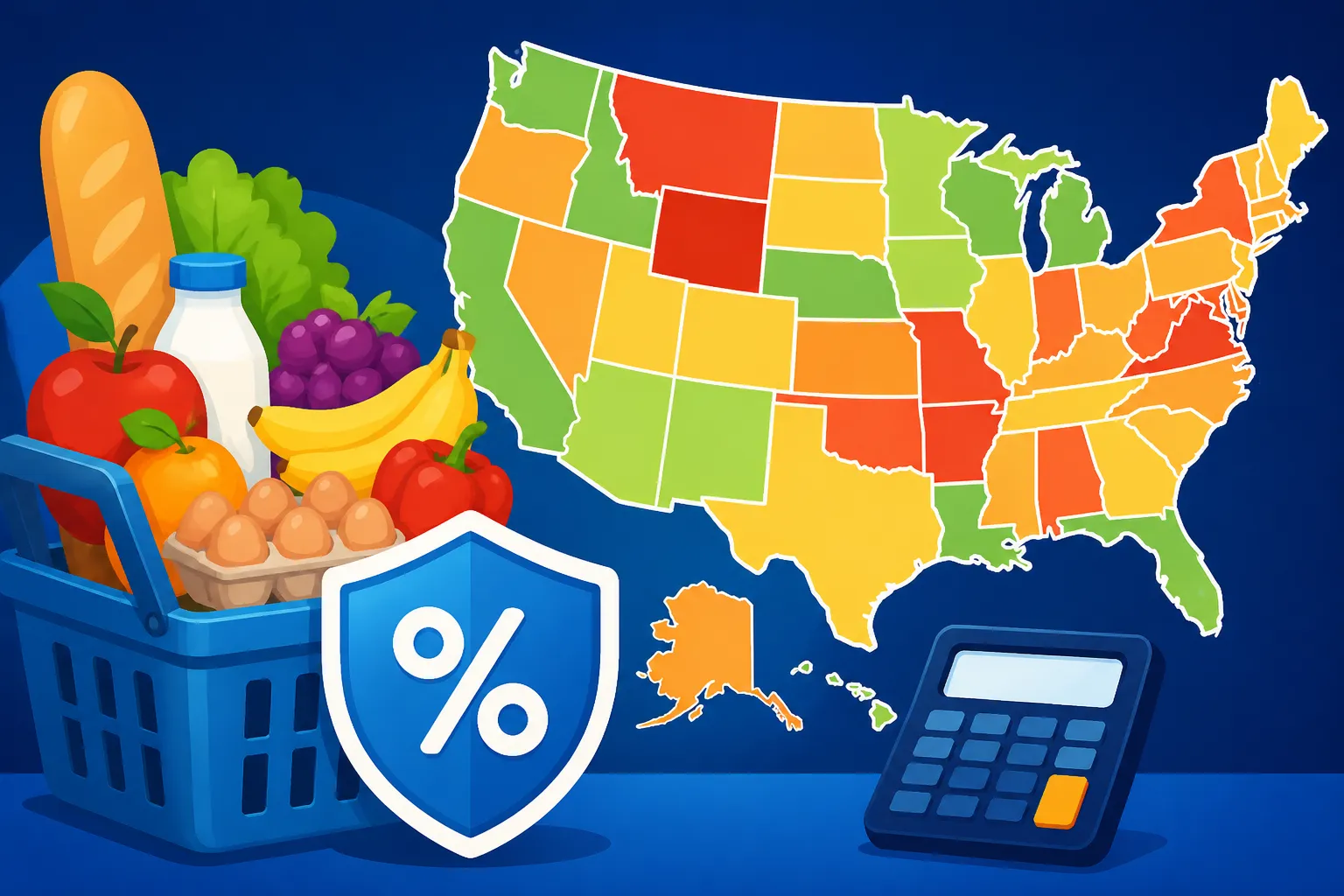
A large portion of U.S. states choose not to impose sales tax on most groceries. These states generally exclude "food for home consumption" from their sales tax base. Think of common grocery items you'd put in your cart to cook meals at home: fresh produce, raw meats, dairy products, breads, and pantry staples. States like California, Illinois, New York, Pennsylvania, and Florida are prominent examples where these essential items typically escape the sales tax net. This policy is generally seen as progressive, as it disproportionately benefits lower-income households, who spend a larger percentage of their income on food.
However, the term "mostly" is key here. Even in these states, there are almost always carve-outs and exceptions for specific types of food or how it's sold. For instance, while a can of soda might be exempt in some states that don't tax groceries, it might be taxable in others, or vice-versa with prepared deli sandwiches. Understanding these nuances requires a look at each state's individual statutes, which can sometimes be quite detailed and specific about what's included and what's excluded from the general food exemption. Many businesses find that automated solutions, like those offered by Avalara, are essential for managing this granular level of detail, especially when operating across multiple states.
Understanding Exemptions: What Truly Qualifies?
So, what exactly does qualify for exemption in these states? It boils down to the state's definition of "food for home consumption." This typically encompasses items intended to be cooked, prepared, or consumed at home, without additional services provided by the seller beyond the initial packaging. This usually means:
- Raw Ingredients: Fresh fruits and vegetables, uncooked meats, poultry, and fish.
- Dairy Products: Milk, cheese, yogurt, butter.
- Baked Goods: Loaves of bread, bagels, rolls (though sometimes specific types of pastries might be taxed if considered "prepared").
- Pantry Staples: Flour, sugar, spices, cooking oils, canned goods, pasta, rice.
- Non-Alcoholic Beverages: Water, juice, and sometimes even soda, depending on the state's specific "food" definition.
The complexities often arise with borderline items. Is a pre-made salad in a container from the grocery store an "unprepared" grocery item or "prepared food"? Does a whole roasted chicken from the deli counter count as groceries if it's taken home, even if it's hot? These are the kinds of questions that make sales tax on food such a headache for businesses and can often differ even between neighboring cities. This is why having a robust system to identify what's taxable and what's not, potentially even down to the ingredient level, is so important. You might find a more detailed explanation of categories in guides like Sales Tax on Groceries & Food by State.
How These Exemptions Help Consumers and Businesses
For consumers, grocery exemptions directly translate to lower costs on essential items. This can significantly impact household budgets, especially for families and individuals with lower incomes, making it a powerful tool for economic equity. When basic food is tax-free, people can stretch their dollars further, which is always a welcome relief at the grocery store.
For businesses, while the concept of exemptions might seem like less revenue to track, it still requires diligent classification. Retailers, from large supermarket chains to small corner stores, must accurately differentiate between taxable and exempt items at the point of sale. This means their inventory management and checkout systems need to be programmed to recognize these distinctions. Incorrectly taxing an exempt item can lead to customer complaints and potential refunds, while failing to collect tax on a taxable item can result in audit liabilities and penalties from the state. It highlights the constant need for accuracy and up-to-date knowledge of sales tax laws, especially as 2026 Sales Tax Rate Changes by State are frequently introduced.
States That Tax Groceries (and How They Do It)
While many states opt to exempt most groceries from sales tax, there's a significant portion of the country where food for home consumption is subject to sales tax. This approach is often taken to generate revenue for state and local services, but it can also be a point of contention due to its regressive nature, meaning it disproportionately affects lower-income households. Understanding these taxing schemes is vital, particularly for businesses operating across state lines or in areas with varying local regulations.
Full Sales Tax on Groceries: The Less Common Path
A few states take the approach of applying their full, statewide sales tax rate to most groceries. As of early 2026, states like Alabama, Hawaii, Idaho, Kansas, Mississippi, Oklahoma, and South Dakota are among those that generally include groceries in their sales tax base, with some nuances. For example, Alabama's sales tax on groceries is a long-standing point of discussion, with some efforts to reduce or eliminate it. In these states, your bill for bread, milk, and eggs will include the standard sales tax, just like a non-food item.
This approach provides a broad revenue base for the state, as food purchases are a consistent and significant part of consumer spending. However, it often faces criticism for being regressive, as individuals and families with lower incomes spend a larger percentage of their budget on food compared to wealthier households. This means the sales tax on groceries takes up a larger share of their disposable income, effectively making essential items more expensive for those who can least afford it. Businesses in these states must ensure their POS systems are correctly configured to apply the full state sales tax rate to all qualifying food items, alongside any applicable local taxes.
Reduced Rates: A Compromise for Essential Goods
Some states try to strike a balance by taxing groceries, but at a reduced rate compared to their general sales tax rate. This is often seen as a compromise: it allows the state to generate some revenue from food sales while acknowledging the essential nature of groceries by not applying the full tax burden. States like Arkansas, Illinois, Missouri, Tennessee, Utah, and Virginia have historically employed some form of a reduced rate for groceries. For example, Tennessee has a 4% state sales tax on food, compared to its general 7% rate. Similarly, Utah's state sales tax on food is 1.75%, far below its general sales tax rate.
These reduced rates add another layer of complexity for businesses. Not only do they need to differentiate between prepared and unprepared food, but they also need to apply different rates to different categories of goods. A supermarket in a state with reduced grocery tax might apply the standard rate to cleaning supplies and clothing, but a lower rate to fresh produce and canned goods. This requires sophisticated sales tax logic within their accounting and point-of-sale systems to ensure accurate collection and remittance. It also means that when you're checking out, you might see varying tax rates applied to different items in your cart, making that final total a bit of a mystery without proper itemization.
Special Local Taxes Adding to the Bill
Even in states with exemptions or reduced rates, local sales taxes can sometimes sneak onto your grocery bill. While a state might exempt food for home consumption, a specific county or city within that state might impose its own local sales tax that does apply to groceries, or to specific types of food. This is less common for staple groceries but can frequently apply to prepared foods, soft drinks, or candy, even in states with general food exemptions.
For instance, in Colorado, which has a very low state sales tax rate (2.9%), many cities are "home-rule" jurisdictions, meaning they can set their own sales tax rules. This can lead to situations where Denver's sales tax applies differently to certain items than Aurora's, even if they're right next to each other. These local add-ons can push the final combined sales tax rate much higher than the state rate alone. Businesses, particularly those with multiple locations or a wide delivery radius, must be acutely aware of these hyper-local variations. Services that specialize in sales tax compliance, like Avalara, are often leveraged to manage these intricate calculations, ensuring that the correct Combined State + Local Sales Tax Rates Explained are applied at every transaction point.
Delving Deeper: The Nuances of "Food" Categories
The world of sales tax is rarely black and white, and food categories are a prime example. What might seem like a simple food item can fall into different tax brackets depending on its form, preparation, or even its intended use. This is where the intricacies of state laws truly shine (or baffle), with specific tests and definitions for everything from a candy bar to a protein shake. It's not just about "food" anymore; it's about "what kind of food?" and "how is it being consumed?".
Prepared Food: Beyond the Restaurant Table
We often associate "prepared food" with restaurants or fast-food joints, where you're clearly getting a meal made for immediate consumption. And yes, meals at your local diner, takeout from your favorite Thai place, or even a drive-thru burger are almost universally subject to sales tax. But the definition of prepared food extends far beyond the traditional restaurant setting and into your everyday grocery store.
Many states define prepared food as any food sold in a heated state, or food that's prepared by the seller and intended for immediate consumption, whether on or off the premises. This includes items like:
- Hot deli items: A rotisserie chicken, hot soup from a buffet, or even warm pizza slices sold at a grocery store.
- Ready-to-eat meals: Pre-made sandwiches, salads, sushi, or platters from a deli or grocery store, especially if utensils are provided or if they're sold in a portion size meant for one person.
- Self-service bars: Salad bars, hot food bars, or olive bars in supermarkets where the customer portions out the food.
The key often lies in the "immediate consumption" aspect and the degree of preparation by the seller. If you're buying a whole, uncooked chicken to roast at home, it's generally a grocery item. But if you're buying that same chicken already roasted and hot from the deli, it often becomes a prepared food item subject to sales tax. This distinction means businesses need their point-of-sale systems to accurately classify these items, which can be challenging given the variety of offerings in a modern supermarket.
Candy and Soda: The "Flour Test" and Other Oddities
Perhaps no categories highlight the absurdity of sales tax definitions more than candy and soda. While most states exempt "food for home consumption," many explicitly carve out candy and soft drinks, taxing them at the full rate even if other groceries are exempt. The reasoning often stems from viewing these items as less essential or even luxury goods.
The famous "flour test" is a prime example of this bizarre classification. For instance, in some states, a Snickers bar is considered "candy" and is taxed, but a bag of chocolate chips, which might have more sugar, is not, because it contains flour and is considered a baking ingredient. Similarly, a chocolate bar might be defined as candy if it contains less than a certain percentage of flour, but if it has more, it might be classified as a food item and exempt. You can dive deeper into this fascinating topic with a guide on Candy & Soda Sales Tax (The Flour Test).
Soft drinks face similar scrutiny. In states where groceries are exempt, pure fruit juice or milk is almost always tax-free. But a can of Coca-Cola or a Pepsi might be taxable. The distinction sometimes hinges on whether the drink contains natural fruit juice, is carbonated, or has artificial sweeteners. It's an intricate dance of definitions that can leave consumers scratching their heads. Businesses need to program their systems meticulously to get these classifications right, as a single error across thousands of transactions can lead to significant discrepancies.
Dietary Supplements, OTC Drugs, and Health Foods
Another area ripe for confusion is the taxation of dietary supplements, over-the-counter (OTC) drugs, and various health foods. Are vitamins and protein powders "food" or something else? Does a medical-grade protein bar qualify differently than a regular granola bar?
Generally, prescription drugs are almost always sales tax-exempt. OTC drugs, however, can be a mixed bag. Some states exempt them, especially if they carry an FDA-mandated "Drug Facts" label, while others tax them. Dietary supplements, like vitamins, minerals, and herbal supplements, are often treated as distinct from "food for home consumption." Many states tax them at the full sales tax rate, even if other groceries are exempt, arguing they are not essential foodstuffs but rather specialized products.
The key takeaway here is that businesses selling these types of products need to consult specific state guidelines for each item. A protein bar might be taxed as a snack in one state, but a "meal replacement" supplement could be viewed differently. This level of granular detail makes manual sales tax calculation incredibly challenging, leading many businesses to rely on automated sales tax solutions to correctly identify and apply the tax status of each product based on jurisdiction. For more in-depth information, you might refer to resources like Are Dietary Supplements & OTC Drugs Taxable?
Understanding the "Meal" Factor: Restaurants, Cafes, and Deli Counters
When it comes to sales tax on food, the concept of a "meal" is critical, especially outside the traditional grocery aisle. Restaurants, cafes, and even certain sections of grocery stores operate under different sales tax rules because they are typically selling prepared food and services, not just raw ingredients. This distinction is vital for understanding why your coffee shop bill always includes sales tax, while your trip to buy coffee beans at the supermarket might not.
Defining "Prepared Food" for Sales Tax Purposes
The legal definition of "prepared food" is what often trips people up, and it's the lynchpin for taxing restaurant meals and similar items. While we touched on it earlier, it bears reiterating with more specific examples. Most states broadly define prepared food as:
- Food sold in a heated state or heated by the seller. This is straightforward: if it's hot when you buy it, it's prepared food. Think of the aforementioned rotisserie chicken, hot soup, or a plate of warm fries.
- Food prepared by the seller for immediate consumption, either on or off the premises. This covers items like sandwiches made to order, salads from a salad bar, custom coffees, or freshly baked goods that are intended to be eaten right away.
- Food sold with eating utensils provided by the seller. If the seller gives you a fork, spoon, plate, or cup along with your food, it's often a strong indicator that the food is considered "prepared." This can apply even to items that might otherwise seem like groceries, such as a tub of yogurt sold with a plastic spoon.
- Food that is combined with other ingredients by the seller. A fruit smoothie made by a cafe, where they blend various fruits and liquids, is a classic example. Even if the individual ingredients were tax-exempt, the act of combining them into a new product for consumption makes it prepared food.
This expansive definition means that a vast array of items sold at eateries, delis, and even some convenience stores fall under the "prepared food" umbrella, making them subject to sales tax. Businesses must train their staff and configure their systems to accurately identify and tax these items.
The Role of Seating and Utensils
Beyond the inherent nature of the food, the environment in which it's sold and consumed also plays a significant role. Many states have specific guidelines related to seating and the provision of eating utensils when determining if food is "prepared" and therefore taxable.
Consider a supermarket with an in-store deli. If you buy a pre-made sandwich and a bottle of water, and then sit down at a small counter with provided napkins and plastic cutlery to eat it, that entire transaction is highly likely to be taxed as prepared food. However, if you bought the exact same sandwich and water and simply took them home, some states might treat them differently, especially if the sandwich wasn't warmed.
The presence of dining facilities, such as tables, chairs, or even standing counters for consumption on the premises, often triggers the "prepared food" tax. This is because the seller is providing more than just the food item; they are also providing a service and a space for immediate consumption. This is a crucial distinction for hybrid businesses, like grocery stores with cafes or bakeries that offer seating. They must be prepared to apply different tax rules depending on whether a customer is dining in or taking out, which again highlights the need for precise Sales Tax Calculator: How to Calculate Sales Tax tools.
Drive-Thrus, Food Trucks, and Catering Services
The "meal" factor extends seamlessly to modern dining experiences like drive-thrus, food trucks, and catering services, all of which almost universally involve the sale of prepared food and are therefore subject to sales tax.
- Drive-Thrus and Fast Food: These establishments are quintessential examples of prepared food vendors. Every item, from burgers and fries to milkshakes and soft drinks, is prepared for immediate consumption, and thus taxed. The convenience factor is part of the service being taxed.
- Food Trucks: Similar to traditional restaurants, food trucks prepare and serve food ready for immediate consumption. Whether it's tacos, gourmet sandwiches, or specialty coffee, these items are taxed. Food truck operators often face the added challenge of dealing with varying local sales tax rates as they move from one jurisdiction to another, sometimes even within the same day. This makes mobile sales tax compliance particularly complex.
- Catering Services: Catering is almost always considered a service that includes prepared food, and thus is fully taxable. This isn't just about the food itself; it's about the preparation, delivery, setup, and sometimes even serving. The entire package is typically subject to sales tax, although some states might have specific rules for gratuities or separate charges for equipment rental.
For businesses engaged in any of these activities, understanding that their offerings fall under the "prepared food" category is paramount. They must ensure their pricing reflects the inclusion of sales tax or that it's clearly added at the point of sale. Failing to do so can result in significant liabilities during an audit. This also relates to broader concerns for Sales Tax for Online Sellers: Complete Guide as many restaurants now offer online ordering and delivery, which introduces additional questions about delivery charges and marketplace facilitator laws.
Navigating the Complexities for Businesses
For businesses, the sales tax landscape for food isn't just confusing; it's a significant operational and financial challenge. The nuances we've discussed — prepared vs. unprepared, candy vs. flour, state vs. local, dine-in vs. takeout — all converge to create a compliance burden that can be truly daunting. Mistakes aren't just minor annoyances; they can lead to audits, penalties, and unexpected financial liabilities that can seriously impact a business's bottom line. This is where strategic thinking and smart tool adoption become indispensable.
The Burden of Proper Categorization and Calculation
Imagine running a medium-sized grocery store that sells everything from fresh produce to a hot deli counter, a coffee bar, and even a small section of dietary supplements. Every single product needs to be correctly categorized for sales tax purposes, not just once, but according to the specific rules of every jurisdiction where you operate. This means understanding:
- State-level exemptions: Does the state generally exempt groceries?
- Local-level taxes: Are there any city or county taxes that apply to any food items, even if the state exempts them?
- Item-specific rules: Is that protein bar considered a candy, a grocery item, or a dietary supplement? What about that sparkling fruit juice – is it a "soft drink" or a "fruit juice"?
- Point-of-sale context: Is the hot sandwich bought for immediate consumption on-site, or is the cold, packaged sandwich being taken home?
This level of granular detail can quickly overwhelm manual processes or even basic POS systems not designed for sales tax complexity. Training staff to correctly identify and manually apply different tax rates to thousands of items is prone to error and incredibly time-consuming. The burden of maintaining accurate product taxability codes for every SKU across multiple locations and sales channels is immense.
Point-of-Sale Systems and Sales Tax Automation
Given the incredible complexity, relying on robust point-of-sale (POS) systems and sales tax automation software isn't just a luxury; it's a necessity for many businesses, especially those in the food industry. Modern POS systems can be integrated with sales tax engines that automatically determine the correct tax rate based on the product, the customer's location (down to the street address sometimes), and the specific taxability rules of that jurisdiction.
When a customer checks out, the POS system identifies each item, pings the sales tax software, which then applies the correct sales tax (or exemption) in real-time. For example, a system could be programmed to know that fresh apples are exempt, a heated rotisserie chicken is taxable at the prepared food rate, and a bottle of soda is taxable at a specific rate even if other groceries are exempt. Solutions from companies like Avalara are specifically designed to handle these complex calculations, integrate with various POS and accounting platforms, and keep up with the constant changes in tax laws. This significantly reduces the risk of errors, saves countless hours of manual effort, and helps ensure compliance.
Staying Compliant Across Multiple Jurisdictions
The compliance challenge only escalates for businesses that operate in multiple states or even just across different cities. A regional grocery chain, for instance, might have stores in a state that exempts most groceries, but some of its stores might be in cities with special local food taxes on prepared items. An online food delivery service might need to apply sales tax based on the delivery address, which means constantly calculating rates across potentially thousands of unique tax jurisdictions, each with its own specific rules about what constitutes taxable food.
Staying compliant means:
- Accurate Rate Lookup: Knowing the precise combined sales tax rate for every single transaction, which can be affected by state, county, city, and special district taxes. This is often more complicated than simply checking Sales Tax by ZIP Code (and Why ZIP Isn't Enough) due to jurisdictional boundaries not always aligning neatly with ZIP codes.
- Dynamic Taxability Rules: Constantly updating product classifications as state laws change (e.g., a state suddenly decides to tax bottled water, or a new rule emerges for specific types of dietary supplements).
- Timely Filing: Registering for sales tax permits in every state where you have nexus and filing returns accurately and on time, even if you collected zero tax in a period.
- Audit Readiness: Maintaining meticulous records of all transactions, showing how sales tax was calculated for each sale, to be prepared in case of an audit.
Without robust automation, managing this complexity is a full-time job (or several), requiring dedicated tax professionals. For businesses, investing in the right sales tax compliance tools is an investment in peace of mind and protection against potentially devastating penalties.
Real-World Examples: A State-by-State Look
To truly grasp the variability of sales tax on groceries and food, it's helpful to look at specific states. This isn't an exhaustive list, but it highlights the diverse approaches taken across the nation, showcasing why there's so much confusion when shopping or doing business across state lines.
Key States and Their Specific Food Tax Rules
Here's a snapshot of how a few prominent states handle sales tax on groceries:
| State | General Sales Tax Rate | Groceries (Unprepared Food) | Prepared Food/Restaurant Meals | Candy/Soda | Key Nuances |
|---|---|---|---|---|---|
| California | 7.25% | Exempt | Taxable | Taxable | Generally exempts food products for home consumption. However, hot prepared food, sodas, and candy are typically taxable. District taxes can add significantly to the rate. |
| Texas | 6.25% | Exempt | Taxable | Taxable | Exempts most food products, including water, for home consumption. Heated foods, ready-to-eat foods from a grocery store (e.g., deli sandwich), and soft drinks/candy are taxable. Local taxes can reach up to 2% additional. |
| Florida | 6% | Exempt | Taxable | Taxable | Exempts food products sold for off-premises consumption. Heated foods, ready-to-eat foods, beverages (excluding milk, 100% fruit/vegetable juice), candy are taxable. Has multiple sales tax holidays annually that sometimes include prepared foods up to certain thresholds. |
| New York | 4% | Exempt (with $110 rule) | Taxable | Taxable | State exempts most food products for home consumption. However, NYC and some counties have their own rates. Prepared food is taxable. Beverages, especially sodas, are usually taxable. Clothing and footwear under $110 are also exempt in NYC, adding another layer of complexity for retailers. |
| Tennessee | 7% | Taxable (4% state rate) | Taxable (7% state rate + local) | Taxable (7% + local) | Taxes food for home consumption at a reduced state rate of 4%, but local taxes still apply, making the combined rate higher. Prepared food, restaurant meals, and some beverages are taxed at the full 7% state rate plus local rates. |
| Illinois | 6.25% | Taxable (1% state rate) | Taxable | Taxable | Taxes groceries (food for home consumption) at a low 1% state rate. Prepared food and restaurant meals are subject to the full state and local rates. Local taxes, especially in cities like Chicago, can make the combined rate on prepared foods quite high. Illinois has proposed to eliminate its 1% grocery tax in 2026. |
| Alabama | 4% | Taxable (4% state rate) | Taxable (4% state rate + local) | Taxable (4% + local) | Taxes food for home consumption at the full state rate of 4%, plus any applicable local taxes, which can be very high. Prepared food and restaurant meals are also taxed at the full combined rate. There have been ongoing legislative efforts to reduce or eliminate the state's sales tax on groceries. |
Note: These rates and rules are general and can be subject to change, as well as varying local jurisdictions. Always verify specific rates and rules for precise locations.
As you can see, even within this small sample, the rules are drastically different. A business selling a bag of groceries in California vs. Alabama faces completely different sales tax obligations for that same purchase. This also underscores why guides on topics like Sales Tax on Groceries in Alabama are so important for localized understanding.
Common Pitfalls and How to Avoid Them
For businesses, these variations are not just academic; they represent real financial risks. Some common pitfalls include:
- Misclassifying Products: Assuming all food is exempt, or that all candy is taxable. Without specific guidance, businesses might incorrectly categorize items like a nutrition bar (food vs. supplement vs. candy) or sparkling water (beverage vs. soda). This can lead to under-collection (and subsequent audit penalties) or over-collection (and customer dissatisfaction).
- Ignoring Local Taxes: Focusing only on the state sales tax rate and forgetting that counties, cities, and special districts can add their own rates and rules, sometimes specifically for food items. This is particularly true for Colorado Home-Rule Cities Sales Tax.
- Outdated Information: Sales tax laws, especially around food, are not static. Definitions change, rates adjust, and new exemptions or taxable categories emerge. Relying on old information is a recipe for non-compliance.
- Inconsistent Application: Applying tax inconsistently across different sales channels (e.g., in-store vs. online) or locations. An auditor will notice discrepancies.
- Lack of Documentation: Not keeping detailed records of product taxability decisions, rate calculations, and filing history. This makes defending your practices during an audit nearly impossible.
To avoid these pitfalls, businesses should:
- Invest in Sales Tax Software: Solutions like Avalara provide automated taxability and rate calculations, reducing manual error.
- Regularly Review Product Taxability: Periodically audit your product catalog to ensure each item is correctly classified according to current state and local laws.
- Stay Informed: Monitor legislative changes that could impact food taxability in your operating states. Industry newsletters and professional tax services can help.
- Train Staff: Ensure that any employee involved in sales transactions understands the basics of food taxability, especially for prepared foods.
Future Trends and What to Watch Out For
The landscape of sales tax on groceries and food is dynamic, constantly evolving with legislative changes, shifts in consumer behavior, and technological advancements. What's true today might not be true tomorrow, making it essential for both consumers and businesses to keep an eye on emerging trends.
Proposed Changes to Grocery Tax Laws
Sales tax on groceries is often a hot-button political issue, especially in states where it applies to essential items. Advocates for lower taxes frequently push for exemptions or reduced rates, citing the regressive nature of these taxes. As of early 2026, several states continue to debate or implement changes:
- Elimination or Reduction Efforts: States like Alabama, which has one of the highest combined sales tax rates on groceries, regularly see legislative attempts to reduce or eliminate this tax. Similarly, Illinois has discussed making its 1% state grocery tax permanently exempt. These efforts are often tied to broader tax reform initiatives aimed at easing the burden on lower-income families.
- Expanding "Prepared Food" Definitions: Conversely, some states might look to broaden the definition of "prepared food" or specific "non-essential" food items (like certain energy drinks or gourmet snacks) to capture more revenue, especially as traditional retail shifts and new consumption patterns emerge.
- "Sin Taxes" on Specific Items: There's a growing trend to impose special taxes on items like sugary beverages (often called "soda taxes") or certain unhealthy snacks, regardless of general grocery tax exemptions. These are usually aimed at public health initiatives rather than general revenue.
For consumers, these changes can mean a direct impact on their grocery bills. For businesses, they represent continuous compliance challenges, requiring constant vigilance and updates to their sales tax systems.
The Impact of Online Food Delivery Services
The explosion of online food delivery services – from grocery delivery apps like Instacart and Amazon Fresh to restaurant delivery platforms like DoorDash and Uber Eats – has added another layer of complexity to food sales tax.
- Jurisdictional Headaches: When food is ordered online and delivered, the sales tax rate is typically determined by the delivery address, not the seller's location. This means a restaurant delivering across city or county lines might need to apply different local sales tax rates to its prepared food, even for the same menu item. This is a crucial distinction, as often the question of Is Sales Tax Based on Billing or Shipping Address? comes up.
- Marketplace Facilitator Laws: Many states have implemented marketplace facilitator laws, which require platforms like DoorDash or Uber Eats to collect and remit sales tax on behalf of the restaurants using their service. This shifts the compliance burden away from individual small restaurants to the larger platforms, but restaurants still need to ensure their product taxability data is correctly fed to these platforms.
- Delivery Charges: Whether shipping and delivery fees are taxable also varies by state and depends on whether the underlying product is taxable. For food delivery, if the meal is taxable, the delivery fee is often taxable as well.
These services have transformed how food is purchased and delivered, necessitating new frameworks for sales tax collection and remittance. Businesses entering or expanding in this space must understand these evolving rules to avoid compliance pitfalls.
How Technology is Evolving to Help
The good news amidst all this complexity is that technology is constantly evolving to make sales tax compliance more manageable. Automation is no longer just for large enterprises; even small to medium-sized businesses can leverage sophisticated tools.
- AI and Machine Learning: Advanced sales tax software is starting to use AI and machine learning to more accurately classify products, even those with ambiguous descriptions, based on patterns in state tax codes and past rulings. This can help with tricky items like specialized dietary products or "healthy" snacks.
- Real-time Rate Calculation: Cloud-based sales tax engines provide real-time rate calculations down to the exact street address, ensuring that local taxes, including special food-related taxes, are always applied correctly, even for dynamic scenarios like food truck movements or online delivery.
- Integration with E-commerce and POS: Seamless integration with popular e-commerce platforms (like Shopify) and POS systems means that sales tax calculation is embedded directly into the transaction workflow, requiring minimal manual intervention.
- Detailed Reporting: Automated systems generate comprehensive reports, simplifying the filing process and providing the necessary documentation for audits.
As the sales tax landscape continues to shift, particularly concerning food and online sales, embracing these technological solutions will be crucial for businesses looking to maintain compliance, mitigate risk, and focus on what they do best: serving delicious food and providing essential groceries.
Disclaimer
The information provided in this article is for general informational purposes only and does not constitute tax, legal, or accounting advice. Sales tax laws are complex and subject to change. Always consult with a qualified tax professional for advice tailored to your specific situation.