Prepared Food Sales Tax Explained
It's incredibly frustrating, isn't it? You walk into a grocery store, pick up a ready-made salad or a hot rotisserie chicken, and suddenly the sales tax seems to jump compared to a carton of eggs or a bag of flour. Understanding why certain foods, particularly "prepared food," are taxed differently can feel like navigating a legal labyrinth. This comprehensive guide will demystify the intricacies of prepared food sales tax, explaining the rules, common scenarios, and what it all means for both consumers and businesses.
Unpacking the Definition of Prepared Food for Sales Tax Purposes
When it comes to sales tax, the distinction between a grocery item and "prepared food" is often where things get incredibly muddy. It's not always intuitive, and what might seem like a simple ready-to-eat item could be subject to an entirely different tax rate than something you'd cook at home. States define "prepared food" specifically to differentiate it from "unprepared" or "grocery" food, largely because these categories are often taxed at different rates.
More Than Just "Hot Food"
The most common misconception is that "prepared food" simply means hot food. While it's true that food sold hot is almost universally considered prepared food for sales tax purposes, the definition extends far beyond temperature. Think about that cold deli sandwich you grab for lunch, or the pre-packaged sushi rolls from your local supermarket. These aren't hot, but they've been assembled, portioned, or otherwise altered by the seller for immediate consumption.
For instance, if you buy a frozen pizza, it's generally considered a grocery item. You take it home, bake it, and then it becomes a meal. But if you walk into a pizzeria and buy a hot slice to eat right then and there, that's undeniably prepared food. The key isn't just the temperature, but the intent behind its sale and its readiness for immediate consumption without significant further processing by the buyer. Even a cold beverage can be classified as prepared food if it's sold as part of a meal or in a specific context where immediate consumption is implied, such as from a soda fountain with a cup and lid provided.
The Importance of Tax Classifications
Why do states bother with these intricate classifications? It's not to make your life harder, I promise! The primary reasons revolve around revenue generation, promoting fairness among different types of businesses, and in some cases, public health or policy goals. Grocery items, especially staple foods, are often taxed at a lower rate or even completely exempt in many states, reflecting a policy choice to make essential items more affordable. You can learn more about these differences in our guide on Sales Tax on Groceries & Food by State.
On the other hand, prepared foods – think restaurant meals, takeout, or convenience store snacks ready to eat – are often seen as a discretionary purchase or a service, and thus subject to the full state and local sales tax rates. For businesses, accurately classifying these sales is paramount. Misclassifying even a small percentage of sales can lead to significant headaches during an audit. If you under-collect sales tax, your business will be on the hook for the difference, plus potential penalties and interest. If you over-collect, you've overcharged your customers, which can lead to reputational damage or even legal challenges. It's a tightrope walk that requires precision and a clear understanding of the rules.
The Core Rationale Behind Differential Taxation
At its heart, the varied taxation of food items comes down to how states perceive the transaction: are you buying raw ingredients to prepare a meal yourself, or are you paying for the convenience of a meal that's already been assembled and is ready for you to eat? This distinction drives everything.
Distinguishing Meals from Groceries
States generally draw a line between what they consider "meals" and what they classify as "groceries." The idea is that groceries are typically raw or minimally processed food items purchased for preparation and consumption at home. These are often viewed as necessities, and as such, many states exempt them from sales tax entirely or tax them at a reduced rate. For instance, in states like California, basic groceries you buy at the supermarket are exempt from sales tax.
However, a "meal" implies convenience, preparation, and often a service component. When you buy a meal from a restaurant, you're not just paying for the ingredients; you're paying for the chef's labor, the overhead of the dining space, and the convenience of not having to cook yourself. This convenience factor is what many states target with the full sales tax rate. It's a way to capture revenue from these more "discretionary" purchases. This fundamental difference is explored further in Are Groceries Taxed Differently Than Restaurant Food?.
Leveling the Playing Field
Another crucial reason for these differing tax rules is to create a level playing field among various types of food retailers. Imagine if a sit-down restaurant, a fast-food joint, a deli making custom sandwiches, and a grocery store selling pre-packaged salads all had the exact same sales tax obligations on their food items. It would be an administrative nightmare and could lead to unfair competition.
By categorizing food, states attempt to ensure that businesses offering similar levels of preparation and convenience face similar tax burdens. A restaurant that offers dine-in service, for example, is clearly selling prepared food. A grocery store that installs a hot deli bar or a fresh sushi counter is now, in many respects, operating like a restaurant for those specific sales. The sales tax rules aim to treat those specific transactions equitably. This helps prevent situations where one type of business might have an unfair pricing advantage over another simply due to tax definitions.
Key Factors Determining "Preparedness"
When a state auditor looks at your sales, they're not just guessing if something is "prepared" or not. They have specific criteria, often called "tests," that help them make the distinction. Understanding these is crucial for both businesses and consumers.
The "Heating" or "Hot Food" Rule
This is, without a doubt, one of the most straightforward and widely applied rules. If food is sold hot, or heated by the seller for the customer, it's almost always considered prepared food and subject to sales tax. Think about your morning coffee from the drive-thru, the rotisserie chicken you grab from the grocery store's hot bar, or a hot dog from a convenience store. All of these items are sold warm or hot, indicating they are ready for immediate consumption.
Consider the nuances: a frozen lasagna you buy at the grocery store is not prepared food because you have to heat it yourself. But if that same grocery store has a cafeteria where they heat and serve that lasagna, it becomes prepared food. Even items that are kept hot by the seller, like pizza slices under a heat lamp, fall under this category. This rule is designed to capture sales where the seller has provided the service of heating the food for immediate enjoyment.
The "Utensil" or "Ready-to-Eat" Rule
Another powerful indicator that food is "prepared" is whether it's sold along with eating utensils, such as forks, spoons, knives, plates, cups, napkins, or straws. This implies that the food is intended for immediate consumption right where it's purchased or soon after.
Take a pre-packaged salad. If it comes with a packet of dressing and a plastic fork tucked inside, many states will classify it as prepared food. The same goes for a cup of yogurt with a spoon, or a bowl of soup. If a convenience store offers self-service coffee with cups, lids, and stirrers readily available, those coffee sales are generally considered prepared food. The provision of these items signals that the food or beverage is ready to eat or drink immediately, without the need for additional home preparation or serving ware. This also applies to things like individual soda bottles sold with a straw, even if they aren't hot.
The "Eating Area" or "On-Premises Consumption" Rule
Many states also look at the environment where the food is sold. If the seller provides tables, chairs, counters, or other facilities for customers to eat on the premises, then food purchased and consumed in that area is generally considered prepared food. This covers traditional restaurants, cafes, food courts, and even some grocery stores that have a seating area.
Imagine a bakery that sells whole loaves of bread (grocery item) but also has a small café section where they sell individual pastries and coffee, with tables for customers to sit and enjoy their treats. Those pastries and coffees sold for on-premises consumption would typically be taxed as prepared food. This rule captures the "restaurant experience" aspect, even if the primary business is not a traditional restaurant. This also extends to outdoor seating areas or dedicated food court spaces within larger establishments. The mere availability of a place to eat suggests the food is intended for immediate, on-site consumption.
Navigating the Complexities: Specific Scenarios and State Variations
The devil, as they say, is in the details, and sales tax on prepared food is absolutely brimming with details. What might seem obvious in one context can be confusing in another, and state-specific laws add even more layers of complexity.
Deli Items and Bakery Goods
Deli counters are a prime example of where the prepared food rules often blur. A sandwich made to order at a deli counter, with fresh ingredients assembled on the spot, is almost always considered prepared food and is fully taxable. This is because it's assembled for immediate consumption and requires no further preparation from you.
However, if you buy sliced turkey and cheese from that same deli counter, without it being made into a sandwich, those are generally considered grocery items and are often exempt or taxed at a lower rate. The act of assembly and the intent for immediate consumption are the key differentiators. Similarly, at a bakery, a whole cake might be considered a grocery item if it's primarily for home consumption later, while an individual slice of cake or a decorated custom cake for a specific event (especially if served on a plate) would be prepared food. These distinctions can sometimes feel arbitrary but are rooted in state tax laws.
Combination Sales and Bundled Goods
What happens when you buy a meal that combines various items? Most states dictate that if a significant portion of a bundled sale meets the definition of prepared food, then the entire combination is taxed as prepared food. Think of a classic fast-food combo meal: burger, fries, and a soda. Even if the soda individually might have different tax implications (as discussed in Candy & Soda Sales Tax (The Flour Test)), when sold as part of that prepared meal, the whole price is typically subject to the full sales tax.
Grocery stores also engage in combination sales, like offering a rotisserie chicken along with pre-made side salads and a roll as a "dinner deal." If the rotisserie chicken is hot and sold with the intent of immediate consumption, the entire bundle often becomes taxable as prepared food. The logic is that the primary purpose of the purchase is a ready-to-eat meal, rather than a collection of separate grocery items.
Cold Prepared Items: Salads, Sushi, and Smoothies
It's crucial to remember that not all prepared food needs to be hot. Many cold items fall squarely into the prepared food category because they are assembled, processed, and ready for immediate consumption without further effort on your part. Think of the array of items in your average grab-and-go section: pre-packaged salads with dressing and a fork, fresh sushi rolls, or a smoothie made to order at a juice bar. These are classic examples of cold prepared foods.
The key here is the level of processing and the "ready-to-eat" nature. A bag of lettuce and a bottle of dressing are groceries. A container of mixed greens with chopped veggies, grilled chicken, a packet of dressing, and a fork? That's prepared food. The seller has done the work of combining ingredients and making it convenient for you to eat on the go.
State-Specific Quirks and Exceptions
This is where the real headaches begin for businesses, and it's why solutions like Avalara are so important. Sales tax laws regarding prepared food vary significantly from state to state, and even within different jurisdictions within a state. There's no universal "prepared food sales tax" rule.
For example, New York has some famously detailed rules, including specific thresholds for certain items and how drinks are taxed if sold with a meal. California, known for its complex tax structure, has base state rates, but then you also encounter various California District Taxes Explained that can add to the total, especially in cities like Los Angeles or San Francisco, which might affect prepared food sales. These district taxes often stack on top of the state and local city/county rates.
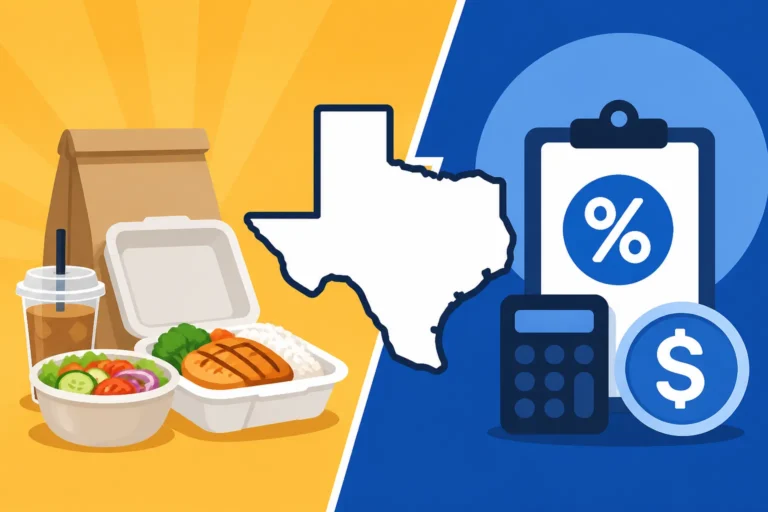
In Texas, the state differentiates items based on whether they are sold for on-premises consumption or take-out. For instance, cold sandwiches and salads are generally exempt if sold for off-premises consumption, but become taxable if the seller provides an eating area. You can dive deeper into the state's approach with our article on Texas Sales Tax Rate (6.25% + Local 8.25% Max).
And then you have states like Alaska, which doesn't have a statewide sales tax, but allows local jurisdictions (cities, boroughs) to levy their own. So, while there's no state-level prepared food tax, you might still pay a substantial local sales tax on your coffee or diner meal in Anchorage or Juneau, as highlighted in Alaska Local Sales Tax (No State Tax). The landscape is truly a patchwork, making uniform compliance incredibly challenging.
Practical Implications for Businesses
For any business selling food, from a corner deli to a large supermarket chain, the complexities of prepared food sales tax are not just theoretical; they have very real, day-to-day consequences for operations, finances, and compliance.
The Burden of Accurate Classification
Imagine running a busy grocery store with a bakery, a deli, a hot food bar, and a coffee shop inside. Each of these sections might sell items that are sometimes considered groceries and sometimes prepared food, depending on the context. Accurately classifying every sale at the point of purchase is a massive undertaking. Your point-of-sale (POS) system needs to be programmed precisely, and your staff needs to be thoroughly trained on the nuances of what's taxable and what's not.
For example, if a customer buys a cold sub sandwich, and your state considers it taxable as prepared food, your cashier must know to apply the full sales tax rate. If they instead ring it up as a grocery item, you've under-collected. Multiply that by hundreds or thousands of transactions a day, and the under-collected tax quickly adds up. This creates a liability for your business, meaning you'll owe the state that money out of your own pocket, often with penalties. On the flip side, over-collecting sales tax can lead to customer complaints and potential legal issues. The burden of getting it right falls squarely on the business owner.
Technology and Compliance Solutions
Given the labyrinthine nature of sales tax, especially with prepared food and its many variables across jurisdictions, manual tracking is simply not sustainable for most businesses. This is where modern sales tax automation software becomes an indispensable tool. Companies like Avalara specialize in providing real-time sales tax calculations, ensuring that the correct rate is applied to every transaction, regardless of the product type or the customer's location.
These solutions integrate directly with your e-commerce platforms, POS systems, and accounting software. They automatically identify whether an item is considered prepared food based on its category and the specific rules of the state and local jurisdiction. For a business with diverse food offerings, having a system that can accurately differentiate between a gallon of milk, a hot latte, and a cold pre-made salad is invaluable. It removes the guesswork, reduces human error, and ensures compliance. You can learn more about finding the right tools in our guide on the Best Sales Tax Compliance Software 2027.
Audits, Penalties, and Staying Ahead
State tax auditors are notoriously meticulous, and food sales are frequently a target for scrutiny precisely because of their inherent complexity. If your business is audited and discrepancies are found in your sales tax collection on prepared foods, the penalties can be severe. These can include not just the underpaid tax amount, but also interest and substantial fines.
Staying ahead means not only having the right systems in place but also being proactive. Regularly reviewing state sales tax laws and any changes is crucial, especially if you operate in multiple states or if your state makes updates to its food tax rules. For example, some states recently changed how they classify certain grocery items or implemented new local taxes that could impact prepared food. Understanding How Combined Sales Tax Rates Work is vital to grasp the full picture of your obligations. Furthermore, if you're an online seller, the concept of Sales Tax for Online Sellers: Complete Guide means you might unexpectedly have nexus in a new state and need to apply their specific prepared food rules. This proactive approach, coupled with robust automation, is your best defense against compliance pitfalls.
Understanding Sales Tax Rates for Prepared Food
Now that we've covered what prepared food is and why it's taxed differently, let's talk about the actual rates you can expect to pay or collect. This isn't just a single number; it's often a combination of several layers of taxation.
Base State Rate Plus Local Add-ons
For prepared food, you're almost always looking at the highest applicable sales tax rate. This includes the state's base sales tax rate, plus any additional local sales taxes levied by counties, cities, and special districts. While grocery food might be exempt or taxed at a reduced rate, prepared food usually bears the full brunt of all these layers. For example, if a state has a 6% sales tax, and a county adds 1.5% and a city adds another 1%, your prepared food item could be subject to an 8.5% sales tax.
This means that a meal purchased in a restaurant in a specific city will likely have a higher effective sales tax rate than, say, a loaf of bread from a grocery store in the same city (if the bread is exempt). Our comprehensive guide on Sales Tax Rates by State 2026: All 50 States provides an overview, and Combined State + Local Sales Tax Rates Explained breaks down how these multiple layers stack up. This combined rate is what businesses need to calculate accurately for every prepared food sale.
Special District Taxes and Surcharges
Adding another layer of complexity, many jurisdictions have special district taxes or surcharges that are specifically applied to prepared food or restaurant meals. These might be for tourism, economic development, or other local initiatives. For example, in major metropolitan areas, it's not uncommon to see an additional percentage tacked onto restaurant bills.
Consider a bustling city like Chicago. Beyond the Illinois state sales tax and Cook County sales tax, you might find additional taxes, making the total rate on a prepared meal one of the highest in the nation. Our guide on Chicago Sales Tax Rate (Highest Big City) delves into this complexity. Similarly, places like Seattle can also have very high combined rates that apply to prepared foods, as you'd find detailed in Seattle Sales Tax Rate 2026 (10.55%). These extra percentages mean that the convenience of a prepared meal can come with a surprisingly significant tax sticker shock if you're not aware of all the local add-ons.
Calculating the Cost of Convenience
Let's walk through a quick example to illustrate how this works. Imagine you're in a city where the state sales tax is 5%, the county sales tax is 1.5%, and there's a special city "meal tax" of 1%. You order a $10 sandwich (prepared food).
Here's how the sales tax would break down:
- State Tax: $10 * 5% = $0.50
- County Tax: $10 * 1.5% = $0.15
- City Meal Tax: $10 * 1% = $0.10
- Total Sales Tax: $0.75
- Total Cost: $10.00 + $0.75 = $10.75
This example shows how quickly these layers accumulate. For businesses, accurately calculating this for every transaction requires precision, whether through manual effort or, ideally, automated systems. For consumers, understanding that the convenience of a ready-to-eat meal often comes with this full, multi-layered tax burden can help explain why your bill might be higher than expected. If you want to practice your own calculations, our Sales Tax Calculator: How to Calculate Sales Tax can be a useful tool.
Prepared Food Sales Tax Examples by State
To give you a clearer picture, here's a brief look at how prepared food taxation generally works in a few example states. Remember, local rates can significantly alter the final percentage.
| State | Grocery Food Tax Status | Prepared Food Tax Status | Key Differentiating Factors (Examples) |
|---|---|---|---|
| California | Exempt | Taxable (full state + local) | Hot food, served with utensils, ready for immediate consumption (e.g., deli sandwich, hot coffee, restaurant meals, most take-out). |
| Texas | Exempt | Taxable (full state + local) | Hot food, served for on-premises consumption, ready-to-eat with utensils provided. Cold ready-to-eat items are exempt if sold "to-go" and not for immediate consumption at seller's location. |
| Illinois | Reduced Rate (1%) | Taxable (full state + local) | Hot food, dine-in, utensils provided, or combination meals. Cold prepared sandwiches/salads are usually taxable. |
| Pennsylvania | Exempt | Taxable (full state) | Hot prepared items, sandwiches, meals consumed on premises. Items like pre-packaged salads and cold deli sandwiches are also often taxable. |
| Florida | Exempt | Taxable (full state + local) | Hot prepared food, meals, and certain cold prepared items like salads and sandwiches are fully taxable. |
This table highlights just how varied the rules can be. For example, Texas has specific nuances for cold prepared items based on consumption location, whereas in California, most cold, ready-to-eat items are simply considered taxable. This variability is precisely why relying on robust sales tax compliance solutions from providers like Avalara is a game-changer for businesses navigating these intricate rules.
Disclaimer
This article is for general informational purposes only and does not constitute professional advice. Laws and regulations vary by location and change over time. Consult a qualified professional for guidance on your specific situation.