Is Shipping Taxable in Texas?
Navigating the labyrinthine world of sales tax can feel like a full-time job for any business owner, and few areas cause as much head-scratching as shipping charges. It's a common frustration: you've meticulously calculated the sales tax on your products, only to wonder if that extra line item for shipping or delivery needs to be taxed too. This guide aims to demystify the rules specifically for Texas, helping you understand when to charge sales tax on shipping and when you can breathe a sigh of relief.
The Core Rule: Is Shipping Taxable in Texas?
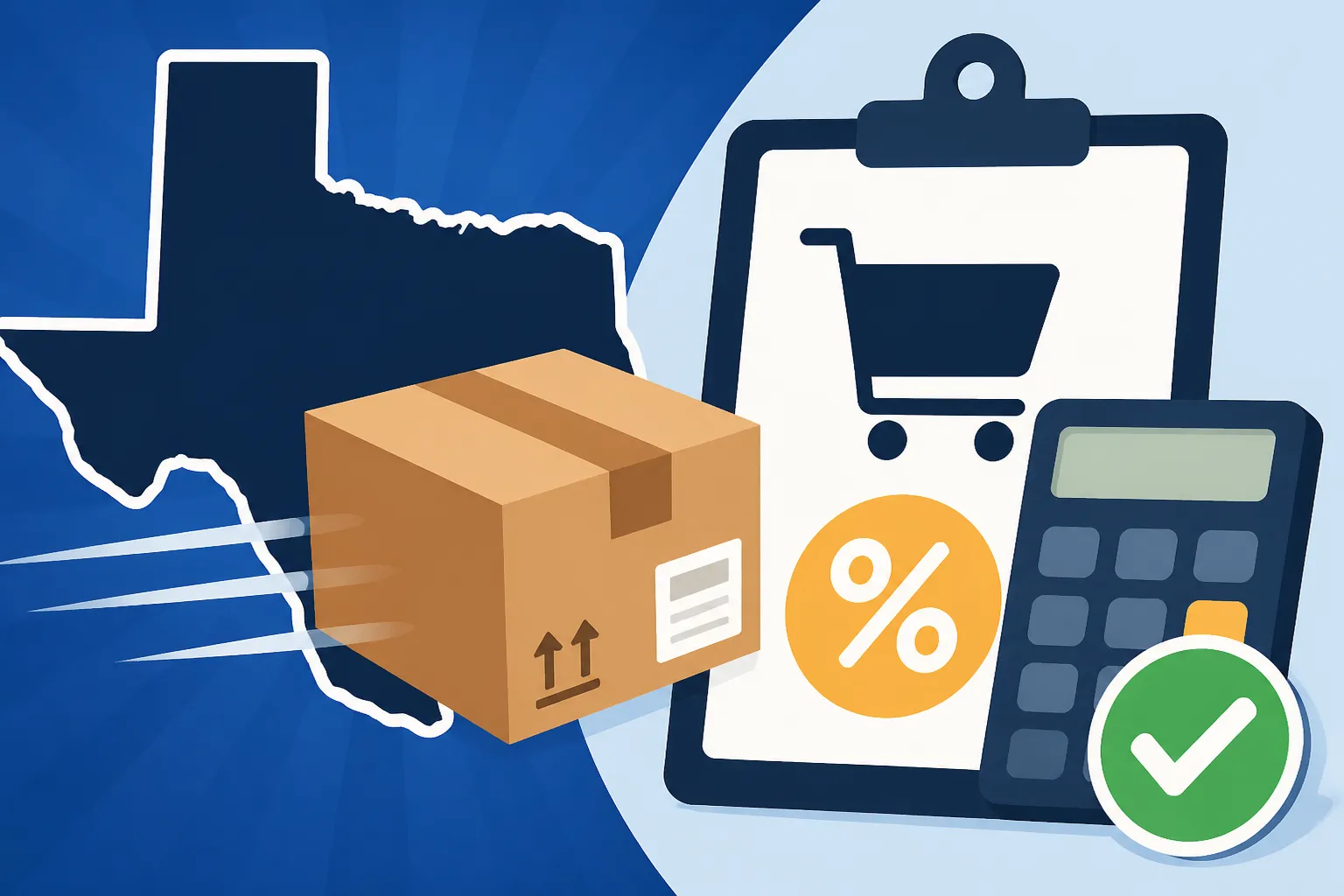
Let's cut right to the chase because this is usually the burning question. In Texas, the taxability of shipping and delivery charges is generally tied to the taxability of the item being shipped. This means if the product you're selling is subject to sales tax, then the shipping charges for that product are also subject to sales tax. Conversely, if the product is exempt from sales tax, then the shipping charges for that product are typically exempt as well. It sounds straightforward, right? But as with most things sales tax-related, there are always nuances and specific situations to consider.
What is "Freight" or "Delivery Charges" in Texas Sales Tax?
When the Texas Comptroller's office talks about "shipping," "freight," "delivery," or "transportation" charges, they're generally referring to any fee a seller charges a customer for moving a product from the seller's location to the customer's desired location. This can encompass a wide range of services, from standard postal delivery to specialized freight carriers. The key here is that these charges are directly related to the movement of the tangible personal property being sold.
It doesn't matter if you call it "handling," "delivery fee," "shipping and handling," or just "shipping." If it's for getting the product to the customer, the state views it primarily through the lens of sales tax on the underlying product. This perspective helps ensure that businesses don't try to circumvent sales tax by simply shifting a portion of the product's price into "delivery fees." It's a pragmatic approach that aims to capture all costs associated with putting a taxable item into the customer's hands.
The Key: Is the Shipped Item Taxable?
This is the golden rule for Texas. If you're selling a product that is subject to sales tax in Texas, then any charge you add for shipping that item is also taxable. Think of it as an integral part of the overall sale of a taxable item. For example, if you sell a piece of furniture (which is taxable), the cost to ship that furniture to your customer's home will also be subject to sales tax. This principle holds true whether the shipping is performed by your own company, by a common carrier like UPS or FedEx, or by a specialized freight service.
On the flip side, if you're selling an item that is exempt from sales tax, then the associated shipping charges are generally also exempt. Imagine you're a grocer delivering basic food items to a customer in Texas. Since most unprepared groceries are not subject to sales tax in Texas, the delivery fee for those groceries would also be exempt. This direct linkage between the product's taxability and the shipping charge's taxability is fundamental to Texas sales tax law and removes some of the guesswork if you know your product's status. Understanding these distinctions is crucial for Sales Tax for Online Sellers Complete Guide.
Understanding Texas' "Incidental to the Sale" Rule
While the general rule is to tax shipping on taxable goods, Texas law often characterizes shipping charges as "incidental to the sale." This means the shipping service isn't considered a separate, distinct service for sales tax purposes but rather an inseparable part of the transfer of taxable goods. This concept is a cornerstone of how many states, including Texas, approach shipping and handling charges. It's not about the service of shipping itself being taxable or exempt, but rather its relationship to the underlying transaction.
This "incidental" interpretation prevents a seller from merely breaking out a shipping charge as a non-taxable service when it's really part of delivering a taxable product. The Texas Comptroller wants to ensure that the entire transaction, including all costs to get the taxable product to the buyer, is taxed appropriately. It's a common area of audit focus, so getting this right is paramount for businesses operating in the Lone Star State.
When Shipping Becomes Taxable (or Not)
The taxability of shipping often hinges on the distinction between taxable tangible personal property and non-taxable services or exempt items.
-
Taxable Items: When you sell items like clothing, electronics, or manufactured goods, which are all typically subject to Texas sales tax, the shipping charge to deliver these items becomes taxable. It's considered part of the "sales price" of the taxable good. The state's position is that without the shipping, the customer wouldn't receive the taxable item, making the shipping an essential part of the taxable transaction. This is often where businesses make mistakes, thinking that because shipping is a "service," it should be treated differently.
-
Non-Taxable or Exempt Items: If you're selling something that is specifically exempt from sales tax, like certain prescription medications or unprocessed food items, then the shipping charge associated with those specific exempt items is also exempt. This rule applies even if you charge separately for the shipping. For instance, if you're a specialized pharmacy shipping only prescription drugs, your shipping fees would likely be exempt from sales tax. However, careful record-keeping is vital here to clearly demonstrate the exempt nature of the goods being shipped.
Separately Stated vs. Invoiced Together
Here's where it can get a little tricky for businesses. While some states have rules that allow shipping charges to be non-taxable if they are separately stated on an invoice, Texas generally does not follow this approach for taxable tangible personal property. In Texas, if the item being shipped is taxable, the shipping charge remains taxable even if it is separately stated on the invoice. This is a crucial distinction that can trip up businesses familiar with other states' sales tax laws.
So, for example, if a customer buys a new bicycle (taxable) for $500, and you charge them $50 for shipping, the sales tax would be applied to the total of $550 ($500 + $50). It doesn't matter if your invoice lists "Bicycle: $500" and "Shipping: $50." Both amounts contribute to the taxable sales price. This rule reinforces the "incidental to the sale" principle, viewing shipping as an inseparable part of delivering a taxable product.
It's also important to consider the Average Sales Tax Rate by State to understand how much these seemingly small charges can add up, especially when local taxes are involved. Texas has a state rate of 6.25%, but local sales taxes can push the combined rate up to 8.25% in many areas, including in major cities. For example, understanding the Houston & Dallas Sales Tax Rate (8.25%) is essential for businesses operating in those areas.
Common Scenarios for Shipping Taxability in Texas
Let's walk through some typical situations to really solidify your understanding of how shipping taxability plays out in Texas. These real-world examples often reveal the subtle complexities that businesses face daily.
Selling Taxable Goods with Shipping
This is the most common scenario. Imagine you run an online boutique selling fashion apparel. Most clothing items are considered taxable tangible personal property in Texas. When a customer purchases a dress and opts for shipping, both the price of the dress and the shipping fee you charge them are subject to sales tax.
Let's say a customer buys a dress for $100 and you charge a flat $10 for shipping. If the combined sales tax rate in the customer's location is 8.25%, the calculation would be:
- Dress price: $100
- Shipping charge: $10
- Total taxable amount: $110
- Sales tax: $110 * 8.25% = $9.075 (which would be rounded)
- Total charged to customer: $110 + $9.08 = $119.08
This principle applies whether you're shipping across town or across the state. The destination-based sourcing rule generally applies in Texas, meaning the sales tax rate is determined by where the customer receives the goods. You can learn more about this in our article on Origin vs Destination Sales Tax Sourcing.
Selling Non-Taxable Goods with Shipping
Now, let's consider a different scenario. Suppose you sell medical equipment, and some of the items you sell are specifically exempted from sales tax under Texas law, such as certain durable medical equipment or prosthetics. If a customer orders one of these exempt items and you charge them for shipping, the shipping charge would also be exempt from sales tax.
For example, if you sell an exempt medical brace for $200 and charge $15 for shipping, the transaction would look like this:
- Medical brace: $200 (exempt)
- Shipping charge: $15 (exempt because the item is exempt)
- Total charged to customer: $215
It's absolutely critical to be certain of the exemption status of your goods. Misclassifying a taxable item as exempt, and subsequently making the shipping exempt, can lead to costly penalties during an audit. This is an area where tools like Avalara can be incredibly helpful in determining the taxability of specific products and services.
Mixed Carts: Taxable and Non-Taxable Items
This is where things can get truly complicated. What happens when a customer's order includes both taxable and non-taxable items, and you charge a single shipping fee for the entire order? Texas law provides guidance for this "mixed cart" situation, and it requires you to allocate the shipping charge.
You must generally apportion the shipping charge between the taxable and non-taxable items based on the proportion of the sales price of each.
Let's use an example:
A customer orders:
- Taxable book: $50
- Exempt magazine subscription: $30
- Total order value: $80
- Shipping charge: $10
Here's how you'd apportion the shipping:
- Determine the percentage of taxable items: $50 (taxable book) / $80 (total order) = 62.5%
- Determine the percentage of non-taxable items: $30 (exempt magazine) / $80 (total order) = 37.5%
- Apply percentages to shipping charge:
- Taxable portion of shipping: $10 * 62.5% = $6.25
- Non-taxable portion of shipping: $10 * 37.5% = $3.75
- Calculate total taxable amount: $50 (book) + $6.25 (taxable shipping) = $56.25
- Calculate sales tax: $56.25 * (local sales tax rate, e.g., 8.25%) = $4.64
This apportionment method ensures that sales tax is only collected on the portion of the shipping charge related to taxable goods. While this might seem like a bit of a mathematical headache, it’s the correct way to handle mixed sales in Texas. Many accounting and sales tax software solutions are designed to handle these complex calculations automatically, making compliance much easier for businesses.
Here's a quick reference table for Texas shipping taxability:
| Item Type Being Shipped | Shipping Charge Separately Stated? | Shipping Charge Taxable in Texas? | Example |
|---|---|---|---|
| Taxable Tangible Personal Property | Yes | Yes | Shipping a new gaming console |
| Taxable Tangible Personal Property | No (bundled) | Yes | Price includes "free" shipping for a taxable lamp |
| Exempt Tangible Personal Property | Yes | No | Shipping prescription medication |
| Exempt Tangible Personal Property | No (bundled) | No | Price includes "free" shipping for a tax-exempt medical device |
| Mix of Taxable & Exempt Items | Yes | Yes (Apportioned) | Shipping a taxable toy and an exempt children's book |
Real-World Examples and Nuances
Beyond the basic rules, several real-world scenarios introduce specific considerations when it comes to shipping charges and sales tax in Texas. These are the details that can often catch businesses off guard.
Drop Shipping and Third-Party Carriers
For businesses engaged in drop shipping, the rules remain largely the same, but the practical application can feel different. When you, as the seller, are drop shipping an item to a Texas customer, you are still responsible for collecting and remitting sales tax on both the product and the shipping charge, assuming the product is taxable and you have Sales Tax Nexus Explained Physical vs Economic in Texas. It doesn't matter that a third-party vendor (your drop shipper) is actually handling the physical shipment. Your customer is paying you for the item and the delivery, so your transaction is what counts.
The charges you incur from your drop shipper for their fulfillment and shipping services are typically business-to-business transactions. If your drop shipper is charging you sales tax, and you are reselling the item, you might be able to provide them with a Resale Certificate by State Complete Guide, specifically a Texas Resale Certificate (Form 01-339), to purchase the items (and potentially associated shipping from them) exempt from tax. This prevents "double taxation" where tax is paid at multiple stages of the supply chain. However, you must then collect the sales tax from your end customer. This is a common area of confusion, and getting Drop Shipping Sales Tax Explained can be tricky, so it's vital to have clear agreements and understand who is responsible for what at each stage.
Handling Charges and Related Fees
Many businesses combine "shipping" with "handling" fees. In Texas, a "handling charge" is generally considered part of the sales price of a taxable item and is therefore subject to sales tax, much like the shipping charge itself. This applies to fees for packaging, order fulfillment, or any other costs associated with preparing an item for shipment.
The Texas Comptroller considers these charges as part of the total cost of the sale. If you break out a "packaging fee" or an "order processing fee" on an invoice for a taxable item, those fees will also be subject to sales tax. The rule of thumb in Texas is that if the underlying item is taxable, nearly all related charges that contribute to the customer receiving that item are also taxable. This differs from some states that might exempt "true" handling fees if they are separately stated and clearly delineated from transportation costs. Always confirm the specific nature of your fees to ensure accurate tax collection.
Best Practices for Texas Shipping Sales Tax Compliance
Staying on top of sales tax, especially with shipping, is an ongoing challenge. Here are some best practices to keep your business compliant in Texas.
Keeping Impeccable Records
The importance of detailed record-keeping cannot be overstated. Should the Texas Comptroller's office ever audit your business, they will want to see clear, verifiable records that justify how you've handled sales tax on shipping charges. This means:
- Invoices: Ensure your invoices clearly delineate product costs, shipping charges, and sales tax collected. If you have mixed sales, your invoices should reflect the apportionment or clearly state which items are taxable and which are not.
- Exemption Certificates: If you're shipping exempt items or selling to an exempt organization (like a church or government agency), keep valid exemption certificates on file.
- Shipping Documentation: Hold onto records from your shipping carriers that show delivery addresses, weights, and costs, especially if these play a role in how you calculate or justify your shipping charges to customers.
Good record-keeping isn't just about compliance; it's also about having a clear picture of your sales and costs. It helps you accurately prepare for Sales Tax Due Dates by State 2026 and ensures that when it's time to How to File a Sales Tax Return Step by Step, you have all the necessary information at your fingertips.
Leveraging Sales Tax Software
For businesses dealing with a significant volume of sales, especially online sales with varying shipping destinations, manually calculating and tracking sales tax on shipping can quickly become a monumental task. This is where dedicated sales tax compliance software can be a game-changer. Solutions like Avalara are specifically designed to:
- Determine Taxability: Automatically assess whether a product and its associated shipping charges are taxable based on the specific rules of Texas (or any other state where you have nexus).
- Rate Calculation: Apply the correct combined state and local sales tax rate based on the customer's shipping address. This is critical for states with complex local tax jurisdictions, like Texas.
- Reporting and Filing: Generate accurate reports and often integrate directly with state tax portals to streamline the filing process, reducing the risk of errors and missed deadlines.
Implementing a robust sales tax solution can save countless hours, minimize errors, and provide peace of mind that you're staying compliant with Texas's intricate sales tax regulations, which can change.
What Happens if You Get It Wrong?
No one wants to think about the consequences of making a mistake, but understanding them can be a powerful motivator for ensuring compliance. Sales tax, including its application to shipping, is a serious matter for state revenue departments.
Penalties for Non-Compliance
If the Texas Comptroller's office discovers during an audit that you have under-collected or failed to remit sales tax on shipping charges, you could face a range of penalties:
- Underpaid Tax: First and foremost, you will owe the uncollected or unremitted sales tax, often with interest accruing from the original due date.
- Penalties: Texas imposes penalties for late filing, late payment, and negligence. For instance, if you fail to remit tax when due, a penalty of 5% of the tax due is assessed for the first 1-30 days, increasing to 10% after 30 days. There can also be substantial penalties for fraud or intentional evasion.
- Audit Costs: Audits themselves can be time-consuming and expensive, requiring significant internal resources or the hiring of external consultants.
These penalties can quickly add up, turning what seemed like a minor oversight into a significant financial burden for a business. Ensuring you are accurately collecting and remitting the Texas Sales Tax Rate (6.25% + Local 8.25% Max) is critical to avoid these costly issues.
Staying Ahead of Changes
Sales tax laws are not static. They can change due to new legislation, court rulings, or administrative interpretations by the Texas Comptroller. What might be non-taxable today could become taxable tomorrow, or vice-versa. Staying informed about these changes is crucial.
- Monitor Official Sources: Regularly check the Texas Comptroller of Public Accounts website for official updates, notices, and rulings.
- Industry News: Subscribe to sales tax news feeds or newsletters from reputable tax professionals or compliance software providers. These sources often break down complex changes into understandable terms.
- Professional Advice: Consult with a sales tax professional or accountant who specializes in Texas sales tax, especially if you have unique business models or complex transactions. This is particularly important for understanding specific thresholds like the Economic Nexus Threshold in Texas ($500k).
Proactive monitoring and adaptation are key to long-term compliance and to avoiding unpleasant surprises. It’s part of the broader effort to ensure your business remains compliant across all aspects of sales tax.
Disclaimer
The information provided in this guide is for general informational purposes only and does not constitute professional tax advice. Sales tax laws are complex and subject to change. Always consult with a qualified tax professional or the Texas Comptroller of Public Accounts for advice specific to your business situation.