Is Clothing Taxable in California?
Navigating the world of sales tax can feel like trying to solve a Rubik's Cube blindfolded, especially when you're just trying to figure out something as seemingly simple as whether your new favorite T-shirt is going to cost you extra. It's a common frustration for shoppers and small business owners alike in a state as vast and diverse as California. This comprehensive guide is here to clear up the confusion specifically around clothing sales tax in the Golden State, offering clarity on what you can expect to pay and why.
The General Rule: Clothing is Taxable in California
Let's get straight to the point: generally speaking, clothing items sold in California are subject to sales tax. Unlike some other states that offer specific exemptions for apparel or have tax-free weekends, California does not have a blanket sales tax exemption for most clothing. This often comes as a surprise to people who have lived or shopped in states with different rules.
Why the Confusion About Clothing Sales Tax?
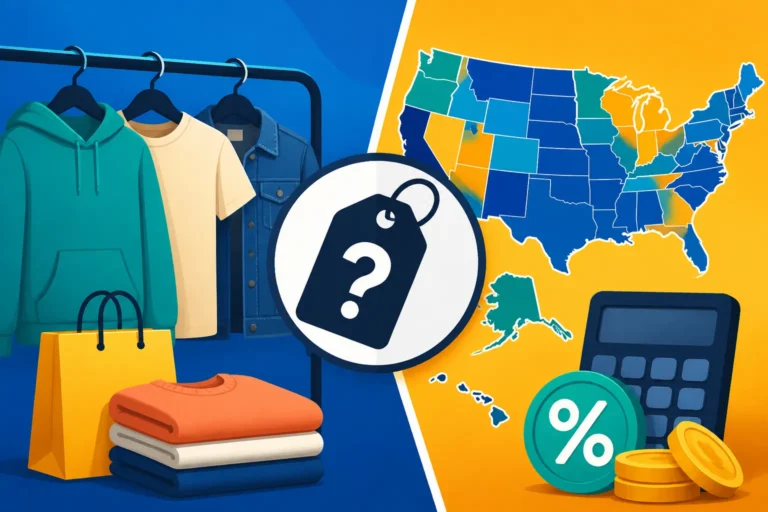
The confusion surrounding sales tax on clothing is completely understandable. Many states across the U.S. handle clothing sales tax very differently. For instance, states like Pennsylvania, New Jersey, and Minnesota exempt most clothing items from sales tax entirely. Then there are states like New York and Massachusetts that offer partial exemptions, where clothing items below a certain price threshold (like New York's $110 rule) are exempt, but anything above that price is taxed. With such a patchwork of rules nationwide, it's easy to assume that California might have similar exemptions, leading to that moment of surprise at the register or when processing an online order. It really highlights why understanding the specifics of Sales Tax Rates by State 2026: All 50 States is so crucial.
What is "Clothing" in the Eyes of the CDTFA?
When the California Department of Tax and Fee Administration (CDTFA) talks about "clothing," they're referring to items that are generally worn on the body for adornment, protection, or modesty. This is a pretty broad definition and includes most ready-to-wear garments. Think about your everyday wardrobe: shirts, pants, dresses, skirts, underwear, socks, coats, and even things like swimwear and activewear. If it's something you typically put on your body when you get dressed in the morning, chances are it falls under the "clothing" umbrella for sales tax purposes. There isn't a complex "flour test" like you might see for candy and food items; it's a straightforward application to nearly all apparel.
Common Clothing Items and How They're Taxed
In California, the sales tax rate you pay on clothing is the standard statewide rate combined with any applicable local district taxes. As of early 2026, the statewide base rate in California is 7.25%. However, this is rarely the final rate you pay because of those local add-ons. You can dive deeper into how this works by exploring California Sales Tax Rate (7.25% Base + Districts).
Everyday Apparel: Your Wardrobe Basics
For the vast majority of clothing purchases, whether you're buying a simple tee at Target, a pair of jeans at Macy's, or a dress from a boutique in West Hollywood, you'll be charged sales tax. This applies equally to children's clothing, adult clothing, and anything in between. There are no exemptions based on the age of the wearer or the perceived "necessity" of the item. So, that school uniform for your child and the fancy suit for a business meeting both get taxed at the same rate. This means if you're making a $100 purchase, you can easily calculate what you'll pay in tax using a guide like How to Calculate Sales Tax (Step by Step).
Accessories and Footwear: Completing the Look
Beyond the main garments, accessories and footwear also fall under the taxable category. This includes everything from belts, ties, scarves, and hats to jewelry, handbags, and wallets. If you're buying a new pair of sneakers from a store in Los Angeles or a designer handbag in San Francisco, you can expect to pay sales tax on these items too. The same goes for shoes of all kinds – sandals, boots, heels, or running shoes. These are considered tangible personal property, just like the clothing they complement, and are subject to the same tax rules. For businesses, keeping track of all these nuances across various product categories can be a headache, making sales tax automation software incredibly useful. Solutions like those from Avalara can help ensure you're applying the correct tax to every item.
Special Purpose Clothing: Uniforms and Protective Gear
Even clothing designed for specific purposes, such as work uniforms, athletic wear, or protective gear (like safety vests or certain types of gloves), is generally taxable. The key is whether the item is considered "clothing" or "apparel." For example, a chef's coat or scrubs for a medical professional would typically be subject to sales tax. However, there can be very specific, niche exemptions, usually for industrial machinery or components, which is a different beast entirely. It’s always best to verify with the CDTFA directly if you're dealing with highly specialized industrial safety equipment that might blur the lines between "clothing" and "tools."
Exemptions and Edge Cases: When Clothing Might Not Be Taxed
While a general exemption for clothing is not a thing in California, there are very specific scenarios where a clothing-related purchase might not incur sales tax. These are usually tied to the buyer's intent or the nature of the transaction, rather than the item itself.
Resale Certificates for Businesses
One of the most common ways clothing items can be purchased without sales tax is by businesses that intend to resell them. If you're a retailer buying inventory for your boutique, you can provide your supplier with a valid Resale Certificate by State: Complete Guide. This certifies that you, the buyer, are purchasing the goods for resale and will collect and remit sales tax from your end customer. It's a critical mechanism to prevent double taxation in the supply chain. For example, a clothing wholesaler in downtown Los Angeles won't charge sales tax to a boutique owner in Beverly Hills if the boutique owner presents a valid resale certificate. The tax is then collected when the boutique sells the item to the final consumer.
Items Not Considered "Clothing" but Related
Sometimes, items that seem related to clothing might not be categorized as "clothing" for sales tax purposes. For example, fabric sold by the yard, sewing patterns, thread, buttons, or zippers are generally considered raw materials or craft supplies. When you buy these items for a DIY clothing project, they are subject to sales tax because they are tangible personal property, but they aren't finished clothing. However, it's worth noting that if you buy a sewing machine, that's also taxable, but it's clearly not "clothing." This distinction is important for retailers who might sell both finished goods and components.
Sales Tax Holidays: A California Conundrum
Many states implement "sales tax holidays" during which certain items, often including clothing and school supplies, can be purchased tax-free for a limited period. This is a common practice, particularly for back-to-school season. However, here's another point of distinction for California: the Golden State does not typically participate in these widespread sales tax holidays. While you might see your friends in Texas or Florida celebrating a Texas Tax-Free Weekend 2026 (Aug 7-9) or a Florida Back-to-School Tax Holiday (All August), California has opted not to offer such exemptions. This means if you're hoping to save on sales tax by timing your clothing purchases, that strategy won't work within California's borders. You'll always pay the standard rate, which is why tools from companies like Avalara are so important for sellers to get right all year long.
The Impact of Local Sales Tax Rates on Your Clothing Purchases
The "sticker shock" for sales tax on clothing in California often comes from the local rates, not just the state's base rate. California is known for its complex sales tax landscape, where numerous cities and counties impose their own district taxes on top of the statewide rate. This is why Combined State + Local Sales Tax Rates Explained is such a helpful resource.
State Versus Local Rates: A Layered Approach
The current statewide sales tax rate in California is 7.25%. But this is just the foundational layer. On top of that, cities, counties, and special districts (like transportation or public safety districts) can levy their own local sales taxes. These local district taxes can vary significantly from one jurisdiction to another, sometimes even within the same county. This explains why the Sales Tax by ZIP Code (and Why ZIP Isn't Enough) can be so tricky to navigate; a ZIP code often covers multiple tax jurisdictions.
For instance, while the statewide rate is 7.25%, the sales tax rate in the city of Los Angeles is higher due to various district taxes. Similarly, a purchase in San Francisco will have a different combined rate than one made in Sacramento. Understanding these nuances is key for both consumers and businesses. This complex system is also Why Is Sales Tax Different in Every City? is a question we hear all the time.
How This Affects Your Clothing Purchases
Let's imagine you're buying a new outfit. The total sales tax you pay depends entirely on where the purchase physically takes place (or, for online sales, where the item is shipped to, under destination-based sourcing rules).
Consider this:
- State Base Rate: 7.25%
- Example District Tax (e.g., in Los Angeles County): An additional 2.25%
- Total Combined Rate: 9.50% (This is often referred to as the Los Angeles Sales Tax Rate Explained)
If you purchase a $200 jacket, the sales tax could be $14.50 at the state base rate, but it would be $19.00 if you're shopping in an area with a 9.50% combined rate. That's a significant difference! Businesses selling clothing across California need to be acutely aware of these varying rates, as miscalculating can lead to compliance issues. This is especially true if you're looking up the San Francisco Sales Tax Rate compared to the rate in a smaller, rural county.
Staying Compliant as a Seller: The Software Solution
For businesses selling clothing, especially online retailers shipping across California, manually tracking and applying these rates is a monumental task. The sheer number of local tax jurisdictions and their constantly changing rates make it nearly impossible to ensure accuracy without some help. This is where modern sales tax compliance software becomes invaluable.
Such software integrates with your point-of-sale (POS) system or e-commerce platform (like Shopify or WooCommerce) to automatically calculate the correct sales tax at the exact address of your customer. It factors in the state rate, county rates, city rates, and any special district taxes, ensuring you collect the right amount every time. Companies like Avalara specialize in this, providing solutions that simplify the complex world of sales tax for businesses of all sizes, ensuring they remain compliant and avoid costly errors or penalties. For businesses really trying to streamline operations and ensure accuracy, researching the Best Sales Tax Compliance Software 2027 is a worthwhile endeavor.
Here's a quick look at how combined sales tax rates can vary in California's major cities for your clothing purchases (rates are illustrative and subject to change):
| City / County | State Sales Tax Rate | Local District Taxes | Estimated Combined Sales Tax Rate |
|---|---|---|---|
| Statewide Base | 7.25% | 0.00% | 7.25% |
| Los Angeles (City) | 7.25% | ~2.25% | ~9.50% |
| San Francisco (City) | 7.25% | ~1.50% | ~8.75% |
| Sacramento (City) | 7.25% | ~1.25% | ~8.50% |
| San Diego (City) | 7.25% | ~0.75% | ~8.00% |
| Fresno (City) | 7.25% | ~1.25% | ~8.50% |
Note: These rates are approximations and subject to change. Always verify the current rate for specific locations.
In summary, while there's no general exemption for clothing in California, understanding the layered system of state and local taxes, and utilizing tools to manage this complexity, can make a huge difference for both shoppers and sellers.
Disclaimer
Please remember that sales tax laws are constantly evolving, and the information provided here is for general guidance only. It is not intended as legal or tax advice. For specific questions regarding your tax obligations or purchases, it's always best to consult with a qualified tax professional or refer to the official resources provided by the California Department of Tax and Fee Administration (CDTFA).