Physical Nexus vs Economic Nexus
If you're a business owner, especially one dipping your toes into the exciting (and sometimes terrifying!) world of online sales or expanding beyond your home state, you've likely encountered the intimidating phrase "sales tax nexus." It's one of the biggest sticking points for entrepreneurs, creating a gnawing uncertainty about where you actually need to collect sales tax. This comprehensive guide is here to demystify nexus, specifically breaking down the crucial differences between physical nexus and economic nexus, helping you understand your responsibilities and navigate compliance with greater clarity.
What Even Is Sales Tax Nexus?
The whole concept of sales tax nexus can feel like a riddle wrapped in an enigma, especially when you're just trying to focus on growing your business. But at its heart, "nexus" isn't nearly as complex as it sounds. It's simply the legal term for the minimum connection a business must have with a state before that state can require the business to collect and remit sales tax. Without nexus, a state generally can't force an out-of-state business to act as its tax collector.
Why Nexus Causes Such a Headache
For small and medium-sized businesses, the very idea of sales tax compliance across multiple states can induce a cold sweat. It's not just about knowing the different rates; it's about knowing which states you even have to worry about in the first place. The landscape is constantly changing, with states eager to capture revenue from all sales made within their borders. This eagerness often leads to expansive definitions of nexus, making it incredibly easy for an unsuspecting business to inadvertently trigger a sales tax obligation without ever realizing it. The fear of non-compliance, and the hefty penalties that come with it, is a very real source of stress for many entrepreneurs.
Imagine you're running a thriving online boutique from your home in Oregon (a state with no statewide sales tax, by the way!). You're shipping products all over the country. Suddenly, you hear about businesses needing to collect sales tax in states where they have "economic nexus." Does that apply to you? What if you send a single employee to a trade show in California? Does that change things? These are the kinds of questions that keep business owners up at night, highlighting why a solid grasp of nexus is absolutely fundamental.
The Core Concept: A Sufficient Connection
Think of nexus as a bridge. For a state to demand you collect sales tax from its residents, there has to be a sufficient legal "bridge" connecting your business to that state. Historically, this bridge was almost always a physical one – something tangible. If you had a store, an office, or employees physically present in a state, the connection was clear. That was called physical nexus. However, with the explosion of e-commerce, states quickly realized that businesses could have a massive impact on their economy without ever setting foot inside their borders. This led to the development of a new kind of bridge: economic nexus, which is based purely on the volume or value of sales a business makes into a state. Understanding this core distinction is the first step toward unraveling the sales tax puzzle and knowing How to Know If You Have Sales Tax Nexus.
The Traditional Beast: Physical Nexus
Before the internet made cross-border commerce an everyday reality, sales tax nexus was a relatively straightforward concept, rooted firmly in the idea of a physical footprint. This "traditional beast," as we sometimes call it, is still very much alive and well, affecting any business that has a tangible presence in a state. It's often the easiest form of nexus to understand because it involves something you can literally point to.
Classic Examples: Bricks and Mortar, Employees, and Inventory
When most people think of a business having a "presence" somewhere, they picture a storefront or an office building. This is the quintessential example of physical nexus:
- Retail Stores or Offices: If your business owns or leases a physical retail location, an office, or any other type of workspace within a state, you automatically have physical nexus there. For instance, if you have a charming little antique shop in Nashville, Tennessee, you clearly have physical nexus in Tennessee.
- Employees: Even without a dedicated office, having employees working in a state can trigger physical nexus. This includes full-time staff, part-time workers, or even remote employees who perform their duties from within that state. So, if your marketing manager lives and works remotely from Texas, even if your main office is in New York, you likely have physical nexus in Texas. It's a key consideration for companies with distributed teams.
- Inventory: This is a big one for online sellers, especially those using third-party logistics (3PL) providers or platforms like Amazon FBA. If your products are stored in a warehouse within a state, awaiting shipment to customers, that inventory creates physical nexus for your business in that state. You might never visit the warehouse, but your goods are physically present there. For example, if you sell handcrafted jewelry on Etsy and use an Amazon FBA warehouse in California, then you have physical nexus in California, regardless of where your business is otherwise located. This is a common and often overlooked trigger, making it important to understand Amazon FBA Sales Tax Nexus Explained.
- Property: Owning or leasing any tangible property in a state, such as equipment, machinery, or even vehicles, can also establish physical nexus.
Surprising Triggers: Temporary Presence and Affiliate Relationships
Physical nexus isn't always about a permanent fixture. Many businesses are caught off guard by temporary activities or indirect connections that can still establish a "sufficient connection" to a state:
- Temporary Presence: Attending trade shows, craft fairs, or setting up pop-up shops for even a few days can create physical nexus. Imagine you're a small business owner based in Florida, but you decide to showcase your unique handmade goods at a week-long convention in Atlanta, Georgia. Even that temporary presence, especially if you're making sales on site, can trigger a sales tax obligation in Georgia. Similarly, if your team travels to a client's location in another state for a consulting project, installation, or repair service, that temporary physical presence might be enough to create nexus. These situations, while brief, often demonstrate a direct engagement with the state's economy.
- Affiliate Nexus: This one is a bit more nuanced. Affiliate nexus arises when an out-of-state business has an agreement with an in-state person or business (an "affiliate") to refer customers for a commission. If that in-state affiliate engages in certain activities that promote the out-of-state business (like placing ads on their website or displaying products), it can create nexus for the out-of-state business. This was a particular focus for states before the Wayfair decision, as a way to capture sales tax from online retailers who didn't have a direct physical presence. While less prominent since Wayfair, it's still a type of physical nexus rule in some states, designed to capture scenarios where an in-state proxy acts on behalf of the remote seller.
- Drop Shipping: While the ultimate responsibility often falls on the seller of record, if you are a drop shipper and your drop shipper partner has physical nexus in a state where you don't, and they ship directly to your customers from that state, it's a complicated scenario that can sometimes indirectly create nexus for you, depending on the state's specific laws and your contractual relationship.
The Modern Marvel: Economic Nexus
The world of sales tax was turned on its head in 2018 with a landmark Supreme Court decision that fundamentally reshaped how states could require businesses to collect sales tax. Enter economic nexus – a game-changer for anyone selling goods or services across state lines, especially online.
The Wayfair Decision's Earthquake
For decades, the standard for sales tax nexus was largely dictated by the 1992 Supreme Court case, Quill Corp. v. North Dakota. This ruling reinforced the idea that a business needed a physical presence in a state to be subject to its sales tax collection requirements. This meant that if you didn't have a store, an employee, or inventory in a state, you generally didn't have to collect sales tax from customers in that state. This made life simpler for remote and catalog sellers, but it created an enormous loophole for states to lose sales tax revenue as e-commerce exploded.
Fast forward to June 21, 2018, when the Supreme Court issued its ruling in South Dakota v. Wayfair, Inc. This decision overturned Quill, effectively stating that a physical presence was no longer the sole requirement for establishing sales tax nexus. Instead, states could now require out-of-state sellers to collect sales tax based purely on the economic activity they generated within that state. It was an earthquake for online sellers, instantly creating sales tax obligations for businesses that had previously been exempt in numerous states. This ruling ushered in the era of economic nexus, making it a critical piece of the puzzle for Sales Tax for Online Sellers Complete Guide.
Understanding Sales and Transaction Thresholds
Following the Wayfair decision, nearly every state that charges sales tax quickly enacted "economic nexus" laws. These laws generally define a threshold of economic activity that, if met or exceeded by an out-of-state seller within a calendar year (or sometimes a rolling 12-month period), establishes nexus. The most common thresholds you'll encounter are:
- $100,000 in Gross Sales: If your total sales into a particular state exceed $100,000 in the current or preceding calendar year, you likely have economic nexus there. It’s crucial to remember this usually refers to gross sales, not just taxable sales. So, if you sell $120,000 worth of untaxable groceries into a state with a $100,000 threshold, you've still met the threshold and created nexus.
- 200 Separate Transactions: Many states initially included a secondary threshold of 200 or more separate transactions into the state. This meant if you sold 200 items, even if they were low-value, you could trigger nexus. However, several states have since dropped this transaction count threshold, recognizing it disproportionately affected small sellers. For example, Kentucky dropped its 200-transaction threshold, meaning you now only need to hit the sales dollar amount. Always check specific state rules for the most up-to-date requirements.
It's vital to track your sales into each state carefully. Many businesses find that they easily exceed these thresholds in multiple states as they grow, creating an ongoing obligation to collect and remit. Understanding What Is the Sales Tax Nexus Threshold? is paramount for any expanding business.
State-Specific Nuances: It's Never Simple
While the $100,000 sales/$200 transaction threshold is a common starting point, relying solely on that would be a mistake. States love to add their own unique twists, making the economic nexus landscape incredibly complex and dynamic. It's never as simple as a one-size-fits-all rule:
- Varying Sales Thresholds: Some states have higher thresholds. For instance, California's economic nexus threshold is $500,000 in gross sales, significantly higher than the common $100,000. Other states might have slightly different amounts or count specific types of sales differently.
- Definitions of "Sales": As mentioned, most states use "gross sales" for the threshold calculation, meaning all sales, taxable or exempt, count towards the total. However, always confirm the exact definition for each state, as some might specify "taxable sales."
- Effective Dates: The date each state implemented its economic nexus law varies. This is important for looking back at previous sales activity to determine if nexus was established in prior periods.
- Marketplace Facilitator Laws: Many states have also enacted marketplace facilitator laws. This means that if you sell exclusively through platforms like Amazon, Etsy, or eBay, the marketplace itself might be responsible for collecting and remitting sales tax on your behalf in those states. However, you still need to understand your overall nexus to know if you have an obligation for sales made on your own website.
Navigating these state-specific rules is arguably the biggest challenge for businesses trying to stay compliant. There's no substitute for checking the current Economic Nexus by State 2026 Thresholds Guide or the specific details for states like Economic Nexus Threshold in California ($500k).
Key Differences and Why They Matter
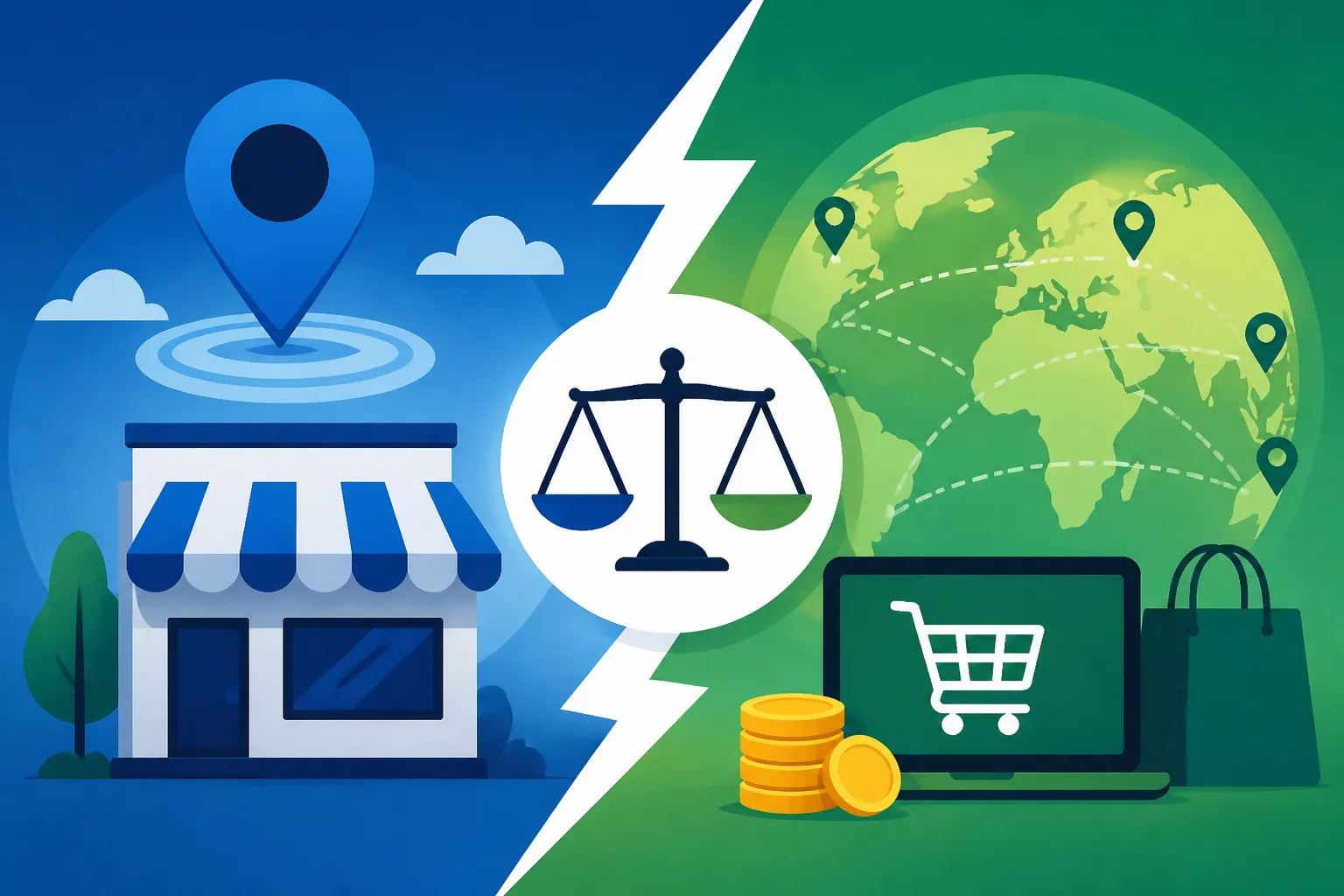
While both physical nexus and economic nexus ultimately lead to the same outcome – an obligation to collect and remit sales tax – their origins, triggers, and the ways they impact different types of businesses are distinct. Understanding these fundamental differences is crucial for any business, whether you're a local brick-and-mortar shop or a global e-commerce giant.
Origin vs. Evolution: How They Came About
The contrast between physical and economic nexus is essentially a story of how commerce has evolved, and how tax law has struggled to keep pace.
- Physical Nexus: The Old Guard: Physical nexus is the traditional approach, deeply rooted in constitutional principles established long before the internet. The Supreme Court's reasoning in cases like Quill Corp. v. North Dakota was based on the idea that states couldn't burden out-of-state businesses with tax collection duties if they lacked a tangible presence. This was meant to protect interstate commerce from undue interference. It's the "old guard" of sales tax, reflecting a time when transactions primarily happened face-to-face or through catalog orders that still relied on physical infrastructure.
- Economic Nexus: The New Frontier: Economic nexus represents the tax system's adaptation to the digital age. The South Dakota v. Wayfair decision was a direct response to the massive growth of e-commerce, which allowed businesses to generate significant revenue in states without any physical presence. States argued (and the Supreme Court agreed) that it was unfair for local businesses with physical nexus to collect sales tax, while large online retailers could sell into the same state tax-free, creating an uneven playing field and significant revenue loss for the states. Economic nexus is the "new frontier," designed to ensure that businesses profiting from a state's market contribute to its tax base, regardless of their physical location.
Impact on Online Sellers vs. Brick-and-Mortar
The rise of economic nexus has dramatically shifted the sales tax burden, particularly for online businesses.
- Online Sellers: The Primary Focus of Economic Nexus: For businesses that operate purely online, without any physical storefronts, employees, or inventory in other states, economic nexus is the primary (and often the only) trigger for sales tax obligations. Before Wayfair, many online sellers operated with minimal sales tax concerns outside their home state. Now, they must constantly monitor their sales volume and transaction count in every state to determine if they've crossed an economic nexus threshold. This means a small artisan selling handmade goods on Shopify from their home office could suddenly find themselves needing to register and collect sales tax in a dozen different states if their sales are high enough. This is why resources like Do I Need to Collect Sales Tax for Online Sales? are so crucial.
- Brick-and-Mortar Stores: Still Grappling with Physical Nexus (and sometimes economic): Traditional brick-and-mortar stores usually have clear physical nexus in the state(s) where they operate their physical locations. If you run a chain of sporting goods stores, you'll collect sales tax in every state where you have a store. The complication for them often arises when they also expand into online sales. A local bookstore in Portland, Oregon, might have no sales tax concerns for its in-store sales, but if its online sales to Washington state residents exceed Washington's economic nexus threshold, it would then need to register and collect sales tax in Washington. Businesses with hybrid models must consider both forms of nexus.
The Ever-Shifting Compliance Burden
The most significant takeaway from the distinction between physical and economic nexus is the increased and ever-shifting compliance burden it places on businesses.
- Complexity for Expanding Businesses: Any business looking to expand its reach, whether through opening new physical locations or growing its online sales footprint, must meticulously track potential nexus triggers. What starts as a simple operation in one state can quickly become a multi-state sales tax challenge. This means understanding not just if you have nexus, but also the specific rules for Combined State + Local Sales Tax Rates Explained in each jurisdiction.
- Constant Monitoring of Thresholds: Unlike physical nexus, which is generally a "yes/no" question once you've established a presence, economic nexus requires continuous monitoring. Businesses need robust systems to track sales by state on an ongoing basis. Missing a threshold can lead to non-compliance, back taxes, interest, and penalties. The situation is even more complex because states can change their thresholds or even what constitutes a "sale" towards those thresholds. The idea of How Often Do Sales Tax Rates Change? isn't just about rates, it's about the rules that determine if you need to collect at all.
- The Need for Automation: The sheer volume of data and the complexity of rules across all states make manual tracking nearly impossible for most growing businesses. This has led to a significant demand for sales tax compliance software that can automate nexus tracking, rate calculation, and filing. Without such tools, the risk of errors and missed obligations becomes extremely high.
| Feature | Physical Nexus | Economic Nexus |
|---|---|---|
| Basis | Tangible presence in a state | Level of economic activity (sales/transactions) |
| Primary Trigger | Stores, offices, employees, inventory, property | Sales volume or number of transactions into a state |
| Historical Context | Traditional commerce, pre-internet | Post-internet, post-Wayfair decision (2018) |
| Who it Affects Most | Any business with physical ties, traditional | Online sellers, remote businesses, marketplace sellers |
| Key Challenge | Identifying all physical ties | Monitoring thresholds in many states simultaneously |
| Legal Precedent | Quill Corp. v. North Dakota (overturned) | South Dakota v. Wayfair, Inc. |
Navigating Nexus: Practical Steps for Businesses
Feeling overwhelmed yet? Don't worry, you're not alone. The good news is that while complex, sales tax compliance is manageable with a systematic approach. Understanding the distinction between physical and economic nexus is the first big step; now let's talk about what you actually do with that knowledge.
Assessing Your Current Nexus Footprint
The very first practical step is to honestly assess where your business currently has nexus. This isn't a one-and-done task; it should be an ongoing review, especially as your business grows or changes operations.
- Identify Physical Nexus States: Start by making a clear list of every state where you have any of the physical presence triggers we discussed. This includes:
- Anywhere you have an office, warehouse, retail store, or any owned/leased property.
- States where you have employees, including remote workers.
- States where you store inventory (e.g., Amazon FBA, 3PL warehouses).
- States where you've had a temporary presence (trade shows, consulting gigs) that might have triggered nexus.
- States where you have affiliate relationships that meet nexus thresholds.
- Monitor Economic Nexus States: Next, you need a system to track your sales into all other states. For each state that charges sales tax, keep a running tally of your gross sales and, if applicable, your transaction count.
- Set up alerts: Many accounting or e-commerce platforms can generate sales-by-state reports. Review these monthly or quarterly.
- Know the thresholds: Have a clear list of the economic nexus thresholds for each state. This includes both the dollar amount and, if still applicable, the transaction count. Remember, these can change, so a yearly check on 2026 Sales Tax Rate Changes by State is a smart move.
- Proactive vs. Reactive: Don't wait until you've clearly crossed a threshold to start paying attention. If you see your sales in a particular state steadily climbing towards the $100,000 mark (or whatever the state's threshold is), start doing your due diligence.
This assessment is your roadmap. It tells you exactly where your sales tax journey needs to begin. Many businesses find that trying to do this manually across 45+ states (plus D.C.) is a nightmare. This is where modern solutions come into play, which can simplify the question of How Do I Know If I Have Nexus in a State?.
Registering for Sales Tax Permits
Once you've determined you have nexus in a state, the next crucial step is to register for a sales tax permit (also called a seller's permit, certificate of authority, or vendor's license, depending on the state). You must register with the state's taxing authority before you start collecting sales tax from customers. Collecting sales tax without a permit is a big no-no and can lead to serious penalties.
The registration process generally involves:
- Visiting the State's Taxing Authority Website: Each state has its own department of revenue or tax commission website where you can apply online.
- Providing Business Information: You'll typically need your business legal name, address, Employer Identification Number (EIN), business type (sole proprietorship, LLC, corporation), and a brief description of your business activities.
- Anticipating Your Filing Frequency: During registration, states will often ask you to estimate your anticipated sales tax liability. This helps them assign you a filing frequency (e.g., monthly, quarterly, annually). For a deep dive, check out Sales Tax Filing Frequency Explained.
- No Cost (Usually): Most states do not charge a fee for a sales tax permit, though some might have a small application fee.
The process for How to Get a Sales Tax Permit by State varies, but the critical point is: don't delay. Registering promptly demonstrates good faith and ensures you're legally authorized to collect sales tax. If you realize you've had nexus for a while and haven't registered, this might be a situation where considering a Voluntary Disclosure Agreement (VDA) with the state could help mitigate penalties.
Collecting and Remitting Sales Tax
With permits in hand, your ongoing obligation is to correctly collect sales tax from your customers and then remit it to the appropriate state on schedule. This is where the rubber meets the road, and where mistakes can quickly compound.
- Rate Determination: Sales tax rates aren't uniform. Many states have a base state rate, but then counties, cities, and special districts can add their own local sales taxes. This means the rate can vary from one street to the next, especially in states like Colorado with its home-rule cities, or California with its many district taxes. Determining the correct rate for each sale, based on the customer's shipping address, is critical. This complex calculation is often based on Origin vs Destination Sales Tax Sourcing rules.
- Collecting from Customers: Your point-of-sale (POS) system for brick-and-mortar or your e-commerce platform for online sales needs to be configured to charge the correct sales tax at checkout. This includes knowing Is Shipping Taxable? in each state, as some states tax shipping and handling fees, while others do not.
- Filing Returns: On your assigned filing frequency (monthly, quarterly, annually), you'll need to file a sales tax return with each state where you have a permit. This report details your total sales, taxable sales, and the amount of sales tax collected. Even if you collected zero sales tax in a period, many states still require a "zero return."
- Remitting Payments: Along with filing the return, you'll remit the sales tax funds you collected. These are not your business's money; you're holding them in trust for the state.
Managing collection and remittance manually across multiple states is a daunting task, particularly as your transaction volume grows. This often leads businesses to seek automated solutions.
Staying Compliant in a Dynamic Landscape
The world of sales tax is anything but static. Laws, rates, and interpretations are constantly evolving, making ongoing compliance a moving target. For businesses striving to avoid penalties and operate smoothly, a proactive approach to monitoring and leveraging the right tools is essential.
Monitoring State Law Changes
One of the most frustrating realities for business owners is that sales tax rules don't just stay put. They shift, they change, and sometimes, they completely overhaul. What was true for nexus or taxability last year might be different this year.
- Economic Nexus Threshold Updates: While many states settled on a $100,000/$200 transaction threshold, some states periodically review and adjust these. For example, some have removed the transaction count, simplifying things slightly. You need to be aware of these subtle but impactful changes.
- Taxability of Products and Services: States frequently re-evaluate what is taxable. For instance, more states are starting to tax digital products or software-as-a-service (SaaS), which were often exempt in the past. If you sell Is SaaS Taxable? Software-as-a-Service by State, you need to know if your product has become newly taxable in a state where you have nexus.
- New Local Taxes or District Taxes: States or local jurisdictions might introduce new local sales taxes or special district taxes. These can significantly impact your rates, particularly in complex states like California with its numerous district taxes, or Louisiana with its parish-specific rates. These changes are typically announced by state revenue departments, but keeping up with every single update across every state can feel like a full-time job in itself.
This constant flux underscores the need for continuous vigilance. Relying on outdated information is a surefire way to fall out of compliance.
Leveraging Technology for Automation
Given the complexities and dynamic nature of sales tax, manual management quickly becomes unsustainable for most growing businesses. This is where technology steps in as a true lifesaver. Sales tax compliance software is designed specifically to handle the intricate details of nexus determination, rate calculation, and filing across multiple jurisdictions.
- Automated Nexus Tracking: Modern sales tax software can integrate with your sales data to automatically monitor your sales into each state, alerting you when you approach or cross an economic nexus threshold. This removes the guesswork and tedious manual calculations.
- Real-time Rate Calculations: These platforms maintain up-to-date databases of sales tax rates for every jurisdiction, including state, county, city, and special district taxes. They can apply the correct rate to each transaction based on the customer's shipping address and the product's taxability rules. This is particularly valuable for businesses dealing with the headache of Sales Tax by ZIP Code (and Why ZIP Isn't Enough).
- Simplified Filing and Remittance: When it's time to file, the software can generate accurate, audit-ready returns for each state and often even automate the filing and payment process. This drastically reduces the time and effort required for compliance.
Many businesses find relief with platforms such as Avalara, which integrate directly with e-commerce stores (like Shopify, BigCommerce) and accounting software (like QuickBooks, NetSuite) to automatically manage the entire sales tax lifecycle. Tools like Avalara can automate the entire sales tax lifecycle, from nexus determination to filing, ensuring your business stays on the right side of the law. For many small to medium-sized businesses, the cost of a solution like Avalara is far less than the potential penalties for non-compliance. When considering your options, it's worth exploring guides like Best Sales Tax Compliance Software 2027 or Avalara vs TaxJar: Which Sales Tax Software?.
Considering Professional Guidance
Even with the best technology, there are times when professional guidance is invaluable. Sales tax can be incredibly nuanced, and some situations warrant expert review.
- Complex Business Models: If you have a unique business model, sell a mix of tangible goods and services (some taxable, some not), or have intricate supply chains (e.g., drop shipping with multiple vendors), a sales tax consultant or tax attorney can provide tailored advice.
- Past Non-Compliance: If you've discovered that you should have been collecting sales tax in certain states but haven't, it's a stressful situation. A professional can help you navigate voluntary disclosure agreements (VDAs) with states, which can significantly reduce penalties and interest for past non-compliance.
- Audits: If your business is ever audited by a state's department of revenue, having an experienced professional in your corner can make a huge difference in managing the process and protecting your interests.
Ultimately, understanding the distinction between physical and economic nexus is a foundational element of sales tax compliance. By proactively assessing your nexus footprint, registering correctly, utilizing automation, and seeking expert help when needed, you can manage this complex aspect of your business with confidence and keep your focus on what you do best: growing your enterprise.
Disclaimer
Please remember that this article provides general information about sales tax nexus and compliance and should not be considered legal or tax advice. Sales tax laws are complex and constantly changing, varying significantly from state to state. It is always recommended to consult with a qualified tax professional or legal expert to discuss your specific business situation and ensure full compliance with all applicable sales tax regulations.