Economic Nexus Threshold in Texas
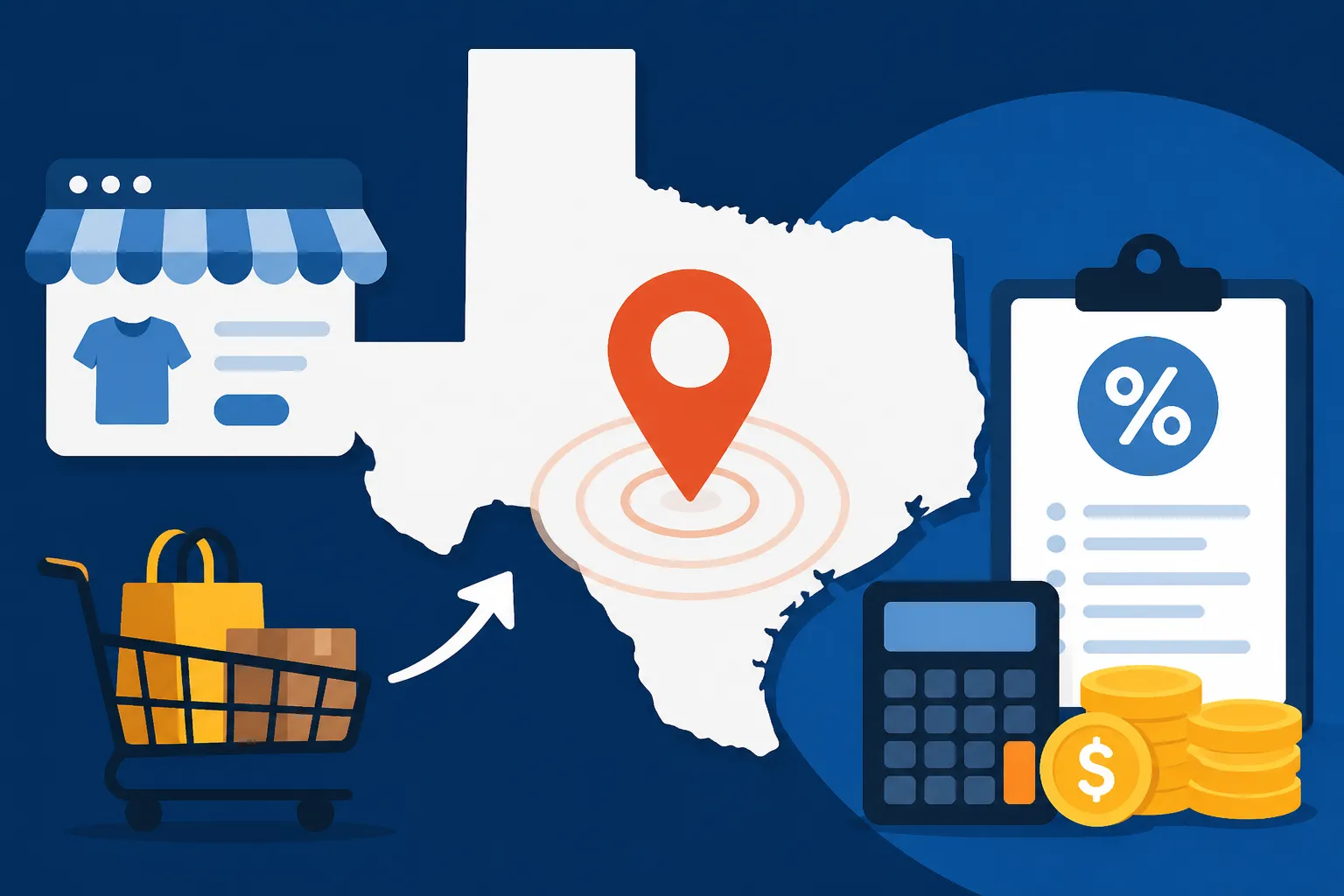
Navigating the labyrinthine world of sales tax can feel like a full-time job for business owners, especially when you're trying to figure out where you even need to collect it. For anyone selling into the Lone Star State, understanding the economic nexus threshold in Texas is absolutely crucial. This comprehensive guide will break down exactly what economic nexus means for your business in Texas, how to identify if you've met the threshold, and what steps you need to take to stay compliant once you do.
What is Economic Nexus and Why Does it Matter in Texas?
Let's be honest, sales tax can be a headache. For years, the rule was pretty straightforward: if you had a physical presence in a state – like an office, a warehouse, or even an employee – you had to collect sales tax from customers in that state. This was called "physical nexus." But then, the internet happened, and suddenly businesses could sell nationwide without ever setting foot in another state. States felt like they were missing out on a lot of revenue, and it created a huge imbalance.
The Big Shift: South Dakota v. Wayfair
Everything changed with the landmark 2018 Supreme Court case, South Dakota v. Wayfair. This decision basically said, "Hey, states, you can require out-of-state sellers to collect sales tax, even if they don't have a physical presence, as long as they meet a certain level of economic activity in your state." This new concept is what we now call "economic nexus." It completely revolutionized sales tax for online sellers and businesses operating across state lines. Suddenly, the old rules were out, and everyone had to re-evaluate their sales tax obligations. If you're looking for a deeper dive, check out our guide on Sales Tax Nexus Explained Physical vs Economic.
Texas, like many other states, quickly jumped on board. They realized that waiting for businesses to set up a brick-and-mortar store before collecting sales tax was an outdated approach. So, they established their own economic nexus threshold, essentially drawing a line in the sand that dictates when an out-of-state business selling into Texas needs to start collecting sales tax from its Texas customers. This isn't just about fairness; it's about revenue for the state, helping fund critical services, and leveling the playing field for local businesses.
Why Texas Specifically? The Scale of the Market
Texas isn't just any state; it's the second-largest state by both area and population, with a massive and diverse economy. It's a huge market for businesses of all sizes, from small e-commerce shops to large corporations. The sheer volume of transactions happening within Texas borders, even from out-of-state sellers, means the potential sales tax revenue is enormous. This makes Texas a significant player in the economic nexus landscape, and understanding its specific rules is paramount for any business with a substantial customer base there. Ignoring these rules isn't just a minor oversight; it can lead to significant penalties and back taxes, which no business owner wants to face.
Texas's Specific Economic Nexus Threshold
Alright, let's get down to brass tacks: what's the magic number in Texas? Unlike some states that have a lower threshold or include a transaction count, Texas keeps it relatively simple, though still substantial. You need to know the specific dollar amount and how it's measured. This isn't a "one-size-fits-all" rule across the country; each state sets its own bar. For a broader view, our Economic Nexus by State 2026: Thresholds Guide can offer more context.
The $500,000 Gross Revenue Rule
In Texas, an out-of-state seller establishes economic nexus if their total gross revenue from sales of tangible personal property or services into Texas exceeds $500,000 in the preceding 12-month period. This is the critical number you need to keep an eye on. It's not about how much profit you made, or even how much taxable sales you made, but the total gross sales.
Let's break that down:
- Gross Revenue: This means the total amount of money you brought in from sales to Texas customers. It includes sales of both taxable and non-taxable goods and services. For example, if you sell $400,000 worth of taxable items and $150,000 worth of non-taxable items to Texas customers in a 12-month period, your gross revenue is $550,000. This means you've crossed the threshold.
- Tangible Personal Property or Services: This covers most products you can touch, as well as many services. Texas generally taxes services related to the sale or repair of tangible personal property, along with specific enumerated services. This can get tricky, so understanding what services are taxable in Texas is important. If you offer SaaS, for instance, you'll want to review Is SaaS Taxable in Texas?.
- Preceding 12-Month Period: This isn't a calendar year. It's a rolling 12-month look-back. So, at the end of each month, you'd look back at your sales for the previous 12 months to see if you've met or exceeded that $500,000 mark. This rolling window means you need a system for continuous monitoring, not just an annual check-in.
What Sales Count Towards the Threshold?
This is where some businesses get tripped up. It's not just about your direct taxable sales.
- All Sales, Taxable or Not: As mentioned, the Texas threshold is based on gross revenue. This means if you sell something that's typically exempt from sales tax in Texas (like certain groceries or medical devices), those sales still count towards the $500,000 economic nexus threshold. The state wants to know your overall economic footprint, not just your taxable one.
- Sales Through Marketplaces: If you sell through a marketplace facilitator like Amazon or eBay, and they are collecting and remitting sales tax on your behalf for those sales, those specific sales may not count towards your threshold in some states. However, Texas's rule specifies "gross revenue from sales of tangible personal property or services," and while marketplace facilitators handle the collection and remittance, your sales still constitute your gross revenue. Always double-check current Texas Comptroller guidance on this, as interpretations can vary and laws evolve. Generally, it's safer to include all your sales activity when assessing your nexus, unless explicitly excluded by the state.
- Fulfillment by Amazon (FBA) and Other Third-Party Logistics: Even if you're using FBA, where Amazon stores your products in Texas warehouses, that could create physical nexus for you independent of economic nexus. So, you might have nexus in Texas for multiple reasons! Our guide on Amazon FBA Sales Tax Nexus Explained delves into this. The economic nexus threshold is an additional trigger, not a replacement for physical nexus rules.
Keeping track of these figures accurately is vital. A spreadsheet or a dedicated accounting system that can segment sales by state will be your best friend here. This ensures you’re not caught off guard and can proactively register when the time comes.
What Happens When You Hit the Threshold in Texas?
So, you've crunched the numbers, looked back over the last 12 months, and realized your gross sales into Texas have surpassed $500,000. Congratulations on your success in the Texas market! But now comes the important part: compliance. This isn't something to ignore or put off.
Registering for a Texas Sales Tax Permit
Once you determine you've established economic nexus, the very next step is to register for a Texas Sales and Use Tax Permit. You cannot legally collect sales tax in Texas until you have this permit. Attempting to collect tax without a permit can lead to serious trouble with the Texas Comptroller of Public Accounts.
The good news is that applying for the permit is relatively straightforward and can be done online through the Texas Comptroller's website. You'll typically need to provide information about your business, such as:
- Your legal business name and any doing business as (DBA) names.
- Your Federal Employer Identification Number (FEIN) or Social Security Number (if a sole proprietorship).
- Your business address and contact information.
- The type of business entity (sole proprietor, LLC, corporation, etc.).
- The nature of your business and the products or services you sell.
- The date you started doing business in Texas or the date you anticipate starting to collect sales tax.
After you apply, the Comptroller's office will review your application. Once approved, you'll receive your sales tax permit and be assigned a filing frequency (e.g., monthly, quarterly, annually) based on your anticipated sales tax collections. Getting this done promptly is critical to avoid any penalties for collecting tax without authorization or, worse, failing to collect when you should have. Need more details? Check out How to Get a Sales Tax Permit in Texas.
Ongoing Compliance: Collection, Filing, and Remittance
Registering is just the first step. The real work of compliance begins once you have your permit. This involves three key areas:
- Sales Tax Collection: You must accurately calculate and collect the correct sales tax from your Texas customers on all taxable sales. Texas has a state sales tax rate, but many cities, counties, and special purpose districts also impose local sales taxes. This means the rate can vary significantly depending on your customer's location within Texas. For example, while the state rate is 6.25%, the combined rate in Houston can go up to 8.25%. Our guide on Texas Sales Tax Rate (6.25% + Local 8.25% Max) explains this complexity. You'll need a system that can handle these varied rates based on the "destination" of your sale (where your customer receives the goods).
- Sales Tax Filing: Regularly, based on your assigned filing frequency (monthly, quarterly, or annually), you will need to file a sales tax return with the Texas Comptroller. Even if you collected no sales tax during a period, you typically still need to file a "zero return." This return reports your total sales (taxable and non-taxable) and the amount of sales tax you collected.
- Sales Tax Remittance: Along with filing your return, you must remit (pay) the sales tax you collected to the state. This usually happens electronically. It's crucial to remember that the sales tax you collect isn't your money; it's money held in trust for the state. Failing to remit collected sales tax is a serious offense.
The entire process, from determining nexus to filing and remitting, can be a lot for a business owner to handle. Many businesses opt for sales tax automation software to manage this complexity, especially with fluctuating rates and filing schedules. For more on filing, consider reading Sales Tax Filing Frequency Explained.
Navigating the Nuances: Common Pitfalls and Best Practices
Sales tax compliance, particularly with economic nexus, isn't always a straight line. There are common traps businesses fall into, and understanding best practices can save you a lot of headaches (and money!) in the long run. The goal is to move from reactive panic to proactive management.
The Perils of Not Tracking Sales Accurately
One of the biggest mistakes businesses make is not accurately tracking their sales by state. This might seem obvious, but many businesses only look at their total sales numbers, or they might track taxable sales but not total gross sales. When the Texas Comptroller comes knocking, or when you suddenly realize you're over the threshold, trying to piece together 12 months of sales data by state can be a nightmare.
Imagine this scenario: you're a small e-commerce business selling artisanal soaps nationwide. You use a basic accounting system that gives you overall sales figures. You never bothered to sort sales by state. One day, you get an email from a state tax authority – not Texas, but a different one – asking why you haven't registered. Now you have to go back through thousands of orders, manually determine the shipping address for each, and then aggregate that data by state for the past few years. This is time-consuming, error-prone, and can easily lead to missed deadlines and penalties. Proactive tracking, right from the start, is the only way to genuinely manage your economic nexus obligations across the country.
Misunderstanding "Gross Revenue" and Taxable Sales
Another pitfall is confusing "gross revenue" with "taxable sales." In Texas, the economic nexus threshold is specifically tied to gross revenue from sales into the state, regardless of whether those sales are ultimately taxable. This distinction is critical.
For example, a company might sell mostly tax-exempt items, like certain food products or medical supplies, to Texas customers. They might mistakenly believe they don't need to worry about the threshold because their taxable sales are low. However, if their total gross sales of all items (taxable and non-taxable) exceed $500,000 in the preceding 12 months, they have indeed established economic nexus. Once nexus is established, they then only collect and remit sales tax on their taxable sales, but the threshold trigger itself includes everything. It's a common misunderstanding that can lead to delayed registration and potential back taxes.
Leveraging Technology for Seamless Compliance
Let's face it, trying to manually track economic nexus thresholds for potentially dozens of states, figure out specific local rates, and manage different filing frequencies is nearly impossible for most businesses. This is where sales tax compliance software becomes an absolute lifesaver. Tools like Avalara and others are designed specifically to automate these complex processes.
Here's how these platforms help:
- Threshold Monitoring: Many services can continuously monitor your sales data and alert you when you're approaching or have crossed an economic nexus threshold in any state, including Texas. This takes the guesswork out of the rolling 12-month look-back period.
- Rate Calculation: They integrate with your e-commerce platform or accounting system to automatically calculate the correct sales tax rate at the point of sale, down to the exact street address. This is incredibly important in a state like Texas, which has a base state rate but also numerous local taxing jurisdictions.
- Filing and Remittance: They can prepare and file your sales tax returns automatically and remit the collected taxes to the correct state and local authorities on your behalf, ensuring you meet all deadlines. This frees you up from remembering individual state due dates.
Investing in a robust solution can be a game-changer, especially as your business grows and your sales expand into more states. It shifts sales tax from a constant worry to a managed, automated process, allowing you to focus on what you do best. If you're comparing options, our article on Best Sales Tax Compliance Software 2027 might be useful.
Example Scenario: Emily's Online Boutique
Let's imagine Emily runs an online boutique selling custom-designed home decor. She's based in Oregon (a state with no sales tax!) and sells nationwide. For years, she didn't worry about sales tax much, only collecting from customers in states where she had a physical presence (which was none).
- Year 1-2: Emily's business grows steadily. She sells $100,000 into Texas in Year 1 and $250,000 in Year 2. No nexus yet.
- Year 3, Q1: Business explodes. In January, February, and March alone, she sells $200,000 into Texas.
- Mid-Year 3: By July, looking back at the last 12 months (July Year 2 to June Year 3), her sales to Texas customers total $600,000. BAM! She's hit the $500,000 economic nexus threshold.
What does Emily do now?
- Register: Immediately applies for a Texas Sales and Use Tax Permit.
- Configure System: Updates her e-commerce platform to start collecting sales tax from Texas customers. She ensures her system, potentially integrated with a solution like Avalara, uses the correct destination-based rates.
- Collect: For all subsequent taxable sales to Texas customers, she collects the correct sales tax.
- File & Remit: She then files her Texas sales tax returns and remits the collected tax according to the schedule assigned by the Texas Comptroller.
If Emily had ignored this, she would eventually face an audit, be on the hook for uncollected sales tax out of her own pocket, plus penalties and interest. Proactive monitoring and action are key.
Summary of Texas Economic Nexus Threshold
To make things super clear, here's a quick rundown of the key points for the Texas economic nexus threshold:
| Feature | Details |
|---|---|
| Threshold Amount | $500,000 |
| What Counts | Gross revenue from sales of tangible personal property or services delivered into Texas. |
| Measurement Period | The preceding 12-month period (a rolling window). |
| Inclusion Criteria | All sales contribute to the threshold, whether taxable or exempt. Sales made through marketplace facilitators typically count towards your gross revenue, though the facilitator remits the tax for those specific sales. |
| Action After Hitting | Register for a Texas Sales and Use Tax Permit, configure your sales system to collect Texas sales tax (destination-based rates), and regularly file returns and remit collected taxes to the Texas Comptroller. You might also want to look into How to Register for Sales Tax in Multiple States if you're hitting thresholds elsewhere. |
| Key Takeaway | Continuous monitoring of your sales into Texas is essential. Don't wait until it's too late! |
Understanding Other Texas Sales Tax Considerations
While economic nexus is a major hurdle for out-of-state sellers, it's not the only sales tax consideration in Texas. The state has its own quirks and complexities that can trip up even seasoned businesses.
The Role of Local Sales Taxes
Texas operates under a destination-based sales tax system, which means the sales tax rate you charge is based on where your customer receives the goods or services. As mentioned, the state sales tax rate is 6.25%, but local jurisdictions (cities, counties, special districts) can add up to another 2% to that, bringing the combined rate up to 8.25% in many areas. This means a sale to a customer in El Paso might have a different rate than a sale to a customer in Fort Worth. This isn't just a minor difference; it's significant and requires precise calculation for every transaction. If you're shipping products, you'll also need to understand Is Shipping Taxable in Texas?.
Taxable Products and Services in Texas
Texas generally imposes sales tax on the sale of tangible personal property and certain enumerated services. This isn't always intuitive. For instance, while most physical goods are taxable, there are exemptions for specific items like certain food products (groceries, not prepared foods), some medical devices, and agricultural products. However, many services that are often untaxed in other states are taxable in Texas, especially services related to real property or certain maintenance services. Staying updated on Taxable Goods Sales Tax by State and Sales Tax on Services: What's Taxable by State is crucial to avoid under-collecting or over-collecting sales tax.
Consequences of Non-Compliance
Ignoring economic nexus or other sales tax obligations in Texas can lead to severe consequences. The Texas Comptroller is diligent in identifying non-compliant businesses. Penalties for failing to register, collect, or remit sales tax can include:
- Uncollected Tax Liability: You'll be personally liable for any sales tax you should have collected but didn't.
- Penalties: Fines for late filing, late payment, or failure to register can accumulate quickly. These often include a percentage of the unpaid tax, and can be substantial.
- Interest: Interest will be charged on any underpaid or unpaid sales tax from the original due date.
- Audits: The state can conduct an audit of your business, which is a time-consuming and stressful process, potentially going back several years.
- Legal Action: In severe cases, particularly for intentional evasion, legal action can be pursued.
It's clear that staying on top of your sales tax responsibilities in Texas is not just good business practice, but a legal imperative.
Disclaimer
The information provided in this guide is for informational purposes only and does not constitute tax or legal advice. Sales tax laws are complex and constantly evolving. You should consult with a qualified tax professional or the Texas Comptroller of Public Accounts for advice specific to your business situation.