Economic Nexus Threshold in New York
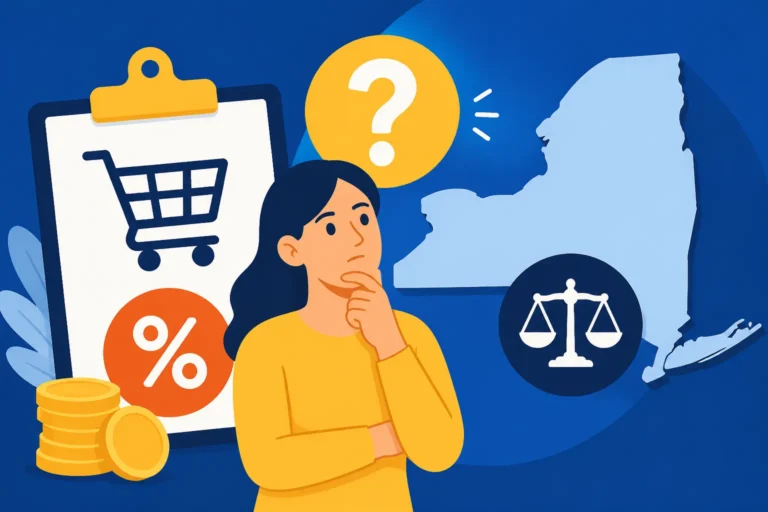
Navigating the labyrinthine world of sales tax can feel like a full-time job for any business owner, and few states add as many twists and turns as New York. Many online sellers and remote businesses find themselves constantly questioning whether they've crossed an invisible line, suddenly becoming responsible for collecting sales tax in the Empire State. This guide is here to shed light on New York's specific economic nexus threshold, helping you understand when and why you might need to register and comply.
Understanding New York's Economic Nexus Threshold
The concept of economic nexus became a nationwide game-changer after the 2018 South Dakota v. Wayfair Supreme Court decision. Before that, you generally only had to collect sales tax if you had a physical presence in a state. Now, states can require remote sellers to collect sales tax based solely on their economic activity within that state – think sales volume or transaction count. New York was quick to adapt its laws, establishing a threshold that, for many, is a dual hurdle, making it notoriously tricky.
The Dual Requirements: Sales and Transactions
Unlike many states that only consider a sales revenue threshold, New York insists on a two-pronged test. To establish economic nexus in New York, a remote seller must meet both criteria during the immediately preceding four sales tax quarters. This means it's not enough to hit a certain dollar amount; you also need to reach a specific number of individual transactions. This dual requirement can often catch smaller, high-value sellers by surprise, or conversely, high-volume, low-value sellers. It truly adds a layer of complexity that businesses operating in other states might not encounter.
For businesses looking to quickly understand if they've met the criteria, it's essential to keep accurate records of both gross sales into New York and the total number of individual sales transactions. Simply having a great year in terms of revenue might not trigger nexus if your transaction count is low, but a modest revenue combined with a high transaction volume could easily push you over the edge.
Breaking Down the $500,000 Sales Threshold
The first part of New York's economic nexus equation is the sales threshold: $500,000 in gross receipts from sales of tangible personal property and services delivered into New York. This isn't just about taxable sales; it includes all sales, even those that might ultimately be exempt. This distinction is crucial because a business might primarily sell non-taxable items but still hit the gross receipts threshold.
For example, imagine a company selling specialized industrial equipment. While each sale might be substantial and potentially exempt if sold for resale or manufacturing, the cumulative total of these sales still counts towards the $500,000 threshold. It’s not about how much sales tax you would have collected, but the total revenue generated from sales within the state. This means even if you're making sales to businesses with valid resale certificates, those sales still contribute to your overall economic nexus calculation. Keep a close eye on your total sales data, not just your taxable sales, when evaluating your New York exposure.
The Persistent 100-Transaction Rule
Here's where New York really stands out from many other states: it still maintains a transaction count threshold. Many states initially included both a sales and transaction threshold post-Wayfair but have since dropped the transaction count, finding it overly burdensome for small businesses. However, New York is one of the few that has retained it. To establish economic nexus, in addition to the $500,000 in gross sales, you must also have made more than 100 separate transactions of tangible personal property and services delivered into New York.
This means a seller could make, for instance, 101 sales to New York customers, each for $5,000, totaling $505,000 in sales. They would meet both the transaction count and the sales revenue thresholds, thus establishing nexus. Conversely, a seller could make only 50 sales, but each for $15,000, totaling $750,000. While they've exceeded the $500,000 sales threshold, they haven't met the "more than 100 transactions" requirement, and therefore, would not have economic nexus in New York. This dual requirement is what makes New York's rules particularly stringent and often confusing for businesses trying to track their obligations.
Who is Impacted by New York's Economic Nexus Rules?
The reach of New York's economic nexus rules extends far beyond large corporations. Small to medium-sized businesses, online retailers, and even those who thought they were exempt because of marketplace facilitator laws can find themselves unexpectedly falling under New York's sales tax umbrella. This reality can be quite a shock, especially for those just starting to expand their reach across state lines.
Online Sellers and E-commerce Businesses
If you're an online seller, whether you have your own e-commerce website or sell through platforms, New York's economic nexus rules are particularly relevant. Your digital storefront knows no physical boundaries, meaning sales can flow into New York from anywhere in the world. This often leads to situations where a small business in, say, California, suddenly finds itself hitting the New York thresholds without ever setting foot in the state. Tracking sales from your own website can be straightforward, but when you're selling across multiple platforms, aggregating that data to monitor your New York sales and transaction counts can become a real headache.
Consider a boutique clothing store based in Atlanta that sells unique apparel through its website. They might not have a huge presence in New York, but over the course of a year, if they sell 150 items totaling $510,000 to customers across New York City, Buffalo, Rochester, and other New York locations, they’ve clearly met both the dollar and transaction thresholds. Suddenly, a business with no physical footprint in New York is legally obligated to register for a Certificate of Authority and begin collecting New York sales tax. This is a common scenario that highlights why understanding these thresholds is so critical for remote sellers.
The Role of Marketplace Facilitators
Marketplace facilitator laws have significantly changed the sales tax landscape, often simplifying things for individual sellers. For instance, platforms like Amazon, eBay, and Etsy are generally considered "marketplace facilitators" in New York. This means they are responsible for calculating, collecting, and remitting sales tax on behalf of third-party sellers who sell through their platform to New York customers. This is fantastic news for many small sellers who rely solely on these platforms, as it shifts the compliance burden away from them.
However, it's vital to understand the nuances. If you sell only through a marketplace facilitator, you likely don't need to worry about New York's economic nexus threshold for those sales. But, if you also sell directly to customers through your own website, app, or other non-marketplace channels, those direct sales still count towards your economic nexus calculation. Even if Amazon handles all your sales tax obligations for your FBA business, your independent e-commerce store could still trigger nexus. It's a common misconception that simply selling on a major platform absolves you of all sales tax duties. Always separate your marketplace sales from your direct sales when assessing your economic nexus obligations. This is why tools that can differentiate between these sales channels are invaluable.
What to Do if You Meet the New York Threshold
Discovering you've hit New York's economic nexus threshold isn't a cause for panic, but it is a call to action. Ignoring the obligation can lead to significant penalties, so it's crucial to take the necessary steps to become compliant. This involves understanding the registration process, implementing proper collection practices, and ensuring you have a system in place for ongoing filing.
Registering for a Certificate of Authority
The first official step once you establish economic nexus in New York is to register with the New York Department of Taxation and Finance to obtain a Certificate of Authority. This is essentially your sales tax permit, granting you the legal authority to collect sales tax from your customers. The application typically requires detailed information about your business, including your legal name, federal employer identification number (EIN), business type, and the date you anticipate starting to collect sales tax.
The New York State Department of Taxation and Finance offers online registration, which can streamline the process. Be prepared to provide accurate information, as discrepancies can delay your application. Once registered, you'll be assigned a sales tax vendor registration number and a filing frequency (e.g., monthly, quarterly, or annually), which depends on your projected sales tax liability. It's important to complete this registration before you start collecting sales tax, though in cases where nexus is suddenly discovered, doing it promptly upon realization is key. Understanding How to Get a Sales Tax Permit by State can provide a broader context, but remember to follow New York's specific procedures.
Collecting and Remitting Sales Tax
Once you have your Certificate of Authority, you must begin collecting sales tax from all applicable sales made into New York. This means integrating the correct New York sales tax rates into your pricing or checkout system. New York has a statewide base sales tax rate, but it also has numerous local sales tax jurisdictions – counties and cities – that can add to that base rate. For instance, if you sell to a customer in New York City, the sales tax rate will include the statewide rate plus the local rates for NYC. Trying to manually keep up with these varied rates, especially across different ZIP codes, can be incredibly challenging. This is where a robust sales tax calculation solution becomes indispensable.
Your e-commerce platform or point-of-sale system will need to be configured to charge the correct combined state and local rates based on the customer's shipping address. Remember, the sales tax calculation is usually based on the destination of the goods or services. Once collected, these funds are held in trust for the state and must be remitted according to your assigned filing frequency. How to File a Sales Tax Return: Step by Step can offer general guidance, but you'll use the New York State Department of Taxation and Finance's online portal for filing your specific returns.
Ongoing Compliance and Automation
Maintaining sales tax compliance in New York, especially with its dual threshold and complex local rates, is an ongoing process. You'll need to continuously monitor your sales into the state to ensure you remain compliant, keep track of potential 2026 Sales Tax Rate Changes by State, and prepare to file your returns accurately and on time. Manually tracking your gross sales and transaction count, applying the correct tax rates for every sale, and then preparing and filing returns can consume an immense amount of time and resources, particularly for growing businesses.
This is why many businesses turn to sales tax automation software. Solutions like Avalara can integrate directly with your e-commerce platforms and accounting software, automatically calculating sales tax at the point of sale, tracking your nexus thresholds in real-time, and even preparing and filing your returns for you. Such tools drastically reduce the risk of errors and ensure you're always charging and remitting the correct amount. They can be particularly helpful for understanding specific thresholds like the Economic Nexus Threshold in New York ($500k + 100 Sales) and ensuring you don't miss any critical deadlines. For a broader look at available options, you might explore Best Sales Tax Compliance Software 2027.
What if You Were Supposed to Collect But Didn't?
It's a common fear among business owners: realizing you should have been collecting sales tax in New York but weren't. Perhaps you misunderstood the rules, or your business grew faster than your compliance efforts. In such cases, it's best to address the situation proactively. New York, like other states, has mechanisms for businesses to voluntarily come forward and rectify past non-compliance, often through a Voluntary Disclosure Agreement (VDA).
A VDA allows you to come clean about past sales tax liabilities, potentially reducing penalties and interest, and defining a lookback period for which you owe taxes. While it might seem daunting, it's usually a much better path than waiting for the state to discover your non-compliance during an audit. Seeking advice from a sales tax professional is highly recommended in these situations. They can help you navigate the process, calculate your potential liability, and submit a VDA application to the New York Department of Taxation and Finance on your behalf. Taking proactive steps can mitigate significant financial and legal consequences down the line.
| Economic Nexus Criteria | New York | Typical Single-Threshold State (e.g., California) |
|---|---|---|
| Sales Revenue Threshold | $500,000 (gross receipts) | $500,000 (gross receipts or taxable sales) |
| Transaction Count Threshold | More than 100 transactions | None |
| Lookback Period | Immediately preceding four sales tax quarters | Preceding or current calendar year |
| Key Differentiator | Requires both sales and transaction thresholds | Generally only requires sales threshold |
This table clearly illustrates the unique dual-threshold approach New York employs, highlighting why it's so important to track both your sales volume and your number of individual transactions into the state. For comprehensive information on how sales tax nexus works across the country, refer to our guide on Sales Tax Nexus Explained (Physical vs Economic). For a deeper dive into New York's specific rates, you can explore New York Sales Tax Rate (4% + Local).
Final Considerations for New York Sales Tax Nexus
Keeping up with sales tax obligations, especially with specific state rules like New York's, can be a major challenge for any business owner. The dynamic nature of e-commerce means that your nexus footprint can change quickly, making regular reviews of your sales data crucial.
It’s always a good idea to perform periodic "nexus checks" for states where you have significant sales volume, including New York. As your business grows and your customer base expands, you might find yourself crossing thresholds you never anticipated. Don't wait until tax season to discover you have a year's worth of uncollected sales tax on your hands. Services like Avalara can provide real-time nexus insights, alerting you if you’re approaching or have exceeded these critical thresholds. Regularly reviewing your sales data into New York, especially focusing on both the dollar amount and the transaction count, will help you stay ahead of your compliance responsibilities. Remember, proactive management of sales tax nexus is far less stressful and costly than reactive problem-solving. Understanding Sales Tax for Online Sellers: Complete Guide can help you develop a robust strategy for multi-state compliance.
Disclaimer
The information provided in this guide is for general informational purposes only and does not constitute tax, legal, or accounting advice. Sales tax laws are complex and subject to change. We recommend consulting with a qualified tax professional or financial advisor for advice tailored to your specific business situation.