Drop Shipping Sales Tax Explained
Drop shipping is a fantastic business model that promises freedom and flexibility, but let's be real, the sales tax implications can feel like trying to solve a Rubik's Cube blindfolded. Many online entrepreneurs get tangled up in the nuances of nexus, collection, and remittance when operating this three-party dance. This comprehensive guide is here to untangle that knot, breaking down everything you need to know about sales tax when you're drop shipping, from who's responsible to how to stay compliant.
Understanding the Drop Shipping Model and Why It's Tricky for Sales Tax
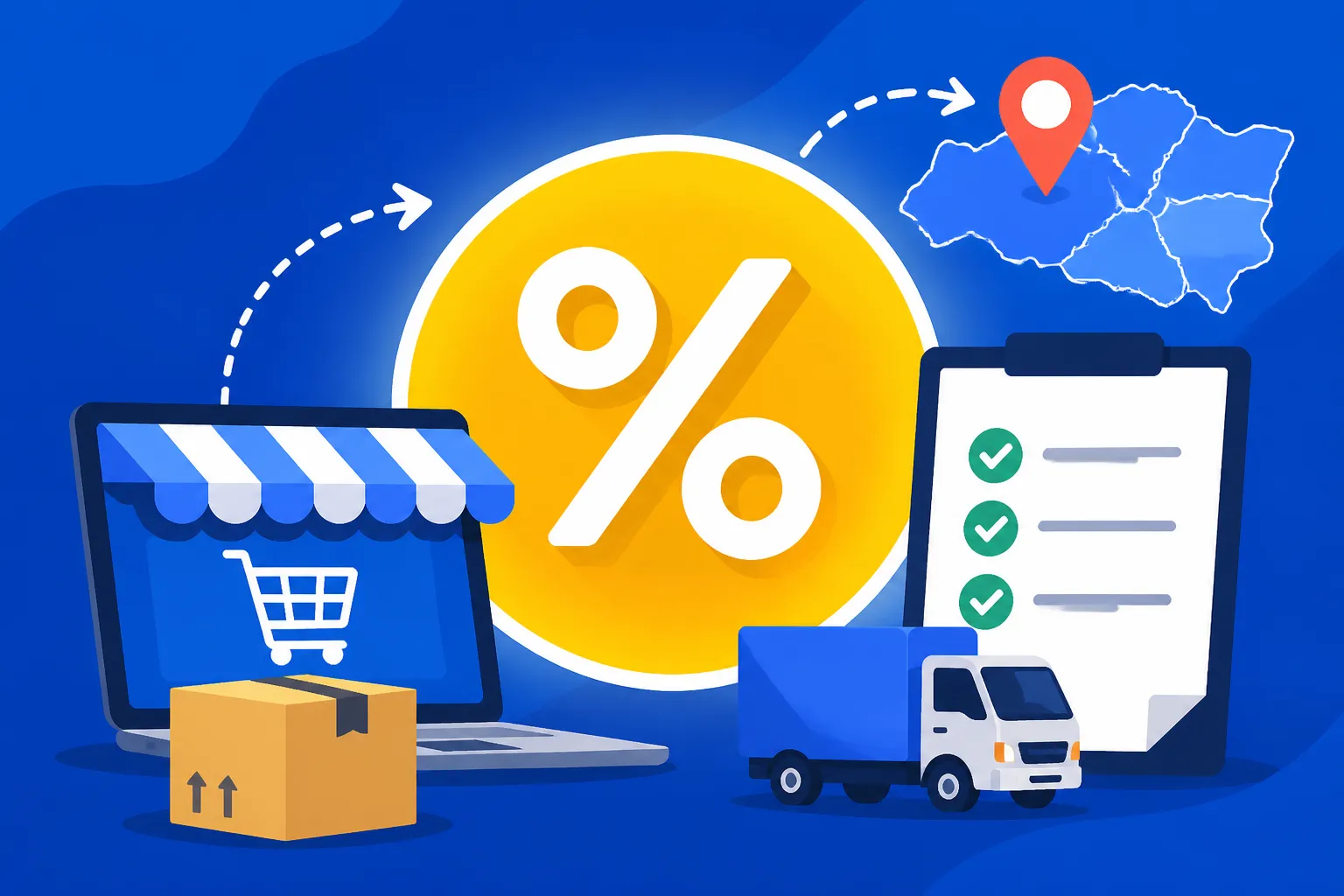
The appeal of drop shipping is undeniable: sell products without ever holding inventory. You list an item, a customer buys it, you forward the order to a third-party supplier who then ships it directly to your customer. Simple, right? In practice, this hands-off approach to inventory creates a unique set of challenges when it comes to sales tax, primarily because multiple parties are involved across different geographical locations.
The Basic Mechanics of Drop Shipping
At its core, drop shipping involves three main entities: the customer, the retailer (that's you!), and the supplier. Imagine Sarah, who runs an online boutique selling custom-designed phone cases. When a customer, Mark, orders a case from Sarah's website, Sarah doesn't have a shelf full of cases in her garage. Instead, she sends Mark's order details and payment to her supplier, a manufacturer in another state. The manufacturer then prints the design on the case and ships it directly to Mark. Sarah handles the marketing, the customer service, and the profit margin, while the supplier handles the product, fulfillment, and shipping. This streamlined process is a dream for minimizing overhead and scaling quickly, but it also layers complexity onto sales tax obligations.
This model fundamentally shifts traditional retail responsibilities. In a typical transaction, a retailer buys inventory, stores it, and then sells it directly to the customer, collecting sales tax if they have nexus in the customer's state. With drop shipping, the "inventory" never truly touches the retailer's hands, and the physical flow of goods is from a third party (the supplier) to the end consumer. This lack of physical interaction with the product you're selling creates ambiguity about who is responsible for what, especially concerning sales tax, which is inherently tied to the point of sale and the movement of goods. Understanding this fundamental difference is the first step toward deciphering your sales tax duties.
Why Sales Tax Becomes a Three-Party Puzzle
Sales tax in a drop shipping scenario isn't a simple "retailer collects from customer" transaction. It's a three-party puzzle where the tax implications can shift depending on where each party is located and their sales volume. You, as the retailer, are making a sale to the end consumer. Your supplier is making a sale to you (the retailer). Both transactions could potentially be subject to sales tax, but usually, the transaction between you and your supplier is exempt because you're buying for resale. The real complexity lies in the sale from you to your customer.
The key challenge comes down to determining "nexus" for both you and your supplier in the customer's state. Nexus, for the uninitiated, is a fancy way of saying a significant enough presence to be required to collect and remit sales tax. If you have nexus in the customer's state, you're generally responsible. If you don't, but your supplier does, things get even more complicated. The state may then look to the supplier to collect. This tangled web means you can't just assume your supplier is handling everything, nor can you assume you're off the hook because you don't touch the product. Every state has its own rules, and they don't always align perfectly with the fluid nature of drop shipping, leading to potential headaches if not managed proactively.
Unpacking Sales Tax Nexus for Drop Shippers
One of the biggest hurdles for any online seller, especially drop shippers, is understanding sales tax nexus. This concept dictates where you're legally required to collect sales tax. For drop shippers, it's not just about your own operations; it's also about your supplier's presence and, sometimes, even where your products are stored. Missing this crucial detail can lead to significant penalties down the line. It's not enough to simply know what nexus is; you need to know how it applies to all parties in your specific drop shipping model. If you're scratching your head, you're not alone – this is where most of the confusion arises.
Physical Nexus Triggers for Drop Shippers
Even though you might never physically touch the products you sell, you can still establish physical nexus in a state. This traditional form of nexus arises from having a substantial physical presence. For a drop shipper, common physical nexus triggers include having an office or home office in a state, storing inventory in a warehouse (even if it's not your warehouse, but one you use), having employees or independent contractors working on your behalf in a state, or even making deliveries in your own vehicles. Think about a scenario where your supplier uses a warehouse in California to fulfill orders for your customers. If that warehouse is considered "your" inventory due to your business relationship, even temporarily, it could create nexus for you in California.
Perhaps one of the most common and often overlooked physical nexus triggers for drop shippers, especially those selling on major platforms, is inventory stored in third-party logistics (3PL) warehouses. If you're utilizing services like Amazon FBA, for example, your inventory could be spread across numerous states. Even if you're not directly managing those warehouses, the presence of your goods in those facilities can trigger nexus in those states. This means that if an Amazon FBA warehouse is in Tennessee and your products are stored there, you might have a physical nexus in Tennessee, regardless of where your home office is. This is why understanding "Amazon FBA Sales Tax Nexus Explained" is so crucial for many drop shippers. It's not just about your direct footprint, but the indirect one created by your supply chain.
Economic Nexus and Its Impact on Your Business
Beyond physical presence, the Supreme Court's 2018 South Dakota v. Wayfair decision fundamentally changed the landscape of sales tax. Now, businesses can establish "economic nexus" in a state simply by meeting certain sales thresholds, regardless of whether they have any physical presence there. Most states have adopted economic nexus laws, typically requiring a business to collect sales tax if their sales into the state exceed a certain dollar amount (e.g., $100,000 in gross sales) or a number of transactions (e.g., 200 separate transactions, though many states are dropping this transaction count). For example, California's economic nexus threshold is $500,000 in sales, while many other states stick to the $100,000 mark.
As a drop shipper, monitoring your sales into every state is absolutely critical to avoid an unexpected tax liability. Imagine you're selling trendy t-shirts. You might easily hit the $100,000 sales threshold in Texas or Florida through online orders, even if your office is in Oregon (a state with no sales tax). Once you cross that threshold in a state, you're generally required to register for a sales tax permit and start collecting sales tax from customers in that state. This applies to your sales as the retailer to the end customer. Keeping track of these thresholds across all states where your customers reside is a significant compliance challenge, and it's a primary reason why many drop shippers feel overwhelmed. You can learn more in our guide on "Economic Nexus by State 2026: Thresholds Guide".
The Role of Inventory Location in Nexus Determination
The location of the inventory that your supplier ships directly to your customers plays a surprisingly significant role in your nexus obligations. While the products might physically belong to your supplier, states often view inventory stored within their borders as a nexus trigger for the entity whose sales generate the movement of that inventory. For drop shippers, this means if your supplier has warehouses in multiple states, and they are using those facilities to ship products on your behalf, your business could potentially establish physical nexus in those states. This is especially true if you have a direct contractual relationship concerning that inventory.
Consider a situation where your main supplier uses distribution centers in Georgia, Pennsylvania, and Arizona. Even if your company is based in New York and has no other physical presence, if orders from your customers are consistently fulfilled from these supplier warehouses, some states might argue that you have nexus due to the presence of your products (even if transient) within their borders. This is a nuanced area, and states interpret "inventory nexus" differently. It’s not always black and white, and often depends on the specifics of your agreement with your supplier and the state’s exact definitions. This adds another layer of complexity beyond just your own economic sales or direct physical footprint, making it vital to understand your entire supply chain's physical presence.
The Three Key Players and Their Sales Tax Responsibilities
In the drop shipping triangle, each party has a distinct role, and with that role comes specific sales tax responsibilities. Misunderstanding these roles or assuming another party is handling a particular aspect can lead to significant compliance issues, including fines and back taxes. It's crucial for you, the retailer, to clearly define these responsibilities and ensure everyone in the chain is aware of their part in the sales tax collection and remittance process. Let's break down who does what in this intricate dance.
The End Customer (Consumer)
The end customer's role in sales tax is generally straightforward: they are the ones who ultimately pay the sales tax. When Mark buys that custom phone case from Sarah's online store, he expects to pay the appropriate sales tax if Sarah is required to collect it in his state. The customer doesn't have any collection or remittance responsibilities; their job is simply to pay the tax passed on to them by the seller. However, if the retailer fails to collect sales tax when they should have, the customer might technically owe "use tax" to their state.
Use tax is essentially sales tax on purchases where sales tax wasn't collected by the seller. For individual consumers, this is rarely enforced unless it's a large purchase like a car or boat. For businesses, however, use tax is a much more common and important concept to manage, especially when purchasing items for their own use from out-of-state vendors who don't collect sales tax. So while the end consumer's direct responsibility is minimal, the system is designed to ensure that the tax is paid one way or another, either at the point of sale as sales tax or by the buyer later as use tax. This makes the retailer's role in correct collection all the more important.
The Retailer (You, the Drop Shipper)
As the online retailer, you sit at the heart of the sales tax puzzle. Your primary responsibility is to determine where you have nexus (both physical and economic) and, if you do, to collect sales tax from your customers in those states. This means registering for a sales tax permit in every state where you've established nexus. Once registered, you must apply the correct sales tax rate (which often includes state, county, and city taxes, and can vary based on the customer's exact location) to taxable sales. Then, you remit those collected taxes to the appropriate state tax authority by their due dates. This entire process can be incredibly complex due to the varying rates and rules across thousands of jurisdictions.
Furthermore, as the retailer, you're responsible for managing the sales tax implications of your own purchases from your supplier. Since you're buying goods for resale, these purchases should generally be exempt from sales tax. To ensure this, you'll need to provide your supplier with a valid resale certificate for each state where the supplier has nexus and charges you sales tax. Without this certificate, your supplier might incorrectly charge you sales tax, eating into your profit margins or creating a headache for you to recover the tax later. This dual responsibility – collecting from customers and ensuring exemption from suppliers – is what makes the retailer's sales tax role particularly challenging in drop shipping.
The Supplier (Wholesaler/Manufacturer)
The supplier's role in the drop shipping sales tax equation depends heavily on whether they have nexus in the state where the end customer is located and whether the retailer has provided them with a valid resale certificate. In the most common scenario, the retailer provides the supplier with a resale certificate. This tells the supplier that the retailer is buying the goods tax-free for the purpose of reselling them. In this case, the supplier generally does not charge the retailer sales tax on their wholesale purchase. The supplier's primary responsibility is then limited to shipping the product and ensuring they have a valid resale certificate on file from the retailer.
However, if the retailer does not have nexus in the customer's state, but the supplier does, things can get tricky. Some states, like California, may impose a "drop shipment rule" where the supplier is then considered the seller for sales tax purposes and is obligated to collect tax from the retailer (even though the retailer plans to resell the item). The supplier may then collect sales tax from you, the retailer, based on the customer's shipping address. In such cases, the supplier will typically apply the sales tax rate of the customer's location. This is one of the more confusing aspects, as it means the supplier might be collecting tax for a sale that, from their perspective, is B2B. Clear communication and understanding of state-specific rules are paramount to ensure the tax is collected correctly and not double-taxed.
Navigating Sales Tax Collection in Drop Shipping Scenarios
Understanding nexus is one thing, but knowing exactly who collects the sales tax from the end customer and under what circumstances is where the rubber meets the road. Because drop shipping involves three parties and products crossing state lines, the sales tax collection responsibility can shift, creating a common source of anxiety for online sellers. Let's break down the most common scenarios you'll encounter and how to handle them.
When the Retailer Has Nexus in the Customer's State
This is perhaps the most straightforward scenario, or at least the one that most closely resembles traditional e-commerce. If you, the drop shipping retailer, have established either physical or economic nexus in the state where your customer resides, then you are responsible for collecting sales tax from that customer. It doesn't matter where your supplier is located or if they also have nexus in that state; your nexus obligates you to collect. For example, if your online store based in Nevada sells a product to a customer in Texas, and you've met Texas's economic nexus threshold of $500,000 in sales, then you must collect the appropriate Texas sales tax from that customer.
To fulfill this obligation, you'll need to be registered for a sales tax permit in Texas. When the customer makes their purchase, your e-commerce platform or sales tax solution should automatically calculate the correct sales tax rate based on the customer's shipping address. You then collect this amount from the customer and later remit it to the Texas Comptroller of Public Accounts. In this scenario, your transaction with your supplier should still be tax-exempt because you're buying for resale. You'd provide your supplier with a valid "Resale Certificate by State: Complete Guide" for Texas, ensuring they don't charge you sales tax on the wholesale purchase. This prevents double taxation and keeps your profit margins intact.
When the Retailer Does NOT Have Nexus in the Customer's State (and the Supplier Does)
This is where drop shipping sales tax can get particularly perplexing, leading to what's often referred to as "drop shipment rules" or "double nexus" situations. Imagine you, a retailer in Montana (a state without sales tax), sell an item to a customer in Illinois. You don't have nexus in Illinois. However, your supplier, who ships the item directly to your customer, does have nexus in Illinois because they have a warehouse there. In this situation, some states will impose a duty on the supplier to collect sales tax.
For example, states like California and Florida have specific "drop shipment rules" that state if the retailer is not registered to collect sales tax in the state, but the drop shipper (supplier) is, then the supplier is responsible for collecting sales tax from the retailer. The supplier would then charge you, the retailer, sales tax on the wholesale cost of the item, using the sales tax rate of the customer's destination in Illinois. You, in turn, may or may not be able to pass that cost onto your customer, depending on your pricing model and whether you're allowed to collect tax without having nexus yourself. This scenario highlights the importance of open communication with your suppliers about their nexus footprint and the specific drop shipment rules in various states. If you're a drop shipper, it's wise to ask your suppliers where they have nexus and if they will charge you tax on drop shipments into those states.
The Intricacies of Resale Certificates in Drop Shipping
Resale certificates are your best friend as a drop shipper. These vital documents allow you to purchase goods from your supplier without paying sales tax on the wholesale transaction, because you intend to resell them to an end consumer. This avoids the problem of "double taxation," where sales tax would be levied twice on the same product – once when you buy from your supplier, and again when your customer buys from you. For every state where your supplier has nexus and would otherwise charge you sales tax, you need to provide them with a valid resale certificate issued by that state (or a state that accepts reciprocal certificates).
The process generally involves registering for a sales tax permit in a state where you have nexus, which then allows you to obtain a resale certificate from that state's taxing authority. You then present this certificate to your supplier. For instance, if your supplier operates out of Texas and you've established nexus there, you'd register for a Texas sales tax permit, obtain a Texas resale certificate (Form 01-339), and provide it to your supplier. They would then know not to charge you sales tax on orders shipped to Texas customers. Without these certificates, suppliers are legally obligated to charge you sales tax, which will directly impact your profit margins. It's a critical piece of the compliance puzzle that too many drop shippers overlook, often learning the hard way when their supplier invoices them for unexpected taxes.
Common Drop Shipping Sales Tax Situations and Solutions
The variability in sales tax laws from state to state, coupled with the unique three-party nature of drop shipping, means there's no one-size-fits-all solution. You'll encounter different scenarios depending on where you, your supplier, and your customer are located. Understanding these common situations is crucial for developing a robust sales tax strategy and staying out of trouble with state tax authorities. Let's delve into how different geographical relationships impact your responsibilities.
Intra-State Drop Shipping (Within the Same State)
When all three parties – you (the retailer), your supplier, and your customer – are located within the same state, the sales tax rules are often simpler, though not without their own nuances. In this scenario, if you have nexus in that state, you are unequivocally responsible for collecting sales tax from your customer. For instance, if you're a California-based retailer, your supplier is also in California, and your customer is in Los Angeles, California, you'll need to collect California sales tax from your customer. You would also provide your California resale certificate to your California supplier so they don't charge you tax on the wholesale purchase.
The key challenge here often comes down to local sales tax rates. Even within a single state, sales tax rates can vary significantly by county, city, and special district. For example, California has a base statewide rate, but then there are numerous district taxes that apply. A sale to a customer in Los Angeles Sales Tax Rate Explained will have a different combined rate than a sale to a customer in Sacramento. You need to ensure your system can accurately calculate these hyper-local rates. This makes having an accurate sales tax calculation tool invaluable, even for what seems like a simple, single-state transaction.
Inter-State Drop Shipping (Across State Lines)
This is the most common and complex scenario for drop shippers, involving transactions where parties are in different states. The sales tax responsibility hinges on where you and your supplier have nexus, relative to the customer's location.
Let's break it down:
- You have nexus in the customer's state, your supplier does not: You collect sales tax from the customer. You provide your resale certificate to your supplier, and they don't charge you tax. This is ideal, as you handle all customer-facing tax collection.
- You do NOT have nexus in the customer's state, but your supplier DOES: This is the tricky part with "drop shipment rules." As discussed earlier, your supplier might charge you sales tax on the wholesale cost based on the customer's destination rate, as if they were making the retail sale. You would then need to decide if you can absorb that cost or pass it on to your customer, and whether you, as a non-nexus seller, can legally collect that tax from your customer. In some cases, if the supplier collects the tax, you might still need to figure out how to report it on your end, or your supplier takes on the full reporting burden. This varies significantly by state.
- Neither you nor your supplier has nexus in the customer's state: In this increasingly rare scenario (due to economic nexus laws), theoretically, no sales tax would be collected by either you or your supplier. The burden would then fall to the customer to self-report and pay use tax, which, as we mentioned, rarely happens for individual purchases. However, with virtually all states now having economic nexus, it's highly likely that either you or your supplier will have nexus somewhere along the chain for most transactions.
Navigating these cross-state complexities requires diligent tracking of both your own sales activity and an understanding of your supplier's nexus footprint. It's a logistical challenge that underscores the need for robust sales tax management.
Handling Marketplace Facilitator Rules
Many drop shippers rely on online marketplaces like Amazon, Etsy, eBay, or Walmart to reach their customers. This introduces a significant simplification: marketplace facilitator laws. Under these laws, the marketplace facilitator (e.g., Amazon) is generally responsible for calculating, collecting, and remitting sales tax on behalf of third-party sellers (like you) for sales made through their platform. This means if a customer buys your drop-shipped item on Amazon, Amazon will typically handle the sales tax, even if you or your supplier has nexus in that state.
This is a huge relief for drop shippers, as it drastically reduces their compliance burden for marketplace sales. However, it's critical to understand that this only applies to sales made through the marketplace. If you also sell products through your own independent website (e.g., a Shopify store), you are still solely responsible for sales tax collection and remittance on those direct sales. In such cases, you need to track your own nexus thresholds and obligations for your direct-to-consumer sales. You can find more details in our guide on "Marketplace Facilitator Laws by State". So, while marketplaces simplify things, they don't eliminate your sales tax responsibilities entirely if you sell through multiple channels.
Registering, Collecting, and Remitting Sales Tax as a Drop Shipper
Once you've wrapped your head around nexus and who's responsible in various scenarios, the next practical steps involve actually getting compliant. This means registering with state tax authorities, implementing a system to calculate and collect the correct tax, and then submitting those taxes on time. This isn't just about understanding the theory; it's about the nitty-gritty operational details that keep your business running smoothly and legally.
Getting Your Sales Tax Permit in the Right States
Before you can collect a single penny of sales tax, you need to be legally authorized to do so. This means registering for a sales tax permit (also called a seller's permit, vendor's license, or certificate of authority, depending on the state) in every state where you've established nexus. This is a non-negotiable step. Operating without a permit when you have nexus is a recipe for serious trouble, including back taxes, penalties, and interest. Each state has its own application process, which usually involves applying through their Department of Revenue or equivalent tax agency website.
The application typically requires information about your business, such as your Employer Identification Number (EIN), business name and address, type of business entity, and estimated sales volume. While the process is generally straightforward for each state, managing applications for multiple states can be time-consuming. You can find detailed guides like "How to Get a Sales Tax Permit by State" to walk you through the specifics. Remember, obtaining a permit confirms your obligation and allows you to properly collect and remit taxes, as well as to acquire resale certificates for your wholesale purchases, protecting your profit margins.
Calculating and Collecting the Correct Rates
Once registered, your next big challenge is accurately calculating and collecting sales tax on every sale you make to customers in your nexus states. This is often the most frustrating part for businesses because sales tax rates are not uniform. They vary not only by state but often by county, city, and even specific special taxing districts within those cities. Moreover, the taxability of products can also differ; for instance, clothing might be exempt up to a certain price point in some states but fully taxable in others.
For example, if you have nexus in Washington, a sale to a customer in Seattle will involve a different combined sales tax rate (which can be as high as 10.55% in 2026) than a sale to a customer in Spokane. Manually keeping track of these thousands of constantly changing rates is virtually impossible for a busy drop shipper. This is where modern e-commerce platforms and dedicated sales tax software come into play. Solutions like Avalara integrate directly with your online store (Shopify, WooCommerce, etc.) to automatically calculate the precise sales tax rate based on the customer's shipping address and the taxability of the product, ensuring you collect the correct amount every time. This automation is a game-changer for maintaining compliance and saving countless hours.
Filing Your Sales Tax Returns
Collecting sales tax is only half the battle; the other half is remitting it to the proper state authorities. This involves filing sales tax returns. States assign filing frequencies (e.g., monthly, quarterly, annually) based on your sales volume. High-volume sellers typically file more frequently. Each state has specific due dates, and missing them can result in penalties and interest. For example, many states require returns to be filed by the 20th of the month following the reporting period, but this can vary significantly.
The actual filing process involves reporting your total sales, taxable sales, and the amount of sales tax collected. Most states now offer online filing portals, making the process relatively streamlined. However, managing returns for multiple states, each with its own forms and deadlines, can still be a significant administrative burden. This is another area where sales tax automation software shines, by generating ready-to-file returns or even filing them on your behalf. Ensuring accurate and timely filing is critical for maintaining good standing with state tax departments and avoiding future audits or penalties. For a more detailed look, check out our guide on "How to File a Sales Tax Return: Step by Step".
Tools and Strategies to Simplify Drop Shipping Sales Tax
Feeling a bit overwhelmed? You're not alone. The complexities of sales tax in the drop shipping world are formidable. The good news is that you don't have to navigate it all manually. There are robust tools and smart strategies available that can significantly lighten your compliance load, allowing you to focus on growing your business rather than stressing over tax forms. Leveraging technology and adopting best practices are key to sustainable success in drop shipping.
Leveraging Sales Tax Automation Software
For drop shippers dealing with sales across multiple states, sales tax automation software is less of a luxury and more of a necessity. Trying to manually track economic nexus thresholds for every state, constantly updated sales tax rates for thousands of jurisdictions, and individual filing deadlines is a monumental task that is prone to error. Sales tax software integrates with your e-commerce platform to automate virtually the entire process. It can:
- Determine Nexus: Help you identify where you've established economic or physical nexus.
- Calculate Rates: Automatically apply the correct sales tax rate (state, county, city, district) based on the customer's shipping address and the taxability rules of the product.
- Manage Resale Certificates: Store and manage resale certificates provided by you to your suppliers, and from your customers (if applicable) to you.
- Prepare Returns: Aggregate your sales data and generate pre-filled sales tax returns for each state.
- File Returns: Some services even offer to file the returns and remit the collected taxes on your behalf.
This kind of automation frees up immense amounts of time and significantly reduces the risk of errors, penalties, and audits. While there are several players in this space, Avalara is a well-known provider offering comprehensive solutions for businesses of all sizes, making it a valuable tool for any serious drop shipper. For a deeper dive into available solutions, our guide on "Best Sales Tax Compliance Software 2026" can help you choose the right fit for your business.
Best Practices for Maintaining Compliance
Beyond investing in technology, adopting certain best practices can further solidify your sales tax compliance as a drop shipper. These strategies are about proactive management and clear communication across your business operations.
One crucial best practice is regularly reviewing your nexus footprint. Economic nexus thresholds can be met quickly as your sales grow, and state laws can change (for example, states sometimes drop transaction count thresholds or adjust dollar amounts). Make it a point to review your sales into every state at least quarterly, if not monthly, to identify new nexus obligations. Staying ahead of the curve means you can register for permits before you're legally required to collect, avoiding retroactive penalties.
Another critical strategy involves maintaining clear communication with your suppliers. Understand their nexus profile and how they handle sales tax on drop shipments into various states. If a supplier has nexus in a state where your customer is located, and they are charging you sales tax due to drop shipment rules, ensure you understand why and that you have all the necessary documentation. Conversely, always provide your suppliers with valid resale certificates for any states where you both have nexus and where you are buying for resale. This prevents unnecessary charges on your wholesale purchases. Finally, keep meticulous records of all sales, taxes collected, and remittances. Should you ever face an audit, comprehensive records are your strongest defense. Platforms like Avalara can help automate this record-keeping, creating an audit trail that gives you peace of mind.
| Sales Tax Scenario | Retailer (You) Nexus? | Supplier Nexus? | Customer Location | Who Collects from Customer? | What Tax Documents Needed? |
|---|---|---|---|---|---|
| Scenario 1: | Yes (State A) | No | State A | Retailer (You) | Retailer needs Sales Tax Permit in State A. |
| Scenario 2: | Yes (State A) | Yes (State A) | State A | Retailer (You) | Retailer needs Sales Tax Permit in State A. Retailer provides Resale Certificate to Supplier. |
| Scenario 3: | No | Yes (State A) | State A | Supplier (often charges Retailer) | Retailer may pay tax to Supplier. Supplier needs Sales Tax Permit in State A. |
| Scenario 4: | Yes (State A) | Yes (State B) | State A | Retailer (You) | Retailer needs Sales Tax Permit in State A. Retailer provides Resale Certificate to Supplier. |
| Scenario 5: | No | No | State A | Neither (Customer owes Use Tax) | N/A (Retailer may face future nexus) |
| Scenario 6: | On Marketplace | Irrelevant | Any State | Marketplace Facilitator | N/A (for marketplace sales) |
This table provides a simplified overview. State-specific drop shipment rules and product taxability can add further layers of complexity. Always verify with current state laws.
Disclaimer
Please remember that this guide is for informational purposes only and does not constitute professional tax or legal advice. Sales tax laws are complex, constantly evolving, and vary significantly by state and even local jurisdiction. While we strive to provide accurate and up-to-date information, individual circumstances differ, and specific situations may require expert consultation. We strongly recommend consulting with a qualified tax professional or legal advisor to address your specific sales tax obligations and ensure full compliance for your drop shipping business.