Do I Need to Collect Sales Tax for Online Sales?
Oh, the wild, wild west of online sales and sales tax! If you're running an online business, whether it's a small Etsy shop or a booming e-commerce site, you've probably felt that knot of anxiety in your stomach wondering if you're actually collecting sales tax correctly – or if you even should be collecting it. It’s a thorny issue that keeps many entrepreneurs up at night. This guide is here to untangle that complexity, explaining exactly when and how you need to collect sales tax for your online sales, so you can breathe a little easier.
Understanding Sales Tax Nexus: The Foundation of Your Obligation
Before you can even think about collecting sales tax, you need to understand the concept of "nexus." In plain language, nexus is simply a fancy way of saying a connection or presence in a state that makes your business legally obligated to collect sales tax there. For years, this was relatively straightforward, but the digital age and a landmark Supreme Court case changed everything. Without nexus, you generally don't have to collect sales tax. With it, you absolutely do.
Physical Presence Nexus: The Old Standard
Historically, nexus was all about having a physical presence in a state. This was easy enough to understand for brick-and-mortar stores. If you had a shop in Arizona, you collected sales tax from customers in Arizona. But for online sellers, it could get a little trickier, even before the big changes.
Think about it:
- An office or retail store: This is the most obvious one. If your business has a physical location where you conduct operations or sell products directly, you have nexus.
- Employees: Having even one employee, agent, or representative working in a state, even remotely, can create nexus. So, if you hire a customer service rep in Florida, you might have nexus there.
- Warehouses or inventory: This is a big one for many online sellers, especially those using fulfillment services. If you store your products in a warehouse in a state, even if it's a third-party warehouse, you likely have physical nexus there. This is a common situation for sellers using Amazon FBA, for example, as their inventory might be spread across multiple states. You might want to dive deeper into the nuances of Sales Tax Nexus Explained Physical vs Economic to grasp the full scope.
- Trade show presence: Even temporarily setting up a booth to sell products at a trade show or craft fair in a state can establish a temporary nexus, obligating you to collect sales tax for the duration of that presence.
The key here is that a physical footprint, however small or temporary, was traditionally the trigger. This made things relatively simple for pure online sellers who didn't have any physical ties outside their home state. But then came the internet, and states quickly realized they were missing out on a huge chunk of potential revenue.
Economic Nexus: The Modern Challenge for Online Sellers
Enter economic nexus, the game-changer for online businesses. The internet made it possible for businesses to have a significant economic impact in a state without ever setting foot there. States began to argue that if you were selling enough products into their state, you should be collecting sales tax, regardless of physical presence. This concept was largely theoretical and legally shaky until a crucial Supreme Court decision.
Economic nexus laws generally state that if your sales into a particular state (or the number of transactions) exceed a certain threshold within a given period, you've established nexus. It doesn't matter if you have a warehouse, an employee, or even a P.O. box there. Your sales volume alone creates the "connection." This is the primary way most online sellers find themselves needing to collect sales tax in states where they don't reside. It can be a real headache trying to track these varied thresholds across the country, making sales tax automation solutions incredibly appealing for many.
The Landmark Wayfair Decision and Its Ripple Effects
The entire landscape of sales tax for online sellers shifted dramatically after the 2018 Supreme Court ruling in South Dakota v. Wayfair, Inc. This wasn't just some minor tweak; it completely redefined sales tax obligations for businesses selling across state lines. Before Wayfair, the idea of "physical presence" was king. After Wayfair, states gained the power to enforce economic nexus laws.
Sales Tax Before Wayfair: Physical Presence Only
For decades, the legal precedent for sales tax collection was rooted in the 1992 Quill Corp. v. North Dakota Supreme Court case. This ruling established that a business only had to collect sales tax in states where it had a physical presence. This meant if your business was based in Oregon (a state with no sales tax) and you sold products online to customers in California, you generally didn't have to collect California sales tax unless you had a physical tie to California – like an office, an employee, or inventory there.
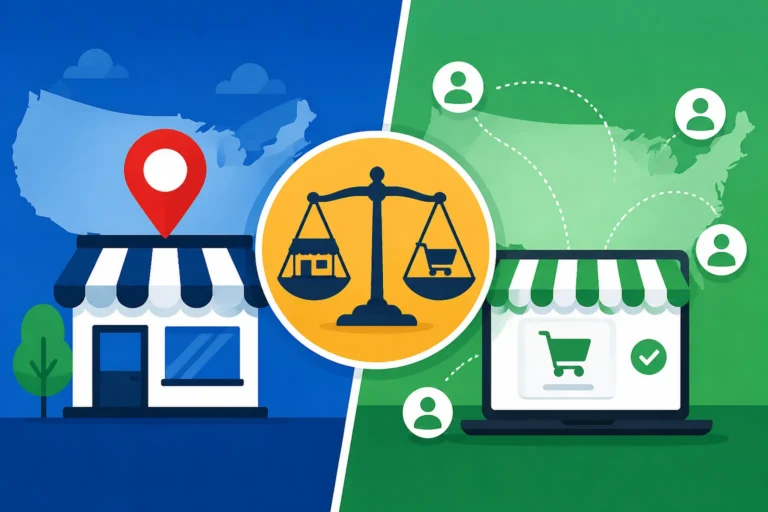
This "physical presence" rule made it much simpler for many online-only retailers. They only needed to worry about their home state (and any others where they had clear physical ties). This system, however, was seen by many states as increasingly unfair and financially unsustainable. Local brick-and-mortar stores were at a perceived disadvantage, as they had to collect sales tax, while many out-of-state online retailers did not. This led to a significant loss of potential revenue for states as e-commerce grew exponentially.
How Wayfair Changed Everything for Online Businesses
The South Dakota v. Wayfair, Inc. decision overturned the decades-old Quill precedent. The Supreme Court ruled that a state could indeed require businesses to collect sales tax even if they had no physical presence, as long as they had a significant economic presence. This opened the floodgates, allowing states to enact and enforce their own "economic nexus" laws.
The implications for online sellers were massive:
- No more "physical presence" shield: Suddenly, simply operating out of a single state with no physical ties elsewhere wasn't enough to avoid sales tax obligations in other states.
- New compliance burden: Online sellers, large and small, now had to monitor their sales activity in every state to determine if they met economic nexus thresholds. If they did, they would need to register for a sales tax permit, collect sales tax, and remit it to that state. This was a monumental shift that put a heavy compliance burden on businesses, especially small to medium-sized ones.
- Widespread adoption of economic nexus laws: Almost immediately after the Wayfair decision, states began implementing their own economic nexus rules. While most states adopted similar thresholds, there are still crucial differences that make compliance complex. Understanding South Dakota v. Wayfair What It Means for Sellers is truly foundational for any modern online business.
This decision essentially leveled the playing field between online and brick-and-mortar retailers, but it also introduced a new layer of complexity that has fundamentally changed how online businesses operate regarding sales tax.
Decoding Economic Nexus Thresholds
After the Wayfair decision, pretty much every state that imposes a sales tax (which is almost all of them, except Alaska, Delaware, Montana, New Hampshire, and Oregon) jumped on board with their own economic nexus rules. This is where things get truly complicated for online sellers because these thresholds aren't uniform. You can't just assume one rule applies everywhere.
The Most Common Thresholds: Sales Volume and Transaction Count
Most states base their economic nexus thresholds on one or both of these criteria:
- Sales Volume: This is typically measured as a gross revenue figure. A common threshold is $100,000 in gross sales into the state during the current or previous calendar year. So, if your business sells $100,001 worth of goods to customers in, say, New York, even if you're based in a different state, you've likely met New York's economic nexus threshold.
- Transaction Count: Many states initially included a transaction count threshold, usually 200 separate transactions into the state. This meant even if you had many small sales that didn't hit the revenue threshold, you could still trigger nexus. Imagine selling 200 handmade keychains at $5 each. That's only $1,000 in sales, but it would have triggered nexus in many states under the 200-transaction rule.
However, many states have since recognized that the 200-transaction threshold could disproportionately affect small businesses or those selling low-cost items, making compliance an undue burden. As a result, several states have moved to eliminate or raise this transaction count, focusing solely on the sales volume threshold. It's really helpful to know Which States Dropped the 200-Transaction Threshold? to keep up with these changes.
State-Specific Variations and Nuances
While $100,000 in sales is a common baseline, it's far from universal. Many states have their own unique twists. Here are a few examples that highlight the diversity:
- California: California, the largest state economy, has a much higher threshold: $500,000 in gross sales. This is a significant difference that can catch some businesses off guard if they assume the $100,000 rule applies everywhere. For more details on this, check out Economic Nexus Threshold in California.
- Texas: Similar to California, Texas also sets its economic nexus threshold at $500,000 in gross sales into the state during the preceding 12 calendar months. Understanding Economic Nexus Threshold in Texas can be crucial for businesses with a significant customer base there.
- New York: New York also uses a $500,000 gross receipts threshold, but with an additional nuance: it also requires 100 sales transactions into the state during the current calendar year. This means you could hit the transaction count before the dollar amount.
- Illinois: Illinois, like many states, currently uses the $100,000 in sales or 200 transactions threshold.
It's not just the numbers that vary; the period for calculation can also differ (e.g., current calendar year, preceding 12 months, or previous calendar year). Some states count gross sales (all sales, taxable or not), while others might specify taxable sales. This intricate web of rules is why manually tracking nexus across multiple states can quickly become overwhelming. Many businesses turn to specialized software like Avalara to help monitor these thresholds and ensure they remain compliant.
The table below provides a quick overview of economic nexus thresholds for a few key states to illustrate the variation:
| State | Sales Threshold | Transaction Threshold | Notes |
|---|---|---|---|
| California | $500,000 in gross sales | None | Higher sales threshold. |
| Texas | $500,000 in gross sales | None | Similar higher sales threshold. |
| New York | $500,000 in gross sales | 100 transactions | Retains a transaction count. |
| Florida | $100,000 in gross sales | None | Classic $100k threshold. |
| Illinois | $100,000 in gross sales | 200 transactions | Retains a transaction count. |
| Washington | $100,000 in gross sales | None | Another classic $100k state. |
| Colorado | $100,000 in gross sales | None | Home-rule cities can add another layer of complexity. |
Remember, this table is just a snapshot, and rules can change. It's imperative for online sellers to routinely monitor their sales activity in every state to proactively identify when they're approaching or exceeding these thresholds.
The Role of Marketplace Facilitators in Online Sales Tax
If you sell through platforms like Amazon, Etsy, eBay, or Walmart, you might be wondering how all this economic nexus talk applies to you. This is where marketplace facilitator laws come into play, and they've been a huge relief for many online sellers, though they don't erase all your sales tax responsibilities.
What Exactly is a Marketplace Facilitator?
A marketplace facilitator is essentially a third-party platform that hosts sales for other sellers. They "facilitate" the transaction between the seller and the customer. Think of platforms like:
- Amazon: Especially for third-party sellers (not Amazon's own retail sales).
- Etsy: All the wonderful craft and vintage sellers.
- eBay: A long-standing online auction and retail site.
- Walmart Marketplace: Walmart's platform for third-party sellers.
- Shopify (in some cases): While Shopify itself is a platform you use to build your own store, its apps and services can act as facilitators, and its direct payment processing capabilities influence sales tax collection.
These platforms provide the storefront, handle payment processing, and often assist with shipping, acting as the intermediary. Recognizing the immense volume of sales happening through these facilitators, states started enacting "marketplace facilitator laws" to simplify sales tax collection and ensure revenue wasn't being missed. You can check out a comprehensive overview in Marketplace Facilitator Laws by State.
How Marketplace Facilitator Laws Impact Your Sales Tax Obligation
Under marketplace facilitator laws, the marketplace facilitator itself becomes responsible for calculating, collecting, and remitting sales tax on sales made through its platform, even if the underlying seller has nexus in that state. This is a significant shift, as it takes a huge burden off individual sellers.
For example, if you sell handmade jewelry on Etsy to a customer in California, and Etsy has nexus in California, Etsy will collect and remit the California sales tax on that sale. You, as the seller, don't have to worry about it for that particular transaction. This applies even if you, the seller, also happen to have economic nexus in California.
However, it's crucial to understand that marketplace facilitator laws don't absolve you of all sales tax responsibilities:
- Sales on Your Own Website: If you also sell products on your independent website (e.g., a Shopify store not integrated as a marketplace facilitator), you are still responsible for collecting and remitting sales tax on those sales if you have nexus in the customer's state. The marketplace only covers transactions made through its platform.
- Determining Your Own Nexus: Even if a marketplace collects sales tax for you, your sales through that marketplace still count towards your economic nexus thresholds in states. So, if your sales on Amazon to customers in Texas push you over the Texas economic nexus threshold, you now have nexus in Texas. This means if you also sell on your independent website, you'll need to collect Texas sales tax on those direct sales. Many sellers often ask Does Amazon Collect Sales Tax for Sellers? and the answer is usually yes, but that doesn't mean your responsibility ends there.
- Registration May Still Be Required: In some states, even if a marketplace is collecting on your behalf, you might still need to register for a sales tax permit. This is often because you'll need to file "zero returns" to report your sales and show that the marketplace handled the tax collection, or to account for any direct sales you make.
In essence, marketplace facilitator laws streamline compliance significantly, but they require sellers to remain vigilant about their total sales activity to understand their ongoing nexus obligations for all sales channels.
Navigating the Path to Sales Tax Compliance for Online Sellers
Alright, so you've grasped the basics of nexus and how the Wayfair decision and marketplace facilitators play into it. Now, how do you actually do this? The path to sales tax compliance involves a few critical steps that can feel daunting, but are entirely manageable with a systematic approach.
Step 1: Determining Where You Have Sales Tax Nexus
This is the absolute first step. Before you can collect anything, you need to know where you're legally obligated to collect. It's not just about your home state anymore.
Here's how to approach it:
- Review Your Physical Presence: Start with the obvious. Do you have an office, a storefront, employees, or a warehouse in any state? This includes any third-party fulfillment centers where your inventory is stored (e.g., Amazon FBA, FedEx, UPS warehouses). If your inventory is sitting in a warehouse in Georgia, for example, you likely have physical nexus in Georgia.
- Analyze Your Sales Data for Economic Nexus: This is the big one for online sellers. Go through your sales records for all states (excluding those without sales tax). Look at both your gross sales amount and your transaction count into each state. You'll need to do this for the current calendar year and the preceding calendar year, as most states look at both. Compare these figures against each state's specific economic nexus thresholds. Remember, these thresholds are documented in Economic Nexus by State 2026 Thresholds Guide. A sales tax software solution, like those offered by Avalara, can automate this tracking, saving you countless hours of spreadsheet work and ensuring accuracy across the ever-changing landscape of state rules. Many businesses struggle with How to Know If You Have Sales Tax Nexus and often find that an automated solution is the most reliable way to stay informed.
- Consider Other Nexus Triggers: Are you using affiliate marketers in other states (click-through nexus)? Do you have temporary sales presence at events? These can also create nexus.
Once you've identified all the states where you have nexus, you've completed the most critical diagnostic step.
Step 2: Registering for a Sales Tax Permit in Each Nexus State
Once you know where you have nexus, the next non-negotiable step is to register for a sales tax permit (sometimes called a seller's permit, certificate of authority, or vendor's license) in each of those states. You cannot legally collect sales tax until you have registered with the state and received your permit number. Collecting tax without a permit can lead to serious penalties.
The registration process usually involves:
- Applying Online: Most states have an online portal for business registration. You'll typically go to the state's Department of Revenue or Tax Commission website.
- Providing Business Information: You'll need your Employer Identification Number (EIN), business name and address, business type (LLC, sole proprietor, etc.), and contact information.
- Estimating Sales: You might be asked to estimate your monthly or quarterly sales volume, which helps the state determine your filing frequency (e.g., monthly, quarterly, annually).
- No Cost (Usually): While there might be minor fees in some states, getting a sales tax permit is often free.
This process can be time-consuming, especially if you have nexus in multiple states. Each state's portal is different, and the information required can vary. For a deeper dive into multi-state registration, check out Registering for Sales Tax in Multiple States. It’s a tedious but essential administrative hurdle.
Step 3: Collecting Sales Tax from Your Customers
With your permits in hand, you're ready to start collecting. This involves two main components:
- Accurate Rate Calculation: This is perhaps the trickiest part. Sales tax rates aren't just statewide; they often include local components (county, city, district taxes). These rates can vary by ZIP code, and sometimes even by specific street address. On top of that, rates can change frequently, and sometimes specific products might be taxed differently (e.g., groceries vs. prepared food, clothing exemptions over a certain price). You can explore Sales Tax Rates by State 2026 All 50 States to see the incredible variety. This is where automation software truly shines. Services like Avalara integrate with your e-commerce platform (like Shopify, WooCommerce, Magento) to automatically calculate the correct sales tax rate at the point of sale, using up-to-date tax tables based on the customer's shipping address.
- Charging the Right Items: Not everything is taxable! Many states exempt certain items like groceries, prescription drugs, or certain clothing items. You need to ensure your system correctly identifies taxable and non-taxable goods.
Step 4: Remitting Collected Sales Tax to the States
Collecting sales tax is just one part of the equation; you then need to file returns and remit the money to the appropriate state tax authority.
- Filing Frequency: Based on your estimated sales volume (and possibly other factors), each state will assign you a filing frequency – typically monthly, quarterly, or annually. Larger sellers are usually required to file more frequently.
- Due Dates: Each state has specific sales tax due dates. Missing these can result in penalties and interest.
- Filing the Return: You'll log into each state's tax portal and report your total sales, taxable sales, and the amount of sales tax collected. Even if you had no sales in a particular state during a filing period, you often still need to file a "zero return" to remain compliant. Getting a step-by-step guide on How to File a Sales Tax Return Step by Step can be invaluable.
- Payment: You'll then electronically submit the sales tax you collected (and sometimes, a small vendor discount in certain states for timely filing).
This entire cycle repeats continuously. It's not a one-time task, but an ongoing compliance obligation that requires meticulous record-keeping and attention to detail.
Overcoming Challenges and Leveraging Compliance Tools
The journey to full sales tax compliance for an online business is rarely a straight line. There are always new challenges, evolving rules, and intricacies that can trip up even the most diligent seller. Recognizing these hurdles and understanding the tools available can make a huge difference.
The Ever-Changing Maze of Rates and Rules
One of the biggest frustrations for online sellers is the sheer volume and dynamic nature of sales tax rules. It's not just about a single state rate.
- Local Jurisdictions: Many states have a base statewide sales tax, but then counties, cities, and special districts add their own percentages on top. For instance, in Louisiana, parish sales taxes can vary wildly, leading to some of the highest combined rates in the country. Trying to keep track of Louisiana Parish Sales Tax Complexity manually can feel like a full-time job.
- Origin vs. Destination Sourcing: Some states use "origin-based" sourcing (you charge the rate from your business's location), while most use "destination-based" sourcing (you charge the rate from your customer's shipping address). This distinction is critical and can significantly impact the rate you need to charge. A good resource for this is Origin vs Destination Sales Tax Sourcing.
- Product Taxability: As mentioned before, not all products are taxed the same way. Is a granola bar a "grocery" or "candy"? Does it pass the "flour test"? Is software delivered as a service (SaaS) taxable in Texas but not in Florida? These nuances make manual product categorization a minefield.
- Rate Changes: Sales tax rates change, sometimes multiple times a year, due to local ordinances, state legislative actions, or special district initiatives. Staying current with 2026 Sales Tax Rate Changes by State is practically impossible without automated systems.
All these factors mean that a simple spreadsheet calculation is often insufficient and prone to error, particularly as your business grows and your customer base expands across more states.
Embracing Sales Tax Automation Software
This is where sales tax compliance software becomes not just a convenience, but often a necessity for online sellers. These platforms are designed to handle the complexity that human effort simply can't match efficiently or accurately.
- Automatic Nexus Tracking: Good software can monitor your sales data and alert you when you're approaching or have met economic nexus thresholds in new states.
- Real-time Rate Calculation: Tools like Avalara's AvaTax integrate directly with your e-commerce platform (Shopify, BigCommerce, Magento, etc.), ERP, or accounting software to calculate the precise sales tax rate at the exact moment of transaction. They use regularly updated tax tables down to the street address level, factoring in all state, county, city, and district taxes, as well as product-specific taxability rules. This ensures accuracy and saves you from manually updating rates or guessing. For a detailed comparison of options, check out Best Sales Tax Compliance Software 2027.
- Simplified Registration: Some software providers offer services to help you register for sales tax permits in multiple states, streamlining the application process.
- Automated Filing and Remittance: Once collected, these systems can help you generate accurate sales tax returns and even file and remit the taxes on your behalf to all the states where you're registered. This eliminates the need to manually log into dozens of state portals each filing period.
- Audit Trail: Automated solutions maintain detailed records of every transaction and tax calculation, providing a robust audit trail should a state ever question your compliance.
While there's an investment involved, the time savings, accuracy, and peace of mind that sales tax software provides can easily outweigh the cost, especially for growing online businesses. It allows you to focus on what you do best – running your business – rather than getting bogged down in the intricacies of sales tax law.
Disclaimer
The information provided in this guide is for general informational purposes only and does not constitute professional tax or legal advice. Sales tax laws are complex and constantly changing. We highly recommend consulting with a qualified tax professional or legal advisor to discuss your specific business situation and ensure full compliance with all applicable sales tax regulations.