Sales Tax Filing Frequency Explained
One of the most common headaches for business owners, especially those selling across state lines, is figuring out not just if you need to collect sales tax, but how often you need to file those returns and send in the money you've collected. It's a never-ending dance of deadlines, and missing a step can lead to frustrating penalties and unnecessary stress. This comprehensive guide is here to demystify sales tax filing frequency, helping you understand how it's determined, what to expect, and how to stay on top of your obligations without losing your mind.
Understanding Sales Tax Filing Frequency
Let's face it, sales tax isn't just a simple percentage added to a sale. It's a complex system, and one of the trickiest parts is understanding the rhythm of when you need to report and remit the taxes you’ve collected. It's not a one-size-fits-all situation, and that's where a lot of the confusion and frustration begin.
Why Filing Frequency Matters for Your Business
Imagine trying to run your business, manage inventory, handle customer service, and then, on top of all that, trying to remember if you're supposed to send money to the state this month, this quarter, or sometime next year. It's a lot! Your sales tax filing frequency directly impacts your cash flow, your administrative workload, and your overall compliance risk. If you're filing too frequently for your sales volume, you're creating unnecessary work. If you're not filing often enough, you could be holding onto significant sums of money that aren't yours, risking hefty penalties. It’s all about finding that delicate balance, and states have their own way of dictating it.
For a small business owner, every hour spent on administrative tasks is an hour not spent growing the business or serving customers. Getting your filing frequency right means fewer surprises, better cash management, and ultimately, more peace of mind that you're meeting your legal obligations. It’s a foundational piece of your financial puzzle, impacting how you budget and how you operate day-to-day.
The Basic Concept: Remitting Collected Tax
At its core, sales tax is a trust tax. When you collect sales tax from your customers, you're not collecting revenue for your business; you're acting as a temporary trustee for the state. That money belongs to the state from the moment it's collected. Your filing frequency dictates how often you need to turn over those funds to the appropriate taxing authority. Think of it like this: if you held onto someone else's money for too long, they'd want it back, right? States feel the same way about sales tax.
The goal for states is to get their revenue consistently and predictably. They don't want businesses sitting on large sums of collected tax for extended periods, as this can affect state budgets and cash flow. So, the more sales tax you collect, the more frequently they want you to remit it. This concept is crucial to grasp because it fundamentally changes how you view those sales tax dollars in your bank account – they're earmarked funds, not profit.
The Cost of Getting It Wrong
Ignoring or mismanaging your sales tax filing frequency can lead to a cascade of negative consequences that no business owner wants to face. The most immediate impact is usually financial, in the form of penalties and interest. States are not shy about assessing these, and they can add up quickly, especially if you're dealing with multiple states. A simple oversight can turn into a significant financial burden, eating into your profits or even your capital.
Beyond the monetary penalties, there's the stress and time commitment associated with rectifying errors. Imagine receiving a notice from the California Department of Tax and Fee Administration (CDTFA) or the Texas Comptroller of Public Accounts stating you've underpaid or filed late. This often triggers an audit or at least a review, which means you'll spend precious hours gathering records, corresponding with tax officials, and trying to explain what happened. It’s a distraction from your core business and can be emotionally draining. Understanding your obligations is the first step in avoiding these costly and time-consuming pitfalls.
How Sales Tax Filing Frequency is Determined
So, who decides if you're a monthly maven or an annual ally when it comes to sales tax? It's not a random draw, nor is it entirely up to you. States have specific criteria they use to assign your filing frequency, and these typically revolve around how much sales tax revenue you're generating for them.
Sales Volume and Taxable Sales
This is, by far, the most significant factor. States want their money, and they want it regularly, especially from businesses that are collecting a lot of it. The higher your total volume of taxable sales within a state, the more frequently that state will expect you to file and remit. This makes perfect sense from their perspective: a business collecting $10,000 in sales tax a month is a much more critical source of ongoing revenue than one collecting $100 a year.
Each state sets specific thresholds for what qualifies a business for monthly, quarterly, or annual filing. For example, a state might classify you as a monthly filer if you collect over a certain dollar amount in sales tax per month or quarter, a quarterly filer if you're above another threshold but below the monthly one, and an annual filer if your collections are very low. These thresholds are not universal; they vary significantly from state to state. So, a business that's an annual filer in one state might be a monthly filer in another, depending on their respective sales volumes and state rules. Keeping an eye on your sales growth within each state where you have nexus is crucial, as exceeding a threshold will almost certainly trigger a change in your filing frequency.
State Regulations and Initial Assignments
When you first register for a sales tax permit in a new state, the taxing authority will usually assign you an initial filing frequency. This assignment is often based on your projected sales volume or a default setting for new businesses. For instance, many states will initially assign new businesses as quarterly filers, giving them a chance to establish their sales patterns before potentially moving them to a more frequent schedule. Other states might ask you to estimate your anticipated taxable sales during the registration process, using that figure to make an initial determination.
It's vital to pay close attention to this initial assignment because it sets the precedent for your obligations. The state will communicate this frequency to you, often with your sales tax permit or certificate of authority. Don't just file away that document without reading it! This initial assignment is the starting point, and it's your responsibility to understand and adhere to it. If you believe the initial assignment is incorrect based on your actual or projected sales, it might be worth contacting the state to clarify, though they are usually quite firm in their initial determination.
Historical Compliance and Performance
While sales volume is king, states also consider your track record. If you've been consistently filing on time and accurately, you're seen as a reliable remitter. On the other hand, a history of late filings, missed payments, or frequent amendments can flag your business for increased scrutiny. In some cases, states might move a habitually non-compliant business to a more frequent filing schedule as a way to ensure more regular remittance and keep a closer eye on their activity. It’s their way of saying, "We need to make sure you're paying us what you owe, so we'll check in more often."
Maintaining a good compliance history isn't just about avoiding penalties; it's about building a trusting relationship with the state taxing authorities. While this factor is less common than sales volume for determining initial frequency, it can absolutely influence how a state responds to requests for changes in frequency or how they view your business during an audit. Consistent and accurate filing is always the best policy, no matter your current frequency. It ensures you remain in good standing and avoid unnecessary complications down the line.
Common Sales Tax Filing Frequencies Explained
When you dive into the world of sales tax, you'll generally encounter three main filing frequencies: monthly, quarterly, and annually. Each has its own rhythm, and understanding them is key to managing your obligations effectively.
Monthly Filers: The High-Volume & High-Risk Category
Monthly filing is typically reserved for businesses that collect a significant amount of sales tax. Think large retailers, busy e-commerce operations, or businesses with high taxable sales volumes. For these businesses, the state wants their money quickly and frequently to ensure steady revenue streams. If your business consistently brings in a substantial amount of sales tax revenue, you'll likely be assigned a monthly filing schedule.
The primary advantage of monthly filing is that the amounts you remit each period are generally smaller and more manageable. You're not sitting on a huge pile of collected tax for months on end, which can be beneficial for cash flow management, as long as you're diligent about setting aside those funds. On the flip side, the disadvantage is the sheer administrative burden. You're preparing and submitting a return every single month, which means more data reconciliation, more potential for error, and more deadlines to remember. This constant cycle can be incredibly demanding, especially for businesses with operations in multiple states, each with its own monthly due dates. Many businesses in this category find that sales tax automation software becomes essential to handle the workload efficiently. To learn more about how often sales tax rates change and how this impacts frequent filers, check out our guide on How Often Do Sales Tax Rates Change?.
Quarterly Filers: The Sweet Spot for Many Businesses
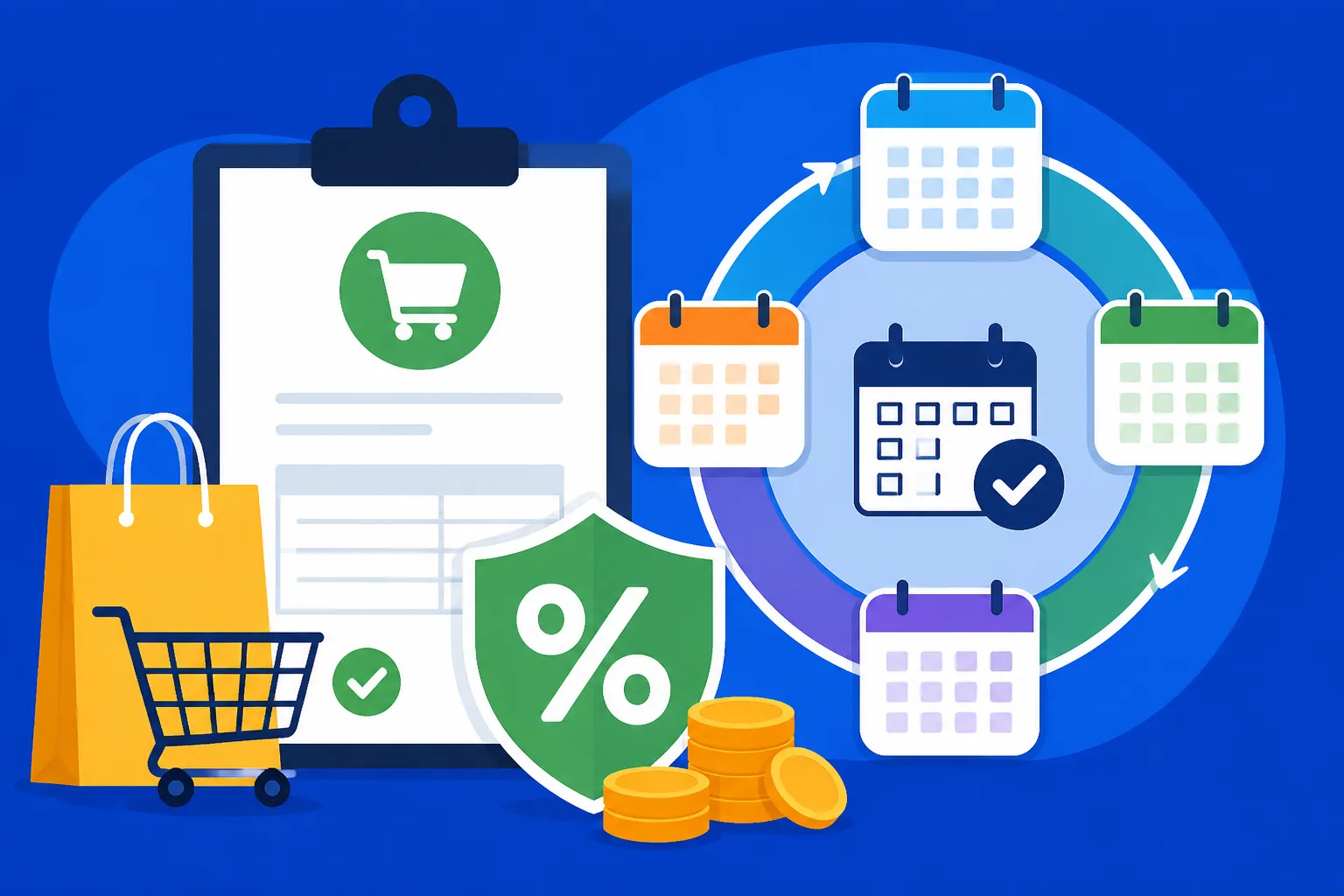
Quarterly filing is arguably the most common frequency for many small to medium-sized businesses. It strikes a balance between the administrative burden of monthly filing and the risk of holding onto large sums of tax for a full year. If your business generates a moderate amount of sales tax, you'll likely fall into this category. The quarters usually align with the calendar year:
- Q1: January 1 – March 31 (due in April)
- Q2: April 1 – June 30 (due in July)
- Q3: July 1 – September 30 (due in October)
- Q4: October 1 – December 31 (due in January of the following year)
For many businesses, quarterly filing feels like the sweet spot. It allows for a manageable amount of time to collect and reconcile sales tax data without the constant pressure of monthly deadlines. Payments are larger than monthly remittances but generally not so overwhelming that they cause significant cash flow issues if managed properly. It’s frequent enough to keep you engaged with your sales tax obligations but not so frequent that it becomes a full-time job. This frequency also often aligns well with other quarterly business reporting, making it easier to integrate into existing financial processes.
Annual Filers: The Low-Volume Exception
Annual filing is the least frequent option and is typically reserved for very small businesses with minimal sales tax collections. If your taxable sales are consistently low, and you're collecting only a small amount of sales tax throughout the year, a state might classify you as an annual filer. This is the least burdensome option from an administrative perspective, as you only need to prepare and file one return per year.
The main benefit is the reduced administrative workload. You only have one major sales tax deadline to worry about per year for that specific state. However, the downside is that you are holding onto the collected sales tax for a much longer period. This means that when it comes time to remit, the payment can be quite substantial. If you haven't meticulously set aside those funds throughout the year, you could face a significant cash crunch at year-end. This is why even annual filers need to be disciplined about tracking and setting aside collected sales tax from day one. Many small businesses, like a home-based artisan selling only a few taxable items a year, might find themselves in this category.
Seasonal Filers and Other Special Cases
Beyond the standard monthly, quarterly, and annual frequencies, some states also recognize "seasonal" filers. This applies to businesses that operate only during specific times of the year, like a Christmas tree farm, a summer beach shop, or a Halloween costume store. Instead of requiring these businesses to file "zero returns" during their off-season (which means filing a return even if you collected no sales tax), states might allow them to file only during the months or quarters they are actively making taxable sales.
This can be a huge relief for businesses with highly fluctuating sales, as it significantly reduces their compliance burden during downtime. To qualify as a seasonal filer, you typically need to indicate this when you register for your sales tax permit or request a change from the state. It's an important distinction that acknowledges the unique operational models of certain industries. Understanding these nuances can save you a lot of administrative headaches.
What Happens When Your Filing Frequency Changes?
Life isn't static, and neither are your sales tax obligations. As your business grows (or sometimes shrinks), your sales tax filing frequency can and often will change. It's not a set-it-and-forget-it deal; states actively monitor businesses to ensure their filing frequency aligns with their sales tax collections.
State-Initiated Adjustments (Usually Upward)
The most common reason for a change in filing frequency is growth. If your taxable sales within a state increase and you cross a specific threshold, the state taxing authority will likely upgrade your filing frequency. For instance, if you were a quarterly filer and your sales consistently hit the state's benchmark for monthly filing, you'll receive a notice from the state informing you of the change. This isn't a suggestion; it's a mandate. States do this to ensure they receive their revenue more frequently from high-volume sellers.
These adjustments are usually based on your past performance, often looking at your total taxable sales over the previous 12 months or four quarters. The state's system flags businesses that exceed the thresholds, and then a formal notice is sent out. It's critical to pay attention to these notices, as ignoring them can lead to significant penalties. Your sales tax compliance software, like Avalara, can often help track these changes across multiple states, alerting you before you miss a beat. Knowing your specific Sales Tax Due Dates by State 2026 is even more critical when your frequency changes.
Requesting a Change (Often Downward)
While states are quick to upgrade your frequency when you grow, getting them to reduce it can be a bit more challenging, though certainly possible. If your business experiences a significant and sustained decline in taxable sales, you might be able to request a downgrade in your filing frequency. For example, if you were a monthly filer but your sales have dropped significantly and consistently below the state's monthly threshold, you could petition the state to become a quarterly filer.
The process usually involves submitting a written request or a specific form to the state's Department of Revenue or equivalent taxing authority. You'll likely need to provide documentation to support your claim, such as sales figures, profit and loss statements, or other financial records demonstrating your reduced sales activity. States want to be sure that the decline is not just a temporary dip but a sustained change in your business operations. It’s also worth noting that some states may have specific periods during which they review or allow changes in filing frequency, so it's good to check their regulations.
Notifying the Taxing Authority
Whether the change is initiated by the state or by your business, communication is key. If the state notifies you of a change, make sure you acknowledge it and update your internal accounting systems and calendars immediately. If you're requesting a change, ensure you follow all the state's procedures and keep records of your correspondence. The last thing you want is to assume a change has been approved and then find out later that it wasn't, leading to missed deadlines and penalties.
It’s also important to update any third-party software or services you use for sales tax calculation and filing. If you're using a platform like Shopify or a dedicated sales tax solution, ensure your filing frequency settings are accurate for each state. A mismatch between what the state expects and what your system is preparing can cause significant reconciliation headaches down the line. Staying proactive and ensuring all parties are on the same page will save you a lot of stress and potential penalties. You might also want to review our guide on Sales Tax Penalties & Late Filing by State to understand the consequences of missing these updates.
The Pitfalls of Incorrect Sales Tax Filing Frequency
Mistakes happen, especially with something as complex as sales tax across multiple jurisdictions. However, mismanaging your filing frequency can lead to some pretty painful consequences that no business owner wants to experience. These pitfalls aren't just minor inconveniences; they can hit your bottom line and reputation hard.
Late Filing Penalties and Interest
This is probably the most common and immediate consequence of getting your filing frequency wrong. If you're supposed to file monthly but only file quarterly, those two missed monthly periods will be treated as late filings. States typically assess penalties for both late filing and late payment. These penalties can vary wildly, from a flat fee to a percentage of the unpaid tax, often increasing the longer the tax remains unpaid. On top of that, interest will accrue on the underpaid or late-paid tax, adding another layer to your financial burden.
Imagine you're a monthly filer in Illinois, but you mistakenly only file quarterly. For each of those "missed" monthly periods, the Illinois Department of Revenue will likely send you a notice assessing penalties and interest. If this continues, the penalties can quickly overshadow the original tax amount you owed. These charges are usually non-negotiable unless you can demonstrate reasonable cause for the delay, which is often a high bar. Preventing these penalties starts with an accurate understanding of your filing frequency and meticulous adherence to the Sales Tax Due Dates by State 2026.
Audits and Increased Scrutiny
Consistently filing at the wrong frequency, or frequently filing late, is a huge red flag for state taxing authorities. It signals a potential lack of internal controls or an intentional attempt to delay payment, both of which can trigger an audit. Once your business is flagged for an audit, it’s a time-consuming and often stressful process that can divert significant resources away from your core operations.
During an audit, the state will meticulously review your sales records, tax calculations, and remittance history. If they find that you've been consistently filing at an incorrect frequency, it can lead to additional assessments, not just for the past errors but also for any other discrepancies they uncover. An audit doesn't just look at sales tax; it can sometimes lead to a broader review of your business's compliance with other state taxes. Avoiding these audits by maintaining accurate and timely filing practices is always the best strategy.
Cash Flow Challenges and Mismanagement
Perhaps one of the more insidious pitfalls is the impact on your cash flow. If you're assigned a monthly filing frequency but you're only thinking about sales tax quarterly, you might not be setting aside the necessary funds. When that monthly deadline hits, and you realize you haven't put aside enough, it can create a scramble. Conversely, if you're holding onto collected tax for too long (e.g., if you're filing annually but should be quarterly), that money sits in your operating account, potentially giving you a false sense of financial health. When the larger, less frequent payment is due, it can feel like a massive hit.
Proper sales tax management means treating the collected tax as a liability from day one. It's not revenue. It should ideally be segregated into a separate account or at least meticulously tracked so you know exactly how much you owe and when. Mismanaging this can lead to unexpected cash shortages, forcing you to dip into operating capital or even take out short-term loans just to meet your sales tax obligations. This financial stress can be completely avoided by simply understanding and adhering to your assigned filing frequency. For more details on calculating the tax itself, check out How to Calculate Sales Tax (Step by Step).
Strategies for Managing Your Sales Tax Filing Schedule
Navigating the complexities of sales tax filing frequencies, especially if you sell across multiple states, can feel like a full-time job. But with the right strategies and tools, you can manage your obligations efficiently and confidently.
Tracking Sales Volume and Nexus Proactively
The first and most crucial step is to stay proactive about your sales volume and nexus footprint. Don't wait for a state to send you a notice about a change in your filing frequency. Instead, regularly monitor your taxable sales in every state where you have a sales tax obligation. Set up internal triggers: if your sales in a particular state are approaching a threshold that would bump you to a more frequent filing schedule (e.g., from quarterly to monthly), prepare for that change.
This proactive approach also extends to understanding your Economic Nexus by State 2026: Thresholds Guide. As your business grows and reaches these economic nexus thresholds, you'll need to register for a sales tax permit in new states. Each new registration means a new filing frequency to track. Regularly review your sales data to identify potential new nexus states and prepare for registration and subsequent filing obligations. A simple spreadsheet tracking your sales by state and comparing them against state thresholds can be a lifesaver. This will help you anticipate changes and adjust your processes before you receive a state-mandated surprise.
Leveraging Sales Tax Automation Software
Let's be real, manually tracking sales tax rates, nexus thresholds, product taxability, and filing frequencies across dozens of states is a nightmare for even the most detail-oriented business owner. This is where sales tax automation software truly shines. Solutions like Avalara are specifically designed to handle these complexities, taking a massive burden off your shoulders.
These platforms integrate with your existing e-commerce platforms (like Shopify or Amazon) or accounting software (like QuickBooks or NetSuite) to automatically calculate sales tax at the point of sale. More importantly, they track your sales volume in each state, monitor nexus thresholds, and often help manage your filing frequencies. When it comes time to file, they can generate the necessary reports or even file directly on your behalf for all the states where you're registered. This automation drastically reduces the risk of errors, late filings, and missed deadlines. For businesses operating in multiple states, this kind of software isn't just a convenience; it's practically a necessity for maintaining compliance. If you're thinking about moving into new states, consider reading our guide on Registering for Sales Tax in Multiple States and how software can help.
Setting Up Reminders and Internal Processes
Even with automation, having robust internal processes and reminders is essential. Technology is fantastic, but human oversight and accountability are still vital. Set up a clear calendar of all your sales tax due dates for every state and every assigned frequency. This could be a shared digital calendar, a recurring task in your project management system, or even a good old-fashioned wall calendar prominently displayed.
Assign clear responsibilities within your team for who is accountable for reviewing sales data, preparing reports, and submitting filings. Don't let these tasks fall through the cracks. Implement a checklist for each filing period to ensure all steps are completed: data reconciliation, review for accuracy, payment processing, and confirmation of submission. For example, before you perform a How to File a Sales Tax Return: Step by Step process, ensure all preliminary checks are done. Regular check-ins on this process, perhaps monthly or quarterly, can help catch potential issues before they become major problems. Consistent internal discipline, combined with smart automation, is your best defense against sales tax compliance headaches.
State-Specific Nuances and Examples
While the general principles of sales tax filing frequency are consistent, the details vary wildly from state to state. What might be standard in one jurisdiction could be completely different in another. This state-specific complexity is often where businesses get tripped up, especially if they operate nationally.
States with Unique Thresholds
Every state sets its own unique thresholds for determining filing frequency, and these can differ dramatically. For instance, California, a state with one of the highest base sales tax rates at 7.25% (and often much higher with district taxes), generally requires monthly filing if your average monthly taxable sales are over $50,000, and quarterly if it's over $10,000 but less than $50,000. Less than $10,000? You're likely an annual filer. Texas, on the other hand, which has a 6.25% state sales tax rate, also uses annual tax reported as a key determinant, with tiers like under $1,000 (annual), $1,000 to $9,999 (quarterly), and $10,000 or more (monthly).
These specific dollar amounts are crucial. You might be a relatively small business nationwide, but if a significant portion of your sales happen to be in California or Texas, you could easily hit their higher thresholds and be required to file much more frequently than you might expect based on your overall sales. It’s not just about total sales, but where those sales are happening and what the local Combined State + Local Sales Tax Rates Explained look like. This is precisely why a "one-size-fits-all" approach to sales tax compliance simply doesn't work. Keeping tabs on each state's particular rules is fundamental.
Mandatory Statewide Local Add-Ons vs. Home-Rule Complexities
Another layer of complexity comes from how local sales taxes are administered. In states like California, you have a base state rate, but then numerous district taxes are added on top, creating a higher combined rate. While these district taxes complicate the calculation of the overall sales tax rate, they are generally administered and collected by the state. This means your single state filing often covers all the local components, making filing frequency a bit more straightforward in terms of where you file.
Then you have states with home-rule jurisdictions, like Colorado or Alabama. In a home-rule state, individual cities and counties have the authority to set their own sales tax rates and, critically, often administer and collect their own sales tax. This means that if you have nexus in multiple home-rule cities within a state, you might need to register, calculate, and file sales tax separately with each of those local jurisdictions, in addition to the state. Each of those local jurisdictions could have its own filing frequency rules, further multiplying your administrative burden. Imagine being a monthly filer for the state, but then also having to be a quarterly filer for Denver, and an annual filer for a tiny town just outside its limits! This level of granularity truly underscores the need for robust tracking and, ideally, automation.
Vendor Discounts for Timely Filers
Here's a little silver lining: some states offer what's called a "vendor discount" or "dealer's discount." This is a small percentage of the sales tax you collect that you get to keep as compensation for the administrative cost of collecting and remitting sales tax on behalf of the state. It's not a huge amount, usually 0.5% to 2% of the tax collected, and often capped at a certain dollar amount per filing period. However, it's a nice perk that rewards businesses for their efforts in sales tax compliance.
The catch? These discounts are almost universally contingent on filing and paying on time. If you're late, you forfeit the discount. This serves as an extra incentive to stay on top of your filing frequency and deadlines. States like Florida, Georgia, and Texas are examples of jurisdictions that offer some form of vendor discount. While the discount shouldn't be your primary motivation for compliance, it's a tangible benefit that can help offset some of your administrative costs. You can learn more about these incentives in our Vendor Discount States (Get Paid to File) guide.
Streamlined Sales Tax (SST) and Its Impact
The world of sales tax is undeniably complex, and for businesses selling across multiple states, the administrative burden can be immense. Enter the Streamlined Sales Tax (SST) Project, an initiative designed to simplify and modernize sales tax administration for businesses, especially those operating across state lines.
Simplified Rules for Participating States
The Streamlined Sales Tax Governing Board works with member states to create uniform sales tax definitions, rules, and administrative practices. Currently, there are 24 full member states in the SST system. The idea behind SST is to make sales tax compliance less of a headache by standardizing things like product definitions (is a candy bar "food" or "candy" for tax purposes?), registration processes, and, yes, even filing frequencies.
For businesses that register through the SST system (often called a "Certified Service Provider" or CSP, which is a third-party company that handles sales tax calculations and filings), compliance can become significantly easier. Instead of navigating 24 different sets of rules, you're interacting with a single system that applies consistent definitions across participating states. This simplification is a huge benefit for businesses, particularly small and medium-sized online sellers, who might otherwise struggle to manage the disparate rules of numerous states. However, it's important to remember that SST only applies to member states, so you'll still need to handle non-member states through their individual rules. For a deeper dive into the program, read our What Is the Streamlined Sales Tax (SST) Program? article.
How SST Influences Filing Requirements
One of the key ways SST aims to simplify things is by streamlining the filing process itself. If you register and file through a CSP for the SST program, your sales tax data for all participating states can often be consolidated and submitted through a single portal or system. While you still have individual state obligations, the underlying mechanism for fulfilling them is made more consistent.
Regarding filing frequency, SST member states generally still use sales volume as the primary determinant, similar to non-SST states. However, the consistent reporting through a CSP can make it easier for states to assess your sales volume accurately and for you to track it. Furthermore, the simplified definitions and processes reduce the likelihood of errors that could lead to miscalculated tax, and thus, incorrect filing frequency assignments or penalties. If your business grows and expands into more SST states, the consistency offered by the program can prevent the exponential growth of administrative complexity you might otherwise face in non-SST states. It's not a magic bullet that makes sales tax disappear, but it definitely aims to make the "how and when" of filing much more manageable.
Disclaimer
The information provided in this guide is for general informational purposes only and does not constitute professional tax or legal advice. Sales tax laws are complex, subject to change, and vary significantly by state and locality. You should consult with a qualified tax professional or advisor for advice tailored to your specific business situation. Relying solely on the information presented here without professional guidance is done at your own risk.