How Does Drop Shipping Affect Sales Tax?
Many entrepreneurs are drawn to the allure of drop shipping, dreaming of running a business with minimal inventory risk and low startup costs. But once the orders start rolling in, a common and often overwhelming realization hits: "Wait, how does sales tax even work when I never physically touch the product?" The labyrinthine rules surrounding sales tax in a drop shipping model can feel like an impossible puzzle, leaving sellers anxious about compliance. This comprehensive guide is here to untangle those complexities, helping you understand your sales tax obligations as a drop shipper and navigate the system with confidence.
Understanding the Drop Shipping Business Model and its Sales Tax Quirks
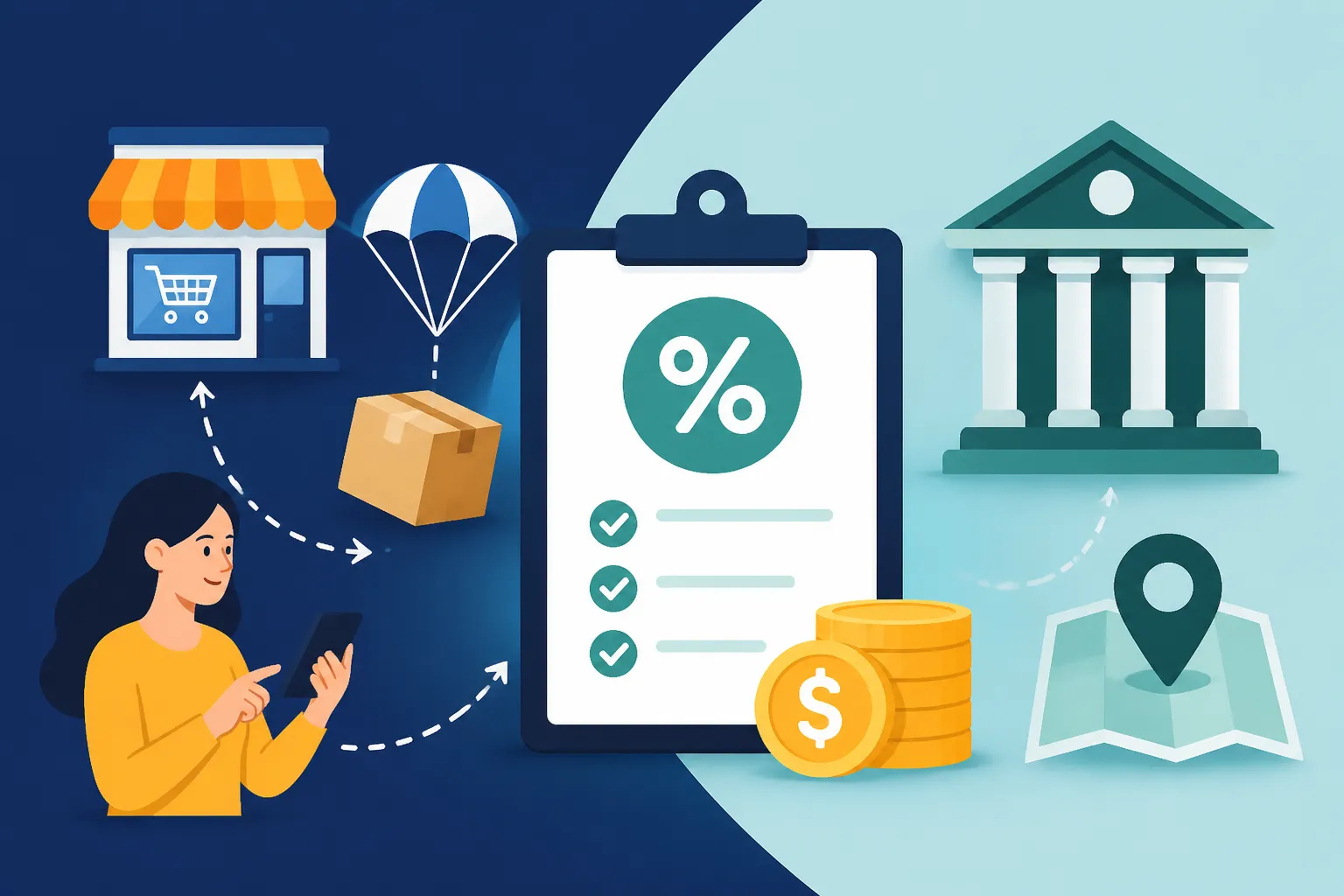
Drop shipping, at its core, involves three parties: the customer, you (the retailer), and the supplier (the drop shipper). The customer places an order with you, you then forward that order to your supplier, and the supplier ships the product directly to your customer. It’s a beautifully efficient model for managing inventory and logistics, but it creates some unique challenges when it comes to sales tax.
The Interplay of Parties in a Drop Shipping Transaction
In a traditional retail setup, the seller collects sales tax from the customer and remits it to the state. Simple enough. But in drop shipping, there are two distinct transactions happening, each with potential sales tax implications:
- Transaction 1: You (Retailer) to the End Customer. This is where you, as the seller of record, are typically responsible for collecting sales tax from your customer if you have nexus in their state and the product is taxable.
- Transaction 2: Supplier (Drop Shipper) to You (Retailer). Here, your supplier is selling the product to you. In many cases, this is a business-to-business (B2B) transaction, and it often qualifies for a resale exemption. This means your supplier shouldn't be charging you sales tax if you provide a valid resale certificate.
The confusion arises because different states have different rules, and you might have nexus in a state where your supplier does not, or vice versa. This dual-transaction nature is why navigating drop shipping sales tax is far more complex than a standard retail operation. You're not just dealing with your own nexus; you're often dealing with your supplier's nexus and your customer's location.
Why Drop Shipping Sales Tax is So Often Confusing
The inherent complexity of drop shipping sales tax stems from a few key areas that frequently trip up online sellers. First, many sellers mistakenly believe that because they never physically handle the goods, they don't have sales tax obligations. This couldn't be further from the truth. Your role as the retailer, collecting payment from the end customer, almost always establishes your primary responsibility for sales tax if nexus exists.
Secondly, the relationship with your supplier adds another layer of intricacy. If your supplier does charge you sales tax, and you don't have a valid resale certificate on file with them, you could be unnecessarily paying tax on goods you intend to resell. This cuts into your margins and represents an avoidable cost. Then there's the question of whether your supplier's presence in a state creates nexus for you, even if you otherwise wouldn't have it. Historically, some states viewed the drop shipper's physical presence as creating nexus for the retailer if the goods were shipped from that state on behalf of the retailer. Thankfully, many states have moved away from this interpretation, but it remains a point of historical confusion for many. Finally, the ever-evolving landscape of Economic Nexus by State 2026: Thresholds Guide means that even without a physical presence, your sales volume could trigger obligations in numerous states.
Sales Tax Nexus for Drop Shippers
Understanding nexus is absolutely fundamental to figuring out your sales tax responsibilities. Nexus is simply the connection a business has with a state that requires it to collect and remit sales tax. For drop shippers, this can get particularly tricky because multiple parties are involved.
Physical Nexus vs. Economic Nexus for Your Business
As a drop shipper, your business can establish nexus in a state in two primary ways:
-
Physical Nexus: This is the traditional understanding of nexus. If your business has a physical presence in a state, you likely have sales tax nexus there. This includes things like:
- Having an office, store, or warehouse (even a shared co-working space)
- Employing staff (even remote employees in certain situations)
- Storing inventory (e.g., in a third-party warehouse, like Amazon FBA)
- Engaging in temporary business activities, such as attending trade shows for more than a set number of days.
For a drop shipper, if your main office is in California, you definitely have nexus in California. If you store some of your own inventory (separate from drop ship items) in a warehouse in Texas, you'd likely have nexus in Texas too.
-
Economic Nexus: This type of nexus came to prominence after the landmark South Dakota v. Wayfair Supreme Court decision in 2018. It means that even if you have no physical presence in a state, you can establish nexus simply by exceeding certain sales thresholds. These thresholds typically involve either a certain dollar amount of sales (e.g., $100,000) or a specific number of transactions (e.g., 200 transactions), or both, within a calendar year. Each state sets its own unique economic nexus thresholds, and these can change. For an online drop shipper, economic nexus is often the primary driver of their sales tax obligations in states where they don't have a physical presence. This is why a guide on Sales Tax Nexus Explained (Physical vs Economic) is so crucial for any online business.
Who Has Nexus: The Seller, the Drop Shipper, or Both?
This is where the drop shipping model truly adds layers of complexity. Let's break down the responsibility:
-
You (the Retailer): You are primarily responsible for sales tax to the end customer. If you have physical or economic nexus in the state where your customer is located, you generally must collect sales tax from that customer on taxable purchases. It doesn't matter where your supplier is located in this scenario, or if your supplier has nexus there. Your obligations are based on your connection to the customer's state.
-
Your Supplier (the Drop Shipper): Your supplier sells the product to you, the retailer. In most cases, this transaction is for resale. If your supplier has nexus in your state, they would normally charge you sales tax. However, you can provide them with a valid resale certificate (also known as a seller's permit or certificate of authority in some states) to exempt that transaction from sales tax. This prevents "double taxation" – once when the supplier sells to you, and again when you sell to the end customer.
-
The "Old" Drop Shipping Nexus Rule: Historically, some states (like California, Florida, and Texas) had specific drop shipping rules that could create nexus for the retailer if their supplier was located in that state and shipped directly to the customer. The idea was that the drop shipper was acting as your agent, thereby creating physical nexus for you. However, with the rise of economic nexus and marketplace facilitator laws, most states have either clarified or effectively nullified these specific drop shipping nexus rules. They now mostly defer to the general physical and economic nexus rules for the retailer. Always check the specific guidance for the states where your suppliers are located, especially for large suppliers, though this is less common today.
The key takeaway is to focus on your nexus obligations first. Identify where you have physical and economic nexus. This dictates where you need to register for a sales tax permit and collect tax from your customers.
The Role of Marketplace Facilitator Laws in Drop Shipping
The sales tax landscape for online sellers, including drop shippers, underwent another seismic shift with the widespread adoption of marketplace facilitator laws. These laws have simplified things immensely for many, but also added new considerations.
How Marketplaces Simplify (or Complicate) Things
A marketplace facilitator is a platform that facilitates sales between third-party sellers (like you) and customers. Think of giants like Amazon, eBay, Etsy, and Walmart. Under marketplace facilitator laws, which are now active in virtually every state that imposes sales tax, the marketplace itself is legally responsible for calculating, collecting, and remitting sales tax on behalf of its third-party sellers. This applies to transactions facilitated through their platform, regardless of whether the seller (you) has nexus in the customer's state.
For many drop shippers who primarily sell through these large marketplaces, this is a huge relief! If you sell on Amazon, for example, and a customer in Arizona buys one of your drop-shipped items, Amazon is typically the one who handles the sales tax for that transaction. This means you don't need to worry about registering, collecting, or remitting sales tax for those specific sales. You can find more details on this in our guide on Marketplace Facilitator Laws by State.
However, it's not entirely hands-off. You still need to:
- Monitor Your Sales: Even if the marketplace collects, your sales volume through that marketplace still counts towards your own economic nexus thresholds in states. So, while Amazon might collect for you, your sales on Amazon contribute to whether you hit the $100,000 threshold in Texas, for example, potentially creating nexus for your direct sales channel.
- Understand Your Statements: You'll receive reports from the marketplace detailing the sales tax they collected and remitted on your behalf. Keep these records.
- Taxability Rules: While the marketplace collects, they still follow the state's taxability rules for products. If a product is exempt in a state, they won't collect tax. If it's taxable, they will.
Impact on Your Direct Sales and Other Channels
The big caveat here is that marketplace facilitator laws only apply to sales made through the marketplace itself. If you also sell products through your own website (e.g., a Shopify store, a WooCommerce site, or any other direct-to-consumer platform), then you are fully responsible for sales tax on those transactions.
This means:
- Separate Nexus Analysis: You need to perform a separate nexus analysis for your direct sales channel. Where do you have physical or economic nexus based on your website sales?
- Registration and Collection: For states where you have nexus through your direct sales, you'll need to register for a sales tax permit and collect sales tax from customers in those states. This is where tools like Avalara can become invaluable, helping you manage the complex calculations across various jurisdictions.
- Resale Certificates for Your Direct Sales: If you're drop shipping for your direct sales, you'll still need to provide resale certificates to your suppliers to avoid being charged tax on your wholesale purchases. Our guide on How Drop Shippers Handle Resale Certificates offers a deeper dive into this often-overlooked aspect.
Let's imagine you sell through both Etsy and your own website. For an order placed on Etsy, Etsy handles the sales tax. But if the same customer buys from your direct website, and you have economic nexus in their state, you are responsible for that sales tax. This dual responsibility can be a source of constant vigilance for drop shippers.
Managing Sales Tax Compliance as a Drop Shipper
Okay, so you understand nexus and the marketplace facilitator rules. Now, how do you actually put this into practice and stay compliant? It involves a few key steps and careful record-keeping.
Determining Your Collection Responsibilities State by State
The first step is a thorough nexus review. You need to identify every single state where you, as the retailer, have either physical or economic nexus.
Here's a step-by-step approach:
- Analyze Your Physical Presence: Do you have an office, employees, or inventory storage (even third-party logistics like 3PL warehouses) in any state? List them out. Remember that even a home office can create nexus in your state.
- Evaluate Economic Nexus Thresholds: Review your total sales (including marketplace sales, as they count towards your threshold) for each state over the past 12-24 months. Compare these against each state's economic nexus threshold. Remember, some states have both a sales dollar amount and a transaction count. Don't forget that Economic Nexus Threshold in California is $500,000, while many states use a $100,000 threshold.
- Identify Where You Need to Register: For every state where you've established nexus (either physical or economic), and for which the marketplace is not collecting on your behalf (i.e., your direct sales), you must register for a sales tax permit. This is a non-negotiable step. Failing to register before collecting can lead to penalties. Our guide on Registering for Sales Tax in Multiple States provides a comprehensive walkthrough.
Once registered, you'll then need to apply the correct sales tax rates to your transactions. This is where tools become incredibly helpful, as rates vary not just by state, but often by city, county, and special districts. For example, California District Taxes Explained shows how local rates can add significant complexity.
Using Resale Certificates Effectively with Suppliers
This is a critical aspect often overlooked by drop shippers. When you purchase goods from your supplier (the drop shipper) with the intent to resell them to your customers, that transaction is generally exempt from sales tax. To claim this exemption, you must provide your supplier with a valid resale certificate.
Here's how it typically works:
- Get Your Own Sales Tax Permit: First, you need your own sales tax permit (also called a seller's permit or resale license) in the state where your supplier is located if they require it or if you intend to collect tax from customers in that state. Many states have reciprocal agreements, meaning a permit from your home state might be sufficient. However, some suppliers may require a permit from their own state or the state of delivery.
- Provide to Suppliers: Once you have the necessary documentation, you provide a copy of your resale certificate to each of your drop shipping suppliers. They will then keep this on file and should not charge you sales tax on your wholesale purchases.
- Keep Records: Always keep copies of the resale certificates you provide, and any correspondence related to them. This protects you in case of an audit.
Failing to provide a resale certificate means your supplier will likely charge you sales tax. This is a direct hit to your profit margins, as you're effectively paying sales tax on your inventory purchases that you shouldn't be. This is money that you'll never recover, as you can't typically pass it on to the end customer as a separate charge. Many states also offer a Multistate Tax Commission (MTC) Uniform Sales & Use Tax Certificate, which can simplify providing certificates to suppliers across multiple states.
Leveraging Sales Tax Software for Seamless Compliance
Given the complexities of nexus, varying rates, and constant changes, relying on manual processes for sales tax is a recipe for headaches and potential errors. This is where sales tax compliance software becomes a lifesaver for drop shippers, especially as they grow.
These software solutions, such as Avalara, can:
- Automate Nexus Tracking: Help you monitor your sales volume against economic nexus thresholds in various states, giving you alerts when you're approaching or exceeding them.
- Real-time Rate Calculation: Accurately calculate sales tax at the point of sale, applying the correct state, county, city, and district rates based on the customer's shipping address. This is crucial for avoiding under or over-collection. For instance, determining the correct rate for a customer in a specific Chicago ZIP code can involve multiple layers of tax, as outlined in our piece on Chicago Sales Tax Rate (Highest Big City).
- Automate Filing and Remittance: Prepare and file your sales tax returns to the appropriate state and local jurisdictions, often integrating directly with your e-commerce platform or accounting software. This saves immense amounts of time and reduces the risk of missing deadlines or making errors.
- Manage Exemption Certificates: Help you store and manage resale certificates and other exemption documents you provide to your suppliers, and even those you might receive from tax-exempt customers.
For a drop shipper dealing with hundreds or thousands of transactions across multiple states, manually tracking all this information is simply not feasible. The time saved, the accuracy gained, and the peace of mind knowing you're compliant are well worth the investment. Think of it as an essential tool, much like your e-commerce platform itself, that allows you to scale your business without getting bogged down in tax minutiae. A good sales tax software solution can truly make the difference between a thriving, compliant drop shipping business and one constantly battling tax issues.
Summary Table of Drop Shipping Sales Tax Scenarios
To help visualize your responsibilities, here's a simplified table outlining common drop shipping scenarios:
| Scenario | Sales Tax to End Customer (You collect?) | Sales Tax from Supplier (Supplier charges you?) | Key Action Items for You |
|---|---|---|---|
| You have nexus in customer's state (direct sale) | Yes (if product taxable) | No (with valid resale certificate to supplier) | Register, collect, remit. Provide resale cert to supplier. |
| You have NO nexus in customer's state (direct sale) | No | No (with valid resale certificate to supplier) | No collection from customer. Provide resale cert to supplier. Monitor nexus thresholds. |
| Sale via Marketplace Facilitator (e.g., Amazon, Etsy) | No (Marketplace collects) | No (with valid resale certificate to supplier) | No collection from customer. Provide resale cert to supplier. Monitor your own nexus thresholds. |
| Supplier charges you sales tax (no resale cert on file) | Yes (if you have nexus in customer's state) | Yes | Provide resale cert to supplier ASAP. Collect from customer if applicable. |
Remember, this table provides a general overview. Specific product taxability, individual state laws, and the exact nature of your supplier relationship can introduce variations. Always consult official state guidance or a tax professional for specific advice.
Final Thoughts on Navigating Drop Shipping Sales Tax
The world of sales tax for drop shippers might seem like an endless maze, but with a clear understanding of nexus, the nuances of marketplace facilitator laws, and the strategic use of resale certificates and automation tools like Avalara, it becomes a manageable part of doing business. The most important thing is to be proactive: determine your nexus obligations early, register where required, utilize resale certificates diligently, and consider implementing sales tax software to streamline your compliance efforts. By taking these steps, you can ensure your drop shipping venture remains profitable and free from unexpected tax surprises, allowing you to focus on growing your business.
Disclaimer
Please remember that this article provides general information and should not be considered legal or tax advice. Sales tax laws are complex and constantly changing. Always consult with a qualified tax professional or refer to your state's specific tax regulations for advice tailored to your individual business situation.