Combined State + Local Sales Tax Rates Explained
Imagine you are standing on one side of a street in a suburban shopping center, ready to buy a new laptop. You walk into the store, check the price tag, and do the mental math. Then, you realize that if you drive just two miles down the road to the next town, that same laptop costs fifteen dollars less. It’s the same state, the same product, and the same retailer, yet the total at the bottom of the receipt is different. This guide solves the mystery of why that happens by explaining the complex layers of combined state and local sales tax rates.
The Layered Reality of Sales Tax
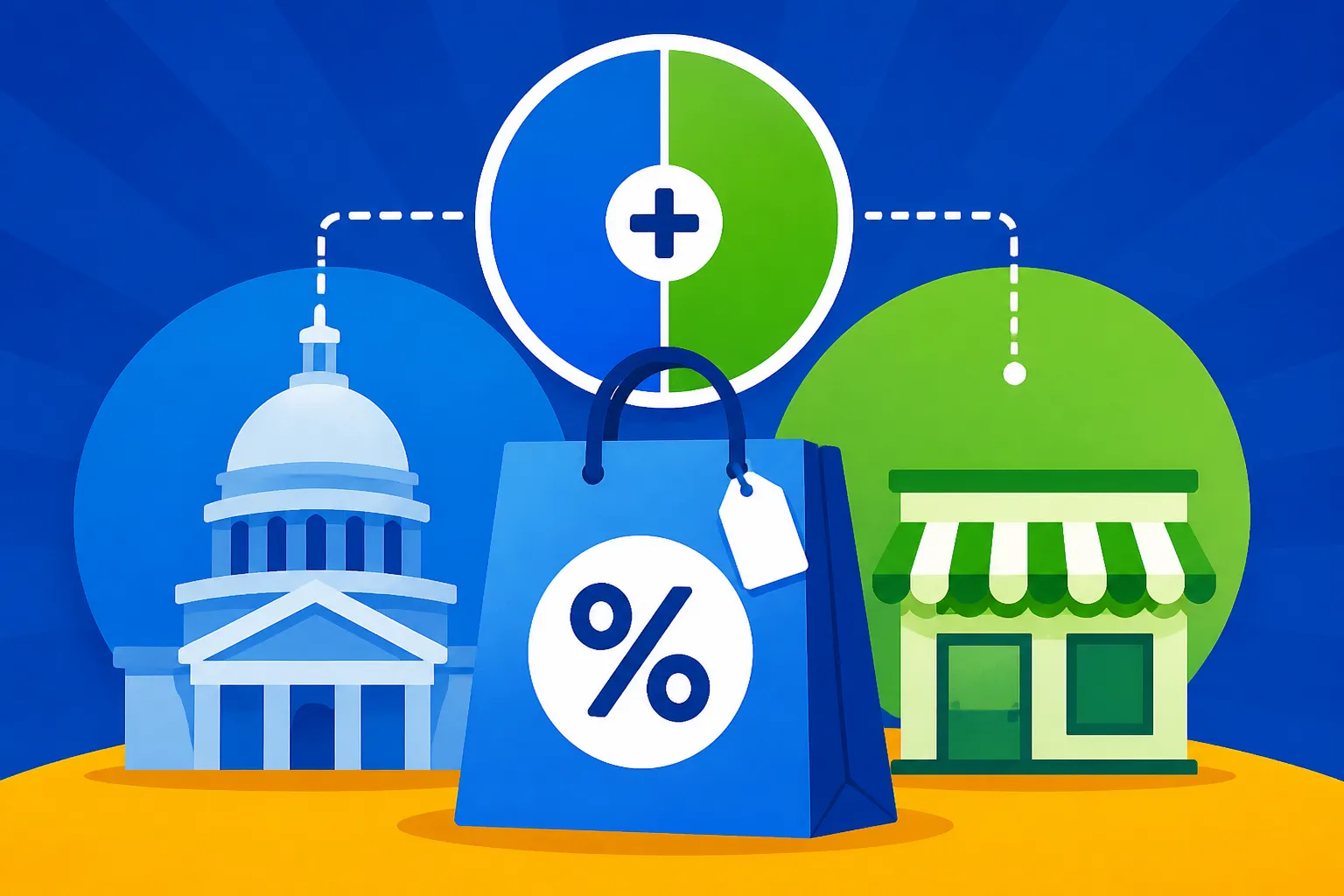
To understand why your receipt looks the way it does, you have to stop thinking of sales tax as a single percentage. In the United States, sales tax is rarely just one flat fee handed down by a central authority. Instead, it is a "stacked" system where multiple government entities all want a small slice of the transaction. It starts at the top with the state government, but it quickly trickles down to much smaller, more specific jurisdictions.
The State Base Rate
The foundation of any sales tax calculation is the state’s base rate. This is the mandatory minimum that applies to every taxable sale within the state’s borders. For instance, if you are shopping in Tennessee, you are starting with a base rate of 7%, which is one of the highest in the country. Conversely, if you are in Colorado, the state only asks for 2.9%. This base rate is usually set by the state legislature and remains relatively stable compared to local rates.
However, even this "simple" base rate can be deceptive. Some states have different rates for different categories of goods, such as a lower rate for groceries or a higher rate for "luxury" items like tobacco or alcohol. When you look at Average Sales Tax Rate by State, you are seeing a bird's-eye view, but the reality for a business owner or a consumer is far more granular. The state rate is merely the starting line for the total tax you will eventually pay at the register.
County and City Add-ons
Once the state takes its share, the county usually steps in. County governments use sales tax revenue to fund essential services that don't always get enough support from property taxes, such as county jails, local road maintenance, and public health departments. In many parts of the country, these county rates range from 0.5% to 2%. While that might seem small, on a large purchase like a car or major appliance, it adds up quickly.
Below the county level, you find city or municipal taxes. Cities are often the most aggressive with sales tax because they have the highest density of infrastructure to maintain. If a city wants to build a new library, revitalize its downtown district, or hire more police officers, increasing the local sales tax rate by a quarter-percent is a common way to generate the necessary funds. This is why two cities sitting side-by-side can have vastly different total rates, even if they share the same county.
Special Districts and Transit Authorities
The final and often most confusing layer of the sales tax sandwich is the special purpose district. These are jurisdictions created for a very specific reason, and they often overlap with both city and county lines. A classic example is a Regional Transportation Authority (RTA) or a mass transit district. If you live in an area with a robust light rail or bus system, there is a high probability that a small fraction of every dollar you spend is going directly to keep those trains running.
Special districts aren't just for transit, though. They can be created for fire protection, school districts, stadium construction, or even "Business Improvement Districts" where local business owners agree to a higher tax to pay for extra security and landscaping in a specific shopping corridor. In California, these are notoriously complex. If you are doing business in the Golden State, you likely already know about California District Taxes Explained, which highlights how these tiny, overlapping zones can make compliance a nightmare for retailers.
Why Combined Rates Vary So Much
The variation in combined rates isn't just a coincidence; it's a reflection of how local governments choose to fund themselves. Some states rely heavily on sales tax because they don't have an income tax, while others keep sales tax low and make up the difference elsewhere. This creates a patchwork of tax "climates" across the country.
Home-Rule vs State-Administered
One of the biggest reasons for rate discrepancy, particularly in states like Colorado, Alabama, and Louisiana, is the concept of "Home-Rule." In a state-administered system, the state government collects all the sales tax (both state and local) and then distributes the local portions back to the cities and counties. This is relatively simple for businesses because they only have to deal with one entity.
In Home-Rule jurisdictions, however, cities have the legal authority to establish their own tax laws, collect their own taxes, and even define what is or isn't taxable differently than the state does. This creates a massive administrative burden. For example, Colorado Home-Rule Cities Sales Tax rules mean that a business might have to file separate tax returns for the state and for half a dozen individual cities. This autonomy allows cities to be very specific about their funding, but it leaves consumers and businesses constantly guessing about the correct rate.
Economic Needs and Local Funding
The economic health of a region often dictates its sales tax rate. A booming tourist town might keep its sales tax high to export the tax burden to visitors rather than residents. Think of places like Orlando or Las Vegas; the high combined rates there help pay for the massive infrastructure required to support millions of tourists. By taxing the hotel rooms, meals, and souvenirs, the city can afford to keep local property taxes lower for the people who actually live there.
On the flip side, some rural areas keep their local add-ons as low as possible to encourage people from neighboring high-tax cities to drive out and shop in their jurisdictions. This "tax competition" is a real phenomenon. If a city sees its retail sales dropping because a neighboring town has a lower combined rate, they may face political pressure to lower their own local levies or offer tax-free periods to stay competitive.
Annexation and Changing Borders
One of the most frustrating aspects of sales tax for businesses is that the boundaries are constantly shifting. As cities grow, they often annex surrounding land to bring more businesses and residents into their tax base. A store that was once in an "unincorporated" part of the county—meaning it only paid state and county tax—might suddenly find itself within city limits after an annexation vote.
This change often happens overnight, and if a business doesn't update its POS system immediately, it will under-collect tax. This leads to a situation where the business is then liable for the difference during an audit. Keeping track of these geographic shifts is a full-time job. This is where automated solutions like Avalara become essential. By using geolocation rather than just a mailing address, tools like Avalara can pinpoint the exact tax latitude and longitude of a storefront, ensuring the rate is always accurate even if the city council just redrew the maps.
The Math Behind the Madness
Calculating the combined rate seems straightforward—you just add the numbers together, right? While that's the basic idea, the implementation is where people get tripped up. There are nuances in how these rates are expressed and how they are rounded that can lead to significant errors over thousands of transactions.
How to Calculate Combined Rates
The formula for a combined sales tax rate is: State Rate + County Rate + City Rate + Special District Rate = Total Combined Rate. Let’s look at a real-world scenario. Suppose you are buying a piece of furniture in a city with a 6% state tax, a 1% county tax, a 2% city tax, and a 0.5% transit district tax. Your combined rate is 9.5%. If the furniture costs $1,000, you will pay $95 in tax.
It sounds simple, but you have to be careful about which rates apply. Sometimes a city is located in two different counties. Depending on which side of the street the store is on, the county portion of the tax might change while the city portion stays the same. To get it right, you really need to understand How Combined Sales Tax Rates Work at a granular level. You cannot assume that because you are in "City X," the rate is the same everywhere within that city's zip code.
The Danger of ZIP Code Calculations
One of the most common mistakes businesses make is relying on 5-digit ZIP codes to determine sales tax. This is a dangerous shortcut. ZIP codes were created by the US Postal Service to deliver mail efficiently; they were never intended to follow political or taxing boundaries. A single ZIP code can contain multiple cities, parts of different counties, and various special districts.
For example, a business might look up a ZIP code and see a rate of 8%. However, three blocks away, still within that same ZIP code, the rate might be 8.5% because those blocks fall inside a specific school district or community facility zone. If you only collect 8%, you are under-collecting, and that 0.5% difference comes out of your profit margin when the state comes knocking. This is a primary reason why we always say Sales Tax by ZIP Code (and Why ZIP Isn't Enough). Accurate tax calculation requires the full 9-digit ZIP or, better yet, a specific street address.
Decimals and Rounding Rules
Once you have the correct combined rate, you have to apply it to the sale and round the result. Most people assume you just round to the nearest cent, but different states have different rules for this. Some states require the "bracket system," where the tax is determined based on which price range the item falls into. Others use straight mathematical rounding.
When dealing with large quantities of small items—like a convenience store selling hundreds of individual candies—the rounding method can actually change the total tax liability by a noticeable amount over a month. Most modern software, including Avalara, is programmed to handle these state-specific rounding rules automatically. Without that, a business owner might find themselves with a "rounding error" on their tax return that leads to an unnecessary red flag from the Department of Revenue.
Comparison of Combined Sales Tax Rates in Major US Cities
The table below illustrates how different the combined rates can be across the country. Notice how the state base rate is often only a fraction of what the consumer actually pays at the counter.
| City | State Base Rate | Local Add-ons | Total Combined Rate |
|---|---|---|---|
| Chicago, IL | 6.25% | 4.00% | 10.25% |
| Seattle, WA | 6.50% | 4.05% | 10.55% |
| Los Angeles, CA | 7.25% | 2.25% | 9.50% |
| New York City, NY | 4.00% | 4.875% | 8.875% |
| Houston, TX | 6.25% | 2.00% | 8.25% |
| Denver, CO | 2.90% | 5.91% | 8.81% |
| Nashville, TN | 7.00% | 2.25% | 9.25% |
| Phoenix, AZ | 5.60% | 3.00% | 8.60% |
Sourcing Rules: Origin vs Destination
The question of which rate to apply often depends on where the sale is considered to have "happened." This is known as sourcing. If you are a local shop selling to a person walking in the front door, it's easy: you use the rate for your physical location. But for online sellers or businesses that deliver products, it gets complicated very quickly.
Understanding Destination-Based Sourcing
Most states in the US use destination-based sourcing. This means the sales tax rate is determined by the location where the buyer takes possession of the goods. If you are a business located in a low-tax rural area but you ship a product to a customer in a high-tax city like Chicago, you are required to charge the Chicago rate.
This rule is designed to ensure that local governments don't lose out on tax revenue just because their residents shop online. From a consumer's perspective, it answers the question, Is Sales Tax Based on Billing or Shipping Address?. It is almost always the shipping address. For the seller, this means they must potentially keep track of thousands of different combined rates across every jurisdiction they ship to, provided they have "nexus" in those states.
Understanding Origin-Based Sourcing
A handful of states, including Texas, Virginia, and Arizona, use origin-based sourcing for in-state sales. In these states, if both the buyer and the seller are located in the same state, the tax rate is determined by the seller's location. This is much easier for the business because they only have to know one rate—their own.
However, even in origin-based states, there are often exceptions for "remote sellers" or specific types of transactions. And if you are shipping from an origin-based state to a customer in a different state altogether, the rules change again. The complexity of managing these two different systems is why many growing businesses eventually turn to Sales Tax Calculator: How to Calculate Sales Tax tools that can distinguish between these rules in real-time.
The Interstate Commerce Complexity
When a sale crosses state lines, it becomes an act of interstate commerce. Historically, states couldn't force out-of-state sellers to collect sales tax unless they had a physical presence (like an office or warehouse) in that state. That all changed with the South Dakota v. Wayfair decision. Now, most states have "economic nexus" laws.
This means that if you sell a certain amount of goods into a state—even if you've never stepped foot there—you are legally required to register, collect, and remit sales tax at the combined local rate of the destination. This is why small online shops suddenly have to care about the transit district tax in a tiny town three states away. If you're unsure if this applies to you, checking an Economic Nexus by State 2026: Thresholds Guide is a vital first step in staying compliant.
Taxable Goods and Local Deviations
One of the most confusing parts of combined rates is that the "taxable base" isn't always the same for the state and the local jurisdiction. Just because the state says an item is tax-exempt doesn't mean the city agrees.
When Locals Tax Groceries but States Don't
A common point of frustration occurs in the grocery aisle. Many states, like Georgia or Louisiana, exempt "unprepared food" (groceries) from the state-level sales tax to help lower the cost of living for residents. However, they often allow local counties and cities to continue charging their local portions of the tax on those same groceries.
This results in a situation where you might pay 0% state tax on a gallon of milk but still pay 2% or 3% in local tax. If you are a retailer, your point-of-sale system has to be smart enough to know that for Product A, the state rate is zero but the local rate is active. It is a level of detail that causes countless errors in manual bookkeeping.
Clothing and Apparel Thresholds
Clothing is another category where the rules are all over the map. Some states have "tax holidays" where clothing is exempt for a weekend, while others, like New York or Massachusetts, have a price threshold. In New York, clothing and footwear under $110 are exempt from the state's 4% tax.
But here is the catch: not every county in New York follows that exemption. Some counties still charge their local share on that $80 pair of shoes, while others waive it to match the state. If you are a shopper, you might find that States With No Sales Tax (NOMAD Explained) are the only places where the price on the tag is truly what you pay, as almost everywhere else has these strange, fluctuating local rules for apparel.
Digital Goods and Service Taxability
As our economy shifts toward digital products and services, local jurisdictions are scrambling to catch up. Some cities have implemented what is colloquially known as a "Netflix Tax," applying local sales tax to streaming services, even if the state hasn't officially updated its tax code to include digital downloads.
This creates a massive "grey area" for SaaS (Software as a Service) companies and digital creators. If you are selling a subscription, do you charge the combined rate for the customer's home address? Does the local "communications tax" apply? These are the types of questions that lead to audits. Because the rules for services and digital goods are so inconsistent, businesses often have to look at the Highest & Lowest Sales Tax States 2026 data to see which regions are most aggressive about taxing the modern economy.
Management and Tools for Businesses
For a small business owner, the sheer volume of data required to manage combined sales tax rates is overwhelming. There are over 13,000 taxing jurisdictions in the United States, and rates can change every quarter. Trying to manage this in a spreadsheet is a recipe for disaster.
Manual Tracking vs Automation
In the old days, businesses kept "tax rate tables" provided by the state. When a customer came in, the clerk would look up the rate and manually type it into the cash register. In a world of e-commerce and multi-state selling, this is impossible. Manual tracking not only takes up valuable time but also introduces human error.
Automation has become the standard for a reason. Modern tax engines integrate directly with your shopping cart (like Shopify or BigCommerce) or your ERP system. When a customer enters their address at checkout, the software sends a call to a database, identifies the exact combined rate for that specific rooftop, and applies it instantly. This level of precision protects the business from future audits and ensures the customer isn't being overcharged.
The Role of Avalara
This is where contextual brands like Avalara come into play. Avalara is a leader in the space because they maintain a massive, real-time database of every state, county, city, and special district rate in the country. Instead of you having to search for the latest rate change in a random county in Nebraska, Avalara does it for you.
For businesses using Avalara, the process of calculating combined rates becomes invisible. The software handles the sourcing rules, the product taxability differences, and even the filing of the returns. In a landscape where 2026 Sales Tax Rate Changes by State can happen overnight, having a "set it and forget it" solution allows entrepreneurs to focus on growing their business rather than acting as unpaid tax researchers for the government.
Dealing with Rate Changes
Sales tax rates are not static. Local governments frequently pass new levies for specific projects. Typically, these changes take effect on the first day of a new quarter (January 1, April 1, July 1, or October 1). However, some jurisdictions don't give much notice.
If you are a business owner, you are legally responsible for knowing when these rates change. If the rate in your city goes from 8% to 8.25% and you continue to charge 8%, you owe that extra 0.25% out of your own pocket. Using an automated system like Avalara ensures that your "tax profile" is updated the moment a change is codified into law, saving you from costly "catch-up" payments at the end of the year.
Common Mistakes to Avoid
Even with the best intentions, it is easy to trip up when dealing with combined rates. Knowing the most common pitfalls can help you stay one step ahead of the tax collector.
Assuming a Uniform State Rate
The most common mistake is the "blanket assumption." A business owner might hear that the sales tax in Texas is 6.25% and set their entire store to that rate. In reality, almost every populated area in Texas adds another 2% for local and transit taxes, bringing the actual rate to 8.25%. If you only collect the state portion, you are missing 25% of your total tax obligation. Never assume the state rate is the total rate unless you are in one of the few states that forbids local add-ons.
Forgetting Use Tax Obligations
If you buy equipment for your business from an out-of-state seller who doesn't charge you sales tax, you aren't off the hook. You likely owe "Use Tax" to your local jurisdiction. The Use Tax rate is almost always the same as the combined sales tax rate for your location. Many businesses have been sunk during audits because they failed to self-report the tax they "should" have paid on their computers, office furniture, or specialized machinery.
Ignoring Effective Dates
When a new tax is passed, there is an "effective date." Sometimes, a business sees the news and starts charging the new rate immediately, even if the tax doesn't technically start until the following month. This is also illegal—you cannot collect a tax that doesn't yet exist. Conversely, waiting too long is equally problematic. Precision is the only way to stay safe, which is why cross-referencing your data with a reliable Sales Tax Calculator: How to Calculate Sales Tax is always a good idea before making adjustments to your pricing structure.
Disclaimer
This guide is provided for informational purposes only and does not constitute legal, tax, or financial advice. Sales tax laws and rates are subject to frequent change by state and local authorities. You should consult with a qualified tax professional or accountant to ensure your business remains compliant with all local, state, and federal tax regulations.