Highest & Lowest Sales Tax States 2026
Trying to figure out why your receipt in one city looks vastly different from a receipt just ten miles away can feel like a losing game of financial Tetris. You might be planning a major cross-country move or simply trying to budget for a new car, only to find that sales tax rates are a moving target. This guide breaks down the landscape of the highest and lowest sales tax states to help you keep your hard-earned money where it belongs.
Understanding the Sales Tax Landscape
When we talk about sales tax, most people think of a single percentage, but the reality is far more layered. In 2026, the tax you pay at the register is rarely just the "state" rate. Instead, it is a cumulative total of state, county, city, and sometimes even special-purpose district taxes. This is why the Average Sales Tax Rate by State can be so misleading if you only look at the base numbers provided by state departments of revenue.
The Shift Toward Consumption-Based Taxation
Over the last few years, we’ve seen a distinct trend: states are increasingly leaning on sales tax to fund their budgets while attempting to lower or eliminate personal income taxes. For a resident, this feels like a double-edged sword. You might see a bigger paycheck every Friday, but you’ll feel the pinch every time you buy a coffee or a pair of shoes. This shift has intensified, especially in the Sun Belt states where population growth is driving the need for new infrastructure, schools, and emergency services.
Why Your ZIP Code Can Be Deceptive
One of the biggest frustrations for both consumers and businesses is the idea that a ZIP code defines a tax rate. It doesn't. A single ZIP code can actually span multiple tax jurisdictions, each with its own set of rules. This is why many savvy business owners utilize tools like Avalara to ensure they aren't accidentally overcharging—or undercharging—customers. If you are standing on one side of a street, you might be in a city with a 2% local add-on; walk across the street, and you might only be subject to the county rate. This granularity is why Sales Tax by ZIP Code (and Why ZIP Isn't Enough) is a critical concept to master if you want to avoid tax-time surprises.
The Impact of Economic Nexus on Your Receipts
If you’ve noticed that you’re being charged sales tax on almost every online purchase lately, you can thank the evolution of "nexus" laws. Following the landmark South Dakota v. Wayfair: What It Means for Sellers decision, states gained the power to require out-of-state retailers to collect tax based on their sales volume. In 2026, nearly every state with a sales tax has an economic nexus threshold. This means that even if a business doesn't have a physical warehouse in your town, they are likely legally obligated to charge you the local rate based on your shipping address.
The Five Pillars of Tax-Free Living: States With No Sales Tax
For those looking to escape the reach of the taxman entirely, there is the "NOMAD" group. This acronym stands for New Hampshire, Oregon, Montana, Alaska, and Delaware. These states have famously resisted the implementation of a general statewide sales tax, making them prime destinations for high-ticket purchases like electronics and luxury goods. However, "no state sales tax" doesn't always mean "no tax at all."
Oregon and New Hampshire: The Purest Havens
Oregon and New Hampshire remain the gold standards for tax-free shopping. In Oregon, the lack of a sales tax is a point of immense state pride, though they do have some specific excise taxes on items like bicycles and heavy equipment. New Hampshire follows a similar path, relying heavily on property taxes and taxes on prepared meals and room rentals rather than a general sales tax. If you are a resident of a neighboring state like Massachusetts, a weekend trip to New Hampshire for back-to-school shopping is a decades-old tradition for a reason.
Alaska’s Local Twist
Alaska is a unique case in the NOMAD group. While there is no state-level sales tax, the state allows local jurisdictions to implement their own. This creates a patchwork where you might pay 0% in one village and 7% in another. This is often explored in detail when looking at Alaska Local Sales Tax (No State Tax), as it highlights how local autonomy can create a "hidden" tax burden in a supposedly tax-free state. For businesses, this makes Registering for Sales Tax in Multiple States a nightmare when dealing with Alaskan customers, as there is no central state agency to handle these local filings.
Delaware and Montana: The Business and Tourist Safe Havens
Delaware is the darling of the corporate world, not just for its legal structure but for its lack of sales tax, which makes it a logistical hub for East Coast distribution. Montana, similarly, uses its lack of sales tax to attract tourists and high-net-worth individuals. However, keep in mind that Montana has "resort taxes" in popular areas like Big Sky or West Yellowstone, where you might see an additional 3% to 4% added to your bill for the "privilege" of shopping in a high-traffic tourist zone.
The Highest Sales Tax States: The Heavy Hitters
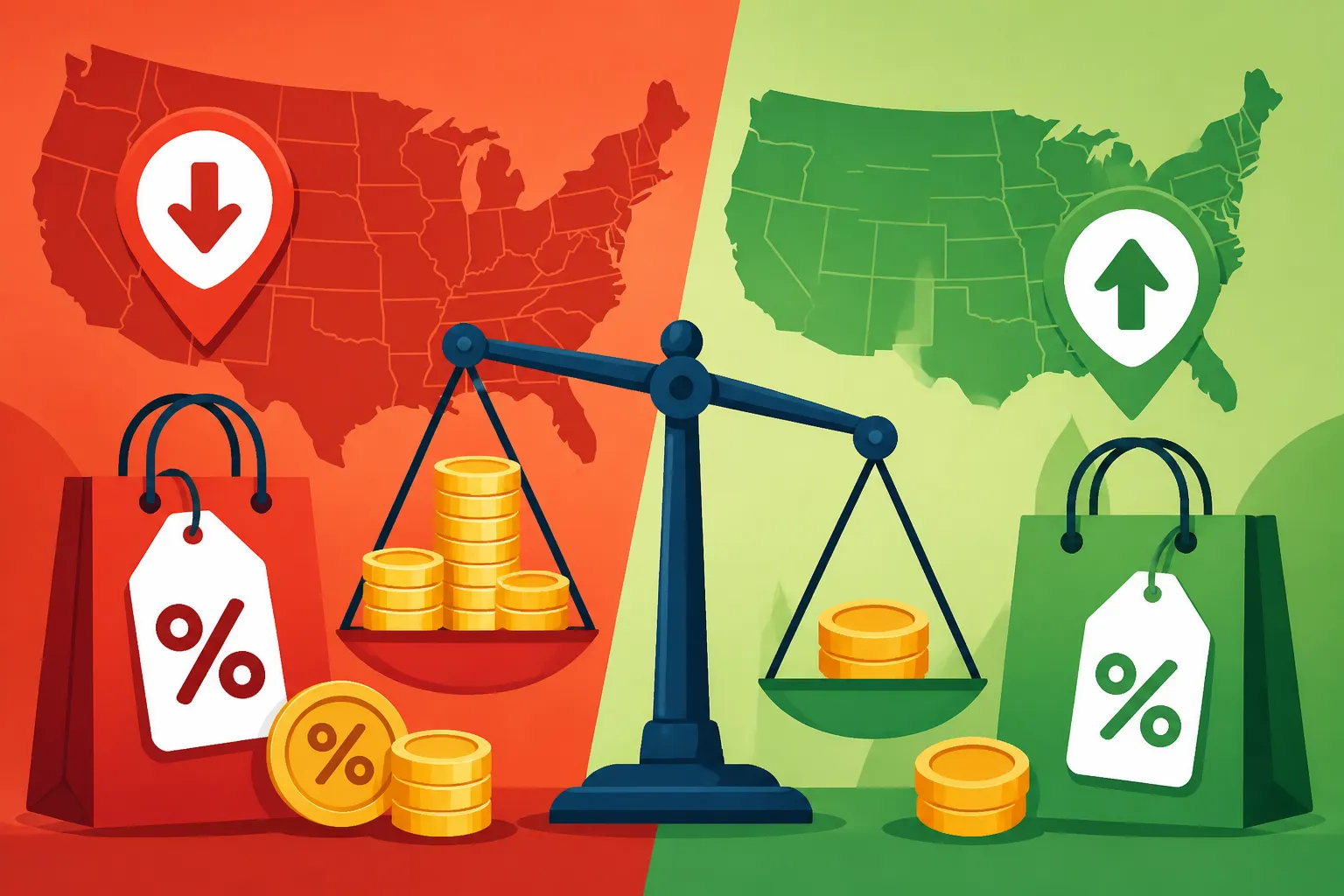
On the other end of the spectrum, we have states where the combined rates frequently push into double digits. These states often have low or no income tax, choosing instead to tax every transaction that occurs within their borders. If you live in these areas, you’ve likely grown accustomed to doing a little "mental math" at the checkout counter.
Louisiana: The Reigning Champion of Complexity
For several years running, Louisiana has held one of the highest average combined rates in the country. In 2026, the Louisiana Sales Tax Rate (Highest Combined 10.11%) remains a major point of contention for residents. The state rate is manageable, but the local "parish" taxes are where the numbers really climb. Some parishes have rates that exceed 5% on top of the state’s base. This creates a scenario where a simple grocery run in New Orleans can feel significantly more expensive than in a neighboring state.
Tennessee: The High Cost of No Income Tax
Tennessee is a favorite for retirees because it has no state income tax, but the state makes up for that lost revenue at the cash register. With a base state rate of 7%, and local options that can add another 2.75%, many residents find themselves paying nearly 10% on almost everything they buy. This trade-off is central to understanding why consumption taxes are so high in the Southeast. If you are a business owner in Nashville, using a platform like Avalara to automate these high-rate calculations is often the only way to stay sane.
Arkansas and Alabama: Local Add-on Leaders
Arkansas and Alabama consistently rank in the top five for highest combined rates. In Alabama, the state rate is relatively modest at 4%, but local jurisdictions are allowed to pile on their own taxes with very little oversight. This leads to many areas where the total rate hovers around 9% to 10%. Arkansas follows a similar model, where county and city taxes are used to fund everything from local parks to police departments, resulting in a high cumulative burden for the average shopper.
| State | Base State Rate | Max Local Add-on | Avg. Combined Rate (2026) |
|---|---|---|---|
| Louisiana | 4.45% | 7.00% | 9.55% |
| Tennessee | 7.00% | 2.75% | 9.55% |
| Arkansas | 6.50% | 5.12% | 9.46% |
| Alabama | 4.00% | 7.00% | 9.25% |
| Washington | 6.50% | 4.10% | 9.38% |
Hidden Costs: Why the State Rate Is Only Half the Story
If you only look at the state-level data, you are missing the forest for the trees. The "sticker shock" most people experience happens because of the layers of taxation that aren't advertised on the state's main tax portal.
Special Purpose Districts
We are seeing an explosion of "special districts." These are hyper-local tax zones created to fund a specific project. For example, a city might create a "Transportation District" that adds a 0.5% tax to every purchase within a three-block radius of a new light-rail station. Or a "Tourism District" might add 1% to sales in a downtown entertainment area. These districts are often the reason why the Combined State + Local Sales Tax Rates Explained guides are so vital for modern budgeting.
The "Home Rule" Headache
In states like Colorado and Illinois, certain cities have "Home Rule" authority. This means they can administer their own sales taxes independently of the state. If you buy a laptop in a Home Rule city, the business has to file one return with the state and a completely separate return with the city. For a consumer, this often results in higher rates. For a business, it’s a compliance nightmare that requires robust software like Avalara to track varying tax bases and filing deadlines.
The Big City Premium
It’s no secret that living in a major metro area is expensive, but the sales tax often acts as a "city surcharge." The Chicago Sales Tax Rate (Highest Big City) is a prime example. In 2026, Chicago continues to hit the 10.25% mark, combining state, county, city, and transit taxes. Compare this to a rural town in the same state, and the difference can be as much as 3%. If you are making a major purchase, driving thirty minutes outside of a major city can sometimes save you hundreds of dollars in tax alone.
How Local Tax Jurisdictions Complicate Your Budget
Budgeting for a household requires more than just looking at the price tag. You have to understand the specific rules of your jurisdiction, as they can change with a single city council vote.
The Frequency of Rate Changes
One of the most frustrating aspects of sales tax is that it isn't static. Rates change quarterly in many states. A city might pass a temporary tax to rebuild a bridge, which then gets extended indefinitely. Keeping track of these shifts is why experts recommend using a Sales Tax Calculator: How to Calculate Sales Tax before committing to a large purchase. You don't want to find out at the dealership that your city’s tax rate went up 0.25% since you last checked.
Calculating Tax on Large Purchases
When you are buying a $40,000 car, a 1% difference in sales tax is $400. That’s a significant amount of money. Many people wonder How Much Is Sales Tax on a Car by State because cars are often taxed differently than a loaf of bread. Some states cap the amount of local tax you can pay on a vehicle, while others charge the full combined rate based on where you register the car, not where you bought it. This is a common pitfall for people who think they can "save money" by driving to a lower-tax county to buy a vehicle.
Sourcing Rules: Origin vs. Destination
If you’re ordering something for delivery, the tax rate is determined by "sourcing" rules. Most states are "destination-based," meaning you pay the tax rate of where the item is delivered. However, a handful of states are "origin-based," where the tax is determined by the seller’s location. Understanding Origin vs Destination Sales Tax Sourcing is essential for both online shoppers and small business owners who are trying to figure out why their invoices look "wrong" compared to their local rates.
Sales Tax on Specific Goods: From Groceries to Cars
Not all items are taxed equally. In fact, what one state considers a "necessity" and leaves untaxed, another might consider a "luxury" and tax at the highest possible rate.
The Grocery Tax Debate
Groceries are one of the most volatile categories in sales tax law. As of January 2026, we’ve seen several states, including Illinois, make major moves to eliminate or reduce the "grocery tax" to provide relief for families facing inflation. However, in states like Alabama and Mississippi, groceries are still taxed at nearly the full rate. This creates a regressive tax situation where lower-income families spend a higher percentage of their earnings on tax for basic needs.
Digital Products and SaaS
The way we consume "goods" has changed, and tax laws are finally catching up. Many states have expanded their definitions of "tangible personal property" to include digital downloads, streaming services, and Software as a Service (SaaS). If you live in a state like Texas or Washington, your Netflix subscription or your professional design software is likely being taxed at the same rate as a physical book or a hammer.
Sales Tax Holidays: A Brief Reprieve
Many of the highest-tax states offer a "peace offering" in the form of sales tax holidays. These are specific weekends where items like school supplies, clothing, or even emergency preparedness gear are exempt from tax. Checking the Sales Tax Holidays by State 2026: Full Calendar is the best way to time your big purchases. If you live in a high-tax state like Tennessee, waiting for the "Tax-Free Weekend" to buy your kids' laptops and clothes can save you 9.75% or more on those items.
Strategies for Managing Sales Tax Compliance for Small Businesses
If you're a business owner, sales tax isn't just a number on a receipt; it's a legal obligation that can sink your company if handled poorly. The complexity of 2026's tax landscape means that manual calculation is no longer a viable option for anyone selling across state lines.
Leveraging Automation
The gold standard for modern business is automation. Using a service like Avalara allows you to integrate real-time tax calculations directly into your e-commerce platform. Whether you are using Shopify, Magento, or a custom-built site, automation ensures that the Economic Nexus by State 2026: Thresholds Guide rules are followed automatically. You don't have to spend your weekends researching whether you've hit the $100,000 sales limit in Ohio; the software does it for you.
Understanding Your Liability
Many new entrepreneurs don't realize that they are personally liable for the sales tax they fail to collect. If you should have been charging 8% but only charged 6%, the state will come looking for that 2% difference, plus penalties and interest. This is why staying informed on the Best Sales Tax Compliance Software 2027 is a business-critical task. It’s much cheaper to pay for a subscription to a tax tool than it is to pay an auditor after three years of non-compliance.
The Importance of Filing Zero Returns
A common mistake is thinking that if you didn't make any sales in a particular month, you don't need to file a return. In almost every state where you hold a permit, you are required to file a "zero return." Failure to do so can result in a "failure to file" penalty, which can range from $50 to $500 per month. Even in a low-tax state, administrative errors can lead to a high-cost headache.
Conclusion
The map of sales tax is more complex than ever, but it’s not impossible to navigate. Whether you’re a consumer trying to find the best place to buy a new refrigerator or a business owner trying to keep up with thousands of jurisdictions, knowledge is your best defense. By understanding the interplay between state bases, local add-ons, and special districts, you can make more informed financial decisions. Remember, the "sticker price" is rarely the final price—unless, of course, you're shopping in Oregon.
General Sales Tax Disclaimer
The information provided in this guide is for general informational purposes only and does not constitute professional tax, legal, or financial advice. Sales tax laws, rates, and regulations are subject to frequent changes by state and local authorities. While we strive to provide accurate and up-to-date information for the 2026 tax year, you should always consult with a qualified tax professional or your state's Department of Revenue to confirm the specific requirements and rates applicable to your situation or business. Accuracy of rates and compliance is the responsibility of the individual or business entity.