Does Alaska Have Sales Tax?
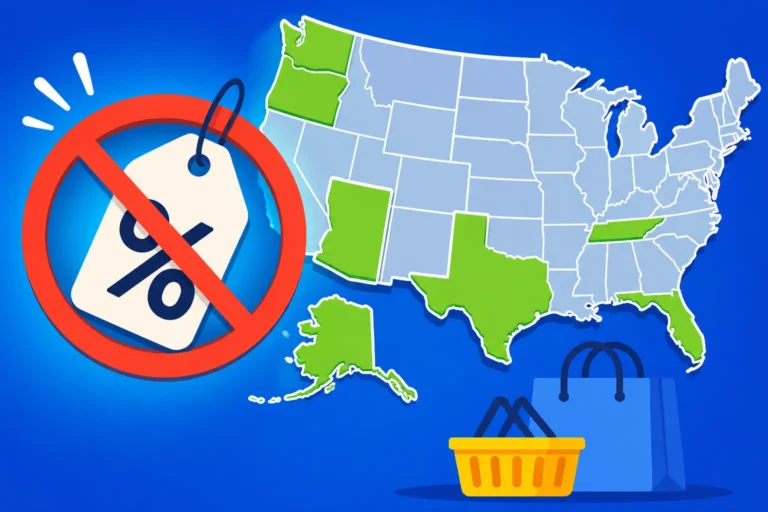
Many people assume that Alaska, often hailed as one of the few states without sales tax, is a sales tax-free haven. While it's true there's no statewide sales tax, this common belief hides a complex reality where local jurisdictions can and do impose their own taxes, creating a patchwork of rates that can surprise shoppers and challenge businesses. This guide will clarify Alaska's unique sales tax landscape, helping both residents and visitors understand what to expect.
Alaska's Statewide Sales Tax Situation
When you first hear that Alaska doesn't have a statewide sales tax, it often brings a sigh of relief, especially for businesses trying to simplify their tax obligations. Unlike most states that impose a baseline sales tax rate across the board, the state of Alaska itself does not collect sales tax on goods or services. This sets it apart from the vast majority of the U.S. and is a significant factor in its overall tax structure.
Why No State Sales Tax?
Alaska's unique approach to sales tax stems from a combination of its economic history and a strong tradition of local governance. For decades, the state's significant revenue from oil and gas production has largely funded state services, reducing the need for a statewide sales tax on consumers. This reliance on natural resource revenue meant that the state government didn't need to implement broad-based taxes like sales or income tax to maintain its operations.
Furthermore, Alaska has always emphasized local control, allowing individual cities and boroughs to determine their own needs and how to fund them. This decentralized approach means that while the state steps back from sales tax, it empowers its local communities to step forward. This is a critical distinction that often gets overlooked, leading to many misconceptions about the "tax-free" nature of the state.
What This Means for Shoppers
For the average shopper, the absence of a state sales tax might initially make prices seem lower than in places like California or Texas. However, it's crucial not to mistake the absence of a state sales tax for a complete absence of all sales tax. If you're buying something in Anchorage, you might not pay sales tax. But if you're shopping in Juneau or Ketchikan, you absolutely will.
This variability can be a real head-scratcher. You might visit one town and pay no tax on your souvenirs, only to travel a few hours down the road (or across a bay, in many Alaskan cases) to another community and find yourself paying an additional percentage. It's a key reason why understanding Sales Tax by ZIP Code (and Why ZIP Isn't Enough) is so important in a state like Alaska, where boundaries matter.
The Reality of Alaska's Local Sales Taxes
While the state of Alaska might not have a sales tax, that doesn't mean you're entirely off the hook when it comes to sales tax on purchases. This is where Alaska’s sales tax picture gets really interesting – and, frankly, a bit complicated. Alaska operates on a local-option sales tax system, meaning that cities, boroughs, and even some census areas can choose to levy their own sales taxes. And many of them do!
Borough and City Sales Taxes: The Real Story
The real story of sales tax in Alaska is found in its local jurisdictions. About 100 of Alaska's 164 organized municipalities impose a local sales tax. These aren't just small, negligible amounts either. Some areas have rates that rival the combined state and local rates found in other states. For example, communities like Juneau, Ketchikan, and Homer all have local sales taxes.
These local sales taxes are typically applied to retail sales of tangible personal property and some services within their boundaries. The exact rate, what's taxable, and any exemptions can vary significantly from one municipality to the next. This creates a highly fragmented sales tax environment. It's truly a testament to the fact that Why Is Sales Tax Different in Every City? is a question that resonates deeply with anyone navigating Alaskan commerce.
How Local Rates Affect Businesses and Consumers
For businesses operating in Alaska, this localized system presents a unique set of challenges. Instead of dealing with one uniform state rate, a business might need to track and apply dozens of different local rates depending on where their customers are located and where the sale occurs. This becomes particularly complex for businesses with multiple physical locations or those that sell online across different Alaskan communities.
Consumers, on the other hand, need to be aware that the price tag they see might not be the final price. A purchase made in Fairbanks (which doesn't have a local sales tax) will look different from the exact same purchase made in Skagway (which has a relatively high local rate). For businesses, keeping track of all these variations manually can be a full-time job. This is where modern sales tax solutions become invaluable; a service like Avalara can help automate the process of accurately calculating and collecting these varied local taxes, ensuring compliance even in Alaska's tricky landscape.
Navigating Sales Tax in the Last Frontier
Understanding Alaska's sales tax environment requires a shift in perspective. Instead of looking for a single statewide rate, you need to think hyper-locally. For businesses and consumers alike, navigating this system effectively can prevent surprises and ensure compliance. It's not about whether Alaska has sales tax, but where in Alaska it has sales tax, and at what rate.
Finding Current Local Sales Tax Rates
The most critical step in navigating Alaska's sales tax is knowing how to find the correct local rates. Since there's no central state sales tax authority managing these rates, you often have to look to the individual city or borough governments. Many municipalities will have their sales tax ordinances and current rates published on their official websites. However, this can be time-consuming if you deal with many different areas.
For businesses, especially those engaging in remote sales into various Alaskan communities, relying solely on manual lookups can lead to errors. This is where advanced tools come into play. Many businesses turn to sales tax compliance software, such as those offered by Avalara, which maintain up-to-date databases of all local sales tax rates, including those in Alaska's numerous jurisdictions. These tools can automatically apply the correct rate based on the customer's location, simplifying a process that would otherwise be incredibly cumbersome.
Sales Tax Compliance for Alaskan Businesses
For businesses operating within Alaska, especially those selling to customers in multiple municipalities, compliance means more than just knowing the rates. It involves understanding the local rules for what is taxable, any exemptions that might apply, and the specific reporting and remittance requirements for each jurisdiction. Each city or borough might have its own sales tax return forms, filing frequencies, and due dates.
This multi-jurisdictional compliance is a significant burden. For example, a business in Anchorage might not collect sales tax, but if they ship a product to a customer in the City and Borough of Juneau, they need to be registered with Juneau, collect Juneau's local sales tax, and file a return with Juneau. The complexity quickly escalates, making tools that track Sales Tax Due Dates by State 2026 and local filing requirements indispensable. Businesses must proactively identify where they have nexus — a connection sufficient to require sales tax collection — in Alaska's municipalities, which often means simply selling into them.
Key Alaska Cities and Their Local Sales Tax Rates
To truly grasp the varying landscape of sales tax in Alaska, it helps to look at specific examples. The rates shown in the table below are illustrative and subject to change, so always verify with the local taxing authority or a robust sales tax lookup tool. What becomes immediately apparent is the stark contrast between communities that choose to levy a sales tax and those that do not, as well as the wide range of rates among those that do.
| Alaskan Municipality | Local Sales Tax Rate (Approx. 2024-2026) | State Sales Tax | Total Sales Tax Rate | Notes |
|---|---|---|---|---|
| Anchorage | 0% | 0% | 0% | No local sales tax |
| Fairbanks | 0% | 0% | 0% | No local sales tax |
| Juneau | 5% | 0% | 5% | |
| Ketchikan | 6.5% | 0% | 6.5% | High local rate |
| Sitka | 5% (Seasonal variations apply) | 0% | 5% | Can vary by season |
| Homer | 4.5% | 0% | 4.5% | |
| Seward | 6% (Seasonal variations apply) | 0% | 6% | Can vary by season |
| Wasilla | 0% | 0% | 0% | Part of Mat-Su Borough, which has no sales tax |
Examples of High and Low Local Rates
As you can see from the table, there's a significant difference in what consumers pay. Cities like Anchorage and Fairbanks are true sales tax-free zones, thanks to their decision not to impose a local sales tax. This can make them attractive for larger purchases if you're willing to travel. However, in places like Ketchikan, you're looking at a 6.5% local sales tax, which means a $100 purchase will cost you an additional $6.50. This is higher than the base state rate in many other parts of the country.
Other communities, like Sitka and Seward, add another layer of complexity with seasonal sales tax rates. This means the rate might be higher during peak tourist seasons (typically summer) and lower during the off-season. This variation can be incredibly challenging for businesses, particularly those with fluctuating seasonal sales, and underscores the need for precise, real-time rate lookup capabilities. Imagine trying to keep up with these changes manually throughout the year; it's practically impossible without a system in place.
The Impact of Tourism on Local Sales Tax
Many of the Alaskan municipalities that do impose a sales tax are popular tourist destinations, particularly along the cruise ship routes. For these communities, local sales tax often represents a crucial revenue stream, helping to fund essential public services that support both residents and the influx of visitors. When cruise ships dock, thousands of tourists disembark, ready to shop for souvenirs, dine in local restaurants, and partake in excursions.
The sales tax collected on these transactions significantly contributes to local budgets, supporting infrastructure, public safety, and other amenities. This economic reality is a primary driver behind why these areas choose to have a local sales tax, despite the state's "no sales tax" reputation. It's a strategic choice to capture revenue from a temporary population that benefits from local services without directly contributing through property taxes. Understanding this dynamic helps explain why Average Sales Tax Rate by State can be misleading when comparing Alaska to other states; you have to look deeper than the state level.
Sales Tax Registration and Economic Nexus in Alaska
For businesses, especially online sellers or those with a remote presence, the question of whether to collect sales tax in Alaska isn't just about knowing the local rates; it's also about understanding where and when you're required to register and collect. While there's no state registration, the concept of "economic nexus" still applies at the local level.
Economic Nexus for Alaskan Municipalities
Even without a statewide sales tax, the landmark South Dakota v. Wayfair Supreme Court decision still impacts Alaska's local jurisdictions. Many of the larger municipalities, or those that are part of the Alaska Remote Seller Sales Tax Commission (ARSSTC), have adopted economic nexus thresholds. This means if your business, even one located outside Alaska, meets certain sales thresholds into these specific communities (e.g., $100,000 in sales or 200 transactions within a calendar year), you might be required to register, collect, and remit their local sales tax.
This is a huge compliance hurdle. A business could be located in Florida, for instance, and have never set foot in Alaska, but still be required to collect sales tax for sales made to customers in Juneau or Ketchikan if they meet those economic nexus thresholds. This is exactly why it's so important to monitor Economic Nexus by State 2026: Thresholds Guide — even for states like Alaska where the state itself doesn't have a sales tax.
Registering and Remitting Local Sales Tax
If your business establishes economic nexus with an Alaskan municipality, you'll need to register with that specific city or borough. This isn't a single, statewide registration like in most other states. Instead, it's a separate registration for each individual jurisdiction where you meet the nexus threshold. The process, forms, and filing frequencies will vary by municipality.
The Alaska Remote Seller Sales Tax Commission (ARSSTC) aims to simplify this for remote sellers by providing a centralized registration and filing portal for participating member municipalities. This is a significant step towards streamlining compliance, as it allows businesses to register and file with multiple jurisdictions through a single platform, rather than having to interact with each one individually. However, not all municipalities are members, so businesses still need to be diligent about checking their individual obligations.
Planning for Alaskan Sales Tax
Whether you're a business owner or a consumer, navigating the sales tax landscape in Alaska requires a proactive approach. Don't assume anything based on the "no state sales tax" moniker. Instead, dive into the local details.
For Businesses: Staying Compliant and Efficient
Businesses selling into or within Alaska need a robust strategy to manage local sales tax. This includes:
- Nexus Monitoring: Regularly review your sales data to identify if you've met any economic nexus thresholds in various Alaskan municipalities. Tools like Avalara can automate this tracking, alerting you when you approach or cross a threshold.
- Rate Accuracy: Implement a system to ensure you're applying the correct local sales tax rate for each sale, based on the precise delivery address. This is critical given the varied rates and seasonal adjustments.
- Registration and Filing: Promptly register with any Alaskan municipality where you establish nexus. Utilize the ARSSTC portal if applicable, but be prepared to register directly with non-member jurisdictions. Maintain accurate records and file returns on time.
- Educate Your Customers: If you sell to Alaskan customers, consider clearly communicating how local sales taxes apply, especially if they're used to the state's "tax-free" reputation.
The compliance burden can be substantial, especially for businesses with sales across many jurisdictions. Investing in a reliable sales tax automation platform is often the most cost-effective solution, freeing up valuable time and resources that would otherwise be spent on manual research and data entry.
For Consumers: Smart Shopping Strategies
As a consumer, being aware of Alaska's local sales taxes can help you make more informed purchasing decisions.
- Know Your Local Rate: Before making a big purchase, especially if you live in or are visiting a municipality that imposes a sales tax, know what that rate is. This helps you budget accurately.
- Consider Location for Big Buys: If you're planning a significant purchase, and your schedule allows, consider whether buying it in a municipality without a local sales tax (like Anchorage or Fairbanks) could save you money.
- Online Shopping Awareness: Don't be surprised if you're charged local sales tax on online orders shipped to an Alaskan address, especially if the seller meets economic nexus thresholds in that specific community. This is a legitimate charge.
Understanding that Alaska's sales tax situation is a "local game" is the first step. By staying informed and utilizing available resources, both businesses and consumers can navigate the Last Frontier's unique tax landscape successfully.
Disclaimer
The information provided in this guide is for general informational purposes only and does not constitute professional tax advice. Sales tax laws are complex and subject to change. Always consult with a qualified tax professional or the appropriate state and local taxing authorities for advice tailored to your specific situation.