Average Combined Sales Tax by Region
Navigating sales tax rates can feel like deciphering an ancient scroll, especially when you consider how much they fluctuate from one state to the next, and even more so by city and county. If you're running a business or just trying to budget for a big purchase, getting a handle on the general sales tax landscape across the country is crucial. This guide cuts through that confusion by breaking down the average combined sales tax rates across different regions of the United States, helping you understand the broad strokes of what to expect wherever you might be doing business or shopping.
Understanding Combined Sales Tax: It's More Than Just the State Rate
Before we dive into regional averages, it’s really important to grasp what "combined sales tax" actually means. It's not just the single percentage you see advertised for a state. Oh no, it’s far more intricate than that! When people talk about sales tax, they often think of the state-mandated rate, like California's 7.25% or Texas's 6.25%. But that's just the starting point.
The Layers of Local Taxation
The "combined" part comes from all the additional local taxes that states allow their various jurisdictions to levy. We’re talking about counties, cities, special districts (transit, hospital, school districts, etc.), all piling on their own percentages. These local rates can vary wildly, even between neighboring towns. For example, you might cross a street from one city into another and find a completely different sales tax rate because of these local add-ons. It's a major reason why calculating sales tax accurately can feel like a headache. To truly understand what you're paying or collecting, you need to look at the How Combined Sales Tax Rates Work in detail, not just the base state rate.
Why Local Rates Matter So Much
Think of it this way: New Orleans, Louisiana, has a state sales tax rate of 4.45%, but the combined rate can soar to over 9.45% due to local parish and city taxes. That’s a huge difference! Businesses, especially those selling online, have to contend with literally thousands of these local jurisdictions across the country. This is why a simple state-level understanding isn't enough; you need to understand the nuances of Sales Tax by ZIP Code and Why ZIP Isn't Enough to get a true picture of the tax landscape. It's not uncommon for businesses to face penalties for miscalculating sales tax because they only applied the state rate and overlooked the substantial local components.
Why Sales Tax Rates Vary So Significantly by Region
The patchwork of sales tax rates across the U.S. isn't random; it's deeply rooted in state and local governance, economic needs, and historical precedents. Each state has the authority to set its own sales tax policies, and most extend that authority to their local governments, creating a diverse landscape of taxation.
State-Level Philosophies
Some states, often those with high income taxes or property taxes, choose to have lower sales tax rates or even no sales tax at all (like Delaware, Montana, New Hampshire, and Oregon). These states aim to attract businesses and residents by reducing the tax burden on consumption. Conversely, states with lower income or property taxes might rely more heavily on sales tax to fund public services. For instance, states like Tennessee and Louisiana often have higher combined sales tax rates, partly because they have no state income tax, so they lean on sales tax and local taxes to fill their coffers. Understanding these foundational differences is key to comprehending the overall tax burden. If you're curious about the extremes, take a look at the Highest & Lowest Sales Tax States 2026.
The Role of Local Control and Funding
The vast majority of the variation, especially at a regional level, comes down to how much local governments are allowed to tax and how much they choose to tax. Cities and counties often implement their own sales taxes to fund specific local initiatives, such as public safety, infrastructure projects, schools, or transit systems. This is particularly evident in states like Colorado, where "home-rule" cities have significant autonomy to set their own sales tax rates, leading to considerable differences even within the same county. It’s a classic example of why sales tax can be different in every city. This decentralization creates pockets of high or low sales tax within broader regions, making broad generalizations challenging but still useful for understanding trends. For specific examples, one might research the Louisiana Parish Sales Tax Complexity to see just how intricate this can get.
Breaking Down Average Combined Sales Tax Rates by US Region
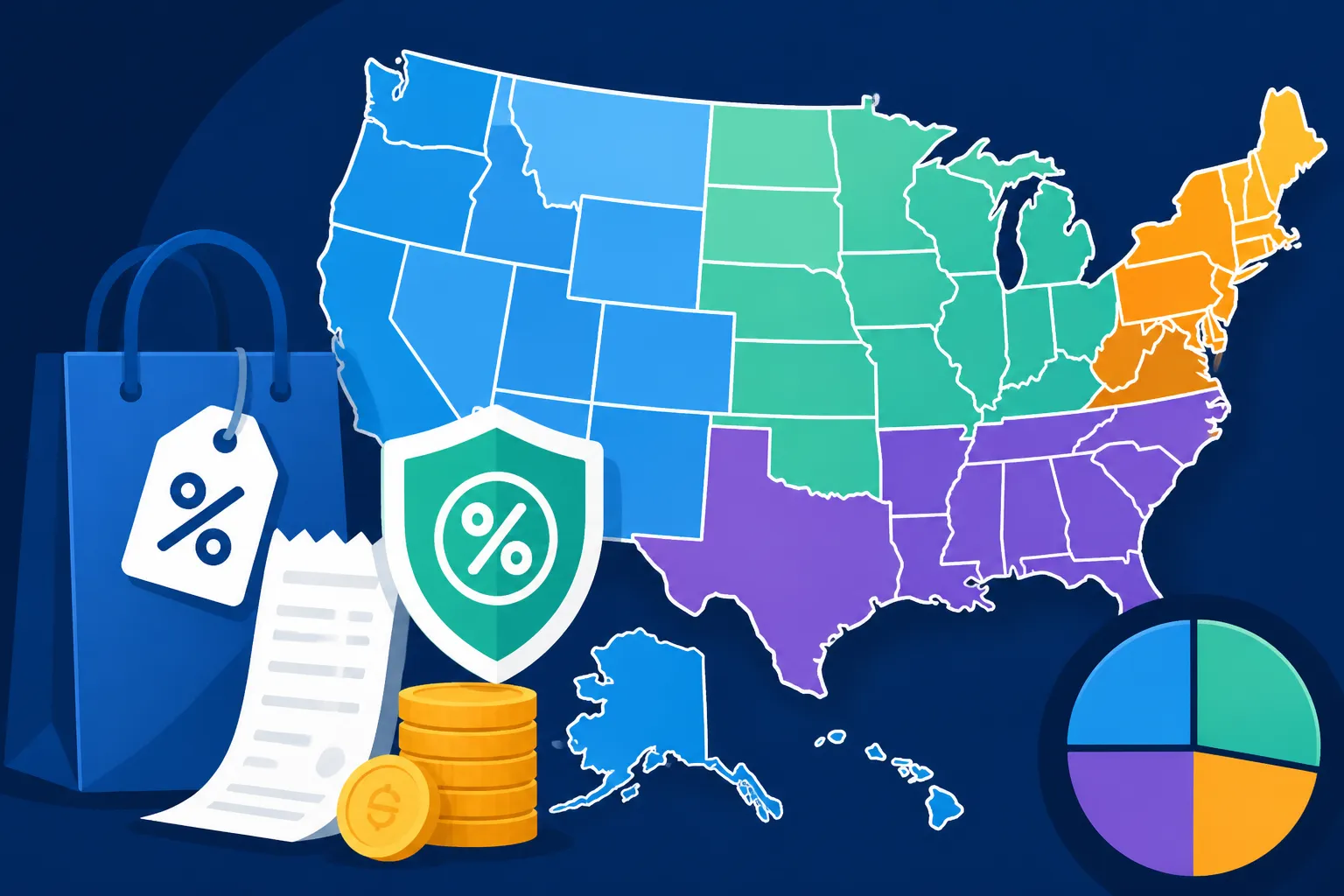
Alright, let's get to the heart of the matter. While there's no single, perfectly precise "average combined sales tax" for an entire region, we can look at the typical ranges and averages across the major U.S. geographical areas. Keep in mind that these are averages, and individual states, counties, and cities within each region can (and often do) fall significantly above or below these figures.
Here's a look at the general landscape, based on current data:
| U.S. Region | Typical Average Combined Sales Tax Rate | Key Characteristics | States Included (Examples) |
|---|---|---|---|
| Northeast | 6.0% – 7.5% | Generally moderate, but some states have no state sales tax or specific exemptions (e.g., clothing in NY/MA below certain price points). Local taxes are less common but exist. | Connecticut, Maine, Maryland, Massachusetts, New Jersey, New York, Pennsylvania, Rhode Island, Vermont. (NH & DE have no state sales tax.) |
| South | 8.0% – 9.5% | Tends to have higher combined rates, with many states relying heavily on sales tax due to no or low income taxes. Significant local add-ons are common. | Alabama, Arkansas, Florida, Georgia, Kentucky, Louisiana, Mississippi, North Carolina, Oklahoma, South Carolina, Tennessee, Texas, Virginia, West Virginia. |
| Midwest | 7.0% – 8.5% | Diverse; some states are moderate, others higher due to a mix of state and local rates. Local taxes are prevalent. | Illinois, Indiana, Iowa, Kansas, Michigan, Minnesota, Missouri, Nebraska, North Dakota, Ohio, South Dakota, Wisconsin. |
| West | 7.5% – 8.5% | Varies widely. Includes states with high combined rates (California, Washington) and those with no state sales tax (Oregon, Montana, Alaska). Local taxes are very common. | Arizona, California, Colorado, Hawaii, Idaho, Nevada, New Mexico, Utah, Washington, Wyoming. (Alaska, Montana, Oregon have no state sales tax.) |
Note: These averages are approximations and can fluctuate with legislative changes. Always verify specific rates for any given location.
The Northeast: A Mix of Moderation and Exemptions
The Northeast region presents a varied picture. States like Connecticut, Massachusetts, and New York have statewide rates that aren't the absolute highest, but then you find local taxes in places like New York City pushing the combined rate up to 8.875%. What's particularly interesting here are the sales tax exemptions for certain items, like clothing under a specific price point in New York and Massachusetts. This can make the effective sales tax lower for many everyday purchases. On the flip side, states like New Hampshire and Delaware famously have no state sales tax at all, making them outliers in the region and influencing the lower end of the regional average. This leads to unique circumstances where sellers need to understand Is Clothing Taxable in New York? ($110 Rule) or other specific exemptions.
The South: Often Leading with High Combined Rates
When you look at the South, you'll generally find some of the highest combined sales tax rates in the country. States like Louisiana, Arkansas, Alabama, and Tennessee frequently appear on lists of states with the highest overall sales tax burdens. This is largely due to aggressive local sales taxes on top of already significant state rates. For example, the Louisiana Sales Tax Rate (Highest Combined 10.11%) exemplifies this trend. This region often relies heavily on consumption taxes because many of these states have no state income tax, or very low ones. Businesses operating here must be hyper-aware of local tax variations to ensure compliance.
The Midwest: A Solid Middle Ground
The Midwest generally sits in the middle when it comes to average combined sales tax rates. States like Illinois have a relatively high state rate, and then local city and county taxes, particularly in places like Chicago, can make the combined rate substantial. Iowa and Missouri also have significant local add-ons. However, you also have states like Michigan and Ohio with more moderate rates. The takeaway here is that while the regional average might not be as high as the South, the variation within the Midwest is still considerable, and local rates are a critical component of the final tax burden.
The West: Peaks and Valleys of Sales Tax
The Western U.S. might be the most diverse region for sales tax. You have powerhouses of high combined rates like California and Washington, where state rates are high, and local district taxes frequently push combined rates above 9% or even 10%. Just look at the California Sales Tax Rate (7.25% Base + Districts) or the Seattle Sales Tax Rate 2026 (10.55%). Yet, within the same region, you find Oregon and Montana, which famously have no statewide sales tax at all, pulling down the regional average significantly. Alaska also has no state sales tax but allows localities to implement substantial local rates, sometimes reaching 7.5% in places like Juneau. This means that an average for the West can be misleading without understanding the dramatic swings between individual states. If you're selling to customers in this region, relying on averages alone is a recipe for trouble.
Factors Influencing These Regional Sales Tax Averages
The "average" is a useful starting point, but it's crucial to understand the underlying currents that push these numbers up or down. These factors dictate not only the current rates but also how likely they are to change in the future.
Economic Health and Funding Needs
A region's economic health directly impacts its reliance on sales tax. During economic downturns, states and local governments might look to sales tax increases as a way to maintain funding for essential services when other tax revenues (like income or property taxes) decline. Conversely, booming economies might see less pressure to raise rates, or even small reductions in some cases. Areas with rapidly growing populations or extensive infrastructure needs (new roads, schools, hospitals) often find themselves needing more revenue, and sales tax is a common lever to pull. This is why you see states sometimes announcing 2026 Sales Tax Rate Changes by State to address budget gaps or surpluses.
Political Climate and Voter Preferences
Taxation is always a political hot potato. Regions with a more fiscally conservative lean might favor lower overall tax burdens, while regions with a more liberal bent might be more amenable to higher taxes to fund robust social programs. Local ballot initiatives often play a significant role here, with voters directly approving or rejecting specific sales tax increases for bond measures or special projects. This democratic process means that even within a generally high-tax state, a particular county or city might vote for a lower rate or vice-versa, directly impacting the combined average for their area.
Tourism and Out-of-State Revenue
Some regions or states, particularly those with strong tourism industries, might strategically set sales tax rates to capture revenue from out-of-state visitors. Think about states with popular vacation destinations; a portion of the sales tax collected is effectively paid by non-residents, easing the burden on locals. Las Vegas, Nevada, for instance, benefits greatly from tourist spending, contributing significantly to its tax base. This strategy can allow states to maintain services without solely relying on their residents' income or property taxes.
Navigating the Complexity: Tools and Resources for Accurate Sales Tax
Given the incredible complexity of sales tax, especially when dealing with various regions and their local rates, relying on averages simply won't cut it for real-world business operations. You need precision.
The Need for Real-Time, Location-Specific Data
Imagine you’re an online seller based in Florida, but you have customers all over the country. You've got to figure out the correct sales tax for a customer in Los Angeles, California, versus one in Houston, Texas, or even a different part of Florida. This means knowing not just the state rate, but every single local tax that applies to that specific address. And it’s not just about the rate; you also need to know if the specific product or service you're selling is taxable in that jurisdiction. For instance, is Is SaaS Taxable? Software-as-a-Service by State in your customer's state? This level of detail makes manual calculation almost impossible to maintain, especially for businesses with high sales volumes or broad geographic customer bases.
Leveraging Sales Tax Automation Software
This is where sales tax automation software becomes an absolute lifesaver. Tools like Avalara specialize in providing real-time, address-level sales tax calculations. They integrate with your e-commerce platforms, POS systems, and accounting software to automatically determine the correct sales tax at the point of sale, taking into account state, county, city, and special district taxes. They also keep up with Sales Tax Rates by State 2026: All 50 States and any ongoing changes.
These solutions don't just calculate; they often help with nexus determination (where you need to collect tax), filing, and remittance, drastically reducing the compliance burden on businesses. For any business serious about getting sales tax right across various regions, investing in reliable software from providers like Avalara isn't just a convenience; it's a necessity. You can explore Sales Tax Rate Lookup Tools Compared to find the best fit for your needs. Trying to How to Calculate Sales Tax Step by Step for every single transaction across multiple regions would be a full-time job in itself, and frankly, prone to error.
Disclaimer
The information provided in this article is for general guidance and informational purposes only, and does not constitute professional tax advice. Sales tax laws are complex, subject to change, and vary by jurisdiction. Always consult with a qualified tax professional or refer to official state tax resources for advice tailored to your specific situation.