Is Clothing Taxable in New York? ($110 Rule)
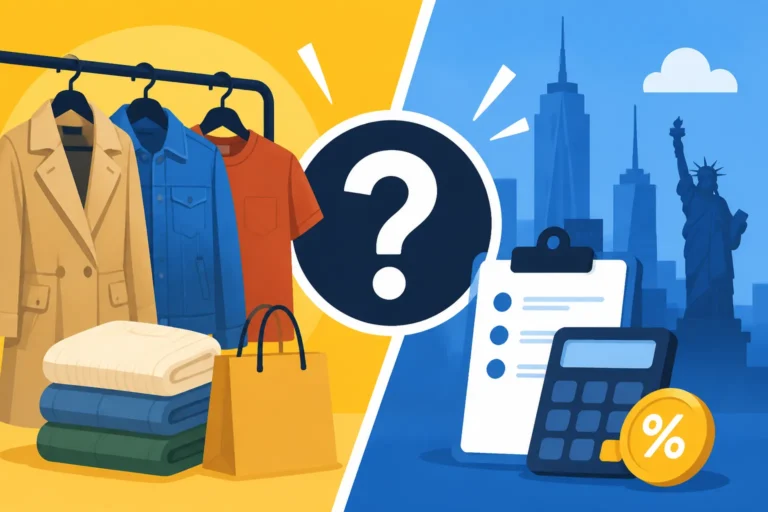
If you've ever stood at the checkout counter in New York, wondering why one pair of jeans seems to have sales tax while another doesn't, or why your online clothing order is taxed differently than something you picked up in a store, you're not alone. The sales tax rules for clothing in New York, particularly around the famous $110 threshold, can feel like a tangled mess. This guide aims to unravel that complexity, providing clear, empathetic explanations for both shoppers trying to save a buck and businesses striving for compliance.
The New York Clothing Sales Tax Landscape
Trying to figure out sales tax on clothing in New York can be genuinely confusing. It’s not a simple flat rate or a blanket exemption; instead, it's a layered system that depends on the item's price, where you're buying it, and sometimes even the specific type of garment. This nuanced approach has evolved over time to balance state revenue needs with consumer relief, particularly for essential clothing purchases. Understanding the basics is the first step to confidently navigating your next shopping trip or managing your business's tax obligations.
The General Rule and the $110 Exemption
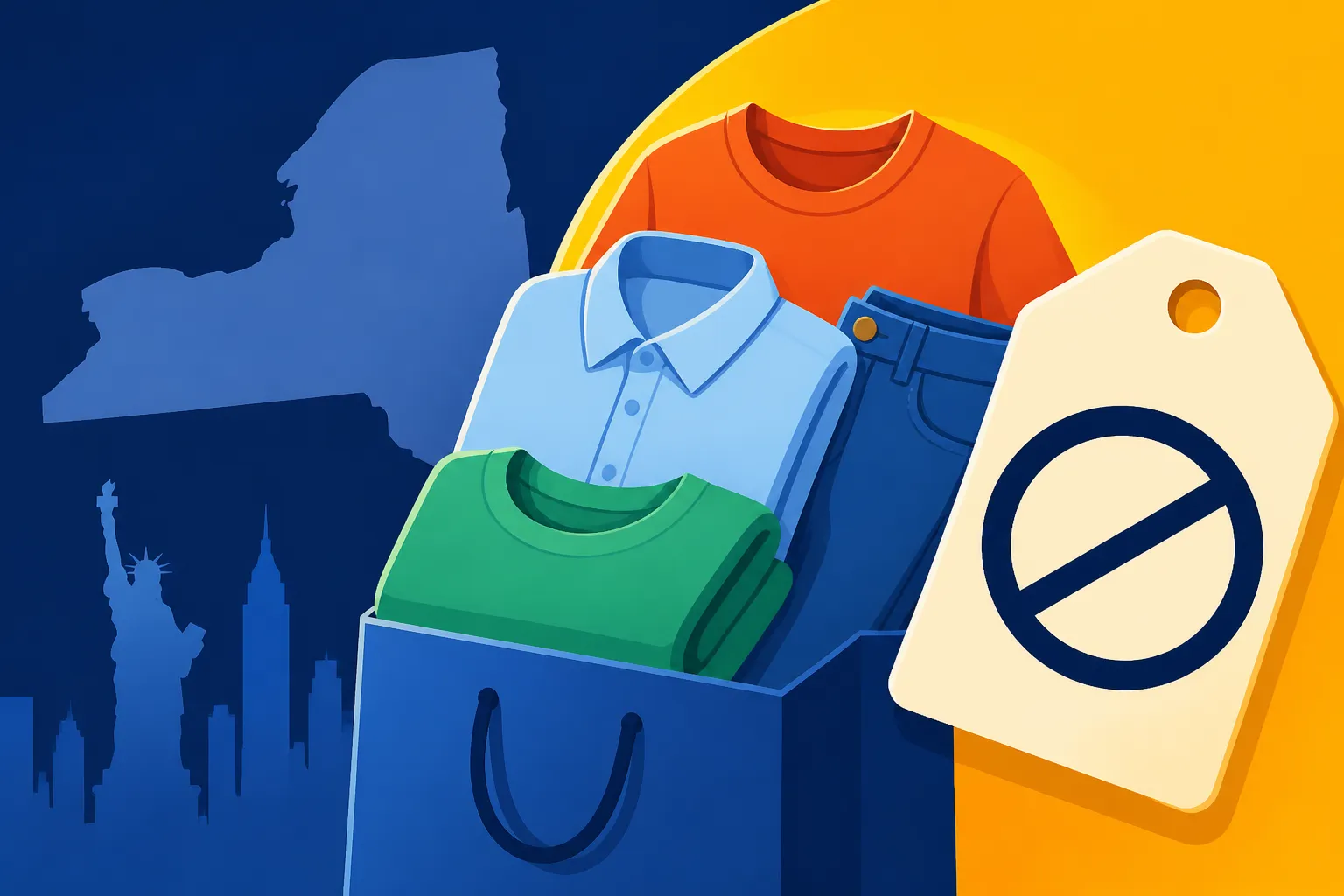
New York State has a base sales tax rate of 4%, but many counties and cities add their own local sales taxes on top of that. For most general merchandise, you'd pay the combined state and local rate. However, clothing and footwear are a special case. The state of New York offers an exemption from its 4% state sales tax for individual items of clothing and footwear that are priced at less than $110. This means if you buy a t-shirt for $25, you generally won't pay the state's 4% tax on it. But here's where it gets tricky: this exemption doesn't automatically apply to local taxes.
Many, but not all, local jurisdictions within New York State have adopted a similar exemption for their local sales tax portions. The most famous example, and often the source of the most confusion, is New York City. In NYC, if an item of clothing or footwear costs less than $110, it's completely exempt from sales tax—meaning you pay neither the 4% state tax nor the city's 4.5% local tax and 0.375% Metropolitan Commuter Transportation District (MCTD) surcharge. This brings the effective sales tax rate to 0% for eligible items under $110 in New York City. It's a significant saving for consumers and a unique aspect of shopping in the five boroughs.
Why New York City is Different and Other Localities
The reason New York City stands out is that its local government has explicitly chosen to exempt clothing and footwear under $110 from its portion of the sales tax. This means that if you're shopping for a pair of sneakers priced at $99 in Manhattan, you'll walk out paying exactly $99. The city's decision was largely driven by a desire to boost retail sales and make New York more competitive with neighboring states like New Jersey, which has a broader clothing sales tax exemption. This local legislative choice creates a patchwork of sales tax rules across the state.
Consider, for example, shopping in Erie County, which includes Buffalo. Erie County has its own local sales tax rate. While the 4% state sales tax portion is exempt on clothing items under $110, the Erie County local sales tax (currently 4.75%) would still apply to those items, unless Erie County has also adopted the under-$110 exemption for its local portion. As of recent updates, some counties outside of NYC have indeed aligned with the state exemption for their local portions, but it's not universal, creating potential inconsistencies. This is why you really need to understand the local rules for Combined State + Local Sales Tax Rates Explained. It's always a good idea to check the specific county or city's tax department website if you're unsure about the local portion. This variation is a classic pain point for businesses operating across different jurisdictions within the state.
How the Exemption Works in Practice
The $110 threshold applies to each individual item. This is a critical detail. If you buy three t-shirts, each costing $30, none of them will be subject to state sales tax (or local tax in NYC) because each item is under the $110 limit. Your total purchase might be $90, but the tax status is determined item-by-item. However, if you buy a single coat for $120, that entire $120 item becomes taxable at the applicable state and local rates, because it exceeds the $110 threshold. It’s not prorated; it’s an all-or-nothing deal per item.
This individual item rule also means that if an item is sold as a set, like a suit jacket and pants, the total price of the set is usually considered for the $110 threshold, not the individual components. But if the components are sold separately, even if worn together, they are assessed individually. This subtle distinction can be tricky for both cashiers and shoppers. For businesses, having a robust sales tax calculation system, perhaps one integrated with services like Avalara, is essential to correctly apply these rules at the point of sale, avoiding errors that can lead to audits or customer dissatisfaction.
Unpacking the $110 Rule: How it Really Works
The "less than $110" rule sounds straightforward, but its application can introduce unexpected complexities, especially when you consider different types of items, sales promotions, or bundles. It’s not just about the sticker price; it’s about the taxable price of an individual item after any discounts but before any additional fees like shipping. This nuanced approach requires careful attention to detail from both consumers and retailers to ensure compliance and avoid overpaying or under-collecting sales tax.
Defining "Clothing and Footwear" for the Exemption
So, what exactly counts as "clothing and footwear" for this exemption? New York defines it quite broadly to include most items worn on the body. This covers everything from your everyday shirts, pants, dresses, and socks to formal wear, activewear, and even underwear. Footwear includes sneakers, boots, sandals, and dress shoes. Generally, if it's designed to be worn on the human body for adornment or protection, and it falls under the price threshold, it’s likely exempt from the state's 4% sales tax (and local tax in NYC).
However, there are exceptions that often trip people up. Items considered "accessories" are typically not exempt, regardless of their price. This category includes things like jewelry, handbags, wallets, umbrellas, briefcases, watches, and hair accessories. Belts, strangely enough, sometimes fall into a gray area depending on how they are marketed and sold, though most are considered accessories. Athletic or protective equipment, even if worn, might also be excluded if its primary purpose isn't general clothing but rather sport-specific protection. This is a common area of confusion, making it helpful to understand the state's specific guidelines to determine if your Is Clothing Taxable in Massachusetts? ($175 Rule) or Is Clothing Taxable in New Jersey? (Exempt) neighbor states have similar definitions.
Impact of Discounts, Coupons, and Bundles
The $110 threshold applies to the selling price of the item after any applicable discounts or coupons provided by the seller. This is a consumer-friendly aspect of the rule. For example, if a jacket is originally priced at $120 but you have a 20% off coupon, bringing the price down to $96, that jacket now qualifies for the exemption because its final selling price is less than $110. This encourages shoppers to look for deals, as discounts can effectively turn a taxable item into a tax-exempt one.
However, manufacturer's coupons typically don't reduce the sales price for tax purposes. If the store is reimbursed by the manufacturer, the original price before the manufacturer's coupon is usually the price considered for sales tax. This distinction between seller-issued and manufacturer-issued coupons can add another layer of complexity. For bundled items, the general rule is to look at the selling price of each individual component if they could reasonably be sold separately. If items are sold as a single unit and not easily divisible (e.g., a two-piece dress set), the total price of the unit determines taxability against the $110 threshold. Retailers need to configure their POS systems carefully to handle these scenarios correctly, especially with diverse product offerings.
Understanding "Use Tax" for Out-of-State Purchases
What happens if you buy clothing online from a retailer outside New York, or if you purchase it while traveling in another state and bring it back? This is where "use tax" comes into play. If an item of clothing would have been taxable had you purchased it in New York (i.e., it cost $110 or more, or it's an accessory not covered by the exemption), and the out-of-state seller didn't charge you New York sales tax, you, as the consumer, are technically responsible for paying New York use tax on that purchase. This applies whether you bought it from an online store that doesn't have nexus in New York or picked it up during a vacation.
The use tax rate is generally the same as the sales tax rate you would have paid in New York, including both state and local portions, based on where you reside or where the item is used. While many individual consumers might not actively track and remit use tax, businesses are expected to be far more diligent. This concept also becomes more complex for online retailers, who, due to economic nexus laws established by the South Dakota v. Wayfair Supreme Court decision, are increasingly required to collect sales tax on behalf of New York customers regardless of physical presence. So, if you're shopping from a large online retailer like Amazon or a brand that has established Economic Nexus by State 2026: Thresholds Guide in New York, they will likely charge you the correct New York sales tax at checkout, regardless of the $110 rule if your local jurisdiction doesn't exempt it. However, smaller or specialized online stores might not, leaving you with a potential use tax liability.
Beyond the Basic Garment: What Else Gets Taxed (or Not)?
The world of fashion and apparel extends far beyond just basic shirts and pants. There are specialized items, accessories that complement an outfit, and services that alter or maintain clothing. Each of these categories can have its own quirks when it comes to New York sales tax, often leading to more head-scratching moments for both shoppers and merchants. Discerning what truly falls under the "clothing and footwear" exemption and what doesn't is key to navigating these rules effectively.
Accessories, Footwear, and Protective Gear
As mentioned, most accessories are taxable in New York, regardless of price. This includes items like scarves, ties (often a surprise to people!), gloves, hats, handbags, belts, and jewelry. The logic here is that these items are not considered essential clothing or footwear for basic wear. They are add-ons. So, while a $90 pair of shoes might be tax-exempt in New York City, a $90 handbag purchased at the same time will be fully taxable. It’s a distinction that often feels arbitrary but is firmly embedded in tax law.
Footwear is generally treated the same as clothing, benefiting from the less than $110 exemption. However, specialized footwear, like cleats for sports, skates, or ski boots, might fall into the category of "protective equipment" rather than general footwear, and thus become taxable regardless of price. The line can be blurry, and it often comes down to the primary purpose of the item. If it's designed specifically for a sport or a protective function, it's more likely to be taxed. This is similar to how Is Shoes Taxable in Texas? handles these items. This level of detail underscores why businesses often leverage tools like Avalara to ensure their product catalogs are correctly categorized for sales tax purposes.
Alterations, Repairs, and Services
What about services related to clothing? Generally, in New York, services are not taxable unless specifically enumerated by law. This means that if you buy a pair of pants that are tax-exempt (under $110) and then pay a tailor to alter them, the alteration service itself is usually not subject to sales tax. The same goes for dry cleaning services or shoe repair – these are generally not taxable services. You would only pay sales tax on any taxable materials used during the repair if they are separately stated and subject to tax.
However, if a taxable item (like a coat over $110) requires alteration, and the alteration is included in the initial purchase price, then the entire transaction, including the "value" of the alteration, becomes subject to sales tax. This distinction between services performed after a purchase and services included within the sale of a taxable item is important. Businesses offering both clothing sales and related services need to be meticulous in how they present and charge for these elements to maintain compliance. Knowing Is Services Taxable? What's Taxable by State is crucial for any business owner.
Online Purchases and Shipping Costs
The "Is Clothing Taxable in New York?" question extends directly to online shopping. Thanks to economic nexus laws, most larger online retailers are now required to collect New York sales tax if they meet the state's sales thresholds. This means if you buy an item from a major online store, they should generally apply the correct sales tax, including the $110 exemption, based on your shipping address. So, if you order a $50 shirt from an online retailer and have it shipped to your apartment in Manhattan, you shouldn't be charged sales tax by that retailer.
However, what about shipping and handling costs? This is another area where rules vary by state, and New York has its own take. In New York, if the item being shipped is taxable, then the shipping and handling charges are also generally taxable. But if the item itself is exempt from sales tax (like a $50 shirt shipped to NYC), then the shipping charges associated with that exempt item are usually also exempt. This is a favorable rule for consumers and helps avoid adding tax to an otherwise tax-free purchase. Still, for businesses, accurately configuring shopping cart software to handle these rules for Is Shipping Taxable? Freight Sales Tax by State can be a challenge.
Why This Rule? The Policy and History Behind It
Sales tax exemptions, especially for something as fundamental as clothing, aren't arbitrary. They typically reflect a state's economic priorities, social welfare considerations, and sometimes, a reaction to regional competitive pressures. The $110 rule in New York is a prime example of a policy designed to achieve multiple objectives, evolving over time in response to various economic and political climates. Understanding its roots can help demystify its current application.
Balancing Revenue and Consumer Relief
At its heart, the New York clothing exemption is a balancing act between the state's need for revenue and the desire to ease the financial burden on its residents. Clothing is a necessity, and taxing every single garment, especially at lower price points, can disproportionately affect lower-income families. By exempting items under $110, the state aims to provide some relief for everyday purchases, making essential clothing more affordable. This policy acknowledges that people need to buy clothes regularly, and removing the sales tax on these basic items can free up household budgets.
However, the $110 threshold also means that luxury or higher-priced clothing items are still taxed. This allows the state to continue collecting significant sales tax revenue from more expensive purchases, which are often considered discretionary. It’s a way of targeting tax relief where it's most needed without completely abandoning a revenue stream. This approach contrasts with states like Pennsylvania or New Jersey, where most clothing is entirely tax-exempt, regardless of price. These different philosophies highlight the varying approaches states take to Sales Tax Rates by State 2026: All 50 States.
Historical Context and Evolution of the Exemption
The New York clothing sales tax exemption isn't new; it has a history of fluctuations and political debates. In the late 1990s and early 2000s, New York State periodically experimented with various clothing tax exemptions, sometimes making all clothing tax-free, other times implementing price thresholds. These changes were often influenced by concerns about "border bleed"—New Yorkers crossing into neighboring states like New Jersey (where clothing is generally exempt) to do their shopping, thus taking valuable sales tax revenue with them.
The $110 threshold, in particular, was settled upon as a compromise. It was designed to capture most everyday clothing items while still taxing higher-end garments. The decision for New York City and certain other localities to adopt this exemption for their local taxes further solidified its impact, particularly for the metropolis. These policy shifts demonstrate how tax laws are not static but are often reflections of economic conditions and legislative priorities, subject to change. Businesses, therefore, must keep a close eye on 2026 Sales Tax Rate Changes by State to ensure ongoing compliance.
Practical Strategies for Shoppers and Sellers
Navigating New York’s clothing sales tax rules can be a bit of a dance. For shoppers, it’s about making informed choices to maximize savings. For businesses, it’s about ensuring accuracy to avoid compliance pitfalls. Both parties benefit from a clear understanding of the rules and leveraging tools and strategies that simplify the process.
For Consumers: Saving Money on Clothing Purchases
As a New York shopper, your best bet for saving money on clothing sales tax is to be mindful of the $110 threshold and your specific location.
- Shop Smart in NYC: If you’re in New York City, remember that clothing and footwear items under $110 are completely tax-free. This is a fantastic advantage for everyday purchases. If an item is just over $110, consider if a discount could bring it below the threshold, as this would make it tax-exempt.
- Understand Local Rules Outside NYC: If you're outside New York City, confirm whether your specific county or city exempts its local sales tax portion on clothing under $110. You can usually find this information on the county's or state's tax department website. If not, be prepared to pay the local tax even on items under $110.
- Leverage Discounts: Always look for store-specific discounts or coupons that bring the price of an item below $110 before tax. This can make a taxable item suddenly tax-exempt.
- Be Aware of Accessories: Remember that items like handbags, jewelry, and most hats and scarves are almost always taxable, regardless of price. Plan accordingly.
- Check Online Retailers: Most reputable online retailers will correctly apply the New York sales tax rules based on your shipping address. Always review your cart's sales tax breakdown before finalizing a purchase. If you're curious about a specific order, you can always use a Sales Tax Calculator: How to Calculate Sales Tax to double check.
For Businesses: Ensuring Accurate Sales Tax Collection
For retailers selling clothing in New York, accurate sales tax collection is not just good customer service; it's a legal obligation. Missteps can lead to audits, penalties, and a damaged reputation.
- Configure POS Systems Accurately: Your point-of-sale (POS) system must be programmed to correctly identify clothing and footwear items, apply the $110 threshold, and differentiate between state and local tax exemptions based on the transaction location. This can be complex, especially if you operate in multiple New York counties with different local rules.
- Train Staff: Ensure all sales associates understand the $110 rule, what constitutes "clothing and footwear," and which accessories are always taxable. Clear guidelines reduce errors and provide consistent customer experiences.
- Regularly Update Tax Tables: Sales tax rules can change. Jurisdictions might alter their local exemption policies or even their base rates. Staying updated is crucial. Manual updates are prone to error and time-consuming.
- Utilize Sales Tax Software: For businesses with significant sales volume or operations across different New York jurisdictions, investing in sales tax automation software is almost a necessity. Solutions like Avalara are specifically designed to handle these complex, fluctuating rules automatically, ensuring that the correct tax is calculated at the point of sale and that filings are accurate. This minimizes the risk of compliance issues and frees up valuable time.
- Understand Shipping Taxability: If you sell online, confirm your system properly applies the exemption to shipping charges for exempt items. Refer to the specific rules for Sales Tax on Shipping by State.
- Maintain Proper Records: Keep detailed records of all sales, including itemized lists and sales tax collected. This is vital for accurate How to File a Sales Tax Return: Step by Step and for audit defense.
Staying Compliant: Tools and Resources for Businesses
The intricacies of sales tax in New York, particularly for clothing, can feel overwhelming. Businesses, whether brick-and-mortar or online, need reliable strategies and tools to ensure they're collecting and remitting the correct amounts. Relying on outdated methods or incomplete information is a recipe for compliance headaches. Modern solutions are designed to simplify this complex landscape.
Leveraging Automation for Accurate Sales Tax Calculation
In today's fast-paced retail environment, manually tracking and applying nuanced sales tax rules like New York's $110 clothing exemption is nearly impossible for most businesses. This is where sales tax automation software becomes invaluable. These systems integrate directly with your e-commerce platform, POS system, or accounting software, automatically calculating the correct sales tax at the moment of purchase. For a New York-based business, this means the software knows to check if an item is categorized as "clothing or footwear," determines its price, identifies the customer's exact location (down to the street address), and then applies the correct combination of state, county, city, and district taxes, including any exemptions.
For instance, if a customer in Brooklyn buys a $75 shirt and a $120 jacket, an automated system would correctly charge 0% tax on the shirt and the full combined NYC sales tax (state 4%, city 4.5%, MCTD 0.375%) on the jacket, for a total of 8.875% on the jacket. Without automation, a cashier might mistakenly apply tax to the shirt or forget the exemption for the jacket. Platforms like Avalara offer robust solutions that can handle these complexities, providing peace of mind and significantly reducing the risk of errors. They keep up with Sales Tax Rate Changes by State 2026 automatically, which is a game-changer for businesses that want to stay compliant without constant manual oversight.
Resources for Businesses to Stay Informed
Staying informed is critical for sales tax compliance. The New York State Department of Taxation and Finance website is the authoritative source for all sales tax regulations, notices, and updates. Businesses should regularly check this site for changes to tax rates, new exemptions, or amendments to existing rules. They often publish technical memorandums (TSB-Ms) that provide detailed guidance on specific tax issues, including clothing and footwear exemptions.
Beyond state resources, industry associations and tax advisory firms often provide webinars, guides, and newsletters specifically tailored to sales tax compliance for retailers. Professional tax accountants specializing in sales tax can also be invaluable, particularly for businesses with complex operations or those experiencing rapid growth across multiple states. Even with automated solutions, understanding the underlying rules is important, and these resources help build that foundational knowledge. Additionally, platforms like Avalara frequently update their resources and guides to reflect the latest legislative changes, making them a comprehensive source for businesses looking to ensure their Sales Tax for Online Sellers: Complete Guide is up to snuff.
Sales Tax Filing and Remittance
Collecting sales tax is only half the battle; the other half is accurately filing returns and remitting the collected taxes to the state and local authorities. New York assigns a filing frequency (monthly, quarterly, or annually) based on a business's sales volume. It's crucial to know your assigned frequency and adhere to the Sales Tax Due Dates by State 2026. Late filings or inaccurate remittances can result in penalties and interest.
For businesses operating in multiple jurisdictions within New York, filing can involve breaking down sales by local tax rates, which can be a manual nightmare without proper tools. Sales tax automation software not only calculates tax but also often helps prepare returns, consolidating all collected taxes into the appropriate formats for each jurisdiction. This streamlines the filing process, minimizing the time and effort required to stay compliant. Whether you're a small online boutique or a large retailer, understanding your obligations and utilizing the right resources is key to successfully navigating the complex world of sales tax.
New York Sales Tax on Clothing in a Nutshell
To help summarize the complex rules, here's a quick reference table for how sales tax applies to clothing and footwear in New York State:
| Item Category | Item Price | Applies in NYC (State + Local) | Applies in most other NY Counties (State + Local) | Notes |
|---|---|---|---|---|
| Clothing & Footwear | Less than $110 | 0% (Fully Exempt) | Local tax may apply (check county-specific rules) | State portion (4%) is exempt statewide. |
| Clothing & Footwear | $110 or more | Full combined rate (8.875%) | Full combined rate (varies by county) | Entire item is taxable. |
| Accessories | Any price | Full combined rate (8.875%) | Full combined rate (varies by county) | Always taxable (e.g., handbags, jewelry, ties, most hats, scarves). |
| Protective/Sport Gear | Any price | Full combined rate (8.875%) | Full combined rate (varies by county) | Taxable if primary purpose is protection/sport, not general wear. |
| Alteration Services | N/A | Generally Not Taxable | Generally Not Taxable | Taxable only if part of the sale of a taxable item. |
| Shipping & Handling | For Exempt Items | 0% (Exempt) | Local tax may apply (check county-specific rules) | Generally follows taxability of the item itself. |
| Shipping & Handling | For Taxable Items | Full combined rate (8.875%) | Full combined rate (varies by county) | Generally follows taxability of the item itself. |
Note: "Full combined rate" for NYC includes 4% NYS, 4.5% NYC, and 0.375% MCTD. "Full combined rate (varies by county)" refers to the specific state and local sales tax rates applicable in that county.
Disclaimer
The information provided in this article is for general informational purposes only and does not constitute tax advice. Sales tax laws are complex and subject to change. Always consult with a qualified tax professional or the official New York State Department of Taxation and Finance resources for advice specific to your individual circumstances or business operations.