What Is a District Tax in California?
Navigating sales tax in California can feel like trying to solve a Rubik's Cube blindfolded, especially when you start hearing about "district taxes." Many businesses and even everyday shoppers get tripped up by the seemingly endless variations in rates from one street to the next. This guide will shine a light on what California district taxes are, why they exist, and how they impact sales tax calculations for everyone involved.
Understanding California's Layered Sales Tax System
California's sales tax isn't just one simple statewide number you can memorize. It's a complex, multi-layered system that stacks different tax rates on top of each other. This intricate structure is a significant reason why the Golden State often has some of the highest combined sales tax rates in the country, and why businesses often struggle to calculate the correct amount.
The Base State Sales Tax Rate
At its foundation, California has a statewide sales tax rate that applies uniformly across all cities and counties. This is the starting point for every sales tax calculation, no matter where in California a taxable transaction occurs. Think of it as the bedrock upon which everything else is built.
However, relying solely on this base rate for your sales tax calculations would lead to incorrect figures almost every time. It's crucial for businesses to understand that this state rate is rarely the final rate a customer pays or a business collects. It’s simply the foundational piece of a much larger, more fragmented puzzle, designed to fund state-level services and programs.
This foundational state rate has seen its own share of adjustments over the years, responding to various legislative needs and economic conditions. While it provides a degree of consistency for state revenue, the real complexity, and where many businesses get confused, arises from the local additions. For a broader perspective on how this compares nationally, you might be interested in our guide on Sales Tax Rates by State 2026: All 50 States.
Why Local Taxes Add Complexity
Beyond the state's foundational rate, individual counties and cities within California have the authority to levy their own additional sales taxes. These local taxes are typically enacted to fund specific local government services, such as maintaining roads, supporting public safety, or bolstering local education initiatives. This is why you'll often see sales tax rates vary significantly even between neighboring towns or within the same county.
This system means that a store just a few miles down the road from yours could be collecting a different sales tax rate simply because it falls under a different city or county jurisdiction. It's not about trying to make things difficult; it's about local communities having the autonomy to fund their specific needs through a tax mechanism that directly benefits their residents. The problem, of course, is that for businesses, especially those selling statewide or online, keeping track of these myriad local rates becomes a serious compliance challenge. Understanding How Combined Sales Tax Rates Work is essential for grasping this intricate system.
What Exactly Is a California District Tax?
Now, let's dive into the core of the matter: what are California's district taxes? If you thought state and local city/county taxes were enough, prepare for another layer of unique California complexity. District taxes are a critical component of the state’s sales tax landscape, adding even more variability to the rates businesses must track and collect.
Defining District Taxes and Their Purpose
California district taxes are special sales and use taxes imposed by specific local entities that aren't necessarily entire cities or counties. Instead, these are often special-purpose districts or regional authorities that cover defined geographic areas, sometimes spanning multiple cities or parts of counties. The key characteristic of a district tax is that it's typically enacted to fund a very particular project or set of services within that specific district.
For instance, you might find district taxes designated for major transportation infrastructure improvements, like new public transit lines or freeway expansions. Other districts might levy taxes to support local hospitals, protect open space, or enhance specific public safety programs. These taxes almost always require voter approval within the affected district, demonstrating a direct local mandate for the funds. This makes them distinct from general city or county sales taxes which might fund a broader range of municipal services. The purpose is highly targeted, and the geographic boundaries are often quite precise, sometimes even differing from traditional city or county lines.
Examples of Common District Taxes
To really grasp district taxes, it helps to look at some real-world examples you might encounter across California. One of the most well-known types of district taxes funds transportation. For example, the Bay Area Rapid Transit (BART) District imposes a sales tax in certain counties within its service area to maintain and expand the public transportation system. You'll find similar transportation sales tax measures in many other counties, such as Measure M in Los Angeles County, which funds various transit projects. The Los Angeles Sales Tax Rate Explained provides more specific details on how these layers stack up in that region.
Beyond transportation, other common district tax initiatives include those for local hospitals, open space preservation, or even specific library districts. These aren't just minor additions; they can significantly push up the combined sales tax rate. For example, the state base rate is 7.25%, but with district taxes, some areas in California can see combined rates well over 10%. Knowing the exact boundaries for these is crucial, as a business on one side of a street might be in a district, while a business on the other side might not, leading to different sales tax rates for what seems like the same location. This is why even within a single city, like San Francisco, the total sales tax rate can vary depending on which specific district a transaction occurs in.
How District Taxes Affect Businesses and Consumers
The presence of district taxes in California creates a ripple effect, significantly impacting both businesses trying to collect the correct amount and consumers paying at the register. It’s a crucial aspect of the California Sales Tax Rate (7.25% Base + Districts) that demands attention.
Impact on Businesses with Nexus
For businesses, especially those with a physical presence or economic nexus in California, district taxes are a substantial compliance headache. Imagine you're an online retailer selling to customers across California. You can't just apply the state rate; you need to apply the correct combined rate for each customer's specific location. This means accurately identifying not just the city and county, but also every single special district they fall into.
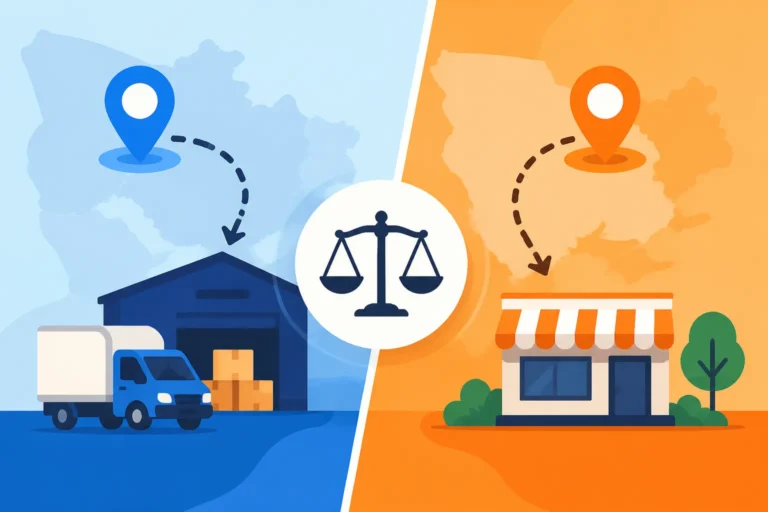
The complexity is amplified by California's sales tax sourcing rules. California is generally an origin-based state for intrastate sales (sales within California where the seller has a physical location). This means if you have a brick-and-mortar store in San Francisco and ship an item to a customer in Los Angeles, you typically charge the rate for your store's location. However, for remote sellers (those without a physical presence in California but who have economic nexus), and for certain types of sales, it can shift to a destination-based approach, where the tax rate is determined by the buyer's location. This nuance can make tax calculation a dizzying exercise. Tools like those offered by Avalara become indispensable in such scenarios, as they can automate the process of pinpointing the exact tax rate based on a precise address. Without such solutions, businesses risk under-collecting, leading to audits and penalties, or over-collecting, which can frustrate customers.
What Consumers See on Their Receipts
For consumers, district taxes usually aren't broken out as separate line items on a receipt. Instead, they're typically combined with the state and general local sales taxes into one single "sales tax" charge. This can make it difficult for shoppers to understand why their sales tax rate seems higher in one town than another, even if the towns are very close. For example, if you buy a coffee in downtown San Jose, you might pay a certain rate. Buy the same coffee from a vendor just outside the city limits but still within Santa Clara County, and the rate could be different due to various district taxes that apply.
This combined approach, while simplifying the receipt, obscures the underlying complexity. A customer paying, say, 9.25% sales tax in a specific part of California is actually paying the 7.25% state rate plus whatever local county, city, and various district taxes add up to. This patchwork of rates is also why simply looking up "California sales tax" on a quick search won't give you the full picture; you need to consider the hyper-local variations. Even if you just want to know What Is the Sales Tax in California, the answer is rarely a single number.
Finding the Correct District Tax Rate
Given the complexity, accurately determining the correct sales tax rate, inclusive of all district taxes, is paramount. This isn't just a nicety; it's a legal obligation that can have financial repercussions if handled incorrectly.
Challenges of Manual Rate Lookup
Trying to manually look up and apply the correct sales tax rate for every transaction in California is like trying to catch smoke. The sheer number of special districts, each with its own specific boundaries and tax rates, makes it nearly impossible for a human to keep track. These boundaries don't always follow neat street lines; they can be irregular, following rivers, utility lines, or even property parcel definitions.
Furthermore, these rates and boundaries are not static. District taxes can be introduced, amended, or sunsetted by local voters or legislative actions. Tracking these changes in real-time across hundreds of potential jurisdictions is beyond the scope of most small and medium-sized businesses. Relying solely on a ZIP code, for instance, is a common pitfall. A single ZIP code can often overlap multiple tax jurisdictions, meaning different sales tax rates apply within the same ZIP code. This is why our article on Sales Tax by ZIP Code (and Why ZIP Isn't Enough) highlights the dangers of this oversimplification. Without precise address-level data, you're essentially guessing, and when it comes to sales tax, guessing can be costly during an audit.
Tools and Resources for Accuracy
Fortunately, businesses don't have to navigate this labyrinth alone. There are reliable tools and resources available to help accurately determine sales tax rates, factoring in all applicable district taxes. The California Department of Tax and Fee Administration (CDTFA) offers an online lookup tool where you can enter an address to find the corresponding sales and use tax rate. This is an excellent starting point and a crucial official resource.
However, for businesses with a high volume of transactions or those selling across many different jurisdictions, integrating an automated sales tax solution is often the most practical and accurate approach. Companies like Avalara specialize in providing real-time, address-level sales tax calculations. These platforms use sophisticated geolocation technology to pinpoint the exact location of a transaction and apply all relevant state, county, city, and district taxes automatically. This automation ensures compliance, reduces the risk of errors, and frees up valuable time for businesses. For anyone selling online or across state lines, exploring the Best Sales Tax Compliance Software 2027 can be a game-changer. These solutions integrate with e-commerce platforms and accounting software, taking the guesswork out of sales tax collection entirely.
Here's a simplified look at how various rates combine in some California locations:
| Location Example | State Rate | County Rate (if applicable) | City Rate (if applicable) | Example District Tax (Type) | Total Combined Rate (Approx.) |
|---|---|---|---|---|---|
| State Base | 7.25% | 0.00% | 0.00% | 0.00% | 7.25% |
| Los Angeles (City) | 7.25% | 1.00% | 0.00% | 1.50% (Transportation) | 9.75% |
| San Francisco | 7.25% | 0.25% | 0.00% | 1.00% (Muni/Transportation) | 8.50% |
| San Diego (City) | 7.25% | 0.50% | 0.00% | 0.50% (Transportation) | 8.25% |
| Oakland | 7.25% | 1.00% | 0.00% | 2.25% (Regional/County) | 10.50% |
Note: Rates are illustrative and can change. Always verify current rates with official sources or specialized software.
As you can see, the district taxes add a significant percentage to the base state rate. For businesses, accurately accounting for these layers is non-negotiable. Knowing How Do I Find My Local Sales Tax Rate? is a question many ask, and the answer almost always points to leveraging precise, address-based lookup tools. Without a robust system, managing sales tax in a state like California is an ongoing battle against complexity.
Disclaimer
Please note that sales tax laws are subject to change and can be highly complex. The information provided in this article is for general guidance and informational purposes only and does not constitute professional tax advice. Always consult with a qualified tax professional or the appropriate state tax authority for advice tailored to your specific situation.