Why Am I Charged Sales Tax on Online Orders?
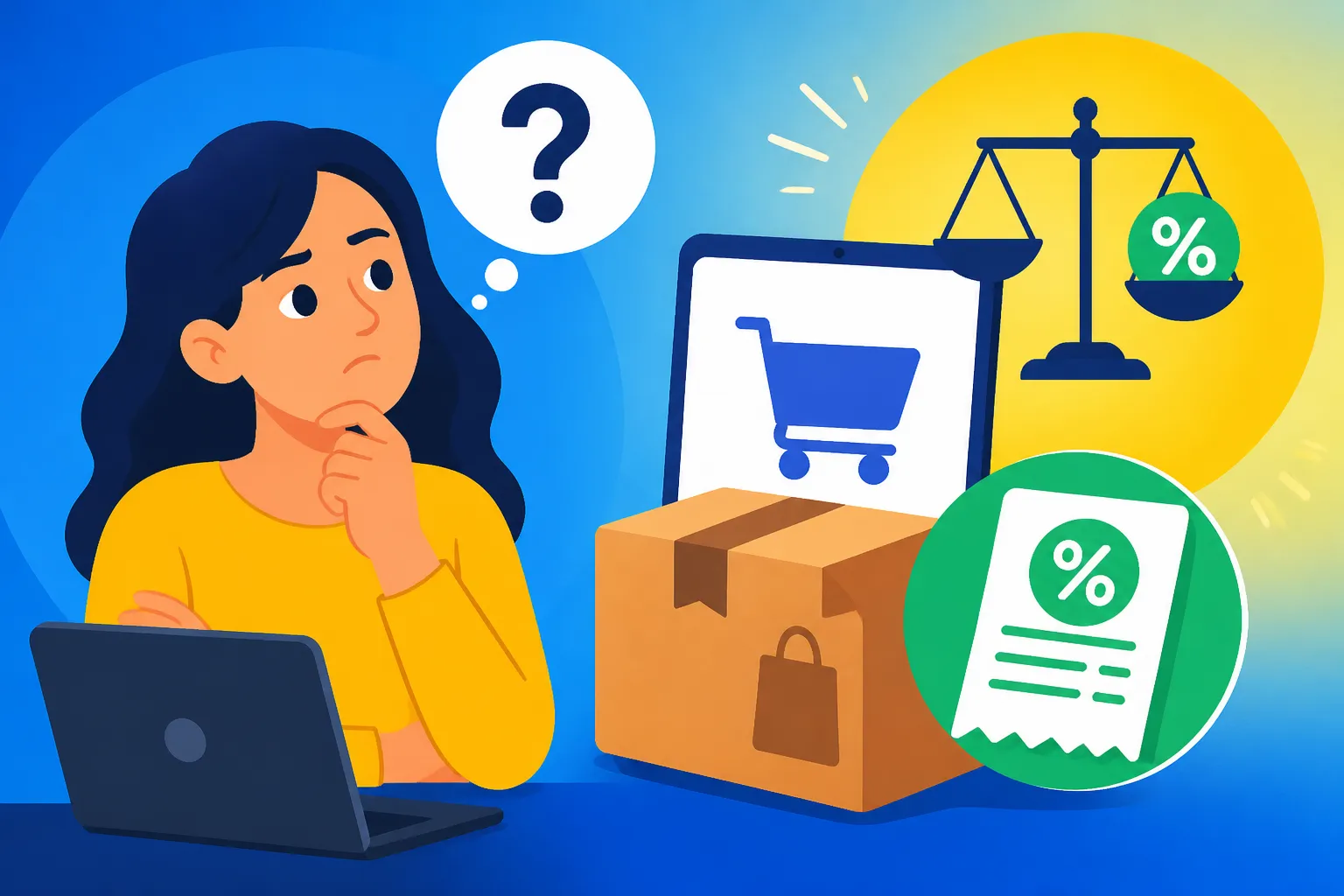
It can be incredibly frustrating to hit "checkout" on an online order, only to see that familiar sales tax added to your total. For years, many of us enjoyed the perceived perk of tax-free online shopping, so seeing that extra charge now can feel like a bait-and-switch. This guide is here to demystify why you're now seeing sales tax on many of your online purchases, breaking down the complex rules that govern digital commerce today.
The Evolution of Sales Tax for Online Shopping
For a long time, the world of online shopping seemed like a tax-free haven. It felt like a little secret, a way to save a few bucks on that new gadget or pair of shoes. But those days are largely behind us, and it's not because states suddenly decided to get greedy. There's a long, fascinating history and a landmark Supreme Court case that completely reshaped how sales tax applies to e-commerce.
The Old Rules: Physical Presence Nexus
Before 2018, the prevailing rule for sales tax collection was based on something called "physical presence nexus." This meant that a business only had to collect sales tax in states where it had a physical connection. Think about it: if a company had a brick-and-mortar store, a warehouse, employees, or even just an office in California, they were required to collect sales tax from California customers. If they didn't have any of those things in, say, New York, they weren't required to collect sales tax from New York residents.
This created a wildly uneven playing field. Local Main Street shops, with their physical stores and employees, always had to charge sales tax. Meanwhile, an online retailer based entirely in Oregon (which has no state sales tax!) could sell to customers in New York, Texas, or Florida without collecting a dime of sales tax, making their prices effectively lower. This wasn't just unfair to local businesses; it also meant states were missing out on billions in revenue that they would have collected if those sales had happened in a physical store within their borders. It became a huge point of contention as e-commerce grew from a niche market into the dominant force it is today.
The Game-Changer: South Dakota v. Wayfair
The Supreme Court case of South Dakota v. Wayfair: What It Means for Sellers in 2018 was the seismic shift that changed everything. South Dakota, like many states, was tired of losing out on sales tax revenue from remote sellers. They passed a law that required out-of-state retailers to collect sales tax if they met certain thresholds, regardless of physical presence. Wayfair, an online furniture giant, challenged this law, arguing it violated the long-standing physical presence rule.
The Supreme Court, in a 5-4 decision, overturned its own previous precedents, stating that the physical presence rule was "anachronistic" in the age of the internet. They recognized that modern commerce extends far beyond physical boundaries. This decision effectively gave states the green light to require out-of-state businesses to collect sales tax based on their economic activity within that state, even if they had no physical presence there. It was a monumental change, one that completely rewrote the playbook for online sellers and, by extension, for you as a consumer.
Understanding "Nexus" in the Digital Age
The concept of "nexus" is absolutely central to understanding why you're now being charged sales tax on online orders. Simply put, nexus is the legal term for a sufficient connection between a business and a state that requires the business to comply with that state's tax laws. Before Wayfair, it was all about physical ties. Now, it's a much broader definition. To dive deeper into what triggers these obligations, you can explore our guide on Sales Tax Nexus Explained Physical vs Economic.
Physical Nexus Still Matters (Warehouses, Employees)
Even after Wayfair, traditional physical nexus hasn't disappeared. If an online seller still has a tangible presence in your state, they definitely have an obligation to collect sales tax. This could include:
- Retail stores or offices: If that online brand also has a physical storefront or a corporate office in your state.
- Employees or agents: Having employees, contractors, or sales representatives working on behalf of the company in your state.
- Warehouses or inventory: This is a big one, especially for sellers using fulfillment services like Amazon FBA. If a seller's products are stored in a warehouse in your state, even if they don't own the warehouse, that can create physical nexus. Imagine a small business in Ohio selling custom t-shirts. If they use an Amazon fulfillment center in Arizona to store and ship their shirts, they might suddenly have nexus in Arizona. This can be a hidden trap for many online sellers.
- Trade shows or temporary locations: Even setting up a temporary booth at a craft fair or a pop-up shop can create temporary nexus in a state.
These traditional physical connections continue to be valid triggers for sales tax collection obligations. It's why a local online boutique with a physical presence will always charge you tax if you're in the same state.
Economic Nexus: The Sales and Transaction Thresholds
This is the big one that came out of the Wayfair decision. Now, an online seller can have "economic nexus" in a state without ever stepping foot there. Every state that imposes sales tax has adopted its own economic nexus rules, but they generally follow a similar pattern: a dollar threshold of sales or a number of transactions, or both, within a calendar year.
For example, most states have a threshold around $100,000 in sales. Some states, like California and Texas, have a higher threshold of $500,000. Others might also include a transaction threshold, like 200 separate sales transactions, though many states have dropped this transaction count rule over time. If an online retailer sells enough goods or conducts enough transactions into a state, they are required to register for a sales tax permit in that state and collect sales tax from customers there. This is why you might see sales tax collected by a small online shop based hundreds or thousands of miles away from you; they've simply crossed that state's economic nexus threshold. You can find detailed information on these specific thresholds in our Economic Nexus by State 2026: Thresholds Guide.
Here's a quick look at some common economic nexus thresholds:
| State | Sales Threshold (Gross Sales) | Transaction Threshold | Notes |
|---|---|---|---|
| California | $500,000 | None | Applies to retail sales of tangible personal property. |
| Texas | $500,000 | None | Taxable sales in the preceding 12 months. |
| Florida | $100,000 | None | Remote sellers must collect if over threshold. |
| New York | $500,000 | 100 transactions | Both thresholds must be met. |
| Illinois | $100,000 | 200 transactions | Both thresholds must be met, though transactions are less common. |
| Colorado | $100,000 | None | Applies to retail sales into the state. |
This table illustrates why a company might collect sales tax in one state but not another, even if their sales volume is generally high. It all depends on how much they've sold into each specific state. Keeping track of these varying rules can be a real headache for businesses, which is why many turn to sales tax compliance software like Avalara to automate the process.
Marketplace Facilitator Laws (Amazon, Etsy, Shopify)
Another huge piece of the puzzle, especially for those of us who shop on popular online marketplaces, is the advent of "marketplace facilitator" laws. After Wayfair, states realized that tracking thousands of individual small sellers might be impossible. So, they created laws that shifted the sales tax collection responsibility from the individual seller to the marketplace itself.
What does this mean for you? If you buy something on Amazon, Etsy, eBay, or even through a Shopify store where Shopify acts as the facilitator, it's typically the marketplace that calculates, collects, and remits the sales tax to your state. They are legally considered the "marketplace facilitator." This is a massive simplification for both consumers and individual sellers on these platforms. You no longer have to worry if the tiny artisan shop on Etsy has met the economic nexus threshold in your state; Etsy does it for them. This simplifies things tremendously, and our article on Marketplace Facilitator Laws by State has all the details on which states have these rules in place.
So, when you see sales tax on your Amazon order, it's not Amazon deciding to charge you extra; it's Amazon fulfilling its legal obligation as a marketplace facilitator to collect that tax on behalf of the third-party seller.
How Online Retailers Determine Your Sales Tax
Now that we understand why online sellers are collecting sales tax, let's look at how they figure out the exact amount. It's not as simple as a flat rate across an entire state, and this is where it can get truly confusing for consumers and incredibly complex for businesses.
Sourcing Rules: Origin vs. Destination States
One of the biggest factors in determining your sales tax rate is whether your state is an "origin-based" or "destination-based" sales tax state.
- Origin-Based Sourcing: In origin states, the sales tax rate is determined by the seller's location (the origin of the sale). So, if a business is located in Dallas, Texas, and ships a product to Houston, Texas, the sales tax rate would be based on Dallas's combined rate. Texas is an origin-based state, which can make things a bit simpler for sellers located there but still challenging when dealing with out-of-state sales.
- Destination-Based Sourcing: Most states use destination-based sourcing. This means the sales tax rate is determined by the buyer's location (the destination of the sale). So, if an online retailer in Oregon sells a product to a customer in Los Angeles, California, they would charge the sales tax rate applicable to Los Angeles, which includes the statewide rate plus any local district taxes for that specific city and county. This is much more common for remote sellers and is the primary reason why your sales tax rate can change based on your exact shipping address, not just the state you live in. Knowing whether Is Sales Tax Based on Billing or Shipping Address? can be critical here.
This distinction is crucial because states have wildly different local sales tax rates. For example, in Colorado, many cities are "home-rule" and set their own sales tax rates, completely independent of the state. This means a seller shipping to Colorado needs to know the specific city and sometimes even district rates.
The Role of Sales Tax Software
Given the incredible complexity of sales tax, with thousands of different tax jurisdictions (state, county, city, special district) and constantly changing rates, it's virtually impossible for even large businesses to manually keep track of everything. This is where sales tax compliance software comes into play.
Companies like Avalara, TaxJar, and others provide services that automate the entire process. When you enter your shipping address at checkout on an online store, that information is often sent to a sales tax software provider behind the scenes. The software then:
- Identifies your exact location: It uses your ZIP code, and often the full street address, to pinpoint the correct taxing jurisdictions. Relying solely on a Sales Tax by ZIP Code (and Why ZIP Isn't Enough) can lead to errors because ZIP codes can cross multiple tax jurisdictions.
- Determines the taxability of the product: Is clothing taxable in your state? Is software as a service (SaaS) taxable? The software knows these rules for thousands of product categories in every state.
- Applies the correct rate: Based on your location and the product, it applies the precise combined state and local sales tax rate. You can learn more about how these combined rates work in our article on How Combined Sales Tax Rates Work.
- Calculates the total: It adds the sales tax to your order.
This automation is essential for online retailers to stay compliant. Without it, they'd spend countless hours trying to manually update rates and rules, which change frequently. For instance, 2026 Sales Tax Rate Changes by State are already on the horizon, making manual tracking even more daunting.
Why Rates Vary Even Within a State
You might have noticed that if you ship something to a friend in a different city in your own state, the sales tax rate might be different. This isn't a mistake; it's due to the layered nature of sales tax. Most states have a base statewide sales tax rate, but many cities, counties, and special taxing districts (like transportation districts or stadium districts) can add their own local sales taxes on top of that.
Take California, for example. The statewide sales tax rate is 7.25%, but if you're shopping in Los Angeles, the rate is often much higher due to various district taxes. A business shipping to California needs to factor in these California District Taxes Explained to ensure accuracy. The same goes for places like Louisiana, which has incredibly complex local parish sales tax rates, or Alabama with its Alabama Local Sales Tax 200 Jurisdictions.
So, when an online store charges you 8.5% sales tax, and your friend in the same state pays 7.0%, it's likely because their specific city or county has different local add-on rates. The sales tax software is designed to accurately capture these hyper-local variations, ensuring that the correct amount is collected for the specific address where the product is being delivered.
What This Means for You as a Shopper
It's natural to feel a bit put out by these extra charges, especially when you might have enjoyed tax-free online shopping for so long. But understanding why it's happening can help put things into perspective.
Fairness and Leveling the Playing Field
One of the primary motivations behind the Wayfair decision and the subsequent economic nexus laws was to create a more level playing field for all retailers. Before, local businesses had a built-in price disadvantage because they always had to charge sales tax, while many online-only competitors didn't. This made it harder for Main Street shops to compete.
Now, with most major online retailers and marketplace facilitators collecting sales tax, that disadvantage is largely gone. Whether you buy a pair of shoes from a local boutique or order them from an online mega-retailer, you're likely paying the same sales tax. This helps support local economies and ensures that states have the revenue they need to fund public services like roads, schools, and emergency services. While it might feel like an extra cost, it's essentially ensuring that commerce, regardless of where it originates, contributes to the public good in the destination state.
Consumer Use Tax: Your Responsibility When Tax Isn't Collected
Here's a little secret that many consumers don't realize: even before Wayfair, if an online seller didn't collect sales tax from you, you, as the consumer, were often legally obligated to report and pay something called "use tax" to your state.
Use tax is essentially sales tax on purchases where the seller didn't collect it, and the goods are consumed, stored, or used in your state. For example, if you bought a $1,000 piece of furniture from a small online seller in a state where they didn't have nexus, and therefore didn't collect the $70 sales tax (assuming a 7% rate), you were technically supposed to report that $70 as use tax on your annual state income tax return.
Most people either didn't know about this or simply ignored it because enforcement was difficult. States rarely audited individual citizens for a few dollars in use tax. However, for businesses, use tax has always been a much bigger deal. With the widespread collection of sales tax by online sellers today, the need for consumers to self-report use tax on online purchases has drastically diminished. It's much simpler when the seller just collects it for you upfront. But it's good to know the concept exists and was always technically there, even if largely unenforced for individual online shoppers.
In essence, being charged sales tax on your online orders is now the norm, reflecting a more modern and equitable approach to taxation in the digital economy. It's a complex system with many layers, but thanks to legal changes and technological solutions like Avalara, it's becoming a seamless part of the online shopping experience.
Disclaimer
Please remember that this article is intended for informational purposes only and does not constitute tax advice. Sales tax laws are highly complex and subject to change. For specific advice regarding your individual or business tax situation, always consult with a qualified tax professional or refer to your state's Department of Revenue resources.