States That Tax Groceries at Full Rate
Navigating the world of sales tax can feel like trying to solve a Rubik's Cube blindfolded, and nowhere is this more true than with groceries. Many of us assume that food, being a basic necessity, should be exempt from sales tax, but that's a misconception that can lead to budgeting surprises. This guide is dedicated to shedding light on the states that tax groceries at their full, standard sales tax rate, helping you understand not just where this happens, but why it's such a complex topic for consumers and businesses alike.
The Surprising Reality of Grocery Sales Tax
It's a common moment of sticker shock: you're at the grocery store, filling your cart with pantry staples, and then you see the sales tax added to your total. For many, it's a genuine surprise, fueled by the widespread belief that food is always tax-exempt. But as anyone who's checked their receipt in certain states knows, that's simply not the case.
Why Groceries Aren't Always Exempt
The idea that food should be tax-free is deeply ingrained in the public consciousness, and for good reason—it's an essential item. However, the reality of state tax codes is far more nuanced and, frankly, less empathetic than many would hope. While a significant number of states do provide exemptions or reduced rates for groceries, others consider them just another taxable commodity. This discrepancy often boils down to a state's approach to revenue generation and its overall tax structure.
Historically, sales tax was designed to be a broad-based tax, applying to most tangible goods to fund public services like schools, roads, and emergency services. When sales tax was first introduced, exempting food wasn't always a priority. Over time, as lawmakers recognized the regressive nature of taxing necessities, many states began to introduce exemptions or lower rates. But some states, either due to different fiscal philosophies or simply a slower pace of legislative change, have maintained the full taxation of groceries. This means that your basic milk and eggs might contribute to the same state coffers as that new flat-screen TV.
It's also crucial to remember that a state's base sales tax rate is just one piece of the puzzle. Even in states where the state might tax groceries at a reduced rate or exempt them, local jurisdictions – cities, counties, and special districts – can often layer on their own sales taxes. This creates a complex tapestry of rates that can vary drastically even within a few miles. It’s exactly why understanding How Combined Sales Tax Rates Work is so critical for both shoppers and business owners trying to keep track of their finances.
The Definition Dilemma: What Counts as Groceries?
Even when a state does offer some form of sales tax relief on food, the challenge then shifts to defining what "food" or "groceries" actually encompasses. This isn't a simple question, and the answers can often lead to some truly head-scratching distinctions. Generally, "groceries" are understood to be unprepared food items intended for consumption at home, like fresh produce, meats, dairy, and packaged goods you'd cook yourself.
However, the moment food becomes "prepared," or is consumed on-site, the taxability often changes. A rotisserie chicken from the deli might be taxed at the full rate, even if the raw chicken breasts next to it are exempt. Why? Because the prepared chicken often falls under the category of "prepared food" for immediate consumption, much like a restaurant meal. This distinction is one of the biggest headaches for grocery stores and convenience stores, which often sell both raw ingredients and ready-to-eat items. This is a challenge that can significantly complicate point-of-sale systems and employee training, as correctly applying the tax hinges on these granular definitions.
Beyond prepared foods, there are specific categories that often get carved out with their own rules, even in states with generous grocery exemptions. Think about candy and soda. Many states choose to tax these items at the full rate, viewing them as discretionary treats rather than essential foodstuffs. The notorious "Candy & Soda Sales Tax (The Flour Test)" is a perfect example of how legislators create incredibly specific, and sometimes confusing, rules. A candy bar might be considered a taxable "candy" if it doesn't contain flour, but a chocolate chip cookie could be deemed an exempt "food product" because of its flour content. It's a level of detail that feels almost arbitrary to the average consumer but has real financial implications.
Unpacking the "Full Rate" States
So, which states are we talking about when we discuss taxing groceries at the full, standard sales tax rate? These are the places where your cart of basic staples will incur the same percentage of tax as almost any other purchase you make.
Who Taxes Groceries at the Standard Rate?
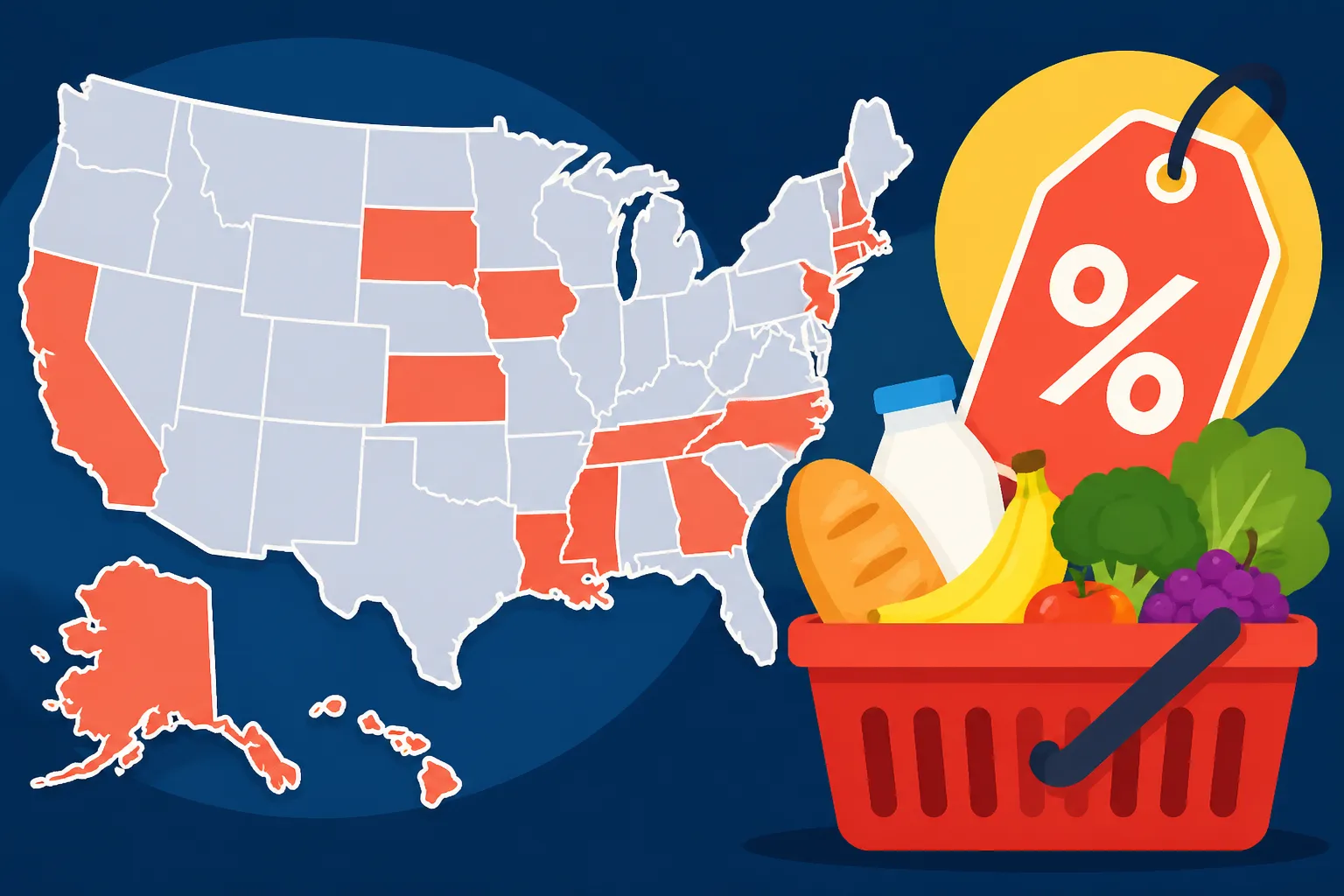
While many states have recognized the importance of exempting or reducing sales tax on food, a specific group of states still applies their standard sales tax rate to most grocery purchases. As of recent data, these states include:
- Alabama
- Hawaii
- Idaho
- Kansas
- Mississippi
- Oklahoma
- South Dakota
In these states, when you buy groceries, you're paying the state's full sales tax rate, plus any applicable local sales taxes. For instance, Alabama has a 4% state sales tax, but when you factor in county and city taxes, the combined rate in some municipalities can easily exceed 10%. Imagine buying $150 worth of groceries for the week in Mobile, Alabama; you could be looking at an additional $15 or more in sales tax alone. This isn't a small amount for families managing tight budgets.
Hawaii's situation is unique, as it levies a General Excise Tax (GET) at 4% across most transactions, including groceries. While technically not a "sales tax," the impact on consumers is very similar – nearly all goods and services, including food, are taxed. For residents of places like Boise, Idaho, or Topeka, Kansas, every trip to the supermarket means an automatic addition of their state's sales tax, on top of any local taxes, to the total grocery bill.
It's critical for both residents and businesses to grasp that these "full rate" states mean the state portion of the sales tax. The final amount you pay at the register will almost always include additional local sales taxes that vary by county, city, or even special taxing district. This means that while Kansas's state sales tax is 6.50%, the combined rate could reach 10.50% in certain areas. It truly highlights why understanding the precise Sales Tax Rate by ZIP Code (and Why ZIP Isn't Enough) is paramount, as even crossing a street could change your tax burden.
How the Full Rate Impacts Daily Life
The decision to tax groceries at the full rate has tangible and significant impacts on the daily lives and budgets of residents in these states. For a typical household, groceries are one of the largest recurring expenses. Adding a sales tax of 5% to 10% on top of that can translate into hundreds, or even thousands, of extra dollars spent per year.
Consider a working-class family in Jackson, Mississippi. With a state sales tax of 7% and various local additions, their combined rate might hover around 8-9%. If this family spends $800 a month on groceries (a conservative estimate for a family of four), they could be paying an additional $64 to $72 in sales tax every single month. That's nearly $900 extra per year that could have gone towards utilities, healthcare, or saving for education. For families already living paycheck to paycheck, this isn't just an annoyance; it's a significant financial strain that reduces their purchasing power for basic necessities.
From a business perspective, the good news for grocery stores in these full-rate states is that the general rule for taxing groceries is simpler – most food items are taxable at the standard rate. This reduces some of the complexity found in states with intricate exemption rules. However, businesses still face the challenge of accurately capturing and remitting all the varying local sales taxes that apply. For a multi-location chain, this means ensuring their point-of-sale systems are constantly updated with the correct rates for every single store. This is where Best Sales Tax Compliance Software 2027 becomes invaluable, automating the intricate rate calculations and ensuring consistent, accurate collection, thereby freeing up businesses to focus on serving their customers rather than getting lost in tax details.
Navigating the Nuances: Beyond the Basic Grocery List
Even in states with seemingly straightforward "full rate" grocery taxation, the devil is often in the details. Certain categories of food and drink frequently have their own distinct taxability rules, adding layers of complexity that can trip up both consumers and retailers.
The Prepared Food Distinction
One of the most common and often confusing distinctions in sales tax law is between "unprepared" and "prepared" food. This isn't just an issue in states that exempt groceries; it applies universally. "Prepared food" typically refers to items that are heated by the seller, combined with other ingredients by the seller, or sold with eating utensils provided by the seller, indicating they're ready for immediate consumption. Think of the hot food bar at a supermarket, a sandwich made-to-order, or even a pre-packaged salad with dressing and a fork included.
The logic behind taxing prepared food, often at the full standard rate (even in states that exempt raw groceries), is that it's considered more of a service or a restaurant-style transaction. You're not just buying ingredients; you're paying for the convenience, preparation, and perhaps even the ambiance (if consumed on-premises). This distinction creates a significant operational challenge for establishments like grocery stores, delis, and convenience stores. They need sophisticated point-of-sale (POS) systems capable of differentiating between, say, a raw chicken that might be exempt and a hot rotisserie chicken that is fully taxable. This can be a major source of frustration during an audit if sales aren't properly categorized. For a deep dive into these rules, our guide on Prepared Food Sales Tax Explained is incredibly helpful.
So, while your bag of flour and carton of eggs might glide through the checkout tax-free in a state like Texas, that gourmet sandwich from the same store's deli will almost certainly incur sales tax. This subtle but impactful difference highlights why businesses must meticulously program their systems and train their staff on these nuances to ensure compliance and avoid unexpected liabilities.
The Curious Case of Candy and Soda
As if prepared food wasn't enough to consider, many states also have very specific, and sometimes arbitrary-feeling, rules for candy and soft drinks. These items are often singled out for full taxation, even in states where other basic groceries are exempt or taxed at a reduced rate.
The rationale can vary: sometimes it's to discourage the consumption of sugary items for public health reasons, and other times it's simply to capture additional revenue from what are considered discretionary purchases. However, the legal definitions can become incredibly convoluted. For example, some states use the "flour test" to distinguish between candy and food: if a sweet treat contains flour (like a cookie), it might be deemed a food item and potentially exempt; if it doesn't (like a pure chocolate bar), it's "candy" and taxable. Imagine the confusion for a cashier trying to apply this rule to every single snack!
Similarly, soft drinks often face separate taxation. While plain bottled water might be exempt as a grocery item, a sweetened soda, an energy drink, or even certain juice drinks might be fully taxable. These distinctions require grocery retailers to have incredibly detailed product taxability matrices embedded in their POS systems. Without precise categorization, a business could easily under-collect tax (and owe it later) or over-collect (leading to customer dissatisfaction). Staying on top of these hyper-specific rules is a constant battle, and it's one of the primary reasons why sales tax compliance can feel like such a burden for businesses of all sizes.
States with Reduced Rates or Exemptions: A Glimpse at the Alternatives
While our focus today is on the states that tax groceries at the full rate, it's helpful to understand the broader landscape. Most states actually offer some form of relief on grocery taxes, either through full exemptions or reduced rates. This contrast underscores the policy choices states make regarding consumer burden and revenue.
States That Offer Full Grocery Exemptions
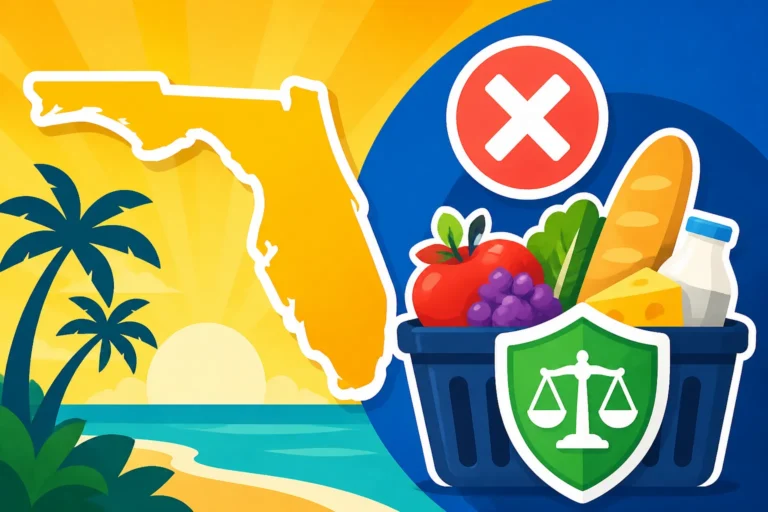
A significant majority of U.S. states have decided to fully exempt unprepared groceries from state sales tax. This policy decision reflects a common understanding that food is a fundamental necessity, and taxing it places an undue burden on residents, particularly those with lower incomes. States like California, Florida, New York, Pennsylvania, and many others choose this path. In these states, when you buy ingredients for home cooking – fresh produce, meats, dairy, pasta, canned goods – you typically won't see state sales tax added to those items.
For consumers in these states, this exemption provides tangible financial relief and simplifies the grocery shopping experience; there's no need to calculate an extra percentage on your basic food items. For businesses, while it makes basic grocery items non-taxable, the challenge still lies in accurately distinguishing these exempt items from taxable ones. As we've discussed, prepared foods, candy, and soda are often still taxable at the full rate, meaning grocery stores in exempt states still need robust systems to categorize sales correctly. Our comprehensive guide on Sales Tax on Groceries & Food by State provides an extensive look at the policies in every state.
It's also worth noting that "full exemption" often refers to the state sales tax. Even in states with generous exemptions, local jurisdictions can sometimes levy small taxes on specific grocery-related items or services, though full taxes on unprepared food are rare in these scenarios. This constant variation keeps the sales tax landscape dynamic and requires continuous vigilance from businesses.
States With Reduced Grocery Tax Rates
Sitting in the middle ground are states that acknowledge the burden of taxing groceries but still need some revenue stream from them. These states apply a reduced sales tax rate to groceries, lower than their standard state sales tax rate. States such as Arkansas, Missouri, Tennessee, Utah, and Virginia fall into this category. For instance, Tennessee's state sales tax rate is 7%, but groceries are taxed at a reduced rate of 4%. While not entirely tax-free, this still offers a noticeable saving compared to paying the full 7%.
The rationale here is often a compromise: to ease the financial burden on consumers while still capturing some revenue to fund public services. However, this approach introduces another layer of complexity for businesses. Their POS systems must be programmed to apply multiple sales tax rates: the standard rate for most goods, a reduced rate for groceries, and often the full rate for prepared foods, candy, and soda. This requires meticulous setup and ongoing maintenance, especially when How Do Sales Tax Rate Changes Take Effect? or definitions are updated.
A notable example of a state shifting its policy is Illinois Grocery Tax Eliminated 2026. Currently, Illinois applies a 1% sales tax to groceries, which is a reduced rate from its standard 6.25% state sales tax. However, effective January 1, 2026, this 1% grocery tax is set to be fully eliminated, making groceries completely exempt from state sales tax. This kind of legislative change, while beneficial for consumers, demands that businesses in Illinois update their systems and processes to ensure compliance by the effective date. It illustrates the dynamic nature of sales tax laws and the need for businesses to be proactive in adapting to changes.
The Broader Economic Impact and Business Challenges
The way states choose to tax groceries has far-reaching consequences, affecting everything from household budgets to the operational complexities of businesses. It's not just a matter of a few cents here and there; it's a fundamental aspect of a state's economic policy with real-world implications.
Consumer Burden and Equity Concerns
The taxation of groceries, particularly at the full standard rate, is a perennial point of contention because it highlights issues of economic equity. Sales tax is generally considered a regressive tax, meaning it consumes a larger percentage of income from low-income households than from high-income households. Why? Because lower-income families typically spend a larger proportion of their earnings on necessities like food, leaving less for discretionary spending or savings. When you tax these essentials, you exacerbate this regressive effect.
Families already struggling to make ends meet find their purchasing power further eroded by grocery sales taxes. An extra 5-10% on their food bill can mean the difference between affording nutritious meals and having to opt for cheaper, less healthy alternatives, or even foregoing other necessities. Advocacy groups consistently call for the exemption or reduction of grocery taxes, arguing that it's a critical step toward alleviating poverty and food insecurity. While states certainly need revenue, the debate often centers on whether taxing the most basic human need is the fairest or most sustainable way to secure those funds.
Understanding these impacts can also help consumers grasp Why Is Sales Tax Different in Every City? and why their cost of living might fluctuate significantly if they move from a state with a grocery tax exemption to one that levies the full rate. It's not just about the price tag of items; it's about the overall tax structure shaping daily expenses.
Compliance Headaches for Businesses
For grocery retailers, convenience stores, and any business selling food items, navigating the labyrinthine world of sales tax is a significant operational challenge. Even in states that impose a full tax rate on groceries, the complexities don't disappear. Businesses operating in multiple states or even multiple jurisdictions within a single state are confronted with a patchwork of rules, rates, and definitions.
Consider a regional grocery chain like Kroger or Albertsons, with stores spread across several states, some with full grocery tax, some with reduced rates, and others with exemptions. Their IT and accounting departments face the immense task of ensuring that every single product in every single store has the correct taxability applied at the point of sale. This isn't just about applying a rate; it's about correctly identifying whether a particular energy drink counts as "soda" for tax purposes, or if a pre-made sandwich qualifies as "prepared food" even though it's sold in a grocery aisle. With thousands of products and frequent 2026 Sales Tax Rate Changes by State at both state and local levels, manual calculation and tracking are simply impossible.
This is precisely where modern sales tax compliance software becomes not just a convenience, but a necessity. Solutions like Avalara integrate with existing point-of-sale, ERP, and e-commerce platforms to provide real-time, accurate sales tax calculations based on the precise location of the sale and the specific taxability of each product. This automation is crucial for mitigating audit risk, reducing compliance costs, and ensuring businesses collect and remit the correct amount of sales tax, regardless of how complex the state's grocery tax rules are. Other solutions like TaxJar also aim to tackle this complexity, leading many businesses to compare options like Avalara vs TaxJar: Which Sales Tax Software? to find the best fit for their needs. Without robust automation, businesses spend countless hours on administrative tasks that could be better spent on growth and customer service.
Practical Tips for Consumers and Businesses
Whether you're stocking your pantry or running a multi-state grocery business, understanding the intricacies of sales tax on groceries is essential. Being proactive and informed can save you both money and headaches.
What Consumers Can Do
For consumers, the best strategy to deal with grocery sales tax is to be informed and aware. First and foremost, know your state's stance on grocery taxation. Do you live in a state like Alabama, Kansas, or Oklahoma where groceries are taxed at the full rate? Or are you in a state like California or Florida where they're typically exempt? A quick search for "What Is the Sales Tax in Alabama?" (or your specific state) will give you a solid starting point. Don't forget to account for local sales taxes, which can significantly bump up the final price, even on groceries.
As you shop, pay close attention to the specific items you're purchasing. Remember the distinctions:
- Prepared vs. Unprepared: If it's hot, ready-to-eat, or comes with utensils, it's likely taxed as prepared food.
- Candy vs. Food: Sweet treats without flour often get taxed as candy, even if a similar item with flour doesn't.
- Soda vs. Other Beverages: Sugary drinks are frequently taxed when plain bottled water or juice might not be.
If you're ever in doubt, check your receipt or ask a store employee. Being aware of these rules can help you budget more accurately and avoid surprises at the checkout. For those in full-tax states, incorporating that sales tax into your grocery budget is crucial. If your weekly grocery bill is usually $120, and your combined sales tax is 8%, you're actually spending $129.60. Planning for that extra amount helps keep your finances on track.
Essential Strategies for Businesses
For businesses selling groceries, proactive and accurate sales tax compliance is paramount. The stakes are high, with potential penalties for under-collection and reputation damage for over-collection.
- Deep Dive into Taxability Rules: Start by thoroughly understanding the specific sales tax laws in every state and local jurisdiction where you operate. This includes not just the rates but the precise definitions of "grocery," "prepared food," "candy," "soft drinks," and any other nuanced food categories. These definitions can be surprisingly detailed and vary significantly.
- Invest in Automation: Manual calculation and tracking of sales tax on varied food items across multiple jurisdictions are prone to error. Implement a robust sales tax automation solution. Integrate it with your POS, e-commerce platform, and ERP systems. This software should automatically determine the correct sales tax rate based on the customer's location, the product being sold, and current taxability rules. This is where companies like Avalara excel, offering solutions that keep pace with constantly changing tax laws.
- Regularly Update and Review: Tax laws, rates, and product classifications are not static. New 2026 Sales Tax Rate Changes by State are enacted every year, and jurisdictions might refine their definitions. Ensure your sales tax software is regularly updated. Periodically audit your system's performance and product taxability codes to catch any discrepancies.
- Train Your Staff: Even with the best software, human error can occur. Train your employees, especially those at the point of sale, on basic sales tax principles, common distinctions (like prepared vs. unprepared food), and how to answer customer questions or troubleshoot issues related to sales tax. An informed staff can be your first line of defense against compliance issues and customer dissatisfaction.
By staying vigilant and leveraging the right tools, businesses can transform the daunting task of grocery sales tax compliance into a manageable, accurate process.
Disclaimer
The information provided in this article is for general informational purposes only and does not constitute tax, legal, or accounting advice. Sales tax laws are complex and subject to change. Always consult with a qualified tax professional or legal advisor for advice tailored to your specific situation.