Illinois Grocery Tax Eliminated 2026
For small business owners, especially those running grocery stores, convenience shops, or even local delis here in Illinois, keeping up with sales tax changes can feel like a constant uphill battle. You’re already juggling inventory, staff, and customer service, and then the state throws a curveball, leaving you wondering how it all impacts your bottom line and what you need to do to stay compliant. This comprehensive guide will walk you through the upcoming elimination of Illinois' sales tax on groceries, detailing what's changing, why it matters, and how you can prepare your business for this significant shift in 2026.
The Current State: Illinois Grocery Tax Before 2026
Before we dive into the exciting changes ahead, it’s crucial to understand the landscape we're operating in right now. Illinois has had a unique approach to sales tax on food items, distinguishing itself from many other states that either fully exempt groceries or tax them at their full general merchandise rate. For years, retailers in the Prairie State have been collecting a reduced sales tax rate on many essential food items, a rate that, while seemingly small, added up significantly for consumers and presented specific challenges for businesses.
The Modest 1% Rate and Its Reach
Currently, in Illinois, most food and beverage items that are purchased for off-premises consumption (think your typical supermarket haul – milk, bread, produce, packaged goods) are subject to a modest 1% state sales tax rate. This isn't the full combined state and local sales tax rate you'd see on, say, a new pair of shoes or a TV, which can easily climb above 6.25% statewide and much higher in some localities. This 1% rate was established with the intention of making staple foods more affordable for residents. However, even at 1%, it still meant an added cost that many felt disproportionately affected lower-income families struggling with rising food prices. For businesses, it meant having to configure their point-of-sale (POS) systems to apply this specific rate correctly, often alongside other, higher rates for different product categories. It might seem like a small percentage, but applying it accurately across a vast inventory requires diligence and careful setup.
Distinguishing Groceries from Prepared Foods
Here's where things got a little tricky for businesses. The 1% rate didn't apply to all food items. Illinois, like many states, draws a fine line between "unprepared food" (your typical groceries) and "prepared food" or "food service" items. If you operate a grocery store with a deli counter, a hot bar, or even just sell individual sodas and candy bars, you know this distinction well. Prepared foods, along with soft drinks, candy, and alcoholic beverages, are currently subject to the full, higher sales tax rate – which includes both the state's general merchandise rate (6.25%) and any applicable local sales taxes.
For example, if a customer bought a gallon of milk, that would be taxed at 1%. But if they grabbed a hot rotisserie chicken from your deli, a freshly made sandwich, a can of soda, or a chocolate bar, those items would be taxed at the full, combined rate. This requires cashiers and POS systems to be finely tuned to ensure the correct tax is applied. Misclassifying even a single item could lead to discrepancies during an audit, which is a headache no business owner wants. Understanding these nuances is key, especially as we discuss how the upcoming changes will simplify some, but not all, of these classifications. If you're looking for more details on how these distinctions are made, you might find our guide on Prepared Food Sales Tax Explained particularly useful.
What's Changing: The Elimination of the Grocery Tax
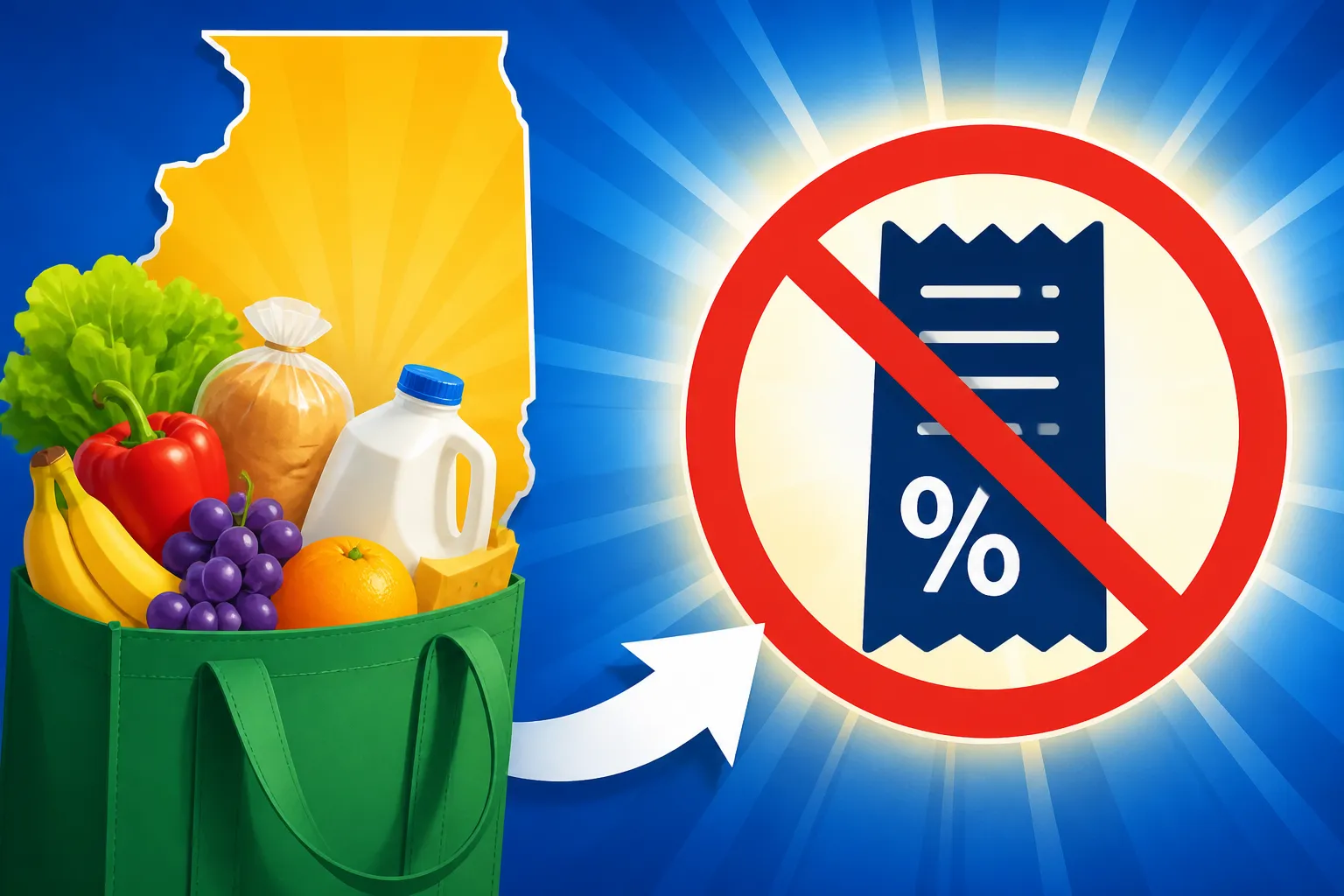
The big news, the one that’s surely caught the attention of shoppers and business owners alike, is the complete elimination of the state's 1% sales tax on groceries in Illinois. This isn't just a temporary holiday; it's a permanent repeal set to take effect, bringing significant changes to how food items are taxed across the state.
Effective Date and Legislative Action
The decision to eliminate the 1% state sales tax on groceries was made through legislative action, with the repeal set to go into effect on January 1, 2026. This wasn't a sudden, spur-of-the-moment choice. There's been a lot of discussion and debate in the Illinois General Assembly over the years about the fairness and impact of the grocery tax. While the tax has been temporarily suspended in the past, such as during inflation relief efforts, this upcoming change marks a permanent move to remove the state's portion of the tax from most food items. This gives businesses a clear timeline to prepare, but also means they can't afford to procrastinate on updating their systems and understanding the new rules.
What "Eliminated" Truly Means for Different Food Items
It's important to clarify what "eliminated" truly encompasses. Starting January 1, 2026, the state's 1% sales tax will no longer apply to most food items that are currently subject to that reduced rate. This primarily includes what we commonly think of as "groceries" – uncooked meats, fresh produce, dairy products, most packaged foods, and non-alcoholic beverages intended for consumption at home.
However, and this is a crucial point for businesses, the full, higher sales tax rate will still apply to certain categories. These exceptions are consistent with how many other states treat these items and include:
- Prepared foods: Think hot deli items, ready-to-eat meals, sandwiches made in-store, or food sold with eating utensils provided. If it's ready to eat immediately and typically consumed on or near the premises, it's likely still fully taxed.
- Soft drinks: Soda, sweetened beverages, and other similar drinks will remain subject to the full sales tax rate.
- Candy: That candy bar impulse buy at the checkout? Still fully taxed. For a deeper dive into the sometimes-confusing rules around candy, you might want to read about the Candy & Soda Sales Tax (The Flour Test).
- Alcoholic beverages: These have their own complex tax structures and will continue to be fully taxed at the higher general merchandise rate.
So, while your customers will see a small reduction in price on their weekly grocery shop, they won't on their takeout order or their six-pack of craft beer. Businesses need to ensure their systems can accurately apply these distinctions post-2026. This is where robust sales tax compliance software, like solutions offered by Avalara, becomes invaluable for automatically categorizing items and applying the correct rates, preventing manual errors and ensuring smooth operations.
Why the Change: The Rationale Behind the Repeal
The decision to eliminate the Illinois grocery tax wasn't made in a vacuum. It stems from a combination of economic pressures, a desire for tax fairness, and a look at how other states handle similar taxation. Understanding the "why" can help businesses and consumers alike appreciate the impact of this legislative shift.
Arguments for Tax Relief and Affordability
One of the primary drivers behind the repeal is the desire to provide tax relief to Illinois residents, especially amidst ongoing concerns about inflation and the rising cost of living. Grocery taxes, even at a seemingly low 1%, are often seen as regressive. This means they disproportionately affect lower-income households, who spend a larger percentage of their income on essential items like food. By removing this tax, policymakers aim to ease the financial burden on families, making everyday groceries slightly more affordable.
Advocates for the repeal have long argued that taxing essential food items is an antiquated practice that hurts those who can least afford it. Eliminating the 1% tax is a direct way to put a tiny bit more money back into the pockets of Illinois consumers every time they shop for groceries. While the individual savings on a single shopping trip might not seem massive, they add up over a year, potentially providing significant relief for households on tight budgets. This aligns with broader national conversations about tax fairness and providing relief where it can have the most direct impact on daily living expenses.
Concerns Over Lost Revenue for Local Governments
Of course, every change in taxation comes with trade-offs. While consumers will benefit, local governments are facing the prospect of losing a source of revenue they have relied on for decades. The 1% grocery tax generated significant funds, which were then distributed to municipalities across the state. These funds often supported essential local services, from public safety and infrastructure projects to schools and libraries.
The concern among local officials is real: how will these vital services be funded once the grocery tax revenue disappears? While the state has indicated plans to explore ways to mitigate the impact on local budgets, such as potentially increasing other forms of aid or exploring alternative revenue streams, the details are still being worked out. This creates a period of uncertainty for cities and counties, who are now tasked with finding ways to bridge this funding gap. For businesses, while they are relieved of the collection burden of the 1% rate, they might indirectly feel the effects if local governments decide to increase other taxes or fees to compensate, though this is speculative and would vary by locality. The larger picture of How Combined Sales Tax Rates Work illustrates how reliant local jurisdictions are on various revenue streams.
Impact on Consumers and Businesses
The elimination of the Illinois grocery tax is going to have a ripple effect, touching everyone from the individual shopper pushing a cart down the aisle to the owner of a multi-location supermarket chain. Understanding these impacts is crucial for successful adaptation.
Potential Savings for Shoppers
For the average consumer, the most immediate and tangible effect will be a slight reduction in the price of their grocery bill. While a 1% saving might not sound like much on a single carton of eggs, consider a weekly grocery trip totaling $150. That's $1.50 in savings. Over a month, that's $6, and over a year, it could be upwards of $70 or more for a family. For many households, especially those managing tight budgets, every dollar counts. This change could mean a little more wiggle room in their weekly finances, whether for another essential item or a small treat.
It’s also an opportunity for retailers to highlight these savings to their customers. Imagine "tax-free groceries" messaging in your store or online. This could become a competitive advantage, even if the savings are modest. However, it's also important for consumers to remember that not all food items will be tax-free. They will still pay the full sales tax rate on prepared foods, candy, and soda, as discussed earlier. Clear communication from retailers will be vital to manage customer expectations and avoid confusion at the checkout.
Operational Adjustments for Retailers
For retailers, this change is a mixed bag of relief and operational adjustments. On one hand, removing the 1% rate on most groceries simplifies things somewhat. You no longer need to collect and remit that specific 1% portion to the state. This might slightly reduce the complexity of sales tax calculations and reporting for these specific items.
On the other hand, the transition itself requires careful planning and execution. Businesses will need to:
- Update POS Systems: Every point-of-sale system, from basic cash registers to advanced integrated platforms, must be reconfigured to reflect the new tax rules for grocery items. This isn't a trivial task for stores with thousands of SKUs. Errors in programming could lead to incorrect charges, customer complaints, and compliance issues.
- Train Staff: Cashiers and customer service staff need to be aware of the changes, especially the distinctions between items that are now tax-free (at the state level) and those that still carry the full sales tax. They'll be the first point of contact for customer questions and potential confusion.
- Inventory Review: It’s an opportune time to review how inventory is categorized within your sales tax system. Are "groceries" clearly separated from "prepared foods" or "candy"? This change provides a clear impetus to ensure your product mapping is accurate and aligned with the new definitions. For businesses managing a large and diverse product catalog, this process can be daunting. Engaging with sales tax software providers, like those offering products such as Avalara, can help streamline this complex reclassification.
While the long-term goal is simplification for many grocery items, the immediate transition period will demand careful attention to detail to avoid compliance missteps.
Navigating the Transition: What Retailers Need to Know
Preparing for the Illinois grocery tax elimination isn't something to put off until the last minute. The clock is ticking towards January 1, 2026, and proactive steps now can save a lot of headaches later.
Updating POS Systems and Tax Software
This is perhaps the most critical task for any retailer selling food items in Illinois. Your point-of-sale (POS) system is the front line of sales tax collection, and it must be updated to correctly apply the new tax rules. This means ensuring that items previously subject to the 1% state grocery tax are now coded as exempt (at the state level, keeping in mind local taxes on non-grocery items).
Here’s a breakdown of what that entails:
- Software Updates: For businesses using modern POS systems and integrated accounting software, this might involve installing a software update provided by your vendor. Ensure you understand what the update covers and if any manual configurations are still required.
- SKU-Level Review: Go through your inventory. For each Stock Keeping Unit (SKU) that is a "grocery item" (unprepared food, non-alcoholic, not candy/soda), confirm its tax code will change from 1% to 0% state sales tax. For items like prepared foods, candy, or soda, verify they continue to be taxed at the full, combined state and local rate.
- Testing: Before January 1, 2026, rigorously test your updated system. Run dummy transactions with a mix of tax-exempt groceries, fully taxed prepared foods, and other taxable merchandise. Check receipts to ensure the correct tax rates are applied. This is where a reliable Sales Tax Calculator: How to Calculate Sales Tax can come in handy for verification.
- Compliance Solutions: If you're a multi-state seller or have a complex inventory, relying on manual updates can be risky. Sales tax automation solutions are designed for these kinds of changes. Providers such as Avalara regularly update their databases to reflect new tax laws, offering businesses a more seamless way to stay compliant without constant manual intervention. This is especially useful for understanding Sales Tax Rate Changes by State.
Communication Strategies for Shoppers
Once your systems are updated, the next step is to clearly communicate these changes to your customers. Confused customers can lead to longer checkout lines, staff frustration, and even negative reviews. Transparency is key.
Consider these communication strategies:
- In-Store Signage: Place clear signs at store entrances, by product aisles, and at checkout counters explaining the change. For example, "Starting January 1, 2026, most groceries are state sales tax-free!"
- Receipt Messaging: Update your receipts to include a message about the tax change. This can help customers understand why their bill might look a little different.
- Website/App Announcements: If you have an online presence, make an announcement on your website, social media channels, or through your store's mobile app. A simple FAQ can also address common questions.
- Staff Training: Empower your staff, especially cashiers and customer service representatives, with accurate information. Provide them with talking points and answers to anticipated questions. They should know which items are still fully taxed (prepared foods, candy, soda) to explain any perceived discrepancies.
- Promotional Opportunities: Frame the change as a benefit to your customers. You can use it in your marketing to emphasize savings, even if they're modest.
By proactively communicating, you build trust with your customer base and ensure a smoother transition for everyone involved.
The Bigger Picture: Grocery Tax Trends Nationwide
The elimination of the Illinois grocery tax is part of a larger, evolving conversation about how essential goods are taxed across the United States. While some states have never taxed groceries, others are actively debating similar reforms.
Other States with Grocery Tax Nuances
It might surprise you to learn that five states currently have no statewide sales tax at all: Alaska (though it allows local sales taxes), Delaware, Montana, New Hampshire, and Oregon. For the states that do have a sales tax, there's a wide spectrum of approaches to groceries.
- Full Exemption: Many states, like California, New York, and Pennsylvania, completely exempt groceries from sales tax. This means shoppers in these states typically pay no sales tax on their basic food items.
- Reduced Rate: Illinois, prior to 2026, was in this category, along with states like Missouri, which taxes groceries at 1.225% (half of its general rate).
- Full Tax Rate: A handful of states, including Mississippi, Alabama, and Hawaii, still apply their full, general sales tax rate to groceries. However, this number is shrinking as states like Illinois move towards exemptions or reduced rates. For a deeper dive, check out our article on States With Reduced Grocery Tax and States That Tax Groceries at Full Rate.
This diverse landscape means that businesses operating in multiple states, or even just keeping an eye on national trends, need to stay incredibly agile. A move like Illinois's repeal puts pressure on other states still taxing groceries to consider similar changes, driven by public sentiment and affordability concerns.
| State | Grocery Sales Tax (Effective 2026) | Notes |
|---|---|---|
| Illinois | 0% State | Prepared foods, candy, soda still taxed at full rate. |
| California | 0% (Exempt) | Generally no sales tax on groceries. |
| Texas | 0% (Exempt) | Prepared foods, candy, soft drinks are fully taxable. |
| New York | 0% (Exempt) | Specific thresholds for prepared foods and certain beverages. |
| Mississippi | Full (7%) | One of the few states that still taxes groceries at the full rate. |
| Alabama | Full (4% State) | Allows local taxes on groceries, discussions for repeal ongoing. |
| Tennessee | Reduced (4% State) | Local rates also apply, leading to higher overall rates. |
| Hawaii | Full (4% GET) | Gross Excise Tax (GET) applies to most transactions, including food. |
The Future of Sales Tax on Food
The trend in sales tax on food items appears to be moving towards greater exemptions, particularly for basic, unprepared groceries. As cost of living continues to be a major concern for residents, and as states look for ways to alleviate financial burdens, removing taxes on essentials like food is a popular policy choice.
However, it's not a simple process. The revenue implications for local governments, as seen in Illinois, are significant and require careful consideration and alternative funding solutions. We're also seeing a continued push to tax prepared foods, candy, and soft drinks at the full rate. This distinction is often justified by viewing these items as less "essential" or as having public health implications (especially for sugary drinks).
For businesses, this means the need for accurate and adaptable sales tax compliance solutions will only grow. The days of a single, simple sales tax rate for everything are long gone. Keeping up with which items are taxable, at what rate, and in which jurisdiction – especially with nuances like those in California District Taxes Explained or Louisiana Parish Sales Tax Complexity – demands robust systems. Whether it’s tracking different rates for various food categories or navigating economic nexus thresholds in multiple states, staying informed and utilizing tools like Sales Tax Automation: Is It Worth It? can be the difference between smooth operations and costly compliance errors. The elimination of Illinois' grocery tax in 2026 is a prime example of this ongoing evolution in sales tax policy.
Disclaimer
Please note that the information provided in this guide is for informational purposes only and does not constitute tax or legal advice. Sales tax laws are complex and subject to change. Businesses should consult with a qualified tax professional or legal expert to ensure full compliance with all applicable state and local tax regulations.