States With Reduced Grocery Tax
Let's be real, navigating sales tax can feel like a labyrinth, especially when it comes to something as fundamental as groceries. You’d think food is food, right? But the reality for many businesses and shoppers is far more complicated, with different rates applying even within the same state. This guide will dive deep into the specific states that have recognized this burden and offer a reduced sales tax rate on groceries, helping you understand the intricacies and what it means for your wallet or your business operations.
The Perplexing World of Grocery Sales Tax
For many of us, grocery shopping is a weekly ritual, a necessary part of life. We grab our carts, fill them with essentials, and head to the checkout, often without a second thought about the sales tax applied. But for families on a tight budget and the businesses trying to accurately collect and remit these taxes, the details matter a great deal. The idea that "food" could be taxed differently depending on where you buy it, how it's packaged, or even its sugar content, can be incredibly frustrating and confusing.
Why Groceries Aren't Always Just "Food"
The core of the confusion often lies in how different states define "food" for sales tax purposes. It's not as simple as asking, "Is it edible?" Some states completely exempt groceries, treating them as essential items. Others, however, apply a general sales tax rate, seeing food as just another taxable commodity. Then there's this fascinating middle ground – states that acknowledge the essential nature of groceries but still want a slice of the pie, so they opt for a reduced sales tax rate specifically for food. This isn't just about what's on the shelf; it's about legislative decisions that weigh public welfare against state revenue needs. The nuances mean that a bag of apples might be taxed differently than a hot coffee or a candy bar, even within the same store. To grasp the full picture, it's helpful to understand the broader landscape of Sales Tax on Groceries & Food by State.
The Financial Strain on Everyday Households
Imagine you're a family budgeting carefully, trying to make every dollar stretch. A full sales tax rate on groceries, typically ranging from 4% to 7% or even higher when local taxes are added, can add a significant burden to an already strained household budget. For example, if you spend $600 a month on groceries, a 7% sales tax means an extra $42 leaving your pocket. Over a year, that's over $500! This is where reduced grocery tax rates can make a tangible difference. They're often implemented with the intention of easing the financial pressure on consumers, particularly low-income families, making essential items more affordable. While it might seem like a small percentage reduction, for regular, substantial purchases like groceries, those small percentages add up to real money that can be used for other necessities.
States That Offer Reduced Sales Tax Rates on Groceries
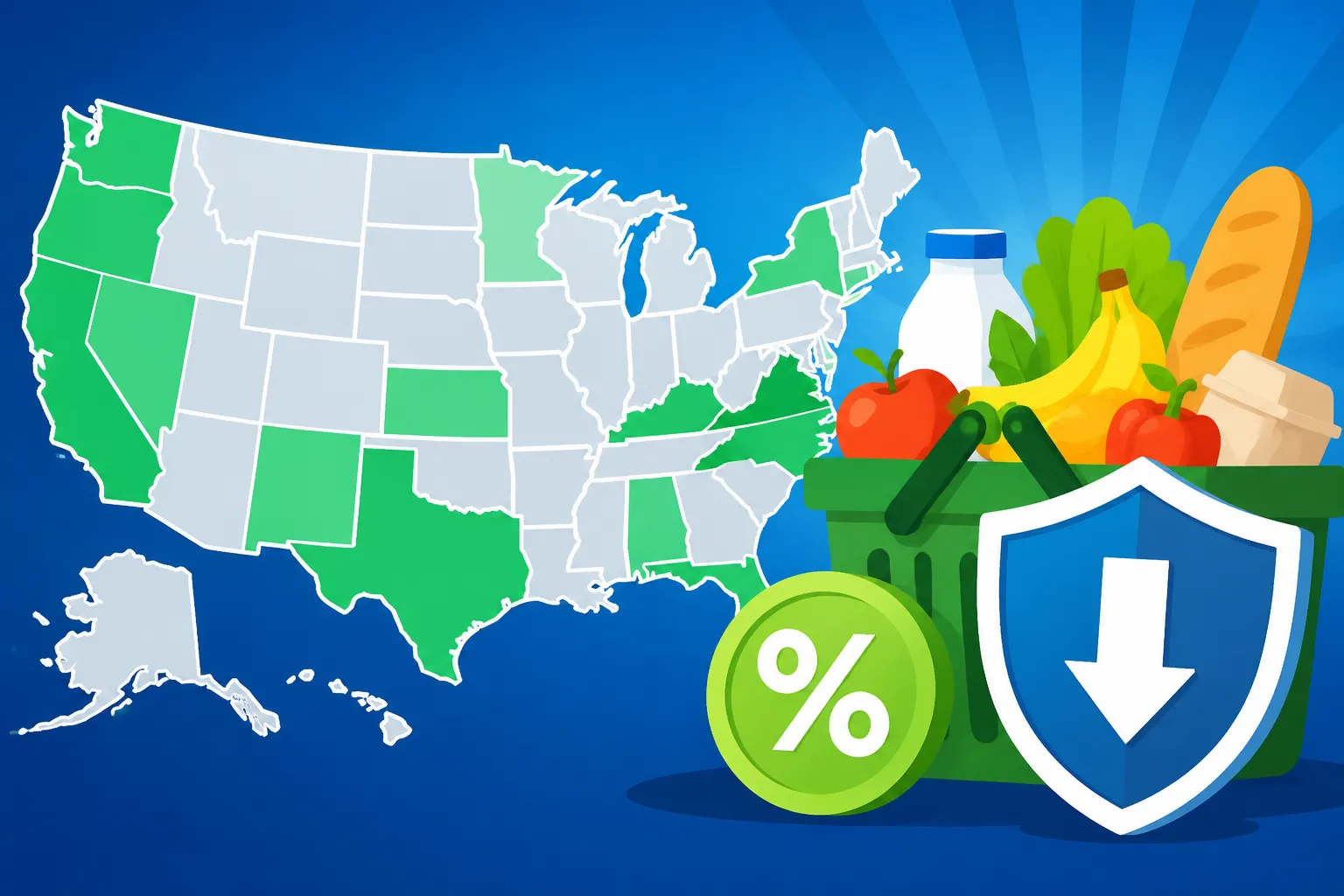
While several states completely exempt groceries from sales tax, a distinct group has chosen a path of compromise: imposing a sales tax on food, but at a rate significantly lower than their general sales tax. This approach aims to balance revenue generation with reducing the burden on consumers for essential goods. These states recognize the public desire for more affordable groceries without completely sacrificing the tax revenue that grocery sales can provide. It's a tricky tightrope to walk, and each state has carved out its own unique path.
The "Mixed Bag" Approach: How It Works
The concept of a "reduced" rate isn't always straightforward. In many cases, it means the state's statewide sales tax rate on groceries is lower than its general sales tax rate. However, and this is a crucial detail that often catches people off guard, local sales taxes (city, county, or special district taxes) can still apply at their full rate. So, while the state might be giving you a break, your total checkout price could still include a noticeable sales tax due to those local add-ons. For instance, a state might have a 0% state sales tax on groceries, but if you live in a city with a 3% local sales tax, you'll still pay that 3% on your food bill. This is a perfect illustration of how Combined State + Local Sales Tax Rates Explained can sometimes be a puzzle.
Let's look at an example: In Tennessee, "food ingredients" are subject to a state sales tax rate of 4%, which is lower than the general 7% state sales tax rate on most other tangible personal property. But if you're shopping in Nashville, you'll also pay Davidson County's 2.25% local sales tax, bringing your total to 6.25% on eligible food items. It's still lower than the 9.25% you'd pay on a new appliance, but it's far from "tax-free." This dual-layer taxation requires businesses to accurately track and apply the correct state and local rates, which can be a monumental task without the right tools.
Spotlight on Key States with Reduced Rates
Several states currently employ a reduced sales tax rate on groceries, each with its own specific rules and rates. It's a dynamic landscape, with legislatures frequently debating and implementing changes to these vital policies. Keep in mind that these rates are always subject to change, so consulting up-to-date resources like Sales Tax Rates by State 2026: All 50 States is always a good idea.
Here's a breakdown of some prominent examples:
- Illinois: While Illinois previously had a 1% state sales tax on groceries, the state has decided to eliminate this state-level tax entirely as of January 1, 2026. This is a significant move, offering relief to consumers. However, local sales taxes will continue to apply. So, while you won't pay a state tax, you'll still see local taxes on your grocery bill, such as those in Chicago, which has one of the higher combined rates in the country. This highlights the importance of understanding local jurisdictions, as discussed in Illinois Grocery Tax Eliminated 2026.
- Kansas: Kansas has been gradually reducing its state sales tax on groceries. The rate is currently 2% and is legislated to drop to 0% by 2025. This gradual phase-out provides relief to residents over time. Similar to other states, local sales taxes will still be imposed on grocery purchases, meaning the final rate you pay will depend on your specific city and county.
- Missouri: Another state on the path to full exemption, Missouri currently imposes a 1.225% state sales tax on groceries. However, this is set to be phased out completely, reaching 0% for state sales tax on groceries starting August 28, 2024. Again, local sales taxes will continue to apply, meaning shoppers will still see a percentage added at checkout.
- Oklahoma: Oklahoma has made a more immediate change, reducing its state sales tax on groceries to 0% as of August 2024. This is a substantial cut from its previous rate, making it a powerful example of a state actively working to reduce the cost of living for its residents. Nevertheless, local sales taxes in various cities and counties across Oklahoma will still be added.
- Tennessee: As mentioned, Tennessee distinguishes between "food ingredients" and other items. Food ingredients are subject to a 4% state sales tax, which is considerably lower than the general 7% state sales tax rate. However, local sales taxes apply on top of this, often bringing the combined rate for groceries well above 4%.
- Utah: In Utah, the state sales tax on "food and food ingredients" is set at a reduced rate of 1.75%. This is a notable discount compared to the general state sales tax rate of 4.85%. Like other states with a reduced rate, Utah's cities and counties can impose their own local sales taxes on food items, which are added to the state's reduced rate.
- Virginia: Virginia applies a 1% state sales tax rate to most food products purchased for home consumption and essential personal hygiene products. This is a significant reduction from its general state sales tax rate of 4.3%. Local sales taxes still apply on top of this 1%.
Here’s a quick overview of these states and their current (or soon-to-be) state-level grocery tax situation:
| State | General State Sales Tax Rate | Reduced State Grocery Tax Rate | Local Taxes Still Apply? | Notes |
|---|---|---|---|---|
| Illinois | 6.25% | 0% (Jan 1, 2026) | Yes | Formerly 1% state tax on groceries. |
| Kansas | 6.50% | 2% (0% by 2025) | Yes | Phasing out state grocery tax. |
| Missouri | 4.225% | 1.225% (0% by Aug 28, 2024) | Yes | Phasing out state grocery tax. |
| Oklahoma | 4.50% | 0% (Aug 2024) | Yes | Significant recent reduction. |
| Tennessee | 7.00% | 4% (for food ingredients) | Yes | Distinguishes between "food ingredients" and other food. |
| Utah | 4.85% | 1.75% (for food ingredients) | Yes | Also distinguishes "food and food ingredients." |
| Virginia | 4.30% | 1% (for food & hygiene) | Yes | Includes essential hygiene products. |
Note: The reduced rates listed are for the state sales tax portion only. Local sales taxes will be added on top of these rates in almost all cases.
Understanding the Nuances of "Food" vs. "Non-Food" Items
Even in states with reduced grocery tax rates, not everything you buy at a grocery store is treated equally. The definition of "food" for sales tax purposes is incredibly specific and can vary widely from state to state. This is where the casual shopper often gets confused, and where businesses face significant challenges in ensuring accurate taxation at the point of sale. It's not just about what's in your cart, but how the state classifies what's in your cart.
The Infamous Candy Flour Test
One of the most talked-about distinctions in grocery tax is the "candy" rule. Many states want to tax candy and soda at the full general sales tax rate, even if "groceries" generally have a reduced rate or are exempt. Why? Often, it's because these items are seen as discretionary, non-essential, or "snack" items rather than fundamental food staples. But how do you define "candy" consistently across different products? Enter the "candy flour test."
This test, adopted by many states, including some in the Streamlined Sales Tax (SST) Agreement, defines candy as a preparation of sugar, honey, or other natural or artificial sweeteners in combination with chocolate, fruit, nuts, or other ingredients or flavorings. The key here is that it does not require refrigeration and does not contain flour as a principal ingredient. So, a chocolate bar without flour might be taxed as candy, while a granola bar (which often contains flour) might be considered a "food ingredient" and taxed at the reduced or exempt rate. This often leads to situations where a Kit Kat is considered candy, but a Twix is not, simply because Twix has a cookie wafer (flour) and a Kit Kat typically doesn't have flour as a principal ingredient in its chocolate wafers. It's a fine line that can baffle both consumers and cashiers, as detailed in our guide on Candy & Soda Sales Tax The Flour Test.
Distinguishing Prepared Foods and Beverages
Beyond candy, the classification of "prepared foods" and certain beverages also adds layers of complexity. Most states, even those with full grocery exemptions or reduced rates, will apply the full general sales tax rate to prepared foods and restaurant meals. The logic is that you're paying not just for the food itself, but for the service of preparation and immediate consumption.
Think about it: a cold turkey sandwich kit you assemble at home might be subject to a reduced grocery tax rate, but if you buy a pre-made, hot turkey sandwich from the deli counter or a fast-food restaurant, it will almost certainly be taxed at the full, higher sales tax rate. The same often applies to fountain sodas, hot coffee, or juice sold from a dispenser – these are typically classified as prepared beverages and taxed at the higher rate, even if a six-pack of bottled soda or a bag of coffee beans purchased for home consumption would fall under the reduced grocery tax.
For businesses, especially grocery stores and convenience stores that sell both raw ingredients and prepared items, this distinction is critical. Their point-of-sale systems must be programmed to recognize these differences and apply the correct tax rate to each item. Imagine a large supermarket like Kroger or Albertsons; they sell everything from fresh produce to deli sandwiches and hot pizza. Each category of item might be subject to a different sales tax rule, making accurate collection incredibly complex. Without sophisticated systems, mistakes are easy to make, leading to potential audit issues down the line.
How Reduced Grocery Tax Impacts Consumers and Businesses
The implementation of reduced grocery tax rates creates a ripple effect throughout the economy, touching both the individual shopper and the businesses that serve them. While the primary goal is often consumer relief, the practicalities for retailers can be quite challenging, demanding precise record-keeping and robust compliance strategies.
Savings for Shoppers, Complexity for Sellers
For consumers, reduced grocery tax rates are generally a welcome change. As discussed earlier, even a few percentage points off their weekly food bill can add up to significant savings over a year. This extra disposable income can be crucial for struggling families or simply offer a bit more breathing room for everyone. It means more money in their pockets for other essentials, savings, or even a small discretionary purchase. In states like Oklahoma or Missouri, where the state-level tax on groceries is becoming zero, the immediate relief for shoppers is substantial, even if local taxes still apply.
However, for grocery stores, convenience stores, and any other retailer selling food items, these nuanced tax rules introduce considerable complexity. Their point-of-sale (POS) systems need to be meticulously programmed to differentiate between:
- Items fully exempt from sales tax (e.g., some fresh produce in certain states).
- Items subject to a reduced state sales tax rate but full local rates (e.g., "food ingredients" in Tennessee).
- Items subject to the full general sales tax rate (e.g., candy, soda, prepared foods, and non-food items like cleaning supplies).
- Changes to these rates, such as 2026 Sales Tax Rate Changes by State, require constant vigilance and updates.
A small local grocery store in Virginia, for instance, has to ensure that a customer buying a gallon of milk (1% state tax + local), a bag of chips (full state + local tax because it doesn't pass the "flour test" for some states or is just deemed a snack), and a hot rotisserie chicken (full state + local tax for prepared food) is charged correctly for each item. This level of granular detail can quickly become overwhelming, especially for small business owners who are already juggling a myriad of other responsibilities.
The Operational Challenges for Retailers
The operational challenges extend beyond just accurate programming of POS systems. Retailers must also:
- Train Staff: Cashiers need to understand the distinctions between taxable and non-taxable (or reduced-rate) items. While a POS system automates much of this, there are always edge cases or situations where a human decision is needed. Incorrect scanning or manual overrides can lead to errors.
- Inventory Management: Proper categorization of inventory items in the backend system is paramount. Each product SKU needs to be tagged with its correct sales tax classification to ensure the POS system applies the right rate. If a new product is introduced or an existing product's classification changes (e.g., a state changes its definition of "candy"), the entire inventory system needs updating.
- Auditing and Reporting: When it comes time to file sales tax returns, businesses must accurately report sales made at different tax rates to the state. This means tracking not just total sales, but sales broken down by the applicable tax rate. Failing to do so can lead to penalties and fines during a state audit. Manual calculation for businesses with high sales volume and diverse product offerings is simply not feasible. The stakes are high; incorrect filing can lead to significant financial repercussions. Understanding How to File a Sales Tax Return: Step by Step becomes even more critical in this complex environment.
Navigating Compliance with Varied Grocery Tax Rules
Given the intricate web of state and local sales tax rates, particularly for groceries, compliance can feel like a full-time job for businesses. What might seem like a simple concept – a reduced tax on food – quickly unravels into a labyrinth of definitions, exclusions, and fluctuating rates. Ignoring this complexity is not an option, as states are increasingly scrutinizing sales tax collection and remittance.
Manual Tracking vs. Automated Solutions
For small businesses with very few transactions or a highly limited product range, manually tracking sales tax might seem manageable initially. They could categorize sales into different buckets: "reduced rate groceries," "full rate taxable goods," and "exempt items." However, as soon as a business grows, adds more products, or expands into new jurisdictions (even just across a county line with different local rates), manual tracking quickly becomes prone to errors and incredibly time-consuming. Imagine a local bakery that starts selling pre-packaged flour mixes (reduced rate), individual cookies (prepared food, full rate), and bottled juice (full rate) – suddenly, a simple ledger becomes inadequate.
This is where automated sales tax solutions become invaluable. Software designed for sales tax compliance can:
- Determine Rates: Automatically calculate the correct state and local sales tax rate for each transaction, based on the customer's location (often the shipping address for online sales or the physical store location for in-person sales) and the product's taxability classification.
- Track Exemptions: Properly handle resale certificates and other exemption documents, ensuring that tax isn't collected on qualifying tax-exempt sales.
- File Returns: Generate accurate sales tax reports and even automate the filing of returns to the appropriate state and local taxing authorities.
Companies like Avalara offer robust platforms that integrate with various e-commerce platforms and accounting software. This kind of automation is a game-changer for businesses dealing with multiple product taxability rules, like those selling groceries. It ensures accuracy and frees up valuable time that would otherwise be spent on tedious manual calculations. Another option that many businesses consider is TaxJar, and comparing services like Avalara vs TaxJar: Which Sales Tax Software? can help businesses decide which solution best fits their needs.
Staying Up-to-Date with Rate Changes
The sales tax landscape is not static; it's constantly evolving. States and local jurisdictions frequently adjust their sales tax rates, enact new exemptions, or change the definitions of what's taxable. Grocery tax rules are no exception. For example, the changes in Illinois, Kansas, Missouri, and Oklahoma regarding state sales tax on groceries are recent developments that require businesses to adapt their systems and processes.
Staying current with these changes is a monumental task. Taxing authorities typically announce changes well in advance, but it requires active monitoring of state revenue department websites and industry news. For a business operating in multiple states, this becomes exponentially more complex. Imagine a regional grocery chain with stores across Tennessee, Virginia, and Missouri; they would have to track separate state-level changes, plus all the varying local tax changes in dozens of cities and counties.
This is another area where sales tax compliance software truly shines. These platforms are designed to monitor and automatically update their databases with the latest sales tax rates and rules, including those specific to grocery items. This ensures that businesses are always charging the correct amount of tax, minimizing the risk of under-collection (which the business would owe) or over-collection (which could lead to customer complaints or audit issues). Investing in Best Sales Tax Compliance Software 2027 isn't just about convenience; it's about robust risk management and maintaining legal compliance in a complex tax environment. Many businesses find that the cost of automation is far less than the potential penalties and lost time associated with manual errors and non-compliance. It genuinely makes Sales Tax Automation Is It Worth It? a rhetorical question for most growing businesses.
The Debate: Why Do States Tax Groceries at All?
After delving into the complexities of reduced grocery tax rates, it's natural to wonder why any state taxes groceries in the first place, especially given the administrative burden and the impact on consumers. The debate over taxing food for home consumption is a long-standing one, with strong arguments on both sides.
Arguments For and Against Grocery Sales Tax
Arguments for taxing groceries:
- Broad Tax Base: Including groceries in the sales tax base generates significant revenue for state and local governments. Sales tax is a major funding source for essential public services like schools, infrastructure, and emergency services. Excluding a large category like food would require raising other taxes or cutting services.
- Simplicity (in theory): From a revenue perspective, a single, uniform sales tax rate on all goods (including groceries) can be seen as simpler to administer than having multiple rates or complex exemptions. However, as we've seen, this often leads to a backlash and subsequent carve-outs like reduced rates, making it complicated again.
- Consumption-Based Tax: Sales taxes are consumption taxes, meaning people pay based on what they buy, not what they earn. Some argue this is a fair way to fund government, as everyone contributes when they consume goods and services.
Arguments against taxing groceries (or for reduced rates):
- Regressive Nature: This is the strongest argument. Sales taxes are considered regressive because they take a larger percentage of income from low-income households than from high-income households. Everyone needs to eat, regardless of income, so essential groceries consume a higher proportion of a poor family's budget. Taxing them disproportionately impacts those who can least afford it.
- Essential Good: Food is a necessity for life, not a luxury. Opponents argue that essential goods should not be taxed, similar to how most states exempt prescription medications.
- Economic Stimulus: Reducing or eliminating grocery taxes leaves more money in consumers' pockets, which can stimulate local economies as people have more to spend on other goods or services.
- Administrative Burden: As we've extensively discussed, the complexities of defining "food," "candy," "prepared food," and applying different state and local rates create a huge administrative burden for retailers and taxing authorities alike.
The trend in recent years, particularly with high inflation impacting food prices, has been for more states to move towards reducing or eliminating state-level sales tax on groceries, or at least initiating serious discussions about it. This reflects a growing recognition of the regressive nature of these taxes and the desire to provide relief to constituents.
The Future Landscape of Food Taxation
The future of grocery sales tax is likely to continue evolving. We've seen states like Illinois, Kansas, Missouri, and Oklahoma recently take steps to reduce or eliminate their state sales tax on groceries, and it's plausible that other states currently taxing food at the full rate might follow suit. This shift is driven by a combination of factors: increasing awareness of economic equity, legislative pushes to reduce the cost of living, and the political appeal of making essential goods more affordable.
However, completely eliminating all sales tax on groceries – state and local – remains a significant challenge for many states due to their reliance on sales tax revenue. Local governments, in particular, often depend heavily on sales tax to fund their specific community needs. This means that even if state taxes on groceries disappear, local sales taxes will likely persist in many areas, maintaining a level of complexity for businesses and a continued, albeit reduced, cost for consumers.
The ongoing debate will likely focus on finding creative ways to offset lost revenue if grocery taxes are reduced or eliminated further, perhaps through adjustments to income taxes, property taxes, or by taxing other goods and services. Whatever the future holds, the conversation around how we tax our most basic necessities is far from over. Businesses will need to remain nimble, with systems that can adapt to changing tax laws and rates, ensuring they can seamlessly adjust their processes as the landscape of Sales Tax by ZIP Code and Why ZIP Isn't Enough continues its dynamic evolution.
Disclaimer
Please note that sales tax laws are highly complex and subject to frequent change. The information provided in this article is for informational purposes only and does not constitute professional tax advice. Always consult with a qualified tax professional or the relevant state taxing authority for advice specific to your business or individual situation.