How Do Sales Tax Rate Changes Take Effect?
Trying to keep up with sales tax feels a bit like trying to catch a falling knife—just when you think you have a handle on the numbers, a local jurisdiction shifts the goalposts. It’s a massive frustration for small business owners and e-commerce giants alike. This guide explores the mechanics of how rate changes go from a legislative proposal to a line item on your customer's receipt.
The Lifecycle of a Sales Tax Rate Change
The journey of a sales tax rate change doesn't happen in a vacuum. It usually begins months, or even years, before you see the update in your checkout system. Most changes start in the halls of state legislatures or during local city council meetings. A bill is proposed, debated, and eventually signed into law. For a business owner, this is the "warning phase," though many of us don't hear the alarm until the state's Department of Revenue sends out a frantic-looking PDF notice.
Legislative Approval and Public Notice
Once a law is passed, states are generally required to provide public notice. However, "public notice" can be a very loose term. While some states are proactive, others might simply post a bulletin on a dense government website. This is where the complexity begins. You might be tracking the 2026 Sales Tax Rate Changes by State and realize that a tiny town in the corner of your most active shipping zone has decided to add a 0.5% public transportation tax. If you miss that notice, you’re the one on the hook for the difference.
Legislative changes often come with a mandatory waiting period. Most states try to align these changes with the start of a calendar quarter—January 1, April 1, July 1, or October 1. This "quarterly cadence" is designed to give software providers like Avalara time to update their databases and give businesses time to adjust their accounting practices. But even with this window, the sheer volume of changes across thousands of jurisdictions can be overwhelming.
Effective Dates and the Grace Period
The "Effective Date" is the line in the sand. If a customer buys something at 11:59 PM on June 30, they pay the old rate. At 12:01 AM on July 1, they pay the new one. But what happens if you’ve already sent an invoice? Or what if a customer returns an item purchased under the old rate? These are the real-world scenarios that make rate implementation so messy.
Some states offer a very brief grace period for "good faith" errors immediately following a change, but don't count on it. Most tax authorities expect your system to be updated the moment the clock strikes midnight. This is why many veteran sellers move away from manual tables and toward automated solutions. If you are manually updating a Sales Tax Calculator: How to Calculate Sales Tax, you have to be ready to pull an all-nighter four times a year just to stay current.
The Role of Local Jurisdictions
While state-level changes get the most press, it’s the local changes that cause the most headaches. Counties, cities, and special districts (like library or fire districts) often have the power to levy their own taxes. These local authorities don't always play by the state's rules regarding timing. In states like Colorado or Louisiana, where "home rule" gives local jurisdictions massive autonomy, a rate change might take effect with very little lead time.
Tracking these hyper-local shifts is nearly impossible without help. You might be looking at a Sales Tax by ZIP Code (and Why ZIP Isn't Enough) guide and realize that one side of a street has a different rate than the other because of a newly formed district. When these local entities decide to fund a new stadium or repair a bridge, the rate change is the primary tool they use, and they expect you to be their unpaid tax collector from day one.
Why Sales Tax Rates Change So Frequently
If you feel like the rates are constantly in flux, you aren't imagining it. The economic landscape of a city or state is always shifting, and sales tax is one of the fastest ways for a government to generate revenue. Unlike income tax, which is often a political landmine, sales tax is frequently seen as a "consumption-based" way to fund essential services.
Budget Deficits and Infrastructure Needs
The most common reason for a rate hike is a budget shortfall. If a state sees a dip in corporate tax revenue or faces an unexpected expense—like a natural disaster—they often look to sales tax to plug the hole. These changes are usually permanent, or at least they stay in place until the next major budget overhaul. For instance, if a bridge needs replacing, a county might vote to increase the local rate by a quarter-percent.
Infrastructure-driven changes are often tied to specific projects. You’ll see this frequently in growing suburban areas where new schools or roads are needed. As a seller, you have to be aware that your Sales Tax for Online Sellers: Complete Guide needs to be a living document because a single local election three states away can change your compliance requirements overnight.
Voter-Approved Initiatives
In many parts of the country, citizens get to vote directly on tax increases. These are often "special purpose" taxes. For example, a city might vote for a "Quality of Life" tax that funds parks and recreation. These are tricky because they don't always align with the state’s fiscal year. They take effect whenever the ballot initiative says they do.
The human element here is significant. When voters approve a tax for a cause they love—like a new animal shelter—they rarely think about the poor e-commerce manager who has to update the backend of a website to collect an extra 0.125%. These tiny increments might seem negligible to the consumer, but they are a massive data-entry burden for the business.
Temporary Surcharges and Sunsetting Rules
Sometimes, a tax isn't meant to last forever. "Sunsetting" is a term used when a tax increase is designed to expire after a certain amount of time or after a specific revenue goal is met. While this sounds great for the taxpayer, it’s a nightmare for the person managing the rates. You have to remember not only when to start collecting a higher rate but also exactly when to stop.
If you continue to collect a tax after it has sunset, you are technically over-collecting, which can lead to class-action lawsuits or heavy penalties. On the flip side, if you stop early, you’re under-collecting. Tools like Avalara are specifically built to handle these "start and stop" dates automatically, which is a lifesaver for businesses that don't have a dedicated tax department to watch the calendar.
| Type of Change | Typical Notice Period | Common Reason | Implementation Difficulty |
|---|---|---|---|
| Statewide Rate | 60 – 90 Days | State Budget / General Fund | Low – High Visibility |
| County/City Rate | 30 – 60 Days | Local Infrastructure / Parks | Medium – Hard to Track |
| Special District | 15 – 30 Days | Libraries / Fire / Transit | High – Very Granular |
| Tax Holiday | 120 Days (Scheduled) | Back-to-School / Economic Boost | Medium – Temporary Logic |
How Sourcing Rules Impact Rate Implementation
When a rate changes, the first question is: Which rate do I use? This sounds simple, but in the world of US sales tax, nothing is straightforward. The answer depends on your state's "sourcing" rules. Whether you are shipping from a warehouse or selling a digital download, the physical location of the buyer and the seller determines which rate change affects you.
Origin-Based vs. Destination-Based Sourcing
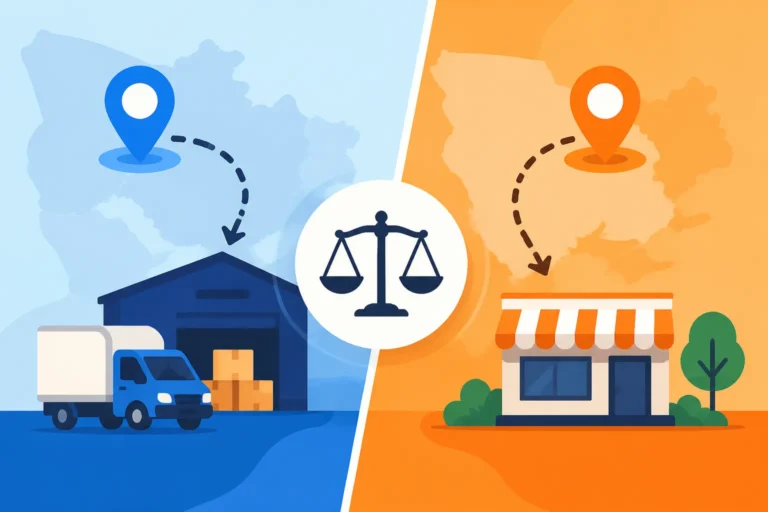
If you are in an origin-based state, you collect tax based on where you (the seller) are located. If your city increases its rate, every sale you make to customers in your state will be at that higher rate. This makes things slightly easier to manage because you only have one primary rate to watch. However, most states have moved toward Origin vs Destination Sales Tax Sourcing rules that favor the buyer's location.
In destination-based states, you collect the rate where the customer receives the goods. This is where the pain of rate changes really hits home. If you have "nexus" (a legal obligation to collect tax) in twenty states, you are potentially tracking rate changes for thousands of different jurisdictions. When a destination state changes its rules, you have to ensure your system identifies the customer's exact address to apply the correct new rate.
Shipping and Delivery Timelines
Rate changes often hinge on the date of the "taxable event." Usually, this is when the customer takes possession of the item. But what happens if a customer orders a couch on June 28 (old rate), but it doesn't ship until July 5 (new rate)? Most states dictate that the date of the sale or the date of delivery determines the tax.
If your state uses the delivery date as the trigger, your software needs to be smart enough to look ahead. This "shipping lag" is a common source of errors during audits. Auditors will look for orders placed right at the cusp of a rate change to see if you were applying the rate based on the order date or the fulfillment date. This is why understanding California District Taxes Explained is so vital for West Coast sellers—the sheer number of districts means there’s always a change happening somewhere.
Handling Returns After a Rate Change
Returns are the ultimate accounting headache. If a customer buys a $100 pair of shoes in December at an 8% tax rate and returns them in January after the rate has jumped to 8.5%, they should only get back the 8% they actually paid. Your system has to "remember" the historical rate for that specific transaction.
If you simply apply the current rate to a return, your books will be unbalanced, and you’ll be effectively "refunding" tax money to the customer that you never actually collected from them. This is a classic trap for businesses that use a simple Sales Tax Calculator: How to Calculate Sales Tax without a robust back-office integration. Compliance isn't just about the forward-facing price; it's about the historical accuracy of your ledger.
Technical Challenges for Business Owners
For the modern business, a rate change isn't just a number change; it's a technical deployment. Your website, your ERP (Enterprise Resource Planning) system, and your physical POS systems all have to stay in sync. If one lags behind the other, you end up with a mess of "omnichannel" data that doesn't match.
Point-of-Sale (POS) System Updates
If you have a brick-and-mortar store, your POS is your lifeline. Most modern cloud-based POS systems push updates automatically, but legacy systems might require a manual upload of tax tables. I’ve seen small shop owners realize three weeks too late that their register was still charging last year's rate because the "automatic update" failed.
The danger here is that you cannot go back and ask customers for an extra 12 cents once they’ve left the store. You, the business owner, have to pay that difference out of your own pocket. When you're operating on thin margins, those small percentages add up fast. It’s why many retailers are switching to Best Sales Tax Compliance Software 2027 options that handle the heavy lifting.
E-commerce Platform Integration
E-commerce adds another layer of complexity. Platforms like Shopify, WooCommerce, or BigCommerce have their own ways of handling tax. Some have built-in engines, while others require third-party plugins. The challenge is ensuring that the tax engine is talking to the checkout page in real-time.
A common issue occurs when a platform’s "native" tax table isn't updated as quickly as the state's actual law. There is often a 24- to 48-hour lag while the platform's engineers verify the new rates. During that window, every sale you make could be non-compliant. High-volume sellers often bypass the native tables and use an API-based solution like Avalara to ensure that they are pulling live, verified data for every single transaction.
Mapping ZIP Codes to Specific Jurisdictions
One of the biggest myths in business is that ZIP codes are for tax. They aren't; they are for the Post Office. A single ZIP code can span multiple cities, counties, and special districts. If you rely on a Sales Tax Rate Lookup Tools Compared guide that only uses ZIP codes, you are going to get it wrong.
When a rate change takes effect, it is often tied to a specific boundary line that has nothing to do with where the mail goes. To be truly compliant, you need "geospatial mapping"—using the exact latitude and longitude of an address to determine the tax. This level of precision is the only way to survive an audit if you are selling in high-complexity states like Texas or Illinois.
Practical Steps to Manage Rate Shifts
So, how do you actually survive this constant cycle of changes? You can't stop the government from raising taxes, but you can build a system that makes the updates painless. It’s about moving from a "reactive" posture to a "proactive" one.
Automating with Compliance Software
The days of manual tax tables are over for anyone selling across state lines. If you have crossed an Economic Nexus by State 2026: Thresholds Guide threshold, you are now a "remote seller" in that state, and the complexity is too much for a spreadsheet. Automation software handles the monitoring of rate changes so you don't have to.
When a change is announced, an automated system like Avalara updates its cloud database immediately. Your checkout system simply pings the cloud, gets the right number, and applies it. This turns a "midnight update" into a "non-event." You can focus on growing your business while the software focuses on the Sales Tax Filing Frequency Explained and the ever-shifting rates.
Conducting Regular Nexus Audits
Rate changes only matter in the states where you are registered. However, your "nexus" (where you are required to collect) changes as your sales grow. You should be checking your nexus status at least once a quarter. If you suddenly find you have nexus in a state with a complex local tax structure, you need to get registered before the next round of rate changes takes effect.
Managing your registration is just as important as managing the rates. If you register late, you might find yourself owing back taxes at a rate that has since changed, making the calculations even more confusing. Staying on top of where you owe tax is the first step in ensuring you are applying the current rates correctly.
Educating Your Accounting Team
Finally, don't let your tax knowledge stay in a silo. Your accounting team, your customer service reps, and even your web developers need to understand that sales tax is fluid. When a customer calls complaining that their "tax looks higher than last time," your team should be able to explain that a local rate change took effect.
Transparency with customers builds trust. If you can point to a specific local ordinance or a state-wide update, it removes the friction of the price increase. It also ensures that your internal team isn't manually overriding tax amounts in your ERP, which is a one-way ticket to a disastrous audit.
Sales Tax Disclaimer
This guide is for informational purposes only and does not constitute professional tax, legal, or financial advice. Sales tax laws and rates are subject to frequent changes by various government authorities. You should consult with a qualified tax professional or accountant to ensure your business remains compliant with all current regulations in the jurisdictions where you operate.
While we strive to provide accurate and up-to-date information, the complexities of tax nexus and local sourcing rules mean that individual circumstances may vary significantly. Always verify rate changes with official state Department of Revenue notices before making significant changes to your business operations.