Sales Tax on Soda by State
It's incredibly frustrating when you're at the checkout, picking up what you think is just another grocery item, only to find sales tax applied to your soda but not your bread. This inconsistency can make figuring out sales tax on beverages feel like a confusing riddle for both shoppers and businesses. This comprehensive guide will unravel the complexities of sales tax on soda across the United States, explaining why it's often treated differently from other food items and what that means for your wallet or your business.
Why Sales Tax on Soda Can Be So Confusing for Everyone
When you walk into a grocery store, you might assume that all food items are treated the same for sales tax purposes. If your state exempts groceries, you expect to pay no sales tax on your milk, eggs, or vegetables. However, this common assumption often doesn't hold true when it comes to soft drinks. The distinction states make between "food for home consumption" and other items is where the confusion truly begins, and soda frequently lands on the taxable side of that line.
The "Food for Home Consumption" Conundrum
Many states implement sales tax exemptions for "food for home consumption," a broad category typically meant to relieve the tax burden on essential household items. The logic behind this is to make basic necessities more affordable, especially for lower-income households. However, most states decide that soda, along with candy and prepared foods, doesn't quite fit this definition of an essential food item. They often view these as luxury or discretionary purchases, or simply as items that don't contribute to basic nutritional needs in the same way flour or fresh produce does.
This carve-out means that even in states with a general grocery exemption, your favorite carbonated beverage will likely be taxed. For instance, in states like Illinois, which generally exempts most groceries from the standard sales tax rate, soda is still subject to the full state and local sales tax. This creates a situation where a jug of orange juice might be tax-free, but a bottle of cola sitting right next to it isn't, leading to understandable bewilderment for consumers and operational challenges for retailers trying to manage diverse inventory and point-of-sale systems. Understanding these nuances is key to grasping why your grocery bill can have such varied tax applications. If you're curious about how this applies to other common items, check out our guide on whether food is taxable? Sales Tax on Groceries & Food by State.
Defining What a "Soft Drink" Actually Is
Adding another layer of complexity is how states actually define a "soft drink" in their tax statutes. It's not always as straightforward as "if it's fizzy, it's soda." State laws can get incredibly specific, creating a patchwork of definitions that vary significantly from one jurisdiction to the next. For example, some states focus on carbonation as the primary identifier, taxing any non-alcoholic carbonated beverage. Others dive deeper into sugar content, artificial sweeteners, or even the percentage of fruit juice present in the drink.
Consider a beverage that contains a small percentage of fruit juice but is also carbonated and sweetened. Is it a juice, which might be exempt, or a soda, which is taxable? The answer can depend entirely on a state's specific threshold for what constitutes "juice" versus a "soft drink." Some states might exclude beverages that contain a certain percentage of natural fruit juice from the "soda" classification, while others might focus more on added sweeteners. This level of detail can be a nightmare for businesses, especially those selling a wide variety of beverages, as they must accurately classify each product to ensure correct tax collection. For consumers, it means that a sparkling water with natural fruit essence might be treated differently than a traditional soda, even if both are enjoyed for refreshment.
Where Soda Sales Tax Applies (and Where it Doesn't) Across the US
The landscape of sales tax on soda across the United States is anything but uniform. While a majority of states with a sales tax do apply it to soft drinks, the specifics can vary wildly. Understanding these differences is crucial for both consumers planning their purchases and businesses trying to maintain compliance, especially if they operate in multiple states or have an online presence.
States That Generally Tax Soda at Full Rate
Most states that impose a sales tax consider soda a general tangible good, subject to the full state and applicable local sales tax rates. This approach simplifies things slightly for these states, as soda isn't given any special exemption. For instance, in states like Texas and Florida, soda is taxed at the standard statewide rate, plus any local county or city taxes that apply. So, if you're grabbing a 12-pack in Houston or Miami, you're paying the full combined rate on that purchase.
California, with its relatively high base sales tax rate of 7.25% and numerous district taxes, also applies sales tax to soda. This means a soda purchased in Los Angeles or San Francisco will reflect a higher total tax due to these combined rates. The rationale in these states often comes down to considering soda a non-essential item, distinguishing it from basic groceries like fresh produce or milk, which might be exempt or taxed at a reduced rate elsewhere. This consistent application across many states helps state treasuries, as soda sales are a reliable source of revenue. You can learn more about how all these different rates combine in our detailed article on Combined State + Local Sales Tax Rates Explained.
States With Specific Exclusions or Special Rules
While many states tax soda outright, some jurisdictions have more nuanced approaches or specific exclusions. These rules often stem from legislative attempts to either encourage healthier choices or respond to lobbying efforts by beverage industries. For example, some states might have specific rules about drinks sold through vending machines versus those sold on a grocery shelf, or distinguish between carbonated beverages and non-carbonated sweetened drinks.
A notable distinction can arise with fountain drinks or sodas sold as part of a meal in a restaurant. Many states categorize "prepared food" differently than "food for home consumption." In these scenarios, even if a state exempts groceries, a fountain soda purchased alongside a burger would likely be taxed as part of the prepared meal. This means a can of soda from a grocery aisle might be taxed differently than the same soda dispensed from a machine in a fast-food restaurant, even within the same city. These distinctions highlight the intricate nature of sales tax laws and the need for businesses to accurately identify their product categories and sales methods. For a deeper dive into this, our post on Prepared Food Sales Tax Explained might be helpful.
States Where Soda Might Be Tax-Exempt as a Grocery Item
Finding a state where soda is genuinely tax-exempt as a grocery item is quite rare. As we've discussed, most states that exempt "food for home consumption" specifically carve out soft drinks. However, if a state has no statewide sales tax at all, like Oregon, Delaware, Montana, New Hampshire, or Alaska (at the state level, though Alaska has local sales taxes), then soda would inherently not be subject to a state sales tax. In Alaska, for instance, local jurisdictions may impose sales tax, but the state itself does not. Therefore, if you buy a soda in Anchorage, you might pay local sales tax, but not state sales tax, because there simply isn't one.
It's crucial to differentiate between a state having a general grocery exemption that includes soda, and a state simply not having a sales tax on anything, or having no state sales tax but allowing local sales taxes. For the vast majority of states with a sales tax, soda will be taxed. The key takeaway here is that if you live in one of the few States With No Sales Tax (NOMAD Explained, you're off the hook for sales tax on soda (and almost everything else, at the state level anyway).
The Local Impact: City, County, and Special District Taxes on Beverages
Just when you think you've wrapped your head around state sales tax rates, local jurisdictions swoop in to add another layer of complexity. These city, county, and special district taxes can significantly inflate the final price of a soda, sometimes even more so than the state portion itself. It’s a common scenario that leaves many consumers scratching their heads, wondering why the sales tax percentage on their receipt seems so much higher than the statewide rate they remember.
How Local Jurisdictions Add to the Bill
In many states, the sales tax rate you actually pay is a combination of the state rate and various local add-ons. These local taxes can come from counties, cities, transit authorities, or other special districts, all of which have the power to levy their own sales taxes. When soda is considered a taxable item at the state level, it often becomes taxable at these local levels as well, compounding the overall rate. For example, if a state has a 5% sales tax, and a county adds 2%, and a city adds another 1%, your effective sales tax rate on that can of soda jumps to 8%.
Consider a place like Chicago, Illinois, which has one of the highest combined sales tax rates in the nation. While Illinois has a state sales tax rate, the city of Chicago adds its own layers, making soda quite expensive from a tax perspective. The sales tax by ZIP code can be incredibly varied, and a simple change in address from one side of a street to another can mean a different rate. This creates a significant challenge for retailers who need to ensure their point-of-sale systems are updated with the correct, hyper-local rates for every single sale, preventing both under-collection and over-collection. It really highlights why relying solely on a statewide rate is often not enough for compliance. To fully grasp this complexity, you might want to look into Sales Tax by ZIP Code (and Why ZIP Isn't Enough.
Beyond Sales Tax: Sugary Drink Taxes and Their Role
It's important to distinguish between standard sales tax and "sugary drink taxes," often referred to as soda taxes or beverage taxes. While both increase the final cost of a beverage, they are fundamentally different types of taxes. Sales tax is generally a percentage of the retail price applied at the point of sale and collected by the retailer for the state and local governments. Sugary drink taxes, however, are typically excise taxes levied per ounce of sweetened beverage. These are often implemented by cities or counties with public health goals in mind, aiming to reduce consumption of sugary drinks and generate revenue for health initiatives.
While not sales tax, these excise taxes on sugary drinks certainly add to the total out-of-pocket expense for consumers buying soda. For example, cities like Philadelphia, Berkeley, Seattle, and Boulder have implemented their own sugary drink taxes. A business selling soda in Philadelphia not only has to collect the standard Pennsylvania sales tax (if applicable to the specific transaction, as prepared food is taxed but groceries generally aren't), but also account for the city's per-ounce sugary drink tax. This dual taxation can make soda significantly more expensive in these areas. Businesses need robust systems to correctly apply both the sales tax and any applicable excise taxes, a task that can become incredibly complex if not managed properly.
Navigating Compliance for Businesses Selling Soda
For businesses, especially those operating across state lines or with an online presence, figuring out the correct sales tax on soda isn't just a matter of checking a simple chart. The varied definitions, exemptions, and local rates create a substantial compliance burden. Making a mistake can lead to audits, penalties, and a whole lot of headaches.
The Burden of Accurate Sales Tax Collection
Imagine running a convenience store chain with locations in multiple states and various cities within those states. Each location sells the same brands of soda, but the sales tax rate—and even the definition of what constitutes a taxable "soft drink"—can differ significantly. Your point-of-sale (POS) system needs to be programmed to recognize each product, understand its taxability status in that specific jurisdiction, and apply the correct combined state and local rate. Then, when it comes to filing sales tax returns, you can't just send one check to your state. You'll likely need to break down the collected taxes by county, city, and special district, remitting the correct amounts to each specific tax authority.
This isn't a small task. A small coffee shop selling a few types of bottled soda might manage this manually, but for larger retailers, distributors, or e-commerce businesses shipping soda across the country, it quickly becomes overwhelming. Incorrectly calculating tax on even a small percentage of sales can lead to under-collection, meaning the business might owe the difference out of its own pocket, or over-collection, which can lead to customer dissatisfaction and potential refunds. The ever-changing nature of sales tax rates, as documented in guides like 2026 Sales Tax Rate Changes by State, further complicates matters, requiring constant vigilance and updates.
Leveraging Technology for Simpler Sales Tax Management
Given the immense complexity, many businesses are turning to technology to help manage their sales tax obligations, especially when it comes to tricky items like soda. Sales tax compliance software is designed to automate the process of calculating, collecting, and remitting sales tax, taking the guesswork out of these intricate rules. These platforms maintain vast databases of current sales tax rates for every state, county, city, and special district in the U.S., including specific rules about product taxability.
When a customer purchases a soda, the software can instantly determine the correct tax rate based on the customer's shipping address (for online sales) or the store's location (for in-person sales) and apply any specific rules for soda taxability in that jurisdiction. Companies like Avalara offer solutions that integrate directly with existing e-commerce platforms, accounting software, and POS systems, making the process seamless. This automation not only helps businesses avoid costly errors and penalties but also frees up valuable time and resources that would otherwise be spent manually researching and implementing tax changes. Using such a tool means a business can focus on selling great beverages rather than getting bogged down in the minutiae of How to Calculate Sales Tax (Step by Step for every single item. This kind of automation is definitely worth considering for any business with significant sales tax complexity, and you can explore more about Sales Tax Automation: Is It Worth It?
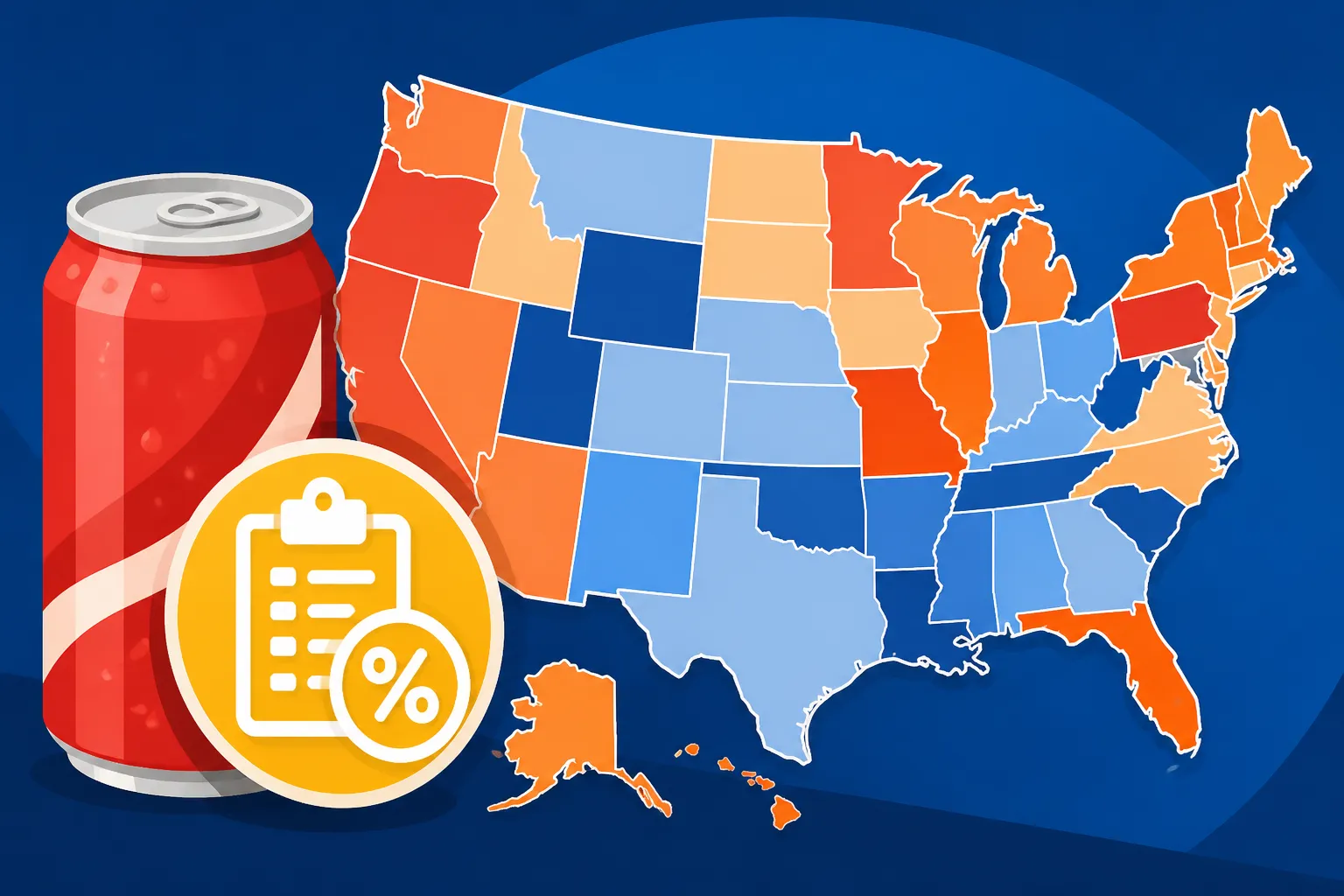
Here's a simplified overview of how soda is generally treated for sales tax purposes in various states:
State General State Sales Tax Rate Soda Sales Tax Treatment Notes the state with the highest sales tax on soda and other beverages at 10.11% in Louisiana, the statewide base is 4.45% plus local sales taxes, for example. The article Sales Tax on Soda by State covers the general rules across states, but remember to always verify local additions. This complexity is why businesses often invest in solutions that automatically handle these layered calculations and correct tax filing.
Disclaimer
This guide provides general information about sales tax on soda by state and is not intended as tax advice. Sales tax laws are complex and subject to change. Businesses and individuals should consult with a qualified tax professional for advice specific to their circumstances.