Are Over-the-Counter Drugs Taxable?
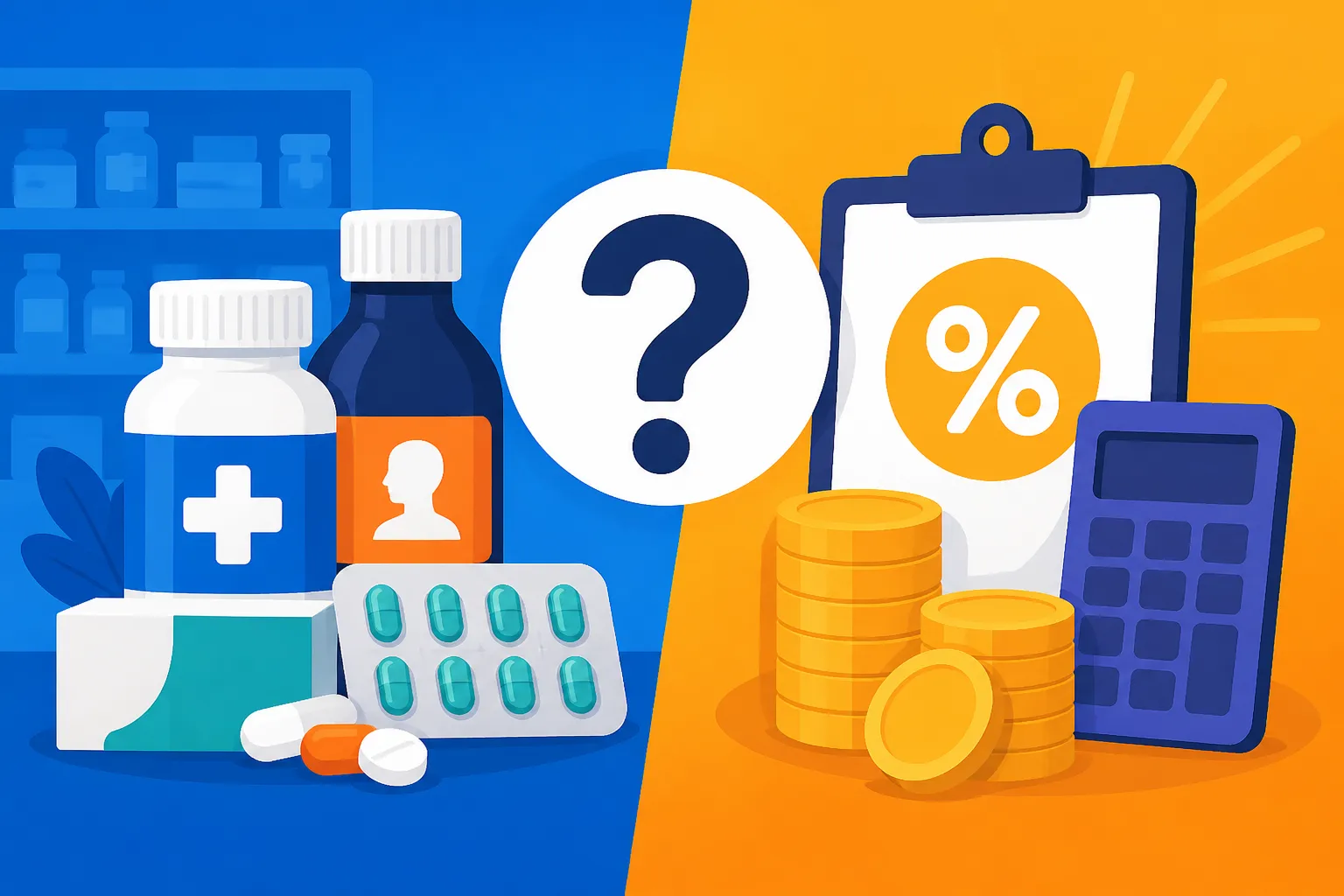
Standing in the pharmacy aisle, staring at that bottle of ibuprofen or allergy medicine, it’s easy to wonder: "Is sales tax going to be added to this?" It feels like it should be simple, right? Medicine helps people, so why would it be taxed? But the world of sales tax is rarely simple, and whether over-the-counter (OTC) drugs are taxable can be a surprising maze, varying wildly from one state — and sometimes even one product — to the next. This guide will help demystify the rules around sales tax on OTC drugs, giving you a clearer picture of what to expect and why.
Unpacking the Nuance of "Drugs" in Sales Tax Law
When it comes to sales tax, not all "medicine" is treated equally. Most people intuitively understand that prescription medications are exempt from sales tax, and for good reason – taxing life-saving or necessary prescriptions would put an undue burden on individuals. However, the line blurs considerably once you step into the world of over-the-counter products. States often have very specific definitions, and they don't always align with what a consumer might consider a "drug" in a common sense way. This creates a patchwork of rules that can leave shoppers and businesses alike scratching their heads.
The Definition Dilemma: What Counts as a "Drug"?
One of the biggest hurdles in understanding sales tax on OTC drugs is that each state gets to define what constitutes a "drug" for tax purposes. These definitions might seem straightforward on the surface, often referencing federal classifications like those from the Food and Drug Administration (FDA). However, the devil is in the details. For instance, some states might broadly exempt anything labeled with a "Drug Facts" panel, while others might require the product to actually treat a specific illness or condition, rather than simply prevent or alleviate symptoms.
Consider common items like pain relievers (ibuprofen, acetaminophen), cold and flu remedies, allergy medications, antacids, or even simple antiseptic wipes. Are these all uniformly considered "drugs" for sales tax purposes? Not necessarily. Some states might draw a distinction between a product that treats a headache and one that prevents motion sickness. This granular level of detail is a huge headache for businesses, especially those selling a wide array of products online, as they need to accurately classify each item. This is where tools from companies like Avalara can become invaluable, helping businesses navigate these complex product taxability rules without having to manually research every single SKU in every single state.
Prescription vs. Over-the-Counter: A Critical Distinction
The most universally accepted sales tax exemption in the medical realm is for prescription drugs. Nearly every state that collects sales tax exempts medications dispensed by a pharmacist with a doctor's prescription. This is a clear, bright line that most taxing authorities understand and enforce. The moment a doctor's order is involved, the sales tax usually disappears.
However, the moment that same active ingredient, or a similar therapeutic item, becomes available over-the-counter without a prescription, its tax status can flip entirely. Think about it: a doctor prescribes a specific strength of hydrocortisone cream, and it's tax-exempt. But if you walk into a drugstore and buy an OTC hydrocortisone cream, even with the same active ingredient, it might suddenly become taxable. The key differentiator is often the "prescription" itself, not the inherent nature or purpose of the medication. This distinction is vital for both consumers budgeting for their healthcare needs and for retailers who must correctly charge and remit sales tax. It underscores the complexity that arises when states interpret federal classifications through their own unique tax lenses.
State-by-State Breakdown: Where OTC Drugs Are Taxable
Trying to figure out the sales tax rules for over-the-counter drugs across all 45 states that have a statewide sales tax can feel like herding cats. There's no single federal rule, so each state sets its own course. This means a product that's tax-free in one state might be fully taxable just across the border. It's one of the most frustrating aspects of the U.S. sales tax system, creating a compliance nightmare for businesses and a confusing shopping experience for consumers.
States Where Most OTC Drugs Are Sales Tax Exempt
Good news for shoppers in some parts of the country! Several states recognize the essential nature of many OTC drugs and exempt them from sales tax. This generally means that common pain relievers, cold medicines, antacids, and similar products are sold without that extra tax burden. This policy is often driven by a desire to make basic healthcare more affordable for residents.
States like Pennsylvania, New York (for most OTC drugs, though specific rules can apply to certain items or categories), and Minnesota are good examples where you’ll typically find these items exempt. For instance, in Pennsylvania, most non-prescription medicines are exempt from sales tax. Similarly, New York offers a broad exemption for medicines and drugs, including many OTC preparations, which is a welcome relief compared to the nuanced rules that might apply to other product categories, like the specific exemption thresholds for clothing. If you're buying a basket of items that includes a box of allergy pills in one of these states, you'll likely see the sales tax waived on that particular item. It's worth noting that even in these generally exempt states, there can be exceptions for things that fall into a grey area, like certain dietary supplements or cosmetics that make health claims but aren't strictly classified as drugs. For more general sales tax information, you can always check our guide on Sales Tax Rates by State 2026: All 50 States to get a broad overview.
States Where OTC Drugs Are Generally Sales Taxable
On the flip side, a significant number of states consider over-the-counter drugs to be taxable tangible personal property, just like a toothbrush or a pack of gum. In these states, when you pick up that bottle of cough syrup or a pack of ibuprofen, you can expect to pay the standard state and local sales tax rate on it. This approach simplifies things in one way – everything's taxable unless specifically exempted – but it can also increase the cost of essential self-care items.
States such as California, Texas, Florida, and Washington typically tax OTC drugs. For example, if you're shopping in Los Angeles, your pain relievers will be subject to the combined sales tax rate. The same goes if you're making a purchase in Houston or Dallas; you'll pay the prevailing sales tax rate on your non-prescription meds. This is a crucial detail for consumers, especially those on tight budgets, and it's an even bigger concern for businesses operating across multiple state lines. Imagine an online retailer shipping a variety of health products – they need robust systems to accurately apply the correct sales tax depending on the customer's location. This is where automated solutions become absolutely critical for ensuring compliance and avoiding costly errors. Our detailed articles like What Is the Sales Tax in California? and What Is the Sales Tax in Texas? can provide deeper insights into these states' general sales tax structures.
States with Nuanced Rules or Specific Exemptions
And then there are the states that don't fall neatly into either category. These jurisdictions often have highly specific rules, conditional exemptions, or a mix of policies that make determining taxability a real puzzle. It's not just a matter of "yes" or "no" but often "yes, but only if…" or "no, unless it's for…". This is where the complexity truly ramps up.
For instance, some states might exempt specific types of OTC products like feminine hygiene products, often due to targeted legislative efforts to eliminate the "tampon tax." Others might have exemptions for certain medical devices that could be sold over-the-counter, such as crutches, bandages, or blood pressure monitors, while still taxing general pain relievers. Another common area of nuance involves dietary supplements and vitamins, which often straddle the line between "food" and "drug." A state might tax all "food" except for staple groceries, and then have separate rules for "drugs," leaving supplements in a grey area. Deciphering whether a particular supplement is treated as a food item or an OTC drug for tax purposes requires careful attention to the state's specific statutes. This kind of intricacy can make accurate sales tax collection incredibly difficult for businesses, highlighting the need for reliable Sales Tax Rate Lookup Tools Compared to avoid missteps.
Common Exemptions and Exceptions to the Rule
Even in states where OTC drugs are generally taxable, there are often specific carve-outs or broad categories of medical supplies that remain exempt. These exemptions usually stem from public policy decisions aimed at easing the financial burden on individuals for essential health-related items. However, understanding which items qualify can still be quite tricky, as state definitions for these categories can vary significantly. It's not always as simple as "medical stuff is exempt," making it important to look at the specifics.
Specific Product Exemptions
Beyond prescription drugs, many states offer sales tax exemptions for a range of other health-related products. These aren't always classified as "drugs" in the traditional sense but are deemed medically necessary or are part of broader public health initiatives. One of the most common and widely adopted exemptions in recent years has been for feminine hygiene products. A growing number of states have explicitly exempted items like tampons, pads, and menstrual cups from sales tax, recognizing them as essential health products rather than luxury items. This movement has been popularly referred to as the "tampon tax" repeal and demonstrates how public advocacy can lead to specific legislative changes in sales tax law.
Another important category often found exempt is durable medical equipment (DME) and certain medical supplies. This can include items such as crutches, wheelchairs, walkers, blood glucose monitors, ostomy supplies, and even certain types of wound dressings. These are distinct from OTC drugs in that they are typically devices or supplies rather than ingestible or topical medications. The exact scope of these exemptions can vary significantly by state, with some having very broad definitions and others being quite restrictive, requiring a doctor's prescription or a specific medical condition for the exemption to apply. Businesses selling these items, especially through online channels, need to be vigilant in determining the taxability in each state they have Economic Nexus by State 2026: Thresholds Guide.
Food vs. Drug: The Supplement Conundrum
Perhaps one of the most confusing areas when it comes to sales tax is the blurry line between "food" and "drug," particularly as it applies to dietary supplements, vitamins, and other health-focused products. Many states exempt or provide a reduced tax rate for "food for home consumption," meaning groceries. However, they then apply full sales tax to "prepared food" or items that aren't considered essential groceries, like candy or soda. So, where do vitamins, protein powders, or herbal remedies fit in?
This often comes down to the product's primary purpose and how it's marketed. If a product is intended to supplement the diet, it might be classified under "food," but if it makes specific health claims about treating, curing, or preventing a disease, it might be pushed into the "drug" category. Even then, as we've seen, whether "drugs" are taxable depends on the state and whether they are prescription or OTC. For example, a protein bar might be seen as food, while a vitamin D supplement could be a "drug" in one state and an untaxed "food" in another. The specifics can be mind-boggling, requiring careful analysis of product labels, ingredient lists, and marketing claims against each state's tax statutes. This is a huge area of contention and confusion for businesses, and it's why understanding rules like Sales Tax on Groceries & Food by State is often a precursor to understanding supplement taxability.
Here's a quick overview of how a few states handle OTC drugs:
| State | General OTC Drug Taxability (Non-Rx) | Notes & Common Exceptions |
|---|---|---|
| California | Generally Taxable | Most OTC drugs are subject to sales tax. |
| Florida | Generally Taxable | Most OTC drugs are subject to sales tax. |
| Illinois | Generally Taxable | Most OTC drugs are subject to sales tax. Groceries generally have a reduced rate, but OTCs are separate. |
| Massachusetts | Generally Taxable | Most OTC drugs are subject to sales tax. Specific medical devices or supplies may be exempt. |
| Minnesota | Generally Exempt | Most OTC drugs are exempt. |
| New York | Generally Exempt | Most OTC drugs are exempt. |
| Pennsylvania | Generally Exempt | Most OTC drugs are exempt. |
| Texas | Generally Taxable | Most OTC drugs are subject to sales tax. Feminine hygiene products are exempt. |
| Washington | Generally Taxable | Most OTC drugs are subject to sales tax. |
Navigating Sales Tax Compliance for OTC Products
For businesses, especially those selling health and wellness products online, the varying sales tax rules for over-the-counter drugs are more than just a minor inconvenience – they're a significant compliance challenge. The consequences of getting it wrong can be steep, ranging from audits and penalties to angry customers who feel overcharged (or undercharged, leading to back taxes). Trying to manually keep up with these fluctuating definitions and tax rates across multiple states is a recipe for errors and headaches.
The Challenge for Retailers and Online Sellers
Imagine running an e-commerce store that sells a mix of dietary supplements, OTC pain relievers, vitamins, and maybe some first-aid kits. If you're selling to customers across the country, you need to know not only the state's base sales tax rate but also if local district taxes apply, and then whether each specific product in the customer's cart is actually taxable in their particular location. This multi-layered complexity is precisely why sales tax is often cited as one of the biggest compliance burdens for small and medium-sized businesses.
A customer in Pennsylvania buying ibuprofen and a multivitamin might pay no sales tax on either. The same customer in California might pay sales tax on both. A customer in Texas might pay sales tax on the ibuprofen but not on feminine hygiene products in the same order. And all this changes if one of those items is classified as a "medical device" or if a state rolls out a new Sales Tax Holiday that temporarily exempts certain back-to-school items, even if it doesn't typically apply to OTC drugs. This intricate web requires not just knowing the rates, but deep knowledge of product taxability by jurisdiction, making it almost impossible to manage without specialized tools. Our guide on Sales Tax for Online Sellers: Complete Guide delves into these challenges further.
Tools and Strategies for Accurate Tax Collection
Given the dizzying array of rules, manually tracking sales tax on OTC drugs for every transaction in every state where you have nexus is simply not feasible for most businesses. This is where automation and smart strategies become not just helpful, but essential. The first step is to accurately categorize every product you sell. Is it truly an OTC drug? Is it a dietary supplement? Is it a medical device? This granular classification at the SKU level is the foundation for accurate tax calculations.
Once your products are properly categorized, you'll need a system that can apply the correct taxability rules and rates in real-time, based on the customer's shipping address. This is where sales tax software solutions truly shine. Companies like Avalara, for example, offer platforms designed to handle this exact complexity. Their systems integrate with e-commerce platforms and accounting software, allowing businesses to:
- Accurately determine product taxability: By feeding in product codes or descriptions, the software can often determine if an item is taxable as an OTC drug (or exempt) in a given jurisdiction.
- Apply correct rates: It automatically calculates the precise sales tax rate based on the customer's location, factoring in state, county, city, and special district taxes, such as those discussed in How Combined Sales Tax Rates Work.
- Keep up with changes: Tax laws for things like OTC drugs or specific exemptions can change. These software solutions are continuously updated to reflect the latest legislation, saving businesses countless hours of research.
For any business selling over-the-counter medical products, investing in a robust sales tax compliance strategy, often involving automation, is not just about avoiding penalties; it's about building trust with your customers and ensuring smooth, efficient operations in a notoriously complex tax landscape. Understanding How to Calculate Sales Tax (Step by Step) manually is good, but automation is the key to scaling without errors in this area.
Disclaimer
The information provided in this guide is for general informational purposes only and does not constitute professional tax advice. Sales tax laws are complex and subject to change. Always consult with a qualified tax professional or refer to your state's official tax regulations for advice tailored to your specific situation.