Are Digital Downloads Taxable?
It's a common headache for online sellers and even consumers: you download an ebook, a song, a piece of software, or even a digital course, and suddenly you see a sales tax charge on your bill. For years, the internet felt like a tax-free wild west, especially for digital goods. But those days are long gone, and the rules are constantly shifting, leaving many small business owners scratching their heads about whether they actually need to collect sales tax on digital downloads. This comprehensive guide is here to untangle that knotty issue, helping you understand when and where digital products are taxable, and what you need to do to stay compliant.
The Evolving Landscape of Digital Taxation
Remember when buying something online almost never included sales tax? Those were the days! But just like flip phones gave way to smartphones, the sales tax rules have evolved dramatically, especially for anything delivered electronically. It’s no longer as simple as taxing only "tangible" goods you can hold in your hand.
Why Digital Products Were Once Exempt
For the longest time, sales tax laws were designed with physical stores and physical products in mind. Think about it: a brick-and-mortar shop selling a book or a CD. The tax was clearly on that tangible item. When digital downloads first started gaining traction, many states didn't have specific laws on the books to address them. They didn't fit the traditional definition of "tangible personal property" – meaning something you can touch, see, and move around.
This lack of explicit legislation led to a period where many digital products slipped through the cracks. If a state's sales tax statute only applied to tangible personal property, and digital goods weren't explicitly defined as such or given their own category, they were often considered exempt by default. It made sense at the time, given the old-school legal framework, but as the digital economy exploded, states started losing out on significant revenue, prompting a big rethink.
The Impact of the Wayfair Decision
The game-changer for online sales tax, including for digital downloads, was the 2018 Supreme Court decision in South Dakota v. Wayfair: What It Means for Sellers. Before Wayfair, retailers only had to collect sales tax in states where they had a physical presence (like a store, warehouse, or employees). This meant if you were selling digital products from your home office in Florida to a customer in California, and you didn't have a physical presence in California, you generally didn't have to collect California sales tax.
Wayfair completely upended this. It allowed states to require out-of-state businesses to collect sales tax if they met certain economic thresholds for sales or transactions into that state – this is what we now call economic nexus. Once states were empowered to collect tax from a much wider net of online sellers, they quickly started updating their definitions of what's taxable. Many states used this opportunity to specifically include digital products in their sales tax base, realizing that the old "tangible personal property" definition was no longer fit for the digital age. This decision accelerated the trend of taxing digital goods, making it far more complex for businesses to track their obligations across state lines. Understanding your Economic Nexus by State 2026: Thresholds Guide is crucial now more than ever, especially if you're selling digital products nationwide.
What Exactly Qualifies as a Digital Download?
When we talk about "digital downloads," it can feel like a broad, nebulous term. Is it just anything you get online without a physical box? Pretty much! But states often categorize these things in ways that affect their taxability.
Common Examples of Taxable Digital Products
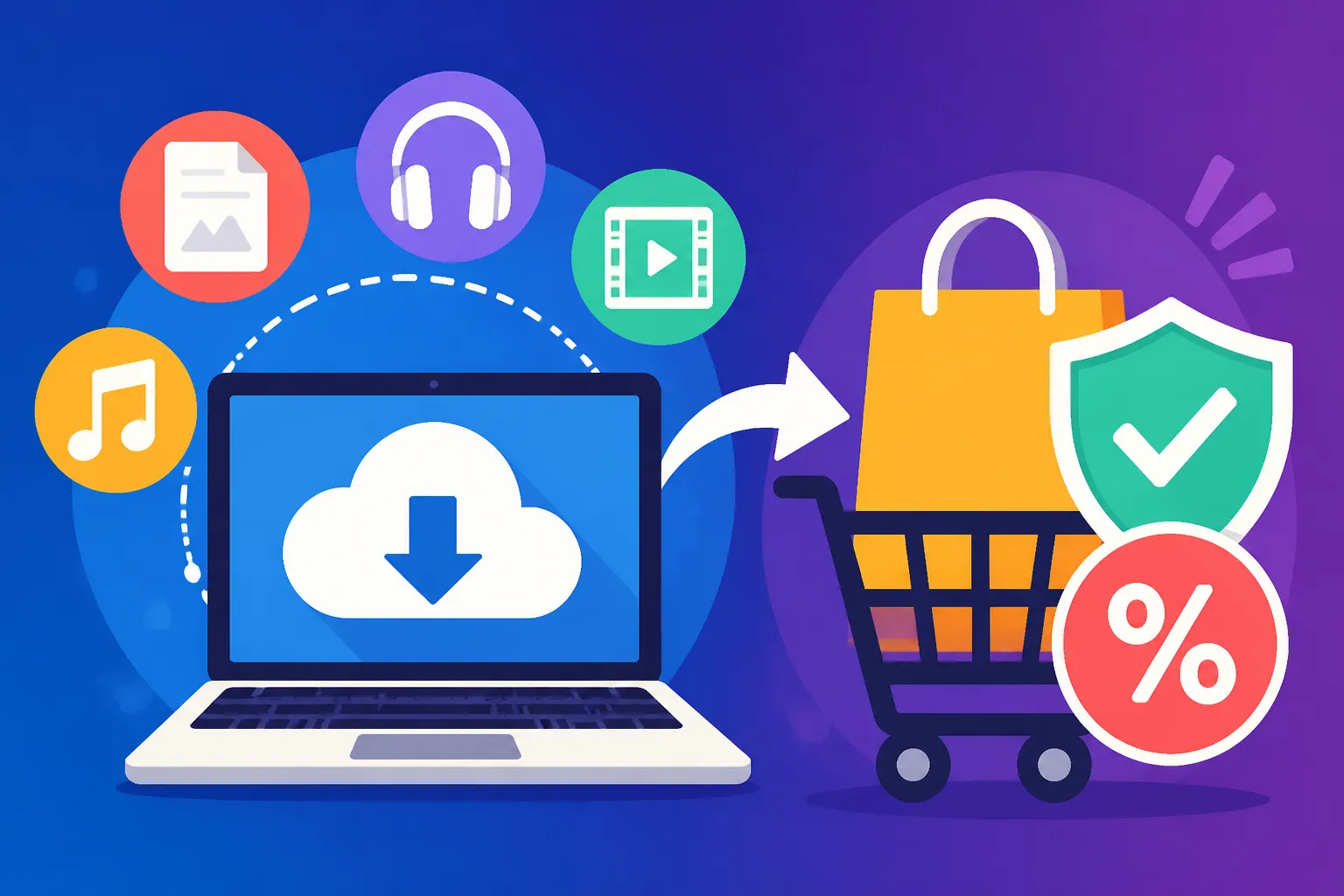
The world of digital goods is vast and ever-expanding. What started with simple MP3s and software programs has grown into a diverse marketplace. Here are some of the most common types of digital downloads that states frequently classify as taxable:
- E-books and Digital Publications: Think Kindle books, PDFs, magazines, and newspaper subscriptions delivered electronically. If you're a writer selling your latest novel as a downloadable file, this applies to you.
- Music and Audio Files: Downloads from iTunes, Bandcamp, or other platforms, including individual songs, albums, and audiobooks.
- Video and Movie Downloads: Digital purchases of films, TV shows, and streaming content that you own outright (not just rent or subscribe to).
- Software and Apps: This includes downloaded software, mobile apps, and even certain cloud-based software that feels like a download. Many states also have specific rules for Is SaaS Taxable? Software-as-a-Service by State.
- Digital Games: Video games purchased and downloaded directly to a console, PC, or mobile device.
- Websites, Fonts, and Graphics: If you sell a website template, unique fonts, stock photos, or graphic design elements as downloadable files.
- Online Courses and Digital Content: Many states now tax access to pre-recorded webinars, online educational courses, or digital workshops that are downloaded or streamed.
The key here is that the customer receives the product electronically, often via a download link, and there's no physical delivery involved.
The "Tangible Personal Property" Debate
One of the biggest hurdles states faced when trying to tax digital products was fitting them into the existing legal framework that largely revolved around "tangible personal property" (TPP). TPP is generally defined as property that can be seen, weighed, measured, felt, or touched, or that is in any other manner perceptible to the senses. A physical book, a CD, a box of software – these are clearly TPP.
Digital downloads, by their very nature, are intangible. You can't physically hold an MP3 file or an ebook. To overcome this, many states have revised their sales tax statutes to either:
- Explicitly redefine "tangible personal property" to include certain digital goods. This is a legislative workaround that essentially says, "Even though you can't touch it, for tax purposes, we're going to treat this digital file as if it were tangible."
- Create a separate category for "digital products," "specified digital products," or "digital automated services" and impose sales tax on them, independent of the TPP definition. This approach acknowledges the unique nature of digital goods but still subjects them to tax.
This debate might seem like legal jargon, but it has real-world implications for businesses. For example, if a state uses the first approach, a court might later rule that their redefinition of TPP for digital goods is unconstitutional. The second approach, creating a distinct category, tends to be more robust legally and is the direction many states are moving.
State-by-State Rules for Digital Download Sales Tax
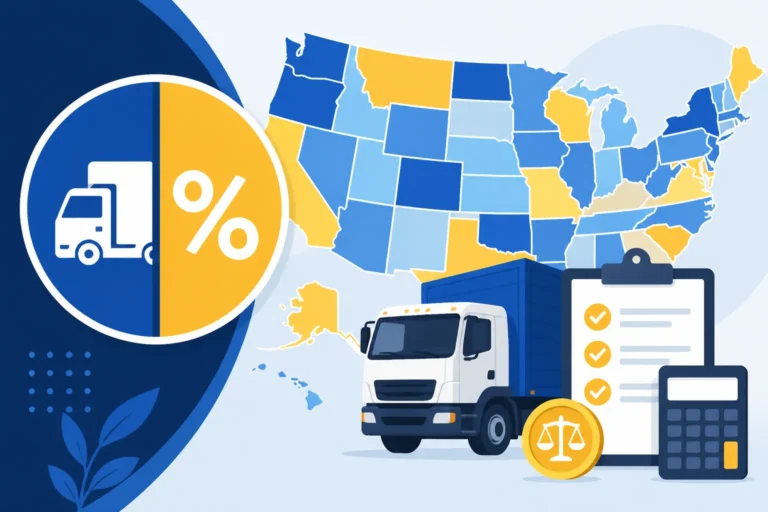
This is where things get truly complicated, because there's no single federal rule for sales tax on digital downloads. Each state gets to decide for itself, leading to a patchwork of regulations that can make your head spin. What's taxable in California might be exempt in Oregon (which has no state sales tax anyway!) and partially taxable in Texas.
States That Fully Tax Digital Downloads
A growing number of states have taken a clear stance: if it's a digital download, it's generally taxable, just like its physical counterpart. These states often view digital products as "specified digital products" or have broadened their definition of tangible personal property to include them.
For example, states like Pennsylvania are quite comprehensive. If you're selling digital music, movies, books, or software to a customer in Pennsylvania, you'll generally need to collect sales tax. Another state with a clear stance is New York, which taxes many digital products, including downloaded music, games, and software. Similarly, Washington State considers most digital products taxable.
The rationale is simple: if a customer would pay sales tax on a CD album, why shouldn't they pay sales tax on the downloaded version of that same album? States argue that the value exchanged is the same, regardless of the delivery method. This broad approach simplifies things in some ways for sellers, as they don't have to differentiate too much between types of digital goods, but it means more digital sales are subject to tax.
States That Partially Tax or Exempt Digital Downloads
Then you have the states that play a bit more coy, or have more nuanced rules. These states might tax some digital products but exempt others, or their taxability depends on specific conditions. This is where it gets incredibly tricky for businesses.
- Partial Taxation: Some states might tax downloaded software but exempt e-books, or vice versa. For instance, Texas generally taxes electronically delivered software but often exempts digital newspapers, magazines, and other digital content if it's considered "informational." Likewise, Florida has been known to tax certain digital products as services, but the exact application can vary based on the nature of the product.
- Exemptions Based on Specific Criteria: A state might exempt a digital product if it requires significant human intervention (i.e., it's not "automated") or if it's considered a custom service rather than a pre-made product.
- No Explicit Tax: A few states still haven't explicitly updated their laws to tax digital goods, or they maintain a strict interpretation of tangible personal property, meaning most digital downloads remain exempt. Massachusetts is an example where, despite ongoing discussions, most digital products are not currently subject to sales tax, though this can always change.
This creates a serious compliance challenge. A seller in, say, Colorado, selling a downloadable game, an ebook, and a custom web design template, might find that the game is taxable in State A, the ebook is taxable in State B but not State C, and the custom template (which involves human service) is exempt in all states. It’s a real mess to navigate without proper tools.
The Nuances of Software-as-a-Service (SaaS)
Software-as-a-Service (SaaS) is a special category that often gets lumped in with digital downloads, but it has its own unique set of tax rules. SaaS isn't typically "downloaded" in the traditional sense; instead, it's accessed via the internet, usually through a subscription. Think about your monthly subscription to Canva, Salesforce, or QuickBooks Online.
Many states treat SaaS differently from a one-time software download. Some states consider SaaS a taxable service, while others consider it intangible personal property and tax it as such, and still others exempt it entirely. The rules are highly variable.
For example:
- Texas taxes 80% of the sales price of SaaS as a data processing service.
- New York generally considers SaaS a non-taxable service unless specific conditions are met, such as providing direct control over the software or servers.
- Washington State typically taxes SaaS as an "in-state digital service."
The distinction often hinges on whether the customer is essentially renting access to software (SaaS) versus owning a copy of software (a traditional download). Because SaaS is ongoing and cloud-based, it triggers different legal interpretations than a static file download. This area is constantly changing, so sellers need to monitor Digital Products Sales Tax by State and specifically Is SaaS Taxable? Software-as-a-Service by State very closely to avoid unexpected tax liabilities.
Here’s a simplified table illustrating the varied approaches across some key states. Please remember this is a general guide and specific product definitions and exemptions can always apply. Always verify with each state's tax authority or a compliance expert.
| State | Digital Books/Music/Video | Downloadable Software | SaaS/Cloud Services | General Approach |
|---|---|---|---|---|
| California | Generally Not Taxable | Generally Not Taxable | Generally Not Taxable | Focus on tangible personal property; services generally exempt. |
| Florida | Generally Taxable | Generally Taxable | Generally Taxable | Broadly taxes digital products. |
| New York | Generally Taxable | Generally Taxable | Generally Not Taxable | Taxes most "canned" digital products. |
| Texas | Generally Not Taxable | Taxable | 80% Taxable | Specific rules for software and data processing. |
| Pennsylvania | Generally Taxable | Generally Taxable | Generally Taxable | Broadly taxes "specified digital products." |
| Washington | Generally Taxable | Generally Taxable | Generally Taxable | Taxes "digital goods" and "digital automated services." |
| Illinois | Generally Not Taxable | Generally Not Taxable | Generally Not Taxable | Strict TPP definition, no specific digital product tax. |
| Massachusetts | Generally Not Taxable | Generally Not Taxable | Generally Not Taxable | Strict TPP definition, services generally exempt. |
| Colorado | Generally Not Taxable | Generally Not Taxable | Generally Not Taxable | Generally focuses on tangible personal property. |
Note: This table is for general informational purposes only and is subject to change. Always consult state tax authorities or a sales tax professional for precise guidance.
Key Considerations for Sellers of Digital Downloads
Given the complexity, if you're selling digital downloads, you can't just set it and forget it. There are several critical factors you need to keep in mind to ensure you're collecting and remitting sales tax correctly.
Understanding Nexus for Digital Products
The first step in any sales tax journey is figuring out where you actually have nexus. Nexus is the connection between your business and a state that triggers a sales tax obligation. For digital products, this usually means economic nexus. This means that even if your business is based in Oregon (a state with States With No Sales Tax (NOMAD Explained)), if you sell enough digital downloads into, say, Georgia, you could establish economic nexus there.
Each state sets its own economic nexus thresholds. Most commonly, this is either a certain dollar amount of sales (e.g., $100,000 in gross sales) or a number of transactions (e.g., 200 separate transactions) into the state, or sometimes a combination of both, within a calendar year. It's vital to monitor your sales volume and transaction count into every state, because hitting that threshold for digital products means you suddenly have a sales tax obligation there.
For example, if you sell $120,000 worth of downloadable Photoshop brushes to customers in California over the course of a year, you've likely triggered California's $500,000 economic nexus threshold (for 2026, though some states have lower thresholds, so always double-check the current numbers). This would mean you're required to register for a seller's permit in California and start collecting sales tax from California customers on those taxable digital products. The same principle applies if your Sales Tax Nexus Explained (Physical vs Economic) also includes physical presence, even if it's just for something like an occasional conference appearance.
Sourcing Rules for Digital Sales
Once you've determined you have nexus in a state and your digital product is taxable there, the next question is: what sales tax rate do you apply? This is where sourcing rules come into play, and they can be particularly tricky for digital goods.
Sourcing rules determine where a sale is considered to have occurred for sales tax purposes. Most states follow either "origin-based" or "destination-based" sourcing:
- Origin-Based Sourcing: The sales tax rate is determined by the seller's location. This is less common for interstate sales.
- Destination-Based Sourcing: The sales tax rate is determined by the buyer's location. This is the prevailing rule for most remote sales, including digital downloads.
For digital downloads, because there's no physical shipping address in the traditional sense, states often rely on the customer's billing address, IP address, or other data points to determine the "destination" for tax purposes. This means you need to accurately capture your customer's location to charge the correct Combined State + Local Sales Tax Rates Explained. If you sell an e-book to someone in Chicago, Illinois, you need to apply Chicago's specific local sales tax rate, assuming Illinois taxes e-books and you have nexus there. This is vastly different from just applying a statewide rate. It's like navigating a maze of different rates based on where your customer happens to be located, which is why understanding Sales Tax by ZIP Code (and Why ZIP Isn't Enough) is crucial. You might also want to read up on Origin vs Destination Sales Tax Sourcing for more detailed information.
How Sales Tax Software Helps
Trying to manually keep track of nexus thresholds, state-specific taxability rules for a wide range of digital products, and ever-changing local rates for potentially dozens of states is a monumental task for any business, especially small ones. This is where sales tax compliance software becomes an absolute lifesaver.
Tools like Avalara integrate with your e-commerce platform (Shopify, WooCommerce, etc.) or your accounting software to automate the entire sales tax process. They can:
- Determine Nexus: Help you track your sales into each state to identify when you cross an economic nexus threshold.
- Calculate Rates: Automatically apply the correct sales tax rate based on the customer's location and the specific product being sold, factoring in state, county, city, and even district taxes. This is invaluable when you're dealing with hundreds or thousands of different sales tax jurisdictions, each with its own local rates.
- Manage Taxability: Keep up-to-date with changes in state laws regarding the taxability of different digital products. So if Florida suddenly changes its stance on streaming services, the software should reflect that.
- File Returns: Prepare and often file your sales tax returns to the appropriate state and local tax authorities, saving you countless hours and reducing the risk of errors.
Investing in a robust sales tax solution can give you peace of mind, allowing you to focus on creating and selling your amazing digital products instead of getting bogged down in tax minutiae. Checking out a guide to the Best Sales Tax Compliance Software 2027 is a smart move if you're scaling your digital business.
Common Challenges and Pitfalls
Even with the best intentions, sellers of digital downloads often run into specific challenges that can make sales tax compliance feel like an uphill battle. It's not always straightforward, and overlooking these areas can lead to costly mistakes.
Keeping Up with Rate Changes
Sales tax rates are not static. They change, and they change often. States, counties, cities, and special taxing districts are constantly adjusting their rates, sometimes multiple times within a single year. These changes are typically announced with some lead time, but tracking every single one for every jurisdiction where you have nexus is a full-time job.
For example, a city might implement a new transportation tax that adds an extra half-percent to the existing sales tax rate, or a state might introduce a new mandatory local add-on that impacts the total combined rate. If you're manually calculating sales tax or using outdated information, you could easily be undercharging (and owing the difference yourself) or overcharging (and frustrating your customers). This becomes even more complex when you realize that How Do Sales Tax Rate Changes Take Effect? can involve different effective dates and publication schedules from various taxing authorities. Staying on top of 2026 Sales Tax Rate Changes by State is a continuous effort.
Managing Exemption Certificates for Digital Products
While many digital products are taxable, there are still situations where a sale might be exempt. The most common exemption for businesses is a resale exemption. If you sell a digital product (like a website template or stock photography) to another business that intends to resell that product to their own customers, that transaction might be exempt from sales tax. However, for this to apply, the purchasing business usually needs to provide you with a valid Resale Certificate by State: Complete Guide.
The challenge is twofold:
- Collecting Valid Certificates: You need a process to collect and verify these certificates. Each state has its own specific forms and requirements for resale certificates. An invalid certificate means you could be on the hook for the uncollected tax if audited.
- Applying Exemptions Correctly: You must ensure your system applies the exemption only to the appropriate sales and for the correct customer. If a business buys some digital products for resale and others for their own internal use, only the resale items should be exempt.
This requires careful record-keeping and a robust system to manage these certificates, ensuring compliance and preventing potential tax liabilities. Understanding Sales Tax Exemption Certificates: Complete Guide is critical for any B2B seller of digital goods.
The Complexity of Different Product Types
Perhaps the biggest head-scratcher for sellers of digital downloads is distinguishing between various digital product types and their taxability. As mentioned, a state might tax downloadable software but not an e-book. Or it might tax a pre-recorded online course but exempt a live, interactive webinar that's considered a service.
Consider the example of a creative agency that sells a variety of digital assets:
- Pre-made website templates (downloadable software/digital product)
- Custom logo designs (service, but delivered digitally)
- Stock photo packs (digital product)
- A subscription to their exclusive font library (SaaS or digital product subscription)
Each of these could have a different sales tax treatment in different states. Manually categorizing each product according to the specific definitions of every state where you have nexus is incredibly time-consuming and prone to human error. This level of granular detail makes it almost impossible to maintain compliance without automated solutions that can map your product categories to state-specific tax rules.
Conclusion
Navigating the world of sales tax for digital downloads is undeniably one of the most complex areas of modern commerce. The days of simply selling digital goods tax-free are largely behind us, and states are increasingly proactive in ensuring they collect their fair share. From understanding your nexus obligations to deciphering ever-changing state-specific taxability rules and sourcing complexities, there’s a lot to keep track of. While it might seem daunting, taking the time to understand these nuances, ideally with the help of automated sales tax solutions like Avalara, will save you immense headaches, costly penalties, and valuable time in the long run. Don't let sales tax compliance be the thing that holds your amazing digital business back!
Disclaimer
The information provided in this article is for general informational purposes only and does not constitute tax, legal, or accounting advice. Sales tax laws are complex and constantly changing. You should consult with a qualified tax professional or legal advisor for advice tailored to your specific situation.