How Much Is Sales Tax on a Car by State
Buying a car is already a high-stress marathon of negotiations, test drives, and mountains of paperwork, but nothing kills the excitement faster than seeing a surprise four-figure tax bill tacked onto the final price. This comprehensive guide breaks down the complex world of vehicle taxation, helping you calculate exactly what you owe and avoid the common pitfalls of out-of-state purchases or trade-in valuations.
The Sticker Shock of Car Sales Tax
We have all been there. You spend weeks researching the perfect SUV or fuel-efficient sedan, you finally haggle the dealer down to a price you can live with, and then you head into the "f&i" (Finance and Insurance) office. Suddenly, that $35,000 price tag jumps by nearly $3,000 because of sales tax. It feels like a gut punch, and frankly, the lack of transparency in how these rates are applied is one of the biggest frustrations for modern car buyers.
The reality is that car sales tax isn't a single, flat number across the country. It is a layered cake of state, county, and city levies that can vary significantly even between neighboring zip codes. To make matters worse, some states treat cars differently than a pair of jeans or a toaster. While a state might have a general sales tax rate of 6%, they might have a special "motor vehicle tax" that is lower—or in some unfortunate cases, higher.
Understanding these nuances is the first step toward not overpaying. If you are trying to get a handle on the base numbers, you should start by looking at the Sales Tax Rates by State 2026: All 50 States to see where your home state sits in the national ranking. But remember, the state rate is just the foundation.
State vs. Local Jurisdictions
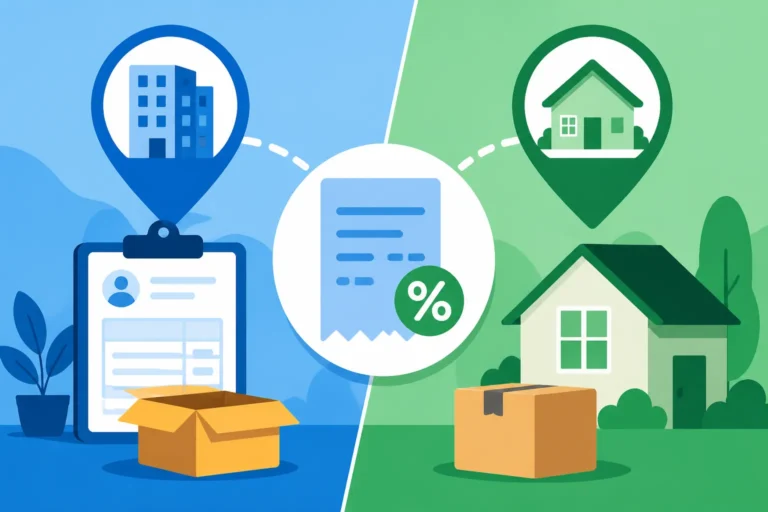
When you buy a car, the tax you pay is almost always determined by where you register the vehicle, not where the dealership is located. This is a common point of confusion. Imagine you live in a quiet suburb with a low tax rate, but you drive fifty miles to a big city dealership to get a better deal on a truck. You won't pay the city's high sales tax; you will pay the rate based on your home address.
However, calculating this manually is a nightmare because of Combined State + Local Sales Tax Rates Explained rules. You might have a 4% state tax, a 2% county tax, and a 0.5% special transit district tax. If you are a business owner managing a fleet across multiple regions, using professional tools like Avalara can be a lifesaver to ensure you aren't accidentally under-collecting or overpaying across thousands of different jurisdictions.
Why Your Registration Address Is Everything
The "situs" or location of the tax is the most critical factor. States are very protective of their tax revenue. If they allowed people to simply drive to a low-tax state to buy a car and avoid their home state's tax, their budgets would collapse. This is why when you go to the DMV to get your plates, they will ask for proof of sales tax paid. If you bought the car in a state with no tax but live in a state with a 7% tax, the DMV will collect that 7% from you right there at the counter before they hand over your registration.
Calculating the True Cost of Your New Ride
Knowing the percentage is only half the battle; you also need to know which numbers the state is actually multiplying that percentage by. Is it the MSRP? The negotiated price? Does it include the "doc fee" that the dealer insists is non-negotiable? This is where the math gets messy, and where a lot of buyers lose money without realizing it.
Let's look at a hypothetical scenario. You are buying a car for $40,000. You have a trade-in worth $15,000. In many states, you only pay tax on the difference ($25,000). This is known as a trade-in credit, and it is essentially a legal tax loophole that can save you thousands. However, if you live in a state like California, they don't allow this. In the Golden State, you pay tax on the full $40,000 regardless of your trade-in. This is a massive difference in your out-of-pocket costs.
Trade-ins and Incentives
The "net purchase price" is the holy grail of car tax calculation. Most states follow a logical path: (Negotiated Price) – (Trade-in Value) – (Manufacturer Rebates) = Taxable Total. But beware of "dealer incentives." Often, manufacturer rebates are considered "cash" and are taxed, while a direct dealer discount reduces the sales price before tax is calculated.
If you are feeling overwhelmed by these variables, using a dedicated Sales Tax Calculator: How to Calculate Sales Tax tool can help you run different scenarios. For example, if you are looking at How Much Is Sales Tax on a Car in Texas?, you will find that Texas allows the trade-in credit, which is a huge win for people who swap cars every few years.
Tax on Documentation Fees and Add-ons
Dealerships love to add "Value-Added" items at the last second. Gap insurance, extended warranties, paint protection, and those infamous documentation fees. In most states, tangible items like floor mats or a roof rack are taxable. However, intangible items like an extended service contract or gap insurance might be exempt from sales tax, though they may be subject to other insurance-related taxes.
The "Doc Fee" is a particularly sore spot. Some states cap this fee at $100, while others allow dealers to charge $800 or more. Because this fee is considered part of the "sale of the property," it is almost always taxable. When you are learning How to Calculate Sales Tax (Step by Step), always remember to add the doc fee to your base price before applying the percentage.
State-by-State Breakdown of Car Sales Tax
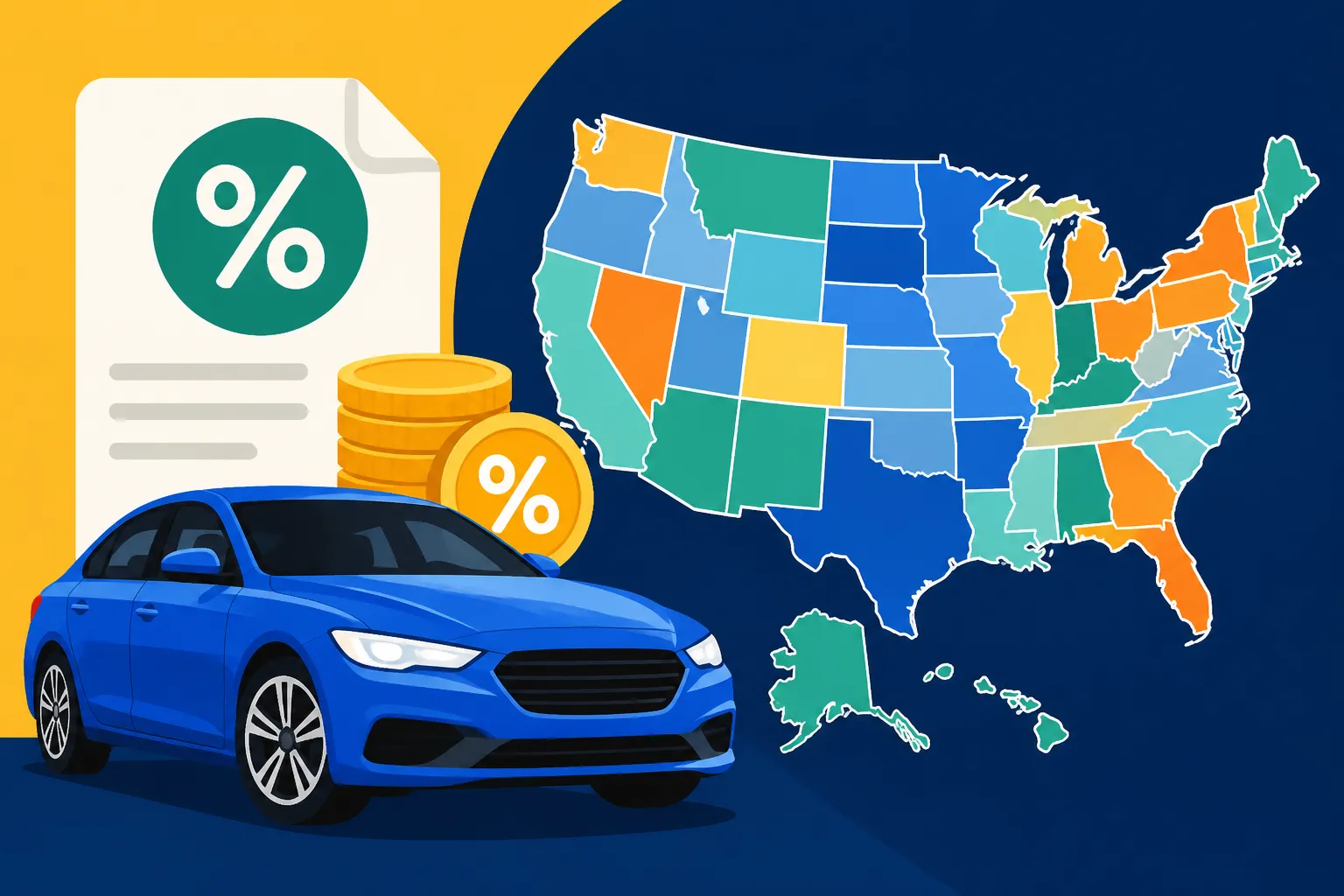
To give you a clearer picture, let's categorize the states based on how they treat car buyers. This is not just about the percentage, but the overall "friendliness" of their tax code toward vehicle owners.
| State Category | Average Combined Rate | Key Characteristics |
|---|---|---|
| High Tax States | 8% – 10.5% | No trade-in credits, high local surcharges (e.g., California, Washington). |
| Moderate Tax States | 5% – 7% | Most common; usually offer trade-in credits (e.g., Texas, Florida, Ohio). |
| Low Tax / Capped | 0% – 3% | Low flat rates or total tax dollar caps (e.g., Alabama, North Carolina, South Carolina). |
| No Sales Tax | 0% | The NOMAD states (New Hampshire, Oregon, Montana, Alaska, Delaware). |
The High-Tax Heavyweights
If you are looking at How Much Is Sales Tax on a Car in California?, prepare your wallet. California has a base rate, but then you have to factor in California District Taxes Explained. Between the state's refusal to recognize trade-in credits and the high local district taxes in places like Los Angeles or San Francisco, you could easily see a total tax rate exceeding 10%.
Washington State is another high-tax area, particularly in the Seattle metro region. With the Seattle Sales Tax Rate 2026 (10.55%) hitting car buyers hard, many residents find themselves paying several thousand dollars just for the privilege of registering their vehicle. In these high-tax environments, accuracy is paramount for businesses, which is why many rely on Avalara's real-time tax engines to avoid compliance errors.
The Low-Tax and Capped Winners
On the flip side, some states are surprisingly affordable for car buyers. South Carolina is a legendary example. While they have a sales tax, they cap the total tax on a vehicle at a very low flat amount (currently around $500). Whether you buy a $15,000 used compact or a $200,000 supercar, the tax is the same.
North Carolina also uses a "Highway Use Tax" instead of a traditional sales tax, which is typically around 3%. This is significantly lower than the Highest & Lowest Sales Tax States 2026 averages you see for general consumer goods.
The NOMAD States: A Buyer's Paradise?
The states of New Hampshire, Oregon, Montana, Alaska, and Delaware are often referred to as the NOMAD states because they have no statewide sales tax. If you live in one of these states, you are in luck. You can read more about this in States With No Sales Tax (NOMAD Explained).
However, don't think you can just drive to Oregon, buy a car, and bring it back to your home in Washington to avoid tax. Your home state will catch you at the DMV. This is a common misconception that leads to awkward conversations with tax authorities. The only way to truly pay 0% tax is to both buy and register the vehicle in a tax-free state, which requires residency.
Special Considerations: Private Sales and Moving
Not every car purchase happens at a shiny dealership with a glass-walled office. Many of the best deals are found on the private market. But if you think buying from "Dave down the street" gets you out of sales tax, think again.
The Private Party Tax Trap
When you buy a car from an individual, you don't pay sales tax to them. Instead, you pay it to the state when you go to transfer the title. Many people try to get clever here by asking the seller to write a lower price on the bill of sale. For example, if you paid $10,000, you might ask them to write $2,000.
States have caught on to this. Many DMVs now use a "Standard Presumptive Value" (SPV). If the price on your bill of sale is significantly lower than the Blue Book value, the state will ignore your number and tax you on what they think the car is worth. If you truly got a "lemon" or a project car for a bargain, you might need a certified appraisal to prove it to the tax man. Understanding What Is the Sales Tax in Florida? or other states regarding private sales is vital before you show up at the registration office.
Moving Across State Lines
What happens if you bought a car in a 4% tax state, paid your taxes, and then moved to a 9% tax state six months later? Most states have a "reciprocity" agreement. They will give you credit for the tax you already paid. If you paid 4%, the new state might ask you to pay the 5% difference, or they might waive it if you have owned the car for a certain period (usually 90 days to a year).
This is a very specific area of law that changes frequently. If you are a business moving assets between states, the complexity of Origin vs Destination Sales Tax Sourcing becomes a major operational hurdle. Leveraging a platform like Avalara can help automate these calculations, ensuring that your company remains compliant during corporate relocations or fleet transfers.
Is Leasing Better for Taxes?
For many people, leasing is a way to drive a nicer car for a lower monthly payment. But the tax treatment of leases is fundamentally different from purchases. In most states, you don't pay sales tax on the full value of the car when you lease. Instead, you pay sales tax on each monthly payment.
This can be a huge advantage. If you live in a high-tax city like Chicago, the Chicago Sales Tax Rate is one of the highest in the country. By leasing, you are only paying that high tax on the "usage" of the car (the depreciation) rather than the whole $50,000 vehicle. However, some states (like Texas) require you to pay tax on the full value of the car upfront even on a lease, which can make leasing much more expensive than it first appears.
Tax on the Buyout
At the end of your lease, if you decide to buy the car, you will be hit with sales tax again on the "residual value" (the buyout price). You aren't being double-taxed; you are simply paying the tax on the portion of the car you didn't pay for during the lease term. It is a logical system, but it catches many "lease-to-own" buyers off guard.
Practical Tips for Your Next Purchase
Now that we have waded through the murky waters of state legislation, how can you actually use this information to save money?
- Calculate the Trade-In Benefit: Before you sell your old car to a private party for $500 more than the dealer is offering, check if your state offers a trade-in tax credit. If your tax rate is 8%, a $10,000 trade-in saves you $800 in tax. If you sell it privately, you lose that $800. The private buyer would need to pay you at least $10,801 for you to come out ahead.
- Watch the Incentives: Always ask the dealer to apply "dealer discounts" before "manufacturer rebates" if possible. While the final price to you might look the same, the tax calculation might be lower.
- Verify the Zip Code: If you live on the border of two counties or cities, make sure the dealership is using your exact address. A simple error in the Sales Tax by ZIP Code (and Why ZIP Isn't Enough) lookup could cost you hundreds of dollars if they apply the wrong local rate.
- Use Automation if You're a Business: If you are a business owner, don't try to track these rates in a spreadsheet. Rates change every quarter. Using a service like Avalara ensures that your vehicle tax compliance is handled by experts who monitor these changes in real-time.
- Check for Exemptions: Some states offer exemptions for hybrid or electric vehicles, or for disabled veterans. It is always worth a quick search for What Items Are Exempt From Sales Tax? in your specific state.
Car sales tax is a complex, frustrating, but unavoidable part of vehicle ownership. By doing your homework and knowing the rules of your specific state—whether you are dealing with the Florida Sales Tax Rate 2026 or the nuances of the New York Sales Tax Rate 2026—you can walk into the dealership with confidence. You won't just be a person buying a car; you will be a savvy consumer who knows exactly where every penny of their hard-earned money is going.
Disclaimer
This guide is provided for informational purposes only and does not constitute legal, financial, or tax advice. Sales tax laws, including rates and trade-in credit policies, are subject to frequent changes by state and local authorities. Always verify current rates and regulations with your local Department of Motor Vehicles or a qualified tax professional before completing a vehicle purchase.