Florida Sales Tax Rate 2026
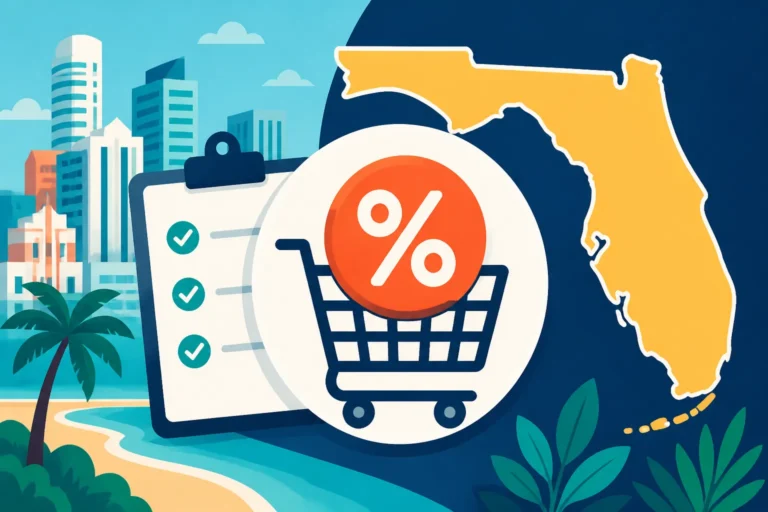
Navigating the Florida sales tax landscape can feel like trying to drive through an afternoon thunderstorm on I-4—it is confusing, high-stakes, and changes before you have a chance to adjust your wipers. Many business owners and shoppers are blindsided by the difference between the state’s base rate and the local surtaxes that vary wildly from Pensacola down to Key West. This guide provides a comprehensive breakdown of the Florida Sales Tax Rate 2026, ensuring you know exactly what to collect, what to pay, and how to stay ahead of the Florida Department of Revenue’s specific quirks.
The Foundation of the Florida Sales Tax System
When most people think about Florida, they think about the 6% state sales tax. It is the baseline for almost every transaction involving tangible personal property. If you buy a new pair of sunglasses in a shop in Tallahassee or a high-end fishing rod in Destin, that 6% is the starting point. Unlike some states that have complex tiered systems for basic goods, Florida keeps the state-level portion relatively straightforward. However, the simplicity ends there because that 6% is rarely the final number you see on your receipt.
The Florida Department of Revenue oversees the collection of this tax, and for businesses, it means you act as an agent for the state. You are responsible for collecting that 6% and keeping it safe until it is time to remit it. If you are a new business owner, the weight of this responsibility can be heavy. You aren't just selling a product; you are managing a portion of the state's budget. Florida relies heavily on sales tax because it famously lacks a state income tax. This means the state is very protective of its sales tax revenue, and the Florida Sales Tax Rate 2026 reflects a system designed to capture revenue from the millions of tourists who visit our beaches and theme parks every year.
It is important to understand that the 6% rate applies to the "sales price" of an item. This includes any charges by the dealer for services necessary to complete the sale, and it generally applies to the lease or rental of goods as well. For example, if you are renting a jet ski for the day, that rental fee is subject to the state rate plus any applicable local surtaxes. Understanding How to Calculate Sales Tax on these mixed transactions is vital for vendors who want to avoid audits down the road.
The Complexity of Discretionary Sales Surtaxes
While the state takes its 6%, Florida’s 67 counties have the authority to add their own "discretionary sales surtaxes." This is where the real math begins. These surtaxes are often used to fund local improvements like school construction, transportation projects, or healthcare services. Because each county votes on its own surtax, you can cross a county line and suddenly see your total tax rate jump from 6.5% to 7.5%.
For instance, if you are shopping in Miami-Dade County, you are looking at a combined rate of 7%. If you drive north into Broward County, the rate stays at 7%, but if you head into a county with no local surtax—though those are becoming increasingly rare—you would drop back down to the flat 6%. This variation is why Sales Tax by ZIP Code (and Why ZIP Isn't Enough) is such a common topic of discussion among Florida bookkeepers. A single ZIP code can actually straddle two different counties, leading to different tax obligations for neighbors living just a few blocks apart.
There is also a unique "bracket system" used in Florida for transactions that involve fractions of a dollar. Since you cannot charge half a cent, Florida provides specific tables that tell you exactly how much to round up or down. While modern POS systems usually handle this, a manual mistake can lead to small but cumulative errors. If you are managing multiple locations across the state, keeping track of these county-level changes is a full-time job. This is where automated solutions like Avalara become incredibly helpful, as they track these shifts in real-time so you don't have to manually update your tax tables every time a county commission passes a new ordinance.
What is Taxable and What is Exempt in Florida
Florida has some very specific ideas about what should be taxed and what should be exempt. Generally, most "tangible personal property"—things you can touch, see, or weigh—is taxable. However, the state offers some relief on life’s necessities. Groceries are a prime example. Most basic food items like flour, milk, and fresh produce are exempt from the Florida Sales Tax Rate 2026. But there is a catch: as soon as that food is prepared for immediate consumption, it becomes taxable.
Imagine you are at a grocery store in Orlando. You buy a bag of raw chicken breasts and a head of lettuce; those are tax-exempt. But if you walk over to the deli counter and buy a hot rotisserie chicken and a pre-made Caesar salad, you are now paying the full state and local tax rate. This "prepared food" distinction catches many small cafe owners off guard. Similarly, prescription drugs and many over-the-counter medical items are exempt. If you are a retailer, you must be meticulous about how you categorize your inventory.
Clothing is another area where people often get confused. Unlike some neighboring states, Florida does not have a permanent exemption for clothing. Whether you are buying a $10 t-shirt or a $1,000 designer suit, you are paying the tax. The only exception to this is during specific "Sales Tax Holidays," which the state legislature usually approves on an annual basis. If you are struggling to keep track of what items are currently taxable, services like Avalara can help categorize your product catalog automatically based on current Florida statutes. You might also want to check out the Florida Sales Tax Rate by City & County to see if there are local exemptions in play.
| County | State Rate | Local Surtax | Total Combined Rate |
|---|---|---|---|
| Miami-Dade | 6.0% | 1.0% | 7.0% |
| Broward | 6.0% | 1.0% | 7.0% |
| Palm Beach | 6.0% | 1.0% | 7.0% |
| Orange | 6.0% | 0.5% | 6.5% |
| Hillsborough | 6.0% | 1.5% | 7.5% |
| Duval | 6.0% | 1.5% | 7.5% |
| Pinellas | 6.0% | 1.0% | 7.0% |
| Leon | 6.0% | 1.5% | 7.5% |
| Monroe (The Keys) | 6.0% | 1.5% | 7.5% |
| Collier | 6.0% | 1.0% | 7.0% |
The Quirk of Florida Commercial Lease Tax
Perhaps the most unique and frustrating aspect of the Florida tax code is the tax on commercial real property rentals. Florida is one of the few states in the country that charges sales tax on the rent paid for commercial office space, warehouses, and retail storefronts. For years, this was a significant burden for small business owners who felt they were being "double taxed" on their business operations.
However, there is good news for 2026. The Florida legislature has been aggressively working to reduce this rate. Historically, it was as high as 6% (matching the state sales tax). In recent years, it was cut to 4.5%, then down to 2%. Many businesses are seeing the benefits of these reductions. However, it is vital to remember that while the state rate on commercial rent has dropped, the local discretionary surtax still applies to that rent.
If your business is located in a county with a 1% surtax, and the state commercial lease rate is 2%, your total tax on your monthly rent check is 3%. This is a significant detail to get right. If you underpay your landlord, they are legally obligated to collect it from you, and if they don't, the state can come after both parties. When you are looking at Combined State + Local Sales Tax Rates Explained, make sure you are looking at the specific rate for "Rentals or Leases of Real Property," as it is distinct from the rate for tangible goods.
Remote Sellers and Economic Nexus in Florida
If you are a business owner located outside of Florida but selling to customers within the state, you cannot simply ignore the Sunshine State. Following the landmark Supreme Court decision, Florida enacted "Economic Nexus" laws. This means that if you have a certain level of economic activity in Florida, you are required to register for a Florida Sales Tax Permit 2026 and collect tax just like a local business.
In Florida, the threshold is $100,000 in taxable sales per year. There is no transaction count threshold (like the 200-transaction rule some other states use), which makes it a bit simpler to track. Once you hit that $100,001 mark in a calendar year, you must register with the Florida Department of Revenue. This applies to e-commerce sellers on platforms like Shopify or WooCommerce. If you use a marketplace facilitator like Amazon, they generally collect and remit the tax for you, but you still need to understand your Sales Tax for Online Sellers: Complete Guide obligations to ensure you aren't creating a liability.
Keeping track of these thresholds across all 50 states is an administrative nightmare. This is why many growing businesses integrate with Avalara to monitor their sales volume and alert them when they are approaching a nexus threshold in Florida or elsewhere. For a deep dive into how this works across the country, see the Economic Nexus by State 2026: Thresholds Guide.
Sales Tax Holidays: A Seasonal Break for Floridians
Florida is famous for its tax holidays, which are designed to provide relief to families during high-spending seasons. The most popular is the "Back-to-School" tax holiday, usually occurring in late July or early August. During this window, certain clothing, footwear, and school supplies are exempt from sales tax, often with price caps (e.g., clothing under $100).
There is also the "Disaster Preparedness" holiday, which is essential given Florida's hurricane history. During this time, you can buy batteries, flashlights, generators, and even pet supplies without paying the Florida Sales Tax Rate 2026. For retailers, these holidays are a double-edged sword. While they drive a massive influx of foot traffic, they also require a complex temporary reconfiguration of the point-of-sale system.
If you aren't careful, you might accidentally collect tax on an exempt item or fail to collect it on something that didn't qualify. Using a system like Avalara during these peaks ensures that your tax calculations stay compliant even as the rules temporarily shift for ten days in August. You can find more details in our Tax-Free Weekend Back-to-School Guide 2026 for a full list of what usually qualifies.
Filing Frequencies and Due Dates
Once you have a permit and are collecting tax, you have to give it back to the state. The Florida Department of Revenue will assign you a filing frequency—monthly, quarterly, semiannual, or annual—based on the amount of tax you collect. Most active businesses are on a monthly schedule.
In Florida, sales tax is due on the 1st day of the month following the reporting period and is considered late if not initiated by the 20th. If the 20th falls on a weekend or a holiday, the deadline moves to the next business day. This is a strict deadline. Florida is not very forgiving of late filers, and the penalties can stack up quickly.
Interestingly, Florida offers a "Collection Allowance." If you file and pay your taxes on time and electronically, you are allowed to keep 2.5% of the first $1,200 of tax due (up to a maximum of $30 per report). It isn't a fortune, but it is a nice little "thank you" from the state for being a reliable tax collector. For more specifics on the timeline, refer to the Florida Sales Tax Due Dates 2026.
Common Pitfalls and Audit Triggers
Audits in Florida often happen because of simple, avoidable mistakes. One major trigger is a discrepancy between the sales reported on your federal income tax return and the sales reported on your Florida sales tax returns. If those numbers don't align, the Department of Revenue's automated systems will flag your account.
Another common pitfall is the misuse of Resale Certificate in Florida (DR-13). If you are buying inventory to resell, you don't pay sales tax to your wholesaler. However, if you use that certificate to buy office furniture or a computer for your personal use, you are committing tax fraud. Florida auditors look specifically for "use tax" issues where businesses purchased items for their own use without paying the proper sales tax.
Finally, failing to collect the proper local surtax is a frequent error. As we discussed, the difference between 6.5% and 7.5% might seem small on one transaction, but over a year of business, that 1% gap can result in a massive bill plus interest and penalties during an audit. This is why having a robust Sales Tax Calculator: How to Calculate Sales Tax or an automated tool is essential for long-term survival in the Florida market.
Florida Sales Tax Rate 2026 Disclaimer
The information provided in this guide is for informational purposes only and does not constitute legal or professional tax advice. Sales tax laws, including county-level discretionary surtaxes and state exemptions, are subject to change by the Florida Legislature and local governments. While we strive to provide the most current data for 2026, you should always consult with a qualified tax professional or the Florida Department of Revenue to verify specific rates and requirements for your business location or specific transactions.