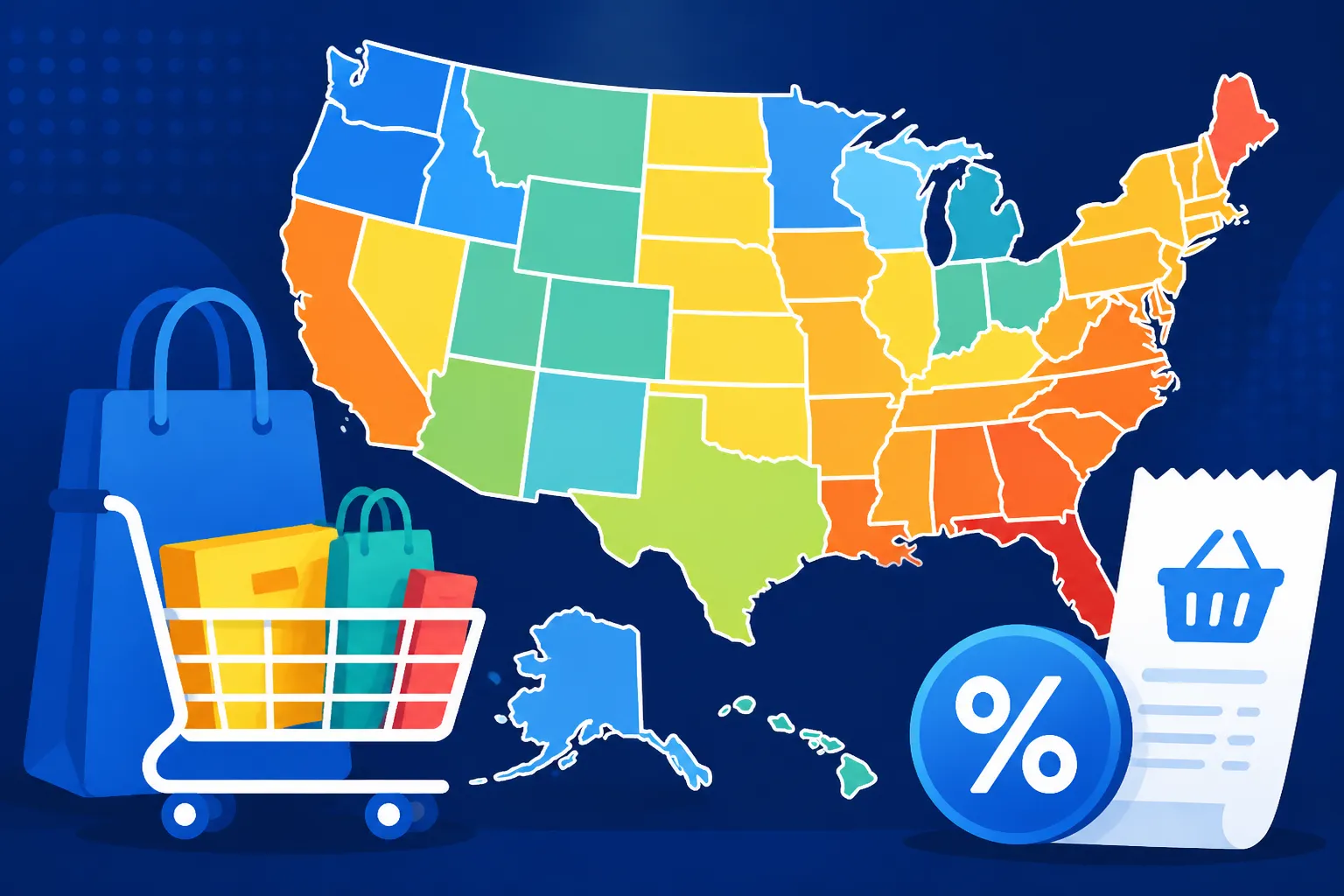
Average Sales Tax Rate by State
Standing at a cash register in a new city and watching your total jump by nearly ten percent because of local surcharges is a jarring experience. It makes personal budgeting nearly impossible for consumers and creates a logistical nightmare for small business owners trying to stay compliant. This guide provides a definitive look at the average sales tax rate by state for 2026, helping you navigate the complex web of local surcharges and state base rates.
The Anatomy of the Combined Sales Tax Rate
When we talk about the average sales tax rate by state, we aren't just looking at the number the state legislature passed in the capital. Most states allow counties, cities, and special-purpose districts to tack on their own percentages. This is why a state with a relatively modest base rate can suddenly become one of the most expensive places to shop in the country. To truly understand what you are paying, you have to look at how these layers stack on top of one another.
The Difference Between State and Local Levies
The state sales tax is the baseline. It is generally a fixed percentage applied to most tangible goods across the entire state. However, the local levy is where things get messy. Imagine you are driving through a state like Illinois or Texas. As you cross from a rural county into a major metropolitan area, the state tax remains the same, but the local portion can fluctuate wildly. Local governments use these funds to pay for everything from police departments and fire services to local park maintenance.
For businesses, this creates a significant burden because you aren't just responsible for one rate; you might be responsible for hundreds. If you are using a platform like Avalara to manage your transactions, you know that the "local" part of the tax is often divided into even smaller segments, such as a 1% city tax and a 0.5% county tax. Failing to distinguish between these can lead to major audit headaches down the line. Understanding Combined State + Local Sales Tax Rates Explained is the first step in realizing that the sticker price is rarely the final price.
How Surcharges and Special Districts Inflate the Total
Beyond the standard city and county taxes, many areas utilize special-purpose districts. These are often invisible to the average consumer but have a very real impact on the total at the bottom of the receipt. A special district might be created to fund a new stadium, a transportation project, or a specific revitalization effort in a downtown corridor. These districts might only span a few city blocks, meaning you could pay a different tax rate on one side of the street than the other.
This level of granularity is why a simple state-wide average can sometimes be misleading. If a state has a 6% base rate but a major city has a 4% local add-on and a 1% stadium tax, the Sales Tax on a $100 Purchase by State will look very different in that city versus a rural town with no local levies. These micro-zones are the primary reason why zip codes are often insufficient for calculating exact tax obligations.
Deep Dive The Highest Average Sales Tax States in 2026
As we look at the landscape, several states continue to lead the pack with the highest combined rates. These rankings are often driven by a lack of state income tax. Since the government has to fund infrastructure somehow, they lean heavily on consumption taxes. If you live in one of these states, you are likely used to "sticker shock," but for travelers or new residents, the costs can be surprising.
The Heavy Hitters Where You Will Pay the Most
States like Tennessee, Louisiana, and Arkansas consistently rank at the top of the Highest & Lowest Sales Tax States 2026 list. Tennessee, for instance, has a high state base rate of 7%, but once you add in the local options, the average combined rate often hovers near 9.55%. In some specific jurisdictions, you might even see rates exceeding 10%. This is a direct trade-off for the state’s lack of a broad-based personal income tax.
Louisiana presents a unique challenge due to Louisiana Parish Sales Tax Complexity. Unlike states where the state government collects everything and distributes it back to the locals, Louisiana parishes often handle their own collections. This decentralized system, combined with high local rates, means the average combined rate in Louisiana is often the highest in the nation, frequently topping 9.5% on average. For a business, navigating these waters without professional software is a recipe for disaster.
The Impact of High Rates on Consumer Behavior
When sales tax rates climb toward the 10% mark, consumer behavior begins to shift. People living near state borders may choose to drive twenty minutes into a neighboring state with lower rates to make large purchases like furniture or electronics. For example, a resident of a high-tax Chicago suburb might find it worth their while to drive to a lower-tax area for a big-ticket item.
This creates a "border effect" where businesses in high-tax jurisdictions struggle to compete with those just a few miles away. This is also why many states have implemented strict use tax laws, requiring residents to report and pay tax on items purchased out of state for use at home. While rarely enforced for small items, it is a major factor for vehicle registrations and business equipment.
Exploring the Sales Tax Havens The NOMAD States
On the opposite end of the spectrum are the states that have chosen to forego a statewide sales tax entirely. These are often referred to as the NOMAD states: New Hampshire, Oregon, Montana, Alaska, and Delaware. For shoppers, these states are a paradise, but for the state governments, it means relying on property taxes, corporate taxes, or natural resource royalties to keep the lights on.
The Benefits of Living in a No-Tax State
Living in a state with no sales tax simplifies life significantly. When you see a price tag for $99.99, that is exactly what you pay at the register. This transparency is a major draw for retirees and those on fixed incomes. New Hampshire and Delaware, in particular, benefit from "tax tourism," where residents of neighboring high-tax states like Massachusetts or Pennsylvania flock across the border to do their holiday shopping.
However, even in these states, there can be catches. For instance, Alaska Local Sales Tax (No State Tax) allows individual municipalities to levy their own local taxes. So, while there is no state-level tax in Alaska, you might still pay 5% or 6% in cities like Juneau or Wasilla. It is a reminder that the term "tax-free" often requires a closer look at the local level. You can learn more about these specific nuances in our guide on States With No Sales Tax (NOMAD Explained).
How No-Tax States Fund Public Services
Without the steady stream of revenue from sales tax, these states have to be creative. Oregon, for example, has one of the highest state income taxes in the country. New Hampshire relies heavily on high property taxes and taxes on "meals and rooms" (tourist-related spending).
For a business owner, moving to a NOMAD state might seem like a way to escape the complexity of tax compliance, but it often just shifts the burden. You may not have to collect sales tax from your local customers, but if you sell products to customers in other states, you still have to worry about Economic Nexus by State 2026: Thresholds Guide. The "Wayfair" decision changed the game, meaning an Oregon-based business might still have to collect tax for 45 other states.
The Full 2026 State-by-State Average Table
The following table provides the projected average combined sales tax rates for 2026. These figures include the state base rate and the population-weighted average of local surcharges. Note that these are averages; your specific rate will depend on your exact street address.
| State | State Base Rate | Avg. Local Rate | Avg. Combined Rate |
|---|---|---|---|
| Alabama | 4.00% | 5.29% | 9.29% |
| Alaska | 0.00% | 1.82% | 1.82% |
| Arizona | 5.60% | 2.77% | 8.37% |
| Arkansas | 6.50% | 2.96% | 9.46% |
| California | 7.25% | 1.60% | 8.85% |
| Colorado | 2.90% | 4.91% | 7.81% |
| Connecticut | 6.35% | 0.00% | 6.35% |
| Florida | 6.00% | 1.02% | 7.02% |
| Georgia | 4.00% | 3.40% | 7.40% |
| Illinois | 6.25% | 2.60% | 8.85% |
| Louisiana | 4.45% | 5.11% | 9.56% |
| New York | 4.00% | 4.53% | 8.53% |
| Tennessee | 7.00% | 2.55% | 9.55% |
| Texas | 6.25% | 1.95% | 8.20% |
| Washington | 6.50% | 2.82% | 9.32% |
Why Geographic Nuance Matters More Than the State Average
While the table above gives you a great bird's-eye view, relying solely on averages can be a dangerous game for businesses. In the world of sales tax, the "average" is a mathematical construct that might not exist in any single location. If you are trying to calculate what you owe or what you should charge, you need to dive deeper into the specific rules of the jurisdiction.
The Hidden Trap of Home-Rule Cities
One of the biggest hurdles for any business is dealing with home-rule jurisdictions. In most states, the state government oversees the administration and collection of all sales taxes. However, in "home-rule" states, cities and counties have the authority to establish their own tax bases and collect their own taxes independently.
Colorado Home-Rule Cities Sales Tax is perhaps the most famous example of this. In Colorado, a city might decide that a certain type of software is taxable, while the state says it isn't. This means a business has to keep two different sets of books for the same transaction. This is where automation tools like Avalara become essential; trying to manually track which of the hundreds of Colorado cities are home-rule is a full-time job that most entrepreneurs cannot afford.
Destination-Based vs Origin-Based Sourcing
Another layer of complexity is "sourcing." This determines which tax rate applies to a sale. If you are a retailer in a destination-based state, you charge the tax rate of the location where the buyer receives the goods (their front door). If you are in an origin-based state, you charge the rate of your business location.
This distinction is vital for accurate reporting. If you are shipping a product from a warehouse in a low-tax rural area to a customer in a high-tax city, the sourcing rules dictate whether you collect 6% or 10%. Understanding Origin vs Destination Sales Tax Sourcing is critical for setting up your online store correctly. If you get this wrong, you could be under-collecting, which leaves you liable for the difference during an audit.
Future-Proofing Your Business Against Rate Volatility
The only constant in sales tax is change. Legislatures meet every year, and local referendums are constantly appearing on ballots. A rate that is 8% today could be 8.25% by July. Staying ahead of these changes requires a proactive approach to compliance.
Leveraging Automation for Accuracy
For the modern e-commerce seller or multi-state service provider, manual tax tables are a thing of the past. The sheer volume of 2026 Sales Tax Rate Changes by State makes it impossible to keep up without technology. Automation software like Avalara integrates directly with your point-of-sale system or shopping cart, calculating the exact tax in real-time based on the customer’s precise latitude and longitude.
This doesn't just save time; it provides a layer of protection. When a state auditor comes knocking, having a digital trail of accurate, real-time calculations is your best defense. It shows that you have made a good-faith effort to comply with the law, even as the Average Combined Sales Tax by Region shifts under your feet.
Keeping Up with 2026 Rate Changes
As we progress, keep a close eye on states that are considering "tax swaps"—the idea of lowering income tax in exchange for higher sales tax. This trend has been gaining momentum in the South and Midwest. For residents, this means your take-home pay might increase, but your daily expenses will too.
For businesses, it means you need to be ready to update your systems frequently. Don't just look at the Sales Tax Rates by State 2026: All 50 States; look at the legislative calendars. Being caught off guard by a mid-year rate hike can eat into your margins before you have a chance to adjust your pricing. If you are ever in doubt, using a Sales Tax Calculator: How to Calculate Sales Tax for specific transactions can help you double-check your work and ensure you aren't leaving money on the table—or creating a debt to the Department of Revenue.
Disclaimer
The information provided in this guide is for general informational purposes only and does not constitute legal, financial, or tax advice. Sales tax laws and rates are subject to frequent change by state and local authorities. While we strive to provide accurate and up-to-date information, you should always consult with a qualified tax professional or the relevant state Department of Revenue to confirm the specific requirements and rates applicable to your business or personal circumstances. Use of any information from this article is at your own risk.