Seattle Sales Tax Rate
Navigating sales tax rates can feel like deciphering a secret code, especially when you're trying to figure out the exact amount for a bustling metropolitan area like Seattle. For businesses and consumers alike, understanding the local sales tax isn't just a matter of curiosity; it directly impacts your budget, pricing strategies, and compliance efforts. This guide is here to untangle the complexities of the Seattle sales tax rate, breaking down its components and helping you understand why it's so important to get it right.
Understanding the Seattle Sales Tax Rate
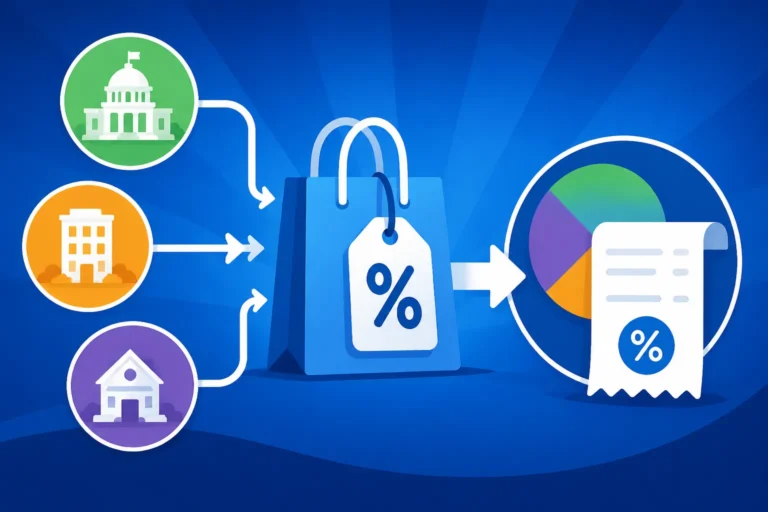
The sales tax rate in Seattle isn't a single, straightforward number. Instead, it's a combination of several different tax jurisdictions that layer on top of each other. This multi-layered approach is common in many states, but particular cities, like Seattle, often have additional local levies that push their rates higher than the state average. This can lead to a lot of head-scratching when you're trying to calculate the final price of an item or ensure your business is collecting the correct amount.
The Current Combined Rate for Seattle
As of early 2026, the combined sales tax rate for the city of Seattle, Washington, stands at a notable 10.3%. This rate is a direct reflection of the various taxing authorities that have jurisdiction over sales transactions within the city limits. While the state of Washington has its base rate, King County adds another layer, and then the City of Seattle itself contributes additional local taxes, often related to specific public services or initiatives. It's a prime example of how local governance directly impacts your everyday purchases.
Imagine you're buying a new gadget or a piece of furniture in downtown Seattle. That 10.3% isn't just a number; it means for every $100 you spend, an extra $10.30 goes towards sales tax. This can quickly add up, especially on larger purchases, and it's why so many residents and businesses find themselves needing a clear explanation of how this rate is derived. Getting it wrong, whether as a consumer budgeting for a purchase or a business remitting taxes, can lead to frustration or, worse, penalties down the line.
Regional Comparison and Why Seattle Stands Out
When you compare Seattle's sales tax rate to other areas, even within Washington state, it often stands out as one of the higher rates. For instance, the general statewide sales tax rate is significantly lower. Other cities in King County might have slightly different rates, depending on their own specific district taxes. This disparity can be confusing for businesses that operate across different municipal lines or for consumers who shop both in Seattle and in surrounding areas.
Consider a small online retailer based in Seattle who also ships products to customers in Tacoma or Olympia. They can't just apply one flat rate to all their Washington sales. The varying local rates mean they need robust systems to ensure they're charging the right tax based on the customer's location. This is where the intricacies of determining sales tax by location become incredibly important. While it might seem like a small difference, even half a percentage point can mean significant discrepancies over time, both for the seller's compliance and the buyer's pocketbook. You can explore how rates differ across the state by checking out our guide on the Washington Sales Tax Rate Explained.
Breaking Down the Combined Sales Tax Rate
To truly understand that 10.3% in Seattle, we need to peel back the layers and look at each individual component that makes up the total. It's not just some arbitrary number; it's a carefully constructed sum of state, county, and local taxes, each serving its own purpose. This is where many people get lost, trying to figure out which part goes where and why.
Washington State Sales Tax Component
The foundation of Seattle's sales tax rate, and indeed the rate for all taxable sales across the state, is the Washington state sales tax. As of 2026, this statewide rate is 6.5%. This portion of the tax goes directly to the state coffers, funding various statewide initiatives, infrastructure projects, education, and public services that benefit all residents. It's a consistent rate that applies uniformly across almost every jurisdiction in Washington.
For businesses, this 6.5% is the constant in a sea of variables. Regardless of whether you're selling a coffee in Seattle, a book in Spokane, or a handcrafted item in a small town, that 6.5% state component generally applies to your taxable sales. It's the starting point for any sales tax calculation. However, the real challenge begins when you start adding the local layers, which can quickly turn a simple calculation into a complex equation. Understanding the statewide baseline is crucial before diving into the more localized complexities.
King County Sales Tax Component
Layered on top of the state rate is the King County sales tax. King County, where Seattle is located, imposes its own sales tax to fund county-specific services. This rate is 3.1% and contributes to things like regional transportation, parks, public health, and other services that span across multiple cities within the county. This means that if you make a purchase anywhere in King County, whether it's Seattle, Bellevue, or Redmond, you'll generally see this 3.1% added to the state rate.
This county-level tax is a significant portion of the overall rate and highlights why two cities within the same state can have different sales tax totals. While the state component is fixed, the county component can vary from one county to another, leading to different combined rates even for neighboring communities. For a business, especially one with multiple locations or a broad delivery radius within King County, accurately applying this county tax is paramount for compliance. It's not enough to just know the state rate; you have to know which county you're in!
City of Seattle Sales Tax Component
Finally, we arrive at the City of Seattle's own sales tax contribution. This additional local tax, often referred to as a "local option" tax, adds another 0.7% to the combined rate. This portion is specifically dedicated to funding services and projects that benefit Seattle residents directly, often related to transit, housing, or other municipal services unique to the city. It's this final layer that pushes Seattle's rate above most other cities in King County.
This municipal layer is often the most variable and the reason why sales tax rates can change from one city block to the next, even within the same county. For retailers, this means that even if you're just across the street from the city limits in an unincorporated area of King County, your sales tax rate would be different. This kind of geographical nuance is why relying solely on ZIP codes for sales tax can be misleading, as detailed in our discussion on Sales Tax by ZIP Code (and Why ZIP Isn't Enough). Businesses utilizing sophisticated tax compliance software, such as solutions offered by Avalara, find it easier to manage these granular differences automatically.
Here’s a quick breakdown of the Seattle sales tax components:
| Taxing Authority | Rate Component | Purpose |
|---|---|---|
| Washington State | 6.5% | Funds statewide programs, education, infrastructure. Applies across all taxable sales in Washington. |
| King County | 3.1% | Funds county-level services such as regional transportation, parks, public health, and other county functions. |
| City of Seattle | 0.7% | Funds city-specific initiatives, often related to transit, housing, and other municipal services within Seattle. |
| Total Combined | 10.3% | The final sales tax rate applied to most taxable purchases within Seattle city limits. |
Navigating Local District Taxes and Their Impact
While the state, county, and city components form the core of Seattle's sales tax rate, the picture can get even more complicated. Washington State, and particularly the King County area, has various special purpose districts that can levy their own sales taxes. These district taxes are specifically designed to fund particular projects or services, often related to transportation or cultural initiatives, and they add yet another fractional percentage to the overall rate.
Specific Seattle-Area District Taxes
Seattle is part of several special purpose districts, the most prominent being the Sound Transit district. Sound Transit is responsible for building and operating regional transit systems, including light rail, commuter rail, and express bus services. To fund these massive projects, Sound Transit imposes its own sales tax, which applies in designated areas across King, Pierce, and Snohomish counties. Within Seattle, this additional tax further contributes to the overall 10.3% rate.
These district taxes are precisely why getting a real-time, accurate sales tax rate is crucial. They are often geographically specific, meaning two businesses just a few miles apart could have different total rates if one falls within a special district's boundaries and the other doesn't. This level of detail makes manual calculation a nightmare, especially for businesses with high transaction volumes or those serving customers across different regions. For complex scenarios like these, understanding Origin vs Destination Sales Tax Sourcing becomes incredibly important to determine who pays what and where.
Impact on Consumers and Businesses
For consumers, the impact of these district taxes is usually seen as a slightly higher final price tag. While the individual district tax might seem small, say 0.1% or 0.2%, when combined with the other layers, it significantly contributes to Seattle's position among states with higher sales tax burdens. This can make comparing prices across different regions tricky, as a seemingly cheaper item online might end up costing more once local taxes are factored in.
For businesses, the impact is far more substantial. Ensuring compliance means staying on top of not just state and county rates, but also these ever-changing district taxes. Miscalculating sales tax can lead to audits, penalties, and customer dissatisfaction. Small businesses, in particular, often struggle with this complexity, diverting valuable time and resources from their core operations to manage tax compliance. This is where tools that offer real-time rate lookups become indispensable, allowing businesses to automatically apply the correct combined rate, including all applicable district taxes, at the point of sale.
Why Sales Tax Rates Change and How to Stay Updated
Sales tax rates aren't set in stone; they can and do change. These changes might come from the state legislature, county councils, or local voter initiatives. Staying informed about these potential shifts is critical for both consumers who want to budget accurately and, especially, for businesses that need to maintain compliance. It’s a constant dance of monitoring legislative sessions and local ballot measures.
Legislative Changes and Voter Initiatives
The primary drivers of sales tax rate changes are legislative actions and voter-approved initiatives. For example, Washington state might decide to adjust its base sales tax rate to address budget needs or fund new programs. Similarly, King County voters might approve a new ballot measure for a regional park system, which includes a fractional sales tax increase to fund it. These changes aren't always easy to track, as they can be proposed, debated, and passed at different levels of government throughout the year.
A recent example could be a local transportation measure passed by Seattle voters to expand bus service, which might incrementally add to the city's sales tax component. These changes are usually announced well in advance, but it's up to businesses to incorporate them into their systems by the effective date. Neglecting to update your point-of-sale system or e-commerce platform could mean under-collecting tax, which you'd then be liable for out of pocket. We've compiled details on How Do Sales Tax Rate Changes Take Effect? to help businesses understand the rollout process.
Tools and Resources for Staying Current
Given the intricate nature of sales tax rates, especially in a dynamic area like Seattle, relying on manual methods or outdated spreadsheets is a recipe for error. Thankfully, there are many excellent resources available to help you stay current. State revenue departments, like the Washington State Department of Revenue, publish official sales tax rate tables and updates. However, digesting this information and applying it to specific addresses can still be time-consuming.
This is where specialized sales tax lookup tools and compliance software become invaluable. Services like Avalara are specifically designed to handle the complexities of multi-layered sales tax rates, including all the state, county, city, and special district components. They provide real-time rate lookups based on precise street addresses, ensuring that businesses charge the correct tax no matter where their customer is located within Seattle or beyond. Comparing various options can be helpful, so take a look at our guide on Sales Tax Rate Lookup Tools Compared. For businesses with Economic Nexus by State 2026: Thresholds Guide in multiple states, such software is essential for managing compliance across diverse tax landscapes.
Staying proactive about sales tax changes also involves checking official sources periodically. The Washington State Department of Revenue typically announces rate changes on its website, often with effective dates a few months in advance. Businesses should make it a habit to review these updates, especially around the end and beginning of the calendar year, as new rates frequently take effect on January 1st or July 1st. Keeping a close eye on these announcements is key to preventing compliance headaches before they even start. For a broader perspective on upcoming changes, our resource on 2026 Sales Tax Rate Changes by State offers valuable insights.
Calculating Sales Tax in Seattle
Once you understand the components, calculating sales tax in Seattle becomes much clearer. For most taxable goods and services, you simply apply the combined rate of 10.3% to the purchase price. However, certain items might be exempt, or you might be dealing with services that have different tax rules, so it's never quite as simple as just multiplying by 10.3%.
Step-by-Step Calculation Example
Let's walk through a simple example. Say you're buying a new coffee maker in Seattle for $150.
- Identify the Base Price: $150.
- Determine the Sales Tax Rate: For Seattle, this is 10.3%.
- Convert the Percentage to a Decimal: 10.3% becomes 0.103.
- Multiply the Base Price by the Decimal Rate: $150 x 0.103 = $15.45.
- Add the Sales Tax to the Base Price for the Total: $150 + $15.45 = $165.45.
So, your $150 coffee maker will cost you $165.45 at the register in Seattle. This straightforward calculation applies to most taxable tangible goods. However, the complexities truly arise when you're looking at things like bundled services, shipping charges, or items that might have specific exemptions. For a comprehensive guide on basic calculations, you can refer to How to Calculate Sales Tax (Step by Step).
What Goods and Services Are Taxable?
In Washington State, and therefore in Seattle, most tangible personal property is subject to sales tax. This includes common retail items like clothing, electronics, furniture, and most general merchandise. Many services are also taxable, which can sometimes surprise people coming from states where services are largely exempt. For example, things like construction services, certain repair services, and even some digital products can be subject to sales tax.
However, there are also common exemptions. Groceries (unprepared food for home consumption) are generally exempt from sales tax in Washington. Prescription drugs are also exempt. It's crucial for businesses to know not just the rate, but also what items or services are subject to that rate. Misclassifying an item as taxable when it's exempt, or vice-versa, can lead to incorrect collections. This is a common pain point for new businesses or those expanding into new product lines. Always consult the Washington State Department of Revenue's guidelines for specific details on taxable items. For a broader overview of how sales tax applies to online transactions, check out our Sales Tax for Online Sellers: Complete Guide.
Disclaimer
The information provided in this guide is for general informational purposes only and does not constitute tax advice. Sales tax laws are complex and subject to change. Always consult with a qualified tax professional or the appropriate state tax authority for advice specific to your business or situation.