Washington Sales Tax Rate Explained
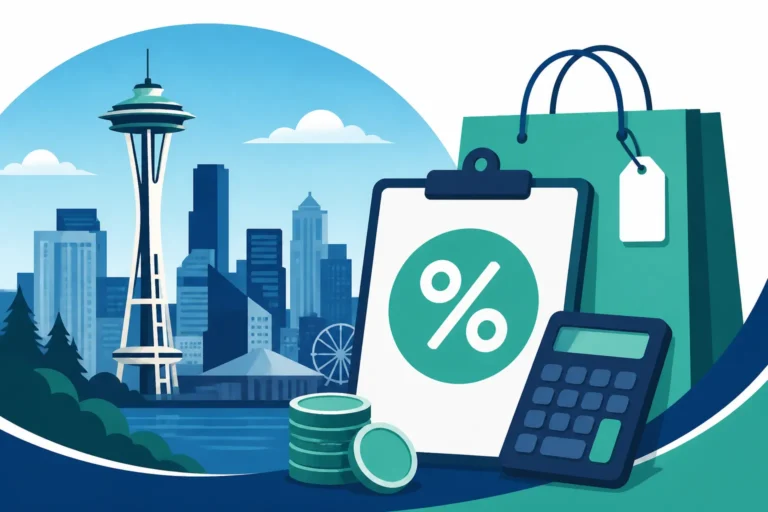
If you have ever stood at a checkout counter in Seattle or Bellevue and felt a sudden jolt of sticker shock when the total appeared, you are certainly not alone. Navigating the tax landscape in the Evergreen State is notoriously complex because what you see on the price tag is rarely what you pay. This guide provides the Washington Sales Tax Rate Explained to help residents and business owners alike demystify these fluctuating percentages.
The Foundation of Washington’s Sales Tax System
To understand why your receipt looks the way it does, we have to start with the state’s fundamental tax philosophy. Washington is one of the few states in the country that does not impose a personal income tax. While that sounds like a dream for your paycheck, the state has to fund its infrastructure, schools, and emergency services somehow. That "somehow" is largely through a robust sales and use tax system.
The Statewide Base Rate
Every single taxable purchase made within the borders of Washington starts with a base state tax rate of 6.5%. Whether you are buying a surfboard in Ocean Shores or a coffee grinder in Spokane, that 6.5% is the absolute minimum you will encounter. This base rate is one of the highest in the nation, which is a direct trade-off for the lack of income tax. When you look at the Average Sales Tax Rate by State, you’ll notice that Washington consistently ranks toward the top because of this heavy reliance on consumption-based revenue.
For many people moving from states with lower base rates, this initial 6.5% can feel steep. However, it is important to remember that this money goes directly into the state’s general fund. From a lifestyle perspective, this means your "tax day" happens every time you go to the mall rather than once a year in April. It is a pay-as-you-go system that keeps the state's ferry system running and its mountain passes clear of snow.
How Local Jurisdictions Pile Up
The confusion really begins when you leave the state level and look at local jurisdictions. Washington allows cities, counties, and even special purpose districts (like those for transit or criminal justice) to add their own layers of tax on top of the state’s 6.5%. This is why the Combined State + Local Sales Tax Rates Explained is such a vital concept for anyone living here. You might be in a city that adds 1%, a county that adds 0.5%, and a transit district that adds another 1.1%.
Let’s take a walk down a hypothetical street. If you are shopping at a store on one side of a county line, you might pay 8.9%. If you walk three blocks south into a different jurisdiction, that rate could jump to 10.3%. This patchwork quilt of rates is exactly Why Is Sales Tax Different in Every City? and it makes manual calculations nearly impossible for the average consumer. For business owners, this means your point-of-sale system has to be incredibly smart to know exactly which GPS coordinate your customer is standing in.
The Concept of Combined Rates
The number you actually see on your receipt is called the "combined rate." It is the sum of the state rate plus all applicable local rates. In some parts of the Puget Sound region, these combined rates have recently pushed past the 10% mark, making Washington home to some of the highest sales tax jurisdictions in the United States. If you are curious about how your local area compares to the rest of the country, checking the Highest & Lowest Sales Tax States 2026 data will show that Washington’s urban centers are consistently at the top of the list.
It is helpful to think of these combined rates as a stack of transparent filters. The bottom filter is the state’s 6.5%. On top of that, you lay the county filter, then the city filter, and finally any special district filters. When you look through all of them at once, you see the final percentage. This cumulative effect is what leads to the Seattle Sales Tax Rate 2026 (10.55%), which can be a significant burden on large purchases like furniture or electronics.
Destination Sourcing and the Shipping Headache
One of the most frustrating aspects for small business owners in Washington is "sourcing." If you run a small pottery shop in Walla Walla and you ship a vase to a customer in Tacoma, which tax rate do you charge? The rate where your shop is located, or the rate where the customer lives?
Why Destination Sourcing Matters for Businesses
Washington is a "destination-sourced" state. This means the sales tax rate is determined by the location where the buyer receives the goods. In our pottery example, the shop owner must charge the Tacoma rate, not the Walla Walla rate. This makes the Origin vs Destination Sales Tax Sourcing rules a critical topic for any e-commerce seller. It means you can't just set one rate for your entire website; you have to calculate the specific tax for every single delivery address in the state.
This creates a massive administrative burden. Imagine having customers in fifty different cities across Washington. You are essentially acting as a tax collector for fifty different local governments, each with their own specific rate and reporting requirements. This is where many businesses turn to automated solutions like Avalara to handle the heavy lifting. Without automation, the risk of human error is high, and the Department of Revenue is known for being quite thorough during audits.
Real World Example: Shipping from Spokane to Vancouver
Let’s look at a realistic scenario. Suppose you sell a high-end mountain bike for $3,000 from your warehouse in Spokane. Your customer lives in Vancouver, Washington. In Spokane, the rate might be lower, but because you are shipping to Vancouver, you must apply the Vancouver combined rate. If the rate in Vancouver is 8.7%, you are collecting $261 in tax. If you accidentally charged the Spokane rate of 9.0%, you’ve overcharged the customer, which can lead to complaints or legal headaches.
Furthermore, if the customer decides to drive to your warehouse in Spokane to pick the bike up in person, the rule changes. Since the "transfer of possession" happens at your place of business, you would then charge the Spokane rate. This "point of delivery" rule is a common trap for businesses that offer both shipping and local pickup. Using a Sales Tax Rate Lookup Tools Compared guide can help you find software that automatically toggles these rules based on the fulfillment method.
The Problem with ZIP Codes
A common mistake is relying solely on ZIP codes to determine tax rates. In Washington, ZIP codes and tax jurisdictions do not always align. A single ZIP code can span multiple cities or even cross county lines. If you rely on a ZIP code to calculate tax, you might be charging a customer in an unincorporated part of the county a city tax they don't actually owe. This is the primary reason why Sales Tax by ZIP Code (and Why ZIP Isn't Enough) is a mantra among tax professionals.
To be truly accurate, businesses must use "rooftop-level" calculations. This involves using the specific street address to determine the exact latitude and longitude of the delivery. For a growing business, trying to do this manually is a nightmare. Tools like Avalara provide the precision needed to ensure that you aren't under-collecting (which leaves you liable for the difference) or over-collecting (which frustrates your customers).
What Items Are Taxable in the Evergreen State
Not everything you buy in Washington is subject to that high sales tax. The state does offer some relief on essential items, but the definitions of what qualifies as "essential" can be a bit pedantic.
Groceries and the Prepared Food Trap
Generally speaking, "prepared food" is taxable, while "unprepared food" (groceries) is exempt. But where is the line? If you buy a head of lettuce, it is tax-exempt. If you buy a pre-washed bag of salad mix, it is still generally exempt. However, if you buy a salad from the deli bar that has been tossed with dressing and includes a plastic fork, it suddenly becomes "prepared food" and is subject to the full combined sales tax rate.
This distinction is explored deeply in the Sales Tax on Groceries & Food by State guide. In Washington, the rule of thumb is that if the seller provides utensils or if the food is sold in a heated state, you are going to pay tax. This even applies to things like rotisserie chickens. A cold chicken in the refrigerated aisle might be exempt, but that same chicken under a heat lamp is taxable. It’s a strange quirk of the law that forces consumers to think twice about convenience.
Digital Products and Software
Washington was one of the first states to get aggressive about taxing the digital economy. If you download a movie, buy an e-book, or subscribe to a streaming service, you are likely paying sales tax. This also extends to software. For businesses, the big question is usually: Is SaaS Taxable in Washington?. The answer is a resounding yes. Software-as-a-Service is considered a taxable retail sale in Washington, regardless of whether the provider is located inside or outside the state.
This is a major pain point for tech startups in the Seattle area. If you are selling a subscription to a cloud-based tool, you must collect sales tax from your Washington customers. Managing these digital tax rules is complex because the definitions of "digital automated services" can be incredibly broad. Many firms use Avalara to keep track of these evolving digital tax laws, as the state frequently updates its guidance on what constitutes a taxable digital product.
Professional Services and Labor
Unlike some states that only tax tangible goods, Washington taxes certain services and the labor used to install or repair goods. If you hire a mechanic to fix your car, you pay sales tax on the parts and the labor. If you hire a contractor to remodel your kitchen, the entire contract price is generally subject to sales tax. However, purely professional services like those from an accountant, lawyer, or doctor are generally exempt from sales tax (though the business still pays a different type of tax called B&O tax).
| City | State Rate | Local Rate | Combined Rate |
|---|---|---|---|
| Seattle | 6.5% | 4.05% | 10.55% |
| Spokane | 6.5% | 2.5% | 9.0% |
| Tacoma | 6.5% | 3.8% | 10.3% |
| Vancouver | 6.5% | 2.2% | 8.7% |
| Bellevue | 6.5% | 3.7% | 10.2% |
| Everett | 6.5% | 3.4% | 9.9% |
| Olympia | 6.5% | 2.9% | 9.4% |
| Bellingham | 6.5% | 2.3% | 8.8% |
Special Tax Districts and Unique Surcharges
Beyond the standard city and county taxes, Washington has several unique "add-ons" that can drive the rate even higher. These are often dedicated to specific regional projects and can catch residents off guard.
The Sound Transit (RTA) Tax
If you live in the "RTA zone"—which covers the most populated areas of King, Pierce, and Snohomish counties—you are likely paying an extra 1.1% Regional Transit Authority tax. This tax was approved by voters to fund the expansion of light rail and bus services in the Puget Sound region. While it provides a public benefit, it is the primary reason why rates in the Seattle metro area are significantly higher than in the rest of the state.
This tax applies to almost everything subject to sales tax, including motor vehicle sales and leases. When you look at How Much Is Sales Tax on a Car by State, Washington’s car tax in the RTA zone is particularly high because the 1.1% is added on top of the already elevated motor vehicle sales tax rate. It is not uncommon for a car buyer in Seattle to pay over 10.6% in total sales tax, which can add thousands of dollars to the cost of a new vehicle.
Public Facilities and Transportation Districts
Other areas of the state have their own specific districts. For example, some cities have a "Transportation Benefit District" (TBD) that adds 0.1% or 0.2% specifically for road repairs. Others might have a "Public Facilities District" to pay for a stadium or a convention center. While these amounts seem small, they add up.
For someone trying to figure out How to Calculate Sales Tax (Step by Step), these micro-layers make the math nearly impossible to do in your head. You can't just assume the rate is 9% because the city next door is 9%. You have to know if you have crossed the invisible line into a Public Facilities District. This is another area where Avalara’s real-time tax calculation engine proves invaluable for businesses that need to remain compliant without slowing down their checkout process.
Compliance and Filing for Sellers
If you are a business owner, collecting the tax is only half the battle. You also have to report it and pay it to the Department of Revenue (DOR). Washington’s filing system is unique and can be quite intimidating for the uninitiated.
The Business and Occupation (B&O) Tax Connection
In most states, you file a sales tax return and you're done. In Washington, sales tax is inextricably linked to the Business and Occupation (B&O) tax. The B&O tax is a tax on the gross receipts of the business. Even if you don't make a profit, you still owe B&O tax on every dollar that comes in. When you file your excise tax return, you are reporting both the sales tax you collected from customers and the B&O tax that the business owes out of its own pocket.
This "double filing" requirement is a common source of confusion. You have to categorize your income correctly (e.g., Retailing, Wholesaling, Service & Other Activities) because each category has a different B&O rate. If you misclassify your income, you could end up with a significant tax bill and penalties. For a detailed walkthrough of the paperwork, checking the Sales Tax Permit & Filing Guide for Alabama or other state guides can offer a comparison, but Washington’s B&O system remains one of the most distinct in the country.
Registering for a Permit and Meeting Thresholds
Before you can legally collect a dime of sales tax, you must register for a Washington Business License and a sales tax permit. This is true whether you are a brick-and-mortar shop or an out-of-state online seller who has "nexus" in the state. Since the Supreme Court's Wayfair decision, even if you don't have an office in Washington, you may still be required to register if you exceed $100,000 in annual sales to Washington customers.
You can find the specifics in the Economic Nexus Threshold in Washington guide. Once registered, the DOR will assign you a filing frequency—monthly, quarterly, or annually—based on your estimated business volume. Missing a deadline is not recommended, as Washington’s penalties for late filing can escalate quickly. Many businesses use Avalara to automate the filing process, ensuring that the returns are submitted on time and the funds are transferred correctly to the state.
The Importance of Resale Certificates
If you are buying inventory that you intend to sell to customers, you shouldn't have to pay sales tax on that purchase. In Washington, you use what is commonly called a "Resale Certificate" (officially the Reseller Permit) to make these tax-free purchases. This is a vital tool for maintaining your profit margins. If you pay sales tax on your inventory and then charge your customer sales tax again, you are effectively being double-taxed.
Getting your hands on a permit requires an application through the DOR, and they only issue them to businesses that genuinely engage in reselling. For more information on how to handle these documents, you can refer to the Resale Certificate by State: Complete Guide. Remember, using a reseller permit for personal purchases (like buying a TV for your home but claiming it's for your store) is considered tax fraud and carries heavy penalties.
Washington Sales Tax Rates Disclaimer
The information provided in this guide is for educational and informational purposes only. Sales tax rates, local jurisdictions, and state laws are subject to frequent changes by legislative bodies and voter initiatives. While we strive to provide the most accurate and up-to-date data, you should always verify current rates with the Washington Department of Revenue or a qualified tax professional before making significant financial decisions or filing tax returns. Tax laws vary significantly based on individual circumstances, and this guide does not constitute legal or financial advice.