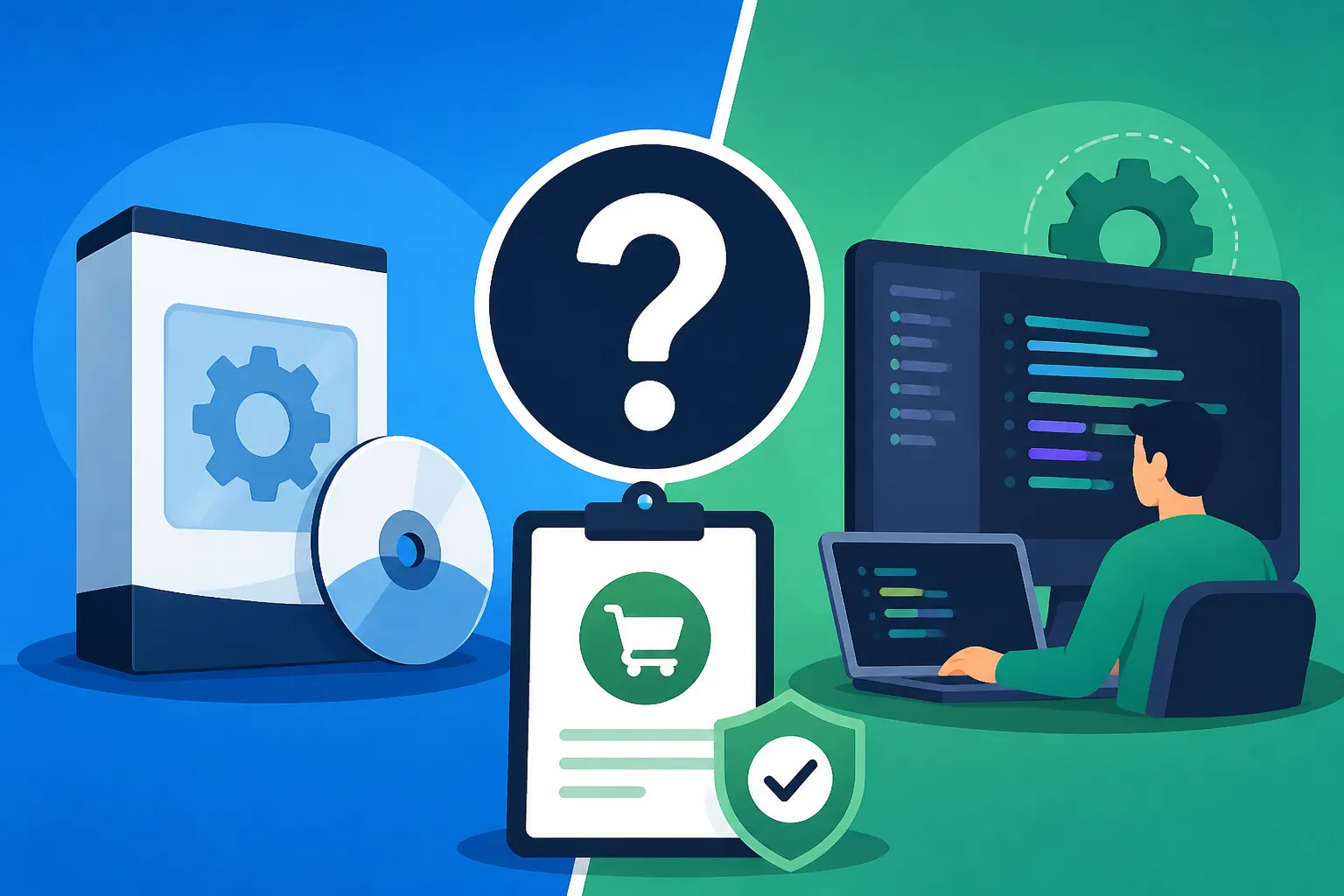
Is Software Taxable? (Canned vs Custom)
The world of sales tax can feel like navigating a maze blindfolded, and when you throw something as intangible and rapidly evolving as software into the mix, it often feels downright impossible. Many business owners, whether they're selling a subscription service or custom code, grapple with the anxiety of getting sales tax right, knowing that a misstep can lead to hefty penalties. This comprehensive guide is designed to unravel the complexities of software taxation, from packaged programs to bespoke solutions, helping you understand your obligations.
The Perplexing World of Software Sales Tax
For years, sales tax was relatively straightforward: you bought a physical item, you paid tax. But as our world rapidly digitized, traditional tax laws struggled to keep up. Software, by its very nature, challenges these old definitions, creating a patchwork of rules across different states that can leave even seasoned entrepreneurs scratching their heads. It’s not just about whether you sell a disc anymore; it’s about downloads, cloud access, and services bundled with code.
Why is Software So Confusing for Sales Tax?
The primary source of confusion stems from how states define "tangible personal property." Historically, sales tax applied to physical goods you could touch, see, and hold. Software delivered on a CD-ROM or USB drive easily fit this definition. But what about software downloaded directly to a computer? Or, even more abstractly, software you merely access over the internet, never actually owning a copy? Tax laws weren't designed for this. States have had to reinterpret, update, or create entirely new legislation, leading to wildly different approaches. One state might consider a digital download tangible, while its neighbor sees it as an intangible service. This fundamental disagreement is the root of the widespread bewilderment, leaving businesses constantly second-guessing their compliance strategy.
The Rapid Evolution of Software and Tax Laws
It feels like yesterday we were installing software from floppy disks, then CDs, then downloaded installers. Now, a huge chunk of our software lives in the cloud, accessed through a web browser or an app, often on a subscription basis. Think about popular services like Microsoft 365, Adobe Creative Cloud, or even your favorite project management tool – these are all examples of Software as a Service (SaaS). Each technological leap introduces new questions for tax authorities. Is a monthly SaaS subscription a sale of software, a service, or something else entirely? Many states are still playing catch-up, and their interpretations continue to evolve. What was taxable last year might have new nuances this year, and businesses need to stay agile to keep up with these 2026 Sales Tax Rate Changes by State. This constant flux means that what's true in California might be completely different in New York, and it's a full-time job just to track it all.
Understanding the Basics: What is Software for Sales Tax?
Before we dive into the nitty-gritty of "canned" versus "custom," it's vital to grasp the core concepts states use to classify software for sales tax purposes. The distinction often hinges on whether the state considers the software a "tangible personal property" or an "intangible service." This isn't just semantics; it determines whether a transaction is even subject to sales tax in the first place. Many states base their sales tax systems on taxing tangible goods, with services being exempt unless specifically itemized in law.
Tangible Personal Property Versus Services
When we talk about sales tax, the bedrock principle in most states is the taxation of "tangible personal property." This refers to physical items that can be seen, weighed, measured, felt, or touched. A car, a pair of shoes, a book – these are all classic examples. For a long time, if software came on a physical medium like a CD or DVD, it was clearly tangible personal property and thus taxable.
However, the game changed with digital delivery. Is a downloaded program "tangible"? Some states have adopted the "electronic tangible personal property" concept, essentially deeming electronically delivered software as taxable just like its physical counterpart. Other states stick to a more literal interpretation, saying if it's not a physical object, it's not tangible. Then there are services. If you're paying someone to write custom code or perform maintenance on your existing systems, that often falls under a service. These services are generally exempt from sales tax unless a state specifically chooses to tax them. The line gets blurry when software functions more like a service, such as a subscription to an online platform, making the distinction incredibly important for Sales Tax on Services: What's Taxable by State.
The Fuzzy Lines of Digital Products
The rise of digital products has further muddied the waters. Beyond traditional software, we now have e-books, streaming movies, online courses, digital music, and even cloud storage. These are all intangible in the traditional sense, yet they are bought and sold just like physical goods. States have responded in a variety of ways:
- Some states explicitly tax digital products: They've updated their laws to include categories like "electronically delivered goods" or "digital goods" under their sales tax statutes. For these states, a downloaded game or a streamed movie is taxable.
- Other states only tax specific digital products: They might tax e-books but not music, or streaming services but not cloud storage.
- A few states still treat most digital products as exempt services: If it's not physical, it's not taxed.
This inconsistent approach means that a company selling, say, a digital photography course might be fully taxable in Texas, partially taxable in New York, and completely exempt in Oregon (which has no state sales tax anyway). Understanding these nuances is paramount, as the classification of your specific software or digital product dictates your entire sales tax obligation. Ignoring this means you could be collecting when you shouldn't be, or worse, not collecting when you absolutely should.
Canned (Prewritten) Software: The Usual Suspects
When people think of "software," they often imagine canned software. This is the off-the-shelf, ready-to-use program that's designed for a mass market. Think about buying a copy of QuickBooks, Microsoft Office, or a popular video game. You don't ask for modifications; you install it and use it as-is. For sales tax purposes, this type of software is generally the most straightforward to categorize, but even here, there are layers of complexity.
Common Examples and Why They're Usually Taxable
Canned software, also known as "off-the-shelf," "prewritten," or "mass-produced" software, refers to programs developed for general use by many customers without significant modification. It's the kind of software you can pick up at a retail store, download from a website, or subscribe to online. Common examples include:
- Operating Systems: Windows, macOS, Linux distributions.
- Productivity Suites: Microsoft Office, Google Workspace (though these are often SaaS now, we'll get to that).
- Accounting Software: QuickBooks, Xero.
- Design Software: Adobe Photoshop, AutoCAD (again, often SaaS).
- Video Games: Both physical copies and digital downloads.
- Antivirus Software: Norton, McAfee.
The reason these are usually taxable is that many states consider them "tangible personal property," even when delivered electronically. The logic is that the value lies in the standardized product itself, which is transferred to the customer. It's not a service where someone is custom-creating something for you; it's a finished product you are acquiring. The consistency and widespread availability of canned software make it an easier target for state tax departments to classify and tax, leading to a general expectation that it will be subject to sales tax in most jurisdictions that levy one.
How States Define "Prewritten" Software
While the concept of "prewritten" software seems clear, states often have specific definitions that businesses need to be aware of. The Streamlined Sales Tax (SST) Governing Board, for instance, defines "prewritten computer software" as "computer software, including prewritten upgrades, which is not designed and developed by the author or other creator to the specifications of a specific purchaser." This definition is widely adopted, and variations on this theme are common across states, particularly those participating in the Streamlined Sales Tax Agreement.
However, where it gets tricky is when prewritten software is modified. Many businesses require some level of customization to integrate off-the-shelf software with their existing systems or to tailor it to unique workflows. States then have to decide: at what point does a modified prewritten software become "custom" enough to change its tax status?
- Minor modifications: Often, basic configuration, installation, or user interface tweaks don't change its "prewritten" status. If the core functionality remains the same, it's still generally taxable.
- Significant modifications: If a substantial portion of the underlying code is altered or new modules are developed specifically for the client, some states might then consider the entire transaction (or at least the custom portion) as a non-taxable service.
The critical factor is often the intent of the developer and the extent of the customization. If the software started as a prewritten product and was then adapted, it often retains its prewritten status unless the customization fundamentally changes the nature of the software or the modifications are explicitly treated as a separate, non-taxable service. This can lead to complex invoicing where the prewritten component is taxed, but the customization service is not. For a detailed breakdown, exploring specific state guides on Is Software Taxable in [Major States]? would be beneficial.
Custom Software: Tailored Code, Tailored Tax Treatment?
In stark contrast to canned software, custom software is built from the ground up to meet the unique specifications of a single client. This could be a bespoke inventory management system, a specialized data analytics tool, or a unique mobile app designed for a specific business process. Because it's a creation of services, custom software often enjoys a different sales tax treatment, though this isn't a universal rule.
Defining "Custom" for Tax Purposes
Just like "prewritten," states have specific criteria for what qualifies as "custom software." Generally, custom software is defined as programs or modifications that are created specifically for a particular purchaser. This means the software didn't exist prior to the agreement with the client and was developed according to their unique requirements.
Key characteristics that often indicate custom software for tax purposes include:
- Unique specifications: The client provides detailed requirements that dictate the software's features and functionality.
- Proprietary development: The software is often developed exclusively for that client, and the client may even retain ownership of the intellectual property.
- Absence of prior existence: The software didn't exist as an off-the-shelf product before the development project commenced.
- Significant modification: If a prewritten software is modified so substantially that it loses its original identity and becomes a new, unique product for the client, it might be reclassified as custom.
It's not enough to simply call it custom; the actual development process and end product must align with the state's definition. For example, installing Microsoft Word and adding a custom template is not custom software. Developing a completely new word processing application for a publishing house with specific integration points and unique editing features, on the other hand, would typically be considered custom. Understanding this distinction is crucial for businesses selling these specialized solutions.
Scenarios Where Custom Software Might Be Exempt
Many states, though not all, exempt custom software from sales tax. The primary reasoning ties back to the "tangible personal property" versus "service" debate. When you hire a developer to create custom software, you are primarily paying for their expertise, their labor, and their creative services – the process of development – rather than a pre-existing tangible product. Since services are generally untaxed unless specifically enumerated, custom software often falls into an exempt category.
Here are common scenarios where custom software might be exempt:
- Pure service contracts: If the contract clearly delineates the development work as a service, separate from the sale of a tangible product, many states will exempt it. This is particularly true if the client receives the software electronically (e.g., via download or cloud access) and no physical media is exchanged.
- Consulting and development fees: Charges for analysis, design, programming, testing, and implementation of custom software are frequently considered non-taxable services.
- Bundled transactions with dominant service component: If a transaction includes both custom software (a service) and some minor tangible components (like a training manual or physical delivery media), and the service component is overwhelmingly dominant in value, the entire transaction might be treated as a non-taxable service.
However, watch out for states that take a broader view of "tangible personal property" or have expanded their definition of taxable services. Texas, for example, has a comprehensive tax on "data processing services" that can include custom software development. So, while custom software often enjoys an exemption, it's never a given. Businesses need to meticulously research the specific laws in the state where the client is located, especially considering the complexities of Origin vs Destination Sales Tax Sourcing if you're selling across state lines.
Delivery Methods Matter: Cloud, Download, or Tangible Media
How software reaches the end-user plays an enormous role in its sales tax treatment. What was once a simple matter of a box arriving on your doorstep has fragmented into a myriad of delivery channels, each with its own tax implications. The advent of cloud computing and widespread digital downloads has forced states to rethink their approaches, leading to disparate outcomes based on the mode of delivery.
Software as a Service (SaaS) and Its Taxability
Software as a Service (SaaS) is arguably the most prevalent way software is consumed today. Instead of buying a license and installing software on your own machines, you access applications over the internet on a subscription basis. Think Salesforce, Zoom, Slack, or countless industry-specific platforms. With SaaS, you're not typically "owning" the software; you're licensing access to use it, often through a web browser or a mobile app.
The sales tax treatment of SaaS is one of the most contentious and rapidly changing areas of tax law. States generally fall into a few camps:
- Not Taxable: Some states view SaaS purely as an intangible service, similar to a consulting service, and thus exempt it from sales tax. This is often because there's no "transfer" of physical property.
- Taxable as a Service: Other states have specifically expanded their definition of taxable services to include certain cloud-based services, data processing, or information services, which can encompass SaaS. Texas and New York are notable examples where SaaS can be taxable under specific service categories.
- Taxable as Tangible Personal Property (or electronically delivered software): A smaller number of states might interpret the right to use the software, even remotely, as akin to a transfer of tangible personal property, making it taxable.
The key takeaway is that the taxability of SaaS varies dramatically by state. A provider of project management software like Asana might find their subscriptions taxable in one state and exempt in another. It's crucial for SaaS providers to understand their Is SaaS Taxable? Software-as-a-Service by State obligations in every state where they have customers, as the rules can be complex and are always evolving.
Downloaded Software: The "Electronic" Delivery Debate
When you purchase software and download it directly to your computer without any physical media involved, you're dealing with electronically delivered software. This includes everything from buying a game from a digital storefront (like Steam or the PlayStation Store) to downloading an antivirus program or a creative suite.
The debate here centers on whether electronically delivered software should be treated the same as software delivered on a physical disk.
- Taxable as "Electronic Tangible Personal Property": Many states have adopted laws that explicitly treat electronically delivered software as "tangible personal property" for sales tax purposes. They reason that the value transferred to the customer is the same, regardless of the delivery mechanism. If a CD-ROM copy of Photoshop is taxable, then the downloaded version should be too. States like Ohio and Washington often fall into this category.
- Exempt as an Intangible: A dwindling number of states still consider electronically delivered software to be an intangible, and therefore not subject to sales tax, primarily because there's no physical item to tax. However, this position is becoming less common as states look for new revenue streams.
Complicating matters, some states have specific nuances. For instance, if you merely license software rather than owning it, even if downloaded, it might be exempt in some states that tax outright "sales" of software. The legal framework surrounding Digital Products Sales Tax by State is a maze of its own, so sellers need to be diligent.
Physical Media: CDs, USBs, and the Old School
While less common now, software still sometimes comes on physical media like CDs, DVDs, or USB drives. For sales tax purposes, this is usually the least complicated scenario.
- Clearly Taxable: In almost all states with sales tax, software delivered on a physical medium is considered tangible personal property and is therefore taxable. This is the traditional model where sales tax laws originated, and the physical nature of the item removes much of the ambiguity. If you purchase a video game disc or an operating system installation DVD, you can almost always expect to pay sales tax on it.
- Bundled Services: The only potential complication might arise if the physical media is bundled with significant non-taxable services, like extensive custom installation or training, and these services are separately stated and substantial enough to shift the primary nature of the transaction. However, for a simple retail purchase of software on a disk, it's nearly always taxable.
Despite the shift to digital, businesses that still sell or distribute software on physical media should ensure their systems correctly apply sales tax to these transactions, as they fall squarely within the traditional sales tax framework.
Real-World Examples: How States Differentiate
The inconsistent nature of software sales tax across the U.S. is best illustrated by looking at specific states. What might be a simple taxable transaction in one state could be a complex mix of taxable and exempt components in another. This patchwork forces businesses with a multi-state presence to adapt their tax collection strategies for virtually every jurisdiction.
States That Tax All Software (e.g., Texas, Washington)
Some states take a broad approach, aiming to tax most forms of software, regardless of whether it's canned, custom, or delivered via the cloud. This simplifies things in one sense, as the underlying product is generally subject to tax, but the devil is always in the details of their specific definitions.
- Texas: Texas is known for its comprehensive taxation of software and related services. Under Texas law, "computer software" is generally taxable, whether it's prewritten or custom, and regardless of the delivery method (tangible or electronic). Even more, certain services related to software, like data processing services, information services, and some types of custom programming, are also taxable. So, if you're selling a SaaS product to a customer in Houston, or developing custom software for a Dallas client, you'll likely be collecting Texas sales tax. They view the entire software ecosystem broadly, making it one of the more challenging states for software providers.
- Washington: Washington State also takes a broad stance. The sale of "computer software" is generally subject to sales tax, and their definition of software includes both prewritten and custom programs. Furthermore, "digital goods," which encompass electronically delivered software, are also taxable. This means whether you're licensing a packaged software suite or providing a SaaS subscription, it's likely taxable in Washington. The state aims to keep pace with technology by ensuring that digital transactions are treated similarly to their physical counterparts.
- Tennessee: While not as broad as Texas, Tennessee generally taxes prewritten computer software, whether delivered electronically or on tangible media. They also tax "computer software services" which can include custom programming. If you're providing software solutions, be mindful of the Tennessee Sales Tax Rate (7% + Local)[link-to-Tennessee-Sales-Tax-Rate-7-Local].
These states exemplify a policy choice to broaden the sales tax base to include digital products and services, reflecting the modern economy. For businesses operating in these states, the assumption should often be that software and related services are taxable unless a specific exemption applies.
States That Differentiate (e.g., California, New York)
Many states adopt a more nuanced approach, drawing distinctions between canned and custom software, or between delivery methods. This can create complex scenarios where minor differences in how a product is sold or delivered can alter its tax status.
- California: California is a classic example of a state that differentiates. While prewritten (canned) software delivered on a tangible medium or electronically is generally taxable, custom software is often considered a non-taxable service. The key is that the custom software must be developed specifically for the customer's unique requirements, and any modifications to prewritten software must be so extensive that the original program loses its identity. If a transaction involves both prewritten software and custom programming, California typically requires the seller to separately state the charges. If not, the entire charge might be taxable if the prewritten component is substantial. For businesses selling into California, understanding the California Sales Tax Rate (7.25% Base + Districts)[link-to-California-Sales-Tax-Rate-7.25-Base-Districts] and its specific rules is vital.
- New York: New York also distinguishes, often treating prewritten software as taxable (whether delivered physically or electronically) but generally exempting custom software and many SaaS offerings. However, New York's tax laws are notoriously complex. The taxability of SaaS, for instance, often hinges on whether the customer "directs and controls" the software or if the vendor essentially performs a service using their own software. Many "cloud-based" services that provide users with access to generic software functionality are not subject to sales tax in New York because they are considered non-taxable information services or data processing services. This nuanced approach requires careful analysis of each specific software product and service. Businesses should check the New York Sales Tax Rate (4% + Local)[link-to-New-York-Sales-Tax-Rate-4-Local] and local rules.
- Florida: Florida taxes prewritten software, whether delivered physically or electronically. However, custom software is generally considered a non-taxable service. For SaaS, Florida often does not tax these services unless they fall under specific taxable services, which can sometimes include things like data processing if there's significant human interaction or data manipulation. It's a state that still leans on the tangible vs. intangible distinction fairly heavily for software.
These states represent the challenge of fitting modern digital products into older tax frameworks. For businesses, this means meticulous documentation of what exactly is being sold and how it's being delivered.
States with Complex Rules (e.g., Illinois, Pennsylvania)
Then there are states whose rules are particularly intricate, often involving a mix of traditional interpretations, new legislation, and specific exemptions that can be hard to pin down without expert guidance.
- Illinois: Illinois taxes prewritten software, whether delivered on physical media or electronically. However, custom software is generally exempt as it's considered a service. Where it gets complex is with SaaS. Illinois has a "Personal Property Lease Transaction Tax" which can apply to certain types of software usage, but generally, pure SaaS where the customer does not have possession or control over the software itself is not subject to Illinois sales tax. However, if the SaaS is bundled with taxable data processing or information services, those might be taxed. Illinois rules also frequently change, adding to the complexity.
- Pennsylvania: Pennsylvania is one of the states that generally exempts most software from sales tax, with some notable exceptions. While many types of software are exempt, certain "digital products" or specific services might be taxable. For instance, prewritten computer software is generally considered tangible personal property and is not subject to sales tax in Pennsylvania. Custom software is also typically exempt as a service. However, specific information services or telecommunications services that might involve software could be taxable. Pennsylvania's approach is often counter-intuitive to businesses accustomed to blanket software taxation.
Navigating these complex states often means needing specific advice for your exact offering. Generic advice simply won't cut it when the nuances are so impactful.
Here’s a simplified table illustrating the general sales tax treatment of software in a few key states. Remember, this is a generalization, and specific circumstances (like bundling or the exact nature of a service) can alter taxability.
| State | Canned Software (Physical/Download) | Custom Software (Development) | SaaS (Cloud-based Subscription) | General Approach |
|---|---|---|---|---|
| California | Taxable | Generally Exempt (Service) | Generally Taxable (Electronic) | Differentiates by type and delivery method |
| Texas | Taxable | Taxable (as Data Processing Service) | Taxable (as Data Processing Service) | Broadly taxes software and related services |
| New York | Taxable (Electronic TPP) | Generally Exempt (Service) | Often Exempt (Information Service) | Differentiates, complex service rules |
| Florida | Taxable | Generally Exempt (Service) | Often Exempt (Pure Service) | Focus on tangible vs. intangible; specific service rules |
| Washington | Taxable (Electronic TPP) | Taxable | Taxable | Broadly taxes all software and digital goods |
| Pennsylvania | Generally Exempt (Not TPP) | Generally Exempt (Service) | Generally Exempt (Not TPP) | One of the few states that largely exempts software |
Why Accurate Classification Is Crucial for Your Business
Getting your software classification right for sales tax isn't just about avoiding a headache; it's about the financial health and legal standing of your business. Mistakes in this area can lead to significant problems, from unexpected audit assessments to damaged customer relationships. In an economy where software is increasingly pervasive, accuracy is not just good practice – it's essential for survival.
Avoiding Audits and Penalties
The number one reason to get sales tax right is to steer clear of state tax audits and the harsh penalties that come with them. State tax authorities are becoming increasingly sophisticated in identifying businesses that aren't compliant, especially as digital sales continue to grow. They know software taxability is complex, and they also know many businesses struggle with it. This makes software companies a prime target for audits.
If you're found to have collected too little sales tax (or none at all when you should have), the consequences can be severe:
- Back Taxes: You'll be liable for all the sales tax you should have collected but didn't, often for several years back. This can be a crippling amount, as it essentially comes out of your business's pocket, not the customer's.
- Interest: States will tack on interest charges to those back taxes, which can accumulate rapidly.
- Penalties: On top of back taxes and interest, states levy penalties for non-compliance, which can range from 5% to 25% or even more, depending on the state and the severity of the non-compliance.
- Reputational Damage: An audit can be a public affair, and the resulting financial strain can damage your business's reputation and financial stability.
Imagine developing a niche software application and selling it successfully for five years, only to discover you were supposed to be collecting sales tax in six different states the entire time. The amount due could easily put you out of business. This is why understanding your Sales Tax Nexus Explained (Physical vs Economic) and then correctly classifying your software for tax purposes in each relevant state is not just a recommendation; it's a critical business imperative.
Maintaining Customer Trust and Pricing Clarity
Beyond the legal and financial risks, incorrect sales tax practices can erode customer trust and create pricing confusion. Customers expect transparency and consistency when it comes to pricing, and that includes sales tax.
- Inconsistent Pricing: If your sales tax application is inconsistent (e.g., some customers are charged, others aren't, or rates fluctuate erratically), customers will notice. This can lead to complaints, abandoned carts, and a perception of unprofessionalism.
- Unexpected Charges: Imagine a customer signing up for a SaaS subscription expecting one price, only to be hit with an unexpected sales tax charge on their first invoice. While states require sales tax, the surprise can be off-putting and lead to churn.
- Competitive Disadvantage: If your competitors are correctly collecting sales tax and you're not, you might initially seem cheaper. However, this is a dangerous and unsustainable strategy. Once you correct your practices, your prices will effectively increase, potentially losing customers. Conversely, if you're collecting tax when you shouldn't, you're making your product unnecessarily expensive.
Clear communication about sales tax during the purchase process – whether on your website, in quotes, or on invoices – builds trust. Customers appreciate knowing exactly what they're paying for and why. Ensuring that your software is classified correctly helps you maintain this transparency and avoid awkward, costly conversations down the line.
Staying Compliant: Tools and Best Practices
Given the labyrinthine nature of software sales tax, staying compliant might feel like an impossible task. However, with the right tools, knowledge, and processes, it’s absolutely achievable. The key is to be proactive, leverage technology, and commit to continuous learning.
Leveraging Sales Tax Software Solutions
For any business selling software across state lines, manually tracking sales tax rates and rules for every jurisdiction is a recipe for disaster. This is where specialized sales tax compliance software truly shines. These platforms are designed to automate the complex process of calculating, collecting, and remitting sales tax.
Here's how they help:
- Rate and Rule Accuracy: Solutions like Avalara constantly update their databases with the latest sales tax rates and rules for thousands of jurisdictions, including specific nuances for software taxability. This means you don't have to monitor legislative changes yourself. They can help ensure you’re charging the correct Sales Tax Rates by State 2026: All 50 States[link-to-Sales-Tax-Rates-by-State-2026-All-50-States].
- Nexus Tracking: Many tools can help you understand where you've established Economic Nexus by State 2026: Thresholds Guide, which is crucial for determining where you need to collect tax.
- Classification Assistance: Some platforms offer robust product classification features, helping you correctly categorize your software (e.g., canned, custom, SaaS) based on state-specific definitions.
- Integration: These tools integrate seamlessly with popular e-commerce platforms (Shopify, WooCommerce), accounting software (QuickBooks, NetSuite), and ERP systems, automatically applying the correct tax at the point of sale.
- Filing and Remittance: Once collected, the software can prepare and file your sales tax returns and even remit the collected taxes to the appropriate state agencies, reducing your administrative burden significantly.
Investing in a robust sales tax solution is often not just a convenience, but a necessity for businesses looking to scale without being overwhelmed by compliance. It frees up valuable time and resources, allowing you to focus on developing and selling great software, rather than wrestling with tax codes. When evaluating your options, consider looking into the Best Sales Tax Compliance Software 2027.
Regularly Reviewing State Guidelines
Even with automation, it's vital to stay informed. Sales tax laws, particularly those pertaining to technology and digital products, are constantly in flux. What's true today might change tomorrow, and these changes can have a direct impact on your tax obligations.
Best practices for reviewing state guidelines include:
- Subscribing to Tax Authority Updates: Sign up for newsletters and alerts from the departments of revenue or taxation in every state where you have nexus and collect sales tax. These agencies are the primary source of truth for their respective state's laws.
- Consulting Industry Resources: Follow reputable tax blogs, news outlets, and compliance experts who specialize in sales tax. They often break down complex legislative changes into actionable insights.
- Periodic Reviews: Schedule annual or semi-annual reviews of your software product classifications and sales tax setup, especially if you introduce new products, expand into new states, or alter your delivery methods (e.g., moving from downloaded software to a SaaS model).
- Professional Advice: For particularly complex situations or when entering new, challenging jurisdictions (like Louisiana with its intricate Louisiana Parish Sales Tax Complexity[link-to-Louisiana-Parish-Sales-Tax-Complexity]), consider consulting with a sales tax professional. They can offer tailored advice and ensure you're interpreting the laws correctly.
For instance, if you operate an online store selling downloadable software, you also need to understand how Is Shipping Taxable? Freight Sales Tax by State might apply to any physical add-ons or bundled goods you send out. Staying vigilant and informed is the ultimate defense against non-compliance and ensures your business operates smoothly, no matter how complex the sales tax landscape becomes. If you're an online seller, a Sales Tax for Online Sellers: Complete Guide could be invaluable.
Understanding Your Sales Tax Permit Obligations
Before you can even begin to think about collecting and remitting sales tax on your software, you absolutely need to have the proper permits in place. This step is non-negotiable and skipping it can lead to severe penalties, even if you are collecting the right amount of tax. Think of it as getting your driver's license before hitting the road – you might know how to drive, but you're not legally allowed until you have that piece of paper.
Why a Sales Tax Permit is Essential
A sales tax permit (sometimes called a seller's permit, reseller's license, certificate of authority, or vendor's license, depending on the state) is the official document issued by a state's tax authority that grants you permission to collect sales tax from your customers. It's essentially your legal authorization to act as an agent of the state, collecting funds on their behalf.
Here's why it's so critical:
- Legal Requirement: In any state where you have sales tax nexus and sell taxable products or services, obtaining a permit is a legal prerequisite to collecting tax. Operating without one is a violation of state law, even if you're attempting to collect and remit.
- Compliance Gateway: The permit number is often required for various compliance activities, such as filing your sales tax returns, applying for resale certificates (if you purchase items for resale without paying tax), or interacting with the state tax department.
- Trust and Legitimacy: Having a valid permit demonstrates to both your customers and the state that your business is legitimate and operating in good faith. It's a foundational element of sound business practice.
- Avoiding Penalties: If an auditor discovers you've been collecting sales tax without a permit, or worse, not collecting at all because you didn't realize you needed one, the penalties can be substantial. These can include fines, interest on uncollected taxes, and even criminal charges in extreme cases.
Many businesses assume that if they're selling online, they don't need a permit, but this is a dangerous misconception. If your software sales create nexus in a state, you are obligated to register for a permit there, regardless of whether your sales are online or brick-and-mortar.
The Process of Obtaining a Permit for Software Sellers
The process for obtaining a sales tax permit is generally similar across states, though specific requirements and processing times can vary. It typically involves applying directly with the state's department of revenue or similar tax authority.
Here's a general overview of the steps involved:
- Determine Nexus: First and foremost, you need to identify all the states where your software sales establish nexus. This could be physical nexus (e.g., having an office, employees, or inventory in a state) or economic nexus (meeting sales thresholds, typically $100,000 in sales or 200 transactions, though some states like California and Texas have a higher $500,000 threshold). For more on this, check out How to Know If You Have Sales Tax Nexus.
- Gather Information: You'll typically need to provide detailed information about your business, including:
- Legal business name and "doing business as" (DBA) name
- Federal Employer Identification Number (EIN)
- Business type (sole proprietorship, LLC, corporation, etc.)
- Start date of sales in the state
- Description of goods/services sold (e.g., "SaaS software," "downloadable prewritten software")
- Contact information for owners/officers
- Complete the Application: Most states offer online applications, which are the quickest and most efficient way to apply. Some states may still accept paper applications.
- Await Approval: After submitting your application, the state will process it. Processing times can range from a few days to several weeks, depending on the state's workload.
- Receive Permit and Filing Schedule: Once approved, you'll receive your sales tax permit number and information regarding your assigned filing frequency (e.g., monthly, quarterly, annually) and due dates. This information is crucial for your ongoing compliance.
It's important to remember that each state requires its own separate registration. There isn't a single federal permit that covers sales tax for all states. For specific guidance on how to acquire your permit, refer to resources like How to Get a Sales Tax Permit by State. Don't delay this step; it's the foundation of legal sales tax compliance for your software business.
The Broader Implications of Sales Tax on Your Business
Understanding the taxability of your software is a huge piece of the puzzle, but it's part of a larger picture of sales tax compliance that impacts every aspect of your business operations. From pricing strategies to cash flow, sales tax isn't just an accounting headache; it's a strategic consideration. Ignoring these broader implications can lead to more than just fines; it can affect your market position and long-term viability.
Pricing Strategies and Market Competitiveness
Sales tax directly impacts your pricing strategy and, by extension, your competitiveness in the market. How you incorporate sales tax into your pricing model can either build trust with customers or create friction.
- Transparency in Pricing: Most businesses selling software choose to list their base price and then add sales tax separately at checkout. This transparent approach ensures customers know exactly what they're paying for the software and what portion goes to taxes. However, it means your final price will be higher in taxable states than in exempt states or those with no sales tax.
- All-Inclusive Pricing: A less common, but sometimes used, approach is "tax-inclusive" pricing, where the advertised price already includes sales tax. This simplifies things for the customer but makes accounting more complex for you, as you'll have to back-calculate the tax from the total revenue. It also means your effective profit margin varies by state.
- Impact on Subscription Services: For SaaS providers, sales tax can significantly alter the monthly or annual cost for customers. If your competitors offer a similar service that is somehow exempt in a particular state where yours is taxable, you could be at a disadvantage. This is particularly relevant if customers are price-sensitive. You need to know if the extra percentage from sales tax will put you over the edge compared to an alternative.
Consider a scenario where your competitor's software is deemed a non-taxable service in New York, but yours, due to a slight difference in functionality or how it's bundled, is considered taxable. That 8.875% NYC Sales Tax Rate (8.875%) Explained[link-to-NYC-Sales-Tax-Rate-8.875-Explained] could make a significant difference in customer acquisition in a competitive market. Careful consideration of sales tax implications should be a part of your overall pricing strategy, not an afterthought.
Managing Cash Flow and Financial Planning
Collecting sales tax isn't about increasing your revenue; it's about acting as a temporary custodian of government funds. These funds do not belong to your business and must be remitted to the state. This distinction is crucial for cash flow management and financial planning.
- Segregating Funds: It's best practice, if not legally required in some states, to keep collected sales tax funds separate from your operating revenue. Many businesses use a dedicated bank account or at least track these funds diligently in their accounting software. This prevents you from accidentally spending money that isn't yours.
- Filing Frequency: States assign different filing frequencies (monthly, quarterly, annually) based on your sales volume. High-volume sellers might need to remit taxes monthly, meaning funds collected in January are due in February. This requires careful cash flow planning to ensure the funds are available when tax returns are due.
- Vendor Discounts: Some states offer a small "vendor discount" for timely filing of sales tax returns, allowing businesses to keep a tiny percentage of the collected tax as compensation for the administrative burden. While usually a small amount, it can be a minor incentive for accurate and timely remittance.
- Audit Reserves: Even with the best compliance efforts, it's wise to maintain a small reserve for unforeseen tax liabilities, especially given the ambiguity surrounding software taxability. This acts as a buffer against potential audit assessments or unexpected rule changes.
Sales tax is a liability that needs to be properly managed. Failing to account for it can create a false sense of prosperity, only to have that illusion shattered when the taxman comes calling for funds that should have been set aside. Proper financial planning around sales tax is as important as managing any other business expense or revenue stream.
Final Thoughts on Your Software Sales Tax Journey
Navigating the sales tax landscape for software is undeniably complex, with each state presenting its own unique set of rules, definitions, and exceptions. Whether you're selling off-the-shelf software, developing custom applications, or offering a SaaS solution, understanding your obligations is paramount to your business's health and longevity. It’s a journey that demands diligence, accurate classification, and often, the assistance of smart automation tools. By staying informed, leveraging technology, and maintaining transparent practices, you can confidently address your sales tax responsibilities and focus on what you do best: innovating and delivering exceptional software.
Disclaimer
The information provided in this article is for general informational purposes only and does not constitute professional tax, legal, or accounting advice. Sales tax laws are complex and constantly changing. Businesses should consult with a qualified tax professional to discuss their specific circumstances and ensure compliance with all applicable tax laws.