Is SaaS Taxable in California?
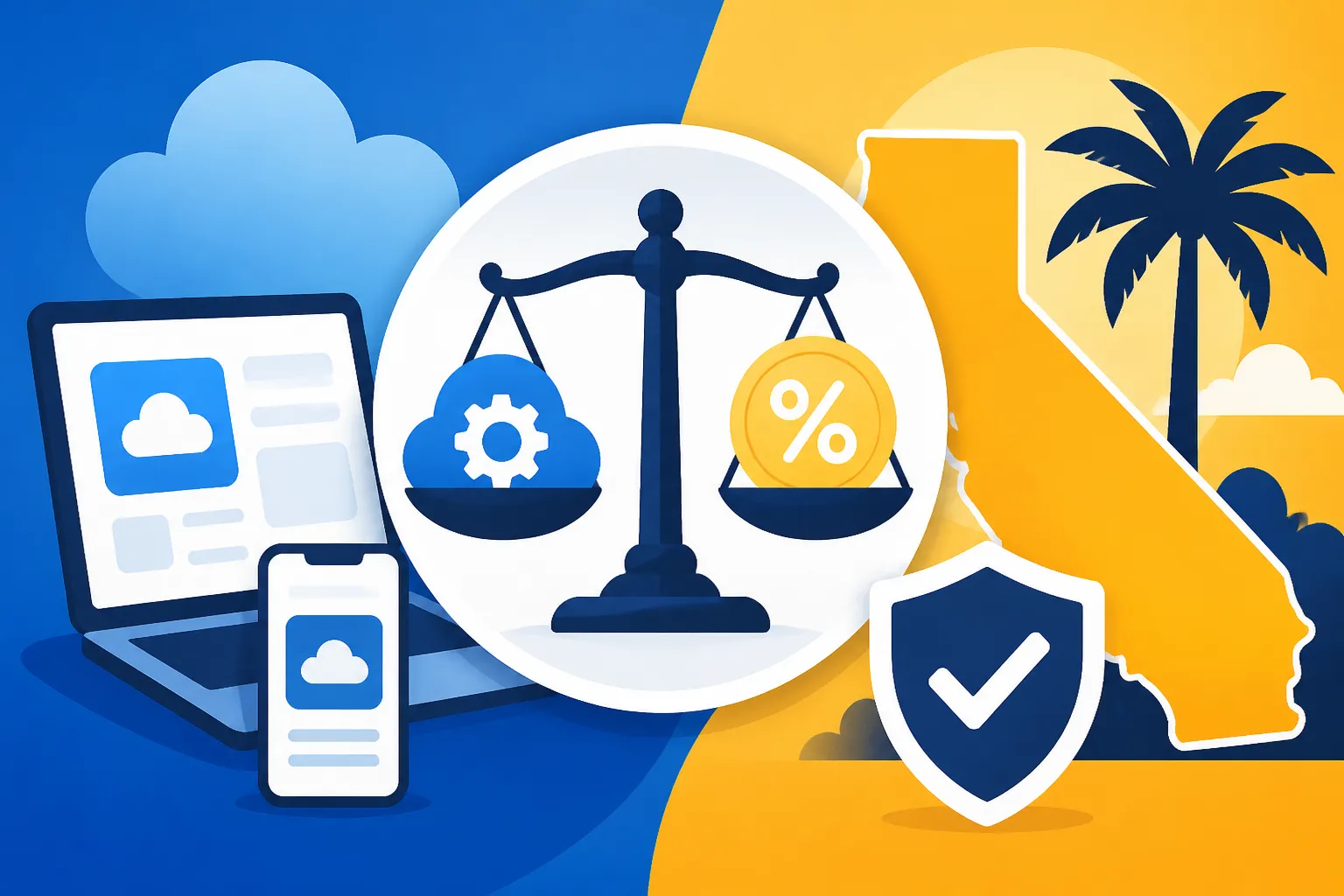
Navigating sales tax for Software-as-a-Service (SaaS) can feel like deciphering a secret code, especially when you're running a business in a bustling, innovative state like California. It’s incredibly frustrating to think you've got it all figured out, only to hear conflicting advice or stumble upon some obscure regulation. This guide is here to untangle the complexities of California sales tax as it applies to SaaS, helping you understand when and if your service falls under the taxable umbrella and what steps you need to take to stay compliant.
The Tangible vs. Intangible Divide: Why SaaS is Tricky
One of the biggest headaches in sales tax, especially for digital products and services, is the fundamental distinction between what states consider "tangible personal property" and what they view as "services" or "intangible property." This distinction is the bedrock of California's sales tax law, and it’s why SaaS often sits in a gray area, causing so much confusion for businesses and consumers alike.
What is "Tangible Personal Property" in California?
In the Golden State, sales tax is primarily imposed on the retail sale of tangible personal property. Think about it: a physical book, a new gadget, a piece of furniture – these are all tangible items you can touch, feel, and hold. The California Department of Tax and Fee Administration (CDTFA) defines tangible personal property as "personal property which may be seen, weighed, measured, felt, or touched, or which is in any other manner perceptible to the senses." This definition is crucial because if something doesn't fit this description, it's generally not subject to sales tax in California, unless there's a specific statute or regulation stating otherwise.
The challenge with software, particularly SaaS, is that it doesn't always fit neatly into this traditional "tangible" box. You're not usually handed a disk or a physical manual. Instead, you access it remotely, over the internet. This remote access and service-oriented delivery model are key to understanding its taxability status. If you're pondering the tax implications for various products, our comprehensive guide on Is Software Taxable? (Canned vs Custom) delves into these nuances across different states.
The Nature of Software Delivery
Historically, software was often delivered on physical media like floppy disks or CDs, which were undeniably tangible. When you bought a software package from a store, you were purchasing a physical product. In these cases, the transaction was clearly a sale of tangible personal property and, therefore, subject to sales tax.
However, with the rise of the internet, cloud computing, and subscription models, the delivery method has evolved dramatically. Today, most software, especially SaaS, is delivered electronically, often accessed through a web browser or a mobile app. You don't "own" a copy of the software in the traditional sense; instead, you're paying for the right to use the software, hosted and maintained by the provider. This shifts the transaction from a sale of a physical good to the provision of a service. For businesses expanding their reach, it’s also vital to understand general rules like Sales Tax on Services: What's Taxable by State as these services might be taxable elsewhere.
Understanding California's Sales Tax Stance on SaaS
California has a fairly consistent, and generally favorable, approach to true SaaS from a sales tax perspective, largely sticking to its "tangible personal property" rule. This is great news for many tech companies and their users in the state.
The CDTFA's Official Position
The California Department of Tax and Fee Administration (CDTFA) has clearly stated its position on software. Generally, sales tax applies to the sale of computer software that is delivered in a tangible form. This means if you buy software on a CD, a USB drive, or any other physical medium, it's taxable. Even if it's custom software developed specifically for you but delivered on a tangible medium, it typically falls under sales tax.
However, the game changes significantly when we talk about Software-as-a-Service (SaaS). The CDTFA views true SaaS as the provision of a service, rather than the sale of tangible personal property. When a customer accesses and uses software over the internet without taking possession of the software itself (i.e., no tangible delivery), California generally does not impose sales tax on that transaction. This is because the customer is receiving an intangible right to use the software and the associated service of hosting and maintenance, not a physical product.
For example, if you subscribe to an online project management tool like Asana or a customer relationship management (CRM) platform like Salesforce, and you access it entirely through your web browser or a dedicated app without any physical installation or download of the core software, California typically considers these transactions non-taxable services. This distinction is paramount and often validated when exploring the broader landscape of Digital Products Sales Tax by State.
How "True SaaS" Avoids Tax
The key to understanding why "true SaaS" is typically non-taxable in California lies in the lack of tangible personal property transfer. Consider these characteristics of a non-taxable SaaS arrangement in California:
- Remote Access: Users access the software remotely via the internet, usually through a web browser or a cloud-based application.
- No Permanent Download/Installation: The user doesn't download and install a permanent copy of the software onto their own computer or server. Temporary downloads necessary for functionality (like browser plugins) generally don't trigger tax if the core software isn't being acquired tangibly.
- Provider Maintains Control: The software provider retains control over the software, its hosting, maintenance, and updates. The customer is essentially renting access, not owning the software.
- Service-Oriented: The essence of the transaction is the provision of a service – enabling the customer to utilize the software's functionality, often accompanied by customer support, data storage, and other related services.
So, if your business is purely selling access to an application hosted in the cloud, where your customers never physically receive a copy of the software, you're likely in the clear for California sales tax. This is a huge relief for many startups and established tech companies based in or selling into California.
Key Scenarios Where SaaS Might Be Taxable
While "pure" SaaS is generally exempt, there are several scenarios where software-related transactions, even those seemingly related to SaaS, could become subject to California sales tax. It's crucial for businesses to scrutinize their offerings to avoid unexpected tax liabilities.
When Physical Delivery Happens
The most straightforward way for software to become taxable in California is if it's delivered on a physical medium. Even if the software is generally cloud-based, if you provide a physical backup disk, a USB stick, or any other tangible item containing the software, that physical component typically triggers sales tax on the entire transaction (or at least the value attributed to the software itself).
Imagine a scenario where a company offers a SaaS product, but as part of an enterprise-level subscription, they also provide a physical server appliance pre-loaded with a local caching mechanism or a backup copy of certain data. Even if the primary access is cloud-based, the provision of that tangible server appliance would likely make the transaction, or at least a portion of it, subject to sales tax. It’s important to properly delineate the components and understand how to apply taxes. If you’re struggling with calculations, a reliable Sales Tax Calculator: How to Calculate Sales Tax can be a lifesaver.
Customization and Professional Services
Another area that can get complicated is when SaaS is bundled with significant customization services or other professional services. If you're providing a service to modify or adapt generic software to a customer's specific needs, the service itself is typically not taxable in California. However, if that customization results in the creation of new tangible personal property (e.g., a custom software delivered on a disk) or enhances an already taxable tangible product, the lines can blur.
Most commonly, professional services like consulting, data migration, training, or technical support, when separately stated and optional, are generally not taxable. But if these services are mandatory and integral to the sale of a taxable software product (i.e., software delivered tangibly), their value might be included in the taxable base. The key is how the services are billed and whether they are indispensable to the core functionality of a tangible product. For businesses managing compliance, solutions like Avalara can help delineate taxable and non-taxable services, ensuring accurate tax application.
Bundling Tangible Products
The bundling of a non-taxable SaaS service with a taxable tangible product is another common pitfall. If you sell a tangible product (e.g., a smart device, a piece of hardware) and include a mandatory subscription to a SaaS platform to make that hardware functional, the entire bundled price might become taxable. California generally follows an "essentiality" rule here: if the tangible product cannot function without the SaaS, and the SaaS cannot be obtained separately, the entire bundle might be considered the sale of the tangible product.
For example, if you sell a smart home security camera (tangible personal property) that requires a subscription to a cloud-based service for recording and notifications (SaaS), and you only offer these as a single price, the entire sale might be taxable. However, if the camera can function independently (even with reduced features) without the subscription, or if the subscription can be purchased separately, then the SaaS portion might remain non-taxable. This bundling rule can be particularly tricky, and it's essential to understand how your product combinations are presented and priced. These complexities are why a strong understanding of How Combined Sales Tax Rates Work is often critical for businesses operating across diverse product lines and states.
Ensuring Compliance and What to Watch Out For
Staying on top of sales tax compliance for SaaS in California, even when it's largely non-taxable, still requires diligence. The landscape of digital goods and services is always evolving, and what's true today might have new interpretations tomorrow.
The Importance of Documentation
Whether your SaaS is taxable or not, thorough documentation is your best friend. For non-taxable SaaS, ensure your contracts, invoices, and marketing materials clearly define the transaction as a provision of an intangible service with remote access, and explicitly state that no tangible personal property is being transferred. This can serve as crucial evidence if the CDTFA ever questions your taxability determination.
If you do have components that might be taxable (e.g., bundled hardware or optional tangible deliverables), make sure those items are clearly separated and accurately taxed. Detailing these aspects on invoices can prevent future headaches. If you’re ever unsure about how to properly document these details, exploring the process for obtaining specific permits, such as How to Get a Sales Tax Permit in California, might illuminate best practices for record-keeping and official registrations.
Staying Updated with Regulations
Tax laws, particularly those concerning technology and digital services, are not static. While California has maintained a consistent stance on SaaS, states continually review and update their regulations as new technologies emerge. It's not uncommon for legislative bodies to propose new rules or for the CDTFA to issue new guidance or interpretations. For example, some states have made significant 2026 Sales Tax Rate Changes by State, and while these might not directly impact SaaS taxability, they highlight the dynamic nature of sales tax laws.
Businesses selling SaaS into California should regularly check the CDTFA website for updates, subscribe to industry newsletters, or consult with tax professionals specializing in technology and sales tax. Being proactive about staying informed can save you from costly mistakes down the line. Remember, what might be true in California could be entirely different in other states where you might have a sales tax obligation, or "nexus." For instance, the rules for Economic Nexus Threshold in California could impact your compliance requirements in other jurisdictions.
Seeking Expert Guidance
Given the potential complexities and the ever-evolving nature of tax law, don't hesitate to seek expert guidance. A qualified sales tax consultant or a firm specializing in multi-state sales tax can provide tailored advice for your specific business model and product offerings. They can help you:
- Determine nexus: Understand if your activities create a sales tax obligation in California or any other state.
- Classify your products: Accurately categorize your SaaS offerings to determine their taxability.
- Implement compliance solutions: Set up your billing systems and accounting software to correctly calculate, collect, and remit sales tax when applicable. For many businesses, investing in robust compliance software, such as solutions offered by Avalara, becomes invaluable for navigating these intricate requirements across different jurisdictions. Such platforms can automate the tax calculation process, track nexus, and help manage filing obligations, simplifying what would otherwise be a monumental task. This often falls under the umbrella of knowing the Best Sales Tax Compliance Software 2027.
- Audit support: Provide assistance if your business ever faces a sales tax audit.
It’s always better to be proactive and ensure you're compliant from the outset, rather than trying to unravel years of incorrect sales tax collection (or non-collection) during an audit. This peace of mind is invaluable for any growing business.
| SaaS vs. Taxable Software in California | True SaaS (Generally Non-Taxable) | Taxable Software (Generally Taxable) |
|---|---|---|
| Delivery Method | Remote access via internet | Physical media (CD, USB) or download with permanent installation |
| Possession of Software | No physical possession by user | User takes possession of software copy |
| Nature of Transaction | Provision of a service (access to software) | Sale of tangible personal property (software itself) |
| Maintenance/Hosting | Provider maintains & hosts | User responsible for hosting/maintenance (or separate service) |
| Customization Impact | Separate service, non-taxable (if optional) | Can be taxable if integral to tangible software delivery |
| Bundling Risk | Low, unless bundled with mandatory tangible product | High if bundled with intangible services; entire bundle may be taxable |
Disclaimer
Please remember, this information is intended for educational purposes only and should not be considered legal or tax advice. Sales tax laws are complex and subject to change. Always consult with a qualified tax professional to discuss your specific business situation and ensure compliance with all applicable state and local sales tax regulations.