Is Clothing Taxable in Massachusetts? ($175 Rule)
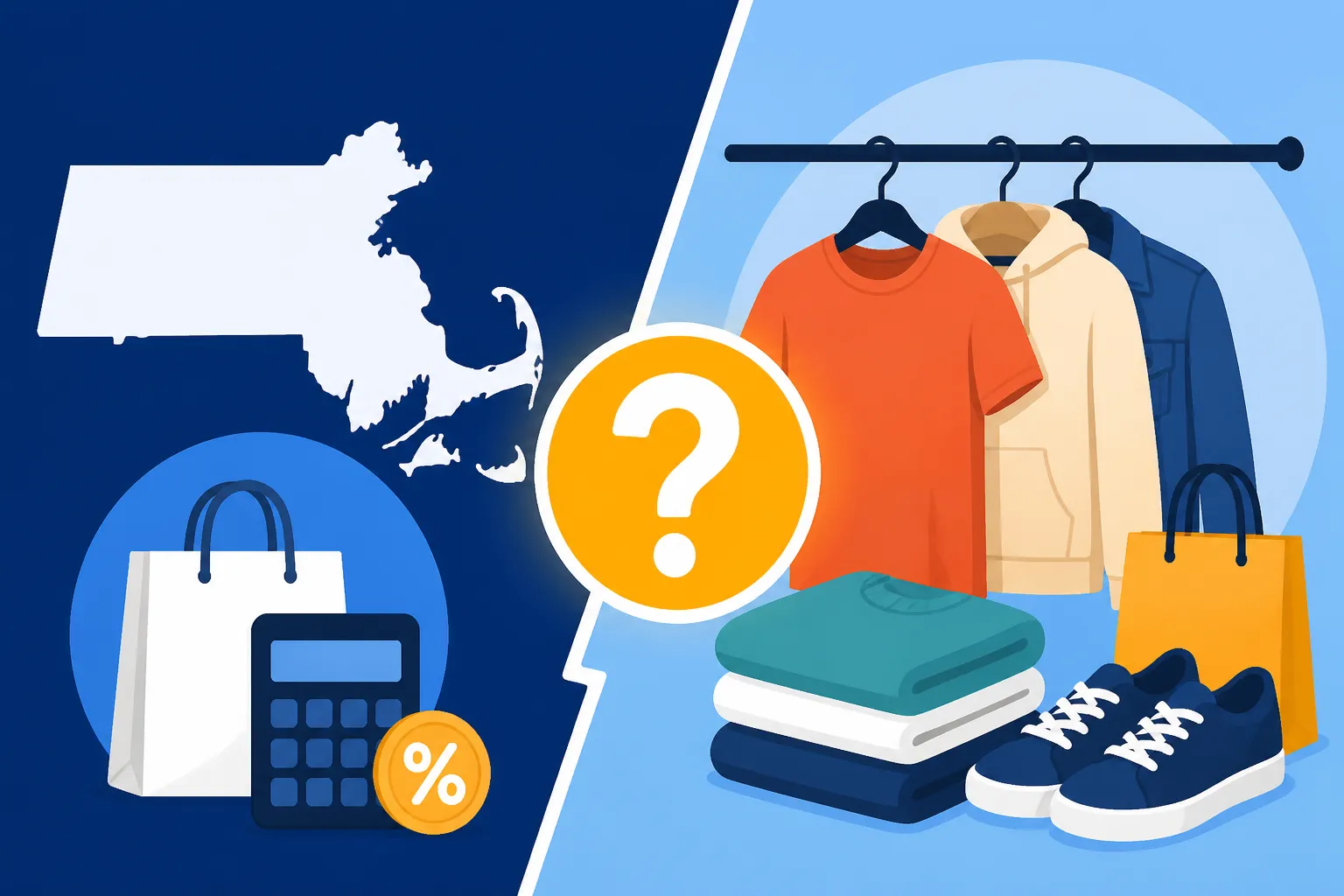
A common headache for shoppers and businesses alike, especially in states with nuanced sales tax rules, is figuring out what's taxable and what's not. If you've ever found yourself wondering why that sweater was taxed but your socks weren't, or why a high-priced item seems to be treated differently, you're not alone. In Massachusetts, the rules for sales tax on clothing come with a specific, and sometimes confusing, price threshold. This guide will meticulously break down the Massachusetts sales tax exemption for clothing, focusing on the critical $175 rule, to help both consumers navigate their purchases and businesses ensure compliance.
Understanding the Massachusetts Clothing Sales Tax Exemption
Massachusetts has a reputation for being a bit unique when it comes to sales tax, and clothing is a prime example. While many states either tax clothing universally or exempt it entirely, Massachusetts carved out a specific exemption that often catches people off guard.
The Core Rule: How it Works
The core rule is pretty straightforward on the surface: clothing is exempt from the state's 6.25% sales tax as long as the sales price of a single item is $175 or less. This isn't a blanket exemption, which is where the confusion often begins. If you're buying a stack of t-shirts, each costing $20, you won't pay any sales tax. But if you fall in love with a designer coat priced at $200, then the entire $200 is subject to sales tax, not just the amount over $175. This "all or nothing" approach for items over the threshold is a critical detail that many consumers and even some new retailers overlook, leading to unexpected charges at the checkout.
It's also important to remember that this rule applies specifically to the state sales tax. While Massachusetts doesn't have local sales taxes layered on top, unlike many other states, the principle of the exemption remains crucial. Understanding this single-item threshold is the first step to making sense of your receipts or correctly calculating taxes for your customers. If you're interested in how this compares to other states, a good place to start is our comprehensive guide on Is Clothing Taxable? Sales Tax on Apparel by State.
Historical Context and Rationale
Why $175? This specific threshold wasn't pulled out of thin air. It's a legislative decision, often adjusted over time, that aims to balance revenue generation with providing some relief to consumers on everyday necessities. The idea is generally that lower-priced clothing items, considered staples, should be tax-free to ease the burden on household budgets. More expensive, luxury items, however, are deemed less essential and thus fair game for taxation.
Over the years, states have debated various approaches to taxing clothing, from full exemptions (like Pennsylvania or New Jersey) to partial exemptions with thresholds, or even full taxation. Massachusetts' current $175 rule is a reflection of its specific economic and political landscape. It represents an attempt to offer a consumer-friendly policy for common apparel while still capturing sales tax revenue from higher-end purchases. The specific amount also accounts for inflation and changing retail prices over time, though it doesn't get adjusted every single year.
This historical context helps us appreciate that these aren't arbitrary rules, but rather carefully considered policies. For businesses, this means staying updated, as thresholds can change, though the Massachusetts clothing exemption has been fairly stable at $175 for some time. But knowing that legislative bodies make these decisions helps to put the sometimes seemingly complex sales tax landscape into perspective, especially when considering Sales Tax Rates by State 2026: All 50 States as a whole.
The Importance of the Price Point
The $175 price point is everything for clothing sales tax in Massachusetts. It fundamentally shifts an item from being completely exempt to fully taxable. This isn't a progressive tax where only the amount above $175 gets taxed; if an item crosses that line by even a single penny, the entire purchase price becomes subject to sales tax. Imagine buying a beautiful dress for $174.99 – tax-free. The exact same dress, marked at $175.01 – fully taxed.
This sharp cutoff means both consumers and retailers need to be extremely vigilant about pricing. For shoppers, it might influence whether they opt for a slightly cheaper alternative to avoid tax, or decide to splurge and accept the additional cost. For businesses, especially those selling higher-end apparel, accurate pricing and clear communication about sales tax are paramount. Miscalculating this can lead to customer frustration or, worse, compliance issues.
Retailers need robust point-of-sale systems that can correctly apply this rule automatically. It’s not just about applying a flat rate, but understanding the conditional nature of the exemption. Manual calculations are prone to errors, especially during busy sales periods. For larger businesses, integrating solutions from companies like Avalara can be incredibly helpful in automating these complex calculations and ensuring that the $175 threshold is correctly applied at checkout, every single time.
What Counts as Clothing for Sales Tax Purposes?
When we talk about "clothing," most of us have a pretty good idea of what that entails: shirts, pants, dresses, shoes, socks, and so on. In Massachusetts, the definition generally aligns with what you'd expect for items worn on the human body for adornment or protection.
Defining "Clothing": The Basics
Think of items that are primarily designed for regular wear: a winter coat, a pair of jeans, sneakers, or a business suit. These are all typically considered "clothing" and would be subject to the $175 rule. The key is their fundamental purpose. Is it something you'd wear out and about, whether for fashion, warmth, or basic modesty? If so, it's very likely to be classified as clothing for sales tax purposes.
However, the simplicity ends there. The state's tax rules often have specific carve-outs or interpretations for items that might seem like clothing but serve a different primary function. This is where it's crucial for businesses to consult the official guidance from the Massachusetts Department of Revenue to ensure they're categorizing items correctly, especially if they sell a diverse range of products.
Generally, most everyday apparel, from underwear to outerwear, if not exceeding the threshold per item, will qualify for the exemption. This includes things like: shirts, blouses, sweaters, dresses, skirts, pants, jeans, shorts, socks, hosiery, underwear, pajamas, bathrobes, suits, coats, jackets, hats, scarves, and gloves.
Accessories, Protective Gear, and Beyond
This is where things can get a little murky. What about accessories? Generally, items like scarves, ties, belts, and hats are considered part of clothing and would fall under the $175 exemption. Jewelry, however, is typically not considered clothing and is fully taxable regardless of price. Handbags are another item that often causes confusion; usually, they are also fully taxable.
Then there's protective clothing or specialty gear. Work uniforms, safety goggles, hard hats, and even specialized sports uniforms designed for specific activities (like hockey pads or wetsuits) often fall into a different category. While they are worn on the body, their primary purpose isn't general wear or adornment, but protection or performance enhancement. These items are generally taxable, regardless of their price, unless specifically exempted by law, which is rare for such goods.
The distinction often hinges on the "primary purpose" test. Is the item primarily fashion or general covering, or is it specifically designed for occupational safety, athletic performance, or to hold other items (like a handbag)? This distinction is critical for retailers to make accurate assessments. For example, a regular backpack often isn't considered clothing, but a fanny pack that integrates into an outfit might sometimes spark debate. When in doubt, it's best to err on the side of caution or seek clarification.
Exclusions: What's Definitely Not Clothing
To make things clearer, let's look at what Massachusetts explicitly states is not considered clothing for the purpose of this exemption, meaning these items are always subject to the 6.25% sales tax, regardless of their price.
- Jewelry and Watches: These are considered luxury goods or accessories and are always taxable. That dazzling necklace or smart watch will always have sales tax applied.
- Sporting Goods and Protective Equipment: Items like specialized athletic pads, helmets, ice skates, ski boots, or wetsuits are generally taxable. Even though they are worn, their function is specialized protection or sport-specific utility.
- Costumes: While you wear a costume, it's typically for a specific event or role-play, not everyday wear. Halloween costumes, theatrical outfits, and the like are generally taxable.
- Diapers: These are not considered clothing and are usually taxable unless a specific, separate exemption applies (which isn't currently the case in Massachusetts for general sales tax, though some states do exempt them).
- Disposable items: Things like paper masks (not cloth reusable masks), medical gloves, or other single-use worn items are not clothing.
- Fabric and sewing materials: If you're buying fabric to make clothing, the raw materials are taxable. The exemption applies to the finished garment.
Understanding these exclusions is just as important as knowing what is included. For sellers, it helps avoid under-collecting tax, which can lead to nasty surprises during an audit. For consumers, it clarifies why certain items, even if worn, will always incur sales tax. It's a nuanced area, and businesses often benefit from robust inventory management systems that can tag products appropriately to manage these sales tax rules, similar to how they'd track compliance for items under Is SaaS Taxable? Software-as-a-Service by State or Digital Products Sales Tax by State.
Navigating the $175 Threshold: Practical Examples
The "single item" clarification is perhaps the most crucial aspect of the Massachusetts clothing sales tax exemption. It means you can buy multiple items, each individually priced at $175 or less, and none of them will be taxed.
Single Item vs. Multiple Items
For example, if you purchase a $100 sweater, a $50 pair of pants, and a $20 shirt, your total bill is $170, and no sales tax applies to any of those items because each one is below the $175 threshold.
However, if you buy a single item, like a designer jacket, that costs $200, the entire $200 is subject to the 6.25% sales tax. You don't get the first $175 tax-free and then only pay tax on the remaining $25. This "all or nothing" principle is a key differentiator from how some other states handle similar thresholds. It simplifies the calculation for retailers (once the system is set up) but can be a surprise for shoppers expecting a partial exemption.
This distinction highlights the importance of how a merchant prices and presents items. While a retailer wouldn't intentionally split a single item just to avoid tax, understanding this rule is vital for accurate pricing strategies and point-of-sale programming. Customers often appreciate clarity on this upfront, especially for more expensive items, to avoid sticker shock at checkout. For a deeper dive into general calculations, check out our guide on How to Calculate Sales Tax (Step by Step).
Bundles and Sets
What happens when you buy items together that are typically sold as a set, like a suit (jacket, pants, vest) or a matching pajama set? This is where the "single item" definition can get tricky. Massachusetts generally looks at whether the items are functionally inseparable or if they are traditionally sold as a single unit.
For example, a traditional men's suit, sold as a jacket and matching trousers for one price, might be considered a single item. If that suit is priced at $300, the entire $300 would be taxable. However, if the jacket and pants are sold separately, even if they're meant to be worn together, and each falls under $175, they might be exempt. A pajama set, if sold as one SKU for a single price, would typically be considered one item. If that pajama set costs $180, the full $180 is taxable.
Retailers need to be very clear on how they bundle and price items. If you create a "bundle deal" where customers pick three separate items (e.g., a shirt, pants, and a tie) and get a discount, those are usually still considered individual items for tax purposes, and the $175 threshold applies to each component's discounted price. This is a complex area, and businesses often rely on sophisticated sales tax software, like those offered by Avalara, to manage these nuances across various product lines and promotional strategies.
Refunds, Exchanges, and the Tax Impact
Sales tax also needs to be correctly handled during returns and exchanges. If a customer returns a taxable clothing item (one that cost over $175), the sales tax collected on that item should also be refunded. This seems straightforward, but it's essential for retailers to ensure their return policies and POS systems are configured to process tax refunds accurately.
What about exchanges? If a customer returns a $200 taxable jacket and exchanges it for a different $190 jacket, they would still owe sales tax on the new item. If they exchange it for a $150 sweater, that sweater would be exempt, and they would receive a full refund of the sales tax paid on the original jacket. The key is that the sales tax determination is made at the time of the new transaction, based on the price of the item being acquired.
It's not uncommon for consumers to get confused here, especially if they are exchanging an item across different price points relative to the $175 threshold. Transparent communication and correctly programmed registers are vital to maintaining customer satisfaction and compliance. Any system that helps track and automate these processes is a huge boon for businesses, ensuring that every transaction, whether a sale or a return, is tax-compliant.
Here’s a quick overview of how the $175 rule works:
| Item Type | Price Per Item | Sales Tax Applied? | Explanation |
|---|---|---|---|
| T-shirt | $25 | No | Each item is under $175. |
| Jeans | $100 | No | Each item is under $175. |
| Winter Coat | $170 | No | Price is $175 or less. |
| Designer Dress | $180 | Yes (on full $180) | Price is over $175, so the entire amount is taxable. |
| Suit (1 SKU) | $250 | Yes (on full $250) | Sold as a single unit, price is over $175. |
| Scarf | $75 | No | Considered clothing, price is $175 or less. |
| Jewelry | Any Price | Yes | Not considered clothing, always taxable. |
| Hockey Skates | Any Price | Yes | Protective/sporting equipment, not considered general clothing. |
Common Misconceptions and Special Cases
In our increasingly online shopping world, the question often arises: does the $175 Massachusetts clothing exemption apply to purchases made online or from out-of-state sellers? The short answer is yes, if the seller has a sales tax nexus in Massachusetts.
Online Purchases and Out-of-State Sellers
Thanks to the landmark South Dakota v. Wayfair Supreme Court decision, many more online sellers are now required to collect sales tax in states where they meet economic nexus thresholds. This means if you're buying clothing from an online retailer that meets Massachusetts' economic nexus criteria (currently $100,000 in sales or 200 transactions annually, though the transaction count is less common now), they are obligated to collect Massachusetts sales tax, and the $175 exemption rule applies. If your $200 jacket comes from an online store that collects Massachusetts sales tax, you'll still pay tax on the full amount. This is a big shift from the pre-Wayfair days, where many out-of-state online purchases might have gone untaxed. To understand more about this, refer to our guide on Sales Tax for Online Sellers: Complete Guide.
However, if you purchase from a very small out-of-state seller who doesn't meet Massachusetts' nexus thresholds and therefore doesn't collect sales tax, you, as the consumer, are technically responsible for remitting "use tax" to Massachusetts. Use tax is essentially sales tax on purchases where the seller didn't collect it. While enforcement on individual consumers for small purchases is rare, businesses are routinely audited for proper use tax remittance. It’s always best to assume the rules apply, regardless of where you click "buy."
Sales Tax Holidays and Their Interaction
Massachusetts occasionally holds sales tax holidays, typically one weekend a year, where most tangible personal property is exempt from sales tax up to a certain dollar amount per item. For example, during a typical Massachusetts sales tax holiday, items up to $2,500 might be exempt.
The key interaction here is that during these sales tax holidays, the regular $175 clothing exemption is superseded. If the holiday has a $2,500 per-item exemption limit, then a $200 jacket that would normally be taxed (because it's over $175) would be tax-free during that specific weekend, assuming it's under the holiday's higher limit. Conversely, a $150 sweater would still be tax-free, as it falls under both the regular exemption and the holiday exemption. This makes sales tax holidays a great opportunity for larger purchases.
It's crucial to pay attention to the specific dates and limits of any announced sales tax holiday, as these can vary year to year. Retailers need to adjust their POS systems to correctly apply the temporary exemption during these periods. Shoppers, on the other hand, can strategically plan their larger purchases around these events. You can find more details about these opportunities in our article on Massachusetts Tax-Free Weekend 2026 (Aug 8-9).
Repairs, Alterations, and Custom Clothing
What about services related to clothing, such as repairs or alterations? In Massachusetts, services are generally not subject to sales tax unless they are specifically enumerated as taxable by law, or if they are intrinsically linked to the sale of tangible personal property. Most clothing alterations or repairs are considered services and are therefore tax-exempt. So, if you buy a pair of pants and then take them to a tailor to be hemmed, the hemming service itself won't be taxed, even if the pants were taxable.
Custom clothing presents a slightly different scenario. If you commission a bespoke suit or dress, the transaction is usually viewed as the sale of a tangible good (the finished garment), not just a service. In such cases, the $175 threshold would still apply to the entire price of the custom-made item. If that custom suit costs $1,500, the full amount would be subject to sales tax. The labor involved in crafting it isn't separated out as an untaxed service in this context; it's part of the creation of the taxable good.
This distinction between a service on an existing item versus the creation of a new item with labor embedded in its cost is important. For businesses offering both standard clothing and custom work, or repair services, understanding these nuances is critical for accurate sales tax collection. It's a prime example of why getting specific guidance or using a reliable sales tax solution is so valuable for managing different product and service types, much like understanding Sales Tax on Services: What's Taxable by State.
Implications for Businesses and Shoppers
For clothing retailers in Massachusetts, the $175 rule adds a layer of complexity to sales tax compliance that businesses in states with simpler rules (like a full exemption or full taxation) don't face.
Challenges for Retailers
Firstly, POS System Configuration: Retailers need robust point-of-sale systems capable of automatically detecting whether a clothing item's individual price exceeds $175 and then applying the sales tax correctly to the entire amount. This isn't just a simple rate application; it's a conditional logic challenge. Systems must also handle bundles and promotions properly, discerning if a "bundle" constitutes a single item for tax purposes.
Secondly, Staff Training: Sales associates need to be well-versed in this rule to explain it clearly to customers, especially when dealing with returns, exchanges, or when customers are comparing items just above and below the threshold. Misinformation can lead to frustrated customers or incorrect tax collection, which directly impacts customer satisfaction and can result in lost sales.
Thirdly, Inventory Management: Correctly categorizing every item in inventory – identifying what truly constitutes "clothing" versus accessories, protective gear, or non-clothing items – is paramount. Errors here can lead to either over-collecting (and confusing customers) or under-collecting (and facing penalties during an audit). This level of detail in product classification is critical to maintaining compliance and avoiding costly mistakes down the line.
The administrative burden can be significant, especially for small businesses. Imagine a boutique selling both apparel and jewelry. They need to know that a $100 necklace is always taxed, while a $100 dress is exempt, and a $200 coat is taxed. This complexity can quickly become overwhelming without proper tools and training.
Tips for Shoppers to Save Money
As a shopper in Massachusetts, being aware of the $175 rule can genuinely help you make smarter purchasing decisions and potentially save you some money on your purchases.
- Strategize Large Purchases: If you're eyeing an expensive item like a winter coat or a formal dress, check its price carefully. If it's just over $175 (say, $180), consider if a similar item priced just under the threshold would serve your needs without the added tax. Sometimes, a slight difference in price can save you a chunk of money, making the sub-$175 option more appealing.
- Split Purchases if Possible: If you're buying a combination of items that could be considered separate, but together might push a "bundle" over $175, ask if they can be rung up individually. For example, buying a jacket and matching pants separately might make both tax-exempt if each is under $175, whereas a "suit set" priced above $175 might be fully taxed. However, retailers often have policies on this, so it's not always possible.
- Leverage Sales Tax Holidays: This is perhaps the best strategy for saving on higher-priced clothing. Plan to purchase expensive items during the state's annual sales tax holiday, when a much higher per-item limit (often $2,500) applies. This can lead to significant savings on big-ticket items that would otherwise be fully taxed. Keep an eye out for announcements about Massachusetts Tax-Free Weekend 2026 (Aug 8-9).
- Understand What's Excluded: Know that items like jewelry, sporting equipment, and accessories like handbags are almost always taxed, regardless of price. Don't expect a tax break on these items; factor the sales tax into your budget from the outset.
Being an informed consumer not only helps your wallet but also encourages retailers to be more transparent about their sales tax practices.
The Role of Sales Tax Software
For businesses navigating these intricate rules, sales tax compliance software is no longer a luxury, but often a necessity. Solutions like Avalara are specifically designed to handle the complexities of multi-state and multi-jurisdiction sales tax, including state-specific exemptions like Massachusetts' $175 clothing rule.
These software platforms integrate directly with POS systems, e-commerce platforms (like Shopify or Amazon), and ERP systems to:
- Automate Rate Calculation: They dynamically determine the correct sales tax rate (or exemption) based on the product type, price, and customer location, even down to the specific item level for conditional exemptions. This removes the guesswork and drastically reduces manual errors.
- Manage Exemption Certificates: While not directly related to the $175 clothing rule, these systems also manage resale certificates and other exemption documents for B2B sales, another layer of complexity that requires careful tracking.
- Stay Updated on Rule Changes: Sales tax laws and rates are constantly evolving. Good software keeps up with these changes, ensuring businesses are always applying the most current rules. For instance, knowing How Often Do Sales Tax Rates Change? is crucial, and automation helps manage this seamlessly.
- Simplify Filing: After collection, the software can often prepare and file sales tax returns, reducing the manual effort and risk of errors. This streamlined process frees up valuable time for business owners and staff.
For a retailer with thousands of SKUs and a presence across multiple states, manually tracking each state's unique rules, like the Massachusetts clothing exemption or California District Taxes Explained, would be a logistical nightmare. Automation provides accuracy, saves time, and significantly reduces audit risk, allowing businesses to focus on growth rather than getting bogged down in tax minutiae. Investing in the Best Sales Tax Compliance Software 2027 is a proactive step towards seamless operation and peace of mind.
Keeping Up with Sales Tax Changes and Tools
Sales tax isn't static; it's a dynamic area of fiscal policy. State legislatures and revenue departments frequently review and update sales tax laws for a variety of reasons.
Why Rates and Rules Change
Economic conditions play a huge role; states might increase sales tax rates or expand the definition of taxable goods and services to generate more revenue during budget shortfalls. Conversely, they might offer new exemptions or sales tax holidays to stimulate the economy or provide relief to consumers. These decisions are often influenced by political priorities and the overall fiscal health of the state.
Demographic shifts, technological advancements (like the rise of digital products or Software-as-a-Service), and changes in consumer buying habits (e.g., the move to online shopping) also drive legislative changes. The 2018 Wayfair decision, for instance, dramatically reshaped sales tax for online sellers nationwide, leading to a cascade of new economic nexus laws in almost every state, fundamentally changing who needs to collect sales tax. Even specific exemptions, like the Massachusetts $175 clothing rule, could theoretically be adjusted in the future, although it's been stable for a while.
For businesses, ignoring these changes is a fast track to non-compliance, penalties, and potential audits. Keeping abreast of announcements from the Massachusetts Department of Revenue and subscribing to tax news updates is essential. Our article on 2026 Sales Tax Rate Changes by State provides an excellent overview of what's on the horizon annually.
Leveraging Sales Tax Lookup Tools
Given the complexity and the potential for changes, both businesses and savvy consumers can benefit greatly from using reliable sales tax lookup tools. These tools allow you to input an address, and sometimes even a product type, to get the most accurate, up-to-date sales tax rate and rules for that specific location.
For Massachusetts, a good lookup tool should:
- Confirm the current state sales tax rate (6.25%).
- Indicate that there are no local sales taxes.
- Clearly state the $175 clothing exemption rule.
- Potentially highlight specific exemptions for other categories of goods, like groceries or certain services, providing a comprehensive overview.
Many sales tax software providers, including Avalara, offer free lookup tools on their websites that can be incredibly helpful for a quick check. For businesses with higher transaction volumes, integrating these lookup capabilities directly into their e-commerce or POS systems is key. This ensures that every transaction is processed with the correct tax, based on the shipping address and the type of item being sold, even taking into account details like Is Shipping Taxable? Freight Sales Tax by State. Comparing options for these tools, like those discussed in Sales Tax Rate Lookup Tools Compared, can help businesses choose the best fit for their needs.
Staying Compliant as a Business
Compliance isn't just about collecting the right amount of tax; it's also about proper registration, timely filing, and accurate remittance. Navigating the sales tax landscape requires a multi-faceted approach to ensure you're meeting all your obligations.
- Registration: If you have nexus in Massachusetts (either physical presence or economic nexus, as detailed in our guide on Economic Nexus by State 2026: Thresholds Guide), you must register with the Massachusetts Department of Revenue to obtain a sales tax permit before you start collecting sales tax. Our guide on How to Get a Sales Tax Permit by State covers this process generally.
- Collection: Implement systems (POS, e-commerce platforms) that correctly apply the $175 clothing exemption and other sales tax rules to every transaction. This requires careful initial setup and ongoing verification.
- Reporting: Keep meticulous records of all sales, taxable and exempt, and the sales tax collected. These records are essential for audit readiness and accurate filing.
- Filing and Remittance: File sales tax returns and remit the collected taxes to the Massachusetts Department of Revenue by the designated due dates. Even if you collected zero sales tax on clothing due to the exemption, you might still need to file a "zero return" to demonstrate compliance. Penalties for late filing or non-filing can be substantial.
- Ongoing Monitoring: Regularly review state tax updates and ensure your systems and staff are trained on any new changes. The world of sales tax is always evolving, and staying proactive is key.
Sales tax compliance is an ongoing responsibility. While the Massachusetts $175 clothing rule offers a benefit to consumers, it adds a layer of administrative detail for businesses. Proactive management, utilizing modern software solutions, and staying informed are the best defenses against compliance pitfalls.
Disclaimer
The information provided in this guide is for general informational purposes only and does not constitute professional tax advice. Sales tax laws are complex and subject to change. Always consult with a qualified tax professional or the Massachusetts Department of Revenue for advice specific to your situation. Businesses should also ensure their systems and practices are fully compliant with all applicable state and local sales tax regulations.