Is Clothing Taxable in New Jersey? (Exempt)
It's incredibly common to stand at the cash register, holding a new shirt or a pair of shoes, and wonder if you're about to be hit with sales tax, especially when you're shopping in a state known for its unique tax landscape like New Jersey. The patchwork of state and local sales tax laws can be downright confusing, making it tough to know what to expect. This comprehensive guide will clear up all that uncertainty, diving deep into New Jersey's sales tax rules specifically for clothing and footwear so you can shop and sell with confidence.
The General Exemption for Clothing and Footwear in New Jersey
When it comes to sales tax, New Jersey offers a pleasant surprise for shoppers: most clothing and footwear are completely exempt. That's right, you heard correctly! Unlike many other states that apply their standard sales tax rate to these everyday necessities, New Jersey decided long ago to give consumers a break. This exemption is a huge relief for families and individuals, particularly during back-to-school shopping seasons or when refreshing your wardrobe. It means that the price tag you see on a pair of jeans, a new jacket, or a fresh pair of sneakers is generally the final price you pay, without an added percentage tacked on at checkout.
What Exactly is Exempt?
The New Jersey sales tax exemption is pretty broad for "clothing" and "footwear." It covers nearly all items of wearing apparel and footwear, including those used for sports activities, as long as they are generally considered suitable for everyday wear. Think about your typical wardrobe: shirts, pants, dresses, skirts, socks, underwear, coats, sweaters, hats, gloves, and almost any type of shoe, from sneakers to dress shoes. Even items like bathing suits, gym clothes, and work uniforms typically fall under this exemption, assuming they aren't specially designed protective gear that would be considered equipment rather than clothing.
For example, if you're strolling through a mall in Paramus or browsing boutiques in Princeton, picking up a new outfit for work or casual wear, you won't see an additional 6.625% sales tax added to your bill. This can translate into significant savings, especially on larger purchases for a whole family. It's one of those little perks that residents and visitors to the Garden State appreciate, making shopping for essentials a bit lighter on the wallet.
Why the Exemption? A Look at Legislative Intent
The exemption for clothing and footwear in New Jersey isn't a recent development; it has been a feature of the state's tax code for quite some time. The rationale behind such exemptions often stems from a desire to make essential goods more affordable for residents, particularly low-income families. Clothing and shoes are fundamental necessities, and taxing them can place a disproportionate burden on those with limited budgets. By exempting these items, the state effectively puts more money back into the pockets of its citizens, stimulating local commerce and making daily life a little more manageable.
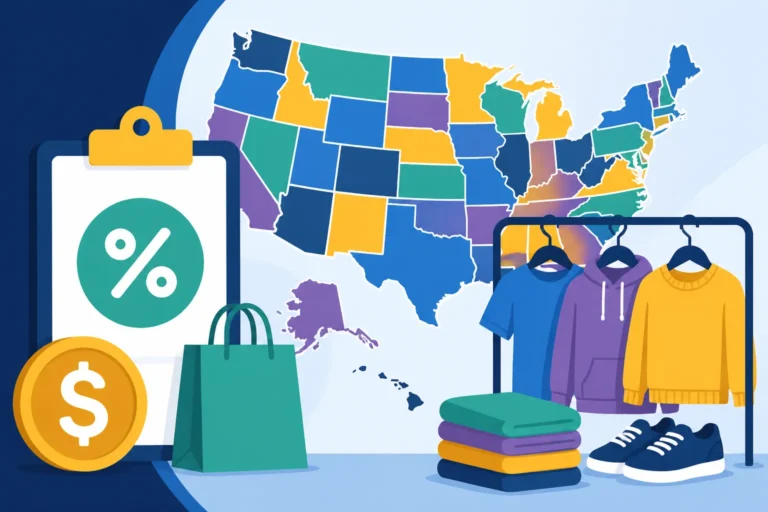
From a policy standpoint, such exemptions can also simplify the shopping experience for consumers. Imagine the confusion if certain types of shirts were taxed but others weren't, or if shoes over a certain price point incurred sales tax. While New Jersey does have some nuances, as we'll explore, the broad exemption for most clothing items simplifies things considerably for both buyers and sellers. It's a clear legislative choice aimed at economic relief and consumer ease, setting New Jersey apart from many other states that rely heavily on sales tax revenue from these goods. If you're curious about how this compares to other states, a good starting point would be to explore a comprehensive guide on .Is Clothing Taxable? Sales Tax on Apparel by State.
Understanding What Remains Taxable
While New Jersey's sales tax exemption for clothing and footwear is a big win for consumers, it's not an absolute free-for-all. There are specific categories of items that, despite being "worn," do not qualify for the exemption and are, in fact, subject to the state's standard sales tax rate of 6.625%. This distinction is where some of the confusion can creep in, as the line between what's considered exempt "clothing" and what's taxable "accessory" or "equipment" isn't always immediately intuitive. Understanding these nuances is crucial, whether you're a shopper trying to budget or a business owner ensuring compliance.
Accessories and Specialty Items That Are Taxed
The primary category of "wearable" items that remain taxable in New Jersey are accessories and certain specialized goods. Accessories, generally defined as items worn on the person and carried rather than worn as a primary layer of clothing, are subject to sales tax. This includes things like jewelry, watches, handbags, wallets, scarves, ties (unless they're considered a fundamental part of a suit or uniform, which can sometimes be a gray area), umbrellas, and even hair accessories like headbands or barrettes. Essentially, if it's something you add to an outfit rather than an intrinsic part of the outfit itself, it's likely taxable.
Beyond accessories, specialized protective equipment or sports gear that isn't typically worn as part of everyday street clothes is also taxable. For instance, while a pair of sneakers for jogging is exempt, specialized protective sports equipment like shoulder pads, shin guards, helmets, wetsuits designed purely for diving, or ski boots (as opposed to regular winter boots) would likely be taxed. These items are generally designed for specific functional purposes beyond mere adornment or general covering and are thus treated differently under the tax code. It's a distinction that often requires a bit of common sense: if you wouldn't wear it to the office or out to dinner, it might just be taxable.
When Does the Line Get Blurry? Defining "Clothing"
Sometimes, the distinction between exempt clothing and taxable accessories or equipment can feel a bit like splitting hairs, and this is where both retailers and consumers can get tripped up. Take, for example, items like belts. Is a belt an essential part of holding up a pair of pants (exempt) or merely an accessory to enhance an outfit (taxable)? Generally, belts are considered accessories and are therefore taxable. The intent often matters: if an item is primarily decorative or supplementary rather than foundational, it usually leans towards being taxable.
Another area of potential confusion involves items that are part of a larger, exempt clothing item but are sold separately or have a dual purpose. For instance, detachable hoods or decorative elements might be taxable if sold independently. Even items like shoe insoles or shoelaces, while related to footwear, are typically viewed as accessories or components rather than integral "footwear" themselves, and thus may be taxable. Businesses, especially those using complex inventory systems, might find tools like Avalara's sales tax software helpful in managing these granular distinctions, ensuring correct tax application at the point of sale. Understanding these detailed definitions is critical for businesses to maintain compliance and avoid audits. For a broader view of taxable goods, check out our article on .What's Taxable in Alabama? Sales Tax Guide, though rules vary by state!
The Retailer's Perspective: Handling Exempt Sales
For retailers operating in New Jersey, the sales tax exemption on clothing and footwear is a double-edged sword. On one hand, it's a fantastic selling point that can attract customers and boost sales, especially for stores specializing in apparel. Shoppers love the idea of "tax-free" purchases. On the other hand, it introduces a layer of complexity to their sales tax compliance obligations. Accurately distinguishing between exempt and taxable items, especially when a customer's shopping cart contains a mix of both, requires robust systems and well-trained staff. Incorrectly applying the exemption can lead to under-collection of tax (and subsequent liabilities) or over-collection (and unhappy customers).
Point-of-Sale Challenges and Solutions
One of the biggest hurdles for retailers is programming their point-of-sale (POS) systems to correctly identify and apply the exemption. Imagine a busy Saturday afternoon: a customer walks up with a new pair of jeans (exempt), a sparkly necklace (taxable), and a pair of athletic socks (exempt). The POS system needs to instantly categorize each item and apply the 6.625% sales tax only to the necklace. For smaller businesses, this might involve manual overrides or careful item coding, which can be prone to human error, especially during peak shopping hours or when new staff are being trained.
Larger retailers with extensive inventories face even greater challenges. They might sell thousands of different clothing, footwear, and accessory items, each needing the correct tax code assigned. Misclassifying even a small percentage of items can lead to significant discrepancies over time. To mitigate these issues, many businesses invest in comprehensive inventory management systems that integrate with their POS and sales tax engines. Clear signage and communication with customers can also help manage expectations and reduce confusion at checkout. Proper staff training on what is and isn't exempt is indispensable for smooth operations.
Importance of Accurate Sales Tax Software
Given the intricacies of New Jersey's sales tax rules – and the fact that other states have their own unique exemptions and thresholds, like the $110 rule in New York City – accurate sales tax software becomes less of a luxury and more of a necessity for retailers. These specialized software solutions are designed to automate the complex process of determining sales tax at the transaction level, factoring in not just the state rate but also any local taxes, specific product exemptions, and sourcing rules (like whether sales tax is based on the Origin vs Destination Sales Tax Sourcing).
Tools from companies like Avalara or TaxJar can integrate directly with a retailer's e-commerce platform, POS system, and ERP (Enterprise Resource Planning) software. This automation ensures that when a customer in New Jersey buys an exempt sweater and a taxable handbag, the sales tax is correctly calculated for the handbag and zero for the sweater, without any manual intervention. This not only boosts accuracy but also saves countless hours typically spent on manual calculations and reconciliations. For businesses looking to scale or those with a presence in multiple states, such software is invaluable for maintaining compliance across diverse and often conflicting tax jurisdictions.
Navigating Online Clothing Purchases
The rise of e-commerce has added another layer of complexity to sales tax, including for clothing and footwear. While New Jersey brick-and-mortar stores have a straightforward approach to exempt clothing, what happens when you buy that same item from an online retailer based out of state? The answer, as with many things sales tax-related, can depend on several factors, primarily where the seller has what's called "nexus" and whether they are a marketplace facilitator. This area has seen significant changes in recent years, largely due to the landmark South Dakota v. Wayfair Supreme Court decision.
How New Jersey's Rules Apply to E-commerce
When you buy clothing online from a retailer that has a physical presence (like a store, office, or warehouse) in New Jersey, or if they meet the state's economic nexus threshold, they are generally required to collect New Jersey sales tax. If the item is qualifying clothing or footwear, they should apply the exemption. This means that if you buy a pair of shoes from a major online retailer that has a warehouse in New Jersey, you shouldn't be charged sales tax on those shoes. This applies whether the online store is a large national chain like Target or a smaller boutique based in the state.
However, the picture gets murkier for out-of-state sellers who don't have nexus in New Jersey and therefore aren't required to collect sales tax. In such cases, New Jersey law dictates that you, as the consumer, are technically responsible for remitting "use tax" to the state. Use tax is essentially sales tax on purchases where the seller didn't collect it. While individual consumers rarely track and remit use tax on small clothing purchases, businesses are much more diligent about it. Fortunately, for most clothing and footwear, since they are exempt from sales tax, they would also be exempt from use tax, meaning you wouldn't owe anything even if an out-of-state seller didn't charge you tax. This aligns with the state's intent to keep these items tax-free for its residents. For a deeper understanding of this topic, read our guide on .Sales Tax for Online Sellers: Complete Guide.
Impact of Economic Nexus on Out-of-State Sellers
The concept of economic nexus significantly changed the landscape for online sellers nationwide. Prior to 2018, many online retailers only collected sales tax in states where they had a physical presence. The Wayfair decision allowed states to mandate that out-of-state sellers collect sales tax if their sales activity into that state exceeded certain economic thresholds (e.g., $100,000 in sales or 200 separate transactions annually). New Jersey promptly adopted its own economic nexus laws.
This means that if an online clothing retailer, even one with no physical stores in New Jersey, sells over $100,000 worth of goods or makes 200 separate transactions into the state in a calendar year, they are generally required to register for a New Jersey sales tax permit and begin collecting sales tax. For qualifying clothing and footwear, they would still apply the exemption. This has dramatically reduced the instances where New Jersey consumers might have previously bought clothing online without being charged sales tax, as more sellers are now obligated to collect it. Businesses must stay on top of these Economic Nexus by State 2026: Thresholds Guide to ensure they are compliant and properly apply any state-specific exemptions like New Jersey's clothing rule.
Comparing New Jersey to Neighboring States
New Jersey's approach to sales tax on clothing isn't universal. In fact, it's one of a handful of states that offer a broad exemption, while many others apply their full sales tax rate or have partial exemptions that come with their own set of rules and limitations. Understanding these differences can be particularly helpful for shoppers who live near state borders or for businesses that operate across multiple states. It highlights why local knowledge of sales tax laws is so critical.
New York's Partial Exemption (The $110 Rule)
Just across the Hudson River, New York State has a more nuanced approach to clothing sales tax. While New York State's 4% sales tax generally applies to clothing and footwear, many local jurisdictions, including New York City, offer an exemption for individual items of clothing and footwear sold for less than $110. This is often referred to as the "$110 rule." So, if you buy a shirt for $99 in NYC, it's tax-free. But if that shirt costs $115, the entire amount is subject to the combined state and local sales tax, which in NYC can be as high as 8.875%.
This rule creates a distinct shopping experience compared to New Jersey. Shoppers in New York need to be mindful of the price point of each item, as crossing that $110 threshold instantly makes an item taxable. It also adds complexity for retailers, who must program their POS systems to recognize this threshold on an item-by-item basis. This contrasts sharply with New Jersey's general exemption, where the price of an individual clothing item typically doesn't affect its taxability status (unless it moves into luxury goods territory, which is a different classification).
Pennsylvania's Full Exemption and Other State Approaches
Heading west from New Jersey, you'll find Pennsylvania, which also offers a robust sales tax exemption for most clothing. Pennsylvania's exemption is quite similar to New Jersey's, covering general articles of clothing and footwear without a price threshold. This makes shopping for apparel in Pennsylvania just as appealing from a tax perspective as it is in New Jersey. For consumers living in areas like Camden, New Jersey, or Philadelphia, Pennsylvania, this consistency can make cross-border shopping decisions less about tax and more about selection or price.
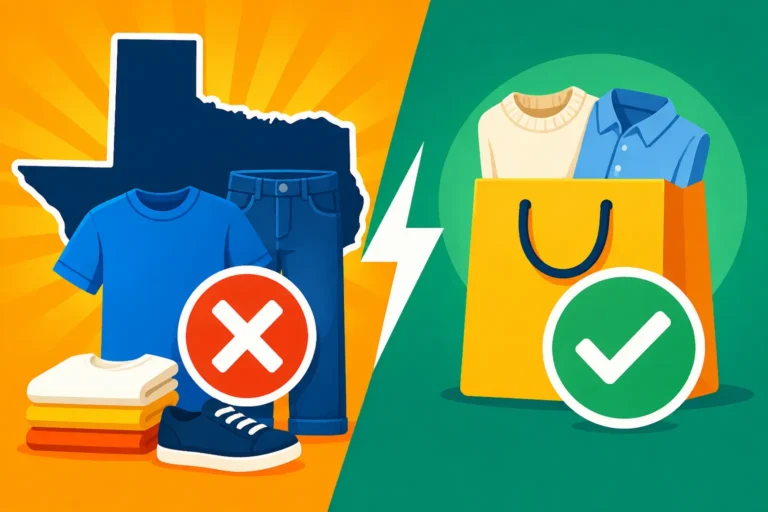
Other states, however, take different paths. Massachusetts, for example, has a $175 exemption for individual clothing items, similar in concept to New York but with a higher threshold. Connecticut offers an annual "Sales Tax Free Week" during which most clothing and footwear under $50 are exempt, but outside that specific week, the standard sales tax applies. Then you have states like Florida or Texas, where clothing and footwear are generally taxable at the full state and local rates, with the exception of specific Sales Tax Holidays by State 2026: Full Calendar that might occur once or twice a year. This patchwork of rules underscores why businesses often turn to sophisticated sales tax solutions like those offered by Avalara to manage compliance across states.
Here's a quick comparison of clothing sales tax rules in New Jersey and some neighboring states:
| State | Sales Tax Rate (State) | Clothing/Footwear Exemption Details | Price Threshold | Typical Exemptions (Examples) |
|---|---|---|---|---|
| New Jersey | 6.625% | Most clothing and footwear are exempt. | None | Shirts, pants, shoes, socks, dresses, outerwear, swimwear, general athletic wear |
| Pennsylvania | 6% | Most clothing and footwear are exempt. | None | Shirts, pants, shoes, socks, dresses, outerwear, swimwear, general athletic wear |
| New York | 4% | Exempt from local sales tax (including NYC) if sold for less than $110 per item. State sales tax applies to items $110 or more. | $110 per item | Items under $110 (depending on local jurisdiction), specific athletic gear is often taxed |
| Connecticut | 6.35% | Generally taxable, but an annual "Sales Tax Free Week" usually exempts items under $50. | $50 (during holiday) | General clothing, shoes (during tax holiday) |
| Massachusetts | 6.25% | Generally taxable, but offers an exemption for individual items of clothing and footwear sold for less than $175. | $175 per item | Items under $175 (year-round) |
| Delaware | 0% | No statewide sales tax on any goods, including clothing. | N/A | All clothing and footwear are effectively tax-free |
Practical Tips for Shoppers and Sellers
Navigating sales tax rules, even for a relatively straightforward exemption like New Jersey's for clothing, still requires a degree of awareness from both consumers and businesses. Understanding the nuances not only helps shoppers save money but also ensures that sellers remain compliant with state tax laws, avoiding potential penalties and fostering customer trust.
Maximizing Your Savings as a Consumer
For shoppers in New Jersey, the most immediate benefit is the direct savings at the register. Always remember that most items of clothing and footwear are exempt. This means you can budget your shopping trips knowing that you won't have an extra 6.625% tacked on to your apparel purchases. If you're ever charged sales tax on an item you believe should be exempt, don't hesitate to politely question the store associate. Mistakes can happen, especially with the wide variety of items stores carry.
Furthermore, if you live near the New York or Massachusetts border, being aware of their respective $110 and $175 thresholds can help you make informed decisions. For example, a higher-priced coat might be tax-free in New Jersey or Pennsylvania, but taxable in New York if it exceeds the $110 limit. Planning your shopping trips to take advantage of these state-specific exemptions can lead to significant savings on larger purchases. And for items that are taxable, such as accessories, knowing the exact New Jersey Sales Tax Rate 2026 can help you budget accurately.
Ensuring Compliance for Businesses
For businesses selling clothing and related items in New Jersey, compliance is paramount. The key takeaway is to ensure your POS system is correctly configured to differentiate between exempt clothing/footwear and taxable accessories or specialty items. Regularly review your product catalog's taxability settings. Training your staff thoroughly on these distinctions is also crucial, especially for new hires, to prevent errors at checkout. These errors, if consistent, can lead to audit flags and potential back taxes, interest, and penalties.
If you're an online seller, particularly one located outside of New Jersey but selling into the state, you must be aware of New Jersey's economic nexus threshold. If your sales meet or exceed $100,000 in gross revenue or 200 separate transactions into the state in the current or previous calendar year, you likely have a sales tax obligation. This means registering and then collecting and remitting the correct sales tax (or applying the exemption for clothing) to the state. Software solutions, like those from Avalara, can be invaluable for managing these complexities, automatically tracking nexus, applying correct rates, and simplifying the filing process. Staying proactive and knowledgeable is the best defense against compliance headaches in the ever-evolving world of sales tax.
Disclaimer
The information provided in this guide is for general informational purposes only and does not constitute tax or legal advice. Sales tax laws are complex and subject to change. Always consult with a qualified tax professional or the New Jersey Division of Taxation for advice specific to your situation.