Is Clothing Taxable in Texas?
Figuring out if your new outfit or school supplies will be hit with sales tax in Texas can feel like a guessing game. Many shoppers, especially those new to the state or running a small business, are often caught off guard by the nuances. This comprehensive guide will clear up the confusion, explaining when clothing is taxable in Texas, detailing the popular sales tax holiday, and covering other important scenarios to help you navigate the rules with confidence.
The General Rule: Is Clothing Taxable in Texas?
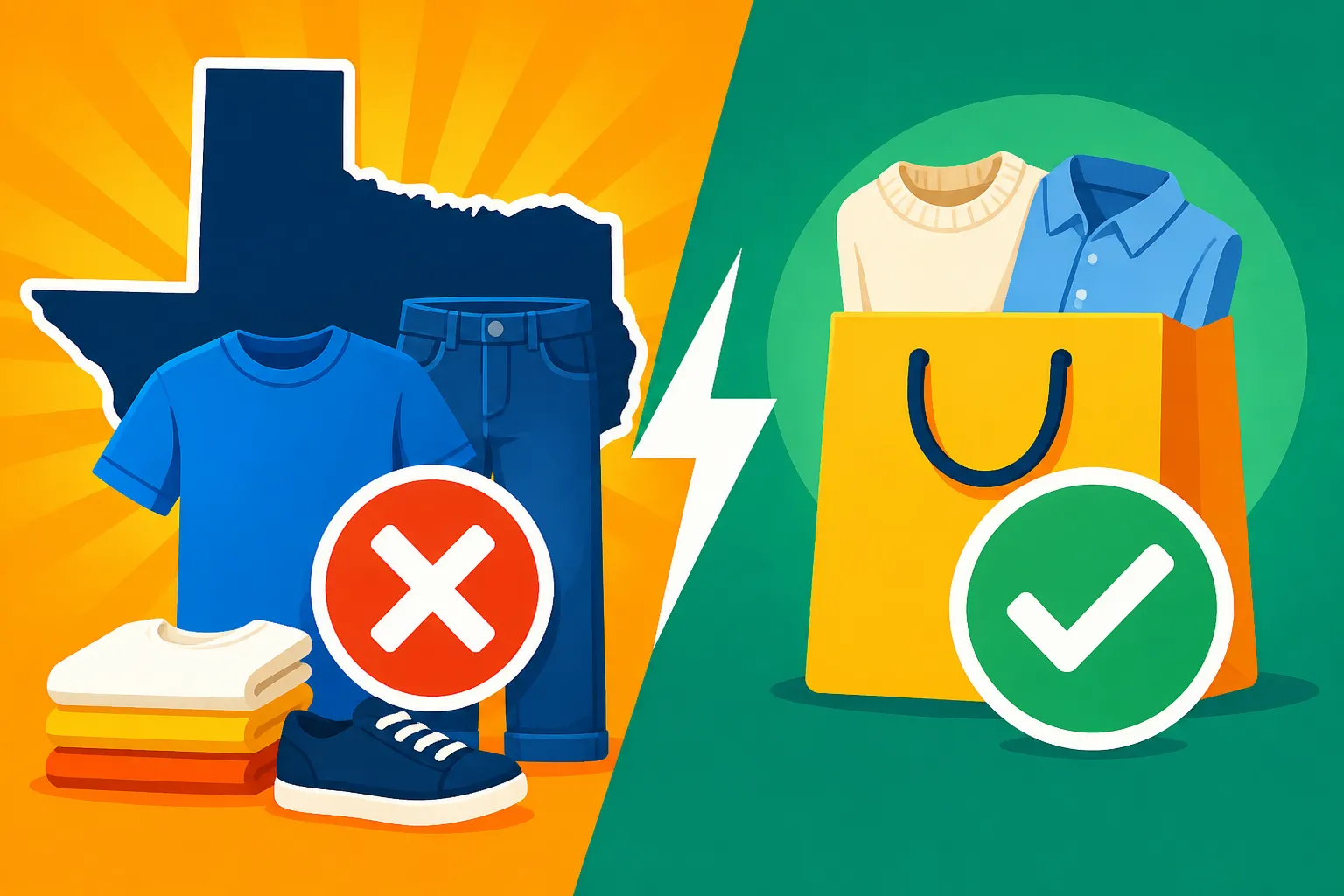
Let's cut right to it: generally speaking, yes, most clothing purchased in Texas is subject to sales tax. While some states have specific exemptions for certain types of clothing or price points, Texas typically treats apparel the same as other retail goods. This often surprises people, especially if they've lived in states like Pennsylvania or Minnesota, where clothing is largely exempt.
Tangible Personal Property and Sales Tax
In Texas, like in many other states, sales tax is primarily levied on the sale of tangible personal property. This simply means anything you can see, touch, or hold – and clothing fits squarely into that definition. When you walk into a store, pick out a new pair of jeans, or grab a cute top, you're typically expected to pay sales tax on that item at the register.
Think about it this way: if you buy a new piece of furniture for your living room, you pay sales tax. If you buy a new book, you pay sales tax. Clothing falls under the same umbrella. This broad application is designed to ensure a consistent revenue stream for the state and local jurisdictions. So, if you're shopping at a local boutique in Dallas or a large department store in Houston, assume the price tag doesn't include the sales tax you'll owe. Understanding the fundamentals of How Combined Sales Tax Rates Work can help you grasp why this applies across various purchases.
Texas's Broad Definition of Taxable Goods
The Texas Tax Code defines "sale" and "tangible personal property" very broadly, making most retail transactions taxable. There isn't a blanket exemption for clothing, unlike groceries or certain medical supplies. This means whether you're buying everyday wear, work attire, or even most specialized clothing, it will likely be subject to the standard sales tax rate, which is 6.25% statewide, plus any local sales taxes that apply. Many cities and counties add their own rates, bringing the combined rate up. For instance, you might see combined rates reach as high as 8.25% in many areas. If you're curious about the specifics, you can dive deeper into the Texas Sales Tax Rate (6.25% + Local 8.25% Max).
This broad definition simplifies things in one sense—most things are taxable. But it also means that, unlike in some other states where you might find clothing exempt up to a certain dollar amount, that's not the case here in Texas for year-round shopping. Every dollar counts, and that 6.25% state tax, plus local add-ons, applies to pretty much every stitch of fabric you buy for personal use.
The Annual Exception: Texas Sales Tax Holiday
While the general rule is that clothing is taxable, there's a highly anticipated annual exception that shoppers across Texas eagerly await: the Sales Tax Holiday. This event provides a fantastic opportunity for consumers to save a little money, particularly on back-to-school items.
What is the Sales Tax Holiday and When Does It Happen?
The Texas Sales Tax Holiday is a specific period, usually a weekend in August, when certain items, including most clothing, footwear, and school supplies, are exempt from sales tax. This tax-free period is primarily designed to help families offset the costs associated with preparing children for the upcoming school year. It’s a huge boon for parents and students alike, offering significant savings when buying multiple items. For 2026, the Texas Tax-Free Weekend 2026 (Aug 7-9) is scheduled to take place, so mark your calendars!
The holiday typically begins on the second Friday in August and runs through the following Sunday. During these days, qualifying items can be purchased tax-free from Texas stores and online retailers. It's a busy time for retailers, as shoppers flock to take advantage of the savings. It's essential to confirm the exact dates each year, as they can sometimes shift slightly.
Specific Clothing Items Included and Excluded
This is where it gets a little tricky, but thankfully, the Texas Comptroller's office provides clear guidelines. During the sales tax holiday, most clothing and footwear sold for less than $100 per item are exempt from sales tax. This means:
- Included Items: Regular shirts, pants, shorts, dresses, skirts, socks, underwear, pajamas, baby clothes, jackets, sweaters, and athletic uniforms (if for general use) are typically covered, as long as each item's price is under $100. Even items like boots and sneakers qualify.
- Excluded Items: Not everything you wear qualifies. The exemption does not apply to:
- Accessories: Items like jewelry, handbags, wallets, watches, scarves, ties, or belts are still taxable.
- Athletic Equipment: Cleats, helmets, shin guards, and other specialized sports equipment are generally taxable.
- Specialized Clothing: Items like wet suits, swim fins, ski boots, or protective masks (e.g., for fencing) are also typically excluded.
- Rental Clothing: Formal wear rentals, like tuxedos or wedding dresses, remain taxable.
- Items over $100: If a single item of clothing or pair of shoes costs $100 or more, it does not qualify for the exemption.
This distinction can be a real pain point for shoppers. You might grab a shirt for $25 (tax-free), but the matching necklace for $30 will still have tax added. Or, if your child needs a fancy new pair of basketball shoes that cost $105, you're out of luck on the tax exemption for those specific shoes. It's crucial to check the price point of each individual item, not the total transaction.
The Online Shopping and Layaway Rules During the Holiday
Good news for modern shoppers: the sales tax holiday generally extends to online purchases as well! If you order qualifying clothing or footwear from an online retailer during the exemption period, and the item meets the under-$100 price limit, it will be tax-free. This applies even if the item is delivered after the holiday ends, as long as you ordered it during the designated window. This is a huge convenience for those who prefer to shop from home or can't make it to physical stores.
What about layaway plans? Texas has thought of that too. If you place a qualifying item on layaway during the sales tax holiday, or if you make the final payment on a qualifying layaway item during the holiday, the item is exempt from sales tax. This offers flexibility for those who plan ahead or prefer to pay in installments. So, whether you're clicking "add to cart" or making your final layaway payment, you can still enjoy the savings during this special time.
Beyond the Basics: Specific Scenarios and Nuances
The general rule and the sales tax holiday cover most situations, but like anything related to taxes, there are always a few edge cases and specific scenarios that can cause confusion. Let's delve into some of those.
Accessories, Footwear, and Special Occasion Wear
We touched on this briefly, but it bears repeating: accessories are generally not included in the sales tax holiday exemption and are always taxable in Texas. This category includes common items like:
- Jewelry: Necklaces, earrings, rings, bracelets.
- Handbags and Wallets: Purses, clutches, backpacks (unless primarily for school supplies, which have separate rules during the holiday).
- Watches: Both traditional and smartwatches.
- Scarves, Ties, and Belts: Fashion accessories designed to complement an outfit rather than serve as essential clothing.
For footwear, the rule is generally simple: shoes are treated like other clothing. So, outside the sales tax holiday, they are taxable. During the holiday, if they are under $100 per pair, they are tax-exempt.
Special occasion wear can be a bit of a gray area. While a wedding dress or a formal gown might be considered "clothing," if you're renting it, the rental is usually taxable as a service or a rental of tangible personal property. If you purchase a wedding dress, even a very expensive one, it is considered taxable tangible personal property, and it won't qualify for the sales tax holiday exemption because it will almost certainly exceed the $100 price limit. Costumes, whether for Halloween or a theatrical production, are typically taxable as general merchandise.
| Item Type | Regular Period (Year-Round) | Sales Tax Holiday (Under $100) |
|---|---|---|
| T-Shirts, Jeans, Sweaters | Taxable | Exempt |
| Shoes, Sneakers, Boots | Taxable | Exempt |
| Underwear, Socks, Pajamas | Taxable | Exempt |
| Jewelry, Watches | Taxable | Taxable |
| Handbags, Wallets, Belts | Taxable | Taxable |
| Helmets, Ski Boots | Taxable | Taxable |
| Dry Cleaning/Alterations | Taxable (Service) | Taxable (Service) |
| Formal Wear Rental | Taxable (Rental) | Taxable (Rental) |
Alterations, Repairs, and Services Related to Clothing
This is a common point of confusion for consumers. What if you buy a pair of pants and then need them hemmed? Or you take your suit to the dry cleaner? These are considered services, and Texas has specific rules for when services are taxable. Generally, if the service is performed on tangible personal property, it can be subject to sales tax.
- Alterations: If you have clothing altered, such as hemming pants or resizing a jacket, the labor charge for that alteration is typically subject to sales tax in Texas. This is because it's considered a service performed on tangible personal property. So, even if you bought a shirt tax-free during the holiday, getting it tailored later will still incur tax on the alteration service itself.
- Repairs: Similarly, if you take a torn coat to a seamstress for repair, the labor charged for that repair is also taxable.
- Dry Cleaning and Laundry Services: These are also considered taxable services in Texas. When you drop off your clothes at the dry cleaner, you'll see sales tax applied to the service fee. This can add up, especially if you have a lot of items to clean regularly.
It's important to differentiate between the sale of an item and the service performed on it. The sales tax holiday applies to the sale of certain items, not to services related to them. This often catches people off guard when they get a bill from their tailor or dry cleaner.
Resale Certificates for Businesses
For businesses that sell clothing, the rules are different. If you are a retailer in Texas buying clothing from a wholesaler with the intent to resell it to your customers, you generally do not pay sales tax on your wholesale purchase. Instead, you would provide your supplier with a Resale Certificate by State: Complete Guide (specifically, a Texas Sales and Use Tax Resale Certificate, Form 01-339). This certifies that you are buying the goods for resale and will collect sales tax from the end consumer.
This system prevents "double taxation" – where tax is paid both when the retailer buys from the wholesaler and again when the customer buys from the retailer. If you're running an online clothing store or a brick-and-mortar boutique, understanding how to properly use and issue resale certificates is critical for managing your inventory costs and staying compliant. Without a valid resale certificate, you'd be stuck paying tax on your wholesale purchases, cutting into your profit margins unnecessarily.
Staying Compliant: Tips for Consumers and Businesses
Navigating sales tax, even for something as seemingly simple as clothing, can be a headache. Whether you're a shopper trying to save a few bucks or a business owner trying to stay on the right side of the law, a little knowledge goes a long way.
For Consumers: Tracking Your Purchases
As a consumer, staying on top of sales tax mostly means understanding when and where you'll pay it.
- Budgeting: Always factor in the sales tax when looking at an item's price tag, especially for larger purchases. Remember, the sticker price isn't the final price. Knowing the Average Sales Tax Rate by State can give you a general idea, but always check Texas-specific rates.
- Utilize the Sales Tax Holiday: This is your prime opportunity to save on clothing. Make a list, check the dates, and ensure the items you're buying fall within the qualifying criteria (especially the under-$100 limit for clothing). It's a great time to stock up on essentials for the whole family.
- Understand Service Taxability: When you get alterations, repairs, or dry cleaning, don't be surprised by the sales tax. It's standard practice in Texas.
Many people wonder, "How much is sales tax on a $100 purchase by state?" In Texas, outside of the tax holiday, a $100 clothing purchase in a city with an 8.25% combined rate would cost you $8.25 in sales tax, bringing the total to $108.25. That might not seem like much on one item, but it definitely adds up over time!
For Businesses: Calculating and Remitting Sales Tax
For businesses selling clothing in Texas, compliance is much more complex. You're not just dealing with the state sales tax, but also city, county, and special district taxes. This multi-layered tax structure can be incredibly challenging to manage, especially if you sell across different jurisdictions or online.
- Accurate Rate Determination: You need to calculate the correct sales tax rate based on the customer's location (or your location, depending on sourcing rules) for every sale. This means knowing the exact combined state and local rate for every address you ship to or for every store location you operate.
- Collection and Remittance: Once collected, these taxes aren't yours to keep. They must be accurately reported and remitted to the Texas Comptroller of Public Accounts by the due date. Failure to do so can result in penalties and interest.
- Sales Tax Holiday Implementation: Businesses also need to correctly implement the sales tax holiday, ensuring that only qualifying items under the price limit are exempt, and for the correct dates. This requires precise programming in point-of-sale systems and e-commerce platforms.
This is where specialized sales tax software can be a lifesaver. Companies like Avalara offer solutions that automate the process of calculating sales tax, managing exemptions, and preparing returns. Instead of manually looking up rates for every single transaction or trying to keep track of the nuanced rules for items and holidays, these platforms integrate directly with your sales systems, providing real-time, accurate tax calculations. This frees up countless hours and reduces the risk of costly errors, allowing businesses to focus on what they do best: selling great clothes. Tools like these are often highlighted when discussing Sales Tax Rate Lookup Tools Compared.
Disclaimer
As a sales tax blogger, I'm here to share general information and my passion for helping you navigate these topics. However, I am not a tax professional, and this content should not be considered professional tax advice. Sales tax laws are complex and can change frequently. Always consult with a qualified tax advisor or the appropriate state tax authority for advice specific to your business or individual situation.