Sales Tax on SaaS by State
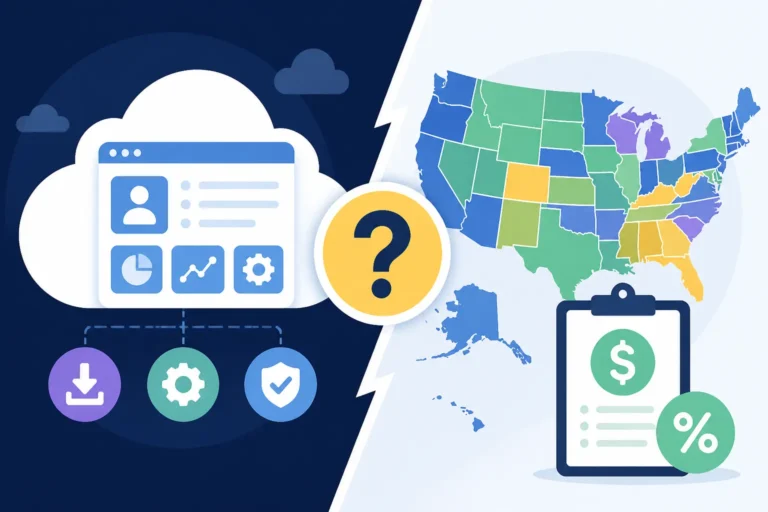
Navigating the ever-changing landscape of sales tax can feel like a full-time job for any business, but it becomes particularly baffling when you're dealing with Software-as-a-Service (SaaS). Many business owners find themselves scratching their heads, wondering if that monthly subscription fee they charge for their amazing software platform should include sales tax, and if so, at what rate and in which states. This comprehensive guide is here to unravel the complexities of sales tax on SaaS by state, helping you understand where and how your digital offerings might be taxed.
Understanding Software as a Service and Its Tax Challenges
SaaS has become the backbone of modern business, from customer relationship management (CRM) tools like Salesforce to project management platforms like Asana, and even simple subscription services for graphic design or accounting software. Instead of buying a software license and installing it on your own server, you're paying a recurring fee to access and use software hosted remotely by a provider, usually through a web browser. It's convenient, scalable, and incredibly popular.
What Exactly Constitutes SaaS in the Eyes of Tax Authorities?
At its core, SaaS is about access, not ownership. You're not buying the software itself; you're subscribing to a service that uses the software. This distinction is absolutely crucial because sales tax laws were traditionally built around the sale of tangible goods—physical items you can touch and hold. When states started to modernize their tax codes for the digital age, they had to grapple with how to classify these new, intangible offerings.
Some states might view SaaS as a "prewritten computer software" delivered electronically, making it taxable. Others might categorize it as a "service," which may or may not be taxable depending on that state's specific laws regarding services. And then there are states that have carved out entirely new definitions specifically for cloud computing or remote access software. This lack of a universal definition is precisely why the sales tax treatment of SaaS varies so wildly across state lines. It's like trying to fit a square peg (SaaS) into a round hole (traditional sales tax definitions) and then finding out every state has a different-sized round hole!
Why Sales Tax on SaaS Is So Tricky for Businesses
For businesses selling SaaS, this patchwork of regulations creates an enormous headache. Imagine you're a small startup based in Delaware (which has no state sales tax, by the way), but you have customers all over the U.S. Each state your customers are in could potentially have different rules about whether your specific SaaS product is taxable, what rate to charge, and when you've even established enough presence (or "nexus") to be required to collect tax in the first place.
This isn't just about knowing if a state taxes SaaS; it's about understanding the specific nuances within that state. Does it matter if the customer is a business or a consumer? What if the software is customized? What if only a small portion of the service is truly "software" and the rest is consultation? All these factors can swing the taxability pendulum one way or another. It means that simply googling "is SaaS taxable in X state?" often isn't enough to get a definitive answer for your unique situation, making it a constant challenge to stay compliant.
Key Factors Influencing SaaS Taxability
When a state decides whether to impose sales tax on your SaaS offering, they typically look at a few critical aspects. These aren't always clear-cut, which contributes to the confusion, but understanding these general principles can help you anticipate how different states might classify your services.
Digital Products Versus Services Classification
One of the primary battlegrounds for SaaS taxability is whether a state considers it a "digital product" or a "service." Traditionally, sales tax applies to the sale of tangible personal property. As technology evolved, many states expanded their definitions to include "digital products" or "electronic downloads," often treating them similarly to physical goods. If a state views SaaS as simply software delivered electronically (even if accessed remotely), it might fall under existing digital product tax laws.
However, many argue that SaaS is fundamentally a service. You're not downloading a static piece of software; you're accessing a dynamic, ongoing service that uses software. If a state generally doesn't tax services (or only taxes specific, enumerated services), then SaaS might escape taxation under this classification. The problem is, there's no national consensus. Some states have specifically amended their laws to clarify that "computer services" or "cloud computing" are taxable, while others remain silent, leaving it open to interpretation or agency guidance. This often means delving into specific state statutes or administrative rulings to discern their stance, which can be a deep dive for any business owner.
The "True Object" Test and Specific State Interpretations
Many states employ what's known as the "true object" or "dominant purpose" test. This test attempts to determine the primary reason a customer is entering into the transaction. Is the customer primarily seeking the software itself, or are they seeking the service provided through the software? For example, if you sell a photo editing SaaS, is the customer paying for the access to the editing software, or for the service of being able to edit photos remotely?
This test can be highly subjective and leads to varied outcomes. Some states might focus on the fact that the customer receives access to a specific program's functionality, classifying it as software. Others might emphasize the ongoing nature, support, and hosting aspects, leaning towards a service classification. To complicate matters further, some states have very specific, narrow definitions for what constitutes taxable "software" or "data processing services," which might or might not encompass modern SaaS models. For instance, some states differentiate between "canned" (off-the-shelf) software and "custom" software, with custom often being exempt. Does your SaaS count as canned if it's configurable but not bespoke for each client? These are the kinds of questions that make tax compliance a minefield for SaaS providers.
Sales Tax on SaaS by State Overview
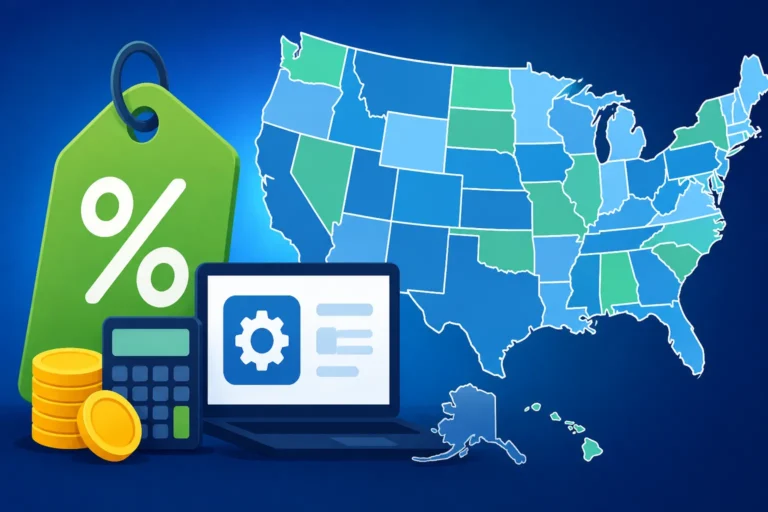
Now, let's dive into the specifics of how different states approach the taxability of Software-as-a-Service. It’s not a simple "yes" or "no" for every state, as many have nuanced rules, exceptions, and unique interpretations. Remember, tax laws can change, and this information is based on current understanding. For the most precise information, always verify with the relevant state tax authority or a sales tax expert.
States That Generally Tax SaaS
A growing number of states have explicitly, or through broad interpretation, decided that SaaS is indeed subject to sales tax. This usually happens in one of a few ways: they define it as a type of "software," a "digital product," or a "taxable service."
- Washington State: This is one of the states that's fairly explicit. Washington broadly taxes SaaS under its business and occupation (B&O) tax and retail sales tax as a "digital product" or a "service of transmitting or conveying software electronically." This means if you have nexus in Washington, you're likely collecting sales tax on your SaaS. Understanding the intricacies of the Washington sales tax rate is crucial here.
- Texas: Texas has a unique approach, taxing 80% of charges for "data processing services" and "information services." Many SaaS offerings fall under these broad categories. So, while not 100% of the charge is taxed, a significant portion likely is. For an in-depth look, check out our guide on Is SaaS Taxable in Texas? (80% Rule).
- New York: New York also tends to tax SaaS. Their guidance generally considers SaaS as "prewritten computer software delivered electronically." Even though you don't download it, accessing it remotely is often viewed as receiving the software. Our resource on Is SaaS Taxable in New York? provides more details.
- Pennsylvania: Pennsylvania includes "computer programming services" and "prewritten computer software" in its definition of taxable services. SaaS often gets caught in this net, making it taxable in the state.
- Louisiana: Historically, Louisiana had some ambiguity, but as of January 1, 2025, Louisiana Now Taxes SaaS (Jan 2025). This is a significant change, clarifying that SaaS and cloud computing services are subject to state sales tax.
- Connecticut: Connecticut is another state that generally taxes SaaS as a "computer and data processing service." The state broadened its definition to include many cloud-based offerings.
- Arizona: Arizona's Transaction Privilege Tax (TPT) system, which is similar to sales tax, can apply to SaaS under certain classifications like "tangible personal property" or "other services." It requires careful review of how your specific service is structured.
- Massachusetts: While Massachusetts generally exempts custom software, off-the-shelf software and related services, including SaaS, can be taxable under their "prewritten software" rules.
- Ohio: Ohio taxes "electronic information services" and "automatic data processing and computer services." Many SaaS platforms fall squarely within these definitions.
- Tennessee: Tennessee broadly taxes "computer software" and related services, which often extends to SaaS when the user is gaining access to the software functionality.
- Illinois: Illinois considers software accessed remotely to be a transfer of tangible personal property, making SaaS generally taxable. However, there are nuances for custom software.
- Utah: Utah taxes "specified digital products" and "prewritten computer software," and its definitions are broad enough to include many SaaS offerings.
States That Generally Do Not Tax SaaS
Some states have taken a more favorable approach to SaaS, either by explicitly exempting it or by simply not having broad enough definitions to capture it under existing sales tax statutes.
- California: California generally does not tax true SaaS as long as there is no transfer of tangible personal property. If the customer is merely accessing and using software remotely without taking possession of it, it's typically considered a non-taxable service. This is a huge relief for many SaaS businesses!
- Florida: Similar to California, Florida generally views SaaS as a non-taxable service. As long as no tangible personal property is transferred, and the essence is access to a service, it usually avoids sales tax.
- Georgia: Georgia considers SaaS a service and generally does not tax services unless they are specifically enumerated in the tax code. SaaS is not among the enumerated taxable services.
- New Jersey: New Jersey has a fairly narrow definition of taxable services, and most SaaS offerings are not included, making them generally exempt.
- Oregon, Montana, Delaware, New Hampshire: These states are the classic "no statewide sales tax" states, often referred to as NOMAD states. If you're selling SaaS to a customer solely located in one of these states, you won't collect state sales tax. However, even in these states, there might be local taxes or other types of taxes (like business license fees) to consider.
States with Nuanced or Conditional Taxability
Then there are states that fall somewhere in the middle, with rules that can depend on various factors like how the software is delivered, what the "dominant purpose" is, or even specific legislative exclusions.
- North Carolina: SaaS is generally exempt in North Carolina if it's considered an "information service" or "data processing service" that doesn't involve the transfer of tangible personal property. However, if the service includes any taxable components, like licensed software or digital products, then parts of it might be taxed.
- Virginia: Virginia usually exempts SaaS if it's purely a service, but if there's any transfer of tangible software or if the service involves storage that is separate from the core service, it can become taxable. This means the specific contract and deliverables matter greatly.
- Michigan: Michigan generally does not tax services, and SaaS often falls into this category. However, if the "true object" of the transaction is seen as the transfer of prewritten computer software, even accessed remotely, it could become taxable.
- Colorado: Colorado's sales tax is complex, especially with its numerous home-rule cities that levy their own sales taxes. The state generally doesn't tax SaaS as a service, but individual cities might have different rules. For instance, a city might define software access differently. Our article on Colorado Home-Rule Cities Sales Tax dives deeper into this complexity.
Here's a simplified table to help visualize the varying approaches (always verify for your specific situation):
State General SaaS Taxability Key Considerations / Nuances
This state also has a very high local sales tax rate, which means the combined rate can be substantial. For more specific local information, check out our guide to Louisiana Parish Sales Tax Complexity.
Remember, this is a general overview, and each state's tax laws are always evolving.
Navigating the Maze: Best Practices for Businesses
The varied landscape of SaaS sales tax can feel overwhelming, but a proactive approach can make all the difference. As a SaaS provider, particularly one scaling rapidly, establishing robust processes is essential for compliance and peace of mind.
Determining Your Nexus Obligations for SaaS
The first and most critical step is to understand where you actually have a sales tax obligation. This "nexus" can be triggered in a few ways. Historically, it was purely physical presence – having an office, employees, or inventory in a state. However, the 2018 South Dakota v. Wayfair Supreme Court decision changed everything, introducing "economic nexus." This means you can establish nexus simply by having a certain amount of sales or transactions into a state, even if you don't have a physical presence.
For SaaS businesses, it's vital to monitor your sales volume and transaction count into every state. Each state sets its own economic nexus thresholds, which can be as low as $100,000 in sales or 200 separate transactions in a calendar year. Some states even dropped the 200-transaction threshold recently, simplifying things slightly but emphasizing the sales volume. Understanding these thresholds and consistently tracking your sales against them is the cornerstone of multi-state sales tax compliance. Our comprehensive guide on Economic Nexus by State 2026: Thresholds Guide can be an invaluable resource to help you keep track of these dynamic rules.
Registering for Sales Tax Permits Where Required
Once you've determined you have nexus in a particular state, your next step is to register for a sales tax permit (sometimes called a seller's permit, vendor's license, or certificate of authority) in that state before you start collecting tax. Collecting sales tax without a permit can lead to penalties, and it’s generally illegal. Each state has its own process, often involving an online application through their Department of Revenue or tax agency website.
The registration process requires specific business information, such as your Employer Identification Number (EIN), business legal name, and address. It's not uncommon for businesses to have nexus in several states, meaning you'll need to go through this registration process multiple times. This can be time-consuming and tedious, but it's a non-negotiable step. For a detailed walkthrough, explore our guide on Registering for Sales Tax in Multiple States.
Automating Sales Tax for SaaS
Given the complexity, manual sales tax management for SaaS is practically impossible for any growing business. The sheer volume of varying state taxability rules, local rates (which can change frequently, as highlighted in our 2026 Sales Tax Rate Changes by State article), and nexus thresholds makes it a job for technology. This is where sales tax automation software becomes your best friend.
These platforms integrate with your billing and accounting systems to automatically:
- Determine taxability: Based on your product/service code and the customer's location, the software assesses whether your SaaS is taxable in that specific jurisdiction.
- Calculate rates: It applies the correct combined state and local sales tax rates, factoring in origin-based or destination-based sourcing rules.
- Manage nexus: Some solutions help you track your sales against economic nexus thresholds.
- File returns: Many services can even prepare and file your sales tax returns on time, ensuring you meet all Sales Tax Due Dates by State 2026.
Using a robust platform like Avalara can significantly reduce errors and ensure compliance. These solutions are designed to handle the nuances of digital product taxation and constantly update their databases to reflect the latest tax law changes. Trying to keep up manually is a recipe for missed deadlines and potential audits, which is exactly what these tools aim to prevent. If you're weighing your options, our comparison of Best Sales Tax Compliance Software 2026 might be helpful.
Staying Up-to-Date with Rate and Rule Changes
The sales tax world is not static; it's constantly evolving. States frequently update their taxability definitions, change rates, and introduce new rules regarding digital products and services. What might be non-taxable today could be taxable tomorrow, as we saw with the recent changes in Louisiana.
To stay compliant, you need a strategy for monitoring these changes. Subscribing to tax news alerts, regularly checking state Department of Revenue websites, or (ideally) relying on an automated sales tax solution that handles updates automatically are essential practices. Without this vigilance, you risk falling out of compliance, which can lead to penalties, interest, and a lot of stress during an audit. This continuous monitoring is part of the ongoing journey for any business engaged in online sales, especially for complex products like SaaS.
Disclaimer
This article is for general informational purposes only and does not constitute professional advice. Laws and regulations vary by location and change over time. Consult a qualified professional for guidance on your specific situation.