What Is the Streamlined Sales Tax (SST) Program?
If you're a business owner wrestling with sales tax, you know the struggle is real. Trying to keep up with different rates, rules, and definitions across various states can feel like you're constantly fighting a losing battle, especially when selling online. It’s an administrative headache that can truly take the joy out of running your business. This comprehensive guide is here to shed light on the Streamlined Sales Tax (SST) Program, explaining what it is, how it works, and whether it could be the simplification you've been dreaming of.
The Labyrinth of Sales Tax: Why SST Even Exists
Let's be honest, sales tax is complicated. It's not just a single rate that applies everywhere; it's a dynamic, ever-changing landscape of state, county, city, and even district taxes, all layered on top of each other. For businesses trying to expand beyond their local footprint, this complexity quickly becomes overwhelming.
The Headache of Multi-State Sales Tax
Before the landmark South Dakota v. Wayfair Supreme Court decision in 2018, many businesses primarily worried about collecting sales tax only in states where they had a physical presence, or "physical nexus." But Wayfair changed everything, introducing the concept of economic nexus, where simply having a certain amount of sales or transactions into a state could obligate a business to collect and remit sales tax. Overnight, thousands of businesses found themselves with sales tax obligations in states they had never even set foot in.
Imagine running a small e-commerce shop from your garage in Oregon (a state with no sales tax, lucky you!). Suddenly, because your handcrafted birdhouses became incredibly popular in California, Texas, and New York, you might find yourself needing to register, collect, and file sales tax in those states. Each state has its own registration process, its own tax forms, its own due dates, and even its own definitions for what constitutes a "birdhouse" (okay, maybe not that specific, but you get the idea!). What's taxable in one state might be exempt in another, and the rules for services versus tangible goods vary wildly. This patchwork of regulations is a nightmare to navigate manually. Understanding Sales Tax Nexus Explained Physical vs Economic became a crucial, albeit daunting, task for countless entrepreneurs.
A Call for Simplicity: The Birth of SST
Recognizing this impending chaos even before Wayfair made it universal, state tax administrators and business representatives began working together in the late 1990s and early 2000s to create a more uniform system. Their goal was simple: streamline the sales tax collection and remittance process for all sellers, especially those operating across state lines. They envisioned a program that would simplify state sales tax laws to reduce the burden of compliance.
The result of these efforts was the Streamlined Sales and Use Tax Agreement (SSUTA), which eventually led to the Streamlined Sales Tax (SST) Program. It wasn't about making sales tax optional, but about standardizing definitions for products and services, simplifying rate structures, and providing a single, state-level administration point for sales and use tax. The hope was that by offering businesses a simpler way to comply, more states would collect the sales tax they were owed, and businesses wouldn't be bogged down by endless administrative tasks. It was a big idea, aiming to bridge the gap between state sovereignty and business practicality.
Diving Deep into the Streamlined Sales Tax Program
So, what exactly is the SST Program, and how does it aim to untangle the sales tax web? At its heart, SST is a cooperative effort among states to simplify and modernize sales and use tax administration.
Core Principles and Member States
The SST Program is built on several core principles designed to make sales tax compliance easier for businesses. These include:
- Uniformity in Definitions: Imagine "food" being defined differently in every state. SST aims to standardize the definitions of products and services that are subject to sales tax. This means a candy bar is a candy bar, whether you sell it in Georgia or Arkansas, and whether it's taxable or exempt is decided uniformly within SST guidelines.
- Simplified Tax Rates: While states still maintain their own specific rates, SST states strive for a single, state-level rate, or at least a simplified structure, rather than a multitude of overlapping local rates that change by city block. The goal is to make it easier for businesses to determine the correct rate at the point of sale. For a quick glance at the broader picture, you can learn more about Sales Tax Rates by State 2026 All 50 States.
- State-Level Administration: Instead of dealing with multiple local tax jurisdictions within a single state, businesses typically register and file with one state agency. This centralizes compliance efforts, making it less fragmented.
- Single Point of Registration and Filing: Sellers can register for sales tax in all SST member states through a single online application. Similarly, they can file a single sales tax return for all SST states, often through a Certified Service Provider (CSP).
Currently, there are 24 states that are members of the Streamlined Sales Tax Governing Board. These states have adopted the uniform rules and definitions to simplify sales tax collection for remote sellers. The current SST member states are: Arkansas, Georgia, Indiana, Iowa, Kansas, Kentucky, Michigan, Minnesota, Nebraska, Nevada, New Jersey, North Carolina, North Dakota, Ohio, Oklahoma, Rhode Island, South Dakota, Tennessee, Utah, Vermont, Washington, West Virginia, Wisconsin, and Wyoming. It’s a good chunk of the country, but noticeably absent are some of the largest consumer markets, which can be a point of frustration for many businesses.
How Businesses Benefit and Who Qualifies
For qualified businesses, especially those without a physical presence in a state (often referred to as "remote sellers"), the SST Program offers significant advantages. The biggest perk? Free sales tax calculation, collection, and filing services. Yes, you read that right: free.
Here's how it generally works: If you're a remote seller registering for sales tax in an SST state, you can choose to use a Certified Service Provider (CSP). CSPs are third-party technology companies that have been certified by the SST Governing Board to perform sales tax functions on behalf of sellers. These functions include everything from determining the correct sales tax rates to preparing and filing sales tax returns. The beauty of this system is that the SST states pay the CSPs for their services, not the remote sellers. This is a huge incentive, essentially eliminating the cost barrier for sales tax compliance in these states.
To qualify for these free services, your business typically needs to meet the definition of a "remote seller" within the SST program. This usually means you don't have a physical presence in the SST member state. If you do have a physical presence, you might still use a CSP, but you'd be responsible for their fees. It’s a game-changer for online businesses, dropshippers, and small businesses looking to expand their reach without incurring massive compliance costs. For businesses trying to figure out Registering for Sales Tax in Multiple States, SST offers a significantly less painful route for its member states.
Navigating the SST Process: What Sellers Need to Know
Understanding the 'why' and 'what' of SST is one thing, but knowing the 'how' is what truly empowers businesses. This is where the practical details of working with the program come into play.
The Role of Certified Service Providers (CSPs)
Certified Service Providers (CSPs) are the unsung heroes of the SST Program. Think of them as your dedicated sales tax navigators, equipped with the technology and expertise to handle the most intricate parts of sales tax compliance. Without CSPs, the promise of SST would be much harder to deliver.
Here’s a breakdown of what a CSP does for an SST-registered remote seller:
- Rate and Boundary Lookups: Sales tax rates are highly granular. A CSP's software integrates with constantly updated databases to determine the precise sales tax rate based on the buyer's location (down to the street address in many cases), ensuring you collect the correct amount. This involves navigating complex jurisdictional boundaries that can change frequently.
- Product Taxability Determinations: The SST program has standardized definitions for many products and services, but applying them correctly still requires careful analysis. CSPs categorize your products according to these definitions, ensuring they are taxed (or exempted) appropriately. For instance, is a diet soda considered "food" or a "soft drink" under state law? A CSP helps answer these nuances.
- Sales Tax Calculation: When a customer makes a purchase, the CSP's system automatically calculates the exact sales tax amount based on the product, the customer's location, and the current rates. This happens seamlessly in the background of your e-commerce platform or POS system.
- Return Preparation and Filing: This is where a huge burden is lifted. CSPs gather all the sales data, prepare the necessary sales tax returns for each SST state, and even file them on your behalf. They also handle the remittance of the collected sales tax to the appropriate state tax agencies.
- Audit Support: Should an SST member state decide to audit your sales tax records, the CSP is often your first line of defense, providing the necessary documentation and support derived from the data they've collected and managed.
Leading sales tax compliance software companies like Avalara are certified as CSPs, offering these comprehensive services. For businesses struggling with the sheer volume of data and ever-changing tax rules, relying on a CSP is not just convenient, it's a strategic necessity to avoid costly errors. It's why many consider these platforms when looking for the Best Sales Tax Compliance Software 2027.
Registration and Reporting in SST States
The process for getting set up and reporting sales tax within the SST Program is designed to be as straightforward as possible, especially when compared to registering in 20+ non-SST states individually.
- Single Registration: Instead of visiting each state's Department of Revenue website, you can register through the Streamlined Sales Tax Registration System. This online portal allows you to register simultaneously in all SST member states where you have nexus. It's a huge time-saver and eliminates redundant paperwork. When you get a How to Get a Sales Tax Permit by State, it's typically an individual state process, but SST streamlines this for its members.
- Choosing a CSP: During registration, you'll be prompted to select an SST Certified Service Provider. This is the crucial step where you decide who will handle the heavy lifting for you. Once you select a CSP, they integrate with your sales platform and begin managing your tax obligations in the SST states.
- Data Integration: Your CSP will need access to your sales data. This usually involves integrating their software with your e-commerce platform (like Shopify, WooCommerce, or Magento) or your accounting software. Once integrated, every sale you make in an SST state is automatically processed for sales tax collection.
- Automated Filing: On your assigned filing frequency (which could be monthly, quarterly, or annually depending on your sales volume, just like regular sales tax filing, explored in Sales Tax Filing Frequency Explained), your CSP will compile all the necessary data. They then prepare and submit the sales tax returns to each SST member state and remit the collected taxes. You simply verify the reports (or let them run automatically, depending on your setup) and ensure funds are available. This automated process makes How to File a Sales Tax Return Step by Step in SST states significantly easier.
The beauty of this system is that it drastically reduces the manual effort and potential for error, allowing businesses to focus on growth rather than agonizing over compliance details.
The Real-World Impact and Limitations of SST
While the Streamlined Sales Tax Program is a fantastic initiative for simplifying multi-state sales tax, it's not a magic bullet that solves all sales tax woes. It has its strengths and, like any program, its limitations.
Who SST Is Best Suited For
The SST Program truly shines for businesses that fit a particular profile:
- Remote Sellers with Economic Nexus: This is the sweet spot. If your business primarily sells online and has crossed economic nexus thresholds in multiple SST member states, but doesn't have a physical presence there, you're the ideal candidate. The free CSP services are specifically designed to benefit you, making compliance in these states virtually cost-free from an administrative perspective. Think of a small business selling artisanal crafts across the country – the SST program can significantly reduce their compliance burden.
- Businesses Expanding Nationally: For companies looking to grow their market reach across many states, SST offers a standardized, predictable framework for a significant portion of the country. It reduces the learning curve and operational overhead that comes with entering new markets. This is particularly valuable for businesses implementing strategies discussed in Sales Tax for Online Sellers Complete Guide.
- Businesses Prioritizing Automation: If you're keen on leveraging technology to minimize manual tasks and free up internal resources, SST's reliance on CSPs aligns perfectly with that goal. It allows you to automate a complex area of your business, which is a major win for efficiency.
Consider a hypothetical scenario: "Maplewood Treasures," an online store selling unique wooden gifts, suddenly finds itself with economic nexus in 10 SST states due to increasing online sales. Instead of hiring an accountant for each state or manually learning 10 different tax codes, they can register through SST, choose a CSP like Avalara, and have all their collection, calculation, and filing handled, largely for free. This saves them countless hours and avoids potential penalties.
The Non-SST State Conundrum
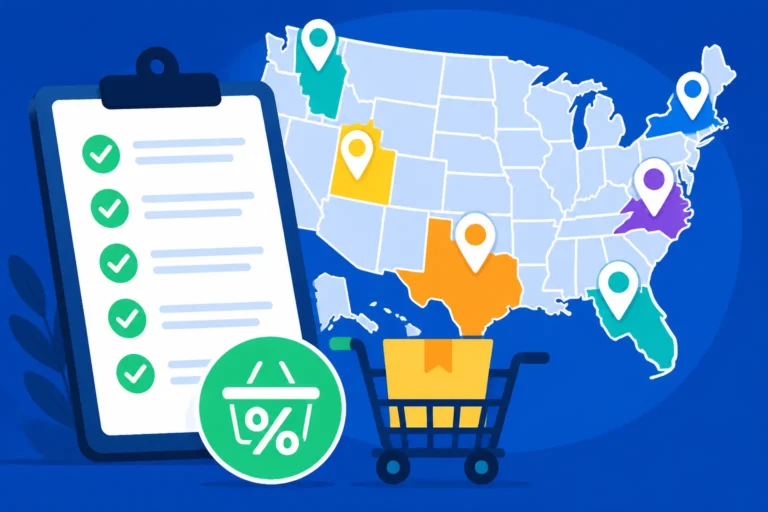
Here’s the rub: While 24 states are part of SST, many of the largest consumer markets are not. California, Texas, New York, Florida, and Illinois – states that represent a huge portion of the US economy – have opted not to join the SST Program. This means that even if you're perfectly compliant in all 24 SST states, you still have to tackle the unique, often complex, sales tax regulations of these non-SST states individually.
This creates a dual compliance challenge:
- SST Compliance: Standardized rules, state-paid CSPs for remote sellers.
- Non-SST Compliance: Disparate rules, different definitions, separate registrations, and potentially different tax software or manual processes for each state.
So, while SST simplifies things for some states, it doesn't eliminate the overall complexity of multi-state sales tax. Businesses still need robust solutions to handle the non-SST states, which can often be the most challenging due to their high sales volumes and intricate local tax structures (think of the district taxes in California or the numerous home-rule jurisdictions in Colorado). For these states, understanding concepts like Economic Nexus by State 2026 Thresholds Guide is paramount, as you'll be managing compliance directly.
Potential Drawbacks and Considerations
While the benefits often outweigh the drawbacks for eligible businesses, it's important to be realistic:
- Initial Setup: While the registration is simplified, integrating a CSP with your systems still requires some initial effort and technical setup. It's not always a "set it and forget it" immediate solution without any thought.
- Understanding the System: Even with a CSP, business owners should have a basic understanding of how sales tax works, especially the distinction between SST and non-SST states. You're still ultimately responsible for your tax obligations.
- Limited Scope: As mentioned, the program only covers member states. If your primary sales are in non-SST states, the program's direct benefits might be less impactful for your overall compliance strategy, though it still provides a blueprint for what simplified compliance could look like.
- CSP Choice: While the services are free for remote sellers in SST states, choosing the right CSP that integrates well with your existing systems and provides excellent support is still important. Different CSPs may offer varying levels of service or support outside the core SST requirements. You might want to use a Sales Tax Rate Lookup Tools Compared to test out how different providers handle rates.
Ultimately, the Streamlined Sales Tax Program is a commendable effort to bring some sanity to the bewildering world of sales tax. For remote sellers, especially, it offers a powerful tool to manage compliance efficiently and cost-effectively in a significant number of states. However, businesses must still remain diligent about their obligations in the many states that operate outside this streamlined framework.
Streamlined Sales Tax (SST) Member States Overview
Here's a quick look at the SST member states and some key non-member states for comparison, highlighting the base sales tax rate as an example of what SST aims to simplify (though local rates can still vary within member states).
| State | SST Member? | State Sales Tax Rate | Key Feature/Note |
|---|---|---|---|
| Arkansas | Yes | 6.50% | Part of SST since its inception. |
| Georgia | Yes | 4.00% | Offers a state-level rate, local taxes vary. |
| Indiana | Yes | 7.00% | One of the higher state-level rates in SST. |
| Iowa | Yes | 6.00% | Has local option sales taxes. |
| Kansas | Yes | 6.50% | Local rates add significantly to the base. |
| Michigan | Yes | 6.00% | A single state-wide rate, no local sales taxes. |
| Minnesota | Yes | 6.875% | Local taxes can apply. |
| Nevada | Yes | 6.85% | Known for its tourism. |
| Ohio | Yes | 5.75% | County taxes apply, no city sales taxes. |
| Rhode Island | Yes | 7.00% | Single state rate. |
| Tennessee | Yes | 7.00% | One of the highest state sales tax rates. |
| Utah | Yes | 4.85% | Base state rate, with local taxes adding on. |
| Washington | Yes | 6.50% | High local taxes, especially in Seattle. |
| California | No | 7.25% | Highest state-level rate, complex district taxes. |
| Florida | No | 6.00% | County surtaxes add to the base rate. |
| New York | No | 4.00% | High local rates in NYC, complex rules. |
| Texas | No | 6.25% | Local rates can go up to 8.25% combined. |
| Illinois | No | 6.25% | High local rates, especially in Chicago. |
This table clearly illustrates the patchwork. While SST states offer a simplified approach, non-SST states like California or New York, with their significant economic activity, still require a separate and often more granular approach to sales tax compliance.
Disclaimer
Please remember that sales tax laws are constantly changing and can be incredibly complex. This article provides general information and insights into the Streamlined Sales Tax Program and should not be considered legal or tax advice. Always consult with a qualified tax professional or the relevant state tax authorities for advice specific to your business situation.