Economic Nexus Threshold in Illinois
Navigating the ever-changing landscape of sales tax can feel like trying to hit a moving target, especially for online sellers reaching customers across state lines. Many small business owners in Illinois, and those selling into Illinois, often find themselves scratching their heads, wondering exactly when they cross that invisible line that requires them to collect sales tax. This comprehensive guide is here to demystify the Illinois economic nexus threshold, explaining what it is, how to track it, and what steps you need to take to stay compliant.
Understanding Economic Nexus in the Prairie State
For years, sales tax was relatively straightforward for most businesses: if you had a physical presence—a store, an office, employees—in a state, you collected sales tax from customers in that state. This was known as "physical nexus." But then came the internet, and with it, a whole new world of remote selling. States started losing out on billions in potential sales tax revenue from online purchases, leading to a landmark change.
The Wayfair Decision's Ripple Effect
The game-changer was the 2018 Supreme Court case, South Dakota v. Wayfair, Inc. Before this ruling, the general consensus was that states could only require businesses to collect sales tax if they had a physical presence there. This meant many online retailers, especially smaller ones, weren't obligated to collect sales tax in states where they didn't have a brick-and-mortar store or an employee. The Wayfair decision essentially said, "Hold on a minute, physical presence isn't the only way to establish a connection." This ruling paved the way for states like Illinois to create what's known as "economic nexus" laws. If you're looking for a deeper dive into how this changed everything, our guide on Sales Tax Nexus Explained Physical vs Economic is a great resource.
The Wayfair decision acknowledged that in our modern economy, simply having a significant volume of sales into a state could create enough of an "economic presence" to warrant sales tax collection obligations. It transformed sales tax from a simple geographical question into a complex calculation based on sales volume and transaction counts (though, as we'll see, the transaction count has largely faded away). This put the onus on businesses to understand the rules for every state they sell into, a daunting task for even seasoned entrepreneurs.
What Economic Nexus Truly Means
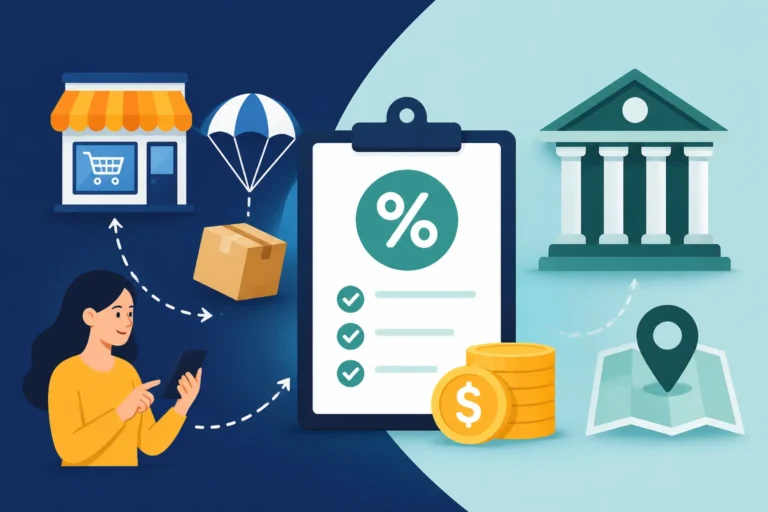
Economic nexus means that if your sales activity into a particular state surpasses a certain financial or transactional threshold, you are considered to have a "nexus" in that state, even if you don't have a physical location there. In other words, your online sales alone can trigger a sales tax obligation. Once you meet this threshold, that state considers you an in-state seller for sales tax purposes, and you're then required to register for a sales tax permit, collect sales tax from your customers in that state, and remit it to the state's tax authority. For businesses selling across the country, this can quickly become a compliance nightmare without the right tools or understanding. If you're just starting to grapple with these concepts, our Sales Tax for Online Sellers Complete Guide offers a broader perspective.
Illinois' Specific Economic Nexus Threshold
Illinois was quick to implement its own economic nexus laws following the Wayfair decision. It's crucial for any business, whether located in Illinois or selling remotely into Illinois, to understand these specific parameters. Getting this wrong can lead to penalties and back taxes, which no one wants.
The Current Dollar Threshold for Remote Sellers
As of January 1, 2021, Illinois simplified its economic nexus rules. Previously, like many other states, it had both a sales dollar amount and a transaction count threshold. However, Illinois has since repealed the transaction count requirement.
Now, for remote retailers, economic nexus is triggered if, in the preceding 12-month period, your gross receipts from sales of tangible personal property, specified digital products, or services for delivery into Illinois exceed $100,000.
It's important to break down what "preceding 12-month period" means. This isn't necessarily a calendar year. It's a "look-back" period. So, for example, if you're assessing your nexus obligations for June 2026, you would look at your total sales into Illinois from June 1, 2025, through May 31, 2026. If that sum is over $100,000, you have economic nexus in Illinois. You then need to begin collecting sales tax as soon as administratively possible, generally by the first day of the next month following the period you crossed the threshold.
What Counts Towards the Illinois Threshold
When calculating your gross receipts for the Illinois economic nexus threshold, you need to include all retail sales of:
- Tangible Personal Property: This is your physical goods, like clothing, electronics, or home goods.
- Specified Digital Products: This can include things like e-books, downloadable software, music, or streaming services, depending on how they are delivered and used. The definition of "specified digital products" can be a bit nuanced, so it’s wise to confirm with Illinois Department of Revenue (IDOR) guidelines if you sell these types of items.
- Services: Certain services are subject to sales tax in Illinois. For example, if you offer custom software development or specific repair services that are tied to tangible personal property, these might count towards your threshold. It’s critical to understand Sales Tax on Services What's Taxable by State as Illinois does tax some services.
Crucially, this threshold is based on gross receipts. This means you include both taxable and non-taxable retail sales when determining if you’ve met the $100,000 mark. The idea is to measure your overall economic activity in the state, not just the portion that ultimately results in collected tax. For instance, if you sell $90,000 worth of taxable goods and $20,000 worth of exempt goods into Illinois over a 12-month period, your gross receipts are $110,000, which means you've crossed the threshold and establish economic nexus. Understanding Economic Nexus Threshold Base Gross vs Taxable Sales can clarify why states choose gross sales.
Destination-Based Sourcing for Remote Sellers
Illinois operates on a destination-based sales tax system for remote sellers. This means that if you're a remote seller (without a physical presence) and you've established economic nexus in Illinois, you generally collect sales tax based on the tax rate at the buyer's location (the destination where the goods are received). This includes the state sales tax rate and any applicable local sales tax rates, such as those imposed by cities or counties. This contrasts with origin-based sourcing, where the tax rate is based on the seller's location. Navigating the nuances of Origin vs Destination Sales Tax Sourcing is key for accurate collection.
Tracking Your Sales to Stay Compliant
Staying on top of your sales figures is paramount when dealing with economic nexus. It's not a set-it-and-forget-it situation; you need a consistent system to monitor your sales into Illinois (and other states). Many businesses find this aspect particularly challenging, especially as their sales grow.
The Importance of Accurate Sales Data
Imagine Sarah, who runs an online boutique selling custom-made jewelry. She's based in Wisconsin but sells nationwide. For months, her Illinois sales were sporadic. Then, a popular influencer featured one of her pieces, and suddenly, orders from Chicago, Naperville, and Springfield started pouring in. If Sarah isn't tracking her sales to Illinois specifically, she could easily blow past the $100,000 threshold without realizing it. This oversight could lead to her owing uncollected sales tax out of her own pocket, along with potential penalties and interest.
Maintaining meticulous records of all sales into Illinois, categorized by whether they are taxable or not (though remember, gross sales count towards the threshold), is non-negotiable. This isn't just about meeting state requirements; it's about protecting your business's financial health. Without this data, you're essentially flying blind in a complex regulatory environment.
When to Review Your Sales Activity
Most states, including Illinois, use a "rolling 12-month period" to determine economic nexus. This means you should review your gross receipts from sales into Illinois at least monthly or, even better, daily. If you check only once a year, you might have been past the threshold for months, accruing significant liability.
For example, if you review your sales at the end of May 2026, you would calculate your total gross sales into Illinois from June 1, 2025, to May 31, 2026. If that total surpasses $100,000, you've established nexus. You then need to begin collecting sales tax promptly. Many businesses choose to automate this process with sales tax compliance software. Solutions like Avalara can help you monitor your sales in real-time against each state's specific thresholds, alerting you when you're approaching or have crossed a nexus trigger. This automation is often invaluable, especially for businesses with high transaction volumes or those selling into many states. Our comparison of Best Sales Tax Compliance Software 2027 might be helpful if you're considering automation.
What to Do Once You Hit the Illinois Threshold
So, you've been tracking your sales, and you've just realized your gross receipts into Illinois have exceeded $100,000 in the past 12 months. Don't panic! This is a common milestone for growing businesses. The key is to act quickly and correctly.
Registering for an Illinois Sales Tax Permit
The very first step after establishing economic nexus is to register for an Illinois sales tax permit. You cannot legally collect sales tax from your customers until you are registered with the Illinois Department of Revenue (IDOR). Collecting sales tax without a permit is a big no-no and can lead to serious issues. The registration process is typically done online through the MyTax Illinois portal.
Here's a general overview of the steps involved in getting your sales tax permit in Illinois:
- Gather Necessary Information: You'll need your Federal Employer Identification Number (FEIN) or Social Security Number (SSN) if you're a sole proprietor, your business's legal name and address, business entity type, owner information, and the date you started (or will start) making sales in Illinois.
- Access MyTax Illinois: Go to the official Illinois Department of Revenue website and look for the MyTax Illinois portal. This is where most business tax registrations and filings happen.
- Complete the Registration Application: Follow the prompts to apply for a "Sales/Use Tax Reseller's Certificate of Registration" or similar business registration. You'll specify the type of business activity (e.g., remote seller).
- Receive Your Permit: Once your application is processed, the IDOR will issue you a sales tax account ID or permit number. The timeframe for this can vary, but it's generally a few business days to a couple of weeks. You can learn more about this process in our guide on Sales Tax Registration Guide for Illinois.
It's tempting to delay this, but starting to collect sales tax before registering means that money you collected from customers isn't legally remitted to the state and could put you in a tough spot. It's always best to be proactive.
Collecting and Remitting Sales Tax
Once you have your sales tax permit, you're officially obligated to start collecting sales tax from your Illinois customers. This involves several critical steps:
- Determine the Correct Tax Rate: As mentioned, Illinois is destination-based for remote sellers. This means you need to charge the combined state and local sales tax rate applicable at the customer's shipping address. Illinois' base state sales tax rate is 6.25%, but local taxes can add significantly to this. For example, the combined rate in Chicago is much higher due to city and county taxes. This is where sales tax software like Avalara can really shine, automatically calculating the correct sales tax rate for each transaction based on the customer's address. Understanding How Combined Sales Tax Rates Work is crucial here.
- Integrate Sales Tax into Your Sales Platform: Ensure your e-commerce platform (Shopify, WooCommerce, etc.) or POS system is configured to calculate and add Illinois sales tax to applicable sales.
- Separate Collected Funds: It's highly recommended to keep the sales tax you collect in a separate bank account. This money doesn't belong to your business; it belongs to the state of Illinois. Segregating it helps ensure you have the funds available when it's time to remit.
- File Sales Tax Returns: On a regular basis, as determined by the IDOR (typically monthly, quarterly, or annually, depending on your sales volume), you'll need to file a sales tax return and remit the collected tax. Your assigned filing frequency will be communicated to you by the IDOR upon registration. Our article on Illinois Sales Tax Filing & Due Dates provides more details on this. Even if you have zero sales in Illinois for a filing period, you usually still need to file a "zero return" to remain compliant. For comprehensive steps, see How to File a Sales Tax Return Step by Step.
It's easy to get overwhelmed by the intricacies of multi-state sales tax compliance, but remember that many resources, from state tax departments to specialized software, are available to help you navigate these waters.
Illinois Economic Nexus Rules Summary
To help keep everything straight, here's a quick overview of the key points for Illinois economic nexus:
| Rule/Aspect | Details for Illinois |
|---|---|
| Economic Nexus Threshold | Over $100,000 in gross receipts |
| Measurement Period | Preceding 12-month period |
| Transaction Threshold | Repealed (No longer applies as of January 1, 2021) |
| What Counts Towards Threshold | Retail sales of tangible personal property, specified digital products, and taxable services delivered into Illinois. Based on gross receipts. |
| Sourcing Rule for Remote Sellers | Destination-based (tax rate at buyer's location) |
| Effective Date (Initial Law) | January 1, 2019 |
| Registration Required | Yes, if threshold is met |
| Regulatory Body | Illinois Department of Revenue (IDOR) |
Remember, these rules apply to remote sellers. If you have a physical presence in Illinois (e.g., a storefront, employees, inventory in a warehouse), you have nexus regardless of your sales volume and must always collect sales tax from Illinois customers. Our article on Sales Tax Nexus Explained Physical vs Economic delves deeper into these distinctions.
Disclaimer
Please remember that this article is intended for informational purposes only and does not constitute professional tax advice. Sales tax laws are complex and subject to change. It is always recommended to consult with a qualified tax professional or the Illinois Department of Revenue directly to ensure your specific business is fully compliant with all applicable sales tax regulations.