What Is the Sales Tax Nexus Threshold?
Trying to navigate the labyrinth of sales tax for your business can feel like you're constantly walking a tightrope, blindfolded, over a canyon of regulations. One minute you're sailing along, making sales, and the next you're hit with a question that sends shivers down your spine: "Do I have sales tax nexus in that state?" It's a common, legitimate fear for many sellers, especially those who operate online and ship across state lines. This comprehensive guide will pull back the curtain on one of the most crucial concepts in sales tax compliance: the sales tax nexus threshold, explaining exactly what it is, how it works, and what it means for your business.
What Exactly Is Sales Tax Nexus?
Before we dive headfirst into thresholds, we need to understand the fundamental concept of sales tax nexus. Simply put, "nexus" is the legal term for a sufficient connection between your business and a state that obligates you to collect and remit sales tax in that state. Think of it as crossing an invisible boundary. Once your business activities in a state reach a certain level, that state says, "Okay, you're doing enough business here that you need to contribute to our economy by collecting sales tax from our residents."
For decades, this connection was primarily about physical presence. If you had a store, an office, employees, or even inventory in a warehouse in a state, you had physical nexus. It was relatively straightforward, though still a lot to keep track of if you expanded your operations. But the digital age, with its explosion of online shopping, completely changed the game, making the old rules feel incredibly outdated and unfair to brick-and-mortar stores.
The Old World: Physical Presence Nexus
In the pre-internet era, and indeed for a long time after, physical presence was the gold standard for establishing sales tax nexus. If your business had a tangible footprint within a state, you were expected to collect sales tax there. This included things like owning or leasing an office building, a retail store, or a warehouse. It also encompassed having employees working in the state, even if they were remote, or utilizing salespeople or independent contractors who regularly conducted business on your behalf within state borders.
Imagine a small business owner in Austin, Texas, who primarily sells handmade jewelry from a local boutique. If they decided to open a second store in Houston, they would clearly establish physical nexus in Houston and, by extension, within Texas. The rules were, for the most part, intuitive for businesses that operated within traditional models. Even keeping inventory in a third-party warehouse, like through Amazon FBA, can create Sales Tax Nexus Explained Physical vs Economic because your goods are physically present there. This created an unfair advantage for online sellers who had no physical ties to a state, allowing them to sell without collecting sales tax, thereby often undercutting local businesses.
The New Frontier: Economic Nexus and the Wayfair Decision
Everything changed dramatically in 2018 with the landmark Supreme Court ruling in South Dakota v. Wayfair. This decision gave states the authority to require out-of-state businesses to collect sales tax, even if those businesses didn't have a physical presence in the state. Instead, states could now impose sales tax obligations based on a business's economic activity within their borders. This pivotal ruling essentially created a new type of nexus: economic nexus.
The Wayfair decision was a monumental shift, and it left countless businesses scrambling to understand what it meant for them. Suddenly, a business selling online from New York to customers in California might find itself needing to collect sales tax in California, even if it had no physical office or employees there. The states wasted no time in enacting their own economic nexus laws, each setting specific criteria for when an out-of-state seller crosses that economic threshold. This is why understanding South Dakota v. Wayfair What It Means for Sellers is so critical.
Demystifying the Sales Tax Nexus Thresholds
So, what exactly is an economic nexus threshold? It's the specific amount of sales revenue or number of transactions that, once exceeded within a calendar year (or sometimes a rolling 12-month period), triggers your obligation to collect sales tax in that state. Every state that has adopted economic nexus laws has set its own unique threshold, though many share similar structures.
The key takeaway here is that these aren't just suggestions; they are legally binding triggers. Crossing a threshold means you've established economic nexus, and you are then legally required to register for a sales tax permit, start collecting sales tax from customers in that state, and file regular sales tax returns. Ignoring these thresholds can lead to significant penalties, back taxes, and interest down the line. It's a serious business, and staying on top of these numbers is paramount for any modern seller.
The Common Denominator: The $100,000 Sales Threshold
The most prevalent economic nexus threshold across the United States is $100,000 in gross sales within a state. This means if your total sales into a specific state, regardless of whether they were taxable or exempt, hit or surpass $100,000 during the defined period (usually the current or previous calendar year), you likely have economic nexus there. Many states use this figure as their primary, and often sole, metric.
For instance, if your e-commerce store, based in Oregon (a state with no state sales tax), sells $120,000 worth of goods to customers in Florida in 2025, you would cross Florida's $100,000 threshold. This would obligate you to register for a Florida sales tax permit and begin collecting sales tax from Florida customers on any taxable sales you make moving forward. This threshold makes it relatively straightforward for businesses to track, provided they have accurate sales data by state.
The Fading Act: The 200-Transaction Threshold
When states initially rolled out their economic nexus laws post-Wayfair, many included a "200-transaction" threshold in addition to or instead of the monetary threshold. The idea was to capture businesses that might have a high volume of small sales, even if their total revenue didn't hit $100,000. However, this particular threshold has proven to be burdensome and confusing for businesses and has been largely phased out by many states.
States like Kentucky and Texas initially had a 200-transaction threshold but have since removed it, simplifying compliance for businesses. While it's becoming less common, a few states, most notably New York, still retain a transaction count as part of their economic nexus criteria, often in conjunction with a sales volume threshold. This means you need to be vigilant and check each state's specific rules, rather than assuming a universal standard. Understanding Which States Dropped the 200-Transaction Threshold? can save you a lot of headache.
Gross Sales Versus Taxable Sales for Thresholds
A critical distinction when calculating whether you've met an economic nexus threshold is understanding what kind of sales count. Most states specify that the threshold applies to gross sales into the state. This means the total dollar amount of all sales you make to customers in that state, regardless of whether those specific items or services are actually taxable. It includes sales of exempt items, sales for resale (where a resale certificate was provided), and even non-taxable services, if the state broadly defines "sales" to include them for threshold purposes.
So, if your business sells $75,000 worth of tax-exempt groceries and $30,000 worth of taxable kitchenware into a state with a $100,000 gross sales threshold, you've hit the threshold, even though a significant portion of your sales were exempt. Only after you've established nexus do you then differentiate between taxable and non-taxable sales when actually collecting and remitting tax. This can be a point of confusion for many sellers, but it's vital to track all sales, not just taxable ones, to accurately assess your nexus obligations.
Navigating the Complexities of State-Specific Rules
The biggest challenge with sales tax nexus thresholds is that there isn't a single, uniform rule across all states. Each state has the autonomy to set its own specific criteria, leading to a patchwork of regulations that businesses must navigate. This complexity is often where businesses get tripped up, and it's why a "one-size-fits-all" approach to sales tax compliance simply doesn't work.
Keeping track of the nuances for each state where you might be approaching a threshold requires diligence and, often, specialized tools. This is where solutions like Avalara come into play, helping businesses manage the intricate web of state-specific rules without constant manual research.
State-by-State Variances: A Snapshot
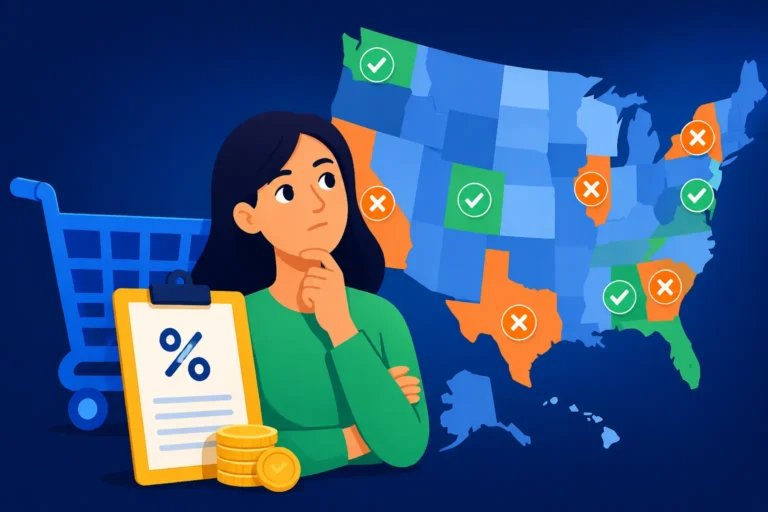
While many states use the $100,000 gross sales threshold, the details can vary significantly. For example:
- California has one of the highest thresholds at $500,000 in gross sales, with no transaction count. If your online store sells less than half a million dollars into the Golden State, you might be in the clear. However, once you cross that significant line, you're responsible. This higher threshold gives smaller businesses a bit more breathing room before having to tackle Economic Nexus Threshold in California ($500k).
- Texas also uses a $500,000 gross sales threshold, again, without a transaction count. For businesses with high-value transactions but fewer total sales, this can be a relief. It means you don't automatically trigger nexus just because you sold 200 inexpensive items. Understanding Economic Nexus Threshold in Texas ($500k) is key for many growing businesses.
- New York stands out as one of the few states that still includes both a monetary and a transaction threshold: $500,000 in gross sales and 100 separate transactions. This means you have to meet both criteria to establish economic nexus in New York. If you sell $600,000 worth of product to a single customer in New York, you still wouldn't meet the transaction count, and thus, wouldn't have nexus based on economic activity alone.
- Florida keeps it simple with a $100,000 gross sales threshold, no transaction count.
- Some states, like Colorado, have a state-level threshold, but their unique home-rule cities often have their own sales tax rules and thresholds, adding another layer of complexity. This makes understanding Colorado Home-Rule Cities Sales Tax crucial for businesses selling there.
This table provides a glimpse into the varied landscape of economic nexus thresholds. Please note that these figures can change, so always verify with the relevant state tax authority or a compliance expert.
| State | Economic Nexus Threshold | Transaction Count | Notes |
|---|---|---|---|
| California | $500,000 in gross sales | No | One of the highest thresholds, offering relief for smaller sellers. |
| Florida | $100,000 in gross sales | No | Straightforward and common threshold. |
| New York | $500,000 in gross sales AND 100 transactions | Yes | Requires meeting both conditions. |
| Texas | $500,000 in gross sales | No | Removed its transaction count, simplifying compliance for many. |
| Illinois | $100,000 in gross sales OR 200 transactions (as of 1/1/2021) | Yes (or) | Earlier, it was "and," but now it's "or," making it easier to trigger nexus. |
| Pennsylvania | $100,000 in gross sales | No | Similar to Florida, a common monetary threshold. |
The Tricky Aspect of Trailing Nexus
Once you meet a state's economic nexus threshold, your obligation to collect and remit sales tax usually doesn't end if your sales happen to dip below that threshold in the following period. Many states have what's often referred to as "trailing nexus." This means that once nexus is established, it typically remains in effect for the remainder of the current calendar year and, crucially, for the entire subsequent calendar year.
For example, if your business exceeded New Jersey's $100,000 sales threshold in 2025, you would have nexus in New Jersey for the rest of 2025 and all of 2026, even if your sales in 2026 only amounted to $50,000. This is designed to prevent businesses from constantly toggling their compliance obligations and provides states with a predictable revenue stream. It also means that once you've triggered nexus, you can't simply stop collecting tax if your sales briefly slow down. It's an ongoing commitment for a defined period.
Retroactive Application: A Frightening Reality
While less common now, some states initially tried to apply economic nexus laws retroactively, which meant businesses could suddenly find themselves liable for years of uncollected sales tax. Thankfully, most states have settled on a prospective application, meaning your obligation begins from the date you cross the threshold, or a specific effective date set by the state.
However, if you've had physical nexus in a state due to, say, inventory in an Amazon warehouse, and you weren't aware of it, you could still be on the hook for past sales tax. This is why understanding Amazon FBA Sales Tax Nexus Explained is so critical for many online sellers. It's a reminder that even with economic nexus being the buzz, physical presence still very much matters and can have longer-reaching implications.
Practical Strategies for Staying Compliant
Understanding sales tax nexus thresholds is one thing; actually staying compliant is another. The dynamic nature of these rules and the sheer volume of data involved can be overwhelming for any business owner. But with a proactive approach and the right tools, you can manage this challenge effectively.
One of the foundational steps is to understand How to Know If You Have Sales Tax Nexus. This involves a regular review of your sales data against the thresholds of every state you sell into.
Regularly Monitoring Your Sales Data
The first and most fundamental step in managing nexus thresholds is meticulous tracking of your sales data by state. You need to know, at any given time, how much revenue you've generated in each state over the current and previous calendar year. This isn't just about total company sales; it's about breaking it down geographically.
Many e-commerce platforms and accounting software can help generate reports that show sales by shipping address, which is typically the relevant factor for destination-based sales tax states. However, you'll need to configure these systems correctly and be diligent about reviewing them. Consider setting up a quarterly or even monthly check-in to see which states you're approaching or have crossed thresholds in. It's far better to catch this early and register proactively than to find out months later after you've already made many sales that should have included tax.
Leveraging Sales Tax Automation Software
For many businesses, especially those selling online to customers across the country, manually tracking nexus thresholds, calculating the correct rates for thousands of taxing jurisdictions, and managing filing requirements becomes an impossible task. This is where sales tax automation software becomes an absolute lifesaver. Tools like Avalara and TaxJar are designed specifically to tackle this complexity.
These platforms can integrate with your e-commerce store (Shopify, Amazon, WooCommerce, etc.) and accounting software (QuickBooks, Xero) to:
- Automatically track your sales against economic nexus thresholds in all states, alerting you when you're approaching or have met one.
- Calculate the correct sales tax rate at the point of sale, based on the customer's location (down to the street address), the taxability of the specific product, and any special district taxes.
- Manage and file your sales tax returns in all the states where you have nexus, often directly integrating with state tax agencies.
For a business that sells widely, this kind of automation isn't just a convenience; it's a necessity for maintaining compliance and avoiding costly errors. Exploring Best Sales Tax Compliance Software 2027 can provide deeper insights into available options.
Understanding the Registration Process
Once you determine you have nexus in a state, the next crucial step is to register for a sales tax permit (sometimes called a seller's permit, certificate of authority, or vendor's license) in that state. You cannot legally collect sales tax until you have registered with the state's taxing authority and been issued a permit. Collecting tax without a permit can lead to its own set of problems.
The registration process varies by state, but generally involves applying online through the state's Department of Revenue or equivalent agency. You'll need your business's legal name, federal employer identification number (EIN), business structure, and other basic information. This is why a comprehensive guide on Registering for Sales Tax in Multiple States is so essential for growing businesses. Don't delay this step; it's the gateway to legitimate sales tax collection and remittance.
Continual Education and Review
The world of sales tax is not static. Rates change, laws evolve, and new interpretations emerge. For example, some states recently announced 2026 Sales Tax Rate Changes by State. What might be tax-exempt today could be taxable tomorrow, or vice-versa. Therefore, it's vital to commit to continuous learning and periodically review your sales tax strategy. Subscribing to updates from state tax agencies, consulting with tax professionals, and utilizing up-to-date software from providers like Avalara can help you stay informed about changes that might impact your nexus obligations or product taxability. The landscape of Sales Tax for Online Sellers Complete Guide is constantly shifting.
Disclaimer
Please remember, the information provided in this guide is for informational purposes only and does not constitute professional tax or legal advice. Sales tax laws are complex and constantly changing. You should consult with a qualified tax professional or legal advisor to discuss your specific business situation and ensure compliance with all applicable sales tax regulations.