Do I Need a Sales Tax Permit to Sell on Etsy?
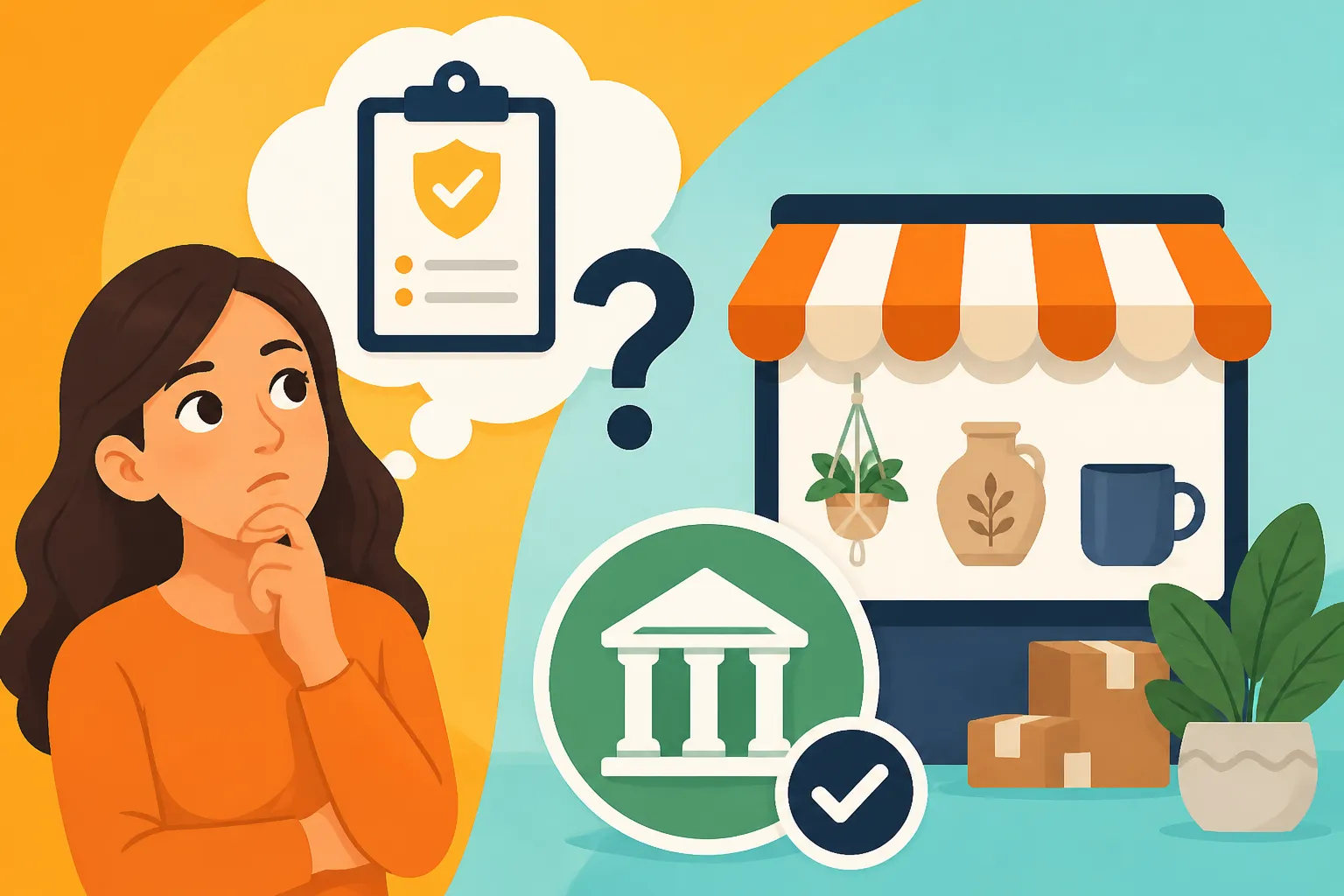
It's a question that keeps many talented crafters and small business owners up at night: "Do I really need a sales tax permit just to sell my unique creations on Etsy?" Navigating the world of sales tax can feel like deciphering ancient hieroglyphs, especially when you're pouring your heart into making beautiful products. This guide is here to untangle that knot of confusion, helping you understand when and why an Etsy seller might (or might not) need a sales tax permit, giving you the clarity to focus on your craft without unnecessary tax-related stress.
Understanding Sales Tax Nexus for Etsy Sellers
Before we dive into the specifics of Etsy, it's really important to grasp the foundational concept that dictates where you need to worry about sales tax: sales tax nexus. Without understanding this, it's impossible to know if you have any obligations at all.
What is Sales Tax Nexus?
At its core, sales tax nexus is a fancy legal term for a "connection" between your business and a state. If your business has enough of a connection, that state can legally require you to collect sales tax from your customers there. For decades, this connection was primarily about physical presence. Think brick-and-mortar stores, employees working in a state, or even storing inventory in a warehouse. If you had a physical footprint, you likely had nexus.
However, the game changed dramatically after the 2018 Supreme Court ruling in South Dakota v. Wayfair. This landmark decision introduced what's known as "economic nexus." Now, even if you don't have a physical presence in a state, if your sales into that state exceed certain dollar thresholds or transaction counts, you can still establish nexus. This means an online seller in, say, California, could have economic nexus in Florida if their sales to Floridian customers meet that state's specific threshold. It's a huge shift, and it's why understanding Sales Tax Nexus Explained (Physical vs Economic) is so crucial for modern businesses, especially those selling online.
How Etsy's Marketplace Facilitator Status Changes Things
Here's where a lot of the confusion for Etsy sellers comes into play, and frankly, it's also where a lot of the relief comes from! Most states have enacted what are called "marketplace facilitator" laws. What does this mean for you? Well, platforms like Etsy, Amazon, and eBay are considered marketplace facilitators. Under these laws, the marketplace (Etsy, in this case) is responsible for calculating, collecting, and remitting sales tax on behalf of its sellers for sales made through its platform.
This is huge! It effectively means that for sales you make directly through your Etsy shop to customers in states with marketplace facilitator laws, Etsy takes on the sales tax burden. You, the individual seller, don't need to worry about getting a permit for those specific sales, collecting the tax, or filing it with the state. This simplifies things immensely, as Etsy is registered to collect in virtually all states that impose a sales tax. It's a fantastic development that has lifted a significant compliance load off the shoulders of countless small businesses and crafters. For more on this, check out our guide on Marketplace Facilitator Laws by State.
When an Etsy Seller Might Still Need a Sales Tax Permit
While Etsy's role as a marketplace facilitator simplifies sales tax for many, it doesn't always eliminate the need for a sales tax permit entirely. There are several common scenarios where you, as an Etsy seller, might still find yourself needing to register with certain state tax authorities. This is where it gets a little trickier, but understanding these situations is key to staying compliant.
Selling Outside of Etsy Your Own Website, Craft Fairs, etc.
The critical thing to remember is that Etsy's marketplace facilitator status only applies to sales made directly through the Etsy platform. If your business extends beyond Etsy, you might have separate sales tax obligations. Imagine you have a thriving Etsy shop, but you also maintain your own independent e-commerce website (maybe on Shopify or WooCommerce), or you frequently participate in local craft fairs, art festivals, or pop-up shops.
In these instances, your direct sales through these other channels are not covered by Etsy's tax collection. You, the seller, are directly responsible for collecting and remitting sales tax on these transactions if you have nexus in the state where the sale occurs. For example, if you live in Georgia and sell at a weekend craft fair in Atlanta, you would need to collect Georgia sales tax on those direct sales. If you also sell through your own website to customers within Georgia, you'd need to collect tax on those as well. This often necessitates obtaining a sales tax permit for Georgia, even if Etsy handles all your Etsy sales there.
Nexus Created by Physical Presence
Even with Etsy handling your platform sales, your own physical activities can still create sales tax nexus independently. A physical presence typically means having a substantial connection to a state, and this connection can take many forms:
- A home office or physical storefront: If your business operates out of your home in, say, Portland, Oregon (a state with no sales tax), you naturally have a physical presence there. But if you were operating out of a home office in Portland, Maine, you'd have physical nexus in Maine.
- Employees or agents: If you have employees or independent contractors working on your behalf in a state, this usually creates nexus.
- Inventory stored in a warehouse: Even if you primarily sell on Etsy, if you use a third-party fulfillment service that stores your inventory in a state other than your home state, that inventory can create physical nexus for you in that state. This is a common pitfall for sellers who expand to other platforms or use fulfillment centers without realizing the tax implications.
- Temporary sales events: As mentioned, setting up a booth at a craft fair, festival, or trade show in a state, even for a single weekend, can often establish physical nexus in that state, requiring you to collect sales tax on those specific event sales.
So, while Etsy handles the sales tax for transactions on its platform, your own business operations outside of that specific channel need independent evaluation. Understanding the nuances of Sales Tax for Online Sellers: Complete Guide can really help clarify these distinctions.
Economic Nexus Thresholds Beyond Etsy Sales
We touched on economic nexus earlier, but it's vital to clarify how it interacts with your Etsy business. Remember, economic nexus is triggered when your sales into a state (even without a physical presence) exceed certain dollar or transaction thresholds. While Etsy generally handles this for sales on its platform, if you're selling through other channels, like your own website, those sales can contribute to your economic nexus obligations.
Let's say you're based in a state with no sales tax, like Montana, but you sell your handmade wooden toys on both Etsy and your personal website. While Etsy manages the sales tax for your Montana-made toys sold on Etsy to customers in, say, Texas, your sales from your own website to Texas customers would count towards Texas's economic nexus threshold (which is $500,000 in gross revenue for the preceding 12 months in Texas). If your total sales into Texas from your website alone exceed that amount, you would then have economic nexus in Texas for those non-Etsy sales and would need to register for a Texas sales tax permit. This threshold typically applies to your sales, not just the sales Etsy facilitates. It's a complex area, and that's why keeping an eye on Economic Nexus by State 2026: Thresholds Guide is essential as your business grows.
Here’s a simplified breakdown to help illustrate these scenarios:
| Scenario | Sales Channel | Physical Presence (e.g., home office, craft fair) | Economic Nexus from Non-Etsy Sales (e.g., own website) | Sales Tax Permit Needed? (for your sales) | Etsy Handles Sales Tax On Etsy Sales? |
|---|---|---|---|---|---|
| 1. Etsy Only, Home State | Etsy only | Only in home state | No | No (Etsy handles it) | Yes |
| 2. Etsy + Own Website, Home State Nexus | Etsy + Own Website | Only in home state | No (below threshold or only in home state) | Yes (for own website sales in home state) | Yes |
| 3. Etsy + Craft Fair in Another State | Etsy + Craft Fair | Home state + temporary in another state | No | Yes (for craft fair sales in other state) | Yes |
| 4. Etsy + Own Website, Economic Nexus | Etsy + Own Website | Only in home state | Yes (exceeds threshold in another state) | Yes (for own website sales in other state) | Yes |
| 5. Etsy + Inventory in Another State | Etsy (but inventory elsewhere) | Home state + inventory in another state | No | Yes (for sales from inventory state) | Yes (but nexus from inventory is yours) |
Steps to Determine Your Sales Tax Permit Needs
Feeling a little overwhelmed by all this nexus talk? Don't worry, you're not alone. The good news is there's a systematic way to figure out your specific sales tax permit requirements as an Etsy seller. It's about breaking down the big picture into manageable steps and asking the right questions.
Identify Your Nexus States Beyond Etsy
The first crucial step is to objectively assess where your business activities might create a connection separate from Etsy's platform. This involves a bit of self-auditing:
- Where is your primary business location? This is usually your home state, where you maintain your office or workshop. You almost always have physical nexus in this state.
- Do you have any employees or contractors working for you in other states? Even remote employees can sometimes create nexus for your business.
- Where do you store inventory? If you're utilizing services that hold your products for you, like a third-party warehouse or a fulfillment service, those locations can establish physical nexus. For instance, if you're an Etsy seller in California but use a fulfillment center in Texas, you'd likely have physical nexus in Texas.
- Do you attend craft fairs, trade shows, or pop-up markets in any state? Even if it's just for a weekend, these temporary presences can create nexus. Keep a detailed log of where and when you participate.
- Are you selling through any channels other than Etsy? This is critical. If you have your own website, an eBay store, a local physical shop, or even wholesale accounts, the sales from these channels are entirely separate from Etsy's marketplace facilitator responsibilities. Your sales through these other channels need to be individually assessed against each state's economic nexus thresholds. You can find out more about How Much Can I Sell Before Collecting Sales Tax? to understand these thresholds better.
Check Your State's Marketplace Facilitator Laws
While Etsy collects sales tax in most states, it's always good practice to verify the specific laws in the states where you sell or have potential nexus. The vast majority of states that impose sales tax have enacted marketplace facilitator laws, and Etsy is typically registered to collect and remit in those states. However, the legal landscape can shift, and specific rules sometimes have nuances.
You can usually find definitive information on your state's Department of Revenue or Tax Commission website. They often have dedicated sections explaining marketplace facilitator rules and listing the platforms they consider "registered" to collect. This confirmation can provide peace of mind that for your Etsy-specific sales, the marketplace is indeed handling the tax obligations. This verification helps you avoid double-collecting or unnecessarily registering for a permit if Etsy truly covers all your sales in a particular state. A quick search for "Do I Still Need a Permit If Amazon Collects?" (and replacing Amazon with Etsy in your mind) can often yield good insights into how these rules broadly apply across marketplaces.
Consider Sales Tax Automation Software
As your Etsy shop grows and perhaps expands to other sales channels or you find yourself with nexus in multiple states due to physical presence or exceeding economic thresholds on your own website, managing sales tax can quickly become a monumental task. This is where sales tax automation software becomes incredibly valuable. Solutions like Avalara exist specifically to streamline this complex process.
These tools can:
- Track nexus: Help you monitor where you've established nexus, both physical and economic, across all your sales channels.
- Calculate rates: Automatically apply the correct, hyper-local sales tax rates at the point of sale, based on the customer's location (and your nexus), factoring in state, county, city, and even special district taxes. This is far more accurate than trying to manually figure out Sales Tax by ZIP Code (and Why ZIP Isn't Enough).
- Manage permits: Keep track of your sales tax permits in different states and help you remember renewal dates.
- Prepare and file returns: Generate accurate sales tax returns and, in many cases, even file them directly with the state on your behalf.
For a small Etsy seller just starting out, manual tracking might suffice. But as you scale, especially if you venture beyond Etsy, investing in a robust solution like Avalara can save you countless hours, reduce errors, and ensure compliance. It transforms a daunting administrative burden into a much more manageable task, freeing you up to focus on what you love – creating and selling. If you want to compare options, check out our guide on Best Sales Tax Compliance Software 2027.
What to Do If You Determine You Need a Permit
So, after going through the steps above, you've realized that your business activities beyond just selling on Etsy do require you to get a sales tax permit in one or more states. Don't panic! This is a very common scenario for growing businesses, and the process, while sometimes tedious, is entirely manageable.
Registering for a Sales Tax Permit
The good news is that obtaining a sales tax permit (sometimes called a seller's permit, certificate of authority, or vendor's license, depending on the state) is a pretty straightforward process, though it varies by state. You'll typically apply directly through the state's Department of Revenue or equivalent tax agency website. Most states have online portals that guide you through the application.
Here's a general idea of the information you'll need to have handy:
- Your Employer Identification Number (EIN): If you're a sole proprietor without employees, you might use your Social Security Number, but an EIN is generally recommended for businesses.
- Your business name and address.
- Your business legal structure: Sole proprietorship, LLC, corporation, etc.
- Details about your business activities: What you sell, how you sell it (online, physical store, craft fairs), etc.
- Effective date: When you started or plan to start making taxable sales in that state.
- Contact information: For yourself or the responsible parties.
The process usually takes anywhere from a few days to a few weeks, depending on the state. Some states might charge a small fee, while others offer permits for free. For detailed, state-specific instructions, our comprehensive guide on How to Get a Sales Tax Permit by State is an invaluable resource. Remember, you generally need a separate permit for each state where you've established nexus and are responsible for collecting sales tax yourself.
Collecting and Remitting Sales Tax for Non-Etsy Sales
Once you have your permit(s), your responsibility shifts to two key areas: collecting the correct sales tax and then remitting it to the state. This is crucial for any sales you make outside of the Etsy platform in your nexus states.
- Collecting Sales Tax: For every taxable sale you make in a state where you hold a permit, you must charge the appropriate sales tax to your customer. This means applying the combined state and local sales tax rate applicable to the customer's location (or your business location, depending on the state's sourcing rules). For instance, if you're selling a taxable item at a craft fair in Seattle, you'll need to know the Seattle Sales Tax Rate 2026 (10.55%) and charge that to your customers. Getting these rates right can be complex due to the myriad of local jurisdictions. Tools like Avalara can be incredibly helpful here, as they automatically calculate the precise rates for each transaction. You can learn more about this in our guide on How to Calculate Sales Tax (Step by Step).
- Remitting Sales Tax: After collecting sales tax from your customers, those funds aren't yours to keep. They are held in trust for the state. You'll then periodically file sales tax returns and remit the collected taxes to the state's Department of Revenue. The frequency of these filings (monthly, quarterly, annually) is determined by the state, usually based on your sales volume. States typically assign you a filing frequency when you register. Our article on Sales Tax Filing Frequency Explained can give you a good overview of how this works. It's vital to file on time, even if you had no sales, to avoid penalties.
Remember, the goal here is compliance for your direct sales. Etsy continues to handle the sales tax for transactions made on its platform, so you're only responsible for collecting and remitting the tax for sales where you are the direct seller and facilitator.
Disclaimer
As a friendly lifestyle blogger, I love sharing helpful information. However, I am not a tax professional, accountant, or legal expert. The content provided in this guide is for informational purposes only and should not be considered tax or legal advice. Sales tax laws are incredibly complex and constantly changing. Always consult with a qualified tax professional or refer to your state's Department of Revenue for advice tailored to your specific business situation.