Can One Permit Cover Multiple Business Locations?
Trying to figure out sales tax for even one business location can feel like navigating a maze blindfolded, full of twists, turns, and unexpected dead ends. But what happens when you decide to expand, open a second shop, or even run a pop-up store across town? The question of whether one sales tax permit can truly cover all your business locations is a common one, and the answer, unfortunately, isn't always a simple 'yes' or 'no.' It largely depends on where your businesses are located, how your state's sales tax system is set up, and even how your business entity is structured. This guide will help you understand the intricacies of sales tax permits for multi-location businesses, so you can expand with confidence and compliance.
The General Rule: One State Permit, Many In-State Locations
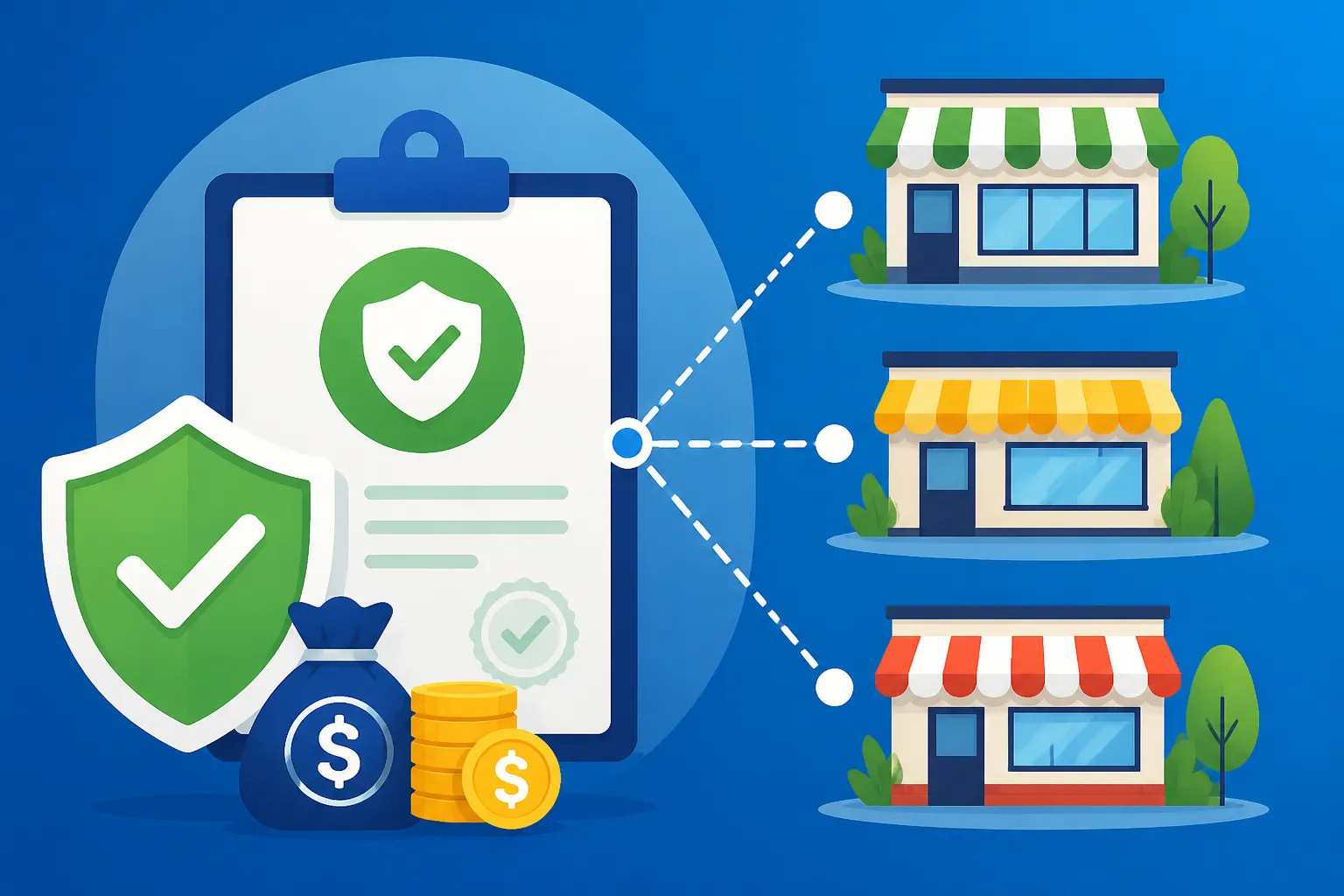
For many businesses operating multiple physical locations within the same state, the good news is that often, a single sales tax permit issued by that state's revenue department can indeed cover all those locations. This is the prevailing approach in states with more centralized sales tax administration.
When a Single State Permit Works
Let's say you own a local bookstore in Phoenix, Arizona, and it's doing so well that you decide to open a second branch in Mesa and a third in Chandler. If all three stores operate under the same legal entity (e.g., the same LLC or sole proprietorship), Arizona's state-level Transaction Privilege Tax (TPT) license would generally cover all three. You register once with the Arizona Department of Revenue (ADOR) and receive one TPT license number. When it comes time to file your returns, you'll report the sales from each location, but they'll all be under that single state account. This simplifies things considerably from a state permit perspective.
Think of it like this: the state cares that you, as a specific business entity, are registered to collect and remit sales tax. As long as all your in-state locations are part of that single entity, they often fall under the umbrella of one state sales tax permit. This is particularly true for states with a single, unified state sales tax rate. You still need to meticulously track sales for each location, as local taxes can vary even within these states, but the foundational permit is usually one-and-done for the state level.
When Separate Permits Become Necessary
However, there are clear scenarios where a single permit simply won't cut it. The most obvious instance is when your business expands across state lines. If our Arizona bookstore decided to open a fourth location in Las Vegas, Nevada, it would absolutely need to obtain a completely separate sales tax permit from the Nevada Department of Taxation. Each state is its own taxing authority, and having a permit in one state doesn't grant you permission to collect or remit taxes in another. This is why understanding How to Register for Sales Tax in Multiple States is so critical for growing businesses.
Another scenario involves different legal entities. If you set up each of your three Arizona bookstores as separate LLCs (e.g., "Phoenix Books LLC," "Mesa Books LLC," "Chandler Books LLC"), even if they are all owned by you, each LLC is a distinct legal entity in the eyes of the state. In this case, each LLC would likely need its own separate sales tax permit. The same applies if you acquire an existing business that has its own established legal entity and sales tax ID; you'd typically keep that separate unless you formally merge the entities. This often comes down to the EIN (Employer Identification Number) – if locations share an EIN, they often share a permit. If they have distinct EINs, they typically need distinct permits.
Understanding State-Specific Requirements
The nuances of sales tax permits really come to light when you dig into how different states structure their tax systems. Not all states are created equal, and what works in one might be a recipe for compliance headaches in another.
Centralized vs. Decentralized Sales Tax Systems
States generally fall into one of two camps regarding sales tax administration: centralized or decentralized.
In a centralized system, the state tax authority (e.g., the Department of Revenue) handles the administration, collection, and auditing of both state and local sales taxes. When you register for a sales tax permit in a state like New York or Florida, you're primarily dealing with a single state agency. While local tax rates will vary by county and city, you typically report all your sales and remit all the collected taxes to the state, and the state then distributes the local portions to the respective jurisdictions. For businesses with multiple locations within such a state, one state permit often suffices. You simply report sales by location or jurisdiction during your Sales Tax Filing Frequency Explained, and the state handles the rest. This system aims to simplify compliance for businesses by providing a single point of contact and filing.
On the flip side, decentralized systems grant significant autonomy to local jurisdictions (counties, cities, parishes, special districts) to administer their own sales taxes. This means that in addition to the state sales tax, local governments can set their own rates, establish their own rules, and sometimes even require separate local registrations or permits. States like Alabama and Louisiana are prime examples. In Alabama, for instance, there are over 200 different sales tax jurisdictions, and you might need to register directly with each city or county where you have a physical presence. The complexity here is immense. While you might only need one state sales tax permit, the local requirements can be far more demanding. A single state permit often doesn't negate the need for numerous local registrations or permits in these states.
Consider Louisiana, a state notorious for its Louisiana Parish Sales Tax Complexity. Not only does it have a state sales tax, but each parish (county) and many municipalities have their own sales taxes, which they often administer independently. If you have stores in multiple parishes in Louisiana, even if you have one state sales tax registration, you'll likely need to register with each individual parish and possibly some cities. This requires careful attention to detail and a robust system for tracking sales and registrations.
Home-Rule States and Local Nuances
Then there are "home-rule" states, which add another layer of complexity to the mix. States like Colorado are excellent examples of this. In Colorado, the state collects a relatively low sales tax rate (2.9%), but many cities and counties have the authority to impose their own sales taxes, which they often administer and audit independently of the state. This means that if you have a physical storefront in Denver, you'd register with the Colorado Department of Revenue for the state sales tax and separately with the City of Denver for its municipal sales tax. If you then opened a store in Colorado Springs, you'd need to register separately with that city too, even though both cities are in the same state.
This distinction is crucial: a single state sales tax permit in a home-rule state typically only covers the state portion of the sales tax. For the local sales taxes, especially in home-rule cities, you often need to jump through additional hoops. This makes the question "Can one permit cover multiple business locations?" particularly tricky in states with Colorado Home-Rule Cities Sales Tax, because while the state might say "yes" to the state permit, the localities might very well say "no" to their local permits. This is why it's so important to consult each state's Department of Revenue website or even reach out directly to municipal tax offices when considering expansion.
Practical Considerations for Multi-Location Businesses
Beyond the legal definitions of permits and state structures, running a multi-location business presents significant practical challenges in sales tax compliance.
Tracking Sales by Location
Even if a single state sales tax permit covers all your in-state locations, you still have the critical responsibility of tracking sales accurately for each one. Why? Because local sales tax rates almost invariably differ. For example, if you operate three retail stores in California – one in Los Angeles, one in San Francisco, and one in Sacramento – while you'd generally have one California seller's permit, the combined state and local sales tax rates in those cities are all different. Los Angeles has its own district taxes, San Francisco has theirs, and Sacramento will have a different set. You need to know exactly how much sales tax was collected at each specific point of sale to ensure you remit the correct amount to the state, which then allocates it to the proper local jurisdictions. Without precise, location-specific sales data, you risk under-collecting, over-collecting, or misreporting, any of which can lead to penalties or audits.
This requires robust point-of-sale (POS) systems and accounting software that can handle complex tax calculations and reporting. Imagine a scenario where a customer buys an item in your Los Angeles store, but it's shipped from your San Francisco warehouse. Depending on the state's sourcing rules (origin vs. destination), the tax rate applied could be different. This kind of intricacy underscores why simple spreadsheets often fall short for multi-location businesses. Understanding concepts like Origin vs Destination Sales Tax Sourcing becomes vital.
The Role of Technology in Compliance
Navigating the labyrinth of sales tax for multiple business locations, especially across state lines or in decentralized/home-rule states, can quickly become overwhelming. This is where modern sales tax compliance technology truly shines. Instead of manually looking up Sales Tax Rates by State 2026: All 50 States or trying to keep track of every changing district tax, automated solutions can handle the heavy lifting.
Companies like Avalara offer powerful platforms designed to automate sales tax calculations, collection, and filing across thousands of taxing jurisdictions. For a business with multiple physical stores or even an online store with nexus in many states, an automated system can:
- Determine accurate rates: Instantly calculate the correct sales tax rate based on the customer's location (shipping address) and the item being sold, taking into account all state, county, city, and special district taxes.
- Manage multiple locations/entities: Help consolidate reporting for a single entity with multiple locations, or manage separate filing for distinct entities or jurisdictions requiring independent registration.
- Automate filing: Prepare and file returns in all the necessary jurisdictions, ensuring timely submissions and reducing the risk of penalties.
- Maintain audit trails: Keep detailed records of all transactions, tax calculations, and remittances, providing a clear audit trail if ever needed.
Without such tools, businesses often find themselves spending countless hours on manual tasks, trying to decipher varying local rules and ensuring they're collecting the correct amount. This is particularly true for businesses that have crossed Economic Nexus by State 2026: Thresholds Guide thresholds in multiple states, necessitating widespread compliance. Leveraging technology means you can focus more on growing your business and less on the intricate, ever-changing world of sales tax.
For any business, whether you have one location or twenty, it's always prudent to review your sales tax obligations periodically and consider how a solution like Avalara can streamline your compliance efforts. The complexities of sales tax, especially when dealing with various physical locations, mean that a proactive and technologically-aided approach is often the most cost-effective and least stressful path to maintaining good standing with tax authorities.
Here’s a simplified table illustrating how states generally approach sales tax permits for multiple in-state locations:
| State System Type | Typical Permit Requirement for Multiple In-State Locations (Same Legal Entity) | Key Characteristics | Example States |
|---|---|---|---|
| Centralized | One state permit usually covers all locations. | State collects and distributes all sales taxes (state and local). Single filing point. | New York, Florida, Texas |
| Decentralized | One state permit, but often requires separate local registrations/permits. | Locals administer their own taxes. Multiple registrations and potentially filings needed. | Alabama, Louisiana |
| Home-Rule | One state permit for state tax, separate municipal registrations/permits. | Cities/counties administer their own local taxes independently from the state. | Colorado (e.g., Denver, Colorado Springs), some cities in Arizona (for TPT licenses) |
Understanding this table provides a high-level overview, but remember that specific rules can change, and it's essential to always verify with the relevant state and local tax authorities or utilize a service like Avalara for precise, up-to-date guidance.
Disclaimer
Please note that this article is intended for informational purposes only and does not constitute tax advice. Sales tax laws are complex and constantly changing. Always consult with a qualified tax professional or the appropriate state and local tax authorities for advice specific to your business situation.