Streamlined Sales Tax Registration (SST)
Navigating the labyrinthine world of sales tax can feel like a full-time job for small business owners and e-commerce entrepreneurs. With every state, county, and even city having its own rules, definitions, and rates, the sheer complexity can be overwhelming, leading to missed deadlines, errors, and unnecessary stress. This guide will walk you through the Streamlined Sales Tax (SST) program, a collaborative effort designed to simplify sales tax compliance for businesses operating across multiple states.
What Exactly is Streamlined Sales Tax (SST)?
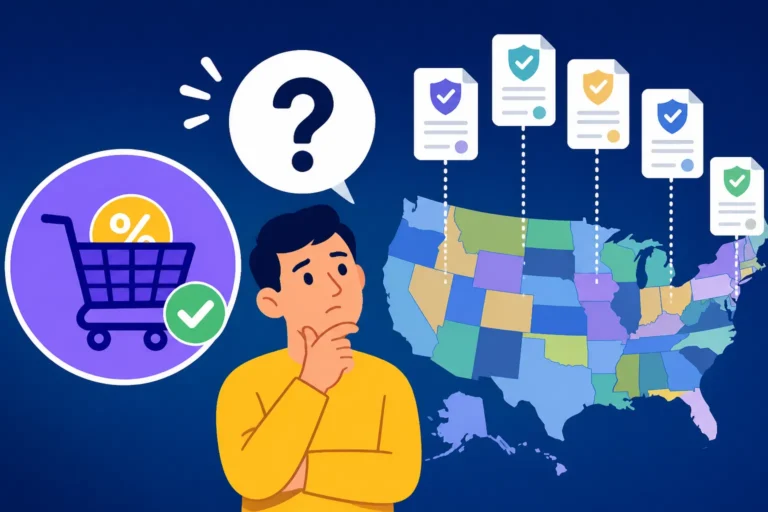
Sales tax compliance in the United States is notoriously complex. Unlike a national value-added tax (VAT) system found in many other countries, the U.S. relies on a state-administered sales tax system, which has evolved into a patchwork of unique rules and regulations. This diversity is precisely what the Streamlined Sales Tax (SST) program was created to address. It's not a federal sales tax, nor does it override state sovereignty. Instead, SST is a cooperative effort among participating states to simplify and harmonize sales tax administration for businesses, especially those selling into multiple states. Think of it as an agreement among states to play by a more consistent set of rules, making it easier for businesses to comply.
The Problem SST Aims to Solve
Imagine trying to keep track of sales tax rules for every single state you sell into. Each state might define "clothing" or "food" differently, leading to confusion about what's taxable and what's exempt. Some states tax digital products, while others don't. Some have specific sales tax holidays that vary by date and eligible items. Add to this the constant Sales Tax Rate Changes by State 2026 and the varying local rates, and it becomes a compliance nightmare. Before the 2018 South Dakota v. Wayfair Supreme Court decision, this complexity was mostly an issue for businesses with a physical presence in multiple states. But with the rise of economic nexus, online sellers without any physical footprint are now required to collect and remit sales tax in many states, exponentially increasing the burden. This patchwork of regulations often deters businesses from expanding or complying fully, leading to potential audits and penalties. The SST program stepped in to try and bring some much-needed order to this chaos.
How SST Works
At its core, SST works by getting member states to agree on a common set of definitions, rules, and administrative practices. This means that if a product is defined as "food" and exempt in one SST state, it's likely to be defined similarly across all SST states, reducing confusion. The program also standardizes registration, filing, and remittance processes. For businesses, the biggest game-changer is often the use of Certified Service Providers (CSPs). These are third-party technology companies, like Avalara, that are certified by the SST Governing Board to manage a seller's sales tax responsibilities. When a seller uses a CSP for sales into SST states, the CSP handles all the rate lookups, calculations, collections, and filings on behalf of the seller. This takes a massive load off the business owner's shoulders, ensuring accuracy and compliance. Crucially, in many cases, states cover the cost of these CSP services for sellers who register through the SST program, which is a huge financial incentive.
Key Benefits of the SST Program for Businesses
The benefits of the SST program are substantial, especially for businesses with nexus in several member states. First and foremost, it brings simplification. Instead of grappling with dozens of different state tax codes, businesses can rely on harmonized definitions and processes. This drastically reduces the time and resources spent on compliance. Secondly, accuracy improves significantly. CSPs are built to handle complex tax calculations, constantly updating rates and rules for thousands of jurisdictions, minimizing errors that could lead to fines. Thirdly, for many sellers, the program offers free sales tax compliance software when they register through an SST-certified CSP. This means the state effectively pays for the service provider to manage your sales tax, a considerable cost saving. Lastly, it streamlines the entire sales tax lifecycle, from initial registration to filing and remittance, allowing businesses to focus on growth rather than administrative headaches. This ease of doing business encourages broader economic activity and helps level the playing field for smaller online sellers competing with larger enterprises.
Who Can Join the SST Program? Eligibility and Requirements
While the Streamlined Sales Tax program offers enticing benefits, it's not a universal solution for every business, nor are all states participants. Understanding the eligibility criteria and the participating states is crucial before diving in. The program is specifically designed to alleviate the burden of multi-state sales tax compliance, especially for remote sellers.
Seller Criteria for Participation
Generally, any business that makes taxable sales into Streamlined Sales Tax states can potentially participate. The key is that you must be a "volunteer seller," meaning you're not legally required to register in an SST state due to a physical presence. The most common scenario for participation today involves businesses that have established economic nexus in one or more SST states. For instance, if your business is based in Florida but meets the economic nexus threshold in Arkansas (an SST state), you could register for sales tax in Arkansas through the SST program. This contrasts with businesses that might have a physical storefront or employee in an SST state, which would typically register directly with that state's department of revenue and not qualify as a "volunteer seller" for the purposes of the SST program. The aim is to make it easier for businesses that don't have traditional ties to a state to comply once nexus is triggered.
What it Means to Be a "Voluntary Seller"
The term "voluntary seller" is critical in the context of SST. It refers to a seller who does not have a physical presence (like an office, warehouse, or employees) in a particular SST member state, but has established economic nexus there. Because these sellers are considered "remote sellers," SST offers incentives for them to voluntarily register and comply. The biggest incentive, as mentioned, is often the states covering the cost of a Certified Service Provider (CSP). If you already have a physical presence in an SST state, you are generally not considered a "voluntary seller" for that specific state through the SST program, and thus wouldn't qualify for the free CSP services for sales into that state. However, if you have a physical presence in, say, Indiana (an SST state) but only economic nexus in Kentucky (another SST state), you could still leverage the SST program and its benefits for your sales into Kentucky. It's about simplifying compliance for those new, remote nexus obligations.
States Participating in the SST Program
As of early 2026, there are 24 full member states in the Streamlined Sales Tax Governing Board. These states have adopted the uniform sales tax definitions and administrative procedures. It's important to remember that this list can occasionally change, so it's always good to verify the current roster.
Here's a list of the participating states, which is quite impressive when you consider the complexity of getting states to agree on anything tax-related:
Streamlined Sales Tax Member States (2026)
| State | Sales Tax Rate | Economic Nexus Threshold | Notes |
|---|---|---|---|
| Arkansas | 6.5% | $100,000 | |
| Georgia | 4.0% | $100,000 | |
| Indiana | 7.0% | $100,000 | |
| Iowa | 6.0% | $100,000 | |
| Kansas | 6.5% | $100,000 | |
| Kentucky | 6.0% | $100,000 | |
| Michigan | 6.0% | $100,000 or 200 sales | |
| Minnesota | 6.875% | $100,000 or 200 sales | |
| Nebraska | 5.5% | $100,000 | |
| Nevada | 6.85% | $100,000 or 200 sales | |
| New Jersey | 6.625% | $100,000 or 200 sales | |
| North Carolina | 4.75% | $100,000 | |
| North Dakota | 5.0% | $100,000 | |
| Ohio | 5.75% | $100,000 or 200 sales | |
| Oklahoma | 4.5% | $100,000 | |
| Rhode Island | 7.0% | $100,000 or 200 sales | |
| South Dakota | 4.5% | $100,000 | State in the landmark Wayfair decision. |
| Tennessee | 7.0% | $100,000 | Highest state rate among SST states. |
| Utah | 4.85% | $100,000 | |
| Vermont | 6.0% | $100,000 or 200 sales | |
| Washington | 6.5% | $100,000 | |
| West Virginia | 6.0% | $100,000 | |
| Wisconsin | 5.0% | $100,000 | |
| Wyoming | 4.0% | $100,000 |
Note: Economic nexus thresholds can change, and some states are moving away from the 200-transaction threshold. Always check the latest requirements for each state.
It's important to note that just because a state participates in SST doesn't mean its base sales tax rate is uniform. For instance, you'll see Tennessee Sales Tax Rate at 7% and Wyoming Sales Tax Rate 2026 at 4%. SST primarily streamlines the administration and definitions, not the actual rates. Moreover, many of these states also have significant local sales taxes on top of the state rate, which the CSPs are equipped to handle. For more detailed information, you can always check the official Streamlined Sales Tax Governing Board website.
The Step-by-Step Process of SST Registration
If you've determined that your business qualifies as a "voluntary seller" and you have nexus in one or more SST states, the registration process is surprisingly straightforward, especially when compared to registering directly with individual states. The beauty of SST lies in its centralized approach, largely facilitated by Certified Service Providers.
Choosing a Certified Service Provider (CSP)
The first, and arguably most crucial, step is selecting a Certified Service Provider (CSP). These are private companies that have been rigorously audited and certified by the SST Governing Board to perform sales tax administration services on behalf of sellers. They are the backbone of the SST program, ensuring that calculations are accurate and filings are timely. When you register through SST, these CSPs often come at no cost to you for sales into SST states. Well-known names in this space include Avalara, Sovos, and TaxJar. Each offers slightly different features and integrations, so it’s wise to explore your options based on your business size, transaction volume, and existing e-commerce platforms. For example, if you're a large enterprise, a solution like Avalara might offer more robust features and integrations with complex ERP systems.
The CSP's role is expansive: they perform the tax calculations, file the returns, and even remit the collected sales tax to the appropriate state. Essentially, they become your outsourced sales tax department for SST states, significantly reducing your compliance burden. They also bear the liability for incorrect tax calculations, as long as you've provided them with accurate information. This liability shift is a huge incentive for businesses to use CSPs.
Gathering Necessary Business Information
Once you've chosen a CSP, you'll need to provide them with essential information about your business. This is similar to what you'd need if you were completing a Sales Tax Registration Guide for California or any other state directly, but the CSP streamlines the intake process. Expect to provide:
- Legal Business Name: As registered with your state.
- Federal Employer Identification Number (FEIN): Also known as an EIN.
- Business Address: Your primary business location.
- Business Type: (e.g., sole proprietorship, LLC, corporation).
- NAICS Code: A standard industry classification code.
- Contact Information: For the principal owner or authorized representative.
- Banking Information: For remitting collected taxes (though the CSP handles this for SST states).
- Information about your sales platforms: Such as Shopify, Amazon, or your own e-commerce website.
- Product Information: A detailed list of the products or services you sell, as the CSP will need to classify them correctly for taxability purposes across different states. This includes identifying exempt items like Is Clothing Taxable in New York? (under certain thresholds) or Is Groceries Taxable in California? (generally exempt).
The CSP will use this data to set up your account and ensure accurate tax calculations and filings. Take your time to provide precise information, as the CSP’s ability to perform its function correctly depends on the data you supply.
Completing the Online Registration through a CSP
After providing your business details, the CSP will guide you through the online registration process. The beauty of SST is that you don't need to visit individual state websites. Instead, the CSP provides a unified registration portal. You'll indicate which SST states you wish to register in, and the CSP will handle the backend submission to the respective state tax authorities. This "one-stop shop" approach for multiple state registrations is a cornerstone of the SST program's simplification efforts.
Once registered, you'll receive confirmation from the individual states and potentially state sales tax permits or account numbers. Even though you're registering through a CSP, the legal obligation to collect and remit sales tax still falls on your business. The CSP is simply acting as your agent. You'll then configure your e-commerce platform or POS system to integrate with the CSP's tax engine, ensuring that sales tax is correctly calculated at the point of sale for all your transactions in SST states.
Life After Registration: Collection, Remittance, and Compliance with SST
Getting registered is just the first hurdle. The real ongoing benefit of the Streamlined Sales Tax program, particularly when working with a Certified Service Provider (CSP), comes in the day-to-day management of sales tax. This is where the heavy lifting of compliance is offloaded, allowing you to breathe a bit easier.
How CSPs Handle Sales Tax Calculations and Filings
Once you're set up with a CSP, their system integrates seamlessly with your sales platforms, whether it's an online store, a physical point-of-sale system, or both. For every transaction in an SST state, the CSP's robust tax engine instantly:
- Determines Taxability: Based on the product or service sold and the standardized definitions across SST states (e.g., whether Is SaaS Taxable in Texas? or a specific type of Digital Products Sales Tax by State applies).
- Identifies Jurisdiction: Pinpoints the exact tax jurisdiction (state, county, city, special district) based on the customer's shipping address. This is incredibly precise, going beyond just ZIP codes, which can span multiple tax jurisdictions. This helps avoid issues highlighted in articles like Sales Tax by ZIP Code and Why ZIP Isn't Enough.
- Applies Correct Rates: Calculates the appropriate combined state and local sales tax rate for that specific jurisdiction, including any local add-ons, and applies it to the transaction.
- Generates Returns: At the end of each filing period (which the state assigns, potentially monthly, quarterly, or annually, like California Sales Tax Due Dates 2026), the CSP compiles all your sales data, calculates the total tax due for each state, and prepares the necessary sales tax returns.
- Remits Funds: The CSP will then remit the collected sales tax directly to the respective state tax agencies on your behalf. This means you don't have to worry about tracking individual state deadlines or making separate payments.
This entire process is automated, vastly reducing the chances of human error and ensuring that your business remains compliant with the intricate and ever-changing sales tax landscape.
Audit Protection and Other Perks of SST
One of the most comforting aspects of using a CSP for SST compliance is the built-in audit protection. As long as you provide accurate product data to your CSP, the CSP typically assumes liability for any incorrect tax calculations. This means if a state audits you and finds an error in the tax rate applied, the CSP is responsible, not your business. This is a massive weight off the shoulders of business owners, as sales tax audits can be incredibly time-consuming and financially draining.
Beyond audit protection, other perks include:
- Centralized Reporting: Even though your tax is going to different states, your CSP provides consolidated reports, giving you a clear overview of your sales tax obligations and payments across all SST states.
- Expert Support: CSPs have dedicated teams of tax professionals who are experts in sales tax law. If you have questions or encounter complex scenarios, their support can be invaluable.
- Staying Up-to-Date: Tax laws and rates are constantly in flux. CSPs continuously monitor and update their systems to reflect the latest changes, ensuring your business is always applying the correct tax, even if it's a new 2026 Sales Tax Rate Changes by State.
This level of support and automation is invaluable, especially for growing businesses that might not have in-house sales tax expertise.
Maintaining Compliance and Avoiding Common Pitfalls
While CSPs and the SST program simplify things greatly, maintaining compliance still requires diligence from your end. Here are a few key areas to focus on:
- Accurate Product Classification: The CSP can only tax what you tell it to. Ensure you've accurately categorized all your products and services within your CSP's system. For example, knowing the difference between Candy & Soda Sales Tax (The Flour Test) and regular groceries is crucial. If you introduce new products, update their classifications promptly.
- Timely Data Flow: Make sure your sales data is consistently and accurately flowing from your e-commerce platforms and POS systems to your CSP. Any disruptions or delays could lead to incomplete or incorrect filings.
- Understanding Your Role: Remember, the CSP is an agent. You are still ultimately responsible for your business's tax obligations. Regularly review the reports provided by your CSP and understand the basics of what's being filed. Don't just set it and forget it entirely.
- Non-SST State Compliance: The SST program only covers its member states. If you have nexus in non-SST states (like California Sales Tax Rate (7.25% Base + Districts) or New York Sales Tax Rate (4% + Local)), you'll need a separate strategy for those, which might involve direct registration and filing, or using your CSP's services for those states (though those services might not be free).
By actively partnering with your CSP and staying informed, you can maximize the benefits of the SST program and ensure long-term sales tax compliance with minimal stress.
Is SST Right for Your Business? Pros and Cons
Deciding whether to enroll in the Streamlined Sales Tax program is a significant business decision. While it offers clear advantages, it's not a one-size-fits-all solution. It's essential to weigh the benefits against potential drawbacks to see if it aligns with your specific operational needs and sales footprint.
Advantages of Streamlined Sales Tax
The compelling advantages of the SST program primarily revolve around simplification and cost savings, particularly for businesses that have established economic nexus in multiple remote states.
- Reduced Compliance Burden: This is the flagship benefit. Instead of navigating the distinct sales tax laws, definitions, and filing processes of potentially 24 different states, you deal with a harmonized system. This dramatically cuts down on the administrative effort, research, and stress associated with multi-state sales tax.
- Free or Subsidized CSP Services: For "voluntary sellers" (those without a physical presence in the SST state), the participating states often cover the cost of using a Certified Service Provider. This means you get a professional, automated sales tax solution without having to pay subscription fees, which can save thousands of dollars annually.
- Enhanced Accuracy: CSPs are specialized software solutions designed for tax calculations. They maintain up-to-date rates and rules for all jurisdictions within SST states, including complex local taxes, minimizing the risk of errors that could lead to penalties.
- Audit Protection: As mentioned, CSPs typically assume liability for incorrect tax calculations in SST states, provided you've supplied accurate data. This offers a significant layer of financial and legal protection during audits.
- Streamlined Registration and Filing: The ability to register in multiple SST states through a single portal and have a CSP handle all subsequent filings and remittances simplifies the entire compliance lifecycle, freeing up valuable time and resources.
- Focus on Business Growth: By offloading complex sales tax tasks, business owners and their teams can re-allocate their energy towards core business activities like sales, marketing, and product development, fostering growth rather than getting bogged down in minutiae.
Potential Drawbacks and Considerations
Despite its numerous benefits, the SST program isn't without its potential downsides or considerations that might make it less ideal for certain businesses.
- Limited State Participation: The most obvious limitation is that not all states are part of the SST program. Major economic hubs like California, Texas, and Florida, for example, are not SST member states. This means if you have nexus in these non-SST states, you'll still need to manage their sales tax compliance separately. A business with nexus solely in non-SST states would not benefit from the program at all.
- "Voluntary Seller" Restriction: The free CSP services are generally only available for "voluntary sellers"—those who have established nexus solely through economic activity and not a physical presence. If your business has employees, warehouses, or other physical ties in an SST state, you might not qualify for the free CSP service for that specific state. In such cases, while you could still use a CSP, you'd likely incur a cost for their services.
- Learning Curve with CSPs: While CSPs simplify the process, there can still be an initial learning curve in integrating the CSP's system with your existing platforms and ensuring accurate product classification. You're still responsible for providing correct source data.
- Reliance on a Third Party: You are entrusting a critical compliance function to a third-party provider. While CSPs are rigorously vetted, it still means your business is dependent on their system's functionality and accuracy.
- Not a Replacement for All Tax Expertise: While SST and CSPs handle sales tax, they don't cover other types of taxes (income tax, payroll tax, property tax). Businesses still need broader tax planning and accounting expertise.
When to Consider Other Sales Tax Solutions
For businesses that primarily operate in non-SST states or have a physical presence in all their nexus states, the benefits of the SST program may not outweigh the effort of enrollment. For instance, if your business solely has Economic Nexus Threshold in California and Economic Nexus Threshold in Texas, then SST won't directly help you with those states. In such scenarios, a business might:
- Register Directly: Handle sales tax registration and filing directly with the state's department of revenue. This can be manageable if you only have nexus in a few states, or if you primarily sell through marketplace facilitators like Amazon or Etsy, which handle many of these obligations for you under Marketplace Facilitator Laws by State.
- Use Paid Sales Tax Software: Implement a general sales tax compliance software solution (like a paid plan from Avalara or TaxJar) that covers all 45 states with sales tax, regardless of their SST status. This offers similar automation benefits but comes with a subscription cost.
- Consult a Tax Professional: For complex situations, a tax advisor specializing in multi-state sales tax can provide tailored guidance.
Ultimately, the decision hinges on your specific nexus footprint, sales volume, and resources. If you have significant sales into multiple SST member states without a physical presence, Streamlined Sales Tax is almost certainly a program worth exploring seriously.
Frequently Asked Questions About SST
The Streamlined Sales Tax program can seem like a beacon of hope in the often-confusing world of sales tax, but it also raises a lot of questions. Let's tackle some of the most common ones.
Understanding SST's Impact on Economic Nexus
Before the South Dakota v. Wayfair decision, sales tax collection was primarily tied to physical presence. Post-Wayfair, "economic nexus" became the new norm, meaning businesses can be required to collect sales tax based solely on their sales volume or transaction count into a state, even without a physical footprint. This is precisely the scenario where SST shines. The program was revitalized to address the compliance burdens created by economic nexus.
SST doesn't change if you have economic nexus; rather, it simplifies how you comply once you've crossed a state's threshold. For example, if your online store based in Oregon (a state with States With No Sales Tax) crosses the $100,000 sales threshold in North Carolina (an SST state), you now have economic nexus there. Instead of individually figuring out North Carolina's specific product definitions, local rates, and filing deadlines, you can register through the SST program, typically getting a CSP like Avalara to handle everything at no cost. This makes economic nexus compliance far less daunting for remote sellers who suddenly find themselves needing to collect sales tax in a dozen or more states.
What if I Already Have Sales Tax Permits in SST States?
This is a common question, especially for businesses that started collecting sales tax in SST states before learning about the program or before economic nexus became widely enforced. If you already have a sales tax permit registered directly with an SST member state, you might still be able to transition to the SST program to leverage its benefits.
However, a critical distinction applies: if you registered directly because you have a physical presence (e.g., an office, employee, or warehouse) in that SST state, you generally won't qualify as a "voluntary seller" for that specific state, and thus won't receive the free CSP services for sales into that state. You could still use a CSP to help manage your compliance, but you'd likely pay for their service.
If you registered directly in an SST state solely due to economic nexus and without a physical presence, it's often possible to transition. You would need to work with an SST Certified Service Provider to guide you through the process of re-registering or linking your existing account under the SST framework. The goal would be to enroll as a "voluntary seller" to access the free CSP services. Each state's exact rules on transitioning existing registrations can vary slightly, so consulting with a chosen CSP or directly with the state's tax department would be the best approach.
Can I Switch to SST Later On?
Yes, you can absolutely switch to the Streamlined Sales Tax program later on, as long as you meet the "voluntary seller" criteria for the states you wish to register in. Many businesses initially try to manage multi-state sales tax on their own, or they use paid software solutions, only to discover the complexity becomes too much as they grow and establish nexus in more states.
There's no penalty or disadvantage for joining the SST program after operating for a while. In fact, many businesses find that the tipping point for joining comes when they realize the time and resources they're dedicating to sales tax compliance could be better spent elsewhere. The process of transitioning typically involves:
- Ceasing Direct Filing: You would stop filing sales tax returns directly with the SST states you plan to enroll in through the program.
- Registering via a CSP: You then go through the standard SST registration process with a Certified Service Provider, identifying yourself as a new participant in the program.
- Integrating Systems: Your CSP will help ensure a smooth transition of your sales data and tax collection processes.
The flexibility of the SST program allows businesses to adopt it when it makes the most sense for their operational scale and compliance needs. It's designed to be an ongoing resource for businesses facing multi-state sales tax challenges.
Disclaimer
The information provided in this guide is for general informational purposes only and does not constitute professional tax or legal advice. Sales tax laws are complex and subject to change. Always consult with a qualified tax professional or legal advisor for advice tailored to your specific business situation.