Do I Need a Separate Permit for Each State?
It can feel incredibly daunting when you're growing your business and suddenly realize that the sales tax rules you thought you understood for your home state might be just the tip of the iceberg. Many small business owners, especially those selling online or across state lines, grapple with the question of whether they need to jump through separate hoops for sales tax in every single state they do business in. This comprehensive guide is here to untangle that knot, explain why multi-state registration is usually necessary, and walk you through what to expect.
The Straightforward Answer: Yes, You Need Multiple State Sales Tax Permits
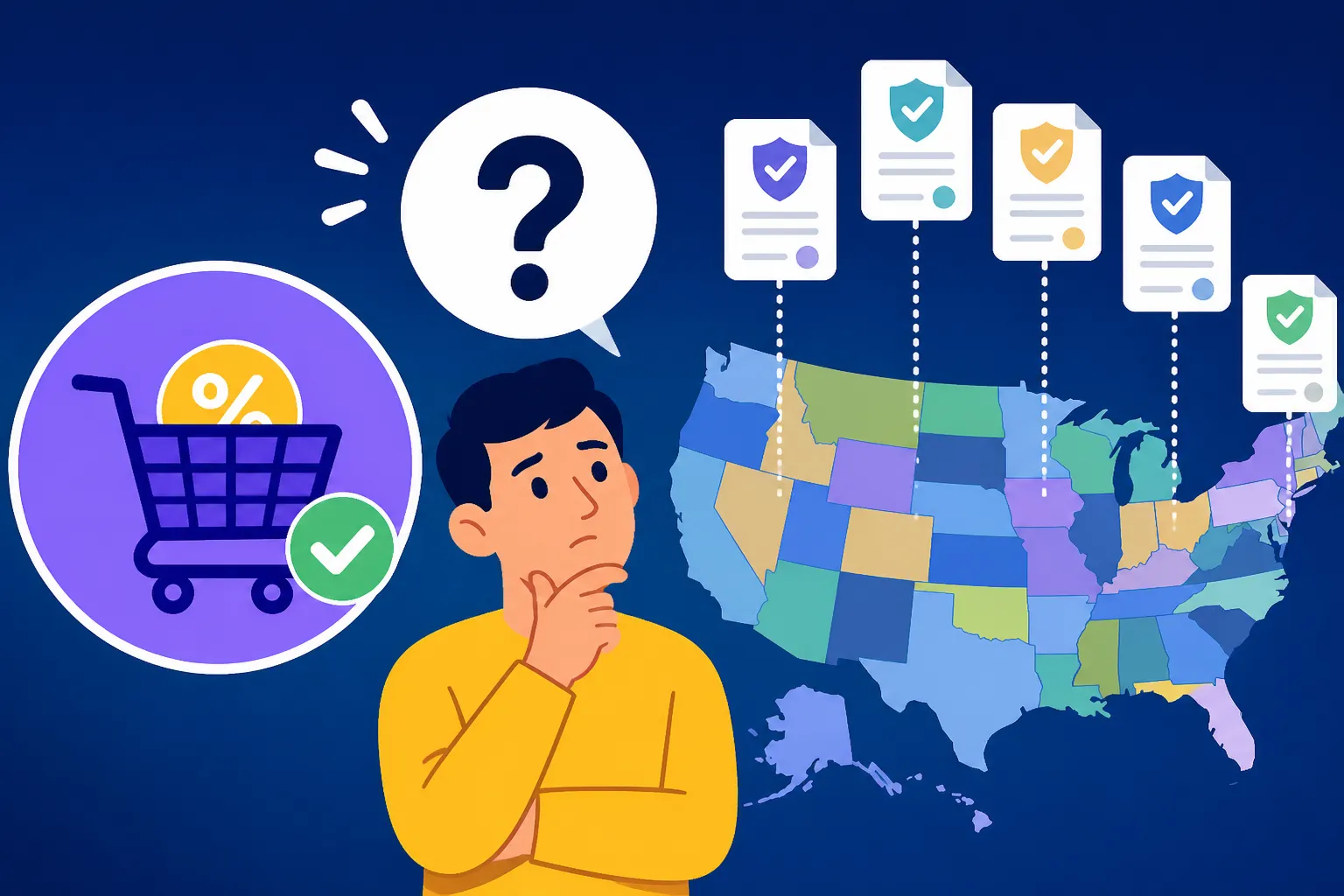
Let's cut right to the chase because this is often where the confusion begins. For the vast majority of businesses that have established what's called "nexus" in multiple states, the answer is a resounding yes. You will need a separate sales tax permit, license, or certificate of authority for each state where you have an obligation to collect and remit sales tax. It's not a one-size-fits-all federal permit, nor is it a single permit that magically covers you across the country.
Why Each State Requires Its Own Registration
Each state operates as its own independent tax jurisdiction when it comes to sales and use tax. Think of it like a puzzle where every state has its unique piece, and your business needs to fit into each one where it has a connection. This means that a permit issued by, say, the California Department of Tax and Fee Administration (CDTFA) is only valid for sales tax within California. It won't help you with your obligations in Texas, Florida, or New York. This can be a huge headache for businesses trying to scale, as each state has its own application process, fees (sometimes), and compliance requirements.
Consider a hypothetical scenario: Sarah runs an online boutique selling custom-designed t-shirts. Her main office and warehouse are in Oregon, a state with no statewide sales tax. However, she attends several craft fairs throughout the year in Washington, where she makes direct sales to customers. Because she has a physical presence at these fairs in Washington, she establishes physical nexus there. Now, even though her business is based in Oregon, she'll need to register for a Washington sales tax permit to legally collect and remit sales tax on those Washington sales. If she also starts shipping enough products to customers in California to meet their economic nexus threshold, she'll need a third permit for California. It quickly adds up!
Understanding State Sovereignty in Sales Tax
The reason for this state-by-state approach stems from the concept of state sovereignty and the distinct tax laws each state has established. There isn't a federal sales tax in the United States, unlike many other countries that have a national Value Added Tax (VAT) or Goods and Services Tax (GST). This decentralization means that each of the 45 states (plus D.C.) that levies a sales tax gets to set its own rules. These rules include defining what's taxable, what's exempt, the various tax rates (which can vary down to the city and county level), and, crucially, how and when businesses must register.
This autonomy leads to a patchwork of regulations that can feel like a minefield for businesses. For example, some states might consider certain digital products taxable, while others do not. The base sales tax rate in Colorado is 2.9%, but its home-rule cities like Denver can add significant local taxes, which often requires separate registration directly with those cities. On the other hand, the Louisiana Sales Tax Rate (Highest Combined 10.11%) is notorious for its complexity due to numerous local jurisdictions. This inherent state-by-state control means that each state wants businesses operating within its borders (or selling enough into its borders) to register directly with its own revenue department to ensure proper collection and remittance.
Decoding Sales Tax Nexus: When and Where to Register
The fundamental trigger for needing a sales tax permit in any given state is establishing "nexus" there. Without nexus, you generally don't have an obligation to collect sales tax. But what exactly is nexus? Simply put, it's a sufficient connection or presence in a state that obligates your business to collect sales tax. Historically, this was largely about physical presence, but thanks to modern commerce and a landmark Supreme Court case, it's much broader now. Understanding Sales Tax Nexus Explained (Physical vs Economic) is step one in figuring out your multi-state obligations.
The Enduring Power of Physical Nexus
Even with all the talk of online sales, physical nexus remains a primary driver for sales tax obligations. If your business has any sort of tangible presence in a state, you've likely created physical nexus. This isn't just about having a brick-and-mortar store; it can be much more subtle.
Consider a few common examples:
- Offices or Stores: This is the most obvious. If you have an office, retail store, or warehouse, you definitely have physical nexus.
- Employees: Even a single employee working in a state, whether full-time, part-time, or even remotely, can create nexus. Imagine a marketing company based in New York that hires a remote graphic designer living in Florida. That remote employee might create nexus for the New York company in Florida, obligating them to collect Florida sales tax from their Florida customers.
- Inventory in a Warehouse: This is a big one for e-commerce sellers, especially those using fulfillment services like Amazon FBA. If your products are stored in a third-party warehouse in a state, you almost certainly have nexus there. This is a common pitfall, as sellers might not even realize their inventory is being distributed across multiple states by their fulfillment partner. Understanding Amazon FBA Sales Tax Nexus Explained is critical for many online businesses.
- Trade Shows, Craft Fairs, or Temporary Events: Setting up a booth at a weekend convention, a pop-up shop, or a local craft fair, even for a short period, can establish nexus in that state. States view this as you physically engaging in sales activity within their borders.
- Delivery Vehicles: Some states consider having your own vehicles regularly delivering goods into their state as creating physical nexus.
The key takeaway here is that physical presence doesn't need to be permanent or extensive to trigger a sales tax obligation.
The Widespread Impact of Economic Nexus (Post-Wayfair)
The sales tax landscape for online sellers changed dramatically after the 2018 Supreme Court ruling in South Dakota v. Wayfair. This decision introduced the concept of "economic nexus," which means that even if you have no physical presence in a state, you can still establish nexus if your sales activity into that state exceeds certain thresholds. This is arguably the most significant factor driving the need for multi-state permits today, especially for e-commerce businesses. To really dive deep, you can read more about South Dakota v. Wayfair: What It Means for Sellers.
Every state that has adopted economic nexus (which is almost all of them with a sales tax) has its own specific thresholds. These thresholds typically involve:
- Sales Volume: A dollar amount of gross sales into the state (e.g., $100,000, $250,000, or $500,000).
- Transaction Count: A number of separate sales transactions into the state (e.g., 200 transactions).
It's crucial to note that many states initially included both a dollar amount and a transaction count, but some, like Texas, have since dropped the transaction count, simplifying things slightly for sellers. For example, the Economic Nexus Threshold in Texas ($500k) is currently $500,000 in gross revenue in the preceding or current calendar year, with no transaction count. In contrast, the Economic Nexus Threshold in New York ($500k + 100 Sales) still includes both a $500,000 sales threshold and 100 separate sales transactions. Tracking these different thresholds across states can be a full-time job in itself, making the need for separate permits a very real consequence of success.
Other Nexus Triggers to Keep an Eye On
While physical and economic nexus are the most common, there are other types of nexus that can trigger a sales tax obligation, particularly as your business grows or engages in specific activities:
- Affiliate Nexus: If you have agreements with in-state individuals or businesses (affiliates) who refer customers to your business in exchange for a commission, and those referrals generate sales, you might establish affiliate nexus. New York was a pioneer in this type of nexus.
- Click-Through Nexus: Similar to affiliate nexus, this can be triggered if you have agreements with in-state residents who advertise your products on their websites, and customers click through from those sites to make purchases from you.
- Referral Nexus: This is often linked to marketplace facilitator laws, where states mandate that platforms like Amazon or Etsy collect and remit sales tax on behalf of their third-party sellers. While this often shifts the collection burden, it doesn't always eliminate your own filing responsibility, especially if you sell on your own website too.
- Cookie Nexus/Software Nexus: Some states are beginning to explore whether having software installed on customer devices or placing cookies on computers within their state creates a form of nexus. This area is still evolving and highlights the dynamic nature of sales tax law.
The bottom line is that any substantial connection to a state, whether physical or virtual, can create nexus, and once nexus is established, the requirement to register for a permit in that state immediately follows.
Navigating the Multi-State Registration Process
Once you've determined you have nexus in multiple states, the next hurdle is the actual registration process. This isn't always a quick or uniform task, but approaching it systematically can make it much more manageable. The overarching goal is to obtain a valid sales tax permit for each state where you're obligated to collect. If you need a broad overview, check out our guide on How to Register for Sales Tax (Multi-State).
Essential Information You'll Need for Each Application
While each state's application form will have its unique quirks, there's a core set of information you'll almost always need to provide. Gathering these details beforehand will save you a lot of time and frustration.
Here's a common checklist:
- Federal Employer Identification Number (FEIN): Your business's unique nine-digit tax ID from the IRS.
- Legal Business Name and DBA (Doing Business As) Name: The official registered name of your business and any trade names you operate under.
- Business Structure: (e.g., Sole Proprietorship, Partnership, LLC, Corporation).
- Physical Business Address(es): Your primary business location and any other physical locations that might create nexus.
- Mailing Address: Where you want to receive official correspondence.
- Contact Information: Name, title, phone number, and email for a primary contact person.
- NAICS or SIC Code: Industry classification codes that describe your business activity.
- Date Business Started (or Date of First Sale/Activity in the State): This helps the state determine when your sales tax obligation began.
- Description of Business Activities: A brief explanation of what your business sells or does.
- Estimated Monthly or Annual Taxable Sales: States often use this to determine your initial filing frequency (e.g., monthly, quarterly, annually).
- Bank Account Information: For setting up electronic payments, though usually not required at the initial registration step.
- Owner/Officer Information: Names, addresses, and Social Security Numbers (SSN) of owners, partners, or corporate officers. This is often required for identification and personal guarantee purposes.
Let's illustrate with a table:
| Information Required | Purpose | Notes |
|---|---|---|
| FEIN | Federal Tax Identification | Essential for all business entities (except sole proprietors using SSN) |
| Legal Business Name | Official identification | Must match IRS records |
| Business Address | Establishes physical location | P.O. boxes usually not accepted for physical address |
| Start Date of Business/Ops | Determines tax effective date | Crucial for states to know when your nexus began |
| Business Activity | Classifies your business for tax purposes | Affects what tax rates or exemptions might apply. Think about Is SaaS Taxable? Software-as-a-Service by State vs. Is Clothing Taxable? Sales Tax on Apparel by State. |
| Owner/Officer Details | Personal responsibility/identification | Many states require this for transparency and accountability |
Failing to provide accurate and complete information can lead to delays in receiving your permit or even rejection of your application, prolonging the time before you can legally collect sales tax.
The Role of Streamlined Sales Tax (SST) in Simplification
For businesses facing the daunting task of registering in many states, the Streamlined Sales Tax (SST) Governing Board offers a glimmer of hope. SST is a cooperative effort by states to simplify and modernize sales and use tax administration. There are currently 24 member states in the SST agreement. For sellers with nexus in multiple SST states, there's a simplified process to register in all member states at once through a single online application. This is a huge time-saver compared to navigating individual state portals.
Here’s how it works: you can use the SST system to register, and once registered, you can often utilize a Certified Service Provider (CSP) to handle sales tax calculations, collection, and filing for you, often at no cost to the seller in SST states. These CSPs, which include well-known names like Avalara, are compensated by the SST states. This arrangement can significantly ease the burden of multi-state compliance. If you're exploring this option, diving into Streamlined Sales Tax Registration (SST) can provide more detail. However, it's important to remember that SST only applies to its member states, so you'll still need to register individually in any non-SST states where you have nexus.
When to Seek Professional Assistance (and mention Avalara)
Let's be real: trying to manage multi-state sales tax registration and compliance entirely on your own can feel like juggling flaming chainsaws. The complexity of nexus rules, varying registration processes, different taxability rules for products, and ever-changing rates often push businesses to seek outside help. This is where sales tax compliance software and consultants really shine.
For many growing businesses, especially those selling online across numerous states, investing in a robust sales tax automation solution can be a game-changer. Companies like Avalara specialize in automating sales tax calculations, filing, and remittance, drastically reducing the chances of errors and freeing up valuable time. They maintain up-to-date databases of sales tax rates for every jurisdiction and understand the nuances of product taxability across states. For instance, Avalara's platform can help you determine if Is Shipping Taxable? Freight Sales Tax by State in a specific area or if a particular service is subject to sales tax. While it's an investment, the cost often pales in comparison to the potential penalties and audit headaches that can arise from non-compliance. Our guide on Best Sales Tax Compliance Software 2027 can help you explore options.
Beyond software, a qualified sales tax consultant or tax attorney can be invaluable, particularly if your business has complex nexus situations (e.g., service-based businesses, manufacturing exemptions, or significant past non-compliance). They can provide tailored advice, help navigate tricky audits, or assist with voluntary disclosure agreements if you discover you've had nexus and weren't collecting.
Beyond Registration: Ongoing Multi-State Sales Tax Compliance
Getting your sales tax permits is a huge accomplishment, but it's just the first step on a much longer journey. The real work of multi-state sales tax compliance begins after registration. You now have ongoing responsibilities to collect the correct amount of tax, file returns accurately, and keep meticulous records. This is where many businesses, even after registering, can still stumble if they're not prepared.
Accurately Calculating and Collecting Local Rates
It's not enough to just know a state's base sales tax rate. Almost every state allows for local jurisdictions (counties, cities, special districts) to impose their own sales taxes, which are then added to the state rate. This means that a sale in one city might have a different combined sales tax rate than a sale in another city just a few miles away, even within the same state. This is especially true in states like Alabama, which has over 200 local taxing jurisdictions. Our guide on Combined State + Local Sales Tax Rates Explained breaks down how these layers of tax work.
Here’s why this is so challenging:
- Rate Variability: Combined rates can range wildly. For example, the state sales tax in Washington is 6.5%, but the combined rate in Seattle is a hefty 10.55%. Meanwhile, a different town in Washington might have a much lower local add-on.
- Sourcing Rules: States have different rules for determining which sales tax rate applies to a transaction. Some states use "origin-based" sourcing (where the sale originates, usually the seller's location), while most use "destination-based" sourcing (where the buyer receives the goods). If your business ships from a warehouse in one state to a customer in another, understanding Origin vs Destination Sales Tax Sourcing is critical. Incorrectly applying these rules can lead to under-collection (and you owe the difference) or over-collection (annoying your customers).
- Product Taxability: What's taxable in one state might be exempt in another. Is Candy Taxable? The Flour Test in California? What about Is Software Taxable? (Canned vs Custom) in Texas? These distinctions add layers of complexity.
Manually looking up the correct rate for every single transaction based on the customer's exact address (not just ZIP code, as ZIP codes can span multiple tax jurisdictions) is virtually impossible for businesses with any volume. This is another area where sales tax software, like offerings from Avalara, becomes invaluable, as it can pinpoint the correct rate based on precise location data.
Juggling Different Filing Frequencies and Due Dates
Once you've collected sales tax, you're essentially holding that money in trust for the state. You then need to remit it by filing a sales tax return. The complexity multiplies with multiple states because each state assigns its own filing frequency and due dates.
- Filing Frequency: States typically assign you a filing frequency (monthly, quarterly, annually) based on your projected or actual sales volume within their state. High-volume sellers might file monthly, while smaller sellers might file quarterly or even annually. This means you could be filing monthly in California, quarterly in Texas, and annually in Florida – all at different times.
- Due Dates: While many states have a general due date (often the 20th of the month following the reporting period), there are always exceptions. Some states might have the 15th, others the last day of the month. Missing these deadlines can result in penalties and interest. Our Sales Tax Due Dates by State 2026 guide can help you track these.
- Zero Returns: Even if you have a permit and made no sales in a particular state during a reporting period, many states still require you to file a "zero return" to indicate you had no taxable activity. Neglecting to file these can also trigger penalties.
Staying on top of this varied calendar requires rigorous organization or, again, automation. Using a shared calendar, specialized accounting software, or a dedicated sales tax compliance platform can help prevent missed deadlines and ensure you remain compliant.
The Importance of Robust Record-Keeping
Just like with any other tax obligation, excellent record-keeping is paramount for sales tax. If you're ever audited, the burden of proof is on you, the seller, to demonstrate that you collected and remitted the correct amounts. This means keeping detailed records for a minimum of three to four years, though some states recommend longer.
What kind of records should you keep?
- Sales Invoices: Showing the date of sale, items sold, sales price, and the sales tax collected (or reason for exemption).
- Exemption Certificates: If you made tax-exempt sales (e.g., to a reseller with a valid Resale Certificate by State: Complete Guide or to an exempt organization), you must keep a copy of the valid exemption certificate from the buyer. This is crucial for proving why you didn't collect tax on those specific transactions.
- Sales Tax Returns: Copies of all returns filed with each state.
- Payment Records: Proof of payment for the sales tax remitted.
- Nexus Documentation: Records that support why you registered in a state (e.g., proof of an employee, warehouse location, or reaching economic nexus thresholds).
Imagine an auditor from the California Department of Tax and Fee Administration (CDTFA) comes calling. They won't just take your word for it. They'll want to see invoices, remittance records, and, if you didn't collect tax on certain sales, the corresponding exemption certificates. Discrepancies or missing records can lead to assessments, penalties, and interest. This is a situation you definitely want to avoid, emphasizing the need for robust systems from the start.
The Risks of Overlooking Multi-State Sales Tax Obligations
It’s easy to get overwhelmed by the intricacies of multi-state sales tax, leading some business owners to (unintentionally) put it on the back burner. However, ignoring these obligations is a risky game. States are increasingly sophisticated in identifying non-compliant businesses, especially with data sharing and the widespread adoption of economic nexus. The consequences of overlooking your duties can be severe, impacting your business's financial health and even your personal liability.
Penalties, Interest, and Back Taxes
The most immediate and tangible risk of non-compliance is facing penalties, interest, and the demand for back taxes. If a state discovers that you should have been collecting sales tax but weren't, they will assess you for all the uncollected tax from the period you had nexus. This isn't just the tax itself; it often comes with significant additional charges:
- Penalties: States impose penalties for various infractions, including failure to register, failure to collect, failure to file, and late payment. These penalties can be a percentage of the uncollected tax, often ranging from 5% to 25% or even higher, depending on the state and the severity of the non-compliance. For example, Sales Tax Penalties & Late Filing by State can stack up quickly.
- Interest: In addition to penalties, states will charge interest on the underpaid tax, calculated from the original due date. Interest rates vary by state but can compound, turning a manageable sum into a substantial debt over time.
- Retroactive Liability: The state can typically go back several years (often three to five, but sometimes more if fraud is suspected) to assess uncollected tax. If you've been operating in a state for a few years without collecting, that accumulated liability can be immense.
Imagine a scenario where a small e-commerce business had nexus in three states for four years but didn't collect sales tax. An audit reveals they should have collected $50,000 in sales tax. With penalties and interest, that $50,000 could easily balloon to $75,000 or more, a sum that could cripple a growing business.
The Stress and Cost of Audits
Beyond the financial hit, dealing with a sales tax audit is a profoundly stressful and time-consuming experience. States initiate audits to verify that businesses are correctly collecting, reporting, and remitting sales tax. An audit can be triggered by various factors, such as discrepancies between your filed returns and industry averages, tips from former employees, or even random selection.
Here’s what an audit often entails:
- Extensive Documentation Requests: Auditors will demand access to your financial records, sales data, exemption certificates, and other documents to reconstruct your sales and tax liability. If your record-keeping is poor, this becomes an extremely difficult and lengthy process.
- Time Commitment: Responding to audit requests, gathering documents, and meeting with auditors can divert significant resources away from running your business. This can last for weeks or even months.
- Professional Fees: Many businesses engage tax attorneys or sales tax consultants to represent them during an audit, especially if the situation is complex. These professional fees add to the overall cost of non-compliance.
- Personal Liability: In many states, business owners (especially those of sole proprietorships or LLCs without robust legal protections) can be held personally liable for uncollected sales tax. This means your personal assets could be at risk if the business cannot pay the sales tax debt.
The stress of an audit can be immense, impacting your health and your ability to focus on strategic business growth. Proactive compliance, even if it means obtaining multiple sales tax permits and managing varied filing schedules, is a far less costly and stressful path in the long run. Don't wait for a letter from the state's department of revenue to make you realize the importance of getting your multi-state sales tax house in order.
Disclaimer
The information provided in this guide is for general informational purposes only and does not constitute tax, legal, or accounting advice. Sales tax laws are complex and constantly changing. You should consult with a qualified tax professional or legal advisor for advice tailored to your specific situation.