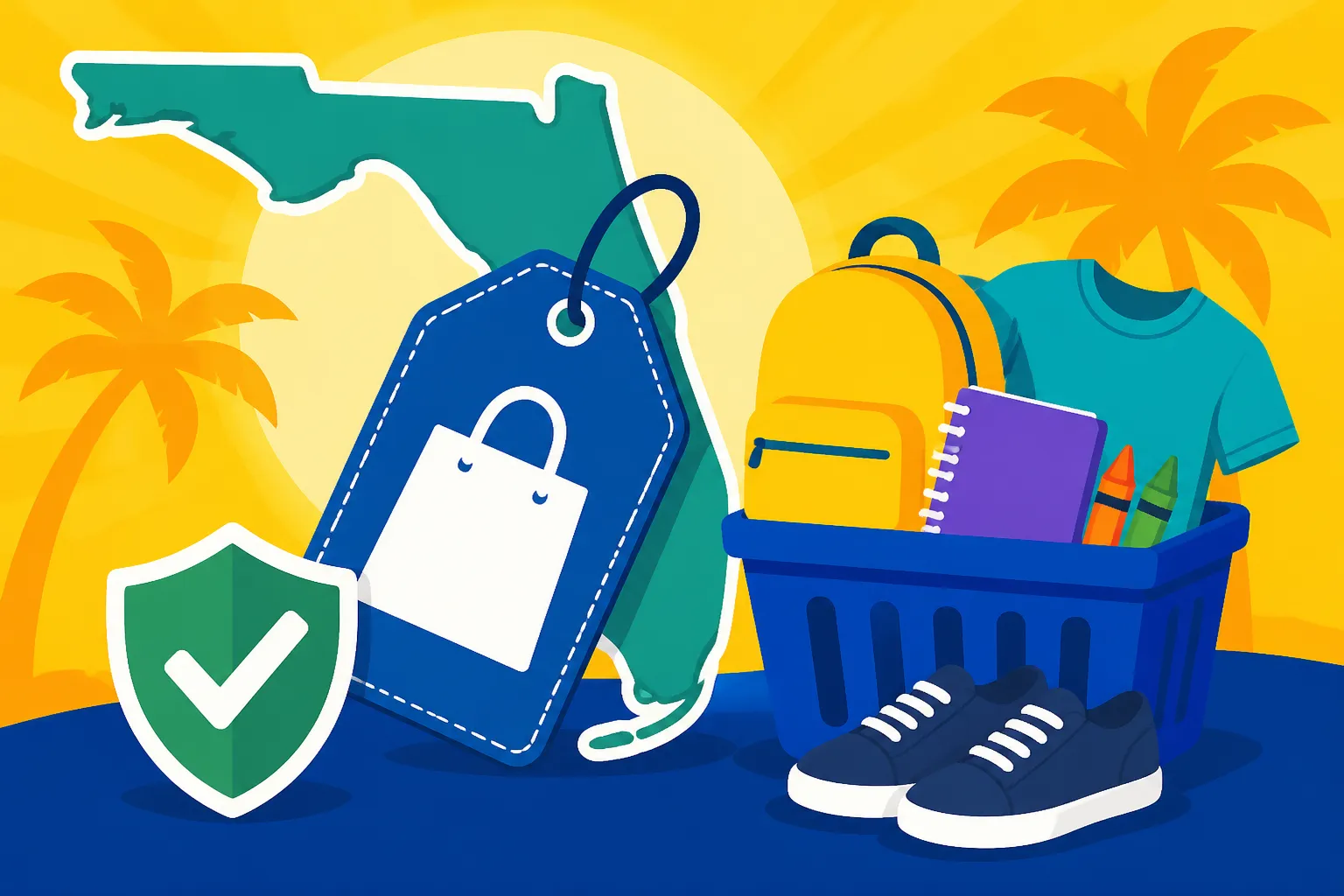
What’s Included in Florida Tax-Free Weekend?
Navigating the labyrinth of sales tax can feel like a full-time job for consumers and businesses alike, and when tax-free weekends roll around, it often brings more questions than answers. You’re trying to save a little money on essential back-to-school items, but figuring out what actually qualifies, what the limits are, and where you can even shop tax-free can be incredibly confusing. This guide is here to cut through the noise and give you a clear, detailed breakdown of what's included in Florida’s annual sales tax holiday, so you can shop smarter and keep more of your hard-earned cash.
Understanding Florida's Sales Tax Holiday
Florida's sales tax holidays are a welcome relief for many families, especially when it comes to preparing for the new school year. These periods are specifically designed to ease the financial burden on residents, allowing them to purchase certain items without paying the state's 6% sales tax, plus any applicable local county surtaxes. It's not just a minor discount; for a family buying multiple outfits, school supplies, and even a new computer, those savings can really add up. However, the exact rules and qualifying items can sometimes feel like a moving target, causing frustration for shoppers trying to plan their purchases.
The Rationale Behind Tax-Free Periods
The concept of a sales tax holiday isn't unique to Florida; many states across the U.S. implement similar programs. The primary goal is often economic stimulus – encouraging consumers to spend money locally, which in turn boosts retail sales and supports small businesses. For families, these holidays provide a much-needed opportunity to stock up on necessities like clothing and school supplies without the added cost of sales tax. Think about it: when you're already stretching your budget to get uniforms, textbooks, and maybe even a new laptop for your kids, saving 6% or more on each item can make a significant difference. It's a win-win: the state gets a boost in economic activity, and consumers get a break on essential purchases. It's these kinds of specific initiatives that sometimes get highlighted when looking at the broader landscape of Sales Tax Holidays by State 2026: Full Calendar across the nation.
How Florida's Sales Tax Works Generally
Before diving into the specifics of the tax-free weekend, it's helpful to remember how Florida's sales tax typically operates. The statewide sales tax rate is 6%. However, many counties also impose their own discretionary sales surtaxes, which can add anywhere from 0.5% to 1.5% to your purchase. This means the actual combined sales tax rate you pay can vary significantly depending on where you're shopping. For example, if you're in Miami-Dade County, you'll generally pay a combined 7% sales tax (6% state + 1% county). In Hillsborough County (Tampa area), it's 7.5% (6% state + 1.5% county). When a tax holiday comes around, it effectively zeroes out these combined rates for qualifying items up to their specific price limits, which can lead to substantial savings, especially on larger purchases. It's a prime example of How Combined Sales Tax Rates Work in practice, even when an exemption applies.
What Exactly Qualifies for the Florida Back-to-School Tax Holiday?
Florida's back-to-school sales tax holiday is typically one of the most anticipated tax-free periods. It's usually held in August, just before students head back to the classroom, but dates can shift, so always double-check the current year's schedule. The holiday generally covers three main categories: clothing, school supplies, and personal computers, each with its own set of rules and price limitations. It’s crucial to pay close attention to these details, as exceeding a price limit or purchasing a non-qualifying item will mean you’re paying the full sales tax rate, defeating the purpose of your strategic shopping. For a general overview of similar savings, check out the comprehensive Tax-Free Weekend Back-to-School Guide 2026.
Clothing and Apparel Guidelines
This is often one of the biggest categories for savings. During the back-to-school tax holiday, sales tax is not collected on purchases of clothing, footwear, and certain accessories that cost $100 or less per item. Yes, per item! This is a critical detail. So, if your child needs a new pair of sneakers for $95, they're tax-free. If they need a winter coat for $105, that extra $5 pushes it over the limit, and the entire coat becomes taxable. It's not just the amount over $100 that gets taxed; it's the whole item. This specific rule about Tax-Free Weekend Clothing Price Limits ($100) is often a point of confusion for shoppers.
- What's In? Think everyday attire: shirts, pants, shorts, dresses, skirts, socks, underwear, shoes, sneakers, sandals, jackets, coats, and even things like school uniforms. Hats, gloves, scarves, and ties also typically qualify. If it's something a student would reasonably wear to school or for general use, and it's under the price cap, it's likely included.
- What's Out? Items not specifically designed for general wear usually don't make the cut. This includes things like sports equipment (e.g., shin guards, wetsuits, ski boots), watches, jewelry, handbags, briefcases, and certain types of protective gear. Items primarily used for business purposes, even if worn, are also generally excluded. For instance, a tailor-made suit might not qualify, depending on its specific use case and price.
- Real-World Scenario: Imagine you're buying three new shirts for your son: one for $25, one for $40, and a third for $80. All three are under the $100 per-item limit, so all three are tax-free. However, if you add a fancy dress for your daughter that costs $120, that dress alone will be fully taxed because it exceeds the $100 individual item cap, even if your total clothing purchase is well within your budget.
School Supplies Specifics
This category covers a broad range of items students need to succeed in the classroom. During the sales tax holiday, school supplies that cost $50 or less per item are exempt from sales tax. Again, the "per item" rule is key.
- What's In? This typically includes pens, pencils, crayons, markers, notebooks, binders, folders, loose leaf paper, rulers, erasers, glue, scissors, calculators, protractors, compasses, book bags, backpacks, lunch boxes, and even correction fluid. Basically, if it's found on a typical school supply list, and it's $50 or less, you're good to go.
- What's Out? Items that aren't strictly "school supplies" often get excluded. This means things like staplers, staples, paper clips, computer printer ink, printer paper, textbooks (which have their own tax rules or exemptions), art supplies not specifically for school (e.g., canvas for an adult art class), or items used in a home office rather than directly for a student's schooling. Also, certain digital storage devices might not qualify under school supplies but could potentially fall under the computer category if they meet those specific criteria.
- Real-World Scenario: You pick up a fancy graphing calculator for $45, a pack of colored pencils for $12, and a new backpack for $35. All these items are individually under the $50 limit, so they are all tax-free. But if you decide to buy a high-end art set for $65, that item would be fully taxable. It highlights the need for careful planning when shopping for What Qualifies for Tax-Free Weekend? across different categories.
Personal Computers and Related Accessories
This is often where the biggest savings can be found, as computers and their accessories can be quite pricey. During the Florida back-to-school sales tax holiday, personal computers and related accessories are exempt when purchased for $1,500 or less per item. This higher price threshold reflects the typical cost of these items.
- What's In? This exemption covers desktop computers, laptop computers, tablet computers (like iPads or Surfaces), and e-readers. It also extends to "related accessories" when purchased at the same time as a qualifying computer. This can include keyboards, mice, monitors, non-recreational headphones, printer cables, storage devices (external hard drives, USB drives), and even operating system software. The key is that these accessories must be $1,500 or less, and generally serve the purpose of making the computer function or improving its direct utility for a student.
- What's Out? Many electronics that might seem computer-related are specifically excluded. This includes cell phones, video game consoles, digital cameras, portable music players, printers (the physical device itself), and most software (other than operating systems). Services, such as internet access, extended warranties, or computer repair, are also not tax-exempt during this period.
- Real-World Scenario: Your college-bound student needs a new laptop. You find a great deal on a laptop for $1,200, a wireless mouse for $25, and a protective sleeve for $40. All these items are under the $1,500 limit and qualify, meaning you save a significant amount. However, if you also decide to buy a new gaming console for $399 or a new printer for $150, those items would be fully taxed.
Here's a quick summary table for the Florida Back-to-School Sales Tax Holiday (always verify current year dates and specifics):
| Category | Qualifying Items | Price Limit Per Item |
|---|---|---|
| Clothing | Apparel, footwear, certain accessories (shirts, pants, dresses, shoes, socks, coats, hats, etc.) | $100 or less |
| School Supplies | Pens, pencils, paper, notebooks, binders, folders, crayons, markers, rulers, calculators, backpacks, lunch boxes, etc. | $50 or less |
| Computers & Accessories | Desktop, laptop, tablet, e-reader; related accessories (keyboard, mouse, monitor, storage, OS software) | $1,500 or less |
Important Exclusions and Common Misconceptions
Despite the clear guidelines provided by the Florida Department of Revenue, confusion still reigns during tax-free weekends. It's easy to make assumptions or misunderstand specific rules, leading to unexpected charges at checkout. Being informed about what doesn't qualify, and understanding how different transaction types are handled, can save you both money and frustration. Businesses, too, often rely on solutions like Avalara to ensure their point-of-sale systems are correctly configured to apply these exemptions, preventing accidental overcharges or undercharges. If you've ever wondered How to Calculate Sales Tax with these kinds of exemptions, you know it can get complex fast.
Items That Do NOT Qualify
Beyond the obvious non-qualifiers already mentioned, there are a few general categories that shoppers often mistakenly assume are covered.
- Everyday Household Items: Groceries, cleaning supplies, toiletries, furniture, and appliances are almost never included in a back-to-school tax holiday. While essential for daily living, these items fall outside the specific scope of school preparation.
- Sports & Recreational Equipment: Athletic pads, helmets (unless part of a specific uniform and under the clothing limit), specialized sports shoes (like cleats specifically for a sport, not general sneakers), or recreational items like skateboards and bicycles are typically excluded.
- Digital Downloads & Streaming Services: While software for computers can qualify, digital products like e-books, music downloads, streaming subscriptions, or video games are not part of these tax holidays. Their taxability often depends on complex rules about Digital Products Sales Tax by State regardless of a holiday.
- Services: Any kind of service, whether it's dry cleaning, shoe repair, computer repair, or internet service, will still have sales tax applied if it's generally taxable in Florida. Tax holidays focus solely on the sale of tangible goods.
Online Purchases and Layaway Rules
The beauty of Florida's tax-free weekend is that it extends beyond brick-and-mortar stores.
- Online Purchases: Yes, qualifying online purchases are generally included in the tax holiday! As long as the item is eligible and purchased during the specified tax-free period, the sales tax exemption should apply. The delivery date doesn't matter as much as the purchase date. So, if you order a qualifying laptop on the last day of the holiday, even if it ships a week later, you should still get the tax break. This is a common question, as many people wonder Does Online Shopping Have Sales Tax? in general, let alone during a holiday.
- Layaway Plans: This can be a bit trickier. Generally, items placed on layaway qualify for the exemption if the customer makes the final payment and takes delivery of the merchandise during the tax-free holiday period. If you make a payment on a layaway item outside the holiday, that specific payment will still be subject to tax. So, if you plan to use layaway, time your final pickup carefully.
- Mail Order Sales: Similar to online sales, if you place a mail order for a qualifying item during the tax holiday, it should be exempt. The key is the date the order is accepted by the retailer, not necessarily when it arrives at your doorstep.
Understanding Price Limits and Bundles
The "per item" price limit is a recurring source of confusion. It means each individual item must meet the threshold, not your total basket.
- Example: Exceeding the Limit: If you buy a pair of jeans for $90 and a jacket for $110, only the jeans are tax-exempt. The jacket is fully taxable because its individual price exceeds the $100 clothing limit. It's not about averaging your clothing costs.
- Bundled Items: Retailers sometimes sell "bundles" – like a laptop packaged with basic software or a mouse. If the bundle contains a mix of taxable and exempt items, and the bundled price is below the computer threshold ($1,500), the entire bundle can be exempt if the non-qualifying items are "incidental" to the qualifying computer. However, if the bundle includes significant non-qualifying items (e.g., a laptop bundled with a video game console), then the entire bundle might be taxable, or the retailer would need to separately price the taxable components. This is where businesses often rely on sophisticated tax compliance software, such as that offered by Avalara, to correctly calculate the sales tax on complex transactions like bundles, ensuring adherence to state regulations. It can be quite a challenge for retailers to manage these specific rules without robust systems.
Making the Most of Florida's Tax-Free Weekend
To truly maximize your savings during Florida's sales tax holiday, a little planning goes a long way. Don't just show up to the store hoping for the best; think strategically about your purchases, timing, and how to combine sales with the tax exemption. Remember, these holidays are a fantastic opportunity, but only if you use them wisely. You might even find yourself wondering How Much Can You Save on Tax-Free Weekend? after applying these strategies.
Strategic Shopping Tips
- Make a Detailed List: Before the holiday even begins, sit down and make a comprehensive list of all the clothing, school supplies, and computer items your family needs. Be specific about quantities and approximate costs. This helps you identify which items fall within the price limits and prevents impulse buys of non-qualifying goods.
- Check Prices in Advance: Retailers know these holidays are coming. Sometimes, a "sale" price during the tax holiday might not be as good as a regular sale a week before or after. Do your homework. Compare prices at different stores and online beforehand. The tax savings are great, but combining them with a good store sale is even better.
- Understand the Dates: Double-check the exact start and end dates and times for the current year's holiday. These can sometimes change, and missing the window by even an hour can mean paying full tax. The Department of Revenue website is your best friend here, or reliable sources that track When Is Tax-Free Weekend 2026?.
- Separate Transactions (If Necessary): If you're buying a mix of qualifying and non-qualifying items, or if some items just barely exceed the price limit, consider separating your transactions. This ensures you only pay tax on the items that absolutely require it. For instance, if you have a $110 jacket and a $90 pair of pants, buy the pants in a separate transaction or ensure the cashier properly rings it up so only the jacket is taxed.
- Shop Early or Late: Crowds can be intense during these weekends. If you want to avoid the rush, consider shopping right when stores open on the first day, or late in the evening on the last day. Online shopping offers a great alternative to avoid crowds altogether.
Staying Informed About Future Holidays
Sales tax holidays are not always static. Legislatures can modify the items included, the price thresholds, or even the dates from year to year. What applied last year might not apply this year.
- Official Sources are Key: Always refer to the Florida Department of Revenue's official website for the most up-to-date information regarding specific tax holidays. They will publish detailed guidance and notices well in advance.
- Sign Up for Retailer Newsletters: Many major retailers, especially those focusing on back-to-school items like Target, Walmart, Best Buy, or Office Depot, will heavily advertise their participation and provide lists of qualifying items. Signing up for their email lists can keep you informed.
- Leverage Tax Compliance Tools: For businesses, staying on top of these shifting rules is critical. This is where solutions like Avalara come into play. Tax compliance software can automatically update tax rates and apply exemptions at the point of sale, ensuring that retailers are always compliant with the latest regulations, even during specific tax holidays. This frees up businesses to focus on serving customers rather than manually calculating complex exemptions. Understanding which products are taxed in general, like Is Clothing Taxable? Sales Tax on Apparel by State, also helps in anticipating holiday rules.
Disclaimer
Please remember that this article provides general information and is not tax or legal advice. Sales tax laws and regulations, especially those related to tax holidays, can change frequently. Always consult the official Florida Department of Revenue website or a qualified tax professional for the most accurate and current information pertaining to your specific situation.