Tax-Free Weekend Back-to-School Guide 2026
Oh, the joys and absolute chaos of back-to-school season! Just thinking about it can make your wallet ache and your head spin with all the lists, the clothes, the supplies, and of course, the ever-present question: "How much is this really going to cost me?" It’s a perennial challenge for parents and students alike to gather everything needed for a successful academic year without completely blowing the budget. That's where tax-free weekends come in, offering a much-needed financial breather. This comprehensive guide is here to walk you through everything you need to know about the Back-to-School Sales Tax Holidays, helping you navigate the rules, maximize your savings, and conquer your shopping list with confidence.
Unpacking the Concept of Sales Tax Holidays
Let's be honest, sales tax can often feel like an invisible addition that just makes everything a little bit more expensive. But imagine a time when that tax magically disappears, at least for certain items, for a brief period. That's precisely what a sales tax holiday is, and they've become a beloved tradition in many states, especially when it comes to getting kids ready for school.
The Rationale Behind Tax-Free Weekends
The idea behind sales tax holidays is pretty straightforward: stimulate the economy and provide a bit of relief to consumers, particularly families. States recognize that back-to-school shopping represents a significant annual expense for households. From new outfits and sturdy backpacks to a mountain of notebooks and pens, these costs add up quickly. By temporarily suspending sales tax on certain items, state governments aim to encourage spending within their borders, boosting local businesses and putting a little extra cash back into the pockets of hardworking families. It's a win-win, really. Consumers save money, and retailers often see a surge in sales during these periods. For many, these weekends aren't just about saving a few dollars; they're a crucial opportunity to afford essential items that might otherwise strain an already tight budget. It’s a thoughtful way for states to give back and support their communities.
How Sales Tax Holidays Work in Practice
While the concept is simple, the execution can sometimes feel a bit like deciphering a secret code, especially with each state having its own unique set of rules. Generally, a sales tax holiday is a designated period, usually a weekend or a full week, during which certain categories of items are exempt from state sales tax, and sometimes local sales taxes too. This means that when you purchase an eligible item, the sales tax isn't added to the price at the register. It's important to remember that these exemptions aren't universal; they apply only to specific types of goods that the state has deemed "eligible" for the holiday. Often, these exemptions come with price caps, meaning an item must fall below a certain dollar amount to qualify for the tax break. For instance, a pair of jeans might be tax-free if it costs $75, but if it's $150, only the first $75 might be exempt, or the entire purchase might become taxable depending on the state's specific rules. Navigating these nuances is key to truly benefiting from the savings. For a broader look at how these breaks are structured across the country, many states even have specific dates for these breaks, as detailed in our comprehensive guide on Sales Tax Holidays by State 2026: Full Calendar.
Navigating the 2026 Back-to-School Tax-Free Landscape
As we look ahead to 2026, many states are expected to continue their tradition of offering sales tax holidays to help families prepare for the new school year. While exact dates and rules can sometimes shift, the general patterns of participation remain fairly consistent year after year. Being prepared well in advance is half the battle, giving you ample time to plan your shopping strategy.
Anticipated Dates and Participating States for 2026
While official announcements for all 2026 dates might still be pending, we can project which states are likely to participate based on their consistent history of offering back-to-school sales tax holidays. Typically, these events are clustered in late July and early August, just before schools generally reopen. This timing is intentional, designed to coincide with peak back-to-school shopping periods.
Here's a table showing anticipated participation and projected dates for some of the most consistent states based on historical trends. Remember, these are projections, and it's always wise to double-check with your state's Department of Revenue closer to the actual dates for any last-minute changes or legislative updates.
| State | Projected 2026 Dates | Common Exempt Categories | Typical Price Caps (per item) |
|---|---|---|---|
| Alabama | Mid-July | Clothing, School Supplies, Books, Computers | $100 (clothing), $750 (computers), $50 (books/supplies) |
| Arkansas | Early August | Clothing, School Supplies, Art Supplies | No cap (clothing/footwear), No cap (supplies) |
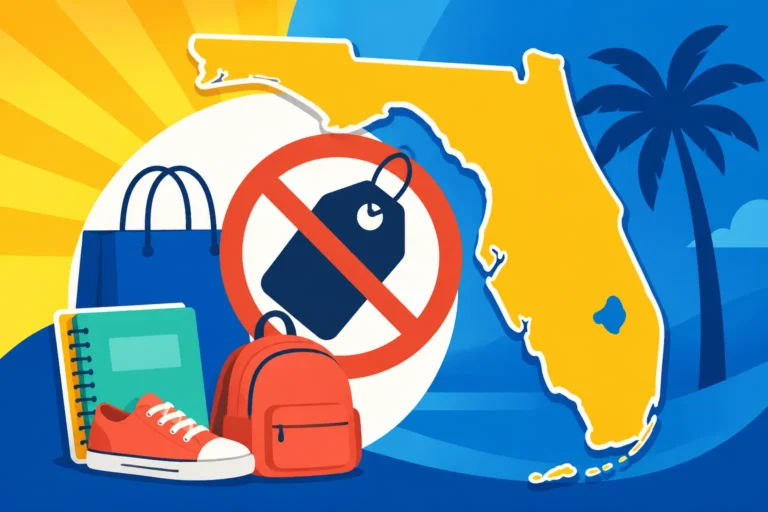
| Florida | Late July – Early August | Clothing, School Supplies, Books, Computers | $100 (clothing/footwear), $50 (school supplies), $30 (books), $1,500 (computers) |
| Iowa | Early August | Clothing, Footwear | $100 (clothing/footwear) |
| Maryland | Mid-August | Clothing, Footwear | $100 (clothing/footwear) |
| Massachusetts | Mid-August | Most tangible personal property | $2,500 (for all items, but often specific limits on certain goods) |
| Mississippi | Late July | Clothing, Footwear | $100 (clothing/footwear) |
| Missouri | Early August | Clothing, School Supplies, Computers | $100 (clothing), $50 (software), $3,500 (computers), $50 (school supplies) |
| New Mexico | Early August | Clothing, School Supplies, Computers, Books | No cap (clothing/footwear), $1000 (computers), $100 (school supplies), $100 (books) |
| Ohio | Early August | Clothing, School Supplies, Books | $75 (clothing), $20 (school supplies), $20 (books) |
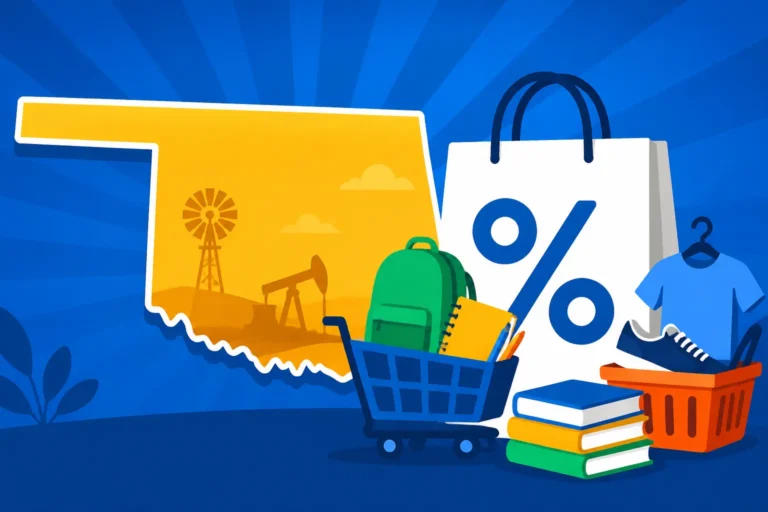
| Oklahoma | Early August | Clothing, Footwear | $100 (clothing/footwear) |
| South Carolina | Early August | Clothing, School Supplies, Computers, Books | No cap (most items) |
| Tennessee | Late July | Clothing, School Supplies, Computers | $100 (clothing), $100 (school supplies), $1,500 (computers) |
| Texas | Early August | Clothing, Footwear, School Supplies, Backpacks | $100 (most items) |
| West Virginia | Early August | Clothing, School Supplies, Sporting Goods, Electronics | $125 (clothing/footwear), $50 (school supplies), $500 (sports equip), $500 (computers) |
Please note: Connecticut and Virginia previously had sales tax holidays but have recently made changes. Connecticut's is now often a tax-free week for clothing/footwear under $100, while Virginia's consolidated various holidays into one, which is set to expire. Always verify current legislation for these states.
You can typically find the most accurate and up-to-date information directly on the respective state's Department of Revenue or Comptroller's website. These agencies are usually very good about publishing official guides and FAQs in the months leading up to the holiday.
Spotlight on Popular Back-to-School Tax Holidays
Some states are particularly well-known for their robust and well-utilized back-to-school tax holidays. These often have long-standing traditions and clear guidelines that many families rely on year after year.
For instance, states like Texas Tax-Free Weekend 2026 (Aug 7-9) and Florida Back-to-School Tax Holiday (All August) are consistent participants, offering broad exemptions that significantly ease the burden on parents. In Texas, the tax holiday typically covers most clothing, footwear, school supplies, and backpacks priced under $100. This is a huge deal when you're buying multiple outfits and a backpack for each child. Families often flock to stores or hit up online retailers during this specific weekend to take full advantage.
Florida's holiday, often extending for a full week or even longer, is usually quite comprehensive. It tends to include not just clothing and school supplies within certain price limits but also books and, crucially for many students, computers and related accessories up to a higher price threshold. Imagine saving on sales tax for a new laptop for college or high school! Knowing these specifics for states like Florida or Tennessee Sales Tax Rate (7% + Local) can make a real difference in your planning. Whether it's the specific clothing rules in Massachusetts Tax-Free Weekend 2026 (Aug 8-9) or the broad scope in Oklahoma Tax-Free Weekend 2026 (Aug 7-9), understanding these popular holidays ensures you don't miss out on savings.
What's Truly Tax-Exempt for Back-to-School?
This is where the rubber meets the road! Knowing what you can save money on is paramount. While the exact list of eligible items can vary slightly from state to state, there are general categories that almost always qualify during back-to-school tax holidays. But beware, the devil is often in the details, especially when it comes to specific types of products or certain price points.
Understanding Clothing and Footwear Exemptions
For most back-to-school tax holidays, clothing and footwear are the absolute staples. Think of all those new shirts, pants, socks, and shoes your kids need as they grow out of everything from the previous year. Generally, items like jeans, t-shirts, dresses, sneakers, and school uniform pieces will qualify. However, you'll almost always find specific exclusions. For example, some states might exempt everyday clothing but still tax accessories like jewelry, handbags, ties, or briefcases. Athletic apparel specifically designed for sports (like cleats or specialized jerseys) might also be excluded in some places, while general athletic shoes are usually fine. The key here is to differentiate between general wear and specialized gear. A basic pair of tennis shoes for gym class? Probably exempt. Expensive football cleats? Possibly not. Always refer to your state's detailed list, but as a rule of thumb, if it's considered general-purpose apparel or footwear for daily wear, it has a good chance of being tax-free, up to the price limit. This includes adhering to rules like Tax-Free Weekend Clothing Price Limits ($100).
School Supplies and Instructional Materials
Ah, the glorious aisle of school supplies! During tax-free weekends, this section becomes a goldmine. Items like pens, pencils, notebooks, binders, crayons, markers, rulers, glue, scissors, and paper are almost universally exempt. Even things like calculators, lunch boxes, and backpacks often make the cut. Some states expand this to include art supplies if they're typically used in a classroom setting, such as paint sets, sketch pads, or art brushes. Textbooks and other instructional materials are also frequently included, which can be a huge relief for college students or those in specialized programs.
However, be mindful of what doesn't qualify. Home office supplies, for instance, might not be included if they're not explicitly designated as school supplies. Think printer paper versus loose-leaf paper. While both are paper, one is generally seen as a school supply while the other is more broadly categorized. Similarly, general household items, even if useful for a student (like cleaning supplies for a dorm room), are unlikely to be tax-exempt under the "school supplies" umbrella. It’s also helpful to consult resources like What Qualifies for Tax-Free Weekend? for a more exhaustive list for your specific state.
Computers, Software, and Electronics Where Applicable
This category is a game-changer for many families, especially with the increasing reliance on technology in education. Many states, though not all, include computers, software, and certain electronics in their back-to-school tax holidays. The price caps here are typically much higher than for clothing or school supplies, reflecting the higher cost of these items. For instance, a state might exempt computers up to $1,500 or even $3,500. This can translate into significant savings on a new laptop, desktop, or even a tablet.
Software, often bundled with a new computer or purchased separately, can also be tax-exempt, particularly if it's educational software. Peripherals like keyboards, mice, and even certain printers might also qualify. However, don't assume all electronics are included. Video game consoles, televisions, and smartphones are almost never part of these exemptions, as they're generally not considered essential for school. Digital products, like e-books or streamed services, are also a grey area and generally not included, though some states are starting to adapt to digital commerce. Always check the specific wording for your state, as the definition of "computer" and "accessories" can be quite precise.
Decoding Price Limits and Item Restrictions
One of the trickiest parts of navigating sales tax holidays is understanding the various price limits and item restrictions that states impose. It's not enough for an item to be in an eligible category; it often also has to fall within a specific price range to qualify for the tax exemption. Missing these details can lead to unexpected charges at the register.
The Importance of Per-Item Price Caps
Almost every state that offers a back-to-school tax holiday imposes a "per-item" price cap on eligible goods. This means that if an item exceeds that predetermined price, it no longer qualifies for the tax exemption. For clothing and footwear, these caps are typically around $100 per item. So, if you find a fantastic winter coat for $95, it's likely tax-free. But if that same coat rings up at $105, it might become fully taxable, depending on the state's rules. Some states might exempt the portion up to the cap, but it's more common for the entire item to become taxable once it crosses the threshold.
This is particularly crucial when you're looking at more expensive items like a new pair of basketball shoes or a designer backpack. You might assume all "footwear" or "backpacks" are covered, only to find out your chosen item is $15 over the limit. For items like computers, the price caps are much higher, often ranging from $750 to $3,500. It's essential to keep these figures in mind as you browse. Don't just grab an item assuming it's tax-free; quickly check its price against your state's specific guidelines to avoid disappointment at checkout. This attention to detail can prevent a lot of frustration and ensure you actually get the savings you're expecting.
Common Exclusions and What to Watch Out For
Beyond price caps, there's a list of common exclusions that shoppers often overlook. These are items that, while they might seem related to school or household needs, are intentionally left out of the tax holiday exemptions. Knowing these beforehand can save you time and prevent you from adding taxable items to your "tax-free" pile.
Here are some typical exclusions:
- Sporting Goods and Recreational Equipment: While West Virginia includes some sporting goods, most states do not. This means items like baseball bats, football pads, skis, or camping gear are generally taxable, even if your child participates in school sports or outdoor clubs.
- Jewelry, Handbags, and Accessories: Often, expensive accessories like watches, briefcases, luggage, or fine jewelry are not considered essential clothing or school supplies and remain taxable.
- Digital Products and Services: E-books, music downloads, streaming subscriptions, and online gaming are almost universally excluded from sales tax holidays, as they are not tangible personal property. This also usually applies to cell phone services or internet access.
- Textbooks for College Courses (sometimes): While K-12 textbooks are often included, some states distinguish and tax college textbooks, especially if they are bundled with other course materials.
- Items for Use in a Trade or Business: The holiday is usually for personal back-to-school use. If you're buying something clearly for your home business, it might not qualify.
- Rentals: Renting items like school band instruments or textbooks typically does not qualify for the sales tax exemption.
The best way to stay informed is to find the official list on your state's Department of Revenue website. These lists are usually quite detailed, sometimes even giving specific examples of what is and isn't included (e.g., "A backpack is exempt, but a suitcase is not."). Getting a handle on your state's Sales Tax Rate by ZIP Code (and Why ZIP Isn't Enough) for standard items is a good baseline before you even consider exemptions.
Smart Strategies for Your Tax-Free Shopping Spree
With the dates marked on your calendar and a clear understanding of what's likely to be exempt, it’s time to get strategic. A well-thought-out plan can maximize your savings and turn a potentially stressful shopping trip into an efficient and rewarding experience.
Mastering In-Store vs. Online Purchases
The convenience of online shopping has changed the game, and thankfully, most states extend their sales tax holidays to qualifying online purchases. When shopping online, many wonder, Does Online Shopping Count for Tax-Free Weekend? The good news is, often, yes! This means you can often browse from the comfort of your home, compare prices, and still get the tax break. However, there are a few critical points to consider:
- Shipping Address Matters: For an online purchase to qualify, the shipping address usually needs to be in a participating state and within the eligible dates. The point of sale for sales tax is often determined by the destination of the goods. So, if you're shipping to a state without a tax holiday, or outside the holiday dates, you'll likely be charged tax.
- Shipping and Handling Fees: This is a tricky one. Some states, like Texas, state that if the entire order is tax-exempt and shipping is included, the shipping fee also becomes tax-exempt. Other states might still charge sales tax on shipping and handling, even if the items in the cart are otherwise tax-free. Be sure to check specific state rules regarding Is Shipping Taxable? Freight Sales Tax by State during these holidays. This can be a significant difference, especially if you're ordering bulky items.
- Order Cut-off Times: Online retailers operate 24/7, but the sales tax holiday has a strict start and end time. Ensure your order is completed and timestamped within the official holiday window. Don't wait until the last minute on Sunday night, only to find the tax magically reappears!
For in-store shopping, the biggest challenges are often crowds and limited stock. Shopping early on the first day of the holiday weekend can help you snag the best selection before items sell out.
Leveraging Sales, Coupons, and Other Deals
The real magic happens when you combine a sales tax holiday with existing store sales, clearance events, or manufacturer coupons. This stacking of discounts can lead to truly impressive savings.
Imagine a scenario: a department store like Macy's or JCPenney is running a 25% off coupon for all kids' apparel. If you then apply that coupon during your state's tax-free weekend, you're saving on both the original price and the sales tax. Similarly, many retailers offer special "back-to-school" sales during late July and early August, specifically to coincide with these tax holidays. Keep an eye on weekly circulars and online promotions from big box stores like Target, Walmart, and Kohl's in the weeks leading up to the holiday.
A word of caution, though: sometimes a coupon or discount might bring an item below the tax-free threshold. For example, if a pair of shoes is $110, but a 20% off coupon brings it down to $88, it now qualifies for the $100 price cap exemption. This is a good thing! Always calculate your discounts first, and then see if the new, lower price falls within the tax-free limit. However, some states might have specific rules about how coupons interact with tax-free eligibility; verify this for higher-priced items. For businesses, managing these varying rules and their interaction with promotions can be a real headache, and solutions like Avalara are often used to automate the complex sales tax calculations, ensuring accurate charging during these special periods.
Handling Returns, Exchanges, and Rain Checks
Life happens, and sometimes you need to return or exchange an item. What happens if you do so outside the tax-free weekend?
- Returns: If you return an item that was purchased tax-free, the refund you receive should reflect the exact amount you paid, meaning no sales tax should be included in the refund. The retailer should process the return as if the sales tax was never collected.
- Exchanges: This can be a bit more complex. If you exchange an item for a different size or color of the same item (and it still falls within the price cap), it's generally treated as a non-taxable exchange, even if done outside the holiday window. However, if you exchange it for a different item entirely, or an item that now exceeds the price cap, it might be treated as a new purchase. In such cases, if you're exchanging outside the tax holiday, sales tax might apply to the difference in price or even the entire new item. Always clarify the store's policy, especially if the exchange involves an upgrade or a completely different product.
- Rain Checks: Many stores offer rain checks when a sale item is out of stock. If you get a rain check during the tax-free weekend for an item that would have been tax-exempt, the store should honor the tax-free status when you finally purchase the item, even if you do so after the holiday has ended. This is because the intent to purchase was made during the eligible period. However, this is largely at the retailer's discretion and state guidelines, so it’s always best to ask the store directly for their policy regarding rain checks and sales tax holidays.
Business Implications and Compliance Considerations
While sales tax holidays are a boon for consumers, they represent a period of intense planning and careful execution for retailers. Businesses must ensure their systems are correctly configured to handle the temporary exemptions, or they risk significant compliance issues.
How Retailers Prepare for Tax-Free Weekends
For retailers, preparing for a sales tax holiday is much more than just putting up signs. It involves a cascade of operational and technical adjustments to ensure smooth sailing.
- Point-of-Sale (POS) System Updates: This is arguably the most critical step. Every POS system needs to be updated to recognize the specific dates, item categories, and price caps for the tax holiday. For example, a system needs to know that from August 2nd to August 4th, 2026, a shirt priced under $100 is non-taxable, but a watch is still taxable, and a $110 shirt is also taxable. This isn't a "set it and forget it" task; it requires precise programming for each SKU that might be affected.
- Staff Training: Store employees, especially those at the checkout, need to be thoroughly trained on the rules. They should know which items are exempt, what the price limits are, and how to handle scenarios like returns, exchanges, or rain checks during and after the holiday. Misinformation at the register can lead to customer frustration and incorrect transactions.
- Inventory Management: Retailers anticipate a surge in demand, particularly for popular back-to-school items. This means stocking up adequately to meet customer needs. Running out of a high-demand, tax-free item can lead to lost sales and disappointed shoppers.
- Marketing and Merchandising: Businesses actively promote their participation in the sales tax holiday, highlighting eligible items and encouraging shoppers to visit. Store layouts might be adjusted to group tax-free items together or clearly mark them.
- Online Store Adjustments: E-commerce platforms also need to be configured. The tax calculation engine on the website must apply the correct exemptions based on the shipping address and item eligibility. This is particularly challenging for multi-state retailers who participate in various tax holidays across different jurisdictions.
Failing to properly configure systems or train staff can lead to retailers incorrectly collecting sales tax (which then needs to be remitted and potentially refunded) or failing to collect it when they should have, which can result in audit issues down the line.
The Role of Sales Tax Automation for Businesses
Given the complexity, many businesses, especially those operating across multiple states or with extensive product catalogs, rely heavily on sales tax automation software. Imagine trying to manually track Sales Tax Rate Changes by State 2026 for every single product across 17 different states, each with its own specific tax holiday rules, dates, and price caps. It's a logistical nightmare!
This is where specialized platforms come into play. Companies like Avalara provide cloud-based solutions that integrate directly with a business's POS, ERP, or e-commerce platform. These systems automatically:
- Determine nexus: They help businesses understand where they have Economic Nexus by State 2026: Thresholds Guide and are therefore obligated to collect sales tax.
- Calculate sales tax in real-time: Based on the customer's location, the item being sold, and the current date, the software instantly calculates the correct sales tax (or exemption).
- Apply holiday rules: Crucially, during a sales tax holiday, the system automatically applies the temporary exemptions to eligible items within the specified dates and price caps. If a product crosses the price threshold or falls outside the eligible category, the tax is correctly applied.
- Maintain compliance: They ensure that businesses are collecting and remitting the correct sales tax, reducing the risk of penalties during an audit. This automation is invaluable for preventing costly errors and ensuring businesses can confidently participate in sales tax holidays without compromising their compliance.
For sellers, navigating these exemptions, especially if they have Economic Nexus by State 2026: Thresholds Guide, can be complex, and these tools are essential.
Beyond Backpacks: Other Sales Tax Holiday Opportunities
While back-to-school tax holidays are probably the most well-known, they are not the only type of sales tax holiday states offer. Many states provide similar temporary tax breaks for other specific categories of goods, usually tied to seasonal needs or public safety initiatives. Keeping an eye out for these can help you save money on other significant purchases throughout the year.
Disaster Preparedness and Energy-Efficient Appliances
Several states, particularly those prone to severe weather, offer sales tax holidays focused on disaster preparedness. These holidays aim to encourage residents to stock up on essential supplies needed to weather a storm or other emergency. Items typically included are things like:
- Generators: Portable generators are often tax-exempt up to a certain price limit.
- Batteries: All types of batteries, from AA to D-cells, are usually included.
- Flashlights and Radios: Emergency radios (including NOAA weather radios) and flashlights.
- Tarps and Tie-downs: Supplies for securing homes or property.
- First-Aid Kits and Bottled Water: Essential survival items.
States like Texas, Louisiana, and Florida are frequent participants in these types of holidays. The Texas Emergency Prep Tax Holiday (April) is a great example of this, helping residents prepare for hurricane season.
Another popular category is energy-efficient appliances. To incentivize consumers to purchase items that can reduce energy consumption and save on utility bills, states like Maryland and Virginia have offered holidays on ENERGY STAR® certified appliances. This can include items like refrigerators, washing machines, air conditioners, and even water heaters, often with a per-item price cap. These holidays are a fantastic opportunity if you're planning an appliance upgrade and want to save on both the purchase price and long-term energy costs.
Recreational and Sporting Goods Holidays
Fewer states offer these, but they do exist! Some states choose to promote outdoor recreation or support local sporting activities by offering sales tax exemptions on certain sporting goods. Louisiana, for example, has historically offered a "Second Amendment Tax Holiday" covering firearms, ammunition, and hunting supplies. Mississippi has also had similar exemptions.
These holidays typically cover items like:
- Fishing and Hunting Gear: Rods, reels, bait, tackle boxes, and certain types of hunting apparel.
- Camping Equipment: Tents, sleeping bags, and camp stoves.
- Bicycles and Helmets: Encouraging active lifestyles.
- Boating Supplies: Life jackets, anchors, and other non-motorized boat accessories.
While not as common as back-to-school holidays, if you're an outdoor enthusiast or your family is involved in sports, keeping an eye out for these specialized sales tax holidays could lead to significant savings on gear that you would likely purchase anyway. Remember, there are a few states that notably don't participate in these holidays, such as the States With No Sales Tax (NOMAD Explained). This means if you live in, say, Oregon, you wouldn't need a holiday for sales tax savings, as there isn't any state sales tax to begin with!
Disclaimer
The information provided in this guide regarding 2026 sales tax holidays is based on historical patterns and current legislative understanding. While every effort has been made to ensure accuracy, sales tax laws and holiday dates are subject to change by state legislatures and revenue departments. Readers should always verify the most up-to-date and official information directly from their respective state's Department of Revenue or taxation authority prior to making purchasing decisions. This content is for informational purposes only and does not constitute professional tax advice.