What Is a Marketplace Facilitator?
Trying to navigate the maze of sales tax as an online seller can feel like a full-time job in itself, especially with new rules constantly emerging. Many of you are probably scratching your heads, wondering if you even need to collect sales tax anymore, or what this "marketplace facilitator" buzz really means for your small business. This guide is here to untangle the complexities, explain exactly what a marketplace facilitator is, and clarify how these rules impact your sales tax obligations, so you can stop stressing and get back to growing your business.
Understanding the Marketplace Facilitator
When you're selling products online, especially through popular platforms, you might have heard the term "marketplace facilitator" pop up in conversations about sales tax. It's not just another piece of jargon; it's a significant shift in how sales tax is collected and remitted, designed to simplify things (in theory!) for states and, in some cases, for sellers like you.
Defining a Marketplace Facilitator
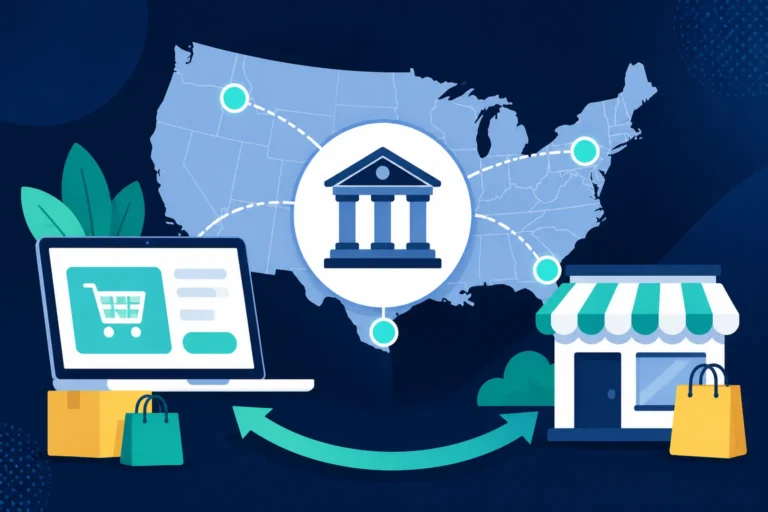
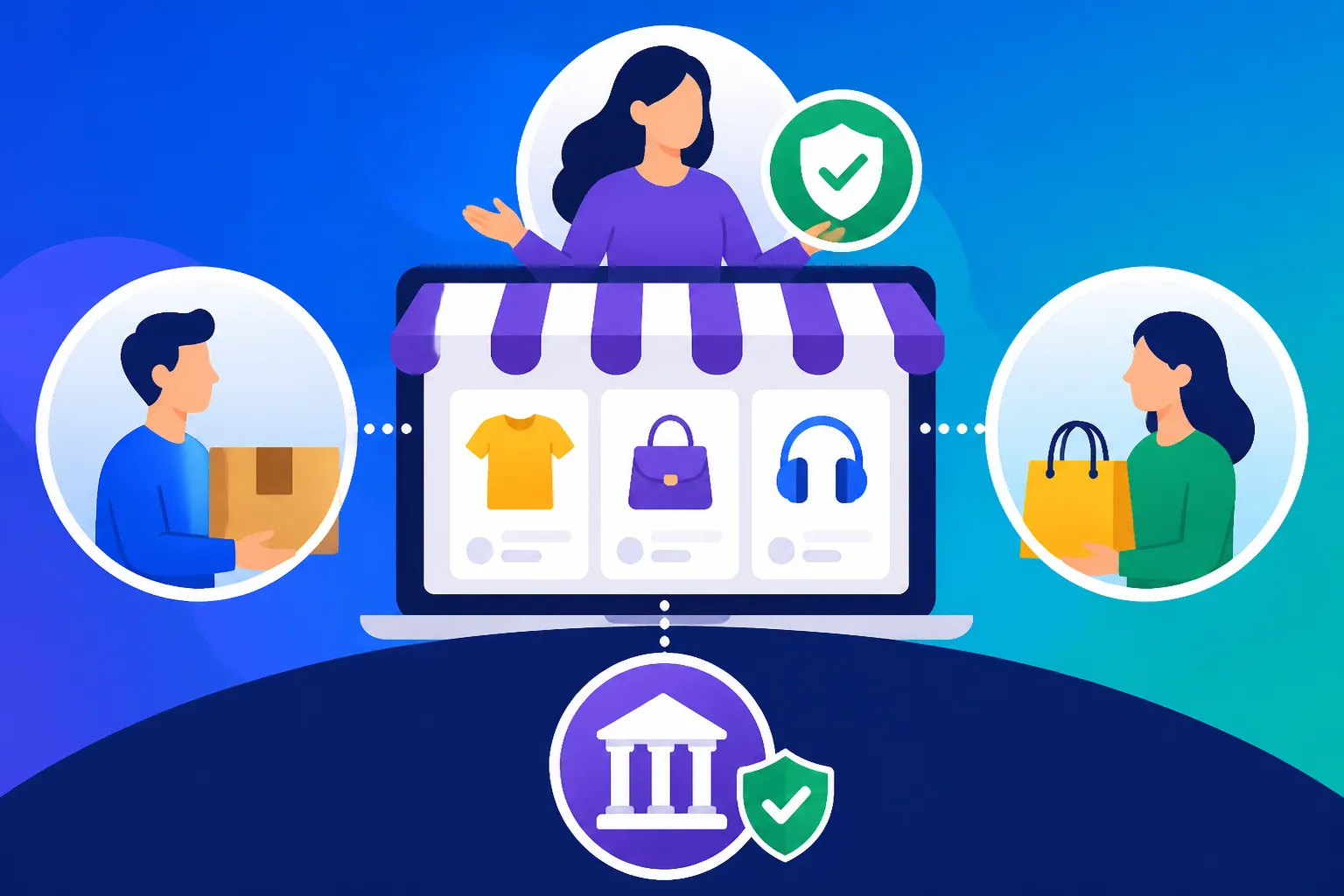
At its core, a marketplace facilitator is essentially a third-party company that facilitates sales between a seller and a buyer. Think of them as the middleman who provides the platform, processes payments, and sometimes even handles shipping or customer service. The key characteristic that elevates them to "facilitator" status in the eyes of sales tax law is their power to collect payment from the customer and then pass it along to you, the seller. This financial control is what makes them responsible for sales tax in many states.
Imagine you're selling handmade jewelry. If you sell it directly from your own website and process all payments yourself, you're responsible for sales tax. But if you list your jewelry on a large platform, and that platform handles the transaction—the customer pays them, and they pay you, minus their fees—then that platform is likely acting as a marketplace facilitator. They're facilitating the entire sales process, from listing to payment.
Major Players in the Facilitator Game
You might already be working with marketplace facilitators without even realizing it. Some of the most common examples include e-commerce giants and booking platforms. For instance, if you sell products on Amazon, eBay, or Walmart.com, these platforms are almost certainly acting as marketplace facilitators in states where such laws are in effect. Similarly, if you offer services or products through platforms like Etsy, Shopify Payments (for certain setups), or even certain food delivery apps, they too often fall under this umbrella.
The list of these platforms is extensive and ever-growing as states expand their definition of what constitutes a "marketplace." The important thing is to understand that these aren't just storefronts; they are active participants in the transaction process, which is why states have shifted the sales tax collection burden to them. This change was largely driven by the desire to streamline sales tax collection from the massive volume of online sales happening daily, especially after the South Dakota v. Wayfair: What It Means for Sellers ruling.
The Core Function: Collecting and Remitting Sales Tax
The primary role of a marketplace facilitator, from a sales tax perspective, is to step into your shoes (the seller's) and take on the responsibility of calculating, collecting, and then remitting the appropriate sales tax to the state on your behalf. This means that for sales made through their platform in states where they are registered to collect, you, the individual seller, no longer have to worry about these specific transactions for sales tax purposes.
Let's say a customer in California buys your product through an online marketplace. Before marketplace facilitator laws, if you had Economic Nexus Threshold in California and were registered there, you'd calculate California's sales tax, collect it from the customer, and then remit it to the California Department of Tax and Fee Administration (CDTFA). Now, with a marketplace facilitator law in place, the platform itself will handle all of that. They calculate the 7.25% state sales tax, plus any applicable district taxes (like those in Los Angeles County or San Diego County), collect it from the customer, and then send it to the CDTFA. It's a huge shift in responsibility and, for many sellers, a massive relief from what used to be a very complex and time-consuming process.
The Genesis of Marketplace Facilitator Laws
Understanding why these laws came into existence helps make sense of the current sales tax landscape. It wasn't an overnight decision, but rather a response to the rapidly evolving e-commerce world and a landmark Supreme Court ruling.
Before Wayfair: The Physical Nexus Era
For decades, the standard for determining if a business had to collect sales tax in a state was based on "physical nexus." This meant you only had to collect sales tax in states where you had a physical presence – a brick-and-mortar store, an office, employees, or inventory stored in a warehouse. This made sense in a world where most commerce was local. However, as online shopping exploded, this system became incredibly outdated.
Businesses could sell to customers all over the country without having any physical presence in those states, thus avoiding sales tax collection. This created a significant disadvantage for local businesses that did have to collect sales tax, and states saw billions in lost revenue. It became clear that the sales tax system needed to catch up with the digital age, especially as consumers increasingly opted for the convenience of online shopping. This created an unfair playing field for Main Street businesses compared to online giants.
Post-Wayfair: Economic Nexus and the Birth of MFLs
The game-changer came in 2018 with the Supreme Court's decision in South Dakota v. Wayfair: What It Means for Sellers. This ruling overturned the physical presence rule, allowing states to require out-of-state businesses to collect sales tax if they met certain "economic nexus" thresholds. These thresholds are usually based on a certain amount of sales revenue or number of transactions into a state annually. For example, many states set the threshold at $100,000 in sales or 200 separate transactions, though some, like California and Texas, have higher thresholds of $500,000.
While economic nexus significantly expanded who had to collect sales tax, states quickly realized that enforcing these rules on hundreds of thousands of individual small online sellers would be an administrative nightmare. Imagine a state trying to audit every single Etsy shop or independent online retailer. That's where marketplace facilitator laws stepped in. They offered a more practical solution: instead of chasing countless individual sellers, states could focus on the larger, centralized platforms that facilitate most of these transactions.
States' Perspective: Simplifying Collection
From a state's point of view, marketplace facilitator laws are a genius solution. It shifts the burden of sales tax compliance from potentially millions of small online sellers to a few dozen major platforms. This drastically simplifies the administration and enforcement of sales tax. Instead of auditing thousands of businesses to ensure compliance, states can work directly with large entities like Amazon or eBay. This means more efficient collection of sales tax, helping states fund essential public services.
For example, a state like Louisiana Sales Tax Rate (Highest Combined 10.11%), which has a notoriously complex sales tax system with numerous local jurisdictions, benefits immensely from marketplace facilitators handling the calculations and remittances. It reduces the sheer volume of individual filings and ensures that local parish taxes are collected accurately, even from out-of-state sellers. The goal is to maximize the collection of sales tax that is legally due, without overwhelming sellers with impossible compliance tasks.
Impact on Online Sellers and Your Responsibilities
While marketplace facilitator laws certainly lift a huge burden from many sellers, it's a common misconception that they completely erase all your sales tax obligations. That's simply not true, and understanding your remaining responsibilities is crucial to avoid any unwelcome surprises down the road.
Less Burden for Many, But Not All
For many small and medium-sized online sellers who exclusively use marketplace facilitator platforms, these laws are a godsend. If 100% of your sales are made through, say, Amazon, and Amazon collects and remits sales tax on all those transactions in every state where you have nexus, then your direct sales tax obligation for those particular sales largely disappears. You might even find that you no longer need to Registering for Sales Tax in Multiple States if all your sales are handled by the marketplace. This allows you to focus more on your products, marketing, and customer service, rather than deciphering complex tax codes.
However, this isn't a blanket exemption. The "less burden" only applies to sales made through the marketplace facilitator in states where they are actively collecting on your behalf. If you also sell through your own website, or through a platform that isn't a marketplace facilitator, then you still have direct sales tax obligations for those specific sales channels. It’s vital to understand this distinction.
Navigating Mixed Sales Channels
This is where things can get a little tricky for sellers. Many businesses operate on what we call "mixed sales channels." You might have your main shop on Etsy, but also an independent e-commerce store built on Shopify, and maybe even a small local craft fair presence. In such scenarios, your sales tax responsibilities become a blend of what the marketplace facilitator handles and what you're still personally accountable for.
For instance, if Etsy is collecting tax for your sales in Texas, that's great. But if you also sell directly from your Shopify store to Texas customers, and your sales through that channel meet the Economic Nexus Threshold in Texas ($500k), then you would need to How to Get a Sales Tax Permit in Texas and collect sales tax on those direct sales. Many sellers miss this critical nuance, thinking that because one channel is handled, all their sales tax is taken care of. Tracking sales across different platforms and your own website becomes paramount. Tools like Avalara can help you monitor these various sales streams and identify where you still have direct collection responsibilities.
The Nuance of Nexus: When You Still Need to Register
Even if a marketplace facilitator is collecting sales tax on your behalf in a particular state, you might still have a Sales Tax Nexus Explained (Physical vs Economic) in that state. This is especially true if you have a physical presence (like an employee or a warehouse) or if your sales from all channels (including facilitated ones) contribute to meeting an economic nexus threshold. Some states require you to register for a sales tax permit even if a marketplace facilitator is collecting all your sales tax for sales made through their platform. Why? Because the state still wants to know who you are and that you're operating within their jurisdiction.
In these cases, you might be required to file "zero returns" or "information returns." This means you file a return indicating that while you had sales in the state, all the sales tax was collected and remitted by the marketplace facilitator. This confirms to the state that you're aware of your obligations, even if your actual payment responsibility for facilitated sales is zero. It's a way for states to keep tabs on who's selling within their borders. Always check the specific rules for each state where you have nexus, as requirements can vary significantly. For more details on this, check out our guide on Do I Need to File Sales Tax If Amazon Collected It?.
What Marketplace Facilitators Handle
When a platform acts as a marketplace facilitator, they step into a fairly significant role regarding sales tax. It's not just a casual "oh, we'll help out a bit." They take on specific, legally mandated responsibilities.
Collecting Sales Tax from Buyers
The primary and most visible function of a marketplace facilitator is to calculate and collect the correct amount of sales tax from the buyer at the point of sale. This sounds simple enough, but consider the complexity involved:
- Rate Calculation: Sales tax rates vary dramatically not just by state, but often by county, city, and even specific districts within cities. A platform like Amazon has to have sophisticated systems in place to determine the precise sales tax rate based on the buyer's shipping address. For instance, Sales Tax by ZIP Code (and Why ZIP Isn't Enough) explains why relying solely on ZIP codes isn't enough; street-level address data is often needed to nail down the correct rate, especially in states with complex local taxes like Colorado or Louisiana.
- Taxability Rules: Beyond rates, they also have to determine if the specific product being sold is even taxable in that particular state and locality. Is clothing taxable? Are digital products taxable? What about services? These rules vary immensely. A digital product might be taxable in Texas but not in Florida, and a marketplace facilitator needs to account for this.
- Exemptions: They also need to handle exemptions, such as sales to tax-exempt organizations or sales that fall under
Sales Tax Holidays by State 2026. While you, the individual seller, might not be dealing with resale certificates for your general consumers, the marketplace facilitator's system must accommodate these scenarios where applicable.
This massive undertaking is why robust sales tax calculation software is critical for these large platforms, and it's also why individual sellers often find peace of mind knowing these complex calculations are being handled for them.
Remitting Sales Tax to States
Once the sales tax is collected from the customer, the marketplace facilitator is then responsible for remitting (paying) that tax directly to the appropriate state and local taxing authorities. This isn't a one-time thing; it's an ongoing process that typically follows specific filing frequencies (monthly, quarterly, or annually) assigned by each state based on sales volume.
Imagine the sheer volume of remittances for a platform like eBay. They're making payments to dozens of states, and within those states, potentially to hundreds of individual local jurisdictions, all on different schedules and using different forms. This requires an incredibly organized and compliant process. They also need to ensure they're remitting by the Sales Tax Due Dates by State 2026 to avoid penalties. This is an enormous undertaking that requires significant technological and compliance infrastructure.
Reporting Requirements
Beyond collecting and remitting, marketplace facilitators also have reporting obligations. They need to keep detailed records of all sales tax collected and remitted, and potentially provide reports to states and, in some cases, to their sellers. These reports help states verify compliance and also allow sellers to reconcile their own records, especially for those who still have direct filing responsibilities for non-facilitated sales.
Some states may require specific reports detailing facilitated sales, which helps them differentiate between sales handled by the marketplace and sales for which the individual seller is still responsible. This level of transparency is essential for maintaining the integrity of the sales tax system and ensuring that all parties are fulfilling their obligations. This comprehensive approach to compliance is exactly what Best Sales Tax Compliance Software 2027 aims to provide, often integrating directly with these large marketplaces.
Your Continuing Responsibilities as a Seller
Even with marketplace facilitators doing a lot of the heavy lifting, you, the seller, still have a role to play in sales tax compliance. Ignoring these aspects can lead to issues down the line.
Understanding Your Sales Tax Nexus
The very first step is to genuinely understand where your business has sales tax nexus. Remember, economic nexus applies to your total sales into a state, regardless of the channel. If your combined sales across all platforms (facilitated and non-facilitated, like your own website) meet a state's economic nexus threshold, then you have nexus there. You also have nexus if you have a physical presence, as we discussed in Physical Nexus vs Economic Nexus.
Even if a marketplace facilitator is collecting for you, having nexus means you might still need to register for a sales tax permit in that state. The state wants to know you exist as a seller within their jurisdiction. For example, if you store inventory in an Amazon FBA warehouse in Florida, you likely have physical nexus there. Even if Amazon collects tax on your sales to Florida customers through their platform, you might still need to get a Florida sales tax permit and perhaps file returns, even if they're "zero" returns for facilitated sales. This is a critical step that many sellers overlook, believing that the marketplace handles everything.
Filing Zero Returns or Reporting Facilitated Sales
As mentioned, some states require you to file sales tax returns even if all your sales tax was collected and remitted by a marketplace facilitator. These are often called "zero returns" or "information returns." The purpose is to formally notify the state that you are indeed doing business there, but that your tax obligations for specific facilitated sales are being met by another party.
The exact reporting mechanism varies by state. Some states have specific lines on their sales tax returns where you report "marketplace facilitated sales" as a deduction or as information-only, effectively reducing your taxable sales to zero for those transactions. Other states might just want a "zero return" to confirm you have no direct sales tax liability for a given period. It's crucial to check with each state's department of revenue where you have nexus to understand their specific filing requirements for marketplace sellers. Neglecting to file these required returns, even if no tax is due, can lead to penalties or make your business appear non-compliant.
Sales on Your Own Website or Non-Facilitator Platforms
This is perhaps the most important area where sellers often get confused. Marketplace facilitator laws only apply to sales made through the specific platforms designated as facilitators. They do not apply to sales you make directly from your own website, through a non-facilitator platform, or in person.
If you have your own e-commerce store, like one built on Shopify (and you're not using Shopify as a marketplace facilitator in a way that shifts tax collection), you are still 100% responsible for determining nexus, registering for a permit, calculating sales tax, collecting it from customers, and remitting it to the states where you have nexus. For example, if you sell handmade crafts on your website to customers in Tennessee Sales Tax Rate (7% + Local) and your sales exceed Tennessee's economic nexus threshold, you must collect and remit that tax yourself. You can't rely on Amazon to handle it, because those sales weren't made on Amazon's platform. This is where tools from companies like Avalara can be incredibly helpful, as they integrate with your own website to automate these complex calculations and filing processes, ensuring Sales Tax for Online Sellers: Complete Guide compliance across all your channels.
Best Practices for Hybrid Sellers
For sellers operating across multiple channels—some facilitated, some not—maintaining accurate records is key. You need a system to:
- Track sales by channel: Clearly delineate between sales made on marketplace facilitator platforms and sales made through your direct channels.
- Monitor nexus: Stay on top of your total sales volume into each state to know when you hit economic nexus thresholds for your non-facilitated sales.
- Understand state rules: Regularly check the sales tax rules for each state where you have nexus, as these can change, including new economic nexus thresholds or 2026 Sales Tax Rate Changes by State.
- Consider automation: As your business grows, manually managing sales tax across various channels and states can quickly become overwhelming. Investing in sales tax automation software can save you immense time and reduce errors.
Here's a quick comparison to help clarify the roles:
| Aspect | Marketplace Facilitator (e.g., Amazon, Etsy) | You (the Seller) for Facilitated Sales | You (the Seller) for Direct Sales (Your Website) |
|---|---|---|---|
| Nexus Determination | Yes, for their own obligation; impacts your total sales for your nexus | Still your responsibility to understand your own nexus | Yes, your full responsibility |
| Sales Tax Calculation | Yes | No (for sales on their platform) | Yes, your full responsibility |
| Sales Tax Collection | Yes, from the buyer | No (for sales on their platform) | Yes, your full responsibility |
| Sales Tax Remittance | Yes, to the state | No (for sales on their platform) | Yes, your full responsibility |
| Filing Returns | Yes, for their facilitated sales | Possibly (e.g., zero returns, information returns) | Yes, your full responsibility |
| Sales Tax Permit Needed? | Yes | Often yes, if you have nexus in the state | Yes, if you have nexus in the state |
| Record Keeping | Yes | Yes (for all your sales data) | Yes |
This table illustrates that while marketplace facilitators lighten the load, they don't erase your entire sales tax compliance burden. Always consult with a sales tax professional to ensure you're fully compliant with all state and local regulations for Sales Tax Compliance for Shopify Sellers or any other platform you use.
Disclaimer
The information provided in this article is for general informational purposes only and does not constitute tax or legal advice. Sales tax laws are complex and constantly changing. Always consult with a qualified tax professional for advice tailored to your specific business situation.