Do I Need to File Sales Tax If Amazon Collected It?
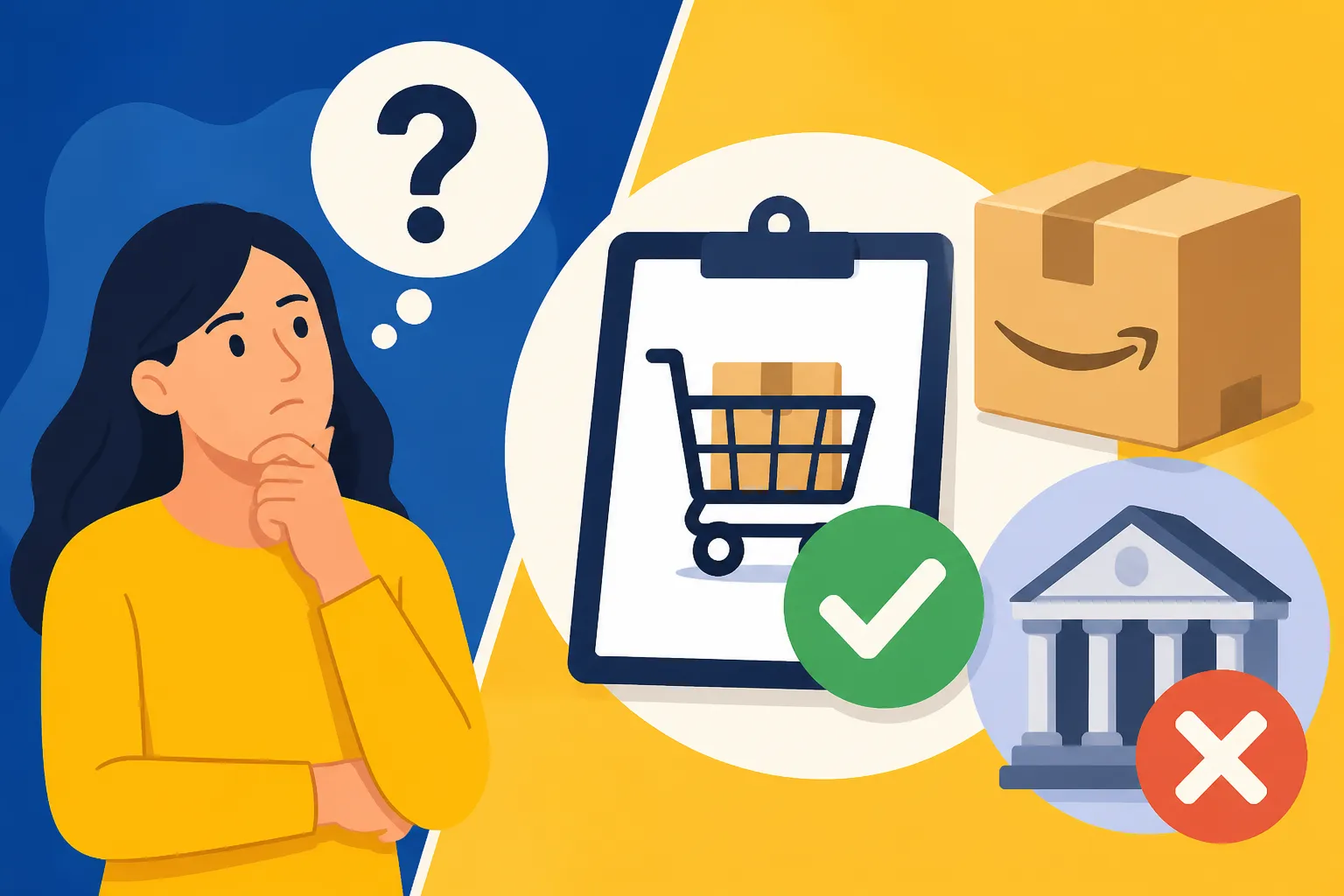
It’s a question that keeps many online sellers up at night: "Amazon collected the sales tax for my orders, so I'm off the hook, right?" While it feels intuitive to think that once a major marketplace like Amazon steps in to handle taxes, your responsibilities vanish, the reality for small business owners is often more nuanced and, frankly, a bit confusing. This guide is here to untangle that knot, explain exactly what Amazon's role is, and clarify your ongoing sales tax obligations as a seller.
Demystifying Amazon's Sales Tax Role as a Marketplace Facilitator
Let's cut right to the chase: Amazon's role in sales tax collection for third-party sellers stems from a significant shift in sales tax law across the United States. Before a landmark Supreme Court case, sales tax nexus primarily relied on physical presence. But times change, and so did the rules for online businesses.
What the Marketplace Facilitator Law Really Means for Sellers
The concept of a "marketplace facilitator" might sound like legal jargon, but it's really quite simple in practice. A marketplace facilitator is an entity (like Amazon, eBay, Etsy, or Walmart Marketplace) that contracts with third-party sellers to facilitate sales through its platform. After the 2018 South Dakota v. Wayfair Supreme Court decision, states gained the authority to require online retailers to collect sales tax even without a physical presence, based on sales volume or transaction count—this is known as economic nexus.
To simplify collection and remittance for the thousands of small businesses selling on their platforms, most states quickly passed "marketplace facilitator laws." These laws shifted the sales tax collection and remittance burden for third-party marketplace sales from the individual seller to the marketplace facilitator itself. So, if you sell on Amazon and your customer is in a state with a marketplace facilitator law (which is pretty much all of them now), Amazon is legally responsible for calculating, collecting, and remitting the sales tax on that transaction directly to the state. This means for those specific sales, you don't have to worry about adding sales tax to the customer's bill or sending that money to the state yourself. It’s a huge relief for many sellers who used to juggle these complex calculations across different states.
The Post-Wayfair Landscape and Amazon's Responsibilities
In the wake of the Wayfair decision, it was a wild west scenario for a bit. States quickly rolled out their new economic nexus rules, and it became clear that individual sellers on massive platforms like Amazon would face an impossible compliance burden if they each had to register and remit in every state where they met a sales threshold. Imagine a small business in Florida selling handmade crafts on Amazon, suddenly having to register for a sales tax permit in every state across the country where they shipped more than 200 orders or $100,000 in sales. It would be a nightmare!
This is precisely why marketplace facilitator laws came into being. They were a pragmatic solution to ensure states still got their sales tax revenue without crushing small businesses with overwhelming administrative tasks. Amazon, given its massive footprint, quickly became one of the primary targets for these laws. Today, Amazon collects sales tax on behalf of third-party sellers for sales shipped to virtually every state that imposes a sales tax. This significantly streamlines the process for transactions occurring on their platform. They handle the intricate tax rate lookup by ZIP code, the calculation, and the remittance of the collected funds to the correct state and local tax authorities. This mechanism reduces much of the day-to-day sales tax burden for sellers using their services, allowing them to focus more on their products and customers rather than the ever-changing landscape of Sales Tax Rates by State 2026: All 50 States.
Beyond Amazon: Your Lingering Sales Tax Responsibilities
While Amazon handles the heavy lifting for sales made through its platform in marketplace facilitator states, it's a common misconception that this completely absolves you of all sales tax duties. The truth is, many sellers still have significant responsibilities, especially if they have multiple sales channels or specific types of nexus.
Sales Made Outside the Amazon Marketplace
Here's where the waters often get murky for sellers: Amazon's collection efforts only apply to sales that happen on Amazon.com. If you also sell products through other avenues, such as your own e-commerce website (think a Shopify store), on a different marketplace like Etsy (which also acts as a marketplace facilitator, but for those specific sales), at local craft fairs, or through direct wholesale accounts, then Amazon's sales tax collection does not cover those sales.
For example, let's say you sell beautiful custom jewelry. You list some unique pieces on Amazon, but you also have your own brand website where you offer exclusive collections. You also participate in the occasional weekend market in your hometown of Portland, Oregon. For your Amazon sales, great, they handle it. But for sales made directly through your website, you are still responsible for determining if you have nexus in the customer's state, collecting the appropriate sales tax, and remitting it. The same goes for your in-person sales at local events. Understanding your obligations for sales made through all your channels is paramount, as different platforms and direct sales trigger different responsibilities. If you have nexus in [California] or [Texas] and sell directly to customers in those states, you're on the hook for those taxes.
The Unavoidable Need for a Sales Tax Permit (Even When Amazon Collects)
This is perhaps one of the biggest points of confusion for Amazon sellers. Many assume that since Amazon collects and remits, they don't need their own sales tax permit. This is often incorrect. In most states, if you meet the criteria for establishing sales tax nexus (whether physical or economic), you are generally required to register for a sales tax permit or license even if Amazon collects tax on your marketplace sales.
Why? Because having a permit signifies that you have nexus in that state and are on the state's radar for sales tax purposes. Even if you report zero taxable sales or zero tax collected for your Amazon sales because they were handled by the marketplace facilitator, you still need to file a return with the state to report your total sales (including Amazon sales) and then deduct the marketplace facilitator sales. This allows the state to see all your economic activity and verify that you're in compliance. Think of it as keeping the lines of communication open with the state's department of revenue. Without a permit, you wouldn't be able to file those returns, and you'd be non-compliant. The process to How to Get a Sales Tax Permit by State varies, but it's a critical first step if you have nexus.
Navigating Filing Obligations When Amazon Handles Collection
So, you've established nexus and you have your sales tax permit. Now what? Even with Amazon taking care of collection, you likely still have a role to play when it comes to filing your sales tax returns. It's not as simple as doing nothing.
Why You Still Have to File Returns (Even if You Don't Remit)
This is the key distinction to grasp: Amazon collects and remits the sales tax on its platform, but you, the seller, might still have an obligation to file a sales tax return with the state. Many states require you to report your total gross sales, and then you'll list the sales made through Amazon as an exemption or deduction. This way, the state still gets a complete picture of your sales activity within their borders, even if they know Amazon is sending them the tax money for a portion of those sales.
Consider the example of a small online bookstore based in Ohio. They sell primarily through Amazon FBA, which means they likely have Amazon FBA Sales Tax Nexus Explained in several states. They’ve registered for sales tax permits in those states. When it comes time to file their monthly or quarterly sales tax returns, they will report their total sales, including those made on Amazon. However, on the state sales tax form, there will usually be a specific line or section where they can deduct or exempt sales made through a marketplace facilitator. This ensures that they are not remitting tax that Amazon has already sent, but they are still providing full transparency to the state revenue department about all their sales activity. Failing to file these "zero" or "deducted" returns can lead to penalties, even if no tax was due from you.
Reconciling Amazon Reports with State Sales Tax Filings
To accurately file your returns, you’ll need to work with the data Amazon provides. Amazon makes various reports available to sellers, including those that detail sales tax collected on your behalf. These reports are invaluable for identifying exactly which sales Amazon handled and which states were involved.
You'll need to download and analyze reports such as your Amazon Tax Document Library or the FBA Sales Tax Report. These reports typically break down sales by state, showing the gross sales, the sales tax collected by Amazon, and the sales tax collected by you (if any, for sales types Amazon doesn't handle). When you go to file your state sales tax return, you'll use this data. For instance, on a California sales tax return, you might report your total California sales and then subtract the portion Amazon collected under a specific "marketplace facilitator sales" deduction code. This ensures your filing correctly reflects what you sold and what tax liability Amazon took on. Sales tax software, such as Avalara, can often integrate directly with Amazon to pull this data and help automate the reconciliation and filing process, making it much smoother than trying to manually parse spreadsheets and state forms. They can help you accurately report marketplace sales as exempt sales or deductions on your state return.
Here’s a simplified breakdown of typical filing scenarios for an Amazon seller:
| Scenario | Nexus Status | Sales Channel | Amazon Collects? | Seller Filing Obligation? | What Seller Reports/Remits |
|---|---|---|---|---|---|
| A. Amazon Marketplace Sales Only | Yes (physical or economic) | Amazon.com (marketplace) | Yes (in facilitator states) | Yes (to report total sales & deductions) | Files return, reports total gross sales (including Amazon sales), deducts marketplace facilitator sales. Remits $0 tax for these sales. |
| B. Own Website Sales Only | Yes (physical or economic) | Your own website | No | Yes (to collect & remit) | Files return, reports total gross sales, reports taxable sales, remits collected sales tax. |
| C. Hybrid Seller (Amazon + Own Website) | Yes (physical or economic) | Amazon.com AND your own website | Yes (for Amazon sales) | Yes (to report total sales & deductions for Amazon; collect & remit for own website) | Files return, reports total gross sales (both channels). Deducts Amazon sales. Remits tax collected only from own website sales. |
| D. No Nexus in Any State | No | Any channel | N/A (shouldn't be selling if no nexus) | No (but this is rare for any active seller) | N/A |
| E. No Sales, But Nexus & Permit | Yes | N/A (no sales this period) | N/A | Yes (zero return) | Files "zero sales tax return" to maintain compliance. |
Maintaining Compliance as an Amazon Seller and Beyond
The sales tax landscape is constantly evolving, and maintaining compliance requires ongoing vigilance, especially for sellers operating across multiple states and sales channels. It's not a "set it and forget it" situation.
Understanding Your Nexus Footprint
Even if Amazon collects sales tax on your marketplace sales, you are still responsible for understanding where you have sales tax nexus. Nexus is what creates the obligation for your business to collect and remit sales tax in a particular state. This can be complex because nexus isn't just about economic thresholds (like selling more than $100,000 in a state). It can also be triggered by physical presence.
For an Amazon FBA seller, this is particularly important. Having inventory stored in Amazon's fulfillment centers in various states can create physical nexus in those states. This means that even if all your sales are through Amazon, you still have an obligation to register for a sales tax permit in any state where your inventory is stored, regardless of whether you meet an economic nexus threshold. Knowing your Economic Nexus by State 2026: Thresholds Guide and where Amazon might be placing your inventory (which can change) is crucial. Don't assume that just because Amazon handles the tax, you don't need to worry about where you're registered. If you have nexus, you need a permit, and if you have a permit, you have a filing obligation, even if it's a "zero" return for marketplace sales. Keep an eye on your inventory reports within Seller Central to understand your FBA footprint.
Leveraging Technology for Simpler Compliance
Given the complexities of multi-state sales tax laws, especially with the additional layer of marketplace facilitator rules, relying on manual processes can quickly become overwhelming and prone to error. This is where sales tax compliance software truly shines. These platforms are designed to automate many of the tedious and error-prone aspects of sales tax management.
For instance, solutions like Avalara integrate with your sales platforms (including Amazon) to pull transaction data. They can then help you identify where you have nexus, determine your filing frequency, generate accurate returns, and even automate the filing and remittance process directly with the states. This automation is particularly beneficial for distinguishing between marketplace sales (where Amazon collects) and your direct sales (where you are responsible). The software can help you correctly report Amazon's collected sales as deductions or exemptions on your state returns, ensuring you comply with reporting requirements without double-paying or under-reporting. If you're serious about scaling your business without getting bogged down in tax headaches, exploring Best Sales Tax Compliance Software 2027 is a smart move. This technology is a game-changer, allowing you to focus on growing your business instead of trying to manually navigate the intricacies of How to File a Sales Tax Return: Step by Step for multiple states.
Disclaimer
The information provided in this guide is for informational purposes only and does not constitute professional tax advice. Sales tax laws are complex and constantly changing. Always consult with a qualified tax professional or the relevant state tax authorities for advice specific to your business situation.