Nevada Sales Tax Rate 2026
Navigating sales tax can feel like deciphering a secret code, especially when you're trying to figure out the exact rates for different states and localities. It's frustrating to think you have a handle on it, only to find out there's a local add-on or a specific district tax you missed. This comprehensive guide is here to shed light on the Nevada sales tax rate for 2026, breaking down the state, county, and local components so you can understand what to expect.
The Statewide Nevada Sales Tax Rate
Let's start with the foundation: Nevada has a statewide sales tax rate that applies across the board, no matter where you are in the Silver State. This is the rate set by the state legislature, and it's the consistent base upon which all other local taxes are built. For 2026, the statewide sales tax rate in Nevada stands at 4.6%. It might seem relatively low compared to some other states, but don't let that fool you into thinking it's the total amount you'll actually pay or collect.
Think of this 4.6% as the non-negotiable starting point. Every taxable transaction in Nevada will at least include this amount. If you're a business owner, this is the percentage of your gross sales of tangible personal property that you'll owe to the state, before factoring in any local complexities. This state rate contributes to Nevada's general fund, helping to finance various state services and programs. It's a crucial piece of the puzzle, but rarely the only piece.
How State Sales Tax Compares Nationally
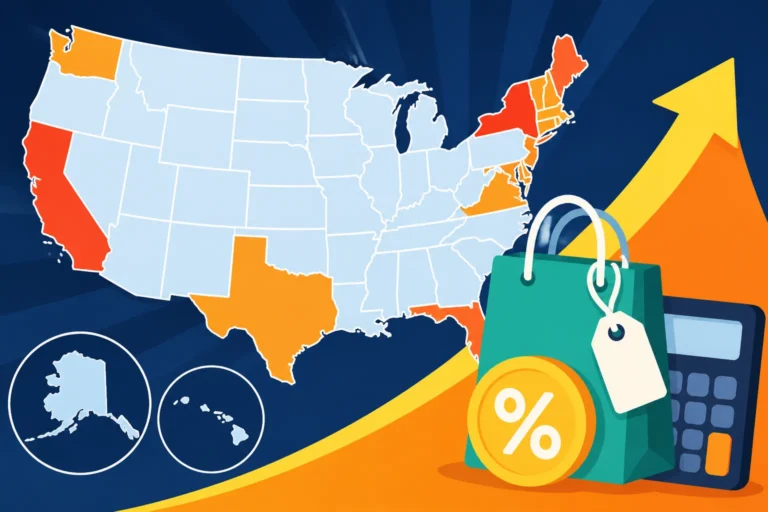
When you consider the base rate of 4.6%, Nevada actually sits on the lower end compared to many other states that impose a sales tax. States like California have a much higher base rate, for example. However, comparing just the state rate can be misleading. Many states rely heavily on local jurisdictions to add their own sales taxes, which can significantly increase the effective rate a consumer pays. This is why knowing just the state rate isn't enough; you need to dig deeper into the local landscape. For a broader comparison, you might find our guide on Sales Tax Rates by State 2026: All 50 States helpful in seeing where Nevada fits into the national picture.
For instance, while Nevada's 4.6% is modest, a state like Colorado has an even lower statewide sales tax rate, but also has a complex system of home-rule cities that can impose their own rates, making the overall calculation tricky. It's all about understanding the layers.
Understanding Nevada's Local Sales Tax Add-Ons
Here's where things get a bit more intricate. While the state sales tax is a flat 4.6%, every county in Nevada has the authority to levy its own additional sales tax rates. These are often called "county option taxes" or "local sales taxes," and they're tacked onto the state rate. This is why the price tag you see in Reno might have a different total sales tax than the one in Las Vegas, even though they're both in Nevada.
These local taxes are usually implemented to fund specific county-level services, infrastructure projects, or transportation initiatives. For example, a county might implement a small sales tax increase to pay for road improvements, public safety, or school districts. It’s a way for local governments to generate revenue directly from economic activity within their borders. Failing to account for these local variations can lead to under-collection for businesses, which means you'd be on the hook for the difference later. This is a common pain point for many businesses, highlighting why understanding How Combined Sales Tax Rates Work is essential.
County-Specific Sales Tax Rates in Nevada
The combined sales tax rate in Nevada is what you truly pay or collect at the point of sale. This is the sum of the statewide 4.6% and all applicable county and special district taxes. For example, Clark County, home to Las Vegas, has one of the higher combined rates due to various local add-ons for things like transportation and stadium funding. On the other hand, a more rural county might have fewer or smaller local add-ons, resulting in a lower overall combined rate.
Let's look at some of the major counties and their current combined rates for 2026:
| County | State Rate | Local Add-ons (Approx.) | Combined Sales Tax Rate |
|---|---|---|---|
| Carson City | 4.6% | 3.10% | 7.75% |
| Clark County | 4.6% | 4.10% | 8.375% |
| Douglas County | 4.6% | 3.10% | 7.75% |
| Elko County | 4.6% | 1.10% | 6.85% |
| Lyon County | 4.6% | 3.10% | 7.75% |
| Nye County | 4.6% | 1.60% | 7.60% |
| Washoe County | 4.6% | 3.10% | 8.265% |
Note: Local add-ons can change, so always verify the most current rates for your specific location.
As you can see, even with the same 4.6% state rate, the final combined rate can vary by more than a percentage point depending on the county. For businesses, this means your sales tax calculation isn't a simple statewide percentage; it's a dynamic figure that depends entirely on your customer's location. This makes tools like Sales Tax Rate Lookup Tools Compared invaluable for staying accurate.
The Role of Special District Taxes
Beyond the general county sales taxes, Nevada also allows for special district taxes. These are even more localized and can apply within specific cities, towns, or designated areas within a county. These district taxes are often earmarked for very specific projects, such as funding a particular redevelopment area, a specific public service, or even tourist-related initiatives.
For example, a city might implement a small district tax to fund its downtown revitalization efforts, or a tourism board might add a small percentage to sales within a resort corridor. These are typically smaller percentages, often a fraction of a percent (e.g., 0.1% or 0.25%), but they still add to the overall sales tax burden and must be collected accurately. These layers of taxation are precisely why it's so challenging to keep up with rates manually. For businesses that operate across different areas, especially if you sell online, you need to understand Is Sales Tax Based on Billing or Shipping Address? to apply the correct rates.
Sales Tax in Major Nevada Cities
When people think of Nevada, they often think of Las Vegas and Reno. These urban centers, as well as other significant cities, each fall within a specific county, and therefore their sales tax rates are heavily influenced by their county's local add-ons. However, cities can also have their own municipal or district taxes, making the final rate a unique combination.
The exact sales tax rate depends on the specific address of the transaction. For an online seller, this means correctly identifying the jurisdiction based on the shipping address. For brick-and-mortar stores, it means knowing the rate for their physical location.
Las Vegas Sales Tax Rate
Las Vegas, located in Clark County, has one of the highest combined sales tax rates in Nevada. The state's 4.6% rate is combined with various county-level taxes that fund everything from transportation improvements to local government services. As of 2026, the combined sales tax rate for most of Las Vegas and surrounding areas within Clark County is 8.375%. This is a significant jump from the state-only rate and reflects the substantial infrastructure and public services required for a large metropolitan area, especially one that sees millions of tourists annually.
For businesses operating in Las Vegas, whether it's a shop on the Strip or a local eatery, accurately collecting this 8.375% is crucial. Over-collecting can lead to customer complaints, while under-collecting means you're short-changing the state and local governments, which can result in penalties down the line. It's not just about the final number, but understanding the breakdown. Our guide on Sales Tax Rate in Las Vegas & Nevada provides even more details specific to this bustling city.
Reno Sales Tax Rate
Reno, nestled in Washoe County, also has a combined sales tax rate that reflects its unique local needs. For 2026, the combined sales tax rate in Reno is 8.265%. This rate includes the 4.6% state sales tax along with Washoe County's specific add-ons for public services, flood management, and other local projects. Much like Las Vegas, Reno's rate is higher than the state-only portion, emphasizing the impact of local taxation.
For businesses in Reno, maintaining compliance means being vigilant about this rate. If you have multiple locations or if you're an online seller fulfilling orders to various parts of Nevada, ensuring your point-of-sale system or e-commerce platform applies the correct rate to each transaction is paramount. This level of detail makes sales tax compliance a complex undertaking for many. This is a common challenge that makes you wonder, Why Is Sales Tax Different in Every City?
Other Notable Nevada Cities
While Las Vegas and Reno are the largest, other cities across Nevada also have their own specific combined rates based on their county affiliations:
- Henderson: Also in Clark County, shares the same 8.375% combined sales tax rate as Las Vegas.
- Carson City: As an independent city-county, it sets its own combined rate, which for 2026 is 7.75%.
- Sparks: Located in Washoe County, shares the 8.265% combined sales tax rate with Reno.
Understanding these rates is critical for any business that collects sales tax. The difference between 7.75% and 8.375% might seem small on a single transaction, but it adds up quickly for businesses with high sales volumes. This is where modern sales tax software solutions like Avalara really shine, automatically calculating these intricate rates down to the street address, taking a huge burden off business owners.
What is Taxable in Nevada?
Nevada's sales tax applies to the sale of tangible personal property. This is a pretty standard definition across most states, meaning physical goods you can touch, see, and move. However, like many states, Nevada also extends its sales tax to certain services, particularly those related to the sale of tangible goods, and to specific digital products. It's not always as simple as "if it's physical, it's taxed."
The key is often to look at whether the service is essential to the completion of a taxable sale or if it's a standalone professional service. And with the rise of the digital economy, states are continually updating their rules on how things like software and downloads are handled.
Tangible Personal Property
This category is the most straightforward. If you're buying a new gadget, a piece of furniture, clothing, or even a book, it's almost certainly subject to sales tax in Nevada. This includes everything from a souvenir from a Las Vegas gift shop to a new set of tires for your car. The state expects businesses to collect the appropriate sales tax on these items and remit it. This is generally the easiest part of sales tax compliance, as the nature of the item is clear.
However, even within tangible goods, there can be nuances. For example, some states have specific rules for things like clothing exemptions up to a certain price, but Nevada does not have such a general exemption. So, whether you're buying a t-shirt or a luxury item, it's typically taxable. Our article on What Items Are Exempt From Sales Tax? provides a broader overview of common exemptions across different states, though always remember to check Nevada's specific rules.
Taxable Services and Digital Goods
Nevada has specific rules about services. Generally, pure services are not subject to sales tax. For example, if you hire an accountant or a lawyer, their fees for professional services are typically not taxed. However, if a service results in a tangible product or is closely tied to the sale of tangible goods, it might become taxable.
For example, if you get a car repair, the parts used are taxable, and in many cases, the labor involved in installing those parts can also be subject to sales tax if it's considered part of the sale of the new part. Likewise, installation services for taxable items are often taxable themselves.
When it comes to digital goods and services, Nevada generally follows the trend of taxing them if they provide the consumer with a permanent right to use or access the product. This can include:
- Digital Products: E-books, downloaded music, movies, or software that you download and own are often taxable.
- Software as a Service (SaaS): While some states distinguish between "canned" and "custom" software, many states are moving towards taxing cloud-based software subscriptions if they provide access to software features or functions without a permanent download. Nevada does tax certain software and data services.
- Streaming Services: While often exempt in some states, others are starting to tax streaming content.
These distinctions are often where businesses run into trouble because the lines can be blurry. It's crucial for businesses offering services or digital products to consult the Nevada Department of Taxation's guidelines or use a robust sales tax solution to ensure they are applying the tax correctly. This ensures you're correctly determining Is SaaS Taxable? Software-as-a-Service by State for your services.
Filing and Compliance for Nevada Sales Tax
Once you've accurately collected the sales tax, the next step is remitting it to the state. Nevada requires businesses to register for a sales tax permit (also known as a seller's permit or sales and use tax permit) if they make taxable sales in the state and have sales tax nexus. This permit is your authorization to collect sales tax from customers.
The frequency with which you file and remit your collected sales tax can vary. It's usually based on your sales volume. High-volume sellers might need to file monthly, while smaller businesses might file quarterly or even annually. The Nevada Department of Taxation assigns your filing frequency when you register. Understanding Sales Tax Filing Frequency Explained is critical for avoiding penalties.
Economic Nexus in Nevada
The landscape of sales tax changed dramatically with the 2018 Supreme Court decision in South Dakota v. Wayfair. This ruling allowed states to require out-of-state businesses to collect sales tax even if they didn't have a physical presence, based on their economic activity in the state – known as economic nexus.
Nevada has its own economic nexus threshold. For 2026, remote sellers are required to register and collect Nevada sales tax if their sales into the state exceed $100,000 in gross revenue in the current or previous calendar year. Unlike some other states, Nevada does not have a transaction count threshold, simplifying things a bit for businesses. If your online store ships products to customers in Nevada and you cross this sales threshold, you're obligated to register with the Nevada Department of Taxation and begin collecting and remitting sales tax. Staying on top of these thresholds across all states where you sell is crucial for multi-state businesses, making our guide on Economic Nexus by State 2026: Thresholds Guide an indispensable resource.
For businesses that meet Nevada's economic nexus threshold, the process involves:
- Registering for a Permit: You'll need to apply for a Nevada sales tax permit through the Department of Taxation's website.
- Collecting Sales Tax: Implement systems to collect the correct combined sales tax rate for each transaction, based on the customer's shipping address in Nevada. This is where sales tax software like Avalara becomes invaluable, ensuring accuracy across all jurisdictions.
- Filing Returns: Submit your sales tax returns by the assigned due dates (monthly, quarterly, or annually). Even if you had no sales in a period, you typically still need to file a "zero return."
- Remitting Payments: Send the collected sales tax revenue to the state.
Ignoring these requirements can lead to penalties, interest, and audits, which no business owner wants to deal with. Proactive compliance is always the best approach. Many businesses find that investing in the Best Sales Tax Compliance Software 2027 pays for itself by automating these complex calculations and filings.
Disclaimer
The information provided in this article is for general informational purposes only and does not constitute tax or legal advice. Sales tax laws are complex and subject to change. Always consult with a qualified tax professional or the Nevada Department of Taxation for advice specific to your situation.