How Do I Calculate Sales Tax on a Purchase?
It can feel like a real headache trying to figure out how much sales tax you're actually going to pay on a purchase, especially with rates changing constantly and varying wildly from one town to the next. This guide is here to demystify the process, walking you through the straightforward steps to calculate sales tax accurately, whether you're a shopper trying to budget or a business owner ensuring compliance.
Understanding the Fundamentals of Sales Tax
Before we dive into the nitty-gritty of calculations, let's get a handle on what sales tax really is. In its simplest form, sales tax is a consumption tax charged by state and local governments on the sale of goods and sometimes services. It's typically added to the advertised price of an item at the point of sale. The money collected goes towards funding various public services, from schools and roads to local emergency services.
Why Sales Tax Varies So Much
One of the biggest frustrations people encounter is how sales tax rates seem to be all over the map. You might pay one rate in a large city like Los Angeles, but a completely different one just a few miles away in a smaller town. This isn't just random; it's due to the layered nature of sales tax.
First, almost all states have a base state sales tax rate. Then, many counties, cities, and even specific districts within those cities add their own local sales taxes on top. These could be for anything from public transit initiatives to special development zones. So, when you see a sales tax rate, it's usually a combination of these different layers. Understanding how these layers stack up is key to accurately determining the total rate. You can learn more about how these rates combine in our guide on Combined State + Local Sales Tax Rates Explained. It’s also why relying on a simple "state rate" often leads to incorrect calculations.
Who Collects and Remits Sales Tax?
When you buy something, whether it's a new pair of shoes or a digital download, the merchant is usually responsible for collecting that sales tax from you, the consumer. They act as an agent for the state and local governments. After collecting it, they then remit it to the appropriate tax authorities at regular intervals – typically monthly, quarterly, or annually. For businesses, this means not only accurately calculating but also diligently tracking and filing sales tax, which can become incredibly complex, particularly for online sellers who might have nexus in multiple states. Our article on Sales Tax for Online Sellers: Complete Guide delves deeper into this complexity.
The Straightforward Method for Sales Tax Calculation
Calculating sales tax on a single purchase is generally quite simple once you have the correct sales tax rate. It involves a basic multiplication.
Step-by-Step Calculation Formula
The most common way to calculate sales tax is by using this formula:
Sales Tax Amount = Price of Item × Sales Tax Rate
And if you want to know the total cost of your purchase, including tax:
Total Cost = Price of Item + Sales Tax Amount
OR
Total Cost = Price of Item × (1 + Sales Tax Rate)
Let's walk through an example:
Imagine you're buying a new gadget priced at $100, and the combined sales tax rate in your area is 7.5%.
- Convert the sales tax rate to a decimal: 7.5% becomes 0.075.
- Calculate the sales tax amount: $100 (Price of Item) × 0.075 (Sales Tax Rate) = $7.50 (Sales Tax Amount).
- Calculate the total cost: $100 (Price of Item) + $7.50 (Sales Tax Amount) = $107.50 (Total Cost).
Alternatively, using the second total cost formula:
- Add 1 to the decimal sales tax rate: 1 + 0.075 = 1.075.
- Calculate the total cost: $100 (Price of Item) × 1.075 = $107.50 (Total Cost).
This formula is the bedrock of all sales tax calculations. While simple for a single item, the real challenge, as we'll discuss, often lies in determining that precise sales tax rate. For more examples, check out our detailed guide on How to Calculate Sales Tax (Step by Step).
What About Multiple Items or Discounts?
If you're buying multiple items, especially if some are subject to tax and others aren't, or if you're applying discounts, the process is still based on the same formula but requires a little more attention to order of operations.
- Apply Discounts First: If you have a coupon or a percentage discount, always apply that to the item's price before calculating sales tax. Sales tax is generally calculated on the net selling price after any discounts.
- Example: A $50 shirt with a 10% discount ($5 off) means the taxable price is $45. If the tax rate is 6%, the tax is $45 * 0.06 = $2.70.
- Sum Taxable Items: If you have several taxable items, you can either calculate the tax on each item individually and then sum the tax amounts, or sum the prices of all taxable items first and then apply the sales tax rate to the total. The latter is usually quicker for a simple transaction.
- Distinguish Taxable vs. Exempt Items: As we'll get into, not everything is taxable. If your purchase includes both taxable and non-taxable items (like groceries in some states), you only apply the sales tax rate to the taxable portion of your purchase.
This clarity in applying discounts and distinguishing items ensures your sales tax calculation is always spot-on, reflecting the actual transaction value.
Pinpointing the Correct Sales Tax Rate
This is often where people get tripped up. It's not enough to know the state's sales tax rate; you need to understand the local nuances. The correct rate depends on several factors, and incorrectly identifying it can lead to underpaying or overpaying, which can be problematic for both consumers and businesses.
State, County, City, and District Taxes
As we touched on earlier, the sales tax rate is a mosaic of different jurisdictional levies.
- State Sales Tax: This is the baseline. For instance, the Florida Sales Tax Rate (6% + County Surtax) starts at 6%.
- County Sales Tax: Many counties add their own percentage. If you're in Orange County, Florida, you'd add a county surtax on top of the state rate.
- City Sales Tax: Some cities impose an additional sales tax. Take Chicago, for example, which has one of the Chicago Sales Tax Rate (Highest Big City) due to multiple layers of local taxes.
- Special District Taxes: These are even more granular and can be imposed by transit authorities, special economic development zones, or even arts and culture districts. California is famous for its intricate California District Taxes Explained.
The critical thing to remember is that these rates stack. So, a 6% state rate, a 1% county rate, and a 0.5% city rate would combine to a total of 7.5%.
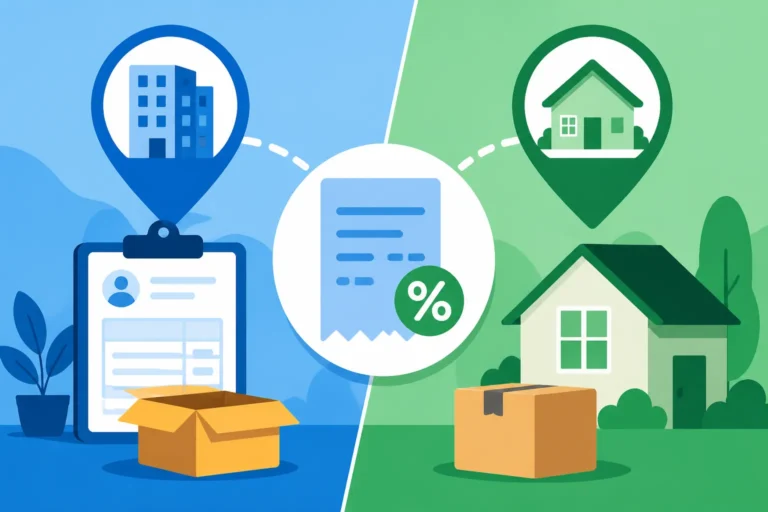
Sales Tax Sourcing: Origin vs. Destination
For businesses, especially those selling online or across county lines, knowing which sales tax rate to apply is paramount. This is determined by sales tax sourcing rules, which vary by state:
- Origin-Based Sourcing: In origin-based states, the sales tax rate is determined by the seller's location. So, if your business is in Seattle, Washington, you'd charge the Seattle Sales Tax Rate 2026 (10.55%) to all in-state customers, regardless of where they are located in Washington.
- Destination-Based Sourcing: In destination-based states, the sales tax rate is determined by the buyer's location – where the goods or services are received. Most states, especially for out-of-state transactions, use destination-based sourcing. This means an online seller needs to know the precise address of their customer to apply the correct local sales tax rate, which can be incredibly challenging given the sheer number of taxing jurisdictions. This concept is explored more deeply in our article on Origin vs Destination Sales Tax Sourcing.
The sourcing rule fundamentally changes how businesses collect sales tax and why an accurate address lookup is so vital for compliance. It’s also why simply using a Sales Tax by ZIP Code (and Why ZIP Isn't Enough) is often insufficient, as ZIP codes can cover multiple tax jurisdictions.
Where to Find the Most Accurate Rates
For consumers, the easiest way to know the correct sales tax rate is usually just to look at your receipt. The merchant has already done the heavy lifting. However, if you're trying to budget before a purchase or you're a business needing to implement accurate rates, here are some reliable sources:
- State Revenue Websites: Every state's Department of Revenue (or equivalent) provides official sales tax rate information. These are the most authoritative sources, though navigating them can sometimes feel like a treasure hunt.
- Online Sales Tax Calculators: Many websites offer free sales tax calculators where you can enter a ZIP code or full address to get an estimated rate. These are convenient for quick checks. Our Sales Tax Calculator: How to Calculate Sales Tax provides an excellent resource.
- Sales Tax Software: For businesses, especially those with nexus in multiple states, specialized sales tax compliance software like Avalara is invaluable. These platforms automatically track sales tax rates down to the street address level, update them as changes occur (2026 Sales Tax Rate Changes by State happen more often than you think!), and integrate with e-commerce platforms and accounting systems to ensure accurate collection and remittance. This kind of automation takes the guesswork and significant manual effort out of sales tax compliance.
Navigating Complexities and Exemptions
Sales tax isn't always a straightforward percentage application. Certain items, services, or situations can alter the calculation, making it a bit more nuanced.
Taxable vs. Exempt Goods and Services
Not everything you buy is subject to sales tax. While the general rule of thumb is that tangible personal property is taxable, there are many exceptions that vary significantly by state.
- Groceries: Many states exempt most unprepared food items (groceries) from sales tax to help consumers afford necessities. However, some states tax groceries at a reduced rate, and a few, like Alabama, tax them at the full sales tax rate. Prepared food, like restaurant meals, is almost always taxable. For more on this, see our article on Sales Tax on Groceries & Food by State.
- Clothing: Most states tax clothing, but a few, like Pennsylvania and New Jersey, exempt it entirely. Others, like New York, offer exemptions only on clothing items below a certain price threshold. If you're wondering, "Is clothing taxable in New York?", you'll find it's generally exempt if the item is under $110.
- Services: Historically, services were largely exempt from sales tax. However, more and more states are beginning to tax certain services, especially digital services, software-as-a-service (SaaS), and even some professional services. The taxability of services is highly dependent on the specific service and state laws.
- Digital Products: E-books, downloaded software, streaming services – the tax rules for these vary wildly. Some states consider them taxable, others don't, and some differentiate based on how they're delivered or accessed.
- Prescription Drugs and Medical Devices: These are typically exempt from sales tax in almost all states.
- Resale Exemptions: Businesses that purchase items with the intent to resell them can often do so without paying sales tax themselves, provided they have a valid resale certificate. They then collect sales tax from their end customer. This is a crucial exemption for retailers and wholesalers.
These exemptions mean you can't just apply the sales tax rate to the total purchase price blindly. You need to know which specific items in your cart are actually taxable.
The Role of Shipping and Handling
This is another common area of confusion. Is the shipping fee you pay when ordering online also subject to sales tax? The answer, frustratingly, is: it depends on the state.
Many states follow one of these general rules:
- Shipping is Always Taxable: In some states, if the item being shipped is taxable, then the shipping and handling charges for that item are also taxable, regardless of whether they are separately stated on the invoice.
- Shipping is Taxable if Not Separately Stated: If the shipping charge is lumped in with the price of the item ("shipping and handling included"), it's often taxable. If it's separately stated and can be proven to be a true transportation cost, it might be exempt.
- Shipping is Always Exempt: A few states consider shipping charges exempt from sales tax, even if the item itself is taxable.
Given this variability, it’s always best to consult state-specific guidance or use a reliable system to determine the taxability of shipping charges. Our article Is Shipping Taxable? Freight Sales Tax by State offers a comprehensive breakdown of these rules across different states.
Consumer Use Tax
What happens if you purchase an item that should have had sales tax applied, but for some reason, the seller didn't collect it (perhaps they didn't have nexus in your state)? That's where consumer use tax comes in. If you bought a taxable item and no sales tax was collected, you, as the consumer, are technically responsible for remitting that "use tax" to your state.
Most individuals don't realize this and rarely file use tax, but states technically expect it, especially for large purchases. For businesses, use tax is a more common consideration, often paid on out-of-state purchases of equipment or supplies that will be used by the business and on which no sales tax was collected at the time of purchase. Understanding Use Tax Explained: What It Is & When You Owe It is crucial for both consumers and businesses to avoid potential penalties.
Tools and Resources for Simplified Sales Tax Calculation
While manual calculation is possible for simple, occasional purchases, the complexities of varying rates, sourcing rules, and exemptions quickly make it unfeasible for businesses or frequent online shoppers.
Online Sales Tax Calculators
For quick, one-off calculations, many free online tools are available. You simply input the price of the item and the ZIP code or full address, and the calculator provides the estimated sales tax amount. These are fantastic for budgeting before a purchase or double-checking a receipt.
However, a key limitation of some basic calculators is that they might not account for specific product exemptions (e.g., whether clothing is taxable below a certain threshold) or complex sourcing rules. For instance, if you're looking up the Sales Tax Rate for Los Angeles & California, a basic calculator might give you the combined rate, but it won't tell you if your specific item is exempt in California (like some food items).
Dedicated Sales Tax Software
For businesses, especially those selling across state lines or through multiple channels (e-commerce, brick-and-mortar), investing in dedicated sales tax compliance software is almost a necessity. These platforms automate the entire sales tax lifecycle, from calculation to filing.
Here’s what they typically offer:
- Real-time Rate Lookups: These systems use sophisticated databases that are constantly updated with the latest sales tax rates for every jurisdiction across the country. They can determine the exact rate based on the customer's precise address, even down to the street level, accounting for all state, county, city, and special district taxes. This is a monumental task that no human could reasonably maintain manually.
- Taxability Rules Engine: Advanced software can apply specific taxability rules based on the product or service being sold. For example, it knows that an e-book is taxable in Texas but not in Florida, or that certain types of manufacturing equipment are exempt in particular states.
- Integration with E-commerce and ERP Systems: These solutions seamlessly integrate with popular platforms like Shopify, Amazon, Stripe, QuickBooks, and various ERP systems. This means sales tax is calculated automatically at checkout and recorded correctly in your accounting system.
- Reporting and Filing: Beyond calculation, these tools generate detailed reports of sales tax collected by jurisdiction and can even automate the filing and remittance of sales tax returns to the various state and local tax authorities.
For businesses aiming for accuracy and peace of mind, a robust solution like Avalara or other similar platforms can transform a daunting compliance burden into a streamlined process. They are, in essence, the "core solution" for businesses facing the complexities of multi-jurisdictional sales tax. You can explore options in our guide on the Best Sales Tax Compliance Software 2027.
Manual Lookup on Government Websites
While time-consuming, manually looking up rates on state Department of Revenue websites is always an option, especially if you need to confirm a specific rate or taxability rule directly from the source. Most states provide a lookup tool or publications detailing their current rates and exemptions. This method requires diligence and careful attention to detail, as each state's website has its own navigation and presentation style.
Here's a table summarizing common calculation scenarios:
| Scenario | How to Calculate | Key Considerations |
|---|---|---|
| Single Item, No Discounts | Item Price × Sales Tax Rate = Tax Amount | Find accurate combined local rate. |
| Multiple Taxable Items | (Sum of Item Prices) × Sales Tax Rate = Tax Amount | Apply rate to total taxable amount. |
| Items with Discounts | (Original Price – Discount) × Sales Tax Rate = Tax Amount | Always apply discounts before calculating tax. |
| Mixed Taxable/Exempt Items | (Sum of Taxable Item Prices) × Sales Tax Tax Rate = Tax Amount | Clearly identify which items are truly taxable in your state. |
| Including Shipping | Depends on state rules (see "Shipping and Handling" above) | Check if shipping is taxable in the specific state. |
| Online Purchase | Item Price × Destination Sales Tax Rate = Tax Amount | Use buyer's full address for accurate destination-based rate. |
Ultimately, whether you're a shopper or a business, understanding how sales tax is calculated empowers you to make informed decisions and ensure compliance. While the basic math is simple, the varying rates and rules across thousands of jurisdictions demand careful attention to detail, or better yet, the use of accurate tools to lighten the load.
Disclaimer
The information provided in this article is for general informational purposes only and does not constitute tax or legal advice. Sales tax laws are complex and subject to change. Always consult with a qualified tax professional or refer to your state's Department of Revenue for specific guidance tailored to your situation.