Florida Sales Tax Rate (6% + County Surtax)
You are standing at a checkout counter in a sun-drenched shop in Miami, looking at a receipt for a new designer handbag. You expected to pay a flat rate, but the numbers look a little different than they did when you bought shoes in Tampa last week. This guide solves the mystery of the Florida sales tax system, explaining the 6% state base and the varying county surtaxes that catch both locals and tourists off guard.
Understanding the Florida Base Sales Tax Rate
If you have ever lived in a state where the sales tax is a simple, flat percentage across every city and town, Florida is going to be a bit of a shock to your system. At its core, the Sunshine State keeps things relatively straightforward with a statewide base rate of 6%. This 6% is the foundation for almost every taxable transaction that happens within state lines. However, as any veteran Florida shopper knows, you rarely pay exactly 6% at the register.
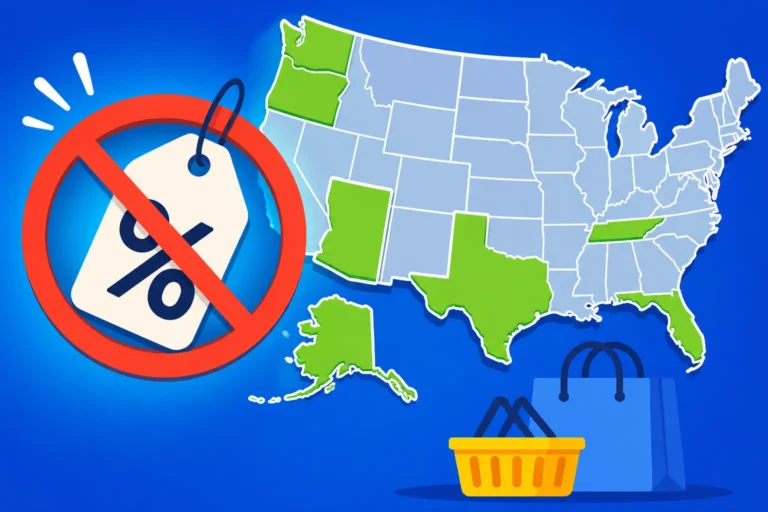
The state uses this revenue to fund massive infrastructure projects, public schools, and environmental conservation efforts like the restoration of the Everglades. Because Florida is one of the few States With No Sales Tax (NOMAD Explained) on the income side, the government relies heavily on consumption taxes. This means that while you keep more of your paycheck, you are contributing to the state's coffers every time you buy a surfboard or a new set of patio furniture. It is a trade-off that most residents are happy to make, but it requires a bit of mental math when you are budgeting for big-ticket items.
Comparing Florida to its neighbors can be eye-opening. While some states have much higher base rates, Florida's 6% is relatively moderate. When you look at the Average Sales Tax Rate by State, Florida often sits comfortably in the middle of the pack. The real complexity begins when you move from the state level down to the local level, where individual counties have the power to tack on their own "discretionary" charges.
How Florida Compares to Other States
When you look at the national landscape, Florida’s 6% base is lower than California’s 7.25% or Tennessee’s 7%. However, it is higher than the 4% base in New York or the 2.9% base in Colorado. What makes Florida unique is how it balances this moderate state rate with local surtaxes. If you are used to the New York Sales Tax Rate (4% + Local), you might find Florida's structure similar, though the local additions in Florida tend to be slightly more conservative than the massive jumps seen in places like New York City or Chicago.
For business owners moving into the Florida market, understanding this base is the first step toward compliance. You cannot simply ignore the state rate, but you also cannot assume it is the only number that matters. If you are shipping goods from a state like Delaware, you might be surprised to learn that Florida expects its cut as soon as you establish a presence here. If you've spent time looking at Is There Sales Tax in Delaware, the transition to Florida's consumption-heavy model can be a steep learning curve.
The Impact of No State Income Tax
The 6% sales tax is essentially the engine of Florida's economy. Because the state does not tax your wages, the Department of Revenue is very diligent about collecting on sales. This is why Florida's tax "nexus" rules are so strictly enforced. If you are an online seller and you hit a certain volume of sales in the state, Florida wants you to register and collect that 6% (plus local surtaxes) immediately.
This reliance on sales tax also means that the state is very protective of its revenue during economic downturns. When tourism slows down and people spend less in shops, the state budget feels it immediately. This is a far cry from states with high income taxes that have a more stable, albeit perhaps more painful, revenue stream. Knowing What Is the Sales Tax in Florida? is essential for anyone trying to understand the state's broader fiscal health.
The Discretionary Sales Surtax Explained
The phrase "Discretionary Sales Surtax" sounds like something out of a dense legal textbook, but in reality, it is just Florida-speak for "local sales tax." Each of Florida’s 67 counties has the authority to vote on and implement additional taxes on top of the state’s 6% base. These surtaxes are usually earmarked for very specific local needs, such as building new schools, improving county roads, or funding indigent healthcare services.
For example, if you are buying a laptop in a county with a 1% surtax, your total tax rate at the register will be 7%. These rates can change frequently based on local elections and referendums. A county might vote to add a half-percent tax to build a new stadium, only for that tax to sunset a few years later when the project is paid off. Keeping track of these shifts is a full-time job for many accountants, and many businesses turn to platforms like Avalara to ensure they are charging the correct amount to the penny.
The surtax is technically a "use tax" as well, meaning if you buy something in a county with a lower tax rate but bring it home to a county with a higher rate, you technically owe the difference. While the state rarely chases individuals for a few cents on a toaster, businesses must be extremely careful. Failure to accurately calculate the Combined State + Local Sales Tax Rates Explained can lead to messy audits and significant penalties.
The 5,000 Dollar Bracket Rule
One of the most peculiar and often misunderstood parts of Florida tax law is the $5,000 cap on surtaxes. This rule is a lifesaver for people making massive purchases. In Florida, the county surtax only applies to the first $5,000 of the purchase price of any single item of tangible personal property. The state's 6% base rate, however, applies to the entire amount.
Imagine you are buying a luxury car in a county with a 1% surtax. If the car costs $50,000, you will pay the 6% state tax on the full $50,000 (which is $3,000). But the 1% county surtax only applies to the first $5,000 of that car’s price (which is $50). Your total tax would be $3,050, rather than the $3,500 you might expect if you simply multiplied the full price by 7%. This rule makes a huge difference when calculating How Much Is Sales Tax on a Car by State and is a unique feature of the Florida tax landscape that rewards high-ticket buyers.
Why Surtaxes Vary by County
Why does one county charge 0.5% while the neighbor charges 1.5%? It all comes down to local politics and infrastructure needs. Heavily populated counties like Miami-Dade often have higher surtaxes because they have more infrastructure to maintain and a larger demand for social services. Conversely, some rural counties might have no surtax at all, sticking strictly to the state's 6%.
Voters in Florida are generally wary of tax increases, so these surtaxes are often put on the ballot with very clear expiration dates or specific goals. When you are looking at the Florida Sales Tax Rate 2026, you might notice that a rate in a specific county has dropped or increased by a small fraction. This is usually the result of a local ordinance or a voter-approved initiative finally taking effect.
Florida Sales Tax Rates by Major County
Navigating Florida’s geography is one thing; navigating its tax map is another. With 67 counties, the rates are a patchwork quilt. While many counties hover around the 7% total (6% state + 1% local), there are notable outliers. Some tourist-heavy areas leverage the surtax to collect revenue from visitors, while other areas keep it low to remain competitive for local shoppers.
If you are a business owner with a physical location in Florida, you collect the tax based on the county where your business is located. If you are shipping to customers across the state, the rules get more complex. Generally, Florida is a "destination" state for sales tax purposes, meaning you charge the rate based on where the item is delivered. This is a common point of confusion that is explored deeply in Origin vs Destination Sales Tax Sourcing.
Below is a breakdown of some of the most populated and economically active counties in Florida to give you a sense of what to expect at the register in 2026.
| County | State Rate | Surtax Rate | Total Combined Rate |
|---|---|---|---|
| Miami-Dade | 6.0% | 1.0% | 7.0% |
| Broward | 6.0% | 1.0% | 7.0% |
| Orange (Orlando) | 6.0% | 0.5% | 6.5% |
| Hillsborough (Tampa) | 6.0% | 1.5% | 7.5% |
| Palm Beach | 6.0% | 1.0% | 7.0% |
| Duval (Jacksonville) | 6.0% | 1.5% | 7.5% |
| Pinellas | 6.0% | 1.0% | 7.0% |
| Leon (Tallahassee) | 6.0% | 1.5% | 7.5% |
| Monroe (The Keys) | 6.0% | 1.5% | 7.5% |
| Collier (Naples) | 6.0% | 1.0% | 7.0% |
Miami-Dade and the Tourist Impact
In Miami-Dade, the 7% total rate is a constant for residents and the millions of tourists who flock to South Beach. Interestingly, Miami-Dade also has several local option taxes that apply specifically to food and beverages sold in certain hotels or establishments that serve alcohol. This can make your dinner bill look slightly higher than a standard retail purchase. If you are tracking Florida Sales Tax Rate by City & County, you'll find that Miami-Dade is one of the most consistent but also one of the most multi-layered jurisdictions in the state.
Businesses in Miami often find that staying compliant requires robust software. Because the city is a hub for international trade and e-commerce, the volume of transactions is massive. Many local firms use Avalara to automate the calculation of these surtaxes, especially when they are dealing with the $5,000 cap rule on high-end luxury goods, which are sold in abundance in the Design District and Bal Harbour.
Orange County and Central Florida Hubs
Orange County, home to Orlando and the world's most famous theme parks, surprisingly maintains a lower-than-average total rate of 6.5%. This half-penny surtax is a point of pride for some local politicians who want to keep the area attractive for both residents and the tourism industry. However, do not let that 6.5% fool you; there are additional "tourist development taxes" on hotel stays that can significantly increase the cost of a vacation.
When you are trying to figure out How Do I Find My Local Sales Tax Rate?, Orange County is a great example of why you can't just guess. Moving just a few miles into a neighboring county like Osceola or Seminole could change your rate to 7% or more. For a family buying a high-priced Disney souvenir, that half-percent might not seem like much, but for a business buying thousands of dollars in office supplies, it adds up quickly.
Hillsborough and the High-Rate Exceptions
Hillsborough County, which includes Tampa, has historically had some of the highest combined rates in the state, reaching 7.5% or even 8.5% in the past due to specific transportation surtaxes. These rates have been the subject of several high-profile legal battles in the Florida Supreme Court. If you are operating a business in Tampa, you must stay incredibly vigilant about 2026 Sales Tax Rate Changes by State because Hillsborough is often at the center of these fluctuations.
The 7.5% rate in Hillsborough is often used as a benchmark for what "high" sales tax looks like in Florida. Residents here are used to the extra bite at the register, but it often drives shoppers across the bridge into Pinellas County if they are looking for a deal on a major appliance or electronics. This "border shopping" is a common phenomenon in Florida's metro areas.
Special Tax Rules in the Sunshine State
Florida isn't just about the rates; it’s about what you are taxing. The state has some very specific exemptions and some very surprising "inclusions" that trip up even seasoned professionals. Unlike states that tax almost everything, Florida has a long list of items that are considered essential and therefore exempt from the 6% state tax and the county surtax.
On the flip side, Florida is one of the only states in the country that taxes commercial rentals. If you are a business owner renting a storefront or office space in Florida, you are paying sales tax on your rent. This is a massive point of frustration for small business owners and something you won't find when looking at Sales Tax on Services: What's Taxable by State in most other parts of the country.
Understanding these nuances is the difference between a clean audit and a financial nightmare. If you are selling specialized goods, you need to know exactly which category your products fall into. For instance, the "Flour Test" used for candy and snacks in some states is less of an issue in Florida, but the distinction between "prepared food" and "groceries" is still vital.
Tax-Free Groceries and Medicine
Florida is relatively generous when it comes to the basics of life. Most "general" groceries—bread, milk, produce, and meats—are exempt from sales tax. However, the moment that food becomes "prepared," the tax kicks in. If you buy a cold rotisserie chicken at the deli counter to take home, it’s usually tax-free. If you buy that same chicken hot and ready to eat, or if you sit down in the grocery store cafe to eat it, you are paying that 6% plus surtax.
Medicine is also generally exempt. This includes prescription drugs and most over-the-counter items like aspirin or bandages. Florida recently expanded exemptions to include certain baby items like diapers and clothes, acknowledging the rising cost of childcare. If you are comparing this to other states, you might look at Is Groceries Taxable in California to see how Florida's policy is actually quite consumer-friendly by comparison.
The Complicated World of Commercial Rentals
This is the "gotcha" of Florida tax law. If you sign a lease for a warehouse, an office, or a retail shop, you must pay sales tax on the base rent and any "additional rent" like property taxes or common area maintenance (CAM) fees paid to the landlord. The good news is that the state has been slowly lowering this rate over the last few years. As of 2026, the state rate for commercial rent has been significantly reduced, but it is still a factor that every Florida business must budget for.
Calculating the tax on a commercial lease is tricky because it follows the same surtax rules as regular sales. If your shop is in a 7% county, you are paying that extra 1% on your rent every single month. For a small business paying $5,000 a month in rent, that’s an extra $350 out of the pocket. It’s one of the reasons many businesses use services like Avalara to manage their multi-location tax obligations, ensuring they don't overpay or under-collect on these unique Florida charges.
Sales Tax Holidays and Savings Opportunities
If there is one thing Floridians love more than the beach, it's a tax-free weekend. The Florida legislature is famous for authorized "Sales Tax Holidays" throughout the year. These events are designed to provide relief to families and encourage spending during specific seasons. For a few days or weeks at a time, the state suspends the 6% tax and the county surtaxes on specific categories of items.
These holidays are not just for individuals; businesses can save a significant amount of money by timing their purchases of computers or disaster supplies during these windows. However, the rules are very strict. There are always price caps—for example, clothing might only be tax-free if it costs less than $100 per item. If you buy a $110 jacket, you might pay tax on the whole thing, depending on that year's specific legislation. Keeping an eye on the Florida Sales Tax Holiday 2026 Guide is essential for maximizing your savings.
Back-to-School and Freedom Summer
The most popular holiday is the Back-to-School period, usually held in late July or early August. This covers clothing, footwear, school supplies, and even personal computers. It is a madhouse at local malls, but the savings are real. In recent years, Florida has also introduced "Freedom Summer," which focuses on outdoor gear, event tickets, and even museum memberships.
If you are a retailer, these holidays are a double-edged sword. They drive massive traffic to your store, but they also require you to update your Point of Sale (POS) system to stop collecting tax on specific items for a very short period. This is where automation becomes a lifesaver. Tools like Avalara can automatically update your tax tables so you don't accidentally charge a customer tax on a pair of sneakers during the Florida Back-to-School Tax Holiday (All August).
Disaster Preparedness Holidays
Living in Florida means dealing with hurricane season. To encourage residents to stock up on supplies, the state offers a "Disaster Preparedness" holiday, usually in May or June. This covers everything from batteries and flashlights to expensive portable generators. There are often two of these holidays a year now, reflecting the state's commitment to safety.
During these windows, items like reusable ice packs, smoke detectors, and even certain pet food can be purchased tax-free. If you are a new resident, this is the perfect time to build your hurricane kit. You can save a lot of money on a high-end generator, especially given that the What Items Are Tax-Free in Texas comparison shows that Florida's disaster holidays are some of the most comprehensive in the nation.
Compliance for Sellers and Small Businesses
If you are selling products in Florida, you are essentially a volunteer tax collector for the state. You are responsible for registering for a sales tax permit, calculating the correct rate (including that pesky surtax), and remitting the money to the Florida Department of Revenue (DOR) on time. If you mess this up, the DOR can be very unforgiving, often levying heavy fines and interest.
The first step for any new business is determining if you have "nexus" in the state. Physical nexus is easy: if you have an office, a warehouse, or an employee in Florida, you have nexus. Economic nexus is a bit newer. If you are an out-of-state seller but you make more than $100,000 in sales to Florida customers, you are now required to register and collect tax. This rule changed the game for many online sellers who previously thought they were "tax-free."
Staying on top of your Florida Sales Tax Due Dates 2026 is critical. Depending on how much tax you collect, you might be required to file monthly, quarterly, or annually. Most businesses fall into the monthly category, with payments due by the 20th of the following month. If you are late, even by a day, you lose your "collection allowance"—a small discount the state gives you for filing on time—and you face a minimum $50 penalty.
Nexus and the 100,000 Dollar Threshold
The $100,000 economic nexus threshold is a "bright-line" rule in Florida. This means there is no "transaction count" to worry about—it's strictly based on the gross sales amount. If you sell ten items for $10,001 each, you have hit the Economic Nexus Threshold in Florida and must start collecting.
This can be a major headache for small e-commerce businesses. Imagine you are a boutique candle maker in Oregon. If a Florida influencer shares your product and you suddenly do $105,000 in sales to Florida residents, you are legally obligated to register with the Florida DOR. This is why many growing brands integrate tax compliance software like Avalara early on; it monitors your sales across all states and alerts you the moment you are approaching a nexus threshold.
Using Automation for Accuracy
Let’s be honest: manually looking up the surtax for every ZIP code in Florida is a recipe for disaster. ZIP codes and county lines do not always align, and a customer might have a Miami mailing address but actually live in an unincorporated part of the county with a different tax rule. This is why "geofencing" and address validation are so important for modern retail.
For most businesses, the "set it and forget it" approach of automation is the only way to stay sane. Systems like Avalara integrate directly with Shopify, WooCommerce, and NetSuite to calculate the 6% + County Surtax in real-time. This ensures that you are never under-collecting (which comes out of your profit) or over-collecting (which upsets customers and can lead to legal issues). When you consider the complexity of Sales Tax by ZIP Code (and Why ZIP Isn't Enough), the investment in a dedicated tax tool pays for itself in avoided audit stress alone.
Florida Sales Tax Rate Disclaimer
The information provided in this guide is for general informational purposes only and does not constitute professional tax, legal, or financial advice. Sales tax rates, surtaxes, and exemptions in Florida are subject to change by legislative action or local referendums. Always consult with a qualified tax professional or the Florida Department of Revenue to ensure your business remains in full compliance with current laws and regulations. Rates mentioned are based on projected data for 2026.